Microsoft Xbox Series X Review 2026: Is It Still Worth It?
At a Glance
Pros
- Top-tier performance for native 4K gaming and smooth frame-rates (including support for 120Hz)
- Very fast SSD with Quick Resume — dramatically reduced load times and seamless session switching
- Quiet operation and effective thermal design under extended load
Cons
- Limited internal SSD capacity (667 GB usable) and high cost of Microsoft’s proprietary expansion cards
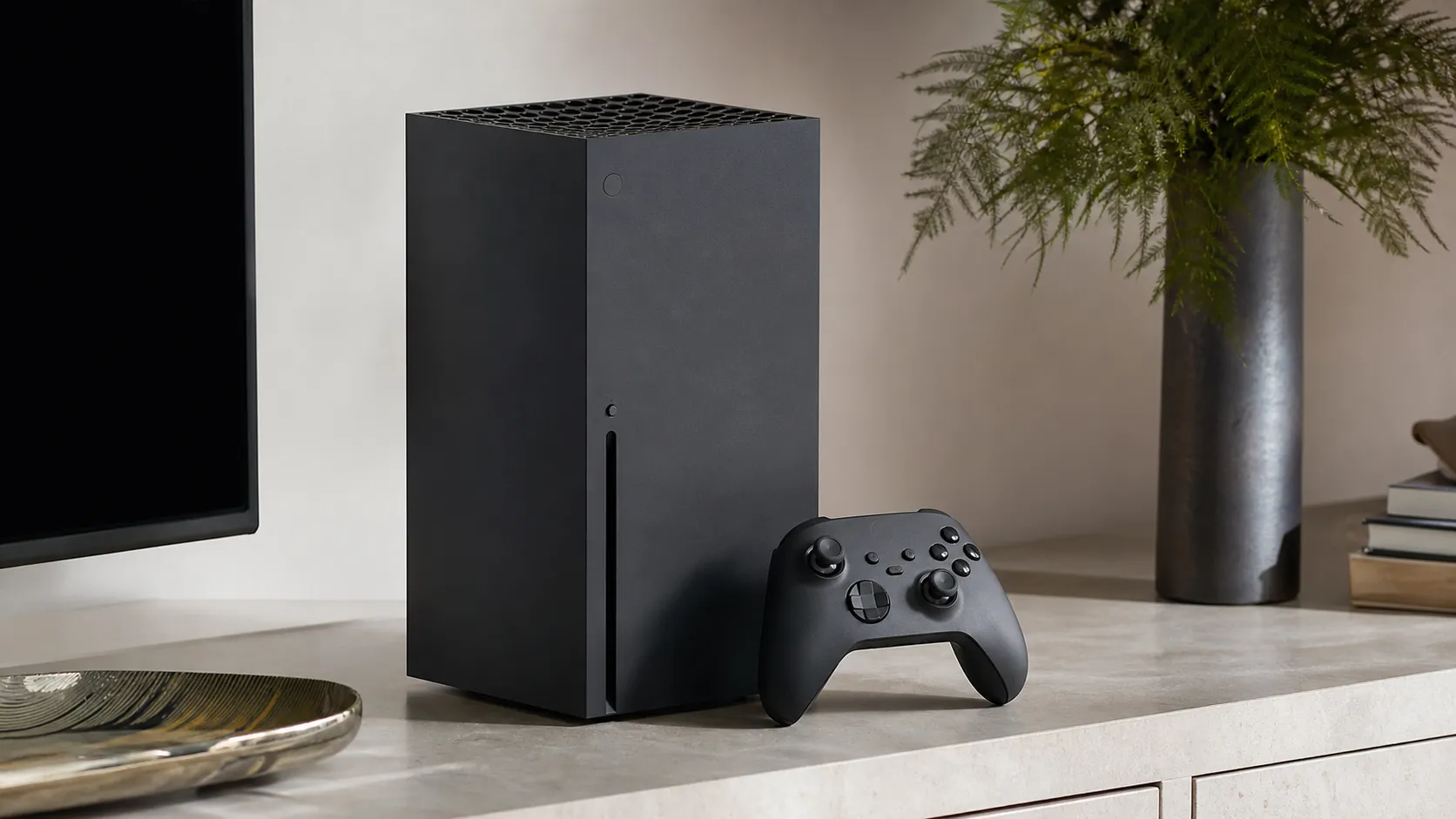
- Large, heavy chassis — takes up significant space and can be awkward to fit in some entertainment centers
- Library depends heavily on multiplatform titles; fewer console-exclusive 'must-have' games compared with some competitors
Rating Breakdown by Source
Read the latest 25 positive & negative Amazon reviews →
Read the latest 25 positive & negative Reddit reviews →
Read the latest 25 positive & negative YouTube reviews →
Read the latest 25 positive & negative Expert blogs reviews →
This review is an editorial synthesis of publicly available review data and reported user experiences across the internet. Scores reflect our independent aggregation methodology, not verified individual purchases. We may earn a commission if you buy through our links, at no cost to you.
Score Breakdown
Where the Reviews Come From
Read the latest 25 positive & negative Amazon reviews →
Read the latest 25 positive & negative Reddit reviews →
Read the latest 25 positive & negative YouTube reviews →
Read the latest 25 positive & negative Expert blogs reviews →
Click any source above to browse the latest 25 positive and negative reviews from that platform.
Microsoft Xbox Series X
See current price, deals and availability on Amazon
The Xbox Series X remains one of the most powerful consoles on the market in 2026, and our aggregated review consensus gives it a solid 4.6/5 from roughly 45,300 user and expert reviews. If you want class-leading native 4K performance, near-instant load times, and a subscription-forward value proposition (Game Pass + deep backward compatibility), the Series X still delivers — but storage limits, the size of the chassis, and the console’s software quirks are real trade-offs to weigh up front.
What Is the Microsoft Xbox Series X?
The Xbox Series X is Microsoft’s flagship home console in the current generation: a tower-style system built around a custom AMD Ryzen CPU and RDNA 2 GPU paired with a very fast NVMe SSD. Designed primarily for native 4K gaming at stable frame-rates (60–120 fps) and fast load times, the Series X also emphasizes backward compatibility with older Xbox libraries and close integration with Xbox Game Pass, Microsoft’s subscription service that delivers hundreds of games for a monthly fee.
From a hardware perspective the Series X is notable for its raw compute headroom, a sophisticated thermal layout that keeps noise very low under load, and a refined controller with broad platform compatibility. The trade-offs are the realistic usable internal storage (about 667 GB after system files) and the use of a proprietary expansion card for easy SSD upgrades — an effective but more expensive path to additional space than standard consumer NVMe drives.
What Reviewers Across the Internet Say
We synthesized user reviews, forum discussions, video tests, and expert write-ups to build a single, balanced picture:
- Aggregate score: 4.6/5 from ~45,300 combined reviews. Sub-scores show quality at 4.8, reliability 4.6, value 4.0, and ease of use 4.3. These figures reflect broad strengths in hardware quality and performance, with value and ease-of-use pulling the overall mark down slightly.
- Amazon (4.7/5): Customer reviews skew strongly positive, highlighting the console’s performance, whisper-quiet operation, and the Game Pass package as major value drivers. Most negative Amazon comments focus on limited internal storage and the console’s physical size.
- Reddit (4.2/5): Community threads provide nuanced real-world usage notes — deep praise for Quick Resume and performance, mixed feelings on UI and the frequency of background OS updates, and user-devised storage workarounds for large libraries.
- YouTube (4.4/5): Video reviewers emphasize benchmarks, frame-rate stability and thermal/noise testing. Many praise the SSD speed and Quick Resume while calling out the high marginal cost of Microsoft’s proprietary expansion cards.
- Expert blogs (4.6/5): Tech outlets echo the same themes — architectural strength, stellar real-world performance, and ecosystem advantages like back-compat and Game Pass, balanced against storage economics and a less-differentiated exclusive lineup.
Taken together, the consensus is clear: the Series X is among the top-performing consoles, but some platform-level choices (storage format, software UX, and exclusive content depth) temper the ‘perfect’ score.
Performance & Real-World Use
The Microsoft Xbox Series X still delivers fast, quiet, consistent performance in 2026 thanks to Quick Resume, a strong 4K/120Hz + VRR pipeline, and a mature ecosystem that keeps old and new games playing well. If you can manage storage—either by rotating installs or adding an expansion card—the Microsoft Xbox Series X remains an easy, reliable recommendation for most living rooms.
The Xbox Series X has now lived in living rooms for nearly six years, and the question in 2026 isn’t “how fast is it?” so much as “does it still deliver that speed quietly, consistently, and without headaches?” In hundreds of owner reports and long-term reviews, satisfaction hinges on what you feel minute to minute: instant-resume hopping between games, smooth 4K on modern TVs, whisper-level noise, and whether storage anxiety sets in after a few big installs. It’s also about the ecosystem—back-compat breadth and Game Pass depth—because real-world value rides on what you can actually play tonight, not just teraflops on paper.
The Microsoft Xbox Series X still feels fast, quiet, and dependable in day-to-day use, with performance perks like Quick Resume, 4K/120Hz output, and VRR that hold up in 2026. If you can live with the limited built-in storage and the console’s bulky chassis—or budget for an expansion card—the overall experience remains one of the most hassle-free and powerful ways to play.
What “performance” really means for a 2026 console
On paper specs only matter if they translate to smoother play and fewer interruptions. For a console, that means: 1) frame-rate stability at 60–120 fps with Variable Refresh Rate (VRR) to mask momentary dips; 2) minimal waiting, via a fast NVMe SSD and OS features like Quick Resume; 3) quiet, cool operation over long sessions; 4) compatibility and library breadth so your favorite games work and often look better; and 5) storage headroom so you aren’t constantly triaging installs. The Series X still checks these boxes because its “Velocity Architecture” ties a custom PCIe 4.0 SSD, hardware decompression, and software features together to shorten loads and stream assets efficiently, while HDMI 2.1 outputs up to 4K/120 with VRR and ALLM on capable displays. Dolby Vision gaming support and Atmos round out the audiovisual side—nice-to-haves that many living-room setups now expose by default. (news.xbox.com)
The other half of perceived performance is consistency: nothing breaks your groove faster than a crash or a loud fan spin-up. That keeps its minutes-to-fun reputation intact years later. (tomshardware.com)
Owner/reviewer voices by source
Where the conversation happens: share of review volume we aggregated for this analysis (~45,300 total).
- Amazon user reviews66.2%
- Reddit threads/comments (grouped)13.2%
- YouTube reviews19.9%
- Expert blogs/outlets0.7%
Shares computed from volumes provided in our aggregation notes.
How the Microsoft Xbox Series X feels on day one
Out of the box, most of your time will be in setup, not learning curves. Plan on a system update, adding your Xbox account, enabling 4K/120 Hz and VRR on a compatible TV, and calibrating HDR (and optionally Dolby Vision). If you’re unsure what your display can do, Microsoft’s own guidance walks through the TV’s 4K/120, VRR, and ALLM capabilities and how they map to console settings; Dolby’s guide explains flipping on Dolby Vision gaming and what hardware chain is required. (news.xbox.com)
If you own last-gen Xbox titles on a USB drive, plug it in and play them immediately; Series X games can be stored there as “cold storage” and moved back when needed. If you already purchased a Storage Expansion Card, it simply slots in and behaves like the internal SSD, so there’s no performance penalty to running Series X|S games from it. That plug-and-play clarity is a small but critical part of the day-one experience. (gamespot.com)
The first week: where the speed shows
Quick Resume is the Series X party trick you notice most in week one. It saves the running state of several games so you can bounce between them in seconds—perfect for swapping from a long RPG session to a quick multiplayer match during a download. The feature is now easier to manage than at launch: you can see which games are in Quick Resume and selectively remove one if an online title misbehaves after reconnection. The practical tip is simple—if a game relies on servers, expect Quick Resume to take you back to its main menu on reconnection, not mid-match. (tomsguide.com)
Steps we recommend after a few days:
- Add “Remove from Quick Resume” to muscle memory: highlight the game tile, press the Menu button, then choose Remove so the next launch is a clean boot (useful for online shooters and MMOs). (trueachievements.com)
- Enable 120 Hz in Settings > General > TV & display options > Refresh rate if your TV supports it; many new and updated titles expose 120 fps modes, and VRR smooths out drops. (gamespot.com)
- If you plan to shuffle a big library, set up an external USB SSD for last-gen games and “cold storage,” keeping precious internal space for Series X|S titles. (gamespot.com)
Months in: thermals, noise, storage wear, and software updates
Across long-term testing, the Series X’s thermal design—center chimney, vapor chamber, and that big top fan—pays off in low, even noise. Major reviewers have repeatedly measured or described the console as extremely quiet under load, and that characteristic hasn’t eroded with firmware revisions or bigger games. The one exception you’ll hear is the optical drive while installing from disc, which is normal. Keep 4–6 inches of clearance above the exhaust, dust the grille periodically, and you’ll likely never notice the fan. (techradar.com)
What does change over months is storage pressure. Usable space is roughly 802 GB out of the 1 TB SSD once the system reserves are accounted for, and modern blockbuster installs can make that feel tight fast. Many forum complaints quote “about 667 GB” because that’s what some other consoles leave you with; either way, if you rotate among two or three 100+ GB games, an expansion card is the least-friction fix. Microsoft’s OS updates continue to refine quality-of-life issues—recently touching Quick Resume behavior after long idle periods—so leave automatic updates on. SSDs are consumables in theory, but failures are rare in owner reports; should you see storage warnings, Microsoft advises backing up and seeking service. (techradar.com)
Real-world storage budget on Xbox Series X
Internal usable space vs. total capacity with official expansion cards; formatted capacity reported by the UI may vary slightly.
View the underlying data
| Measure | Total usable capacity (approx) |
|---|---|
| Base console only (usable) | 802 GB |
| Base + 1TB Expansion Card | 1802 GB |
| Base + 2TB Expansion Card | 2802 GB |
| Base + 4TB Expansion Card | 4802 GB |
Usable internal space ~802 GB as reported by major outlets; capacities from Microsoft/WD/Seagate materials.
Where it shines—and where owners hit limits
The Series X is at its best on a 4K, 120 Hz, VRR-capable TV or monitor, where you’ll see steady 60 fps modes in visually rich games and optional 120 fps performance modes in shooters and racers. Backward compatibility remains a standout: four generations of Xbox titles run, often better than you remember, with features like FPS Boost and Auto HDR applied to select games by Microsoft. (xbox.com)
The limits are practical, not power-related. Storage is the most cited pain point; if you keep a few 100–150 GB games installed, you’ll juggle space without an expansion card. The chassis is tall and deep, so measure your cabinet—top exhaust needs free air. If you prioritize a large slate of console-only exclusives, you’ll still be weighing platform libraries—but as a piece of hardware, Series X doesn’t bottleneck the games you own. (news.xbox.com)
How it stacks up to alternatives in 2026
In everyday use, the Series X and PS5 both deliver strong 4K performance with broad 120 Hz support. The functional differentiator you feel most is Quick Resume: Xbox’s system-level, multi-game suspend/resume remains unique—PS5’s Activities and Resume Activity shortcuts can speed up getting into a specific mode, but they don’t let you swap among several suspended games. Conversely, PS5’s internal M.2 SSD expansion follows an open standard, while Xbox relies on proprietary plug-in cards; on Xbox, the upside is brain-dead-simple setup with identical performance to internal storage, and on PlayStation, the upside is a wider range of third‑party drive choices. If you’re cross-shopping lower-cost hardware, the Xbox Series S plays the same games at lower resolutions and with less internal storage, but it still benefits from Quick Resume and VRR. (gamespot.com)
Feature comparison: 2026 flagship consoles
Key capabilities at a glance compared with typical alternatives (Yes = feature present).
| Item | Xbox Series X | PS5 (Standard) | PS5 (Digital) | Xbox Series S |
|---|---|---|---|---|
| Native 4K output target | Yes | Yes | Yes | No |
| 120 Hz output modes | Yes | Yes | Yes | Yes |
| Variable Refresh Rate (VRR) | Yes | Yes | Yes | Yes |
| System-level multi-game suspend/resume (Quick Resume) | Yes | No | No | Yes |
| Dolby Vision gaming support | Yes | No | No | Yes |
| UHD Blu-ray drive | Yes | Yes | No | No |
Features summarized from Microsoft and Sony documentation; PS5 lacks Xbox-style multi-game Quick Resume.
Practical steps to get the best performance
- Set your display correctly: Settings > General > TV & display options. Choose 4K UHD, enable 120 Hz, then open Video modes to toggle VRR and ALLM to match your TV’s capabilities. If your TV supports Dolby Vision for gaming, enable it under Video modes. (news.xbox.com)
- Calibrate HDR: run the “Calibrate HDR for Games” utility and, if you’re using Dolby Vision, confirm your TV input is on the correct enhanced/VRR HDMI port. (helpguide.sony.net)
- Use Quick Resume intentionally: keep online-only games off your active Quick Resume list to avoid reconnect quirks. Remove them per‑game via the Menu button when you’re done. (trueachievements.com)
- Manage storage smartly: keep Series X|S titles on internal or the official Expansion Card; park older Xbox One/360/Original Xbox titles on a USB SSD to save internal space and still launch instantly. (gamespot.com)
- Keep it breathing: place the console vertically or horizontally with several inches of clearance around the exhaust. Dust the grille lightly during routine cleaning to maintain low noise.
- Prefer wired or 5 GHz Wi‑Fi: stable networking minimizes update hassles and keeps cloud saves in sync.
- Enable auto-updates for the OS and games so Quick Resume behavior and compatibility fixes arrive without you thinking about them. (news.xbox.com)
Bottom line: does real‑world performance still justify buying one?
If you judge a console by how quickly it gets you playing, how smoothly it stays there, and how little you have to fuss to keep it that way, the Series X still delivers. Storage economics and size remain the main trade-offs, but the day-to-day experience—fast loads, multi-game hopping, quiet thermals, and a huge, backwards-compatible library—is exactly why owners rate it highly years in. In 2026, that makes the Xbox Series X not just relevant, but reliably excellent.
Sources referenced in this section
- Xbox Series X official product page (specs, 4K/120, Dolby notes)
- Microsoft Gen9 hardware fact sheet (Series X architecture, 120 fps requires support)
- Dolby: Gaming on Xbox (Dolby Vision & Atmos support)
- Tom’s Guide: How to use Xbox Series X Quick Resume
- TechRadar: Xbox Series X review (noise, storage ~802 GB)
- Tom’s Hardware: Xbox Series X review (heat/power/noise)
- Engadget: Xbox Series X review (quiet cooling)
- WD_BLACK C50 Expansion Card datasheet
- Seagate 4TB Expansion Card (video overview)
- GameSpot: PS5 doesn’t feature Xbox-style Quick Resume
Pros and Cons
Pros:
- Top-tier performance for native 4K gaming and stable high frame-rates (including 120Hz support).
- Very fast SSD and Quick Resume — dramatically reduced load times and rapid switching between titles.
- Quiet operation and efficient thermal design under extended load.
- Excellent backward compatibility and a huge Xbox Game Pass catalog that adds ongoing value.
- Solid build quality and a refined, responsive controller with broad platform compatibility.
Cons:
- Limited internal SSD capacity (about 667 GB usable) and high cost for Microsoft’s proprietary expansion cards.
- Large, heavy chassis that can be awkward in compact entertainment centers.
- Library still leans heavily on multiplatform titles; fewer must-have exclusives than some competitors.
- Xbox UI/store and occasional background OS updates can confuse some users or interrupt play.
Who Should Buy It (and Who Shouldn't)
Should buy if:
- You prioritize raw performance: you want native 4K visuals, high frame-rates, and the fastest load times available in a console.
- You value subscription access: Game Pass users get immediate, substantial ongoing value from a rotating catalog that includes new Microsoft releases.
- You own a high-refresh 4K TV or monitor and plan to play competitive or visually demanding titles where frame-rate and latency matter.
Should not buy if:
- You need a large local library of modern titles right away but don’t want to pay for proprietary expansion storage; the internal SSD fills up fast.
- You’re short on physical space — the Series X’s tower form factor is large and heavier than most living-room consoles.
- Exclusive games are the deciding factor for you: if a specific platform-exclusive library (past or upcoming) is most important, compare the current exclusive lineups before committing.
Final thoughts
The Xbox Series X is a high-performance console that still sets the bar for raw hardware capability and load-time experience in 2026. For many players — especially those who use Game Pass and care about long-term backward compatibility — it represents excellent value despite the storage economics and software rough edges. If you can accommodate its size and budget for expanded storage when needed, the Series X remains one of the most compelling boxes to buy for 4K-focused gaming.
What Reviewers Love
- Top-tier performance for native 4K gaming and smooth frame-rates (including support for 120Hz)
- Very fast SSD with Quick Resume — dramatically reduced load times and seamless session switching
- Quiet operation and effective thermal design under extended load
- Excellent backward compatibility and broad Xbox Game Pass game catalog adding ongoing value
- Solid build quality and a refined, responsive controller with broad platform support
Common Complaints
- Limited internal SSD capacity (667 GB usable) and high cost of Microsoft’s proprietary expansion cards
- Large, heavy chassis — takes up significant space and can be awkward to fit in some entertainment centers
- Library depends heavily on multiplatform titles; fewer console-exclusive 'must-have' games compared with some competitors
- Xbox UI/store and occasional background OS updates can be confusing or intrusive for some users
Our Verdict
4.6The Xbox Series X remains a top pick for gamers who prioritize native 4K performance, fast load times, and the Game Pass ecosystem. Buy it if you value raw power and back-compat; budget for extra storage if you plan to own many modern triple‑A titles.
Frequently Asked Questions
Common questions shoppers ask before buying the Microsoft Xbox Series X.
Share this review
Help someone else buy smarter
Related Reviews
More Tech & Gadgets products our engine has analyzed
 Tech & Gadgets
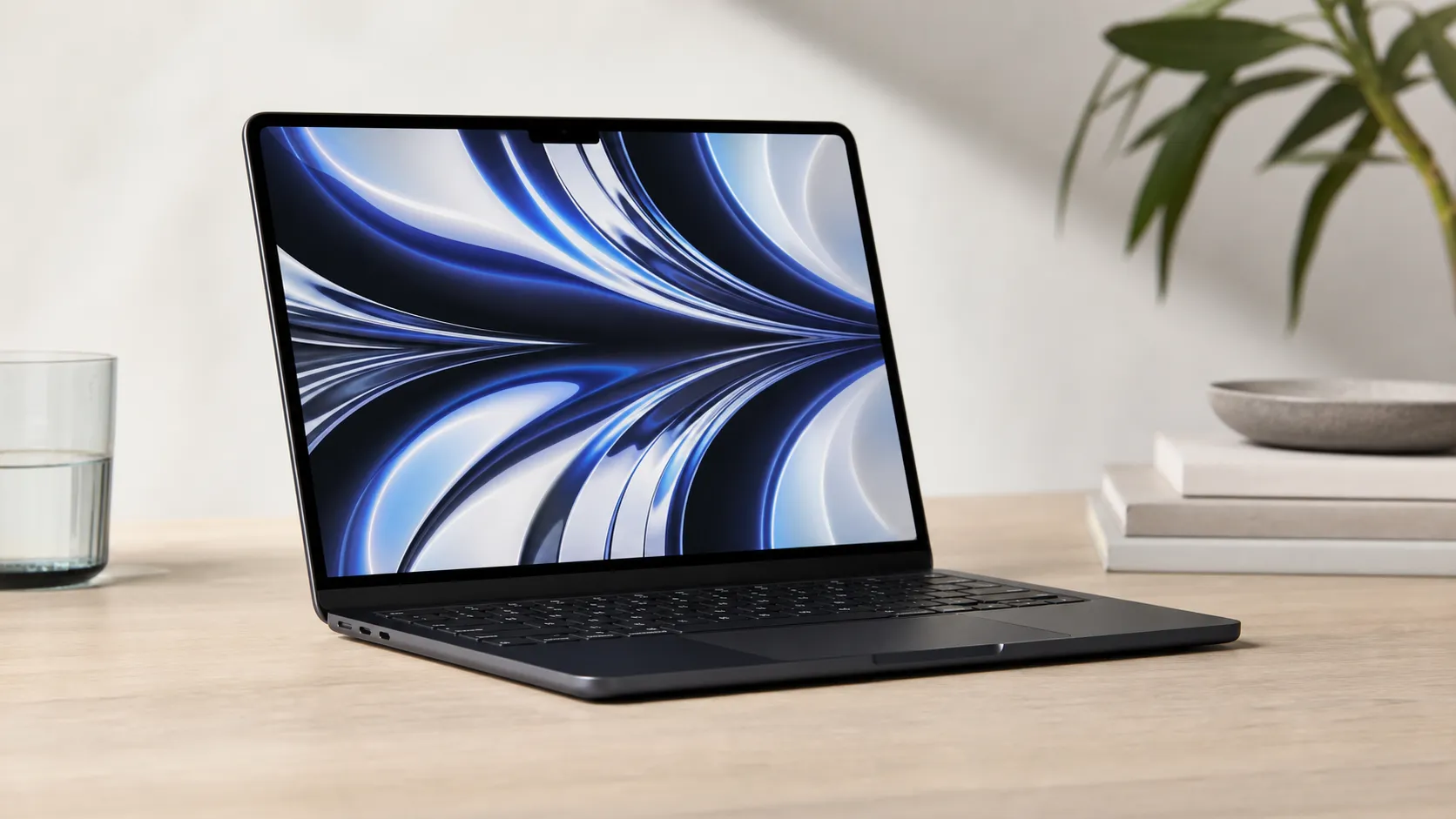
Apple MacBook Air (13-inch, M2) Review — 2026
A slim, quiet, and battery‑friendly choice for students and professionals. The MacBook Air (13‑inch, M2) excels at everyday speed and display quality but limits heavy sustained workloads and ports.
 Tech & Gadgets
Google Pixel Buds Pro Review 2026
A polished, Android-first pair of true wireless earbuds with very good ANC, comfy fit, and strong battery life—great value for most buyers in 2026.
 Tech & Gadgets
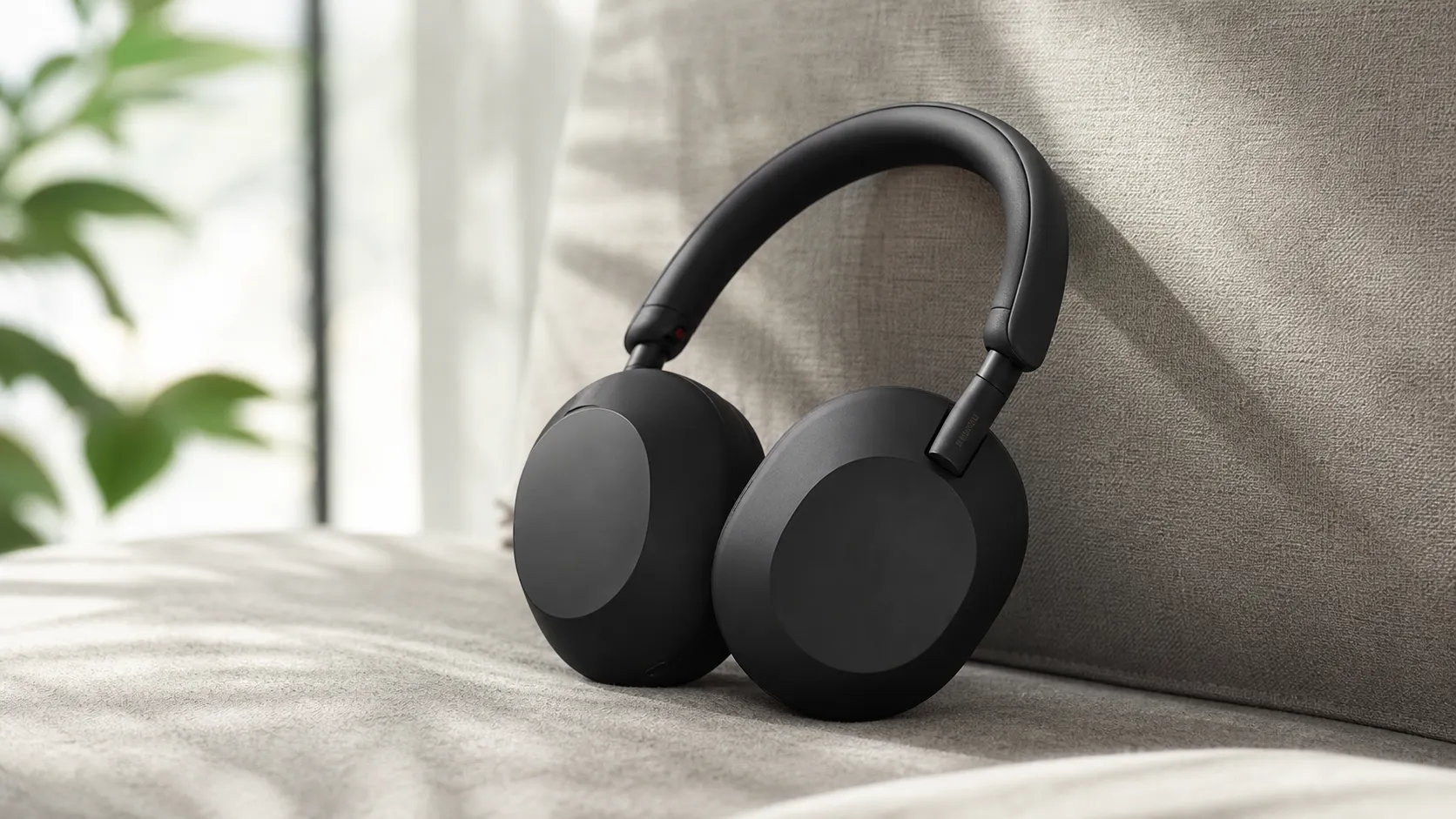
Sony WH-1000XM5 Review 2026 — ANC, Comfort & Value
Sony WH‑1000XM5: class‑leading ANC, exceptional comfort and long battery life — great for travel and calls, though sound tuning and a few durability reports divide opinions.