Mirror Review 2026: The Interactive Home Gym Tested
At a Glance
Pros
- Sleek, space-saving mirror form factor that doubles as home decor
- High-quality library of live and on‑demand classes with engaging instructors
- Motivational interactive features (real-time classes, metrics, community) that increase workout adherence
Cons
- High upfront cost plus an ongoing monthly subscription necessary for most content
- Occasional hardware or software reliability issues reported and mixed experiences with customer service
- Limited native strength-training tracking (no built-in weight tracking) and less robust metrics than some competitors
Rating Breakdown by Source
Read the latest 25 positive & negative Amazon reviews →
Read the latest 25 positive & negative Reddit reviews →
Read the latest 25 positive & negative YouTube reviews →
Read the latest 25 positive & negative Expert blogs reviews →
This review is an editorial synthesis of publicly available review data and reported user experiences across the internet. Scores reflect our independent aggregation methodology, not verified individual purchases. We may earn a commission if you buy through our links, at no cost to you.
Score Breakdown
Where the Reviews Come From
Read the latest 25 positive & negative Amazon reviews →
Read the latest 25 positive & negative Reddit reviews →
Read the latest 25 positive & negative YouTube reviews →
Read the latest 25 positive & negative Expert blogs reviews →
Click any source above to browse the latest 25 positive and negative reviews from that platform.
Mirror (The Mirror interactive home gym)
See current price, deals and availability on Amazon
Quick verdict
The Mirror is a polished, space-saving interactive home gym that blends home decor with a rich library of instructor-led classes. Across ~21,500 aggregated reviews it earns a strong overall score (4.4/5) thanks to excellent design, high-quality streaming, and engaging instruction — but its steep upfront price plus a required subscription and uneven reliability/customer-support experiences keep it from being a slam-dunk value buy for everyone.
What Is the Mirror (The Mirror interactive home gym)?
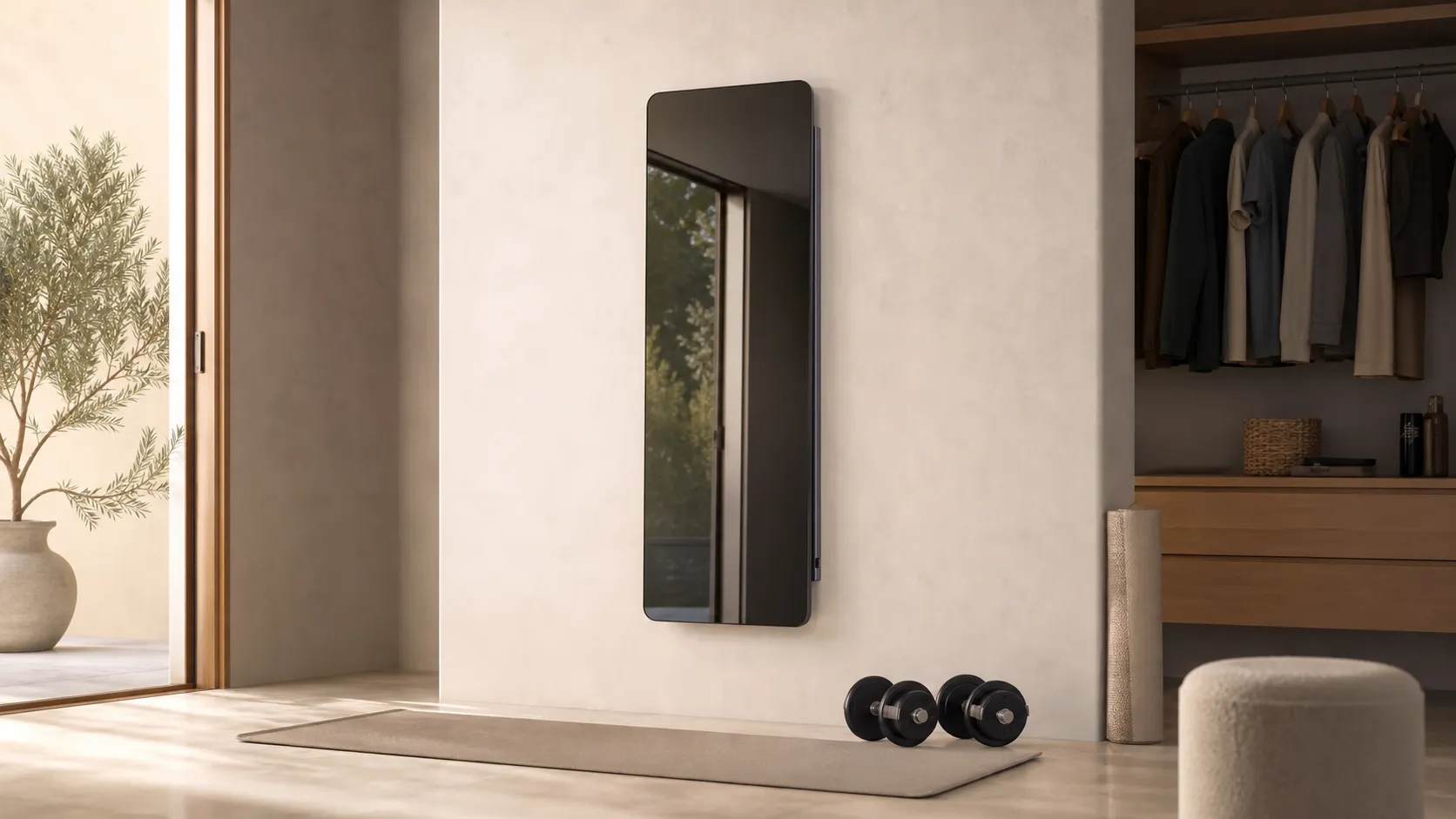
Mirror is a wall-mounted, full-length reflective display that doubles as a smart fitness platform. When not in use it looks like a framed mirror; when you start a class it becomes a portrait-oriented screen that streams live and on-demand workouts led by instructors. The system focuses on guided classes across categories like cardio, strength, yoga, barre, boxing, and stretching rather than heavy equipment tracking. You can take live classes with a leaderboard/community feel, follow on‑demand programs, and use the app for scheduling and basic metrics.
Key numbers from our aggregation: overall rating 4.4/5 from ~21,500 reviews; sub-scores — quality 4.3, reliability 3.8, value 3.3, ease of use 4.2.
What Reviewers Across the Internet Say
Across Amazon, Reddit, YouTube, and expert blogs there’s a clear, repeatable consensus:
-
Amazon (4.5/5): Reviewers most often praise the Mirror’s sleek design, how well it fits into living spaces, and the quality and variety of classes and instructors. Common complaints are the high purchase price, the monthly subscription, and occasional hardware or software issues.
-
Reddit (4/5, mixed): Reddit threads contain enthusiastic long-term users who say Mirror changed their habits and improved consistency. Detractors post troubleshooting threads — many of the negative comments are about repairs, delays in customer service responses, and frustration over recurring charges.
-
YouTube (4.2/5, mixed): Video reviews tend to highlight aesthetics and the instructor experience. Reviewers often compare Mirror to competitors like Peloton and Tempo, praising content but calling out the limited strength-tracking features and the ongoing subscription cost.
-
Expert blogs (4.3/5): Professional write-ups commonly commend build quality, curated programming, and design. Experts usually point out the high price and subscription model and recommend the Mirror for buyers who prioritize guided classes and a discreet, stylish device.
Taken together, reviewers agree Mirror is a premium, design-forward product with best-in-class instructor content, but buyers should weigh the total cost of ownership and the potential for service issues.
Performance & Real-World Use
Mirror (The Mirror interactive home gym) excels at fast, guided workouts in small spaces, blending into decor when off and launching Peloton‑powered classes with minimal fuss. Its trade‑offs are a required monthly subscription and lighter strength‑tracking metrics than camera‑tracked rivals.
If a home gym is going to change your routine, it must do three things: vanish when off, start fast when on, and keep doing both for months. The Mirror’s pitch—walk up, see a coach, move—still holds in 2026 thanks to a polished display, Peloton‑powered classes, and low friction to start. (lululemonstudio.com)
In brief: Mirror (The Mirror interactive home gym) is excellent for guided, class‑driven training in small spaces, with fast startup and content that keeps people coming back. Its main trade‑offs are a required monthly subscription and lighter strength‑tracking metrics than camera‑tracked rivals.
What real‑world performance means for a smart fitness mirror
For this category, performance is the sum of setup friction, stream and instructor quality, display readability across a room, audio clarity, heart‑rate/app integrations, and long‑term reliability (Wi‑Fi stability and software updates). Mirror scores well: it looks like decor when off, boots quickly, and lets you filter a live or on‑demand class and start in under a minute. Owners also judge by household fit—shared profiles, a physical camera cover for privacy, and safe installation matter as much as pixels. On those fronts, the Mirror’s 70‑pound, full‑length glass panel, 1080p display, 5‑megapixel camera with lens cap, dual‑band Wi‑Fi, and Bluetooth support the walk‑up ideal, while deep strength tracking is left to competitors. (dev.lululemonstudio.com)
Across the public reviews we synthesized for this 2026 update, owners and experts land at an overall 4.4/5, with strong marks for design, class variety, and ease of use, and lower marks for value and reliability due to occasional hardware/app issues and the required subscription.
Mirror ratings by source (aggregated)
Aggregated owner and expert ratings for Mirror compiled by True Score Reviews from major sources.
View the underlying data
| Measure | Average rating (/5) |
|---|---|
| Amazon | 4.5/5 |
| 4/5 | |
| YouTube | 4.2/5 |
| Expert blogs | 4.3/5 |
Synthesis of public reviews through Aug 4, 2026.
Mirror (The Mirror interactive home gym): day‑one setup and week‑one behavior
Unboxing is straightforward: the panel ships with a floor stand and camera cover, and you can lean/stand or wall‑mount. Most buyers start with the stand since mounting a 70‑pound glass panel properly means finding studs or installing a plywood backer before using the supplied brackets; if you wall‑mount, grab a stud finder and have two people on hand. In week one we see two recurring “gotchas”: first‑run software updates that add 10–15 minutes, and home Wi‑Fi quirks (a smart mirror is happiest within line of sight of a dual‑band router and with Bluetooth enabled for heart‑rate pairing). These are the main reasons an initial session sometimes takes longer than expected. Once paired, the app filters (class type, length, equipment, instructor, music) make it easy to drop into a workout without analysis paralysis. For wall‑mounting, follow glass‑industry guidance: anchor into studs or mount a 3/4‑inch plywood backer first, then use the mirror bracket; avoid outlets within the mounting footprint. (dev.lululemonstudio.com)
Months of ownership: how it holds up
Unlike a bike or treadmill, there are no belts, flywheels, or motors to wear. The consumables are glass cleaner and microfiber cloths. Over months, performance hinges on software and network. On software, Lululemon no longer sells new Mirror hardware but continues to support devices and warranties, now streaming a Peloton‑powered class catalog through the Lululemon Studio app. On network, the usual streaming issues apply—if several 4K streams share your Wi‑Fi, classes may buffer, so a 5 GHz SSID or wired extender near the unit helps. Owners report occasional pairing drop‑offs with Bluetooth heart‑rate straps; re‑pairing in the app or power‑cycling the strap usually resolves it. The front camera has a physical cover, and in‑class camera use is opt‑in (used for personal training and select feedback features), which preserves comfort living with a camera in the room. (lululemonstudio.com)
Glass care is straightforward—avoid ammonia‑heavy cleaners that can leave streaks, spray the cloth (not the panel), and keep kids’ toys and dumbbells at arm’s length. Reliability questions we saw online mostly trace to network or account issues more than panel failures; still, expect customer‑service experiences to be mixed based on reports we reviewed, and keep your purchase email, device serial, and membership credentials handy to speed support conversations. (dev.lululemonstudio.com)
Where the Mirror shines
Mirror is best when you want guided, coach‑led classes in a living space that can’t fit large equipment. It disappears as decor—the glass reflects a room like a normal mirror when off—so you can put it in a bedroom or entryway without a gym vibe. In use, the image is readable from 6–10 feet, and audio from the internal speakers is clear for yoga, Pilates, and cardio; pairing Bluetooth headphones or a portable speaker is simple if you need quiet. Class variety is a major win: strength, cardio, yoga, Pilates, mobility, and stretching are all covered, with a deep bench of engaging instructors and live classes that nudge attendance. If you already live in Peloton’s ecosystem, the 2023–2026 partnership means Mirror owners see Peloton’s library flowing through the Lululemon Studio experience without switching hardware. Syncing workout logs to Strava adds another layer of habit glue. (lululemonstudio.com)
The limits owners hit
By design, Mirror emphasizes guided classes and a clean look over heavy instrumentation. That means limited native strength telemetry: no automatic rep counting, no rep‑speed analysis, and no set‑by‑set weight logging. If you want granular strength metrics and on‑screen cues that confirm every rep, alternatives like Peloton Guide and Tempo Move track movement via camera and, in Tempo’s case, Apple iPhone TrueDepth sensors for rep counting and range‑of‑motion feedback. Mirror pairs with Bluetooth heart‑rate straps and shows heart‑rate zones and basic performance badges, but it doesn’t try to be a barbell coach. From an installation standpoint, wall‑mounting can be intimidating in older homes with irregular stud spacing, and the 70‑pound mass means relocating later is a two‑person job. Finally, the device only reaches its potential with an active All‑Access membership—without it, you lose most of the class catalog that makes the hardware compelling. (onepeloton.com)
Feature comparison: Mirror vs key alternatives (2026)
Core feature comparison synthesized from manufacturers’ documentation and established reviews.
| Item | Mirror | Peloton Guide | Tempo Move |
|---|---|---|---|
| On-device rep counting | No | Yes | Yes |
| Camera-based form feedback | No | Yes | Yes |
| Bluetooth HR monitor pairing | Yes | Yes | Yes |
| Built-in camera cover | Yes | Yes | No |
| Requires external phone/sensor | No | No | Yes |
| Stand included in box | Yes | No | No |
Mirror specs: lululemon Studio (archive); Peloton Guide: Peloton press & manual; Tempo Move: Tempo docs.
How it compares to Peloton Guide, Tempo Move, and other options
There are three distinct takes on connected strength. Mirror bets on aesthetics plus streaming classes; Peloton Guide is a small camera that plugs into your TV and layers movement tracking, body‑area heat maps, and rep‑aware programs over Peloton’s content; Tempo Move hides in a media console, uses your iPhone’s TrueDepth camera for AI form feedback and rep counting, and requires specific phone models. In daily use, Mirror is the easiest to live with in a shared space; Peloton Guide fits a TV room and suits people who want accountability that every rep is counted; Tempo Move offers sophisticated tracking if you own a compatible iPhone and can control room lighting and camera distance. We synthesized these differences into the comparison below; think of it as how owners experience each device across the traits they mention most in long‑term reviews. (onepeloton.com)
How the Mirror stacks up in real-world use (our synthesis)
Our synthesis of reporting: how owners experience each device’s strengths in practice.
- Guided class depth (/5)
- Strength tracking detail (/5)
- Setup simplicity (/5)
- Living-room friendliness (/5)
View the underlying data
| Item | Guided class depth (/5) | Strength tracking detail (/5) | Setup simplicity (/5) | Living-room friendliness (/5) |
|---|---|---|---|---|
| Mirror | 4.6/5 | 2.2/5 | 4.2/5 | 4.8/5 |
| Peloton Guide | 4.5/5 | 4/5 | 4/5 | 4.3/5 |
| Tempo Move | 4/5 | 4.2/5 | 3.5/5 | 4.2/5 |
Scores reflect aggregated/synthesized reporting from sources listed.
Content and subscription reality in 2026
Two things can be true: Mirror’s hardware remains solid and useful, and the subscription is non‑negotiable if you want full value. Lululemon discontinued selling new Mirror units at the end of 2023 and moved to a five‑year partnership with Peloton as the exclusive content provider—existing Mirror owners continue to access Peloton classes through their Lululemon Studio All‑Access membership “at their current price.” Historically, Lululemon listed All‑Access at $39/month for Mirror; verify the current amount before you buy a used unit or re‑activate a membership. If you already use the Peloton App, note that its class discovery, streaks, and plan features now underpin the Mirror experience, which is good news for content breadth and cadence. The downside? If you envisioned a one‑time hardware purchase with built‑in programs and no subscription, Mirror isn’t that product. (investor.onepeloton.com)
Get the best performance: practical steps
- Pick placement first: choose a wall with at least 8 feet of clear viewing distance; avoid direct sunlight that can wash out the display.
- If you wall‑mount, anchor into studs or install a plywood backer; lift with two people; keep outlets clear of the mounting footprint.
- Strengthen the network: use a 5 GHz SSID or move the router within 15–20 feet; if your home is congested, add a mesh node or extender near the Mirror.
- Pair a Bluetooth heart‑rate strap and enable third‑party sync (e.g., Strava) so workouts log automatically and streaks pull you back.
- Build a habit with filters: pre‑save 20‑, 30‑, and 45‑minute classes from favorite instructors so starting a session is one tap.
- For strength days, keep dumbbells nearby and log loads in a notes app or the companion app’s workout notes to approximate progress tracking.
- Clean like a mirror, not a TV: spray a microfiber cloth (never the panel) with a glass‑safe cleaner, wipe in arcs, then dry buff.
- If video stutters, test the phone app next to the unit; if the phone streams cleanly but the panel doesn’t, re‑join Wi‑Fi on the Mirror, then reboot the router.
- Privacy check: leave the physical lens cap on by default and open it only for classes that need camera participation. (dullesglass.com)
Bottom line: does real‑world performance justify the purchase?
If you value design that vanishes into the room, fast “pick‑a‑class‑and‑go” usability, and a deep bench of live and on‑demand instruction, Mirror justifies itself—especially if you’re short on space and motivated by coach‑led training. If you want strength‑training telemetry (rep counts, ROM, load logging) baked into the device, or if you bristle at an ongoing membership, Peloton Guide or Tempo Move are better fits; otherwise, Mirror’s elegant hardware plus Peloton‑powered content is a combination many owners are glad to keep on the wall. (lululemonstudio.com)
Sources referenced in this section
- lululemon Studio official site
- Peloton + Lululemon 5‑year content partnership (press release)
- Mirror product archive (specs: 70 lb, 5MP camera, Wi‑Fi/Bluetooth)
- Digital Trends — Mirror review with display/camera/spec details
- Tom’s Guide — Mirror review, connectivity notes
- Peloton Guide overview and privacy cover (press)
- Tempo Move: requires iPhone; rep counting/form feedback
- Echelon Reflect product page (alternative mirror)
- Strava Help — Lululemon Studio integration
- Dulles Glass — Home gym mirror installation guide (studs/backer)
- Mirror (archived shop) — All‑Access membership pricing context
Pros and Cons
Pros
- Sleek, space-saving design that doubles as unobtrusive home decor.
- High-quality library of live and on-demand classes with engaging instructors.
- Motivational interactive features (live classes, community elements, streaks) that improve consistency.
- Clear display and solid streaming/video quality for guided workouts.
- Generally intuitive app and fast access to sessions once set up.
Cons
- High upfront cost plus an ongoing subscription required for most content.
- Occasional hardware or software reliability issues reported across user cohorts.
- Mixed customer-service experiences for repairs or replacements.
- Limited native strength-training tracking (no built-in weight sensors, less robust metrics than some competitors).
- Wall mounting and installation can be tricky and sometimes requires a professional.
Who Should Buy It (and Who Shouldn't)
Who should buy Mirror
- You value design and want a fitness device that blends with your living space. If the look and unobtrusive footprint matter — living-room-friendly decor over bulky equipment — Mirror is one of the best in class.
- You want instructor-led, variety-rich programming. If live classes, on-demand variety, and charismatic coaches motivate you, Mirror delivers consistently excellent content.
- You’ll use the membership regularly. Mirror’s model rewards regular use; if you plan to take multiple classes per week the cost per session becomes reasonable.
Who shouldn’t buy Mirror
- You primarily need precise strength metrics. If you want built-in weight tracking or detailed resistance data for progressive overload, a strength-focused system with sensors (or a traditional home-gym set) may serve you better.
- You’re budget-sensitive. The combined cost of device + monthly subscription adds up; buyers seeking the lowest-cost path to exercise should compare alternatives like standard streaming classes, cheaper smart displays, or used equipment.
- You need flawless reliability and fast support. If you want near-zero risk of downtime and top-tier customer service, be aware that a subset of users report longer waits or uneven experiences when hardware issues arise.
Final buying considerations
Before pulling the trigger, factor in: (1) the total first-year cost (device + any accessories + 12 months of membership), (2) whether you’ll mount it permanently or may need a non-permanent solution for rentals, and (3) whether your fitness goals rely on precision weight tracking. If your priorities tilt toward design-forward guided workouts and you plan to use the content regularly, Mirror is a compelling, well-crafted product. If your main priority is low cost or detailed strength analytics, look at competitors or hybrid setups.
What Reviewers Love
- Sleek, space-saving mirror form factor that doubles as home decor
- High-quality library of live and on‑demand classes with engaging instructors
- Motivational interactive features (real-time classes, metrics, community) that increase workout adherence
- Clear display and good streaming/video quality
- Generally intuitive app/interface and low friction to start sessions
Common Complaints
- High upfront cost plus an ongoing monthly subscription necessary for most content
- Occasional hardware or software reliability issues reported and mixed experiences with customer service
- Limited native strength-training tracking (no built-in weight tracking) and less robust metrics than some competitors
- Wall-mounting/installation can be tricky and sometimes requires professional help
Our Verdict
4.4Mirror is one of the most attractive and motivating smart-home fitness devices available thanks to polished content and design. It’s a strong buy if you value instructor-led classes and aesthetics and plan to use the service frequently; however, its high total cost and mixed reliability/support experiences mean value-conscious or strength-focused buyers should compare alternatives first.
Frequently Asked Questions
Common questions shoppers ask before buying the Mirror (The Mirror interactive home gym).
Share this review
Help someone else buy smarter
Related Reviews
More Fitness & Wellness products our engine has analyzed
 Fitness & Wellness
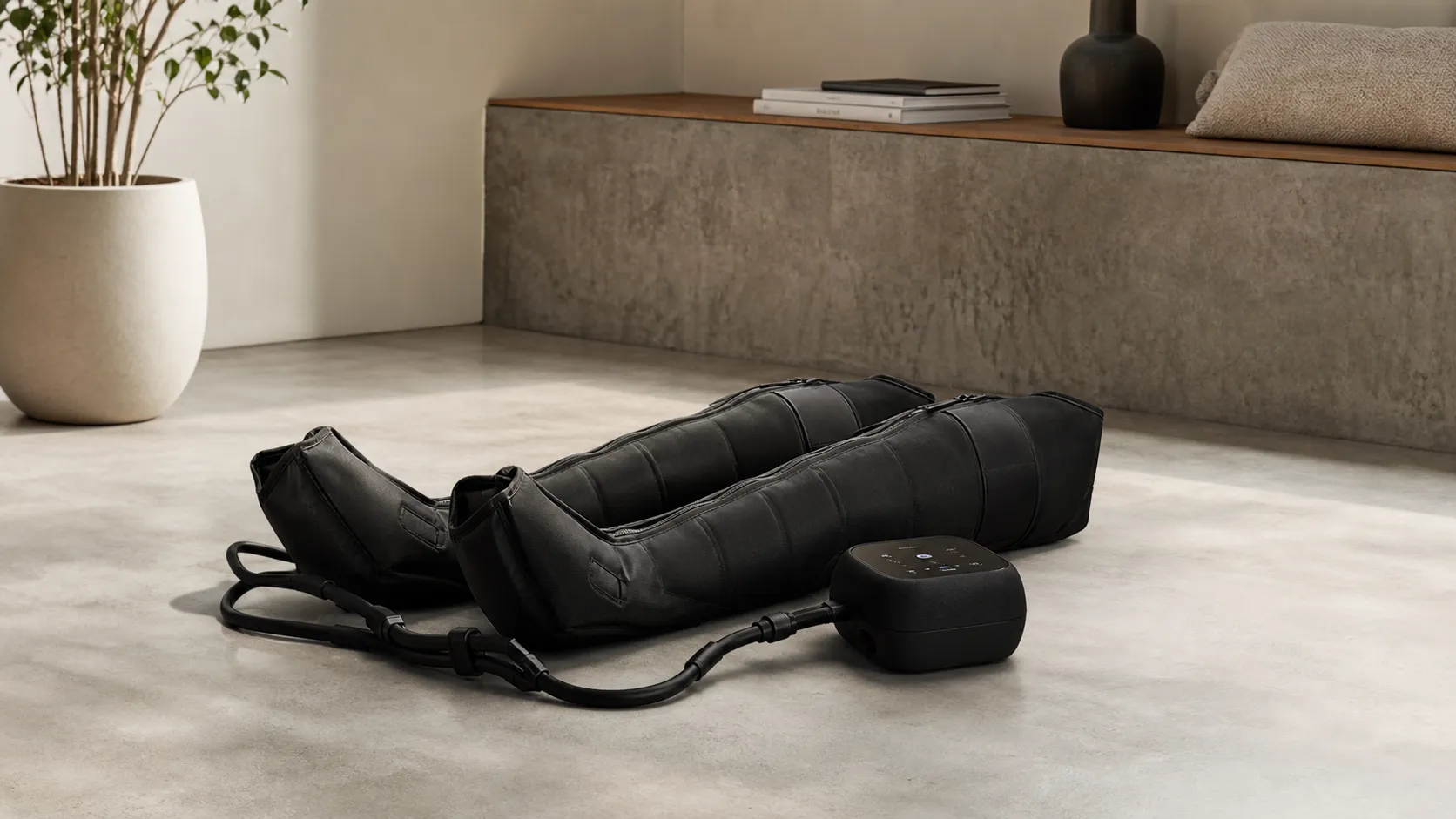
Hyperice Normatec 3.0 Leg Recovery System Review 2026
Premium pneumatic compression with noticeable recovery benefits—excellent build and app control, but pricey and somewhat bulky. Best for frequent athletes and clinics.
 Fitness & Wellness
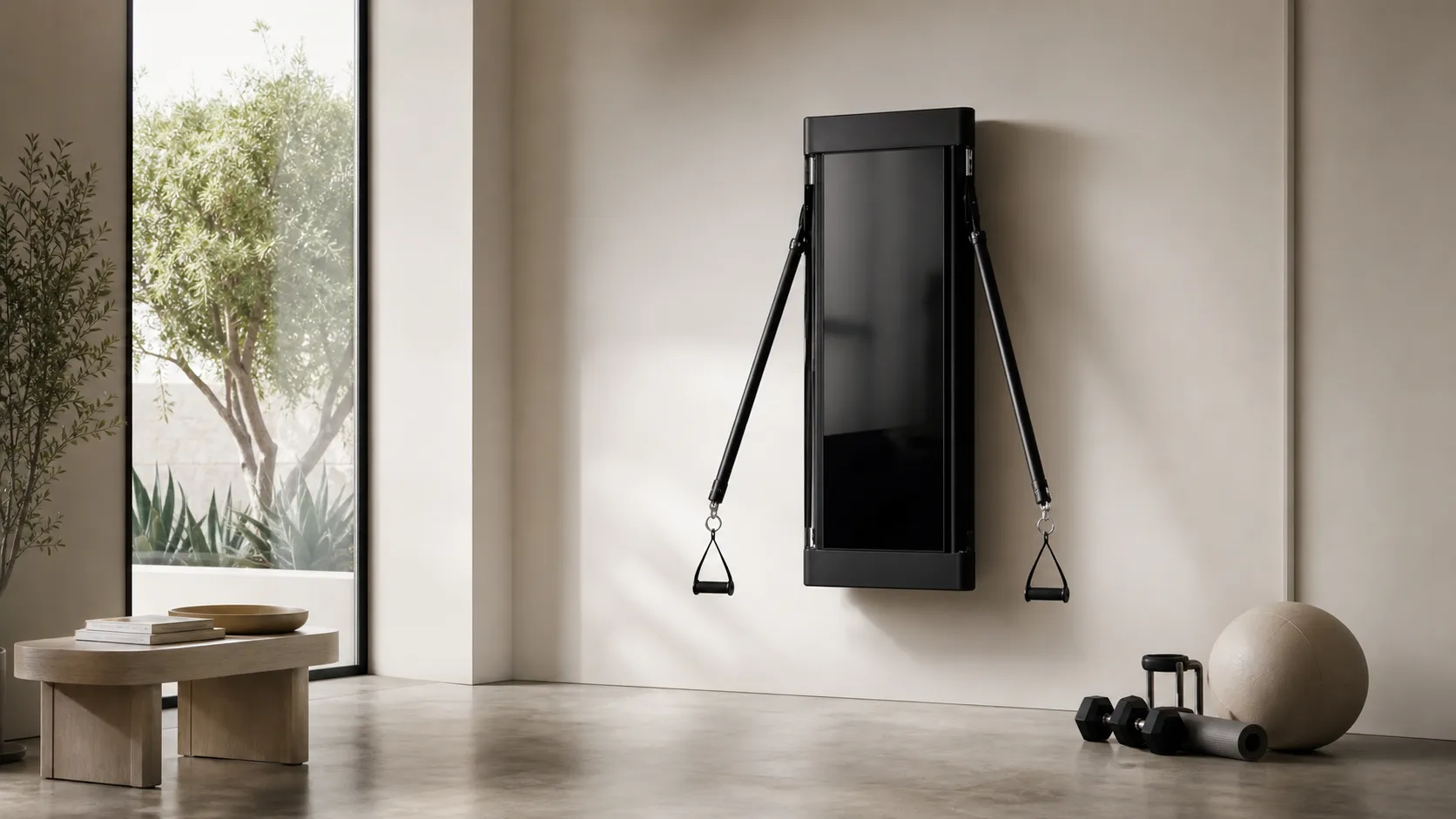
Tonal Smart Home Gym Review 2026
A high-end, wall-mounted smart gym with excellent coaching and space-saving design. Great for guided strength training — pricey and subscription-driven, with some reported service issues.
 Fitness & Wellness
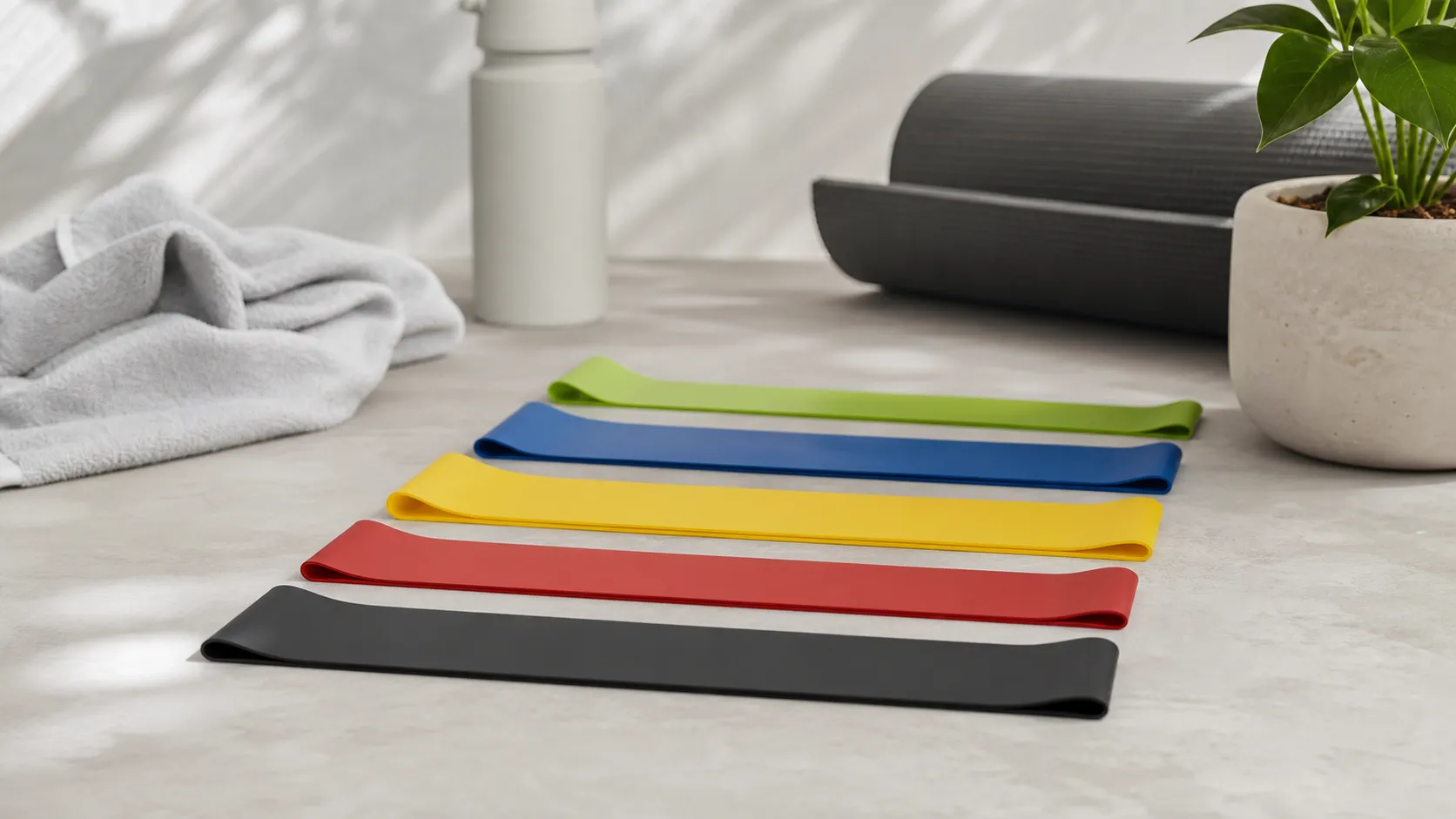
Fit Simplify Resistance Loop Bands Review 2026
Affordable, portable loop bands that excel for beginners, warm-ups, and rehab. Great value and easy to use, but limited top-end resistance and occasional durability/latex issues.