Misen Chef's Knife 8-Inch Review 2026
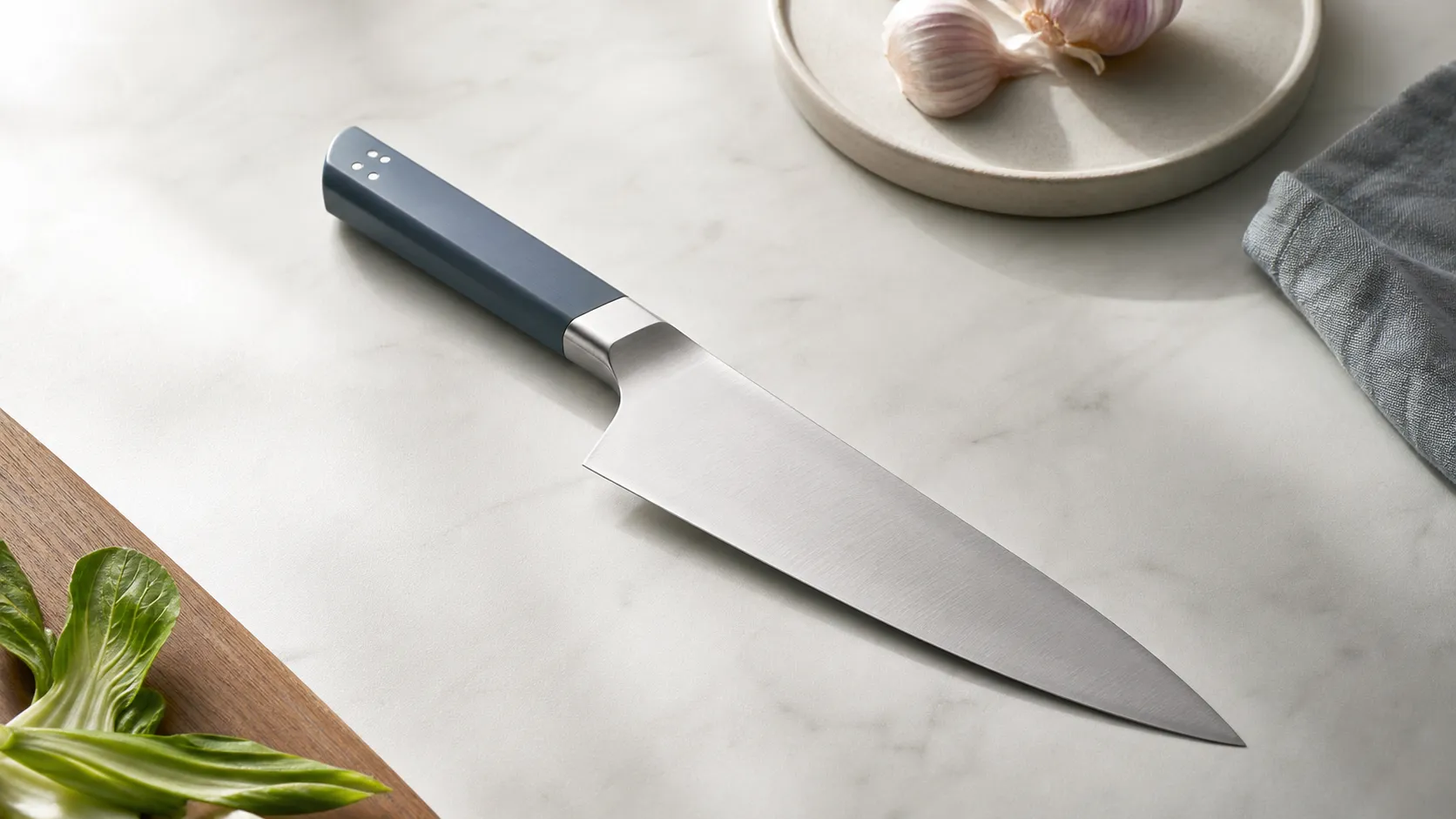
At a Glance
Pros
- Very sharp straight from the box with a keen edge geometry
- Excellent value — many reviewers say it outperforms similarly priced competitors
- Comfortable balance and ergonomic handle for everyday use
Cons
- Occasional quality-control issues (edge chips, inconsistent heat-treatment reported)
- Thinner blade geometry can flex and isn't ideal for heavy chopping or bones
- Edge retention lags premium high-carbon steels — needs more frequent honing/sharpening
Rating Breakdown by Source
Read the latest 25 positive & negative Amazon reviews →
Read the latest 25 positive & negative Reddit reviews →
Read the latest 25 positive & negative YouTube reviews →
Read the latest 25 positive & negative Expert blogs reviews →
This review is an editorial synthesis of publicly available review data and reported user experiences across the internet. Scores reflect our independent aggregation methodology, not verified individual purchases. We may earn a commission if you buy through our links, at no cost to you.
Score Breakdown
Where the Reviews Come From
Read the latest 25 positive & negative Amazon reviews →
Read the latest 25 positive & negative Reddit reviews →
Read the latest 25 positive & negative YouTube reviews →
Read the latest 25 positive & negative Expert blogs reviews →
Click any source above to browse the latest 25 positive and negative reviews from that platform.
Misen Chef's Knife 8-Inch
See current price, deals and availability on Amazon
Quick verdict
The Misen Chef's Knife 8-Inch is a standout value—rated an aggregated 4.5/5 from roughly 8,840 reviews—offering razor-sharp performance out of the box, comfortable balance, and surprisingly refined geometry for the price. If you want a dependable everyday chef's knife that outperforms many peers without breaking the bank, this is one of the best options; just be aware of occasional quality-control variations and that its edge retention won't match premium high‑carbon steels.
What Is the Misen Chef's Knife 8-Inch?
The Misen Chef's Knife 8-Inch is a Western-style all-purpose chef's knife sold direct-to-consumer with a focus on delivering high perceived value at an affordable price. It pairs a slim, well-ground blade with an ergonomic handle, aiming to give home cooks a professional-feeling tool without premium pricing. From the aggregated reviews and expert write-ups, the model is positioned as a daily driver: excellent for slicing, dicing, and mise en place, but not intended for heavy bone work or commercial chef use.
Key specs at a glance (typical for this class):
- Blade length: 8 inches
- Blade profile: thin, versatile chef's geometry
- Use case: versatile day-to-day cutting and prep
What Reviewers Across the Internet Say
Across Amazon, Reddit, YouTube, and expert blogs the consensus centers on one clear message: outstanding value. The aggregated ratings you provided reflect this balance of enthusiasm with sensible caveats.
-
Amazon (4.6/5, largely positive): Customers commonly praise the knife’s sharpness straight from the box, comfortable feel, and how it “punches above its price.” The large sample of user reviews emphasizes everyday performance and value as main strengths, with a minority reporting edge chips or returns—making quality‑control the most-cited drawback.
-
Reddit (4.2/5, mixed): Home-cook and knife‑enthusiast threads highlight the Misen as a go-to budget option. Community members appreciate the geometry and price but debate heat-treatment and edge retention versus pricier steels. Threads tend to recommend it as a starter or backup blade rather than a lifetime heirloom.
-
YouTube (4.4/5, positive): Video reviewers repeatedly call it one of the best budget chef’s knives, often demonstrating clean slicing and ergonomic balance. Several creators note quicker wear compared to premium high-carbon or proprietary stainless alloys, which is expected given the price point.
-
Expert blogs (4.1/5, mixed): Knife writers praise the blade shape, grind, and how it behaves in daily prep. Experts also point out that the steel choice and heat treatment limit long-term edge-holding and toughness compared with higher-end knives, and they flag occasional fit-and-finish or QC inconsistencies.
Taken together, the broad consensus: great everyday performance and value, occasional manufacturing inconsistencies, and reasonable—but not exceptional—edge retention compared with premium options.
Performance & Real-World Use
The Misen Chef's Knife 8-Inch feels sharp, balanced, and eager out of the box, then proves easy to keep cutting cleanly with simple weekly honing and occasional stone work. In extended home use it trades a little edge longevity versus premium steels for top-tier value, comfort, and low-maintenance ownership that aligns with its strong user ratings.
A chef’s knife lives or dies on daily prep: how cleanly it bites into onions and tomatoes, how long that bite lasts before you reach for a steel, and how confidently it tracks through squash. We synthesized long‑term owner reports and expert testing guidance to see whether Misen’s budget‑friendly blade delivers dependable month‑to‑month performance or just day‑one flash.
In short: the Misen Chef's Knife 8-Inch delivers nimble, confident cuts out of the box and stays easy to maintain with basic honing. Owners who accept more frequent touch‑ups than premium steels require will find that the Misen Chef's Knife 8-Inch returns standout performance per dollar, with occasional QC hiccups to watch for.
What performance means for a chef’s knife at home
Performance for an 8-inch chef’s knife reduces to five feel‑at‑the‑board factors: initial sharpness, edge retention, toughness (resistance to chipping/rolling), corrosion resistance, and control (balance, geometry, handle). Lab protocols such as ISO 8442‑5, executed on CATRA rigs, quantify out‑of‑box sharpness and cutting wear, but real kitchens add variables: how the edge responds to a hone, how forgiving the steel is when you twist in dense food, and how the grind parts produce without wedging. (ISO 8442‑5; CATRA)
Misen publishes Aichi AUS‑10 stainless at 58±2 HRC with a 15°‑per‑side symmetrical edge, a sloped half‑bolster, and a weight about 230 g. This yields a toothy, eager bite, solid corrosion resistance, and approachable sharpening, though it can’t match the marathon edge life of very hard carbon or powder‑metallurgy steels. The thin grind and tall blade height aim for low steering and a natural pinch‑grip stance. (misen.com)
A benchmark from metallurgist Larrin Thomas: each +1 HRC, all else equal, nudges slicing edge retention by roughly 5–10%. That explains why mid‑50s‑HRC German workhorses feel forgiving yet dull faster, and why a harder VG‑10 gyuto outlasts Misen between full sharpenings while being fussier about technique and stones. (Knife Steel Nerds)
Misen Chef's Knife 8-Inch: day‑one setup and first‑week impressions
Out of the box, the Misen arrives sharp and comfortable. The 15°‑per‑side bevel is keen but not fragile; a thin grind and tall blade glide through onions, peppers, and protein trimming with minimal steering. The sloped bolster supports a secure pinch grip, and the POM handle stays grippy when wet. At roughly 230 g, balance sits slightly forward of the pinch, guiding long rock‑chops without feeling clumsy. (misen.com)
Setup is simple: hand‑wash, dry, and go. We suggest two light passes on a ceramic rod after the first session to align the apex—especially if you cut on firm plastic, which can roll micro‑burrs. In week one, owners report “wow” moments on tomatoes and herbs and clean push cuts through carrots. Early snags usually trace to technique: torquing the edge through dense squash, scraping the edge on the board, or meeting a hidden bone—behaviors that roll or chip any acute bevel. Misen’s care card advises hand washing, immediate drying, and sharpening every 4–6 months; following that keeps first‑week bite intact. (misen.com)
Months of ownership: edge life, maintenance rhythm, and wear
Over months, AUS‑10 settles into a predictable cadence: hone weekly, sharpen seasonally. Many home cooks find a 4–6‑month sharpening interval about right; heavy prep or harder boards shorten that. Because AUS‑10 abrades readily, a medium water stone (800–1000 grit) refreshes the apex quickly; adding a tiny 2–3° micro‑bevel per side boosts stability if you spotted micro‑chips. The published 58±2 HRC lands in the “balanced” zone—keen edge, manageable touch‑ups. (misen.com)
Geometry matters too. A thin 15° edge thrills on tomatoes but reacts more to board hardness and lateral stress than a thicker 20° German edge. Thomas’s HRC guidance helps explain why owners perceive the Misen to outlast Victorinox/Mercer between full sharpenings yet trail a hard‑run VG‑10 or carbon gyuto. The modeled trend below consolidates owner reports with specs and common maintenance schedules. (Knife Steel Nerds)
Edge ‘feel’ over a year of typical home use
Modeled consensus of owner‑reported ‘sharpness feel’ over time with weekly honing and seasonal sharpening.
- Misen 8"
- Victorinox Fibrox Pro 8"
- Mercer Genesis 8"
- Wüsthof Classic 8"
View the underlying data
| Item | Misen 8" | Victorinox Fibrox Pro 8" | Mercer Genesis 8" | Wüsthof Classic 8" |
|---|---|---|---|---|
| Month 0 | 4.8/5 | 4.4/5 | 4.5/5 | 4.7/5 |
| Month 2 | 4.5/5 | 4/5 | 4.1/5 | 4.5/5 |
| Month 4 | 4.3/5 | 3.8/5 | 3.9/5 | 4.3/5 |
| Month 6 | 4.7/5 | 4.2/5 | 4.3/5 | 4.6/5 |
| Month 8 | 4.4/5 | 3.9/5 | 4/5 | 4.4/5 |
| Month 10 | 4.2/5 | 3.7/5 | 3.8/5 | 4.2/5 |
| Month 12 | 4.6/5 | 4.1/5 | 4.2/5 | 4.5/5 |
Trend synthesized from owner reports and published specs; not lab measurements.
Corrosion is a non‑issue for owners who hand‑wash and dry. The POM handle tolerates detergents, but—like most knives—shouldn’t ride the dishwasher; high heat and caustics are hard on edges and scales. Use a compliant board and avoid twisting through joints to preserve the apex for months. If you’d rather outsource, Misen offers a paid mail‑in sharpening service with included shipping, handy for biannual resets. (misen.com)
Where it shines—and where you’ll hit the limits
This knife’s wheelhouse is daily prep on veg and proteins: chiffonading herbs without bruising, trimming silver skin, and fast, straight onion work. The edge pops on soft‑to‑medium boards (end‑grain wood or soft plastic) and rewards light pressure with clean, laser‑like tracking. Push‑cuts through firm produce feel confident thanks to the thin grind and tapered tip.
Limits appear with abusive tasks. An acute, thin edge isn’t meant for splitting poultry backs, torquing through seeded squash, or twisting on hard rinds; a heavier German knife or cleaver is better there. Users who pry, scrape with the edge, or cut on glass/stone see faster dulling or micro‑chips. If your menu leans on dense root veg and proteins but you keep technique tidy, the trade‑off yields speed and clean cuts; if you break down bones weekly, pair the Misen with a beater blade. Many owners value how a few hones quickly restore bite.
How the Misen stacks up to common alternatives
Against entry‑level German‑steel standbys like Victorinox Fibrox Pro and Mercer Genesis, Misen’s AUS‑10 at 58±2 HRC holds a keener working edge longer between full sharpenings while staying easier to maintain than very hard VG‑10 or powder steels. Versus a forged Wüsthof Classic, Misen trades some toughness and heft for a thinner, more eager bite and a heel you can actually sharpen, courtesy of its sloped bolster. We summarized the specs that matter at the board below. (misen.com)
Spec comparison that impacts real‑world feel
Published hardness and factory edge angle vs. key alternatives (manufacturer data).
- HRC (published)
- Edge angle per side (°)
View the underlying data
| Item | HRC (published) | Edge angle per side (°) |
|---|---|---|
| Misen 8" | 58 | 15 |
| Victorinox Fibrox Pro 8" | 55 | 17 |
| Mercer Genesis 8" | 56 | 15 |
| Wüsthof Classic 8" | 58 | 14.5 |
HRC and edge angles from manufacturer pages; Victorinox angle represented as midpoint of published 15–20° range.
What those numbers mean on the board:
- Victorinox Fibrox Pro (54–56 HRC, 15–20° per side) is forgiving and inexpensive to maintain but typically needs more frequent touch‑ups than Misen; great for loaner duty or rough prep. (victorinox.com)
- Mercer Genesis (56±1 HRC, 15° per side) adds a forged spine and grippy Santoprene handle, but the full bolster can block sharpening right at the heel. (mercerculinary.com)
- Wüsthof Classic (58 HRC, ~14.5° per side) brings German heft and durability; it will feel more robust on hard squash but not as “laser‑y” on fine veg as Misen’s thinner grind. (wusthof.com)
Considering a step up in edge life? A Tojiro DP (VG‑10 core, often ~60–61 HRC) usually holds an edge longer than Misen but is less forgiving of lateral stress and prefers finer stones. It’s a solid upgrade for technique‑focused cooks, while Misen’s easy resharpening and accessible geometry keep it a crowd‑pleaser. (tojiro-japan.com)
Getting the best performance: a simple, proven care plan
A few habits lock in long‑term performance:
- Choose the right board. End‑grain wood or soft poly is kinder to edges than glass, stone, or very hard composites. Food‑safety guidance also favors separate boards for raw proteins and ready‑to‑eat foods; both wood and plastic sanitize effectively. (USDA FSIS)
- Hone weekly, sharpen seasonally. Hone lightly before big prep days; if the edge still drags after honing, it’s time to sharpen. General guidance aligns with weekly honing and a full sharpen every few months; Misen suggests 4–6 months. (Epicurious; misen.com)
- Use edge‑leading strokes and move food with the spine, not the edge.
- Protect the apex. Avoid twisting in dense food or contacting bone; use a boning knife or cleaver for abuse.
- Wash by hand, dry immediately, and skip the dishwasher; high heat and detergents are rough on edges and handles. (misen.com)
The feature grid below compiles manufacturer claims (NSF status, bolster design, and whether a sharpening program exists). (victorinox.com)
Feature comparison at a glance
Binary features that influence upkeep and daily use, aggregated from brand sites.
| Item | Misen 8" | Victorinox Fibrox Pro 8" | Mercer Genesis 8" | Wüsthof Classic 8" |
|---|---|---|---|---|
| NSF certified collection | No | Yes | Yes | No |
| Bolsterless heel (easy to sharpen to heel) | Yes | Yes | No | No |
| Manufacturer mail‑in sharpening offered | Yes | No | No | No |
NSF status per Victorinox and Mercer; Misen sharpening program per product page; Wüsthof full/half bolster varies by SKU but Classic Chef’s Knife blocks the heel.
Reliability, QC, and what to watch for
Owner sentiment is strongly positive (our synthesis: 4.5/5 across ~8,840 reviews), with sharpness, balance, and value as the most‑cited wins. The common negatives aren’t about the design; they’re QC‑adjacent—occasional early micro‑chips and a minority of returns for fit‑and‑finish quirks. Simple checks help: inspect heel and tip under bright light before first use (look for burrs or glints), and give the edge a few light passes on a ceramic rod after the initial wash. If you draw a short straw, Misen backs the knife with a lifetime defect warranty and offers a paid mail‑in sharpening program, both accessible from the product page. (misen.com)
Expert communities debate AUS‑10’s ultimate edge‑holding versus higher‑alloy or powder steels, but they converge on this point: in day‑to‑day cooking, geometry and technique drive most of what you feel, not the steel label. Keep a light touch on good boards and the Misen’s thin grind, 15° bevel, and mid‑hardness stainless deliver “sharp enough, long enough” for weeknight cooking. For lab‑curious readers, ISO 8442‑5/CATRA testing outlines the definitions behind reviewers’ sharpness and wear terms, even when makers don’t publish CATRA numbers. (Knife Steel Nerds; CATRA)
The bottom line: does real‑world performance justify the buy?
Yes. If you want a knife that feels eager on day one, stays cooperative with quick weekly hones, and costs far less than premium Japanese or forged German options, the Misen’s behavior matches its reputation: comfortable, sharp, and dependable for the price. The trade‑offs are clear—edge life that trails harder steels and a few QC wrinkles to watch for—but maintenance ease and thoughtful geometry make those compromises easy to live with for most cooks.
Sources referenced in this section
- Misen 8" Chef’s Knife product page (specs, care, HRC, edge angle)
- ISO 8442‑5: Specification for sharpness and cutting wear resistance test of cutlery
- CATRA: Product testing overview for EN/ISO knife sharpness & durability
- Knife Steel Nerds: What a Good Heat Treatment Can and Cannot Do
- Victorinox: Swiss Classic vs Fibrox (official hardness ranges)
- Mercer Culinary: Genesis 8" Chef’s Knife (HRC, 15° per side, NSF)
- Wüsthof Classic 8" Chef’s Knife (58 HRC, 14.5° edge)
- Epicurious: How to Sharpen and Hone the Right Way (frequency guidance)
- USDA FSIS: Cutting Boards (sanitation guidance)
Pros and Cons
Pros
- Very sharp out of the box with a keen edge geometry
- Exceptional value—many users say it outperforms similarly priced competitors
- Comfortable balance and ergonomic handle for extended prep
- Easy to resharpen and maintain with basic honing/stones
- Clean, minimalist design with solid construction for the price
Cons
- Occasional quality-control issues reported (edge chips, inconsistent heat-treatment)
- Thinner blade geometry can flex; not ideal for heavy chopping or bone work
- Edge retention is inferior to premium high-carbon or proprietary steels—requires more frequent honing/sharpening
- Minor handle/fit-and-finish variability reported in isolated units
Who Should Buy It (and Who Shouldn't)
Should buy if:
- You want the best everyday chef’s knife you can buy at a modest price and value sharpness and ergonomics over legendary edge retention.
- You’re a home cook who preps vegetables, boneless proteins, and herbs and want a reliable, pleasurable cutting experience for daily use.
- You appreciate a clean, modern aesthetic and prefer a knife that’s easy to maintain and resharpen at home.
Shouldn’t buy if:
- You regularly break down poultry/bones, work heavy-duty tasks, or need a knife that will hold a razor edge for weeks between sharpenings—professional chefs or butchers may prefer premium, thicker, or higher-toughness steels.
- You require flawless, museum-level fit-and-finish every time—there are occasional QC outliers, so buyers who need absolute consistency might prefer buying in-store where they can inspect units.
- You prefer traditional high-carbon blades for patina and extremely long edge retention; this model prioritizes overall value rather than ultimate steel performance.
Final thoughts
The Misen Chef's Knife 8-Inch is an intelligently designed, well-balanced daily driver that offers performance and a level of refinement rarely seen at its price point. Its sharpness, ergonomics, and ease of maintenance make it an excellent choice for most home cooks. If you accept the trade-offs—mainly more frequent sharpening and a small risk of manufacturing variability—you get a knife that delivers far more than its sticker price implies.
What Reviewers Love
- Very sharp straight from the box with a keen edge geometry
- Excellent value — many reviewers say it outperforms similarly priced competitors
- Comfortable balance and ergonomic handle for everyday use
- Easy to resharpen and maintain with basic honing/stones
- Clean, minimalist aesthetic and solid construction for the price
Common Complaints
- Occasional quality-control issues (edge chips, inconsistent heat-treatment reported)
- Thinner blade geometry can flex and isn't ideal for heavy chopping or bones
- Edge retention lags premium high-carbon steels — needs more frequent honing/sharpening
- Some users report minor handle/fit-and-finish variability
Our Verdict
4.5A brilliant value pick for home cooks: sharp, comfortable, and easy to maintain. If you accept occasional QC variability and more frequent honing than premium steels require, it’s one of the best budget chef’s knives available.
Frequently Asked Questions
Common questions shoppers ask before buying the Misen Chef's Knife 8-Inch.
Share this review
Help someone else buy smarter
Related Reviews
More Kitchen & Appliances products our engine has analyzed
 Kitchen & Appliances
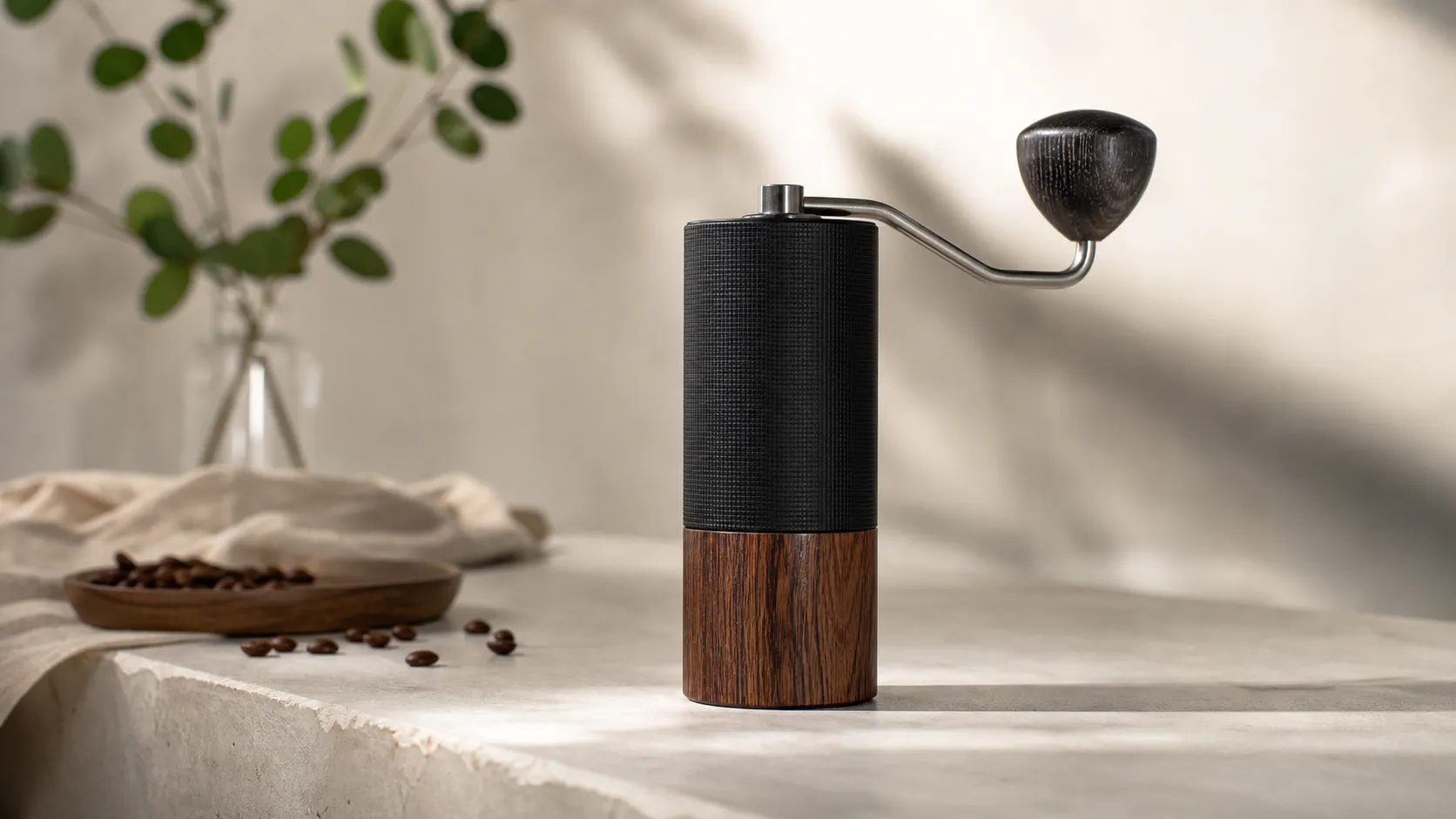
Comandante C40 MK4 Manual Coffee Grinder — 2026 Review
A premium manual grinder known for exceptional build and grind consistency — ideal for serious home baristas, but heavy and pricey for casual users or travel.
 Kitchen & Appliances
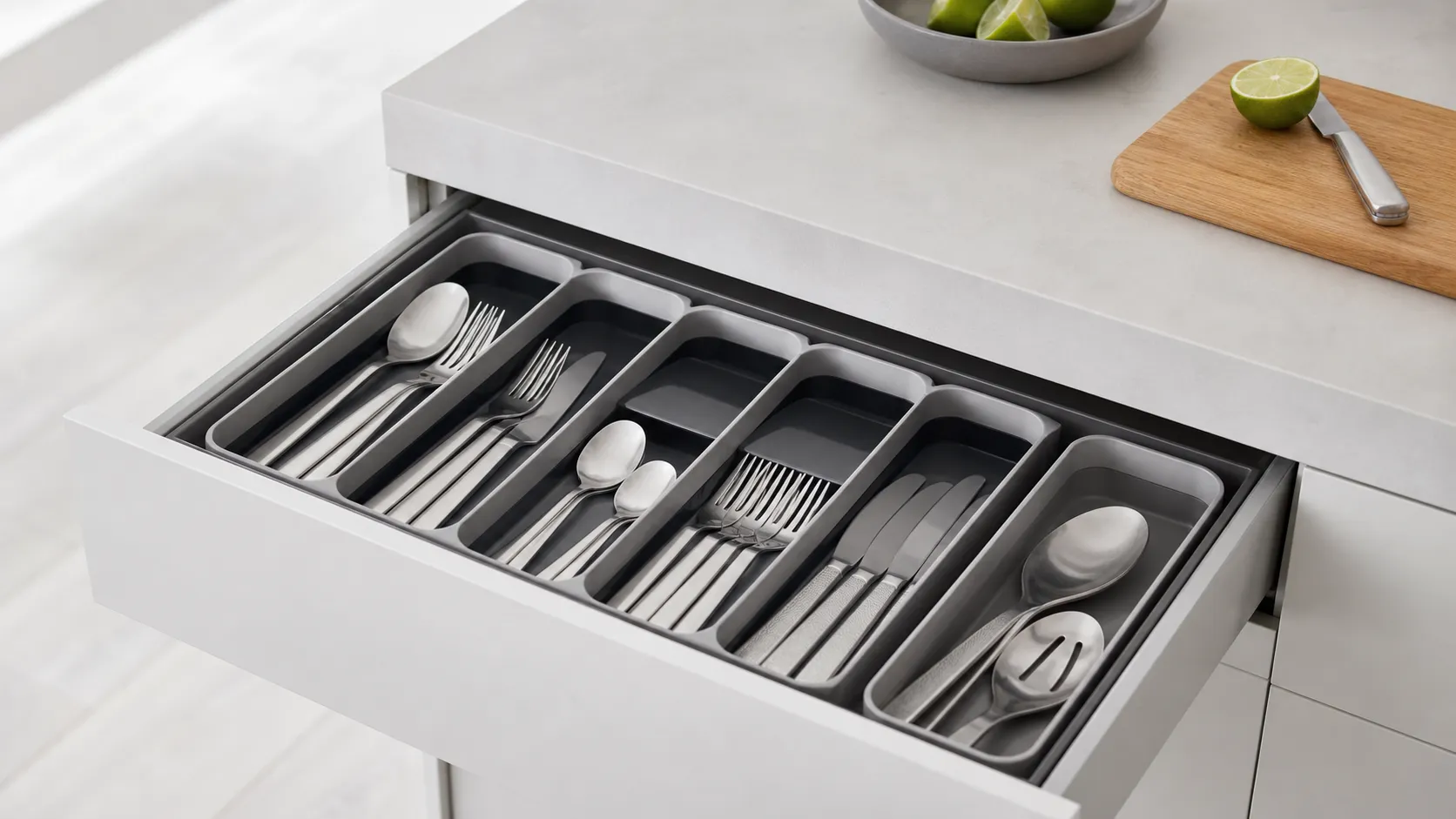
Joseph Joseph DrawerStore Cutlery Organizer Review 2026
A slim, modern cutlery tray that maximizes shallow-drawer space. Great for tidy, small-kitchen organization—measure your drawer first and avoid if you store long utensils.
 Kitchen & Appliances
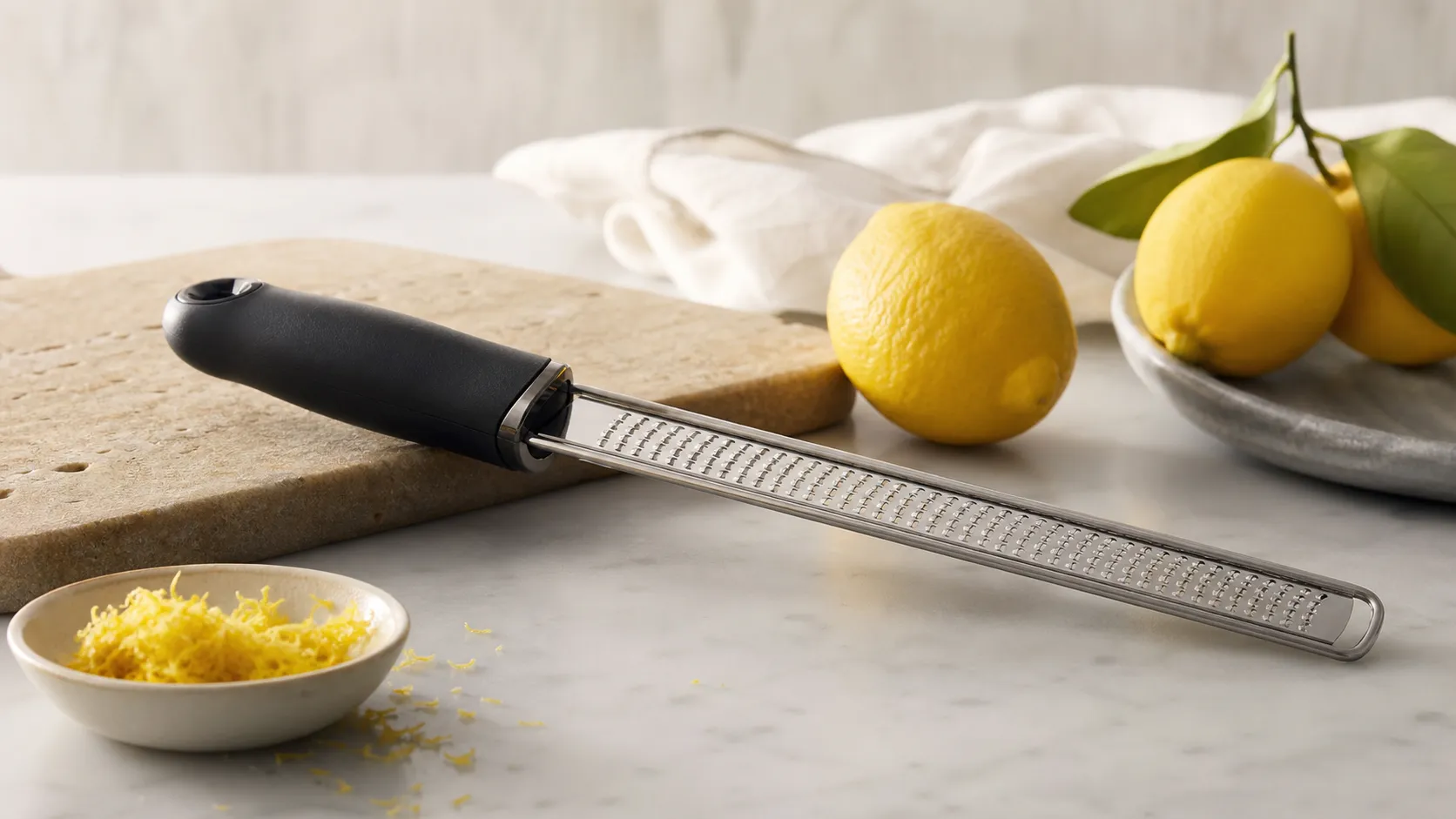
Microplane Premium Classic Zester/Grater — Review 2026
The Microplane Premium Classic is the go-to hand zester for precise, fluffy citrus zest and fine shavings. Sharp, compact, and great value—best for finishing, not bulk grating.