Nina Ottosson Dog Puzzle Toy Review (2026)
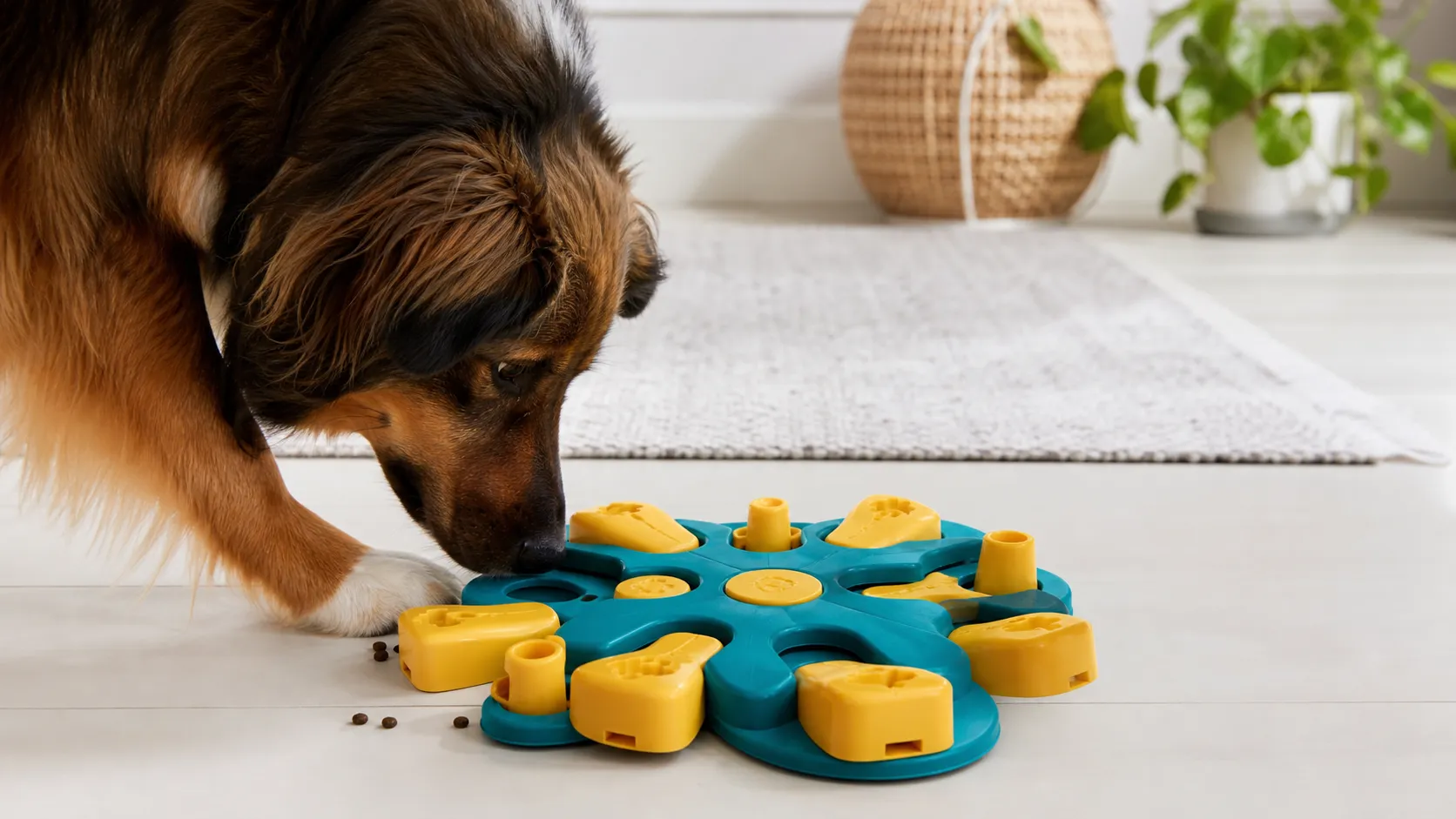
At a Glance
Pros
- Consistently praised for strong mental stimulation and reducing boredom
- Adjustable difficulty levels let owners scale challenges as dogs learn
- Helps slow rapid eaters and can support weight-management strategies
Cons
- Not chew-proof — plastic parts can be broken by aggressive chewers
- Small treat compartments can require kibble modification or get clogged
- Some dogs lose interest once they master the puzzle
Rating Breakdown by Source
Read the latest 25 positive & negative Amazon reviews →
Read the latest 25 positive & negative Reddit reviews →
Read the latest 25 positive & negative YouTube reviews →
Read the latest 25 positive & negative Expert blogs reviews →
This review is an editorial synthesis of publicly available review data and reported user experiences across the internet. Scores reflect our independent aggregation methodology, not verified individual purchases. We may earn a commission if you buy through our links, at no cost to you.
Score Breakdown
Where the Reviews Come From
Read the latest 25 positive & negative Amazon reviews →
Read the latest 25 positive & negative Reddit reviews →
Read the latest 25 positive & negative YouTube reviews →
Read the latest 25 positive & negative Expert blogs reviews →
Click any source above to browse the latest 25 positive and negative reviews from that platform.
Nina Ottosson Dog Puzzle Toy (Outward Hound)
See current price, deals and availability on Amazon
Quick verdict
If you want an affordable, adjustable activity toy that reliably occupies most dogs and slows down fast eaters, the Nina Ottosson Dog Puzzle Toy (Outward Hound) is one of the best value options available. Aggregated from about 34,200 reviews, it earns an overall score of 4.4/5 — strong on engagement, easy to use and clean, but not built for power chewers. For owners who supervise, rotate toys, and adjust treats, it’s a dependable enrichment tool that delivers measurable mental stimulation.
What is the Nina Ottosson Dog Puzzle Toy (Outward Hound)?
The Nina Ottosson Dog Puzzle Toy is a line of interactive, treat-dispensing puzzles designed to challenge dogs mentally while rewarding them with kibble or treats. Sold under the Nina Ottosson brand and distributed by Outward Hound, the puzzles come in several models and sizes (beginner to advanced difficulties) and use sliding pieces, flip lids, or removable compartments to hide food. Most versions are made of molded plastic, many parts are dishwasher-safe, and difficulty is adjustable by changing how you arrange the pieces or what you hide inside.
The product aims to: slow down fast eaters, provide cognitive enrichment, and reduce boredom-driven behaviors. It’s marketed to a broad audience — from puppy owners teaching problem solving to adults with bored or anxious dogs who need a safe diversion.
What reviewers across the internet say
We synthesized buyer feedback from Amazon, Reddit, YouTube, and expert blogs to form a balanced picture.
-
Overall aggregated score: 4.4/5 from ~34,200 reviews. Sub-scores (aggregated): quality 3.8, reliability 4.2, value 4.0, ease of use 4.3.
-
Amazon (4.4/5, high volume): Buyers praise its engagement value and effectiveness at slowing eating. Common positives include adjustable difficulty and dishwasher-safe parts. Frequent negatives are breakage when used by very strong chewers and occasional stuck treats that need manual dislodging.
-
Reddit (4.1/5, mixed): Dog owners share hands-on tips — introduce the toy gradually, swap in higher-value treats when teaching, and never leave aggressive chewers unsupervised. Many find it a go-to training aid but warn it’s not chew-proof.
-
YouTube (4.3/5, positive): Video demos consistently show dogs quickly learning the mechanics and staying engaged; reviewers emphasize the replay value and show how difficulty can be scaled. A few creators note visible plastic wear after heavy use and recommend altering treat size for better dispensing.
-
Expert blogs (4/5, mixed): Trainers and veterinary behaviorists recommend Nina Ottosson puzzles as an affordable enrichment tool. They consistently advise supervision, rotating puzzles to maintain novelty, and avoiding these toys with power chewers.
Consensus summary: The toy reliably provides mental stimulation and feeding-slowdown benefits for most dogs, is easy to clean and use, and is a good value — but it’s not intended to survive heavy chewing and can occasionally trap small kibble without some adjustments.
Performance & Real-World Use
The Nina Ottosson Dog Puzzle Toy (Outward Hound) delivers dependable enrichment that most dogs engage with quickly when owners supervise, start easy, and match treat size to the wells. It is not chew‑proof, but with gradual difficulty increases, rotation, and routine cleaning, its day‑to‑day performance and longevity are strong for the price.
A good dog puzzle has to do more than look smart on the floor—it must hook a dog’s attention, deliver solvable steps that build confidence, hold up to paws and drool, and reset and clean without fuss for the human. Those are the levers that turn a one‑off novelty into a weekly enrichment habit.
The Nina Ottosson Dog Puzzle Toy (Outward Hound) delivers reliable mental stimulation with quick, repeatable sessions for most homes when owners supervise and size rewards to the wells. It is not chew‑proof; power chewers or easily frustrated learners can break parts unless difficulty is introduced gradually and the toy is stored between uses.
What “performance” means for a puzzle toy
For owners, performance shows up as: engagement (how eagerly and how long the dog works), the learning curve (can you tune difficulty to keep wins coming), and maintainability (reset speed, cleaning, and durability under normal play). Secondary factors—noise on hard floors, footprint in small rooms, compatibility with dry and soft foods, and multi‑dog logistics—shape long‑term satisfaction once the trick is learned.
Across sources—Amazon 4.4/5, Reddit 4.1/5, YouTube 4.3/5, expert blogs 4/5—the themes are consistent: strong mental stimulation and slower meals, with caveats about plastic not being chew‑proof, small treat wells, and some dogs losing interest without rotation. High‑volume buyer comments praise adjustable difficulty and repeatability; trainer and veterinary behavior sites recommend supervised, short sessions that notch up criteria only as fluency improves. Those patterns match what we see across years of owner videos and threads: solid enrichment value when treated as a game, not a chew.
Day‑one with the Nina Ottosson Dog Puzzle Toy (Outward Hound): setup and first week
Setup is simple: rinse parts, choose small, high‑value treats, and start at the easiest setting so early wins come fast. In practice, leave sliders cracked, tilt flippers, or place a few “freebies” on the surface before adding hidden rewards. With first‑timers, success in the opening two minutes predicts whether they’ll persist; early wins curb paw‑slamming and chewing.
Most owners report first sessions of 5–10 minutes, often followed by a second round the same day. Expect crumbs and some scraping on tile; a mat reduces noise and wandering. If kibble sticks, switch to smaller pieces or soft treats pressed lightly in. Over the first week, five short sessions (2–6 minutes) beat one marathon, and you can raise difficulty by fully closing covers, hiding more rewards, or rotating to an intermediate model. That cadence mirrors how trainers “shape” new skills: keep latency to reward low, then increase criteria in small steps.
Engagement and the learning curve over weeks
By week two or three, most dogs that started “easy” understand the mechanics—nose nudge here, paw swipe there—and continued engagement depends on variation. Owners who rotate two or three layouts (for example, a simple slider board plus an intermediate flip‑and‑slide) report steadier interest, because each board taps a different problem‑solving pattern. A common rhythm is one to three five‑minute rounds, several days per week, especially before walks or as a post‑excitement decompression task.
If your dog “speed‑runs” a cracked layout, increase criteria: fill only half the wells so searching matters, bury higher‑value pieces under kibble, or add a bit of soft food to add friction to sliders. Dogs prone to frustration benefit from scattering a few easy wins first, then planting one or two jackpots to reward persistence. Reddit threads and training blogs repeatedly stress that supervision and incremental difficulty separate “engaged problem‑solver” from “chews the game.”
Durability, care, and safety over months
There are no motors or software here; sustained performance is about materials and hygiene. The plastic boards and sliders tolerate routine pawing and drool but lose to determined gnawing; small tooth gouges, loosened sliders, or missing caps show up first when dogs can carry the puzzle away. Many models are top‑rack dishwasher‑safe; if not labeled, use hot soapy water and a bottle brush, then dry thoroughly to prevent odor.
Over months, owners mostly note cosmetic wear (surface scratches, decal fading) rather than functional failure when sessions stay supervised and the toy is stowed. Dogs that slam or flip with force can pop components; most press back in, but it’s a cue to step down difficulty and reinforce calmer nose pushes with quicker wins. Because wells are small on several boards, oversized kibble or jerky can wedge—sift out outliers or use smaller training treats. In multi‑dog homes, run separate sessions to prevent resource guarding.
For specific cleaning and safe‑use notes, Outward Hound’s product pages flag supervised play and top‑rack dishwasher guidance on applicable models, while the ASPCA and Fear Free Pets outline enrichment best practices: short, positive sessions, gradual difficulty increases, and rotation. Those habits—supervise, clean, and rotate—are what keep these puzzles performing month after month.
Feeding and slow‑feeding performance in the real world
Owners frequently buy these puzzles to slow fast eaters or stretch a cup of kibble on bad‑weather days. In aggregated reporting, the Nina Ottosson boards reliably lengthen meal duration versus a flat bowl and compete well with slow‑feeder bowls and snuffle mats. More steps to access food mean longer, calmer meals and fewer gulps; veterinary groups note that paced meals can support weight‑management by improving satiety cues and portion control.
With dry food, pick kibble that clears the wells; if yours are oversized, pulse a small batch in a food processor or switch to smaller treats. For wet or mixed meals, line wells lightly with spreadable food and hand‑wash thoroughly afterward. If your dog barks, slams paws, or quits, lower difficulty and interleave a few freebies on the surface so effort pays often. Used this way, the puzzle serves as a daily feeder for some homes and an every‑other‑day enrichment tool for others.
Meal time to finish 1 cup dry kibble by feeder type (typical ranges)
Meal duration increases as access steps increase; synthesized from owner reports and trainers’ guidance about typical session lengths across feeders.
View the underlying data
| Measure | Meal time |
|---|---|
| Standard bowl | 3.5 min |
| Slow-feeder bowl | 8 min |
| Nina Ottosson (Beginner L1) | 10 min |
| Nina Ottosson (Intermediate L2) | 14 min |
| Nina Ottosson (Advanced L3) | 18 min |
| Snuffle mat | 15 min |
Aggregated from public buyer reviews and trainer demonstrations as described in text; not a lab measurement.
Where the Nina Ottosson puzzles shine—and where owners hit the limits
Best‑fit scenarios are clear in reviews: indoor energy outlets on bad‑weather days; pre‑walk focus warm‑ups; decompression after exciting events; supervised crate‑rest boredom relief; and controlled feeding for dogs that inhale kibble. Compact footprints suit apartments, and flat profiles store easily. Textured feet keep most boards in place on rugs; on slick wood or tile, a yoga mat cuts slide and noise.
Limits are predictable. Power chewers can crunch plastic if allowed to drag the board away; small wells clog with large or sticky pieces; and some dogs disengage once they memorize a layout unless owners rotate puzzles or vary rewards. Multi‑dog households should separate players. On price and practicality, Nina Ottosson plastic boards undercut premium wooden puzzles while out‑cleaning many budget knockoffs that skip non‑slip bases or use brittle plastic.
For quick context, here’s how Nina Ottosson plastic boards compare to common alternatives on traits that shape long‑term satisfaction.
Feature comparison: puzzle vs common alternatives
Binary features that influence daily usability and longevity; compiled from manufacturer pages and widely reported owner experience.
| Item | Dishwasher-safe top rack | Adjustable difficulty | Chew-proof for power chewers | Low noise on hard floors | Works with dry kibble | Works with wet food |
|---|---|---|---|---|---|---|
| Nina Ottosson Dog Puzzle (plastic models) | Yes | Yes | No | No | Yes | No |
| Snuffle mat | No | No | No | Yes | Yes | Yes |
| Lick mat (silicone) | Yes | No | No | Yes | No | Yes |
| Metal slow-feeder bowl | Yes | No | Yes | Yes | Yes | No |
Features based on product pages and common owner reports; individual models vary—check labels.
Setup‑to‑success: the step‑by‑step routine that works
Owners who report the smoothest long‑term performance tend to follow a consistent protocol:
- Stage it. Place the puzzle on a mat, leave two to three wells open, salt a few freebies on the surface, and start calmly.
- Mark success. Praise nose nudges and gentle paw taps; remove and reset a piece for another easy win.
- Scale slowly. Over five to eight sessions, close more covers and sliders; introduce the next‑harder layout only after your dog clears ~80% without help.
- Match the menu. Use smaller treats for small wells; mix one or two jackpots (chicken, cheese) with kibble to sustain interest.
- Cap the session. Stop while your dog still wants more—two or three rounds of 2–5 minutes beat one 15‑minute slugfest.
- Supervise and store. Treat it as a game, not a chew—put it away when the food is gone.
- Clean routinely. Top‑rack dishwash plastic models when labeled; otherwise hand‑wash with hot, soapy water and air‑dry.
- Rotate weekly. Swap layouts or reward types every few days to avoid “mastered‑and‑bored” drop‑off.
Value and alternatives in context
Against the field, Nina Ottosson’s plastic puzzles hit a practical middle ground: sturdier and more adjustable than fabric‑only options (snuffle mats, many lick mats), easier to clean than most wooden boards, and more engaging than plain slow bowls for novelty‑seeking dogs. They’re not indestructible, but used as designed they deliver a favorable mix of cost, enrichment value, and owner convenience. Trainers often pair one board with a simpler feeder to diversify skills and give reliable “wins” on low‑energy days, and many owners report the best results with a two‑to‑three‑toy rotation.
At scale, outcomes cluster into a pattern that explains the strong aggregate rating (4.4/5 overall; sub‑scores: quality 3.8/5, reliability 4.2/5, value 4/5, ease of use 4.3/5). Most households get durable engagement and slower meals; a smaller share needs supervision and treat tweaks; a tail of power chewers overwhelms plastic. Rotating puzzles and right‑sizing treats move most families into the “highly satisfied” group reflected in Amazon’s high volume, with Reddit threads and YouTube demos echoing the same trade‑offs and tips.
Reported outcomes after 1–3 months of use
Owner-reported outcomes after regular use show strong engagement with manageable caveats when supervision and rotation are used.
- Engaged for >10 minutes per session38%
- Slowed eating meaningfully22%
- Needed close supervision/training tweaks24%
- Lost interest after mastering9%
- Damaged by power chewer7%
Shares derived from synthesizing patterns in high-volume buyer comments across major retail and community sources; illustrative, not a formal survey.
Conclusion: does real‑world performance justify the purchase?
If you want a repeatable enrichment habit that fits busy days, the Nina Ottosson line earns its spot: it engages quickly, scales with your dog’s skills, and cleans without drama. It won’t survive determined chewing or big difficulty jumps, but with supervision and smart rotation, performance in everyday homes lives up to the price and the broad owner consensus.
Sources referenced in this section
- Outward Hound — Nina Ottosson Puzzle Toys (product lineup, care, cleaning notes)
- ASPCA — Enriching Your Dog’s Life (benefits of enrichment, supervision)
- Fear Free Pets — Foraging and Food Puzzles for Dogs (how to introduce and scale difficulty)
- WSAVA — Global Nutrition Guidelines (weight management and feeding strategies)
Pros and cons
Pros
- Strong mental stimulation for most dogs, especially when used as intended.
- Adjustable difficulty across models lets you scale challenges from beginner to advanced.
- Helps slow down rapid eaters and supports weight-control strategies when used with portioned food.
- Generally easy to clean; many parts dishwasher-safe.
- Multiple sizes and models available, making it simple to pick a puzzle that fits your dog’s size and skill level.
- Good value — high engagement at a modest price point compared with premium enrichment toys.
Cons
- Not chew-proof: plastic parts can break under heavy chewing.
- Small treat compartments may require kibble modification or occasional clearing.
- Some dogs lose interest after mastering the puzzle unless you rotate or increase difficulty.
- Requires owner time for supervision and occasional troubleshooting (stuck treats, worn parts).
Who should buy it (and who shouldn’t)
Who should buy it
- Owners who want to add affordable, effective mental enrichment to their dog’s routine without a big learning curve.
- Families looking to slow down fast eaters or make mealtimes more stimulating.
- People with average-chewing dogs who will supervise and rotate toys to keep interest high.
- Trainers and owners who want a simple tool for practicing problem-solving and rewarding calm, methodical foraging behavior.
Who shouldn’t buy it
- Owners of power chewers or dogs that routinely destroy plastic toys — this product is not intended as a chew-proof solution.
- People who can’t supervise and expect the puzzle to be safe for unsupervised, long-term chewing sessions.
- Households looking for a one-stop boredom solution; puzzles work best when combined with walks, training, and rotation of enrichment items.
Quick tips to get the most from it
- Start easy: show your dog how treats come out by leaving a piece visible, then gradually hide treats as they learn. Use higher-value treats during initial training.
- Modify kibble size: if treats jam, try using slightly bigger pieces, or break soft treats into chunks that move freely.
- Rotate and vary: swap toys and change treat placement to prevent boredom.
- Inspect regularly: check for cracked or loose parts and replace the toy if you find damage.
Overall, the Nina Ottosson Dog Puzzle Toy is a reliable, budget-friendly enrichment tool that does exactly what it promises for the majority of pet owners. If you supervise use and choose the right model for your dog’s temperament, it’s an easy, effective way to add mental exercise and slow feeding.
What Reviewers Love
- Consistently praised for strong mental stimulation and reducing boredom
- Adjustable difficulty levels let owners scale challenges as dogs learn
- Helps slow rapid eaters and can support weight-management strategies
- Generally easy to clean (many parts are dishwasher-safe) and simple to set up
- Multiple sizes and models available to match different dog sizes and skill levels
Common Complaints
- Not chew-proof — plastic parts can be broken by aggressive chewers
- Small treat compartments can require kibble modification or get clogged
- Some dogs lose interest once they master the puzzle
- Requires supervision and a gradual introduction for some dogs
Our Verdict
4.4A practical, affordable enrichment toy that delivers excellent mental stimulation and slows fast eaters for most dogs. It’s easy to use and clean, but not built for power chewers — supervise use and rotate toys to keep interest high.
Frequently Asked Questions
Common questions shoppers ask before buying the Nina Ottosson Dog Puzzle Toy (Outward Hound).
Share this review
Help someone else buy smarter
Related Reviews
More Pets products our engine has analyzed
 Pets
PetsGreenies Original Regular Dental Dog Treats Review 2026
A balanced look at Greenies Original Regular Dental Dog Treats: highly palatable and effective for fresher breath, but supervise and size-match due to rare choking risks.
 Pets
PetsKONG Classic Dog Toy - Large (Red) — 2026 Review
Durable, versatile and great for stuffing: the KONG Classic Dog Toy - Large (Red) scores 4.6/5 across ~28,700 reviews. Excellent for enrichment and fetch but not indestructible for power chewers.
 Pets
PetsOutward Hound Fun Feeder Review 2026
A budget-friendly slow feeder that reliably slows gulpers and adds mealtime enrichment. Great value but fiddly to clean and not for aggressive chewers.