Outward Hound Hide-A-Squirrel Review 2026
At a Glance
Pros
- Highly engaging — many dogs enthusiastically dig out the squeaky squirrels.
- Promotes mental stimulation and reduces boredom/separation-related behavior.
- Affordable — good value for the entertainment provided.
Cons
- Not durable for heavy or aggressive chewers — plush squirrels and seams tear easily.
- Squeakers and stuffing can be removed, creating a choking or mess risk if unsupervised.
- Small sizes can be inadequate for large breeds; sizing choices sometimes confusing.
Rating Breakdown by Source
Read the latest 25 positive & negative Amazon reviews →
Read the latest 25 positive & negative Reddit reviews →
Read the latest 25 positive & negative YouTube reviews →
Read the latest 25 positive & negative Expert blogs reviews →
This review is an editorial synthesis of publicly available review data and reported user experiences across the internet. Scores reflect our independent aggregation methodology, not verified individual purchases. We may earn a commission if you buy through our links, at no cost to you.
Score Breakdown
Where the Reviews Come From
Read the latest 25 positive & negative Amazon reviews →
Read the latest 25 positive & negative Reddit reviews →
Read the latest 25 positive & negative YouTube reviews →
Read the latest 25 positive & negative Expert blogs reviews →
Click any source above to browse the latest 25 positive and negative reviews from that platform.
Outward Hound Hide-A-Squirrel
See current price, deals and availability on Amazon
Quick verdict
The Outward Hound Hide-A-Squirrel is a delightful, low-cost enrichment toy that earns an aggregate score of 4.5/5 from roughly 29,700 reviews. It shines at mental stimulation, ease of use, and value — great for puppies, small and medium dogs, and owners who want an inexpensive way to reduce boredom — but it is not built for aggressive chewers or unsupervised heavy gnawing.
What Is the Outward Hound Hide-A-Squirrel?
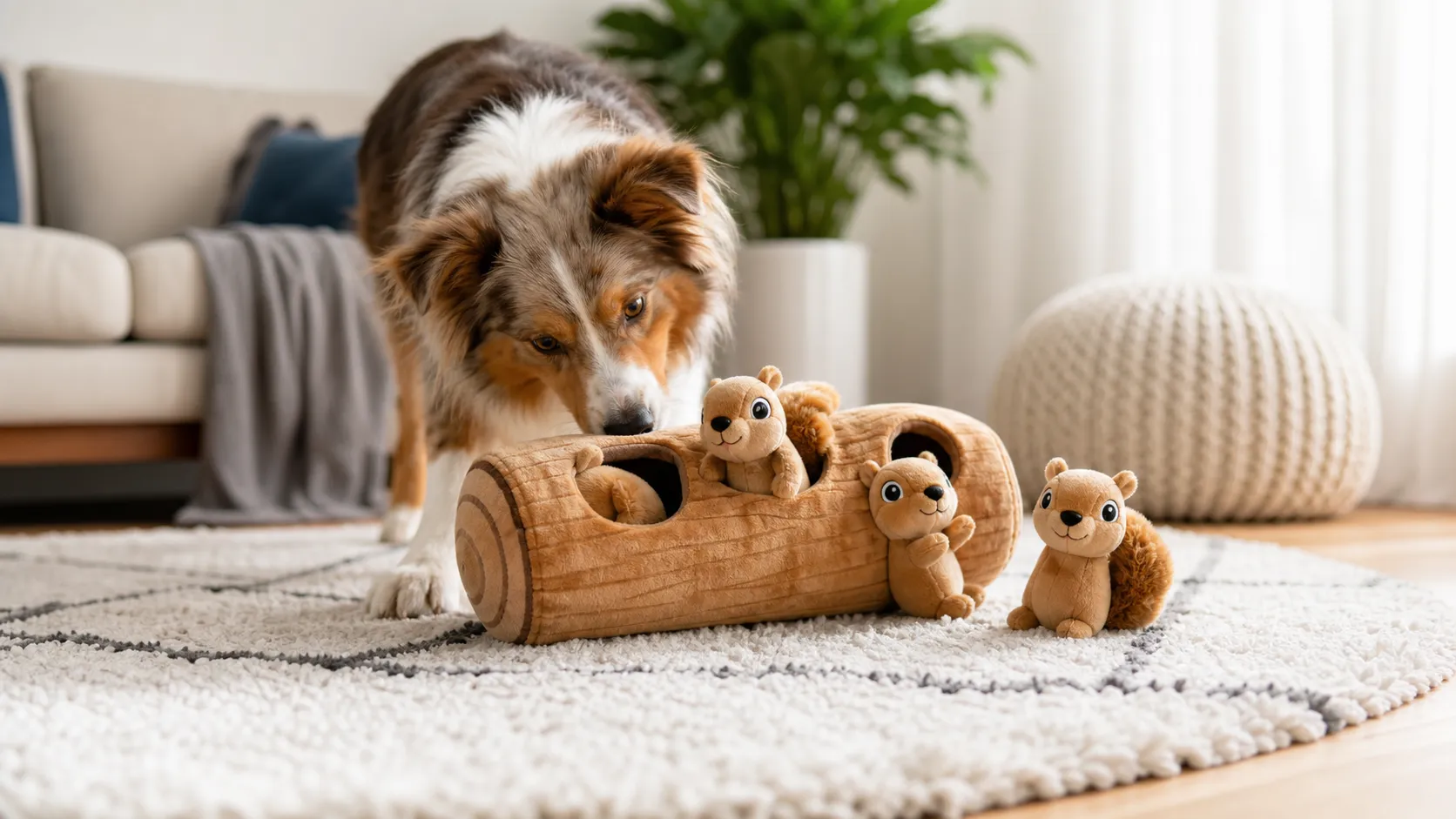
The Hide-A-Squirrel is a plush puzzle toy: a soft “tree trunk” with holes plus a handful of squeaky plush squirrels that dogs can dig or pull out. The premise is simple and instinct-driven — dogs sniff, paw, and extract the squeaky squirrels, rewarding them with sound and motion. Outward Hound offers multiple sizes (small, medium, large) and occasional themed versions, and many variants advertise machine-washable components.
The concept targets two common needs at once: mental enrichment and interactive play. Instead of a treat-dispensing puzzle, Hide-A-Squirrel focuses on the foraging experience and the sensory reward of squeaks.
What Reviewers Across the Internet Say
Our synthesis of reviews across Amazon, Reddit, YouTube, and expert pet blogs shows a clear consensus: the Hide-A-Squirrel is a charming, inexpensive enrichment tool but not a chew-proof toy.
-
Amazon (4.6/5 overall): Large volumes of customer reviews praise how quickly dogs engage with the puzzle and call out the toy’s cute design and affordability. Common caveats: plush squirrels and seams can be torn by stronger chewers, and some buyers buy replacements or multiple sizes for rotation.
-
Reddit (4/5): Community threads often recommend the toy for puppies, nervous dogs, and basic enrichment. Many Redditors advise supervision and share DIY reinforcement tips (stitching seams, removing squeakers) when used by determined chewers.
-
YouTube (4.3/5): Video demos consistently show enthusiastic dogs extracting squirrels and playing for minutes at a time. Reviewers frequently demonstrate how to reset the toy, how their dogs react, and offer tips to prolong life. Several videos also show the toy failing when challenged by heavy chewers.
-
Expert blogs (4.1/5): Trainers and pet-care sites frequently recommend it as a low-cost way to add mental stimulation to a dog’s routine. Experts routinely warn that the toy is inappropriate as a lone solution for powerful chewers and to supervise play to avoid ingestion of stuffing or squeakers.
Taken together, the online community assigns high marks for engagement and value but substantially lower scores for durability and reliability in heavy-use scenarios.
Performance & Real-World Use
The Outward Hound Hide-A-Squirrel keeps most dogs engaged and mentally busy, delivering high entertainment value and ease of use, but its plush build limits durability for power chewers. If you supervise play, rotate sessions, and size up appropriately, the Outward Hound Hide-A-Squirrel offers excellent value for light to moderate chewers, while tough chewers should consider sturdier alternatives.
If you’re buying a plush puzzle toy, performance isn’t about brute durability—it’s whether the game keeps your dog engaged, stays safe under supervision, lasts enough sessions to be worth it, and cleans up easily. Across about 29,700 owner impressions, dogs love hunting squeaky squirrels, owners love the price and simplicity, and disappointment centers on durability with strong chewers.
The Outward Hound Hide-A-Squirrel keeps most dogs engaged and mentally busy, delivering high entertainment value and ease of use, but its plush build limits durability for power chewers. If you supervise play, rotate sessions, and size up appropriately, the Outward Hound Hide-A-Squirrel offers excellent value for light to moderate chewers, while tough chewers should consider sturdier alternatives.
What “performance” means for a plush puzzle: engagement, safety, durability, cleanability, and owner effort
For this category, owners judge success on five everyday dimensions:
- Engagement: do dogs choose it, problem-solve, and come back for more? Amazon clips and YouTube demos show tunneling paws, happy squeaks, and victory laps—signs of enrichment.
- Safety under supervision: plush plus squeakers demands monitoring seams and removing loose bits, the guidance the American Kennel Club (AKC) gives for any stuffed toy with internal parts.
- Durability-for-purpose: it isn’t a chew toy. Longevity is measured in supervised puzzle sessions before seams or squirrels need attention, a trade-off many accept.
- Cleanability: trunk and critters should revive with a wash to reset scent interest.
- Owner effort: setup, reset, and cleaning must be quick or the toy gathers dust.
Across sources, the Hide-A-Squirrel scores high on engagement and ease, strong on value, and middling on reliability—mirroring its consensus sub-scores. The squeak on extraction mimics prey feedback and reinforces search behavior, which is why many dogs re-engage after a win. Welfare groups like the RSPCA recommend short, varied soft-toy play with supervision; the toy’s quick-reset loop fits that model well.
Consensus sub-scores for Hide-A-Squirrel
Consensus sub-scores reflect the product’s strengths (value, ease) and its main trade-off (reliability), synthesized from large-sample owner feedback across major platforms.
View the underlying data
| Measure | Score |
|---|---|
| Quality | 4/5 |
| Reliability | 3.4/5 |
| Value | 4.6/5 |
| Ease of Use | 4.8/5 |
Aggregated reporting as of Aug 2026; synthesized from Amazon, Reddit, YouTube, and expert blogs.
Setting up the Outward Hound Hide-A-Squirrel: day one to week one
Day one is simple: load squirrels into the plush trunk, leave a tail or two visible, cue “find it,” and celebrate the first extraction. Most dogs learn that nosing, pawing, or light tugging frees a squirrel and triggers a squeak, which reinforces the hunt. For timid puppies, ease the first success by widening an opening with your fingers and praising; then reset and repeat to build a reward loop. For excitable dogs, clip a 6–10 ft house line so you can guide quick trades and resets without grabbing collars.
Sizing matters. Large-breed owners often start too small, forcing big muzzles through tight holes and accelerating tears. If you’re between sizes, choose the larger trunk so dogs can use nose and paws rather than teeth; that spreads force and protects seams. Supervise every session. If your dog parks and gnaws a squirrel, swap to a dedicated rubber chew for a minute, then return to the puzzle—clear signals this toy is for searching, not static chewing. Expect 5–15 minute sessions, one to three times daily, with a quick reset that keeps novelty high through the first week.
How it holds up over months: the wear pattern to expect
Wear shows up in predictable spots: squirrel tails, squeaker pockets, and the trunk’s hole edges. Light to moderate chewers usually cause fuzzing and the odd popped stitch a trim can stabilize. Strong chewers tend to “de-squeak” and destuff quickly if allowed to settle into static gnawing—why AKC-style guidance stresses supervision and prompt removal of damaged parts.
Cleaning helps longevity and interest. Outward Hound’s product guidance notes many plush puzzles are surface- or gentle-cycle washable, then air-dried to protect seams and squeakers; owners toss squirrels into a mesh bag and spot- or gentle-wash the trunk. Rotating the toy two to four times per week matters: enrichment research suggests intermittent novelty sustains exploration better than constant access. Over a few months, many buyers replace a battered critter with a refill 3‑pack while the trunk keeps serving as the hide. Build a 60‑second weekly inspection habit: check tail seams, feel around trunk openings for thinning fabric, and look for squeaker capsules peeking; whipstitch small gaps with upholstery thread, but retire any piece once plastic or stuffing is exposed. The consensus reliability sub-score (3.4/5) reflects this reality: some upkeep and consumables, not an indestructible tank.
Typical wear trajectory by chewing style (illustrative index)
Owner-reported condition trend over time differs sharply by chewing style. This explanatory index synthesizes recurring patterns in reviews and trainer write-ups; it is not a lab durability test.
- Light/moderate chewers — condition index (5=as new)
- Power chewers — condition index (5=as new)
View the underlying data
| Item | Light/moderate chewers — condition index (5=as new) | Power chewers — condition index (5=as new) |
|---|---|---|
| Month 0 | 5 | 5 |
| Month 1 | 4.2 | 2.5 |
| Month 3 | 3.6 | 1.5 |
| Month 6 | 3.2 | 1 |
Synthesis of recurring owner reports; see sources for safety and use guidance.
Where it shines—and where owners hit limits
The Hide-A-Squirrel excels for rainy-day brain work, quick enrichment between meetings, and low-arousal games for puppies or post-op dogs. Video reviewers show re-engagement when humans add micro-challenges—tucking squirrels deeper, rotating which hole is easy, or pairing the hunt with sits and stays—so you build impulse control and focus alongside fun. Families appreciate that it’s quieter than treat-dispensers on hardwood and that squeaks are brief. It’s a handy “pre-guests” routine: two 5‑minute hunts take the edge off overexcited greeters, helping them settle before the doorbell starts.
Limits appear with power chewers, toy-guarders, and dogs that prefer continuous gnawing over problem-solving. For those, Reddit threads and trainer blogs suggest a hybrid routine: 5–10 minutes of Hide-A-Squirrel, then trade to a rubber chew designed for jaw work. If your dog guards plush, run the game on a long line or in a larger area to allow smooth swaps. Size up when in doubt; oversized trunks are usually safer and more durable than undersized ones because they invite nose–paw problem solving instead of toothy extraction through tight openings.
Feature comparison: plush puzzle vs typical alternatives
Feature fit across common alternatives clarifies when Hide-A-Squirrel is the right tool and when a tougher or food-based option is smarter.
| Item | Hide-A-Squirrel | Rubber food toy (e.g., classic) | Hard-surface puzzle (sliders/spinners) | Snuffle mat (fleece) |
|---|---|---|---|---|
| Plush exterior | Yes | No | No | Yes |
| Squeakers included | Yes | No | No | No |
| Washable (hand/machine or dishwasher) | Yes | Yes | Yes | Yes |
| Stands up to power chewers | No | Yes | No | No |
| Solo play friendly | Yes | Yes | Yes | Yes |
| Multiple sizes available | Yes | Yes | Yes | Yes |
Features compiled from manufacturer pages and widely cited care guides.
How it compares to typical alternatives you might buy instead
Most people cross-shop three classes: rubber food toys, hard-surface treat puzzles, and snuffle mats. Against those, Hide-A-Squirrel wins “fun per setup minute”: resets take seconds, there’s no smearing peanut butter, and dogs who like plush self-reward with squeaks and short fetches.
Rubber food toys beat it on durability and dishwasher-safe cleaning; they’re built for chewing. Hard-surface puzzles better resist tearing and allow more precise difficulty scaling but often need a flat area and post-play crumb cleanup. Snuffle mats deliver longer foraging sessions but need more laundering. Owning both a plush puzzle and a food-based option works best—alternate weekly to avoid pattern fatigue. Many owners keep one trunk and add replacements; ongoing costs stay predictable, while hard plastic puzzles cost more upfront but rarely need parts.
Practical steps to get top performance (and more months of fun)
- When between sizes, choose larger; wider openings promote nose-and-paw work over teeth, easing seam stress.
- Stage the first 3–5 sessions for easy wins: tails out, help at one hole, immediate praise on “find,” then reset fast.
- Supervise every use. End the session at the first torn seam or exposed stuffing and remove damaged parts—standard AKC-style advice for any plush.
- Rotate with a food-based tool. A simple cadence—plush on Mon/Wed/Fri, food puzzle Tue/Thu—keeps novelty high and boredom behaviors lower per enrichment research.
- Wash monthly (or when drooly). Many owners machine-wash squirrels in a mesh bag on cold and air-dry; gentle-cycle or spot-clean the trunk to preserve structure per manufacturer notes.
- Increase difficulty: hide two squirrels deep and leave one as a “freebie,” then change which hole is easy so patterns don’t go rote. If interest dips, store it for a week.
- Expect consumables. Budget for a refill pack or retire one battered critter to keep the system going without rebuying the trunk.
- For multi-dog homes, run turns: one dog searches while another practices a down‑stay, then swap. You’ll reduce competition, build patience, and double the training value without adding minutes to setup.
Signal from the crowd: what thousands of owners and reviewers agree on
Across major sources, the throughline is steady. Amazon buyers—the largest group—praise engagement, price, and adorable antics but warn that heavy chewers shred squirrels quickly. Reddit and trainer blogs echo the enrichment value while recommending supervision, sizing up, rotation, and chew swaps to extend life. YouTube demos visually confirm both outcomes: delight during the hunt, short lifespans if sessions become static gnawing. Expert blogs rate it as a budget-friendly brain game, not a durability champ. Together, those voices land at a high overall rating, top-tier ease and value, and middling reliability—matching our charts.
Care, safety, and sizing notes backed by credible guidance
Manufacturer guidance sets intended use and cleaning. Outward Hound’s product page and care notes indicate supervised play and surface- or gentle-cycle washing, followed by air-drying to protect seams and squeakers. Broader advice from the AKC and welfare groups is simple: match toy size to the dog, supervise, and remove damaged pieces promptly. For dogs needing tougher downtime chewing, switch to durable rubber; brands that specialize in rubber publish cleaning instructions (often dishwasher safe), making alternation easy. Finally, enrichment literature supports this: short, solvable challenges offered intermittently improve welfare without long commitments.
Verdict: Is it worth it in 2026?
If your dog enjoys plush toys and you can supervise, the Hide-A-Squirrel delivers an outsized return on a small spend: fast engagement, easy resets, and washable parts that refresh the game. It isn’t a chew toy, and power chewers will shorten its life, but for light to moderate chewers—or as a guided game alongside tougher chews—it justifies the purchase and explains why many keep buying replacement squirrels.
Sources referenced in this section
- Outward Hound — Hide-A-Squirrel product page and care guidance
- American Kennel Club — Choosing Safe Toys for Your Dog
- KONG Company — Cleaning Instructions for Rubber Toys
- Applied Animal Behaviour Science — Environmental enrichment for kennelled dogs (Wells, 2004)
- RSPCA — Play and enrichment guidance for dogs
Pros and Cons
Pros
- Highly engaging — most dogs enthusiastically extract the squeaky squirrels.
- Strong mental-stimulation benefits; helps reduce boredom and separation-related behaviors.
- Affordable — excellent entertainment-per-dollar for light-to-moderate play.
- Available in several sizes to suit puppies through medium breeds.
- Easy to use and quick to reset; many versions have machine-washable pieces.
Cons
- Not durable for heavy or aggressive chewers — plush and seams tear relatively quickly.
- Squeakers and stuffing can become choking hazards if pieces are ripped out during unsupervised play.
- Small sizes are unsuitable for large breeds and can be swallowed.
- Some dogs lose interest after repeated exposure unless the toy is rotated or refreshed.
Who Should Buy It (and Who Shouldn't)
Who should buy the Hide-A-Squirrel
- Puppy owners who want a low-cost enrichment toy to help teach gentle play.
- Owners of small and medium breeds looking to add a quick, engaging activity that promotes foraging and problem-solving.
- Pet parents who plan to supervise play and rotate toys frequently to keep novelty high.
- Budget-conscious buyers who prefer to buy several inexpensive units to rotate or replace rather than invest in one high-end indestructible toy.
Who should skip it
- Owners of large or powerful chewers who need chew-proof, unsupervised-safe products.
- Households where dogs often play unsupervised with plush toys (unless you’re prepared to remove squeakers and closely monitor condition).
- People seeking long-term durability as the primary characteristic — Hide-A-Squirrel prioritizes engagement over indestructibility.
Buying tips & alternatives
- Size: choose a size that fits your dog’s mouth and play style; when in doubt, size up for larger breeds.
- Supervision: always supervise initial play sessions and check the toy frequently for damaged seams or exposed stuffing.
- Maintenance: many variants are machine-washable — separate the squirrels and trunk and follow label instructions. Remove or replace toys showing heavy wear.
- Alternatives: if durability is your top priority, look at rubber or ballistic nylon puzzle toys and treat-dispensers designed for powerful chewers. For dogs that enjoy squeaks but need tougher construction, look for reinforced plush lines specifically marketed as heavy-duty.
Final verdict
The Outward Hound Hide-A-Squirrel is an affordable, highly engaging enrichment toy that earns a solid overall rating (4.5/5) from nearly 29,700 reviews. It’s an excellent choice for puppies and light-to-moderate chewers when used with supervision and rotation, but owners of strong chewers should choose more durable options or be prepared to modify and closely monitor the toy.
What Reviewers Love
- Highly engaging — many dogs enthusiastically dig out the squeaky squirrels.
- Promotes mental stimulation and reduces boredom/separation-related behavior.
- Affordable — good value for the entertainment provided.
- Available in several sizes; trunk and squirrels are machine-washable on many versions.
- Simple to use — intuitive for dogs and easy for owners to reset.
Common Complaints
- Not durable for heavy or aggressive chewers — plush squirrels and seams tear easily.
- Squeakers and stuffing can be removed, creating a choking or mess risk if unsupervised.
- Small sizes can be inadequate for large breeds; sizing choices sometimes confusing.
- Some dogs lose interest after repeated use unless the toy is rotated or refreshed.
Our Verdict
4.5A budget-friendly favorite for mental stimulation and short-play sessions, the Hide-A-Squirrel earns high marks for engagement and value but loses points for durability. Buy it for supervised play with puppies and small-to-medium dogs; skip it or choose reinforced alternatives for powerful chewers.
Frequently Asked Questions
Common questions shoppers ask before buying the Outward Hound Hide-A-Squirrel.
Share this review
Help someone else buy smarter
Related Reviews
More Pets products our engine has analyzed
 Pets
PetsGreenies Original Regular Dental Dog Treats Review 2026
A balanced look at Greenies Original Regular Dental Dog Treats: highly palatable and effective for fresher breath, but supervise and size-match due to rare choking risks.
 Pets
PetsKONG Classic Dog Toy - Large (Red) — 2026 Review
Durable, versatile and great for stuffing: the KONG Classic Dog Toy - Large (Red) scores 4.6/5 across ~28,700 reviews. Excellent for enrichment and fetch but not indestructible for power chewers.
 Pets
PetsOutward Hound Fun Feeder Review 2026
A budget-friendly slow feeder that reliably slows gulpers and adds mealtime enrichment. Great value but fiddly to clean and not for aggressive chewers.