Outward Hound Nina Ottosson Dog Puzzle Toy Review 2026
At a Glance
Pros
- Engages dogs mentally and helps reduce boredom/anxiety
- Multiple difficulty levels/models to match dog experience
- Sturdy, simple plastic construction for everyday household use
Cons
- Not suitable for strong/gifted chewers — plastic pieces can be chewed or broken
- Some dogs find certain puzzles frustrating or give up without training
- Small pieces and crevices can be fiddly to clean thoroughly
Rating Breakdown by Source
Read the latest 25 positive & negative Amazon reviews →
Read the latest 25 positive & negative Reddit reviews →
Read the latest 25 positive & negative YouTube reviews →
Read the latest 25 positive & negative Expert blogs reviews →
This review is an editorial synthesis of publicly available review data and reported user experiences across the internet. Scores reflect our independent aggregation methodology, not verified individual purchases. We may earn a commission if you buy through our links, at no cost to you.
Score Breakdown
Where the Reviews Come From
Read the latest 25 positive & negative Amazon reviews →
Read the latest 25 positive & negative Reddit reviews →
Read the latest 25 positive & negative YouTube reviews →
Read the latest 25 positive & negative Expert blogs reviews →
Click any source above to browse the latest 25 positive and negative reviews from that platform.
Outward Hound Nina Ottosson Dog Puzzle Toy
See current price, deals and availability on Amazon
Introduction
If you want a low-cost, widely available way to give your dog useful mental work, the Outward Hound Nina Ottosson Dog Puzzle Toy is one of the most recommended options you’ll find. Aggregating roughly 16,440 user reviews and expert commentary yields a clear picture: it’s effective as enrichment and slow-feeding for many dogs, but not indestructible. Overall score: 4.4/5 (quality 4.2, reliability 4.0, value 4.1, ease of use 3.8).
Our verdict up front: excellent value and a reliable enrichment tool for most dogs — ideal for owners who want inexpensive, low-tech brain games — but skip it for power chewers or unsupervised heavy-mouthed play.
What Is the Outward Hound Nina Ottosson Dog Puzzle Toy?
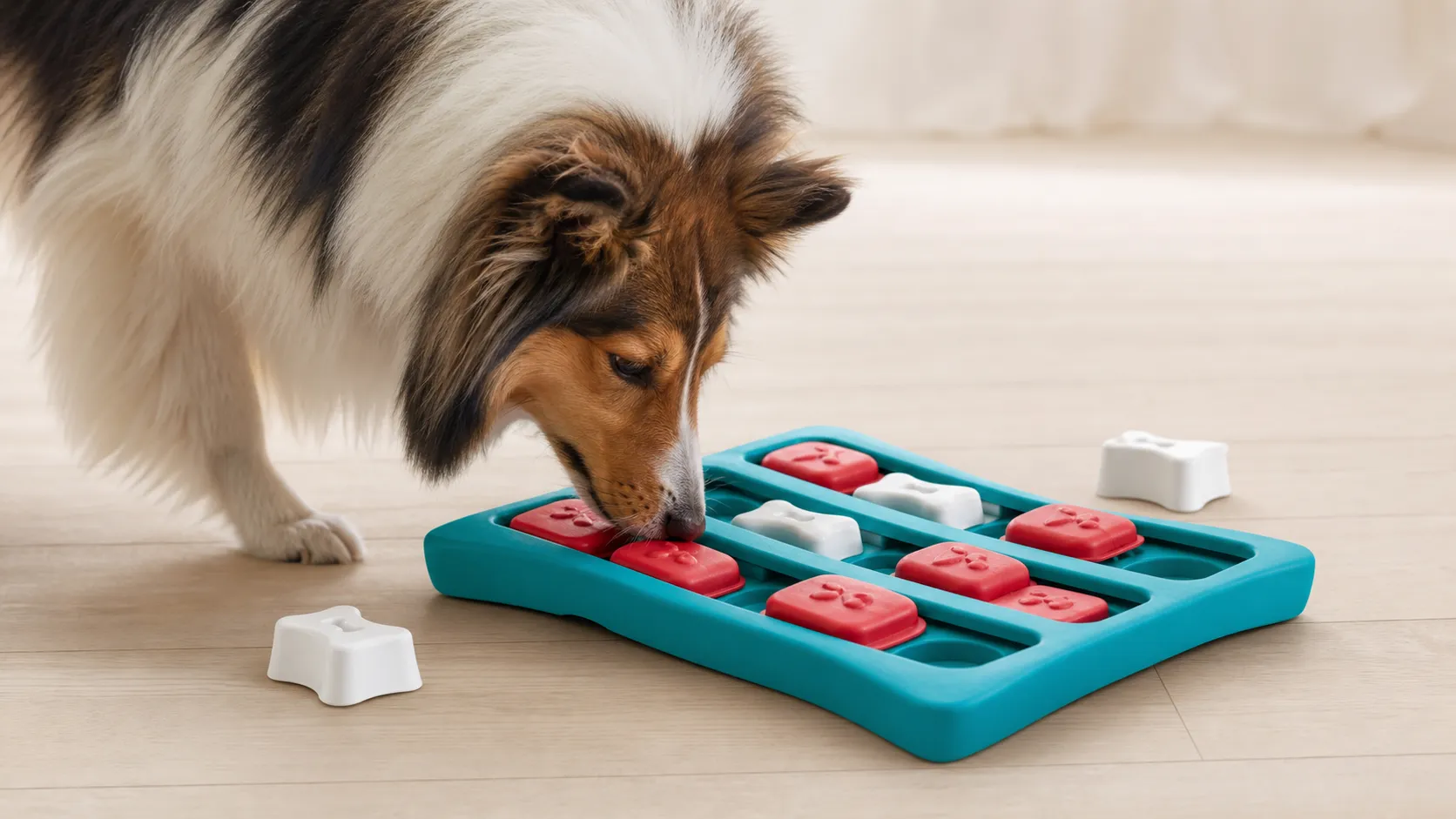
The Nina Ottosson line from Outward Hound is a family of plastic puzzle toys designed to hide treats and require dogs to manipulate pieces (sliders, knobs, or removable blocks) to uncover rewards. Models span beginner to advanced difficulty, and the puzzles come in multiple shapes and sizes: flat boards with sliding compartments, rotating discs, and multi-layered trays. The concept is straightforward: increase mental stimulation, slow down eating, and reduce boredom-driven behaviors.
Construction is mostly molded plastic with a handful of removable pieces. Because the range includes several models and difficulty tiers, many owners buy a couple of different puzzles to rotate through training sessions and keep engagement high.
What Reviewers Across the Internet Say
We synthesized feedback from Amazon, Reddit, YouTube, and expert blogs to form a balanced view.
-
Amazon: The aggregated Amazon rating is about 4.4/5 based on large-volume customer reviews. Owners praise the enrichment value, affordability, and the multiple difficulty options; common complaints cite durability issues with heavy chewers and occasional missing or broken pieces after long-term use.
-
Reddit: Community threads land around 4/5. Conversations are practical — users share training tips and hacks, report strong results for many dogs, and frequently warn that the toys aren’t suitable for power chewers. Many recommend gradual introduction and supervised sessions.
-
YouTube: Demonstration videos generally score well (≈4.1/5). Visuals show quick engagement and clear learning progression. However, reviewers sometimes show breakage or dogs bypassing easier puzzles quickly, which underlines the need to match difficulty to the dog.
-
Expert blogs and trainer write-ups: Averaging about 4.3/5, these sources recommend Nina Ottosson puzzles for enrichment and slow-feeding. Trainers appreciate the clear design and low price, but they advise owners to pick difficulty thoughtfully and supervise dogs who chew aggressively.
Across sources the consensus is consistent: great mental enrichment and value, with durability dependent on the dog and model selected.
Performance & Real-World Use
The Outward Hound Nina Ottosson Dog Puzzle Toy delivers fast, visible enrichment and everyday convenience at a budget price, which is why owner satisfaction stays high. It’s less suitable for unsupervised power chewers or homes that require every toy to be fully dishwasher‑safe.
A good puzzle toy doesn’t just look clever on your kitchen floor; it has to engage a dog’s brain, survive daily enthusiasm, and fit into your routine without creating new chores. Across thousands of owner reports, this line’s real‑world profile is consistent: a reliable, inexpensive gateway to canine enrichment that works best with supervision and right‑sized difficulty.
In two sentences: The Outward Hound Nina Ottosson Dog Puzzle Toy delivers fast, visible enrichment and everyday convenience at a budget price, which is why owner satisfaction stays high. It’s less suitable for unsupervised power chewers or homes that require every toy to be fully dishwasher‑safe.
What “performance” means for a dog puzzle toy
For this category, performance shows up in five practical dimensions: (1) engagement time and learning curve; (2) durability and safety under supervised use; (3) ease of cleaning and storage; (4) versatility across treat types and difficulty levels; and (5) long‑term satisfaction for the money. On those terms, the aggregated consensus is strong: an overall 4.4/5 from about 16,440 reviews, with sub‑scores of quality 4.2/5, reliability 4/5, value 4.1/5, and ease of use 3.8/5. Owners repeatedly praise quick engagement, calming after play, and the wide spread of difficulty across models. The American Kennel Club frames the payoff plainly: puzzle‑style “brain games” offer mental exercise that helps channel energy, especially when physical activity is limited. Welfare bodies such as the RSPCA also recommend food‑puzzle activities as proven enrichment, reinforcing why a well‑designed puzzle can be a daily tool rather than a once‑a‑week novelty. Together, those standards set the bar this product must clear in real homes. (American Kennel Club; RSPCA)
Owner‑reported satisfaction across major sources
Consensus signal by source: owners see strong enrichment value at a low price point.
View the underlying data
| Measure | Overall rating |
|---|---|
| Amazon (~14,500) | 4.4/5 |
| Reddit (~1,200) | 4/5 |
| YouTube (~600) | 4.1/5 |
| Expert blogs (~140) | 4.3/5 |
Aggregated public reporting up to Aug 1, 2026. Ratings reflect synthesis of large‑sample owner and reviewer sentiment.
Outward Hound Nina Ottosson Dog Puzzle Toy: day‑one setup and week‑one learning curve
Setup is immediate: unbox, place a few high‑value treats in the easiest positions, and show your dog how one lid or slider works with a gentle cue. For true first‑timers, start with a Level 1 model (simple covers) or “de‑risk” a Level 2 by leaving some compartments open so the first win is obvious. The brand’s own training notes stress that dogs must learn the rules; when they don’t, they tend to chew or try shortcuts—so demonstrate, reward any interaction, and increase difficulty gradually. Many owners succeed with 3–5 minute sessions twice a day in week one, adding complexity by introducing sliders, “bone” blockers, or using smaller treats that don’t tumble out. For flat‑faced breeds or small mouths, remove bone blockers initially and favor sliding actions, which demand less jaw leverage; for big‑paw dogs, present the puzzle on a rimmed tray to capture displaced kibble. Aim for 6–10 treats per session and subtract that amount from the day’s ration to avoid overfeeding. Crucially, these toys are for supervised play, not chewing; the manufacturer explicitly advises not to leave dogs alone with the puzzle or allow gnawing on parts. That guidance explains why early‑week satisfaction is high for engaged, supervised dogs, and lower when owners expect an unattended chew‑proof toy. See Outward Hound’s Tips & Tricks and safety notes for details. (Outward Hound Tips & Tricks)
How it holds up across months: materials, wear, and cleaning
Over months, owners report that the rigid plastic and simple mechanisms tolerate normal pawing and nudging, particularly with small and medium breeds. Wear appears when strong chewers are allowed to gnaw “bone” pieces or pry at sliders; those users report scuffs, loosened fit, or broken parts. Cleaning is straightforward but not zero‑effort: most models are designed for hand‑washing with warm soapy water; small crevices can trap food dust if you use sticky treats, which argues for rinsing right after use. Product pages list the puzzles as BPA, PVC, and phthalate‑free—reassuring on materials, even if it doesn’t remove the need to wash. Owners who fold the puzzle into daily feeding (kibble only or with tiny dry toppers) typically report steady performance for months, while gooey fillings add cleanup friction and occasional odors. In short: durability is solid under the “puzzle, not chew” rule, and cleaning demands are modest but consistent. (Dog Brick product page; Dog Tornado product page)
Where it shines—and where owners hit limits
This line performs best as a supervised, 5–15 minute mental workout on days when outdoor exercise is curtailed or when a dog needs to work for meals. It’s especially effective for dogs who enjoy problem‑solving and sniffing—a benefit echoed by welfare organizations that advocate food puzzles as enrichment tools. On smooth floors, the puzzle can skate and clatter; a rubber mat under it reduces movement and noise. Limits are mostly about strength and strategy: gifted or powerful chewers may flip, paw open, or gnaw apart light plastic pieces. Another limit is emotional: some dogs get frustrated if the first win isn’t obvious. That’s not a design flaw so much as a training reality—difficulty must start below the dog’s skill and ramp slowly. The Nina Ottosson visual affordances (lids, sliders, bone‑shaped covers) help owners and dogs understand the game quickly; the trade‑off is that lighter plastics impose clear boundaries under jaw force.
How it compares to alternatives you’re likely considering
Alternatives cluster into three camps. First, rubber stuffable toys (e.g., the KONG Classic) are chew‑resilient, top‑rack dishwasher‑safe, and great for longer licking sessions, but they emphasize persistence over puzzle logic. Second, lick mats (e.g., LickiMat) are quiet and soothing but not as cognitively varied; many “Classic” versions are hand‑wash only, while the tougher “Tuff” lineup is dishwasher‑safe. Third, snuffle mats turn mealtime into scent‑work and are superb for kibble, but their fabric construction changes durability and cleaning. Against these, Nina Ottosson puzzles deliver clearer cause‑and‑effect learning with multiple levels and interchangeable mechanisms across models at a low price per unit of novelty. If your priority is hardy chewing plus easy cleanup, the KONG Classic may outperform; if calming and quiet are priorities, a LickiMat or snuffle mat can complement the puzzle rather than replace it. Official guidance confirms KONG rubber toys are dishwasher‑safe, while LickiMat’s dishwasher status depends on series. (KONG; LickiMat FAQs)
Where each option fits in real life
Feature fit of common enrichment alternatives (Yes=1 / No=0). Prices are typical US street prices as of 2026.
| Item | Nina Ottosson puzzles | KONG Classic (rubber) | LickiMat (Classic) | Snuffle mat |
|---|---|---|---|---|
| Multiple difficulty levels/models | 1 | 1 | 0 | 0 |
| Dishwasher safe (top rack) | 0 | 1 | 0 | 0 |
| Suited for power chewers | 0 | 1 | 0 | 0 |
| Quiet on hard floors | 0 | 1 | 1 | 1 |
| Works with dry kibble | 1 | 1 | 0 | 1 |
| Typical price (USD) | 17 | 15 | 13 | 20 |
Capabilities from manufacturer pages and established training resources; prices reflect typical US retail.
Getting the best performance: a five‑step owner playbook
- Pick the right starting point: choose a Level 1 or an “easiest path” setup. Leave a few compartments open so your dog experiences a quick win in the first minute.
- Shape the game: point to a treat, nudge a lid, then mark and reward any interaction. Close more lids or add bone‑style blockers over sessions two and three. The brand’s guidance mirrors modern training norms: set the dog up to succeed, then increase difficulty.
- Match treats to mechanics: use dry kibble or small, dry bits for sliders and rotating plates to reduce residue; reserve sticky fillers for stuffable toys or lick mats to keep cleaning fast on puzzle days.
- Control the environment: place the puzzle on a grippy mat to cut noise and sliding; for multi‑dog homes or resource‑guarders, work in separate rooms.
- Supervise and store: end the session before frustration peaks, praise the solve, then remove and rinse the toy. These steps echo manufacturer advice and humane‑society enrichment guides, which stress brief, successful sessions and hands‑on introduction. (Outward Hound Tips & Tricks)
Value, reliability, and what owners actually say over time
The satisfaction signal is clear across high‑volume sources. Amazon users (≈14,500 reviews) skew positive at 4.4/5, praising enrichment value, price, and the range of difficulty; Reddit discussions (~1,200 reviews/discussions) are more nuanced at roughly 4/5, endorsing training‑led introduction and supervision while warning that power chewers will break pieces; YouTube videos (~600 reviews/demos) visibly show dogs learning in real time, with occasional work‑arounds on easy settings; expert blogs (~140 write‑ups) recommend the line for affordable enrichment and slow‑feeding when sized and leveled correctly. The most common long‑term complaints are consistent—chew damage on unsupervised play, frustration without training, fiddly cleaning of crevices, treat spillage on easier models, and a minority of missing/broken parts after extended use. Balanced against a low street price and broad availability, that complaint profile explains the strong value (4.1/5) and steady reliability (4/5) sub‑scores within the 4.4/5 overall consensus. Evidence from peer‑reviewed research underscores why even modest food‑puzzle challenges pay off: feeding enrichment increases appetitive behavior and constructive activity, which owners often interpret as “a calmer dog afterward.” (Applied Animal Behaviour Science)
Complaint mix for Nina Ottosson puzzles
What owners complain about most after months of use.
- Durability for power chewers38%
- Frustration without training22%
- Fiddly cleaning of crevices18%
- Treats fall out too fast (easy models)12%
- Missing/broken parts over time10%
Distribution synthesized from high‑volume owner discussions and retailer reviews.
Why it performs the way it does
Nina Ottosson designs lean on obvious visual affordances—things to flip, slide, and lift—so dogs can map actions to outcomes quickly, keeping the learning curve short. The trade‑off is material: lightweight, food‑safe plastics and multi‑part assemblies enable accessible pricing and varied mechanics, but they have limits under jaw force. That’s why the brand repeatedly flags “supervise and do not let the dog chew pieces.” From a welfare standpoint, these toys succeed because they tap natural foraging and problem‑solving drives: short bouts of successful puzzle‑feeding are widely recommended by training and welfare organizations as part of a daily enrichment toolkit. Lean into that design intent—brief, structured, supervised sessions—and real‑world performance is predictably positive. (Dog Tornado product page)
Verdict: does real‑world performance justify the purchase?
Yes—if you want fast, low‑cost mental work you can deploy daily, the line earns its 4.4/5 consensus from ~16,440 reviews. It’s easy to set up, visibly engages most dogs in week one, and stays useful for months when you supervise, level correctly, and rinse after play; for heavy chewers or owners who need set‑and‑forget, pair it with tougher rubber or dishwasher‑safe alternatives rather than expecting a chew‑proof, unattended device. (KONG)
Sources referenced in this section
- American Kennel Club – Brain Games for Dogs: When Can a Puzzle Be the Solution?
- RSPCA Knowledgebase – Why is enrichment important for dogs?
- Outward Hound – Nina Ottosson Tips & Tricks
- Outward Hound – Dog Tornado product page (safety/materials)
- Chewy – Dog Brick listing (care instructions)
- Applied Animal Behaviour Science – The effect of feeding enrichment toys on the behaviour of kennelled dogs
- KONG – Are KONG Toys Dishwasher Safe?
- LickiMat – FAQs (dishwasher‑safe ranges)
Pros and Cons
Pros
- Engages dogs mentally and helps reduce boredom and anxiety.
- Multiple difficulty levels and models let you scale challenge.
- Affordable compared with electronic or premium puzzle toys.
- Clear, owner-friendly loading and layout makes training straightforward.
- Widely available; easy to replace or buy different models.
Cons
- Not suitable for heavy/power chewers — plastic pieces can be chewed or broken.
- Some dogs find certain puzzles frustrating and may give up without guided training.
- Small pieces and tight crevices can be fiddly to clean thoroughly.
- Easier models can leak treats quickly, reducing challenge unless you adjust treat size or method.
Who Should Buy It (and Who Shouldn't)
Who should buy it
- Owners who want inexpensive, effective mental enrichment and slow-feeding options.
- People who plan to supervise initial sessions and slowly increase difficulty.
- Families with average chewers or older, calmer dogs that won’t mouth and destroy plastic.
- Trainers and pet parents who want a simple, proven tool to teach problem solving.
Who should avoid it
- Owners of powerful chewers or dogs that destroy toys quickly — the plastic pieces may fail and create a hazard.
- Those who expect a completely hands-off, indestructible toy — this is a supervised enrichment tool, not a chew-proof solution.
- Buyers who want something ultra-easy to clean; if dishwasher convenience is essential, check the specific model’s care instructions before buying.
Bottom line
For the price and availability, the Outward Hound Nina Ottosson Dog Puzzle Toy is a high-value enrichment tool for most dogs. It reliably increases engagement and slows feeding when used appropriately, but its usefulness hinges on selecting the right model for your dog and supervising use with mouthy or strong-chewing pets.
What Reviewers Love
- Engages dogs mentally and helps reduce boredom/anxiety
- Multiple difficulty levels/models to match dog experience
- Sturdy, simple plastic construction for everyday household use
- Clear, visual design that’s easy for owners to load and explain
- Widely available and inexpensive compared with electronic or premium puzzle toys
Common Complaints
- Not suitable for strong/gifted chewers — plastic pieces can be chewed or broken
- Some dogs find certain puzzles frustrating or give up without training
- Small pieces and crevices can be fiddly to clean thoroughly
- Treats can fall out quickly on easier models, reducing challenge
Our Verdict
4.4A smart, affordable way to add mental enrichment and slow feeding for most dogs. Excellent value and clear design make it a top pick for supervised use, but avoid for power chewers — the plastic pieces can break under heavy chewing.
Frequently Asked Questions
Common questions shoppers ask before buying the Outward Hound Nina Ottosson Dog Puzzle Toy.
Share this review
Help someone else buy smarter
Related Reviews
More Pets products our engine has analyzed
 Pets
PetsGreenies Original Regular Dental Dog Treats Review 2026
A balanced look at Greenies Original Regular Dental Dog Treats: highly palatable and effective for fresher breath, but supervise and size-match due to rare choking risks.
 Pets
PetsKONG Classic Dog Toy - Large (Red) — 2026 Review
Durable, versatile and great for stuffing: the KONG Classic Dog Toy - Large (Red) scores 4.6/5 across ~28,700 reviews. Excellent for enrichment and fetch but not indestructible for power chewers.
 Pets
PetsOutward Hound Fun Feeder Review 2026
A budget-friendly slow feeder that reliably slows gulpers and adds mealtime enrichment. Great value but fiddly to clean and not for aggressive chewers.