PetSafe ScoopFree Ultra Review 2026
At a Glance
Pros
- Greatly reduces daily scooping — automated rake moves waste into an enclosed tray.
- Effective odor control for many households thanks to crystal litter and covered waste compartment.
- Easy initial setup and simple day-to-day use (replace tray every few days to weeks depending on cat count).
Cons
- Ongoing cost of proprietary disposable trays and crystal litter (can be expensive over time).
- Mechanical issues reported over long-term use — rake jams, sensor or motor failures that sometimes require repairs or replacement.
- Some cats avoid the unit due to noise, timing of the rake, or the enclosed design; not universally accepted by every cat.
Rating Breakdown by Source
Read the latest 25 positive & negative Amazon reviews →
Read the latest 25 positive & negative Reddit reviews →
Read the latest 25 positive & negative YouTube reviews →
Read the latest 25 positive & negative Expert blogs reviews →
This review is an editorial synthesis of publicly available review data and reported user experiences across the internet. Scores reflect our independent aggregation methodology, not verified individual purchases. We may earn a commission if you buy through our links, at no cost to you.
Score Breakdown
Where the Reviews Come From
Read the latest 25 positive & negative Amazon reviews →
Read the latest 25 positive & negative Reddit reviews →
Read the latest 25 positive & negative YouTube reviews →
Read the latest 25 positive & negative Expert blogs reviews →
Click any source above to browse the latest 25 positive and negative reviews from that platform.
PetSafe ScoopFree Ultra Automatic Self-Cleaning Litter Box
See current price, deals and availability on Amazon
Introduction
If you want to spend less time scooping and more time with your cat, the PetSafe ScoopFree Ultra Automatic Self-Cleaning Litter Box promises a near-hands-off solution. Our aggregated look at roughly 14,450 reviews finds this unit delivers excellent day-to-day convenience and odor control for many households, but it also has real trade-offs: recurring disposable-tray costs and a pattern of mechanical issues over months of ownership. Overall aggregated score: 3.6/5.
In short: it’s a powerful time-saver for busy owners and people with mobility limits, but not a set-and-forget purchase — budget for replacement trays and be prepared for possible long-term repairs.
What Is the PetSafe ScoopFree Ultra Automatic Self-Cleaning Litter Box?
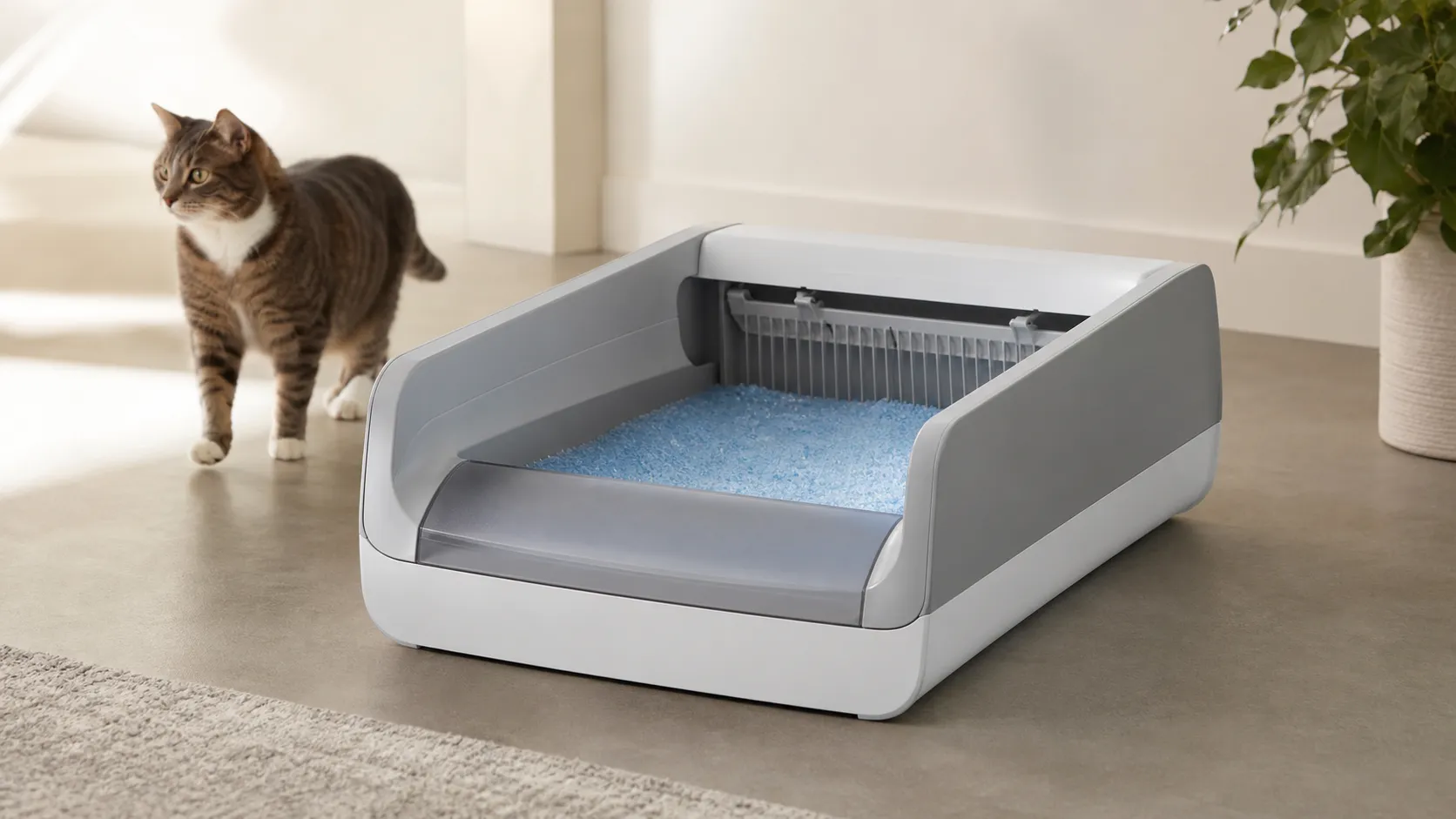
The ScoopFree Ultra is an automated litter system that uses crystal (silica) litter and a motorized rake to sweep waste into an enclosed disposable tray after your cat uses it. The Ultra model adds a covered waste compartment, adjustable rake timing (so the unit can wait a few minutes before cleaning), and a privacy hood in some configurations. Rather than scooping clumps daily, you replace the full disposable tray every few days to weeks, depending on how many cats use it.
Mechanically it’s straightforward: sensors detect when the cat leaves, a timer delays the rake, and the rake moves waste into a sealed tray that isolates odor. PetSafe sells proprietary disposable trays pre-filled with crystals (and replacement crystal packs if you buy a reusable tray), so maintenance is largely swapping trays and occasionally wiping sensors and rails.
What Reviewers Across the Internet Say
We combined user feedback from Amazon (large-volume customers), Reddit threads, YouTube reviews, and expert pet blogs to reach a consensus.
-
Amazon: Many users praise the dramatic reduction in daily scooping and improved odor control, especially in small homes or apartments. However, the site’s mixed reviews commonly mention mechanical failures (rake jams, sensors) after months and frustration at the ongoing cost of disposable trays. Aggregated Amazon score: ~3.6/5.
-
Reddit: Real-world discussion threads skew pragmatic — posters share long-term failure stories, troubleshooting steps, and DIY fixes. Redditors are split between enthusiastic converts who find the convenience worth the cost and frustrated owners who returned to manual pans or switched to other automatics. Aggregated Reddit sentiment: ~3.2/5.
-
YouTube: Video reviewers demonstrate easy setup and reliable daily odor control, and many creators call it a major time-saver. Follow-up comments and long-term update videos frequently bring up replacement-tray expense and occasional mechanical degradation over months. Aggregated YouTube sentiment: ~3.7/5.
-
Expert blogs: Pet-product sites generally recommend the ScoopFree as a hygiene-forward option for busy owners or those with mobility limits, but they consistently warn about disposable-tray costs and note the mechanical components are the system’s weak point. Aggregated expert score: ~3.8/5.
Across sources the theme is consistent: excellent short-term convenience and odor control, balanced against mid- to long-term reliability and cost concerns.
Performance & Real-World Use
The PetSafe ScoopFree Ultra Automatic Self-Cleaning Litter Box is convenient and controls odor well for many one- and two-cat homes, but recurring tray costs and eventual rake/sensor hiccups hold it back. If you accept those trade-offs, the PetSafe ScoopFree Ultra Automatic Self-Cleaning Litter Box delivers low-touch upkeep yet isn’t the most reliable or flexible option long term.
Automatic litter boxes promise to return minutes of your day and square inches of mental bandwidth. In real homes, that comes down to how well the box controls odor, whether your cats reliably use it, how often it asks you to spend money or time, and whether its moving parts keep moving after months of use. With an aggregated 3.6/5 satisfaction across large owner samples, this category leader performs best when matched to the right home and habits—especially one- and two-cat households that value low-touch upkeep.
The PetSafe ScoopFree Ultra Automatic Self-Cleaning Litter Box is a clear win for convenience and odor control in many homes, but its proprietary crystal trays add real monthly cost and long‑term rake/sensor hiccups are not rare. If you accept those trade‑offs, the PetSafe ScoopFree Ultra Automatic Self-Cleaning Litter Box can deliver weeks of low‑effort hygiene, though other designs are more flexible and, in some cases, sturdier over time.
What real‑world “performance” means for a self‑cleaning box
Owners judge success across odor control, cat acceptance, reliability, time savings, running cost, and cleanliness. The Ultra uses a sensor‑triggered rake that sweeps solid waste into a covered trap after a selectable delay (5, 10, or 20 minutes). Crystal litter absorbs urine and dehydrates stool to limit smell; a simple health counter logs cycles. These mechanics explain many early “this just works” reports—the crystals suppress odor and the hood contains scatter. PetSafe’s manual sets key constraints: use only the pre‑measured crystal trays (non‑clumping), keep kittens under six months in manual mode, and expect best results with cats under 15 lb. Those constraints matter because the system is tuned around crystal absorption and predictable litter depth; substitutions or very wet diets shorten tray life and can gunk the rake. Space also matters: the bed is 14 x 15.5 inches and the exterior 19.1 x 27.6 inches (16 inches high with the hood), so larger cats may feel tight compared with globe‑style competitors. (petsafe.net)
PetSafe ScoopFree Ultra Automatic Self-Cleaning Litter Box: day‑one setup and the first week
Setup is quick—slide the frame over the disposable tray, pour in the crystals, level the bed (check the green status light), attach the hood, and start with the default 20‑minute delay. Place the new box next to the old one for about a week and, if needed, leave the unit unplugged a few days so skittish cats acclimate before auto‑rake. These choices reduce early aversion triggered by first noise/motion. In owner reports and the manual, week one usually feels like relief: waste disappears into the covered trap, ammonia smell is muted, and a glance at the health counter replaces scooping. If the indicator flashes, leveling the litter or clearing the sensor windows typically fixes it. Two notes from the manual help: sprinkle a small handful of crystals under the waste trap during setup, and don’t add extra litter—the pre‑measured amount is calibrated for raking and sensor clearance. (petsafe.net)
Months 1–12: what changes, what wears, and how to keep it humming
After the honeymoon, performance hinges on three variables: how many cats use it, what they eat/drink, and home humidity. PetSafe is frank about replacement cadence: about 20–30 days per tray for one cat, 10–15 for two, and 7–10 for three; high humidity and high‑moisture diets shorten those figures. As trays saturate, urine odor creeps in and the waste trap may not close cleanly—both are change cues. The most common long‑term complaints are rake jams and intermittent sensor errors. The manual’s fixes are straightforward: reseat the waste‑trap magnets until you hear a click, re‑level the unit on its tray, brush crystals off the sensor windows, and cycle power so the rake returns home. Do those checks when you swap trays to reduce “mystery blinks.” Also note PetSafe’s guidance that kittens under six months should remain in manual mode; some owners misread soft‑stool smearing as a product flaw when it’s physiology. The crystal medium itself is amorphous silica gel—non‑toxic and highly absorbent when used as directed—which helps explain its strong odor performance. (petsafe.net)
Recommended tray replacement interval vs. number of cats
PetSafe’s own replacement chart shows sharply shorter intervals as cat count rises; midpoints shown for clarity.
View the underlying data
| Measure | Days between tray changes (midpoint of PetSafe range) (d) |
|---|---|
| 1 cat | 25 |
| 2 cats | 12.5 |
| 3 cats | 8.5 |
Midpoints calculated from PetSafe manual replacement ranges: 20–30d (1 cat), 10–15d (2 cats), 7–10d (3 cats).
Consumables and the real cost to run
Running cost is the other side of convenience. PetSafe’s guidance says a single cat can go 20–30 days per tray; two cats need a change every 10–15 days. Using current multi‑pack pricing, each tray lands roughly in the mid‑$20s. For a one‑cat home averaging 25 days/tray, that’s about one tray per month; for two cats averaging 12 days/tray, expect a little over two trays per month. At mid‑$20s per tray, that pencils out to roughly $25/month for one cat, $55–$60/month for two, and $80–$100/month for three depending on humidity and diet. Owners looking to trim costs can consider PetSafe’s reusable tray (paired with bagged crystal litter), but the company still specifies ScoopFree‑branded crystals and warns against alternate media in the manual. Electricity draw is negligible; time saved (no daily scooping) is where you “gain.” The Ultra shifts effort from minutes per day to dollars per month; whether that pencils out depends on your tolerance for scooping and how many feline users you have. (petsafe.net)
Where it excels—and where owners hit the limits
The Ultra shines when matched to the right scenario: one cat (or two polite sharers), low‑to‑moderate humidity, and owners who want minimal handling of waste. The hood and crystal medium do strong work on odor, and delay options help: 20 minutes lets crystals desiccate stool before raking; 5–10 minutes reduces fresh‑waste odor in open‑plan homes. Trouble spots are predictable. Multi‑cat homes often need more than one box regardless of automation—standard veterinary guidance is one box per cat, plus one—and even then, three‑cat households churn through trays quickly. Some cats dislike the rake motion or hood; if that’s your household, unplug for acclimation, remove the hood at first, and provide a traditional backup box in a different location to prevent “bathroom strikes.” Expect some tracking: crystal granules are lighter than clay and carry out on paws; a mat helps. The box’s footprint is modest, but the bed is smaller than globe‑style units, which larger cats may prefer. (aaha.org)
How it stacks up against popular alternatives
Against globe sifters like Litter‑Robot 4 and open‑top smart boxes like Petlibro Luma, the Ultra trades flexibility for simplicity. Its advantages are low daily effort, tidy full‑tray swaps, and no clump‑sticking; drawbacks are proprietary consumables and smaller interior space. Litter‑Robot 4 uses standard clumping clay, lets you set a 3–30 minute wait in the app or on‑device, and its globe offers a larger bed—useful for bigger cats—but the machine is taller and deeper. Litter‑Robot 4 lets you pick 3, 7, 15, 25, or 30 minutes precisely, which can help with wetter stools. Petlibro’s Luma is more open (often friendlier to hood‑averse cats), works with clumping litters, and adds app logging; it’s still sizable but shorter than LR4. If you prize low ongoing cost and litter flexibility, clumping‑litter designs win. If your top priority is the cleanest, least hands‑on full changeout, the Ultra’s sealed‑tray approach is compelling—so long as you’re comfortable with the monthly tray bill and crystal‑only constraint.
Size comparison: footprint and height
Dimensions matter for placement and cat comfort; all measures in inches from manufacturer materials.
- Width
- Depth
- Height
View the underlying data
| Item | Width | Depth | Height |
|---|---|---|---|
| ScoopFree Ultra | 19.1 in | 27.6 in | 16 in |
| Litter-Robot 4 | 22 in | 27 in | 29.5 in |
| Petlibro Luma | 22.5 in | 23.3 in | 28.1 in |
ScoopFree Ultra dimensions from PetSafe manual; Litter-Robot 4 from Whisker; Luma from Petlibro product page.
Feature comparison: ScoopFree Ultra vs alternatives
Feature differences that influence daily life and running cost.
| Item | ScoopFree Ultra | Litter-Robot 4 | Petlibro Luma |
|---|---|---|---|
| Uses proprietary consumables | Yes | No | No |
| Works with clumping litter | No | Yes | Yes |
| Adjustable cleaning delay | Yes | Yes | Yes |
| App monitoring | No | Yes | Yes |
| Hood included | Yes | No | No |
| Crystal litter compatible | Yes | No | No |
PetSafe manual (tray/crystal and delay); Whisker docs (clumping litter, delay, no hood); Petlibro docs (clumping compatibility, app).
Getting the best performance: step‑by‑step
- Placement: Pick a dry, level area away from showers or damp basements; humidity shortens tray life. Seat the frame fully on the tray so the magnets and sensors align, and keep the cord tidy. Avoid washers/dryers and food bowls per ASPCA, and keep a clear escape path. (petsafe.net)
- Acclimation: Set the Ultra beside your cat’s existing box for a week; if needed, leave it unplugged a few days and remove the hood at first. Add a few handfuls of old litter to the new crystals to transfer scent. (petsafe.net)
- Timer strategy: Start with the default 20‑minute delay to allow dehydration, then try 10 or 5 minutes if fresh‑waste odor is your bigger complaint. Multi‑cat homes often prefer the shorter delays to keep the surface groomed. (petsafe.net)
- Hygiene cues: Change the tray when crystals turn yellow across most of the bed or the trap no longer closes cleanly. Resist topping off with extra litter; it can block sensors and cause errors. (petsafe.net)
- Reliability hygiene: At tray change, brush crystals off the infrared sensors, ensure the waste‑trap magnets “click,” check that the box sits flat on the tray, and power‑cycle so the rake returns home. These habits reduce jams and indicator errors. (petsafe.net)
- Multi‑cat sanity: Follow the “one box per cat, plus one” rule to prevent resource guarding and accidents, regardless of automation. Keep boxes on different floors or rooms rather than side‑by‑side. (aaha.org)
Conclusion: does real‑world performance justify the purchase?
If you want to all but eliminate daily scooping and your cats tolerate crystal litter and a hooded pan, the ScoopFree Ultra delivers on its core promise: low‑touch, hygienic waste handling and solid odor control. The trade‑offs are just as real: recurring tray expense that scales with cat count, a smaller bed than some rivals, and occasional long‑term rake/sensor fussiness that needs light maintenance. Combined with broad owner feedback (3.6/5 overall; ease‑of‑use a strength, long‑term reliability a weak spot), it’s a smart buy for one‑cat households or low‑traffic two‑cat homes that value convenience most. If you need litter flexibility, to minimize consumables, or to house larger/multiple cats, a clumping‑litter alternative like Litter‑Robot 4 or an open‑top smart box such as Petlibro Luma will better match your priorities while sacrificing the Ultra’s sealed, swap‑and‑go tray routine. (petsafe.net)
Sources referenced in this section
- PetSafe ScoopFree Ultra/Original Product Manual (PAL00-14243, PAL00-15342)
- PetSafe Shop – Cat Litter Boxes & Litter (pricing/claims incl. “up to 30 days,” trays and reusable tray)
- AAHA/AAFP Feline Life Stage Guidelines – General litter box considerations
- ASPCA – Litter Box Problems (acceptance, placement)
- Vetstreet – Is Silica Safe for Cats? (amorphous silica overview)
- Whisker (Litter‑Robot 4) – Wait time/cycle delay settings
- Petlibro – Luma Smart Litter Box product page
Pros and Cons
Pros
- Greatly reduces daily scooping — automated rake stores waste in an enclosed tray.
- Effective odor control for many homes thanks to silica crystal litter and sealed trays.
- Easy initial setup and low hands-on daily maintenance.
- Good option for owners with mobility limitations or very busy schedules.
- Disposable trays make whole-tray changes cleaner and faster than scooping.
- Rake timing and covered waste compartment reduce visible mess and litter scatter.
Cons
- Recurring cost of proprietary disposable trays and crystal refill packs can be expensive over time.
- Mechanical parts (rake, sensors, motor) show higher failure rates over months to years for some owners.
- Not all cats accept crystal litter, the enclosed design, or the noise/timing of the rake.
- Crystal litter can track and feels different under paw compared with clumping clays.
- Environmental cost of disposable trays relative to traditional litter scooping.
Who Should Buy It (and Who Shouldn't)
Who should buy it:
- Busy owners who value time savings and cleaner daily routines. The convenience is the product’s core strength.
- People with limited mobility who find scooping physically difficult.
- Apartment dwellers who need reliable odor control without daily maintenance.
Who should not buy it:
- Households on tight budgets that can’t absorb the ongoing cost of disposable trays and crystals.
- Owners of cats that are easily startled, refuse new litter textures, or prefer open pans — acceptance is not universal.
- Those who want a long-term, low-waste solution; disposable trays increase both cost and environmental impact.
In practice: If you can trial one (some sellers offer generous return windows) and your cat uses it reliably, the ScoopFree Ultra can be life-changing for daily cleanup. If your cat rejects the unit or it develops mechanical problems after a year, however, the long-term value declines quickly.
What Reviewers Love
- Greatly reduces daily scooping — automated rake moves waste into an enclosed tray.
- Effective odor control for many households thanks to crystal litter and covered waste compartment.
- Easy initial setup and simple day-to-day use (replace tray every few days to weeks depending on cat count).
- Good option for owners with mobility limitations or busy schedules—low hands-on maintenance.
- Disposable trays make full-tray changes relatively clean and fast compared to scooping a pan.
- Rake timing/mode options and covered waste bin reduce visible mess and litter scattering.
Common Complaints
- Ongoing cost of proprietary disposable trays and crystal litter (can be expensive over time).
- Mechanical issues reported over long-term use — rake jams, sensor or motor failures that sometimes require repairs or replacement.
- Some cats avoid the unit due to noise, timing of the rake, or the enclosed design; not universally accepted by every cat.
- Crystal litter can track, feel odd to some cats' paws, and can't be swapped easily for regular clumping litter.
Our Verdict
3.6The PetSafe ScoopFree Ultra is a strong choice if you need serious day-to-day convenience and reliable short-term odor control; it shines for busy owners and those with mobility limits. However, recurring disposable-tray costs and a noticeable pattern of mechanical issues over months mean it’s not the best long-term value for every household — try it only if you accept those trade-offs and monitor maintenance closely.
Frequently Asked Questions
Common questions shoppers ask before buying the PetSafe ScoopFree Ultra Automatic Self-Cleaning Litter Box.
Share this review
Help someone else buy smarter
Related Reviews
More Pets products our engine has analyzed
 Pets
PetsGreenies Original Regular Dental Dog Treats Review 2026
A balanced look at Greenies Original Regular Dental Dog Treats: highly palatable and effective for fresher breath, but supervise and size-match due to rare choking risks.
 Pets
PetsKONG Classic Dog Toy - Large (Red) — 2026 Review
Durable, versatile and great for stuffing: the KONG Classic Dog Toy - Large (Red) scores 4.6/5 across ~28,700 reviews. Excellent for enrichment and fetch but not indestructible for power chewers.
 Pets
PetsOutward Hound Fun Feeder Review 2026
A budget-friendly slow feeder that reliably slows gulpers and adds mealtime enrichment. Great value but fiddly to clean and not for aggressive chewers.