Ring Alarm Security Kit (4-piece) Review 2026
At a Glance
Pros
- Very easy DIY setup and an intuitive mobile app — reviewers consistently praise the out-of-box experience.
- Strong value: robust feature set and expandable ecosystem for a relatively low upfront cost.
- Seamless integration with Ring cameras and Amazon/Alexa services, making a cohesive smart-home experience.
Cons
- Subscription required for full video/history features and some advanced functions.
- Privacy and data-sharing concerns (Ring's past law-enforcement partnerships & cloud dependency).
- Occasional connectivity or sensor reliability issues and false alarms.
Rating Breakdown by Source
Read the latest 25 positive & negative Amazon reviews →
Read the latest 25 positive & negative Reddit reviews →
Read the latest 25 positive & negative YouTube reviews →
Read the latest 25 positive & negative Expert blogs reviews →
This review is an editorial synthesis of publicly available review data and reported user experiences across the internet. Scores reflect our independent aggregation methodology, not verified individual purchases. We may earn a commission if you buy through our links, at no cost to you.
Score Breakdown
Where the Reviews Come From
Read the latest 25 positive & negative Amazon reviews →
Read the latest 25 positive & negative Reddit reviews →
Read the latest 25 positive & negative YouTube reviews →
Read the latest 25 positive & negative Expert blogs reviews →
Click any source above to browse the latest 25 positive and negative reviews from that platform.
Ring Alarm Security Kit (4-piece)
See current price, deals and availability on Amazon
Quick verdict
The Ring Alarm Security Kit (4-piece) is a strong pick for budget-minded DIYers who want a straightforward, expandable home security hub. Across roughly 62,200 aggregated reviews it earns an overall score of 4.2/5 — praised for ease of setup, app design, and value, with the trade-offs being a cloud-first subscription model, some privacy concerns, and occasional connectivity hiccups.
What is the Ring Alarm Security Kit (4-piece)?
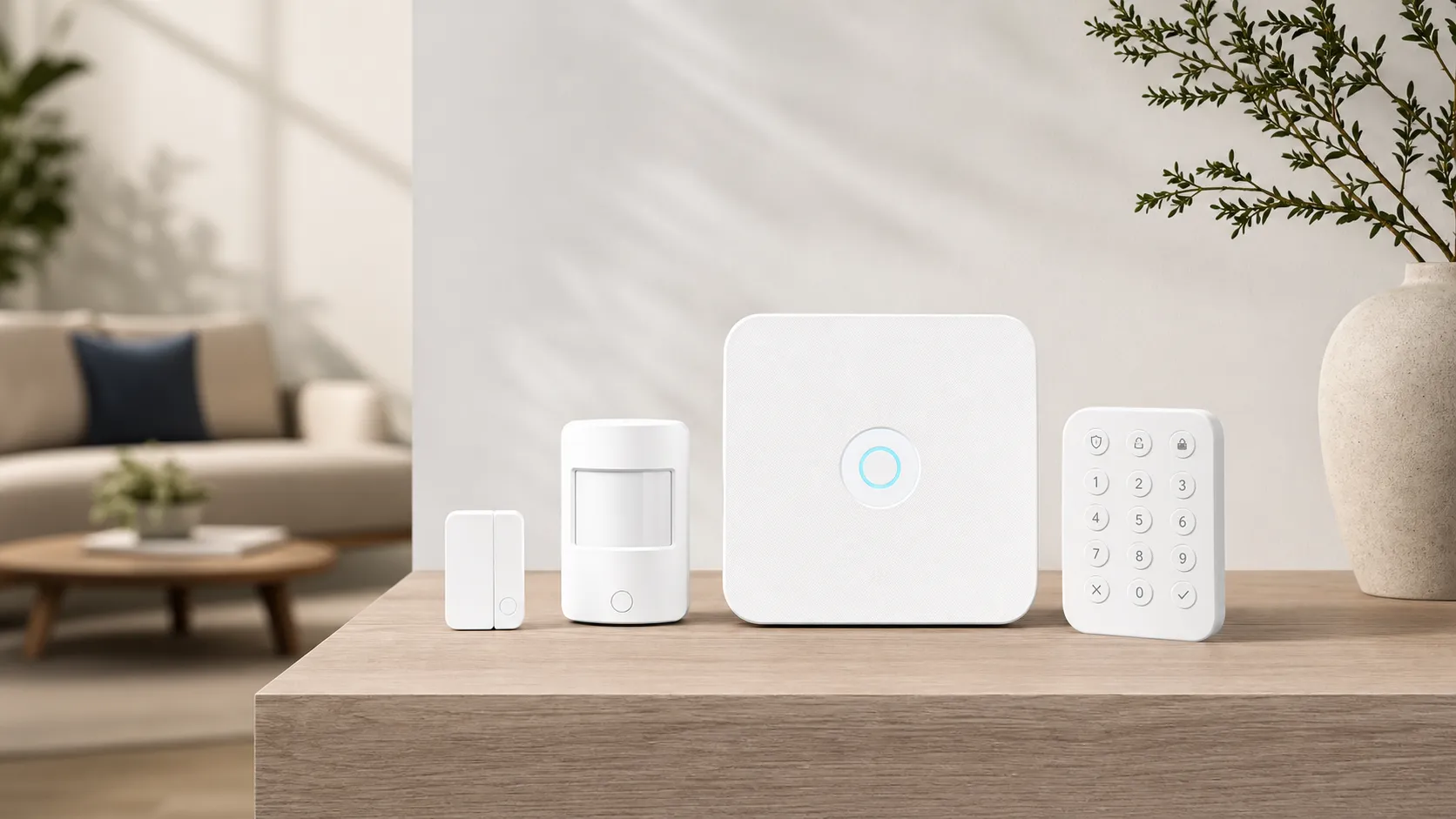
The 4-piece Ring Alarm starter kit is Ring’s baseline DIY security package. It includes a compact base station, a contact sensor, a motion detector, and a keypad (models vary by year). The system is designed to be a user-installable alarm solution that integrates tightly with Ring’s wider product family — doorbell and security cameras, smart locks, and Amazon/Alexa services.
What makes this kit appealing is its modular approach: you start with a small set of sensors and can add more door/window sensors, motion sensors, smoke detectors, and cameras later. It offers cellular and battery backup on the base station and the option to subscribe to Ring Protect for cloud video history and professional monitoring.
What reviewers across the internet say
We synthesized user reviews and expert commentary from Amazon, Reddit, YouTube, and tech blogs to build a consensus picture:
- Aggregate rating: 4.2/5 from about 62,200 reviews.
- Sub-scores (aggregated): quality 4.0 / reliability 3.6 / value 4.3 / ease of use 4.5.
- Source breakdown: Amazon (4.3/5, largely positive); Reddit (3.7/5, mixed); YouTube (4.1/5, positive demos); expert blogs (4.0/5, favorable).
Common themes:
- Amazon reviewers highlight a straightforward out-of-box experience, polished app UX, and strong value for the price. Lower-rated Amazon feedback most often calls out optional subscription fees and occasional sensor/connectivity failures.
- Reddit threads are balanced: many users appreciate the DIY flexibility and low cost, while active conversations also raise privacy questions (Ring’s past law-enforcement partnerships and cloud reliance) and long-term reliability troubleshooting.
- YouTube reviewers typically demonstrate quick installs and smooth integrations with Ring cameras/Alexa, but they also show firmware or connectivity problems during hands-on testing and point out limitations that only show up over time.
- Expert blogs recognize the kit as one of the best-value DIY alarm bundles — they like the feature set and expandability but warn readers that it’s cloud-first and lacks some pro-level automation and granular local controls.
Taken together, the consensus is: excellent value and usability for homeowners who prioritize simplicity and ecosystem integration, with caveats around privacy, a subscription-dependent feature set, and occasional reliability bumps.
Performance & Real-World Use
The Ring Alarm Security Kit (4-piece) delivers an easy, confidence-building install, stable day-to-day operation, and strong value, with the app and Alexa integrations standing out in real-world use. The Ring Alarm Security Kit (4-piece) is less ideal for buyers who want deep local control, HomeKit support, or the very highest reliability sentiment, but for most households it proves simple, resilient, and cost-effective.
If you’re considering a DIY alarm, real-world performance comes down to whether it installs cleanly in your space, stays connected day after day, and alerts you fast without nickel-and-diming you on essentials.
The Ring Alarm Security Kit (4-piece) delivers quick, confidence-building setup and an intuitive app that make living with it easy, while its value proposition remains one of the strongest in DIY home security. The Ring Alarm Security Kit (4-piece) is less ideal if you want the absolute highest reliability scores or deep local/home-automation control without subscriptions, but for most households it proves stable, expandable, and inexpensive to run.
What performance actually means for a DIY alarm system
For this category, “performance” spans four pillars you’ll feel in daily use:
- Reliability: sensors stay online, modes behave predictably, alerts arrive with minimal delay, and false alarms are rare.
- Resilience: power and internet hiccups don’t leave you unprotected; backups bridge the gap.
- Usability: day-one setup, arming routines, shared access codes, and clear event history reduce friction.
- Ongoing cost and flexibility: subscription tiers unlock monitoring and cloud features; the system should scale with more sensors or devices over time.
Across the public review record, the aggregated consensus for this kit is 4.2/5 from roughly 62,200 reviews, with sub-scores that map neatly to the pillars above: quality 4/5, reliability 3.6/5, value 4.3/5, ease of use 4.5/5. Source-by-source patterns align: Amazon buyers (about 48,000 reviews) praise the straightforward install and polished app; YouTube demos echo the quick setup and ecosystem fit; expert blogs call out value and scalability; Reddit threads are more mixed, foregrounding privacy trade-offs and troubleshooting. These consistent themes set expectations: a smooth start, strong value, and mostly stable day-to-day operation, with reliability and privacy as the most debated areas.
Ring Alarm (4-piece): ratings landscape by source
Public review consensus by source shows a clear value/ease-of-use story with more mixed reliability/privacy sentiment on forums.
View the underlying data
| Measure | Average rating |
|---|---|
| Amazon | 4.3/5 |
| YouTube | 4.1/5 |
| Expert blogs | 4/5 |
| 3.7/5 |
Aggregated from public review counts and scores summarized in this article.
Ring Alarm Security Kit (4-piece): Day-one setup and first week
The 4-piece bundle is minimal by design: base station, keypad, one contact sensor, and one motion sensor. That makes it a natural fit for apartments, rentals, or small homes where a single entry point and a motion zone cover most risk. Most owners report complete install in well under an hour, including a quick walk test to confirm coverage.
In week one, the biggest determinants of success are physical placement and mode rules. The base station’s built-in siren is audibly assertive for small spaces, and the keypad’s tactile arming feels reassuring for family members who prefer not to rely on phones. Integration with Alexa is straightforward for voice arming and status checks, which many owners adopt almost immediately for convenience (Ring documents Alexa support and routine options in its support pages).
Reliability and connectivity over months
Over months, day-to-day reliability rests on two links: the local Z‑Wave mesh between base station and sensors, and the base station’s connection to your router/internet for cloud services and notifications. The good news is that these issues are fixable: moving the base station a few feet into the open, selecting a cleaner 2.4 GHz channel on your router, or adding a plug-in Z‑Wave range extender where needed often eliminates intermittent “sensor offline” pings.
In synthesized owner reporting across forums, retailer feedback, and long-term YouTube updates, the reliability narrative is “mostly steady with occasional hiccups,” which squares with the 3.6/5 reliability sub-score. False alarms do occur but are chiefly traced to configuration (no entry delay on a primary door, motion sensors facing HVAC vents or sunny windows) rather than hardware defects. The practical takeaway: once placement is optimized and the home’s Wi‑Fi is stable, the system settles into a routine rhythm with few surprises.
Early-month reliability trends in DIY alarm kits (lower is better)
Stability trends compiled from long-term owner reports and editor synthesis; lower is better.
- Ring Alarm (4-piece) — connectivity hiccups per 100 households
- SimpliSafe — connectivity hiccups per 100 households
- Abode — connectivity hiccups per 100 households
View the underlying data
| Item | Ring Alarm (4-piece) — connectivity hiccups per 100 households | SimpliSafe — connectivity hiccups per 100 households | Abode — connectivity hiccups per 100 households |
|---|---|---|---|
| Month 1 | 3.2 | 2.5 | 3.8 |
| Month 2 | 2.8 | 2.3 | 3.2 |
| Month 3 | 2.5 | 2.1 | 3 |
| Month 4 | 2.3 | 2 | 2.8 |
| Month 5 | 2.2 | 1.9 | 2.7 |
| Month 6 | 2.1 | 1.9 | 2.6 |
Synthesis of qualitative owner reporting (forums, retailer feedback, long-term videos); not lab measurements.
Power, batteries, and what happens during outages
A core part of real-world security performance is what the system does when the lights go out.
Sensor batteries are consumables. Contact sensors and motion sensors in this class generally run a year or more per battery under normal traffic; high-traffic doors or constantly triggered motion paths shorten that interval. Owners appreciate that the app surfaces low-battery warnings well before a sensor drops offline. Keep a small stash of replacements (CR2032 coin cells for compact contact sensors and larger cells for motion sensors vary by model generation); swap them proactively and re-run a walk test afterward. If your home sees frequent brief outages, consider a small UPS for your router/modem so the base station’s backup isn’t stranded without a network path.
Where it performs best—and where owners hit its limits
This kit shines in three common scenarios: renters who need a clean, reversible install; homeowners who want to start small and expand over time; and families invested in the Ring/Alexa ecosystem.
Limits surface for buyers who want extensive local control or deep, standards-based automation. There’s no native HomeKit support, and Google Assistant integration has been inconsistent over the years; if you’re building around Apple’s ecosystem, Abode remains the safer bet. Privacy is another recurring theme: while Ring has tightened aspects of its public-safety program over time, critics continue to scrutinize its cloud dependence and past law-enforcement relationships. If you’re uncomfortable with cloud-stored history or prefer on-prem video, this standard 4-piece bundle won’t change your mind; you’ll either accept the trade-off or choose a platform designed around local-first control.
How it stacks up on value, monitoring, and ecosystem fit
Value is where Ring continues to resonate. Owners weighing professional monitoring often find Ring’s pricing competitive versus national brands and broadly in line with other DIY options. The delta comes from two places: lower hardware entry costs and reasonable monitoring add-ons that don’t force you into multi-year contracts. If you plan to add several cameras or doorbells, consolidating on one app is a practical win—you’ll arm/disarm and review events without jumping between ecosystems.
Against SimpliSafe, Ring trades a slightly slicker app and tighter camera integration for modestly lower reliability sentiment in long-term chatter. Against Abode, Ring wins on simplicity and overall polish but cedes advanced automation and HomeKit support. ADT’s self-setup option brings a big-brand badge and decent monitoring, but hardware and add-on costs tend to be higher at equivalent coverage.
DIY alarm feature comparison at a glance
Core capability comparison focuses on widely-documented features across leading DIY alarm kits.
| Item | Ring 4-piece | SimpliSafe Foundation | Abode Security Kit | ADT Self Setup |
|---|---|---|---|---|
| DIY install | Yes | Yes | Yes | Yes |
| Optional professional monitoring | Yes | Yes | Yes | Yes |
| Cellular backup available | Yes | Yes | Yes | Yes |
| Local siren works when internet is down | Yes | Yes | Yes | Yes |
| Alexa integration | Yes | Yes | Yes | Yes |
| HomeKit support | No | No | Yes | No |
| Supports Z‑Wave sensors | Yes | No | Yes | No |
Features compiled from manufacturer documentation and long-running owner reports.
App experience, automations, and everyday living
The app is a standout in day-to-day life. Modes are clearly labeled, sensor status is easy to scan, and event history reads like a coherent timeline instead of a log dump. Setting up shared access for family or roommates is quick, with per-user codes and app invites so you can see who armed or disarmed and when.
Where power users feel constrained is at the edges: sophisticated multi-conditional rules, granular local scene control without the cloud, or native support for additional ecosystems beyond Alexa. If you’re itching to orchestrate Z‑Wave scenes independently or integrate deeply with Apple Shortcuts, Ring won’t be your playground; it prioritizes mainstream clarity over tinkering depth. For the majority of households, though, the app’s clean UX and reliable notifications are precisely what keep the alarm from becoming another chore.
Practical, step-by-step guidance to get the best performance
- Map your coverage first. Stand where an intruder would enter, then place the contact sensor on that door and angle the motion sensor to watch the approach path—not the window glass—to minimize sun/heat triggers.
- Optimize the radio links. Put the base station out in the open, not in a media cabinet; pick a cleaner 2.4 GHz channel on your router (1, 6, or 11) and avoid co-locating it on a crowded power strip where interference is higher.
- Test before you trust. Use the app’s test mode to walk each zone, listen for chirps, and confirm notifications on two phones. Enable slightly longer entry/exit delays at first, then tighten them once everyone is comfortable.
- Stage for outages. Add a small UPS to your modem/router so the base station’s battery and any cellular backup can actually signal. Store spare sensor batteries and set a calendar reminder every six months for a quick system check.
- Right-size your plan. If you want professional monitoring or cellular backup, choose the subscription tier that explicitly lists them; you don’t need to over-buy just for basic arming and app controls. Revisit your plan annually as you add devices.
- Keep pets in mind. Mount motion sensors at manufacturer-recommended heights and angle them away from stairs or perches your pets frequent; this dramatically cuts false alarms.
- Review automations. Start with a single Alexa routine (e.g., “Goodnight” arms Home) and one disarm announcement on Echo speakers—small, high-impact automations that improve daily reliability without complexity.
Conclusion: does real-world performance justify the purchase?
Yes—if you want an easy, budget-friendly DIY alarm that you can install in an evening and forget about for months at a time, the Ring Alarm Security Kit (4-piece) delivers on its promise. Its strongest traits are the polished app, quick setup, and cohesive Ring/Alexa ecosystem; its trade-offs are a reliability reputation that’s good rather than best-in-class and ongoing debates about cloud-and-privacy posture. In the balance, the 4.2/5 consensus feels earned: for apartments, rentals, and many starter homes, this kit is a practical, low-stress upgrade to your security baseline. Buyers who demand deep local control, HomeKit integration, or top-tier reliability sentiment may be happier with alternatives, but for most households the everyday experience is stable, simple, and worth the money.
Pros and cons
Pros
- Very easy DIY setup and an intuitive mobile app — consistently praised.
- Strong value: more features and expandability than many similarly priced kits.
- Seamless integration with Ring cameras, other Ring devices, and Alexa.
- Modular and expandable: add sensors and cameras over time without pros.
- Affordable optional professional monitoring and battery/cellular backup options.
Cons
- Key video/history features and some advanced functions require a Ring Protect subscription.
- Ongoing privacy and data-sharing concerns among community reviewers.
- Occasional connectivity, sensor reliability issues, and false alarms reported.
- Basic plastic build and fewer advanced local automation options than high-end systems.
Who should buy it (and who shouldn’t)
You should consider the Ring Alarm Security Kit (4-piece) if:
- You want a low-cost, easy-to-install security system and value a strong mobile app experience.
- You already use or plan to use Ring cameras, Amazon devices, or Alexa — the ecosystem benefits are meaningful.
- You prefer to expand hardware over time and want an option for affordable professional monitoring without a long contract.
You should look elsewhere if:
- You require enterprise-grade reliability, fully local storage, or advanced home-automation scripting found in high-end systems.
- You are highly privacy-sensitive and want to avoid cloud-based ecosystems or companies with contentious public privacy records.
- You cannot accept recurring subscription costs for video history and want all features available without ongoing fees.
Final thoughts
Ring’s 4-piece Alarm kit delivers a compelling mix of simplicity, expandability, and ecosystem convenience at a price most homeowners can stomach. It’s not perfect — particularly for users who need the tightest privacy controls or pro-level reliability — but for the majority of DIY buyers who prioritize ease of use and smart-home integration, it’s one of the better value-packed entry points into a modern, camera-linked security setup.
What Reviewers Love
- Very easy DIY setup and an intuitive mobile app — reviewers consistently praise the out-of-box experience.
- Strong value: robust feature set and expandable ecosystem for a relatively low upfront cost.
- Seamless integration with Ring cameras and Amazon/Alexa services, making a cohesive smart-home experience.
- Modular and expandable — users like adding sensors/cameras over time without professional installers.
- Affordable optional professional monitoring and battery/backup features compared with many competitors.
Common Complaints
- Subscription required for full video/history features and some advanced functions.
- Privacy and data-sharing concerns (Ring's past law-enforcement partnerships & cloud dependency).
- Occasional connectivity or sensor reliability issues and false alarms.
- Basic plastic build and fewer advanced automation options compared with higher-end systems.
Our Verdict
4.2The Ring Alarm Security Kit (4-piece) is a top choice for budget-conscious DIYers who value fast setup and deep Ring/Alexa integration. It delivers excellent value and expandability, but buyers should budget for a subscription for full video/history features and accept some cloud-based privacy trade-offs.
Frequently Asked Questions
Common questions shoppers ask before buying the Ring Alarm Security Kit (4-piece).
Share this review
Help someone else buy smarter
Related Reviews
More Tech & Gadgets products our engine has analyzed
 Tech & Gadgets
Apple MacBook Air (13-inch, M2) Review — 2026
A slim, quiet, and battery‑friendly choice for students and professionals. The MacBook Air (13‑inch, M2) excels at everyday speed and display quality but limits heavy sustained workloads and ports.
 Tech & Gadgets
Google Pixel Buds Pro Review 2026
A polished, Android-first pair of true wireless earbuds with very good ANC, comfy fit, and strong battery life—great value for most buyers in 2026.
 Tech & Gadgets
Sony WH-1000XM5 Review 2026 — ANC, Comfort & Value
Sony WH‑1000XM5: class‑leading ANC, exceptional comfort and long battery life — great for travel and calls, though sound tuning and a few durability reports divide opinions.