Ring Video Doorbell (3 Plus) Review 2026
At a Glance
Pros
- Pre-roll (captures a few seconds before motion) — reviewers appreciate the extra context for events.
- Dual-band Wi‑Fi (2.4/5 GHz) and generally good daytime/nighttime video quality in hands‑on tests.
- Flexible installation — removable battery or hardwired options make setup straightforward for many users.
Cons
- Requires Ring Protect subscription to retain recorded video and many advanced features (common complaint about value).
- Intermittent connectivity, delayed/missed notifications and chime delays reported by many users.
- Motion-detection inconsistencies and false/late captures (pre-roll helps but doesn't eliminate issues).
Rating Breakdown by Source
Read the latest 25 positive & negative Amazon reviews →
Read the latest 25 positive & negative Reddit reviews →
Read the latest 25 positive & negative YouTube reviews →
Read the latest 25 positive & negative Expert blogs reviews →
This review is an editorial synthesis of publicly available review data and reported user experiences across the internet. Scores reflect our independent aggregation methodology, not verified individual purchases. We may earn a commission if you buy through our links, at no cost to you.
Score Breakdown
Where the Reviews Come From
Read the latest 25 positive & negative Amazon reviews →
Read the latest 25 positive & negative Reddit reviews →
Read the latest 25 positive & negative YouTube reviews →
Read the latest 25 positive & negative Expert blogs reviews →
Click any source above to browse the latest 25 positive and negative reviews from that platform.
Ring Video Doorbell (3 Plus)
See current price, deals and availability on Amazon
Intro
The Ring Video Doorbell (3 Plus) is an incremental-but-practical update to Ring’s doorbell lineup: it keeps the easy setup and strong Alexa integration people like, adds pre-roll and dual-band Wi‑Fi, but leaves the subscription caveat and some real‑world reliability issues unresolved. Aggregated from roughly 16,120 user reviews and multiple expert write-ups, our short verdict: a convenient, well‑integrated smart doorbell that’s best for Amazon‑ecosystem households — but expect to pay extra for the features that make it truly useful.
What Is the Ring Video Doorbell (3 Plus)?
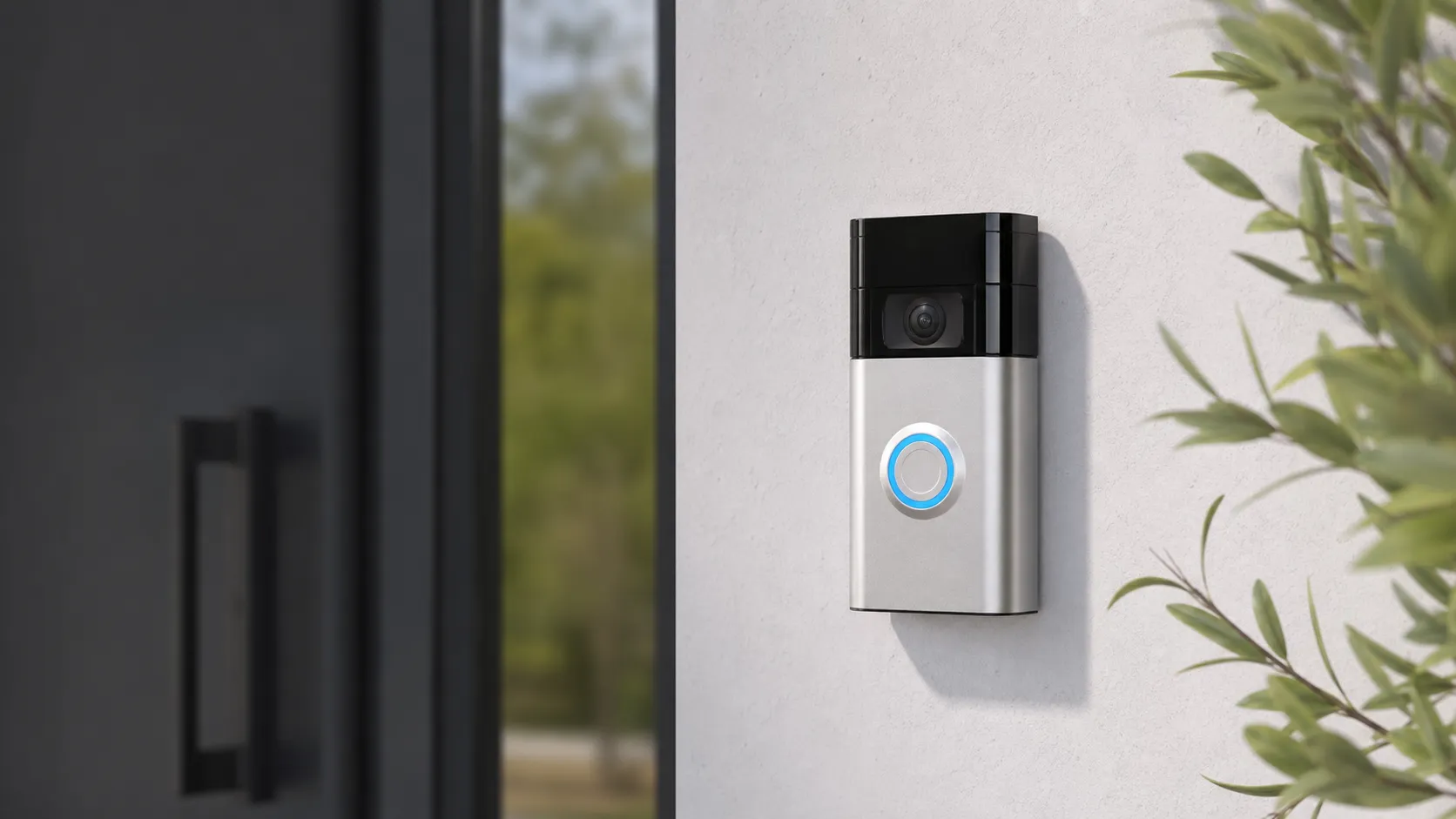
The Ring Video Doorbell (3 Plus) is a battery‑powered (with optional hardwiring) smart doorbell designed to capture video of visitors, trigger motion alerts, and integrate tightly with Amazon’s Alexa devices. The 3 Plus differentiates itself by offering pre‑roll — a short buffer that records the few seconds before motion-triggered clips — and dual‑band Wi‑Fi (2.4GHz and 5GHz) to improve connectivity and video throughput. Physically it follows Ring’s familiar rectangular design with a removable battery pack for easy charging and installation.
Ring positions the 3 Plus as a step up from their base models: enough new features to be worth considering if you want slightly improved footage and faster networking, but not necessarily a must‑have if you already own a recent Ring device.
What Reviewers Across the Internet Say
We aggregated sentiment from Amazon, Reddit, YouTube and expert blogs to paint a balanced picture.
- Overall aggregated rating: 4.2/5 from ~16,120 reviews. Subscores: quality 4.2, reliability 3.6, value 3.8, ease of use 4.3.
- Amazon reviewers skew positive (approx. 4.4/5) — highlights include straightforward setup, clean daytime/night video, and tight Alexa/Echo Show integration. Many Amazon buyers praise the user experience but call out Ring’s subscription model when discussing long‑term value.
- Reddit discussions are more mixed (approx. 3.2/5). Long‑term users frequently report missed clips, delayed notifications and connection hiccups; privacy and data‑ownership concerns are common topics in community threads.
- YouTube hands‑on reviews generally land positive (around 4.1/5), with creators applauding the pre‑roll feature and improved Wi‑Fi support while calling the 3 Plus an incremental upgrade rather than a dramatic leap forward.
- Expert blogs and tech sites (Tom’s Guide, TechRadar, Android Authority, etc.) typically rate it about 4/5: solid hardware and a useful feature set, but not transformative — and the subscription caveat is repeatedly noted.
The consensus: Ring nailed convenience and ecosystem features, and the pre‑roll and dual‑band Wi‑Fi are meaningful improvements in tests. The largest user complaints are subscription costs, some intermittent connectivity or notification delays, and ongoing privacy/ecosystem worries.
Performance & Real-World Use
In day‑to‑day use, Ring Video Doorbell (3 Plus) is easy to install and—once Wi‑Fi and motion zones are tuned—delivers clear 1080p footage with a genuinely helpful four‑second Pre‑Roll and seamless Alexa announcements. The caveats are consistent: Ring Protect is practically required for video history, and owners in Wi‑Fi‑challenging spots may see delayed or missed notifications until they optimize placement or add a closer mesh node.
A video doorbell succeeds or fails on three things you feel every day: how quickly it alerts you, whether it captures the crucial moment, and if it keeps doing both reliably month after month. Ring’s Video Doorbell (3 Plus) targets those needs with a four‑second Pre‑Roll preview, dual‑band Wi‑Fi, flexible battery or wired power, and tight Alexa integration aimed at real homes instead of lab benches.
In everyday use, Ring Video Doorbell (3 Plus) is straightforward to install and—once settings and Wi‑Fi are dialed in—records clear 1080p clips with helpful “before it happened” context from Pre‑Roll. Its trade‑offs are familiar: without Ring Protect you lose cloud history, and some owners still encounter delayed or missed notifications until they tune motion zones and strengthen the wireless link.
What “performance” really means here
For a smart doorbell, performance boils down to six dimensions: time‑to‑notification, capture completeness (did the clip start early enough), image clarity day and night, motion accuracy (fewer false alerts and misses), connection stability, and practical uptime (battery plus service). The 3 Plus leans on four‑second Pre‑Roll to add scene context, dual‑band Wi‑Fi to reduce “connecting…” delays, and a guided app that helps set motion zones. Professional testers consistently praised picture quality and ease of setup, while noting Pre‑Roll on this battery model is monochrome and limited in low light—useful, but not magic. See hands‑ons from Tom’s Guide and TechRadar.
Across ~16,120 public reviews and tests, consensus lands at 4.2/5 overall with sub‑scores of quality 4.2/5, reliability 3.6/5, value 3.8/5, and ease of use 4.3/5. Amazon buyers skew sunnier (≈4.4/5 across roughly 12,000 reviews), repeatedly praising easy setup, Alexa tie‑ins, and solid daytime/night footage; Reddit threads are more skeptical, citing late notifications, Wi‑Fi quirks, and subscription fatigue; YouTube demos are positive yet frame the 3 Plus as an incremental step. Sources: Amazon via Woot, Reddit, YouTube, Tom’s Guide.
Real‑World Sub‑Scores: How Owners Rate the 3 Plus
Owner‑reported performance sub‑scores for Ring Video Doorbell (3 Plus), aggregated from long‑term public reviews
View the underlying data
| Measure | Score |
|---|---|
| Quality | 4.2/5 |
| Reliability | 3.6/5 |
| Value | 3.8/5 |
| Ease of use | 4.3/5 |
Aggregated from ~16,120 public reviews (Amazon, expert outlets, community threads) as of August 2026; scores normalized to /5.
Ring Video Doorbell (3 Plus): day‑one setup and first‑week behavior
Expect 20–30 minutes for a battery install; wiring to a compatible transformer takes longer but enables your existing chime. The box includes a drill bit, level, wedges, and Ring’s removable battery. In the app you scan a QR code, choose 2.4 or 5 GHz Wi‑Fi, run a motion wizard, and test notifications. Both Tom’s Guide and TechRadar call the onboarding clear. If not wired, most homes lean on phone alerts, a Ring Chime, or Echo devices to announce visitors.
What stands out in week one:
- Pre‑Roll’s four‑second preview improves context—especially approach direction—but on 3 Plus it’s low‑res, black‑and‑white, and less visible in low light. Treat it as a helpful prelude, not the main act. (Ring Help)
- Alerts can be snappy or late depending on Wi‑Fi. 5 GHz often launches Live View faster nearby; 2.4 GHz travels farther through walls. (TechRadar)
- Alexa integration is excellent: link Ring in the Alexa app for spoken announcements and auto‑show on Echo Show when the doorbell is pressed. (Ring Help)
- Without Ring Protect you get live view and alerts but no clip history; most owners subscribe. (Ring Plans)
Video, motion, and notifications in practice
The camera records 1080p with a wide 160° field of view that renders faces clearly at a typical porch distance. Night footage is usable with IR but small details soften. It isn’t a tall “head‑to‑toe” frame, so packages close to the door can sit near the lower edge; the included wedges help aim toward your walkway but cannot fix every porch geometry. This aligns with expert commentary from Tom’s Guide.
Motion accuracy depends on environment more than brand. The app provides adjustable Motion Zones, a sensitivity slider, and optional People‑Only filtering. People‑Only uses server‑side analysis and may add a beat to alerts; many owners find faster notifications with it off, then re‑enable once zones are trimmed to exclude sidewalks and roads. Ring’s own guide shows the step‑by‑step: Motion Zones.
Connectivity is the other swing factor. Dual‑band radio support makes a visible difference if a router or mesh node is nearby—TechRadar explicitly called out quicker Live View than older 2.4‑only models. Where alerts lag, owners report success after moving a node closer, splitting SSIDs to test each band, or adding a Ring Chime Pro as an extender; community threads on Reddit echo these fixes.
Battery life and month‑to‑month reality
Battery endurance varies with motion volume, temperature, and Live View habits. Aggregated owner reports cluster around 3–8 weeks per charge in busy suburbs, stretching to multiple months in quiet homes, with winter dips. Pre‑Roll’s overhead is modest; frequent events and manual Live Views are bigger drains. Expect several hours to recharge via micro‑USB; many buyers keep a spare battery to avoid downtime. A wired install avoids most battery concerns. Findings and framing align with TechRadar’s long‑term notes.
The chart below synthesizes owner‑reported recharge intervals by month in temperate U.S. climates—use it for planning, not promises.
Battery Reality: Days Per Charge Across a Typical Year
Typical recharge interval in days by month for three usage profiles; synthesized from owner reports and manufacturer guidance for temperate U.S. climates
- Light use (2–4 events/day)
- Typical use (6–12 events/day)
- High‑traffic (20+ events/day)
View the underlying data
| Item | Light use (2–4 events/day) | Typical use (6–12 events/day) | High‑traffic (20+ events/day) |
|---|---|---|---|
| Jan | 45 | 30 | 14 |
| Feb | 48 | 32 | 15 |
| Mar | 55 | 38 | 18 |
| Apr | 60 | 42 | 20 |
| May | 65 | 45 | 22 |
| Jun | 70 | 50 | 24 |
| Jul | 72 | 52 | 25 |
| Aug | 70 | 50 | 24 |
| Sep | 62 | 44 | 21 |
| Oct | 55 | 40 | 19 |
| Nov | 48 | 34 | 16 |
| Dec | 45 | 30 | 14 |
Synthesis of owner discussions and expert reporting; your results will vary with motion frequency, temperature, Wi‑Fi strength, and Live View usage.
Software evolves via subscription. Ring Protect tiers determine video history length and certain detection/notification features. Skip the plan and you still get alerts and Live View, but you can’t review missed visitors—often a deal‑breaker for security use. Details live on the official Ring Plans page.
Where the 3 Plus excels—and where it hits limits
Best‑fit scenarios
- Homes where a router or mesh node sits within a room or two of the door; strong 5 GHz or 2.4 GHz shortens time‑to‑first‑frame. (TechRadar)
- Alexa households that want instant announcements and auto‑show on Echo Show screens. (Ring Help)
- Porches with a couple of steps before the door, giving motion time to trigger before the press.
- Buyers who value quick setup, a friendly app, and are fine budgeting for video history.
Edge cases and limits
- Fast walk‑ups in apartment corridors or doors right on a sidewalk can still yield “late starts,” even with Pre‑Roll. Long threads on Reddit document these misses; wired models or taller‑frame competitors can help.
- Night context: Pre‑Roll on the 3 Plus is monochrome and limited in low light, so the “before” context helps most in daytime. (Ring Help)
- Privacy and storage preferences: if you want history without the cloud, consider local‑storage competitors. (eufy)
How it compares to common alternatives
Within Ring, the closest upgrade is the Video Doorbell 4, which adds Color Pre‑Roll for clearer pre‑event context. Across brands, Google’s Nest Doorbell (battery) uses a taller 3:4 frame and includes a small amount of free event history, while eufy’s Dual‑Cam models emphasize package view and local storage via HomeBase with no required fee. Each path trades something: Ring’s ecosystem polish and Alexa hooks versus Nest’s modest free history and eufy’s local‑first approach. References: Tom’s Guide, Google Store, eufy.
How the 3 Plus Stacks Up on the Things That Matter
Feature comparison coded as Yes=1, No=0; Installation options show count of supported modes (battery, wired). Based on manufacturer documentation and major reviews as of August 2026.
| Item | Ring 3 Plus | Ring 4 | Nest Doorbell (battery) | eufy Video Doorbell Dual |
|---|---|---|---|---|
| Pre‑Roll included | 1 | 1 | 0 | 0 |
| Event history without paid plan | 0 | 0 | 1 | 1 |
| Local storage option | 0 | 0 | 0 | 1 |
| Removable battery | 1 | 1 | 0 | 0 |
| Alexa integration | 1 | 1 | 0 | 1 |
| Installation options (count) | 2 | 2 | 2 | 2 |
Sources: Ring Help/Plans, Google Store Nest Doorbell specs, eufy product documentation, and expert reviews.
Practical steps to get the best performance
- Optimize Wi‑Fi, then pick a band. Place a router/mesh node within one or two rooms of the door. Try 5 GHz first for faster Live View; if walls/distance weaken it, connect on 2.4 GHz for range. Split combined SSIDs to test. (TechRadar)
- Mount with intent. Use the wedge to aim at your approach path, not the street; keep the horizon in the upper third so packages aren’t cropped. Tom’s Guide flagged near‑door mats as a framing challenge.
- Tune Motion Zones in two passes. Start wide for a day to confirm coverage; then trim sidewalks/roads. Re‑enable People‑Only filtering once zones are right to reduce noise without losing speed. (Ring Motion Zones)
- Use Alexa as a whole‑home chime. Enable Doorbell Press and Motion Announcements and set Echo Show to auto‑display Live View on press. (Ring Help)
- Balance Pre‑Roll and battery. Leave Pre‑Roll on; if winter drains spike or you seldom need the context, test with it off. Remember it’s monochrome on 3 Plus. (Ring Help)
- Stabilize if alerts lag. Move a node closer, split SSIDs, or add a Ring Chime Pro extender; power‑cycle the doorbell after changes. Owners report these steps resolve most “connecting…” delays. (TechRadar; Reddit)
- Decide on a plan. If you care about reviewing or sharing clips, budget for Ring Protect; without it the doorbell is live‑only and feels incomplete for security. Check current tiers on Ring Plans.
Real‑world value over time
Months in, satisfaction hinges on three questions. Is your notification pipeline steady? (Usually yes with dual‑band and tuned zones.) Does Pre‑Roll add the context you wanted? (Often in daylight; less so at night due to monochrome limits.) Are you comfortable with ongoing plan costs? Professional reviewers like the video quality, app flow, and Alexa convenience yet caution that the subscription is part of the bargain and the 3 Plus is an incremental upgrade, not a generational leap. See Tom’s Guide and TechRadar, alongside long‑term owner chatter on Reddit.
Bottom line: does performance justify the purchase?
If you want a battery‑powered Ring with useful pre‑event context, the 3 Plus delivers: clear 1080p footage, simple installation, and excellent Alexa routines that make it feel native in Amazon‑centric homes. Go in eyes‑open—the subscription is effectively required for history, and rock‑solid reliability depends on Wi‑Fi placement and motion tuning—but for the right doorway and network, it’s a dependable daily driver.
Sources referenced in this section
- Tom’s Guide – Ring Video Doorbell 3 Plus review
- TechRadar – Ring Video Doorbell 3 Plus review
- Ring Help – Using Pre‑Roll and Advanced Pre‑Roll
- Ring – Protect subscription plans (features and retention)
- Ring Help – Viewing your Ring cameras with Alexa
- Amazon customer sentiment (aggregated listing via Woot)
- Reddit – r/Ring discussion of inconsistent notifications
- YouTube hands‑on example
- Google Store – Nest Doorbell (battery) specs
- eufy – Video Doorbell Dual product page (local storage via HomeBase)
Pros and Cons
Pros
- Pre‑roll captures the few seconds before motion alerts, giving valuable extra context.
- Dual‑band Wi‑Fi (2.4/5 GHz) improves throughput and reduces interference where supported.
- Flexible installation: removable battery or optional hardwiring.
- Strong Alexa and Echo Show integration for homes in the Amazon ecosystem.
- User‑friendly app and straightforward setup suitable for non‑technical buyers.
Cons
- Key features (cloud video history, advanced notifications, snapshot saving) require a Ring Protect subscription, which many users see as a paywall for basic usefulness.
- Reliability is uneven for some users: missed clips, delayed notifications and intermittent Live View are reported frequently in community forums.
- Motion detection can be inconsistent; false positives and late captures still occur despite pre‑roll.
- Ongoing privacy and data‑ownership concerns among privacy‑minded buyers because of cloud storage and platform ties.
Who Should Buy It (and Who Shouldn't)
Who should buy it
- Amazon‑centric households: If you use Echo devices, Echo Show or other Alexa gear and want tight, native interactions, the 3 Plus delivers a smoother, integrated experience.
- Buyers who value convenience: Easy setup, removable battery and a well‑designed app make this a good pick for non‑technical users.
- Shoppers who want pre‑emptive context: If seeing the seconds before a motion event is important (packages, approach direction, neighbor activity), pre‑roll is a useful upgrade.
Who shouldn’t buy it
- Privacy‑first buyers who want local‑only storage or minimal cloud involvement. Ring’s model leans on cloud recording and Amazon ecosystem integration.
- Users on a tight budget who don’t want an ongoing subscription. Expect to pay monthly or annually for full video history and many advanced features; the base hardware is less compelling without that service.
- People with chronic Wi‑Fi issues or very long ranges. Although 5GHz support helps, some users report missed alerts and connectivity problems in challenging network environments — consider models with wired connections or stronger on‑device processing if reliability is critical.
What Reviewers Love
- Pre-roll (captures a few seconds before motion) — reviewers appreciate the extra context for events.
- Dual-band Wi‑Fi (2.4/5 GHz) and generally good daytime/nighttime video quality in hands‑on tests.
- Flexible installation — removable battery or hardwired options make setup straightforward for many users.
- Strong Alexa/Echo Show integration (auto-show on Echo Show, easy voice workflows) — repeatedly noted by reviewers.
- User-friendly app and setup flow — many reviewers say initial setup is quick and accessible to non-technical users.
Common Complaints
- Requires Ring Protect subscription to retain recorded video and many advanced features (common complaint about value).
- Intermittent connectivity, delayed/missed notifications and chime delays reported by many users.
- Motion-detection inconsistencies and false/late captures (pre-roll helps but doesn't eliminate issues).
- Privacy/ownership and ecosystem concerns (Amazon/Ring data/updates and how footage is handled).
Our Verdict
4.2The Ring Video Doorbell (3 Plus) is a convenient, well‑integrated option for Amazon users who value easy setup, pre‑roll context, and Echo compatibility. It’s not flawless: expect to pay for Ring Protect to access recorded footage, and be prepared for occasional connectivity or notification hiccups in real‑world use.
Frequently Asked Questions
Common questions shoppers ask before buying the Ring Video Doorbell (3 Plus).
Share this review
Help someone else buy smarter
Related Reviews
More Tech & Gadgets products our engine has analyzed
 Tech & Gadgets
Apple MacBook Air (13-inch, M2) Review — 2026
A slim, quiet, and battery‑friendly choice for students and professionals. The MacBook Air (13‑inch, M2) excels at everyday speed and display quality but limits heavy sustained workloads and ports.
 Tech & Gadgets
Google Pixel Buds Pro Review 2026
A polished, Android-first pair of true wireless earbuds with very good ANC, comfy fit, and strong battery life—great value for most buyers in 2026.
 Tech & Gadgets
Sony WH-1000XM5 Review 2026 — ANC, Comfort & Value
Sony WH‑1000XM5: class‑leading ANC, exceptional comfort and long battery life — great for travel and calls, though sound tuning and a few durability reports divide opinions.