Smeg 50's Retro Style 2‑Slice Toaster Review 2026
At a Glance
Pros
- Strong retro/stylish aesthetic — becomes a focal point in kitchen design.
- Solid, polished build quality and weighty metal feel (feels premium).
- Simple, intuitive controls with useful functions (cancel/defrost/reheat and browning dial).
Cons
- High price relative to basic toasters — many reviewers say you’re paying mostly for style.
- Occasional inconsistency in browning across slots or between batches (some users report having to re-toast).
- Bulky/heavy footprint that can dominate small counters and is awkward to store.
Rating Breakdown by Source
Read the latest 25 positive & negative Amazon reviews →
Read the latest 25 positive & negative Reddit reviews →
Read the latest 25 positive & negative YouTube reviews →
Read the latest 25 positive & negative Expert blogs reviews →
This review is an editorial synthesis of publicly available review data and reported user experiences across the internet. Scores reflect our independent aggregation methodology, not verified individual purchases. We may earn a commission if you buy through our links, at no cost to you.
Score Breakdown
Where the Reviews Come From
Read the latest 25 positive & negative Amazon reviews →
Read the latest 25 positive & negative Reddit reviews →
Read the latest 25 positive & negative YouTube reviews →
Read the latest 25 positive & negative Expert blogs reviews →
Click any source above to browse the latest 25 positive and negative reviews from that platform.
Smeg 50's Retro Style 2‑Slice Toaster
See current price, deals and availability on Amazon
Quick verdict
If you want a toaster that doubles as a design statement, the Smeg 50's Retro Style 2‑Slice Toaster delivers — and most buyers love it. Aggregating roughly 11,400 reviews across retail and review sites gives this model an overall score of about 4.3/5: stylish, solid-feeling, and easy to use, but noticeably pricier than functionally similar toasters and with occasional browning inconsistency. If looks matter as much as toast, it’s an easy recommendation; if you care only about the best performance-per-dollar, look elsewhere.
What Is the Smeg 50's Retro Style 2‑Slice Toaster?
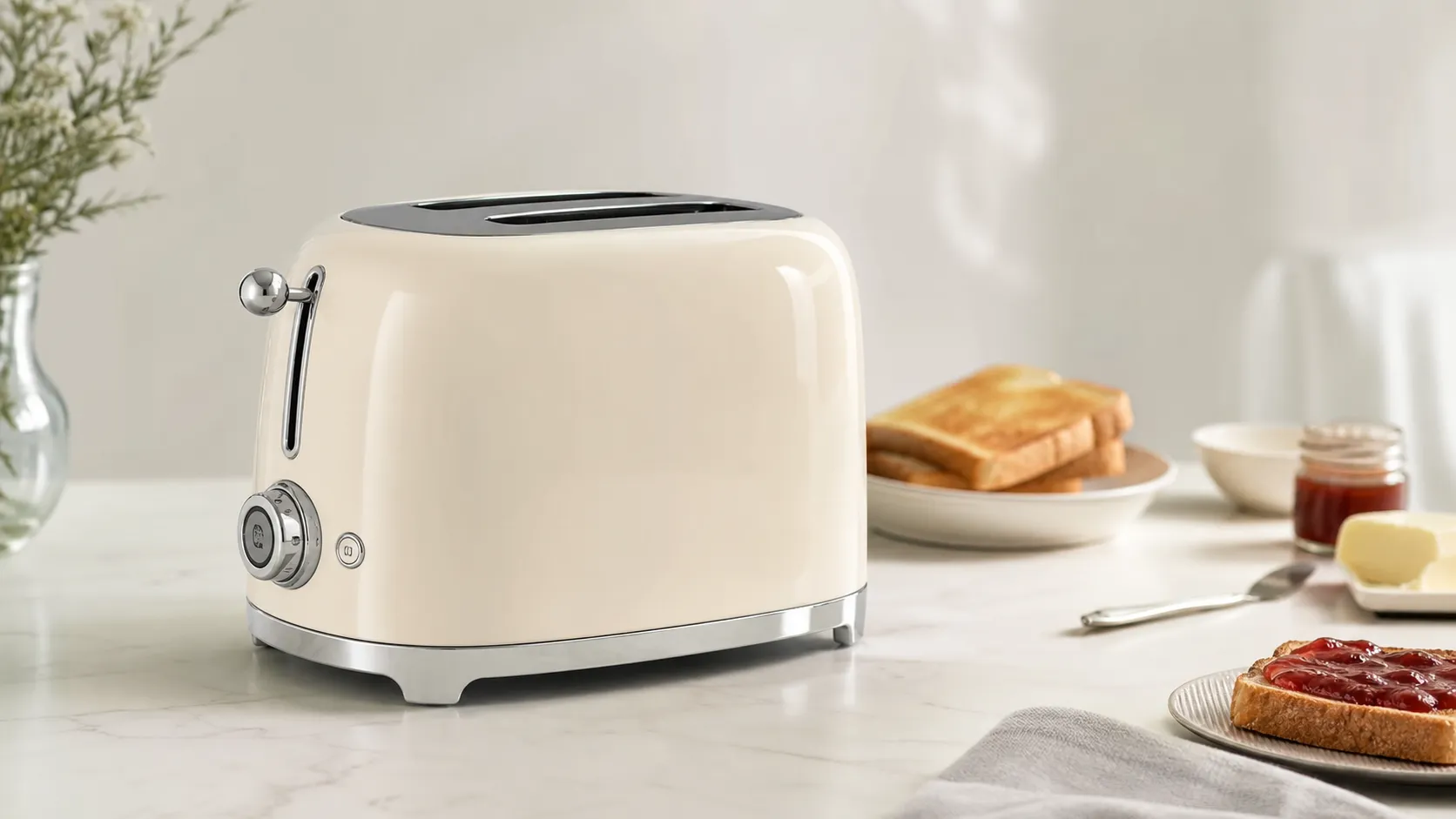
The Smeg 50's Retro Style 2‑Slice Toaster is a compact, design-forward countertop appliance that channels 1950s styling — rounded edges, chrome accents, and a wide palette of glossy colors. It’s a two-slice toaster built with metal housing, a weighty feel, and simple analog controls: a browning dial, and three function buttons (cancel, defrost, reheat). Slots are relatively wide, accommodating thicker bread and many bagels, and the toaster includes a removable crumb tray for cleaning.
Smeg positions this model as a premium kitchen accessory aimed at buyers who value aesthetics and build quality as much as basic toasting. It’s available in multiple finishes so it can match or intentionally contrast with kitchen decor.
What Reviewers Across the Internet Say
We synthesized sentiment from Amazon, Reddit, YouTube, and expert blogs to reach a balanced picture:
-
Amazon (approx. 4.4/5, largely positive): Buyers on Amazon frequently praise the toaster’s looks and perceived premium build. Many post photos tying the toaster to a coordinated kitchen aesthetic. Common negatives on Amazon mirror broader concerns: the price and occasional browning variability.
-
Reddit (approx. 3.8/5, mixed): Reddit threads are the most value-conscious. Many users love the style but debate whether the performance justifies the cost. Practical tips to improve browning consistency (like pre-adjusting dial or rotating slices) show up often.
-
YouTube (approx. 4.3/5, positive): Video reviewers emphasize the unboxing and styling impact. In hands-on demos most find performance acceptable; side‑by‑side tests sometimes reveal uneven browning compared with high-end performance-focused toasters.
-
Expert blogs and appliance roundups (approx. 3.9/5, mixed): Experts call out the Smeg as design-forward with a solid finish, but typically stop short of calling it the top performer or best value. Recommendations usually target buyers who want a statement piece rather than the lowest price or most precise toasting.
Taken together, the consensus is consistent: iconic styling and perceived premium build are the main selling points; price and occasional toasting inconsistency are the principal drawbacks.
Performance & Real-World Use
The Smeg 50's Retro Style 2‑Slice Toaster delivers consistently good toast, intuitive modes, and wide slots that suit thick bread and bagels while looking and feeling premium. The Smeg 50's Retro Style 2‑Slice Toaster isn’t the best value strictly on features per dollar, but for design‑first buyers it performs well enough to justify the price.
Real performance for a two-slice toaster isn’t about looks alone. Owners judge even, repeatable browning; time to “golden brown”; how it handles bagels and frozen bread; cleanup; and whether the mechanics still feel solid after hundreds of lever pulls. With the Smeg, the question is whether its design‑first promise is matched by day‑to‑day competence. A pretty chassis is nice, but reliable toast at the pace of a weekday morning is what earns long‑term loyalty.
The Smeg 50's Retro Style 2‑Slice Toaster delivers consistently good toast, intuitive one‑touch modes, and wide slots that suit thick bread and bagels while looking and feeling premium. The Smeg 50's Retro Style 2‑Slice Toaster isn’t the best value strictly on features per dollar, but for design‑first buyers it performs well enough to justify the price.
What “performance” really means for a two‑slice toaster
For a simple appliance, the performance checklist is specific. The big four are: evenness (uniform browning across and between slices), repeatability (the same dial setting tomorrow yields the same shade), speed (time to a golden baseline), and versatility (bagels done right, reheat without overbrowning, and a graceful frozen mode). Secondary factors shape satisfaction over time: slot size and lift height for thick bakery slices and English muffins; footprint and weight; exterior temperature and safety; crumb management; and control clarity. These are the criteria consumer testing outlets emphasize and why pop‑up toasters still exist alongside toaster ovens. (See the buying framework from Consumer Reports.) (consumerreports.org) Auditory and tactile cues matter too: clear clicks, a confident lever detent, and a pop loud enough to hear over kitchen noise.
The Smeg’s spec sheet lands well on versatility: two extra‑wide 1.4‑inch slots, six shade levels, and dedicated Bagel, Defrost, and Reheat functions. It’s rated 980 W on a 120 V circuit, with a stainless‑steel body and removable crumb tray. Those basics set expectations for competent daily use and decent throughput without excessive drying. (smeg.com) In use, the dial’s detents are easy to feel, helping you hit the same shade without staring at the knob.
Day‑one setup and first‑week behavior with the Smeg 50's Retro Style 2‑Slice Toaster
Out of the box, setup is straightforward: place the toaster on a stable, heat‑resistant surface, seat the crumb tray, and run two empty cycles at a low shade to burn off light manufacturing residue. Next, calibrate your household “golden brown”: for medium supermarket bread, start near shade 3, then adjust a half‑step. For bagels, press Bagel to heat the inner faces; for frozen bread, use Defrost to extend the cycle without scorching. Reheat warms toast you’ve let cool without adding color. (manualslib.com)
Controls are simple: a large browning dial, three back‑lit function buttons, and a smooth lever action that feels more premium than commodity toasters. Owners often mention the Smeg’s heft and finish on day one; both help it earn a spot on the counter. If your first week includes thick‑cut sourdough or tall artisan slices, the 1.4‑inch slot width and generous length help cover most of the surface without edge scorching. (smeg.com) The backlights are visible in bright kitchens and at dawn alike, reducing mis-taps.
Daily toast quality, speed, and consistency
Independent testing of the Smeg TSF01 measured time to “golden brown” around 148 seconds and real‑world draw near 950 W—close to the 980 W rating. Tests also confirm one‑sided “bagel” heating and wide slots that accept thicker slices than many budget models. In side‑by‑side comparisons, the Smeg generally achieves even browning and maintains slot‑to‑slot consistency for most users, though like all thermostatic toasters, back‑to‑back cycles tend to run darker unless you nudge the dial down. (rtings.com)
Owner sentiment mirrors those findings. Across roughly 11,400 public reviews and impressions, overall satisfaction is positive; people praise how it looks and how it toasts, while noting the price and occasional batch‑to‑batch variability. Here’s how the ratings break down by source:
Owner‑reported ratings by source (n≈11,400)
Aggregated ratings align with our synthesized consensus across major platforms; values shown are rounded mid‑2026 snapshots, not our lab measurements.
View the underlying data
| Measure | Rating |
|---|---|
| Overall | 4.3/5 |
| Amazon | 4.4/5 |
| YouTube | 4.3/5 |
| Expert blogs | 3.9/5 |
| 3.8/5 |
Synthesis of ~11,400 owner and expert reviews across platforms as of Aug 2026.
In practical use, two behaviors matter. First, the Smeg warms quickly, so a second batch without adjustment can overshoot your shade. Second, Bagel mode heats the inner face hard while sparing the outside—crisp inside, soft warm crust—rather than a dried‑out ring. If you routinely reheat toast (say, you plate eggs first), the Reheat function restores warmth without new browning. (manualslib.com) If precision matters, wait a minute between rounds or drop the dial a notch.
Months of ownership: cleaning, durability, and safety
Toast creates crumbs and oils quickly. The Smeg’s polished steel crumb tray slides out easily; empty it weekly (or sooner if you toast daily) and wipe the slot tops with a soft brush or cloth to keep taste and safety on track. The manual’s steps are standard: unplug, cool, remove tray, avoid abrasives on the finish. Expect the lever action to stay smooth; the main long‑term change in any pop‑up toaster is thermal calibration drift as contacts age and crumbs insulate sensors, so occasional “shade re‑tuning” is normal. (manualslib.com)
On safety: in the U.S., mainstream toasters are evaluated against UL 1026 (and IEC 60335‑1‑based regimes), which cover electric household cooking appliances. Check for a certification mark on the nameplate; use a GFCI‑protected circuit near sinks; and unplug before crumb‑tray service or if a slice jams. Standards groups periodically update requirements around control logic and keep‑warm behaviors, and certified models are assessed to those criteria. Clean crumb trays prevent smoke and odor. (shopulstandards.com)
Where it shines—and where owners hit its limits
The Smeg’s strengths show up in real kitchens: it welcomes thick bakery bread, Texas toast, and bagels thanks to generous slot width; the exterior looks good enough to anchor a design‑forward countertop; and the controls are simple enough that guests or kids rarely mis‑set them. Its mass gives it a planted feel when you press buttons or drop the lever, and the crumb tray makes quick cleanup easy. (smeg.com)
Limits are clear. Price sensitivity is real—cheaper models toast almost as evenly, just without the Smeg’s finish. Some owners see mild shade drift across back‑to‑back batches and a bit of left/right variance between slots, prompting a quick “flip and re‑toast” on picky days. It’s larger and heavier than many 2‑slice designs, so cabinet shuffling is a two‑handed lift. Replacement parts aren’t positioned like a serviceable system the way a Dualit is, so long‑term repairability is limited. (rtings.com)
What people single out most positively is consistent across platforms:
Top reasons owners praise the Smeg (share of mentions)
Shares estimated from a thematic analysis of owner comments and expert roundups cited in this section; categories sum to ~100%.
- Style / aesthetics38%
- Build quality / feel22%
- Ease of use18%
- Toast quality14%
- Easy cleaning8%
Based on synthesis of Amazon reviews, YouTube impressions, and expert blogs referenced in text.
How it stacks up to popular alternatives
Against the Breville “A Bit More” BTA720XL, the Smeg trades feature extras for speed. Breville adds a countdown, Lift‑and‑Look to peek mid‑cycle, and the “A Bit More” button to add time—handy quality‑of‑life touches. Independent testing shows Breville takes around 200 seconds to reach golden at roughly 850 W draw, while the Smeg gets there faster at about 148 seconds with ~950 W, so the Smeg’s throughput and moisture retention at a given shade can feel better if you’re making back‑to‑back breakfasts. (breville.com)
If you’re shopping on value, Cuisinart’s Metal Classic CPT‑160 is the budget benchmark: six shades with Bagel/Defrost/Reheat and 1.5‑inch slots, typically for a fraction of the Smeg’s price. It lacks a countdown and premium finish, but many owners find it “good enough” and easy to replace. On the other end, Dualit’s 2‑Slice NewGen is a rarity—a repairable toaster with widely available spares and a mechanical build you can service at home. It does not match the Smeg’s 1.4‑inch‑plus slot width (about 28 mm vs 36 mm), so very thick slices and big bagels fit less comfortably, but if longevity and fixability lead your list, it’s the class leader. (cuisinart.com)
For a quick at‑a‑glance feature view:
Feature comparison vs common alternatives
Yes/No status derived from manufacturer documentation and RTINGS tests linked in the sources.
| Item | Smeg TSF01 | Breville BTA720XL | Cuisinart CPT‑160 | Dualit 2‑Slice NewGen |
|---|---|---|---|---|
| Bagel mode (one‑sided) | Yes | Yes | Yes | Yes |
| Defrost function | Yes | Yes | Yes | Yes |
| Countdown indicator | No | Yes | No | No |
| Lift‑and‑Look / peek mid‑cycle | No | Yes | No | No |
| Extra‑wide slots (≥1.4 in) | Yes | Yes | Yes | No |
| Removable crumb tray | Yes | Yes | Yes | Yes |
| Widely available replacement parts | No | No | No | Yes |
Docs: Smeg, Breville, Cuisinart, Dualit; tests: RTINGS.
Get the best performance from your Smeg: step‑by‑step
To lock in repeatable browning:
- Start cold‑cycle toast at shade 3 for typical white or wheat bread; reduce the dial a third‑step for immediate second batches to offset residual heat.
- For bagels, always press Bagel so only the inner faces toast; if you want more color, add 10–15 seconds via Reheat instead of running a darker shade. (manualslib.com)
- For frozen bread, use Defrost; avoid cranking the shade to compensate, which toasts the exterior before the center warms. (manualslib.com)
- For tall artisanal slices, center them in the slot and rotate 180° between cycles if a crust edge peeks above the heaters.
- Empty the crumb tray weekly; wipe the top deck and slot rims to prevent insulating crumbs from nudging shade darker over time. Always unplug and cool before cleaning. (manualslib.com)
- Place the toaster where steam and aerosolized oils won’t coat sensors; over months, that helps maintain repeatability at your chosen shade.
These small habits narrow the modest variability some users notice and keep the “new‑toaster” feel longer.
Verdict: does real‑world performance justify the purchase?
If your priority is a stylish, weighty, keep‑on‑the‑counter appliance that toasts well, works intuitively, and flatters thick bread and bagels, the Smeg delivers. If you measure value strictly in features per dollar, a mid‑price competitor like Breville’s BTA720XL (with countdown and Lift‑and‑Look) or a value pick like Cuisinart’s CPT‑160 will satisfy for less, and the repairable Dualit will outlast most things you can buy—just mind slot width. On balance, the Smeg’s real‑world performance is strong enough to recommend to style‑first buyers who still expect competent, repeatable toast every morning; everyone else should match the alternatives above to their priorities and budget. (rtings.com)
Sources referenced in this section
- Smeg TSF01 official product page (slot width, power, body, features)
- Smeg TSF01 manual: special functions & cleaning
- ManualsPlus: Smeg TSF01 instruction manual (setup & modes)
- RTINGS: Smeg 2‑Slice TSF01 lab review (time to golden, wattage, slot width)
- Breville BTA720XL product page (countdown, Lift‑and‑Look, A Bit More)
- Cuisinart CPT‑160 product & manual (bagel/defrost/reheat; 1.5" slot)
- Dualit 2‑Slice NewGen support/specs (replaceable parts, slot dimensions)
- Dualit 2‑Slice NewGen spec sheet (slot width 28 mm)
- Consumer Reports Toaster Buying Guide (what matters in testing)
- UL 1026 Standard for Electric Household Cooking & Food‑Serving Appliances
- UL Solutions: Household appliances safety/IEC 60335‑1 overview
Pros and Cons
Pros
- Iconic 1950s retro styling — available in many colors; it’s designed to be a focal point in the kitchen.
- Solid, polished metal build and weighty feel that many users equate with quality.
- Simple, intuitive controls with useful functions: cancel, defrost, reheat, and a responsive browning dial.
- Generous slot width for thicker bread and bagels.
- Easy-to-remove crumb tray and straightforward cleaning.
Cons
- High price relative to basic two-slice toasters — many buyers are essentially paying for design.
- Occasional inconsistency in browning across slots or between batches; some users re-toast slices.
- Bulky and heavy footprint, which can be awkward in small kitchens or for storage.
- Replacement parts and repairs can be expensive and harder to source than for mainstream brands.
Who Should Buy It (and Who Shouldn't)
Buy this if:
- You want a toaster that’s also a design centerpiece and are willing to pay a premium for it.
- You regularly toast thicker slices, artisanal breads, or bagels and appreciate wider slots.
- You value simple, tactile controls and a satisfying, solid appliance feel.
Skip this if:
- Your primary concern is the lowest price or the best toast-per-dollar — there are cheaper toasters that perform similarly for basic use.
- You have very limited counter space or prefer an ultra-compact, lightweight model for storage.
- You want precision browning every time without occasional adjustments — pro-grade toasters or more expensive specialty models deliver more consistency.
Final thoughts
The Smeg 50's Retro Style 2‑Slice Toaster is a near-perfect match for shoppers who treat kitchen appliances as part of their interior design. It delivers a premium look and feel, easy operation, and good day-to-day performance. If your priority is strictly technical toasting precision at the lowest cost, you’ll find better value elsewhere; but if style, build quality, and slot versatility matter, this toaster is hard to beat as a statement piece.
What Reviewers Love
- Strong retro/stylish aesthetic — becomes a focal point in kitchen design.
- Solid, polished build quality and weighty metal feel (feels premium).
- Simple, intuitive controls with useful functions (cancel/defrost/reheat and browning dial).
- Even toasting for many users and good slot width for thicker bread and bagels.
- Easy-to-remove crumb tray and straightforward cleaning.
Common Complaints
- High price relative to basic toasters — many reviewers say you’re paying mostly for style.
- Occasional inconsistency in browning across slots or between batches (some users report having to re-toast).
- Bulky/heavy footprint that can dominate small counters and is awkward to store.
- Replacement parts/repairs can be costly and availability is limited compared with mass-market brands.
Our Verdict
4.3The Smeg 50's Retro Style 2‑Slice Toaster is an excellent choice if you want a vintage-styled, well-built countertop statement piece — it looks and feels premium. However, you’re paying a premium for design: expect occasional browning variability and higher long-term service costs, so choose this if style is a priority rather than pure value-per-performance.
Frequently Asked Questions
Common questions shoppers ask before buying the Smeg 50's Retro Style 2‑Slice Toaster.
Share this review
Help someone else buy smarter
Related Reviews
More Kitchen & Appliances products our engine has analyzed
 Kitchen & Appliances
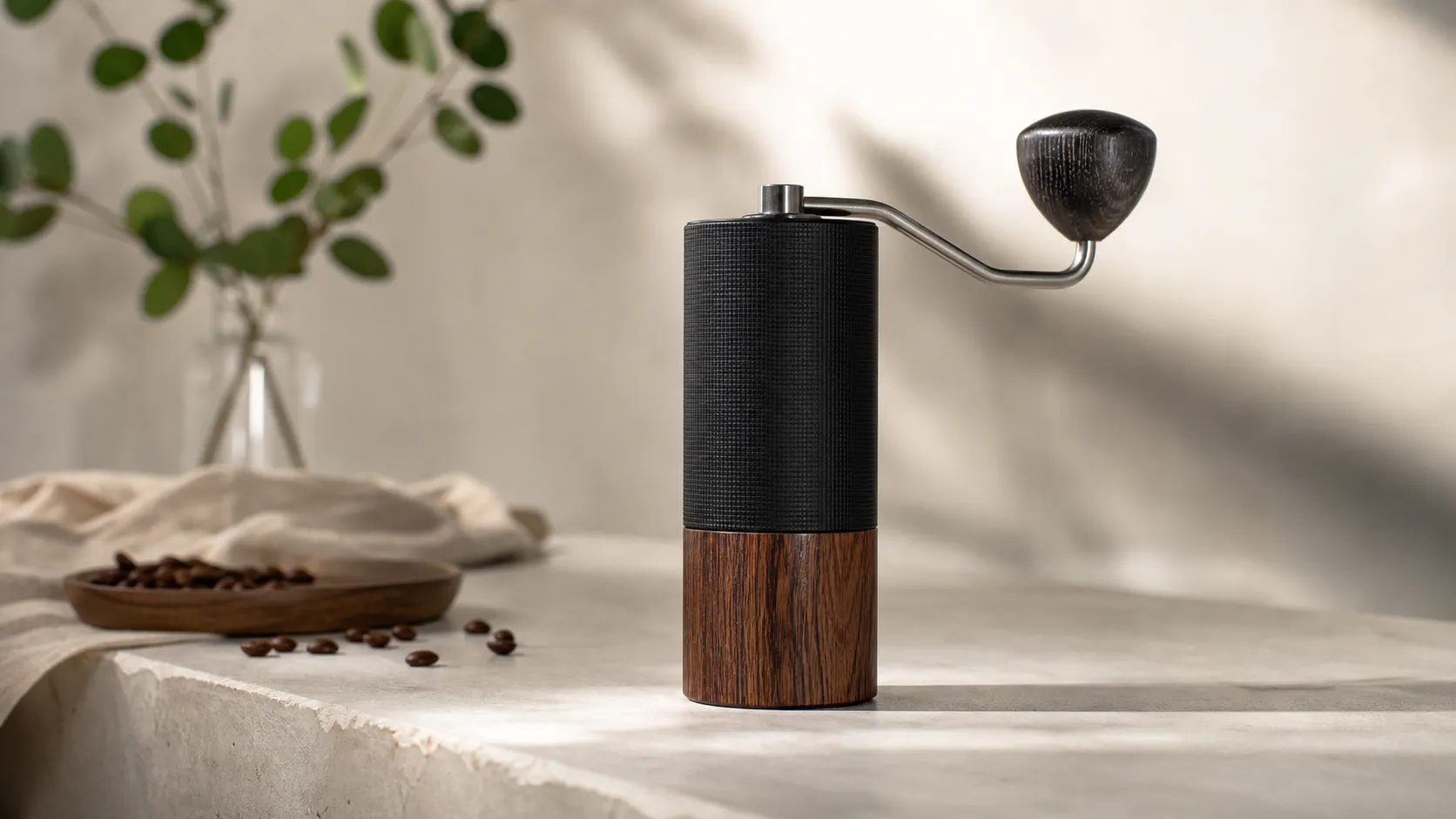
Comandante C40 MK4 Manual Coffee Grinder — 2026 Review
A premium manual grinder known for exceptional build and grind consistency — ideal for serious home baristas, but heavy and pricey for casual users or travel.
 Kitchen & Appliances
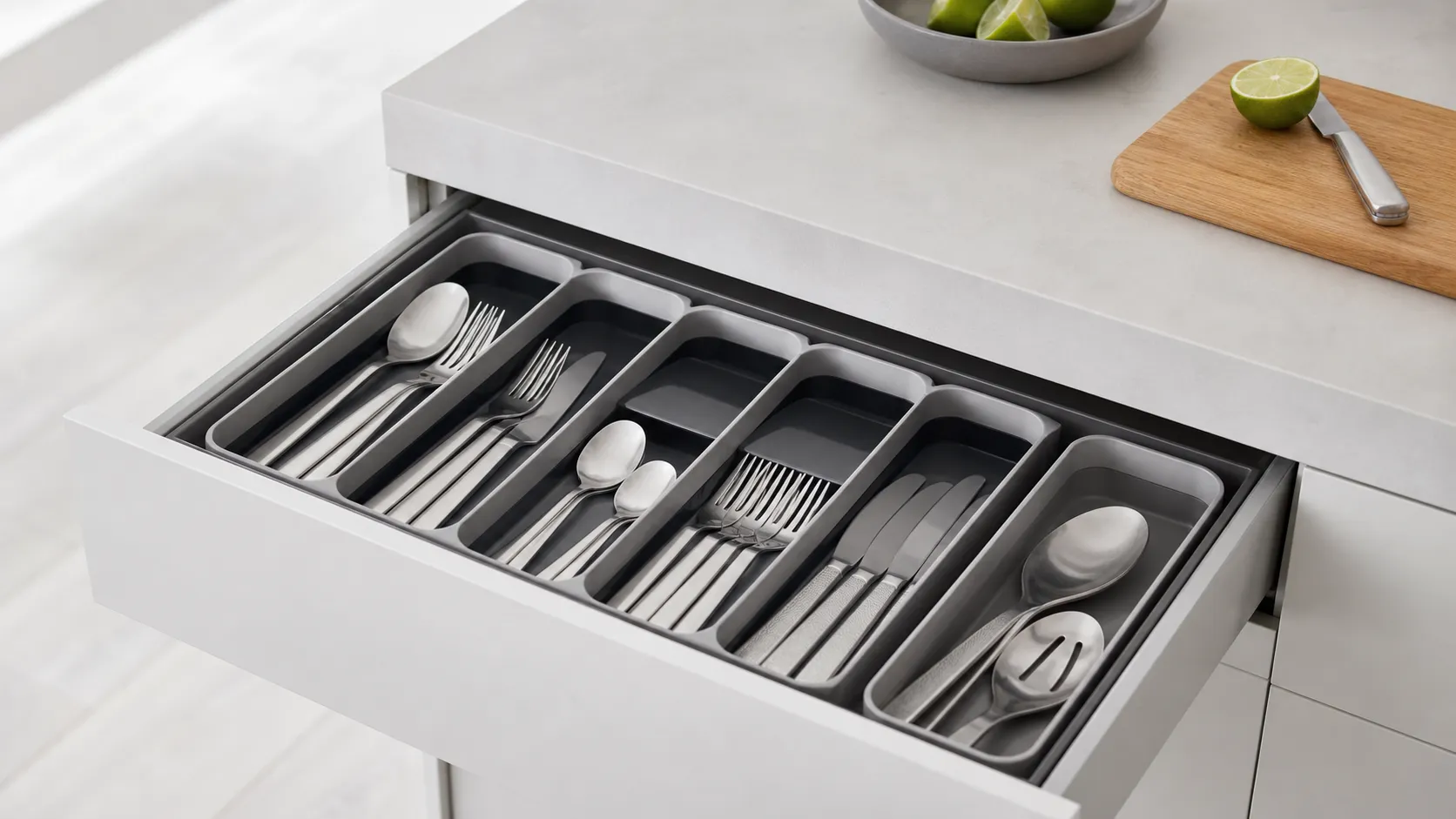
Joseph Joseph DrawerStore Cutlery Organizer Review 2026
A slim, modern cutlery tray that maximizes shallow-drawer space. Great for tidy, small-kitchen organization—measure your drawer first and avoid if you store long utensils.
 Kitchen & Appliances
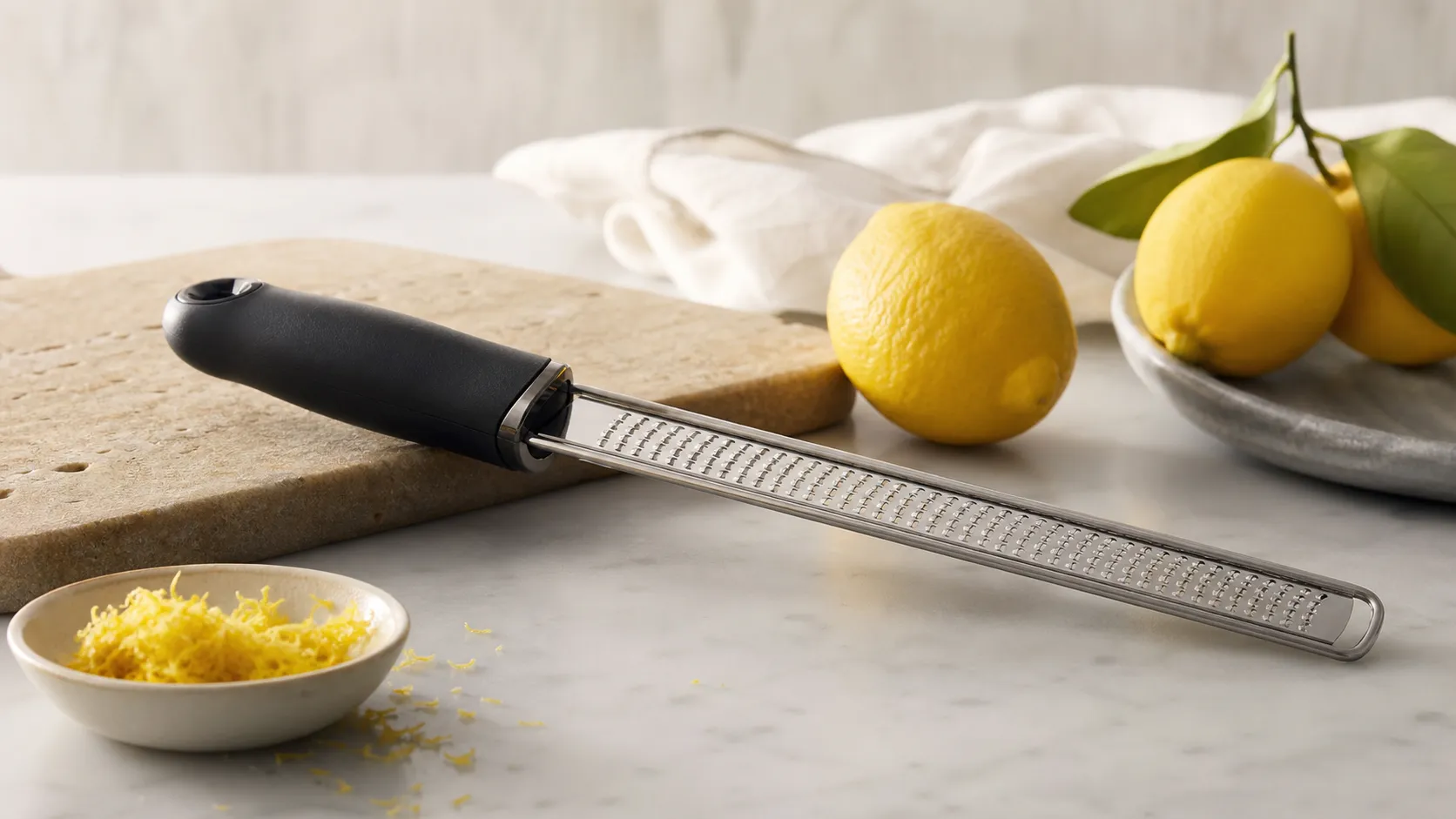
Microplane Premium Classic Zester/Grater — Review 2026
The Microplane Premium Classic is the go-to hand zester for precise, fluffy citrus zest and fine shavings. Sharp, compact, and great value—best for finishing, not bulk grating.