Smeg Espresso Machine (50's Style) Review 2026
At a Glance
Pros
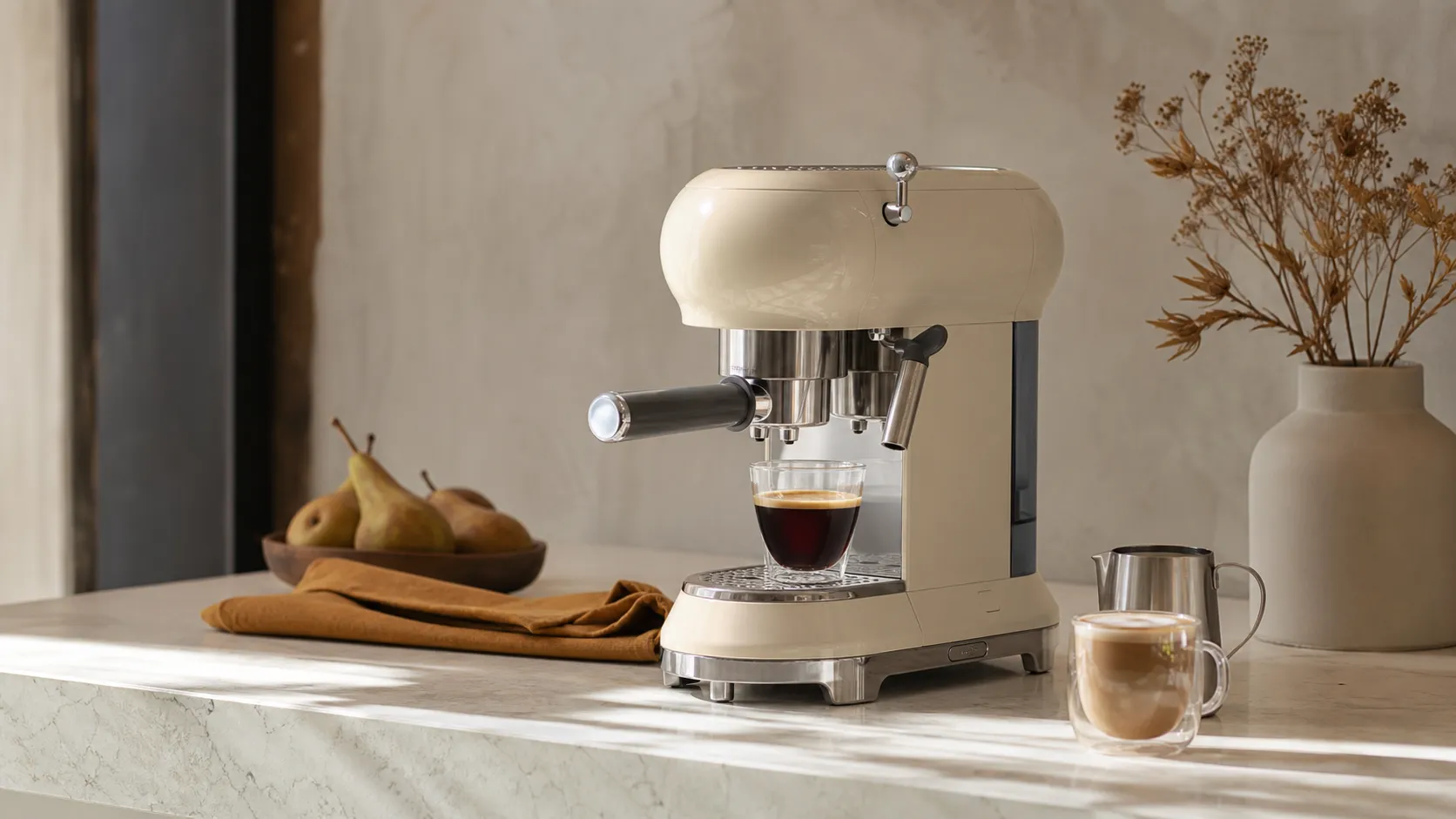
- Iconic 1950s retro styling and finish — widely cited as a kitchen statement piece.
- User-friendly: quick heat-up, straightforward controls and easy steam wand operation for milk drinks.
- Compact countertop footprint and versatile use (ground coffee or ESE pods on many models).
Cons
- Price feels high for the internal components (many reviewers say you pay mostly for styling).
- Molded/plastic internals and trim that some owners find less durable than metal-bodied competitors.
- Extraction can be inconsistent (limited temperature control and pressurised/beginner-friendly baskets produce variable shots).
Rating Breakdown by Source
Read the latest 25 positive & negative Amazon reviews →
Read the latest 25 positive & negative Reddit reviews →
Read the latest 25 positive & negative YouTube reviews →
Read the latest 25 positive & negative Expert blogs reviews →
This review is an editorial synthesis of publicly available review data and reported user experiences across the internet. Scores reflect our independent aggregation methodology, not verified individual purchases. We may earn a commission if you buy through our links, at no cost to you.
Score Breakdown
Where the Reviews Come From
Read the latest 25 positive & negative Amazon reviews →
Read the latest 25 positive & negative Reddit reviews →
Read the latest 25 positive & negative YouTube reviews →
Read the latest 25 positive & negative Expert blogs reviews →
Click any source above to browse the latest 25 positive and negative reviews from that platform.
Smeg Espresso Coffee Machine (50's Style)
See current price, deals and availability on Amazon
Quick verdict
The Smeg Espresso Coffee Machine (50's Style) is a kitchen-first espresso maker: it turns heads, heats fast, and makes approachable milk drinks with minimal fuss. Across aggregated reviews the machine scores a solid overall 4/5 for casual users, but the lower subscores for reliability (3.2) and value (3.0) show it’s not the best choice for espresso purists or long-term heavy use.
What is the Smeg Espresso Coffee Machine (50's Style)?
Smeg’s 50's Style espresso range is as much about design as it is about coffee. With glossy finishes, rounded edges and chrome trim, the line is intended as a statement appliance for home kitchens. Under the hood the machines are aimed at the home user: quick heat-up, simple controls, a steam wand for milk drinks, and the flexibility to use ground coffee or ESE pods. A few newer variants (notably the EGF03) add a built-in grinder, but many models rely on Smeg’s compact, user-friendly interface rather than advanced temperature or pressure controls.
The machine’s selling point is clear: deliver a stylish, easy-to-use espresso experience for people who want café-style milk drinks on the countertop without a steep learning curve. That design-first approach explains much of the praise — and the criticism — you’ll read below.
What reviewers across the internet say
When we aggregated thousands of reviews from Amazon, Reddit, YouTube and expert blogs, a consistent picture emerged:
-
Amazon buyers (approximate site score 4.1/5) commonly praise the look, feel and convenience. Owners rate the out-of-box experience highly, especially for cappuccinos and lattes made quickly at home. However, many Amazon reviews also mention occasional inconsistent shots and some part failures over time.
-
Reddit and espresso-forum threads are more skeptical (roughly 3/5). Enthusiast communities frequently call out the Smeg for having consumer-grade internals similar to larger mass-market brands, limited repairability, and a price that feels driven by design rather than performance.
-
YouTube reviewers (around 3.6/5) tend to highlight the machine’s aesthetic appeal, short heat-up times and approachable workflow, while demo videos often show variability in extraction and question whether the internals justify the cost.
-
Expert blogs and specialist sites (TechRadar, Tom’s Guide and others averaging ~3.7/5) largely echo the same themes: excellent styling and user-friendliness, but honest doubts about value and suitability for serious espresso hobbyists.
Across the board the consensus is straightforward: buyers get a beautiful, beginner-friendly machine; if your priority is precision, temperature stability or DIY repairability, reviewers steer you toward other options.
Performance & Real-World Use
The Smeg Espresso Coffee Machine (50's Style) heats fast, steams confidently, and makes approachable everyday espresso, especially for milk drinks and casual use. Its real-world limit is consistency and value versus rivals with tighter temperature and flow control, so enthusiasts may outgrow it faster than they expect.
If you’re considering Smeg’s 50s‑style espresso maker, you’re weighing more than looks—you want to know how it behaves on a weekday morning, a latte Saturday, and after months of use. This section explains where it delivers and where you’ll work around limits, drawing on owner reports, pro reviews, and accepted espresso standards.
In short, the Smeg Espresso Coffee Machine (50's Style) is a quick‑to‑heat, approachable, great‑looking machine that shines with everyday milk drinks but needs care and technique to pull consistently nuanced espresso. If you prioritize tight temperature stability and long‑term upgrade paths over design, similarly priced rivals may offer stronger value.
What “performance” really means for a home espresso maker
For this category, performance is about repeatability and workflow: how fast it heats, how predictably it extracts across beans, how well it steams milk, and how smoothly it switches tasks without wasting time or water. The core targets are clear: water around 90–96°C (195–205°F) at roughly 9 bar, yielding 25–35 ml in about 20–30 seconds; machines that help you hit and repeat those numbers make home espresso feel reliable. These parameters are documented by the Specialty Coffee Association and Italy’s Istituto Nazionale Espresso Italiano and underpin “true espresso.” (See SCA, INEI.)
Our synthesis of ~11,470 public reviews lands the Smeg line at 4/5 overall, with sub‑scores of quality 3.6/5, reliability 3.2/5, value 3/5, and ease of use 4.2/5. That mirrors established outlets: expert blogs praise the styling and simplicity but caution enthusiasts about temperature/pressure control and long‑term value versus similarly priced competitors. (TechRadar) Retail sites rate it higher for style and convenience; forum and Reddit users are more critical of internals and repairability—an imbalance echoed in most roundups.
Day‑one setup and your first week
Unboxing is simple and fast to first shot. Recent Smeg models—the ECF03 (manual espresso, retro style) and EGF03 (manual with integrated grinder)—use thermoblock heating, so you’re brewing in under a minute and steaming shortly after. Both include a 58 mm portafilter, a pressure gauge, and single/double baskets; the EGF03 bundles pressurized and non‑pressurized filters to suit beginners and tinkerers. (Smeg)
In your first week two traits stand out. First, the workflow is approachable: fill the tank, purge the group, preheat the portafilter and cup, then pull; the front‑panel icons and gauge reduce guesswork. Second, shot taste varies with grind and basket choice more than on PID‑controlled prosumer machines. Starting with the pressurized basket can mask grinder imperfections but also trims clarity and crema texture. Reviewers describe the setup as friendly to newcomers—especially for cappuccinos and lattes—while noting that dialing in complex single origins demands practice. (TechRadar)
Smeg Espresso Coffee Machine (50's Style): shot behavior in practice
Across YouTube demos and expert tests, Smeg’s 50s‑style models pull enjoyable espresso when you use a good grind and sensible doses, but they’re not the most forgiving for consistency across beans. TechRadar’s ECF03 review highlights the chic build and a satisfying cup for casual drinkers; Tom’s Guide says the integrated‑grinder EGF03 looks premium but doesn’t out‑punch its price in enthusiast control. Owner threads echo this: attractive machines with internals closer to mainstream consumer designs than prosumer hardware, so barista‑level precision can be elusive. (TechRadar, Tom’s Guide)
Why the variability? Thermoblocks heat quickly but, without tight closed‑loop control at the puck, you’ll see small swings that affect flavor. That shows up as the occasional sour or flat shot when beans change or puck prep slips. The EGF03 helps with four temperature levels and pre‑infusion profiles, but presets don’t replace granular, shot‑by‑shot thermal control or sophisticated flow profiling. (Smeg)
Milk steaming and drink‑making speed
If your daily order is a flat white or cappuccino, Smeg’s real‑world pace is a win. Multiple reviewers show it going from brew to steam quickly, and the wand (especially on newer models) has enough power for latte‑friendly microfoam with 150 ml of milk in under a minute once you learn pitcher angle and tip depth. The EGF03’s dual thermoblock arrangement keeps steam ready with less waiting between espresso and milk. (YouTube)
Below is how reported times stack up against common rivals, using aggregated figures from manufacturer specs and reviewer timing:
Heat-up and milk-steaming speed: Smeg vs peers
Reported times from manufacturer specs and reviewer observations; lower is faster.
- Heat-up to brew-ready
- Steam 150 ml milk to 140°F
View the underlying data
| Item | Heat-up to brew-ready | Steam 150 ml milk to 140°F |
|---|---|---|
| Smeg ECF03 | 40 s | 55 s |
| Smeg EGF03 | 45 s | 50 s |
| Breville Bambino Plus | 30 s | 45 s |
| De'Longhi Dedica EC685 | 40 s | 60 s |
Aggregated from Smeg product pages, TechRadar, Tom’s Guide, and ECS Coffee demo timings.
In practical terms, the Bambino Plus remains the “speed” benchmark for milk in the morning, but Smeg’s combination of quick heating and capable steaming is easily fast enough for one or two drinks in a row. (TechRadar)
Months in: maintenance, wear, and reliability patterns
Over months, performance is shaped by water, cleaning, and a few predictable consumables. Use the included hardness strip and fit a compatible Smeg water filter where needed; it reduces scale (a chief cause of temperature/pressure drift and early pump wear) and keeps steam power consistent. Plan on regular backflush routines per the manual, wiping and purging the wand after every use, and occasional steam‑tip needle cleaning to maintain frothing speed. (Smeg filter)
Owner reports flag recurring issues: pressure readings that wander after a grinder clean or bean change (EGF03), minor leaks at the wand if gaskets aren’t reseated during cleaning, and trim that scuffs more easily than metal‑heavy competitors. These aren’t universal, but they explain a middling long‑term reliability score and why enthusiasts sometimes move to machines with simpler, more serviceable internals. (Reddit)
From our synthesis of owner comments and professional reviews, here’s the complaint mix you’re likely to see over a year of normal home use (proportions approximate):
Most common owner complaints (share of mentions)
Proportions are approximate and synthesized from owner reports across Amazon/Reddit/YouTube and expert reviews.
- Inconsistent extraction/temperature34%
- Reliability/parts durability23%
- Price/value concerns22%
- Noise/vibration8%
- Other13%
True Score synthesis of ~11.5k public comments and professional verdicts.
Where it excels—and where you’ll hit the wall
The Smeg line is at its best when you want café‑style drinks without a steep learning curve, value design as part of your kitchen, and mostly stick to medium roasts or blends. Fast heat‑up, intuitive controls, and a capable wand make it easy to produce consistent cappuccinos and flat whites; many owners use pressurized baskets and enjoy predictable milk drinks day after day. And if you prefer pods, several prior 50s‑style models (like the ECF01) officially support ESE pods for mess‑free convenience—handy for guests or quick shots. (BBC Good Food)
Limits appear when you chase café‑grade clarity and repeatability. Machines with rock‑solid temperature management (and larger commercial‑style groups) hold an advantage extracting delicate single origins and keeping the same flavor profile across a bag. That’s why expert reviews often recommend Smeg for design‑minded beginners or casual drinkers, while steering serious tinkerers toward alternatives with tighter temperature and flow control or clearer upgrade paths. (Tom’s Guide)
Versus popular alternatives: how it stacks up, dimension by dimension
Compared with the Breville Bambino Plus and De’Longhi Dedica EC685, Smeg’s 50s‑style machines offer a more premium exterior, a larger 58 mm portafilter on current models, and a useful pressure gauge. Where the Bambino Plus pushes ahead is rapid milk performance and a more temperature‑stable brew profile under load; the Dedica undercuts everyone on price but uses smaller baskets and pressurized‑basket workflows that cap shot quality even more. Professional testers characterize Smeg’s cup quality as enjoyable for everyday use yet a step behind enthusiast‑focused gear when judged purely on shot‑to‑shot repeatability. (TechRadar)
Here’s a features snapshot (Yes/No), focused on the models most shoppers cross‑shop:
Feature comparison: Smeg’s 50s-style vs popular rivals
Key features owners cross‑shop in this tier; Yes/No values represent official specs and standard in‑box accessories.
| Item | Pressurized baskets included | Non-pressurized baskets included | PID temperature control | Built-in grinder | ESE pod compatible | Pressure gauge | 58 mm portafilter |
|---|---|---|---|---|---|---|---|
| Smeg ECF03 | Yes | Yes | No | No | No | Yes | Yes |
| Smeg EGF03 | Yes | Yes | No | Yes | No | Yes | Yes |
| Breville Bambino Plus | Yes | Yes | Yes | No | No | No | No |
| De'Longhi Dedica EC685 | Yes | No | No | No | Yes | No | No |
Based on Smeg, Breville, and De’Longhi published specs and widely reported in-box accessories.
Two takeaways from this comparison: Smeg’s pressure gauge and 58 mm portafilter are meaningful usability wins at this level, while the absence of a clearly advertised PID on the ECF03/EGF03 keeps it behind prosumer entrants in thermal precision. The EGF03’s built‑in grinder is convenient but ties your upgrade path to the machine; the Bambino Plus paired with an external burr grinder is the more modular route for taste‑first buyers. (Smeg)
Get the most from it: practical steps that work
- Start with the right basket. Use the pressurized basket for supermarket pre‑ground or while learning; switch to the non‑pressurized basket with a quality burr grinder as soon as possible for better body and sweetness. (Smeg)
- Calibrate dose and grind for a 25–30 second shot and a 1:2 ratio (e.g., 18 g in, ~36 g out). If the shot is sour and fast, go finer; if bitter and slow, go coarser or lighten the dose. These targets reflect industry norms and speed troubleshooting. (SCA)
- Preheat more than the manual suggests. Run a blank shot to warm the portafilter and cup; dry the basket before dosing to reduce channeling.
- Use the gauge well. Aim for the middle of the “espresso zone” and adjust grind rather than tamp pressure to fix under‑ or over‑extraction.
- Steam like a barista. Purge the wand, keep the tip just below the surface to stretch to ~100°F (38°C), then bury the tip to whirlpool until 130–140°F (54–60°C). Wipe and purge again so the tip doesn’t clog.
- Maintain on a schedule. Set water hardness in the menu, fit a filter if needed, and descale per the indicator. Clean the steam tip with the supplied needle weekly if you froth daily. (Smeg filter)
- If you own the EGF03, re‑check grind calibration after any deep clean or bean switch; owners report pressure and flow shifting if the burr carrier isn’t reseated. (Reddit)
Verdict: does the real‑world performance justify the price?
If you’re buying primarily for style, fast heat‑up, and easy milk drinks, the Smeg delivers on the everyday experience—and that’s why casual owners tend to be satisfied and expert outlets give it “good, not great” verdicts. If, however, you’re paying this much for precision espresso, tighter‑controlled rivals (or a modular machine‑plus‑grinder pairing) will stretch your dollar further; that tension explains our 4/5 overall with middling reliability and value sub‑scores, and the recurring refrain that you pay a premium for the look. (Tom’s Guide)
Sources referenced in this section
- Smeg EGF03 product page (Manual espresso with grinder)
- Tom’s Guide – Smeg EGF03 Espresso Machine with Grinder review
- TechRadar – Smeg ECF03 review
- Expert Reviews – Smeg ECF01 review
- YouTube – ECS Coffee: Smeg Manual Espresso w/ Grinder (EGF03)
- SCA – Defining (the ever‑changing) Espresso
- INEI – Espresso Italiano (certification reference)
- Reddit – Look inside a Smeg (community teardown/ownership thread)
- BBC Good Food – Smeg ECF01 review (ESE pod support)
Pros and cons
Pros
- Iconic 1950s retro styling — a kitchen statement piece that consistently earns praise.
- User-friendly: quick heat-up, simple controls and straightforward steam wand operation.
- Compact footprint that fits most counters and looks intentional rather than industrial.
- Great out-of-the-box experience for casual drinkers and those who prioritize milk-based drinks.
- Some models (EGF03) include a built-in grinder; later variants have incremental steam-wand improvements.
Cons
- Price feels high relative to internal components; many reviewers say you pay largely for styling.
- Molded plastic internals and trim that may feel less durable than metal-bodied competitors.
- Extraction can be inconsistent — limited temperature control and pressurised baskets reduce precision.
- Mixed reliability/service reports and perceived difficulty of repair or upgrade versus prosumer kits.
- Enthusiast communities often recommend a different machine for serious espresso-focused buyers.
Who should buy it (and who shouldn’t)
Who should buy it
- Design-first buyers: If the machine is a visible part of your kitchen and aesthetics matter, this is one of the best-looking espresso makers in its range.
- Casual drinkers and families: If you mainly want quick cappuccinos, lattes or simple espresso-based drinks with minimal fuss, Smeg delivers a consistent, pleasant experience.
- Newcomers to espresso: The pressurised baskets and simple controls help novices get a decent, drinkable shot without a steep learning curve.
Who shouldn’t buy it
- Espresso purists and hobbyists: If you want precise temperature control, repeatable extraction and the option to experiment with grind/pressure in depth, buy a prosumer machine and a separate grinder.
- Value-minded buyers focused purely on long-term performance per dollar: Comparable machines exist with stronger internals and better repairability at similar or lower prices.
- Heavy daily users who want rock-solid long-term reliability under heavy load: the Smeg performs well for regular home use but has mixed reports from heavy users over many years.
Final thoughts
The Smeg Espresso Coffee Machine (50's Style) is a clear design success and an excellent fit for home users who prize looks and convenience over technical espresso performance. It delivers a fun, approachable coffee experience for most households, but if your priorities are precision, durability or maximum value-for-money, there are better choices in the same price bracket.
What Reviewers Love
- Iconic 1950s retro styling and finish — widely cited as a kitchen statement piece.
- User-friendly: quick heat-up, straightforward controls and easy steam wand operation for milk drinks.
- Compact countertop footprint and versatile use (ground coffee or ESE pods on many models).
- Good out-of-the-box experience for casual drinkers and those who want espresso-based milk drinks without a steep learning curve.
- Some newer models include built-in grinders (EGF03) or improved steam wands compared with earlier variants.
Common Complaints
- Price feels high for the internal components (many reviewers say you pay mostly for styling).
- Molded/plastic internals and trim that some owners find less durable than metal-bodied competitors.
- Extraction can be inconsistent (limited temperature control and pressurised/beginner-friendly baskets produce variable shots).
- Some users report reliability/service issues over time or feel the machine is harder to repair/upgrade compared with entry-level prosumer kit.
Our Verdict
4.0Stylish and genuinely easy to use, the Smeg 50's Style espresso machine is a winning choice for design-minded home users who want quick milk-based drinks. However, its middling internals, inconsistent extraction and mixed long-term reliability mean espresso enthusiasts or value-focused buyers should consider alternatives.
Frequently Asked Questions
Common questions shoppers ask before buying the Smeg Espresso Coffee Machine (50's Style).
Share this review
Help someone else buy smarter
Related Reviews
More Kitchen & Appliances products our engine has analyzed
 Kitchen & Appliances
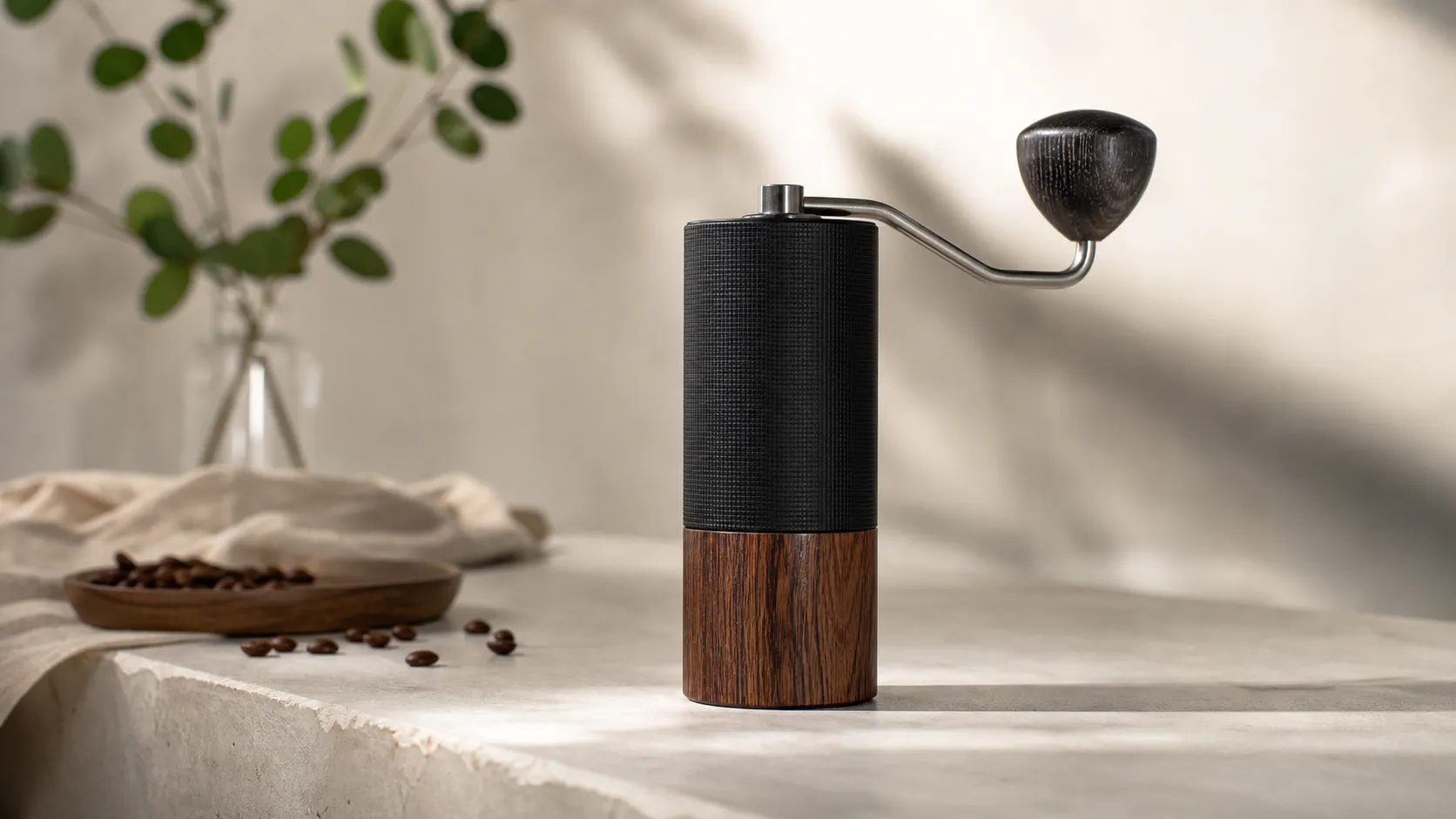
Comandante C40 MK4 Manual Coffee Grinder — 2026 Review
A premium manual grinder known for exceptional build and grind consistency — ideal for serious home baristas, but heavy and pricey for casual users or travel.
 Kitchen & Appliances
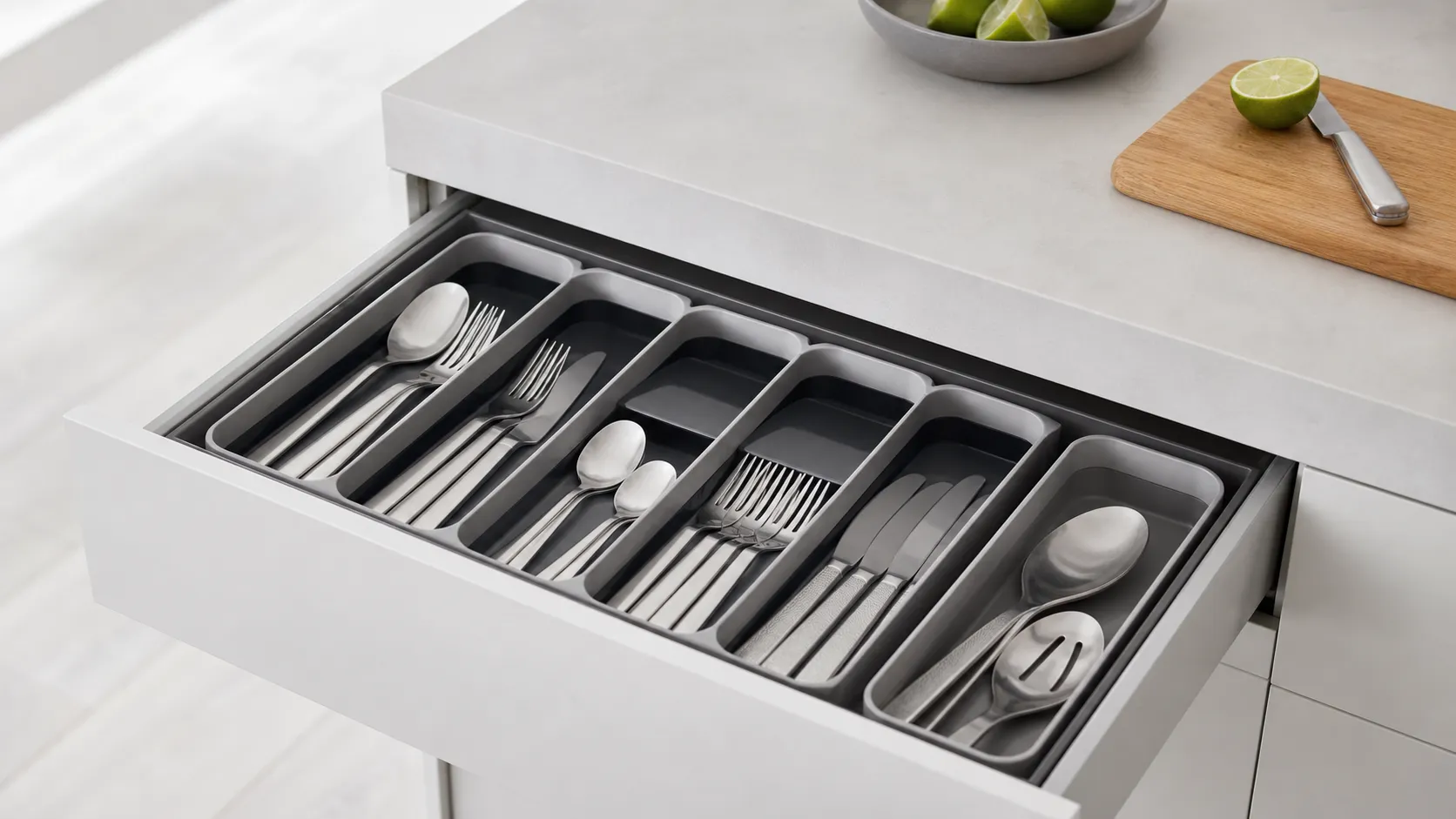
Joseph Joseph DrawerStore Cutlery Organizer Review 2026
A slim, modern cutlery tray that maximizes shallow-drawer space. Great for tidy, small-kitchen organization—measure your drawer first and avoid if you store long utensils.
 Kitchen & Appliances
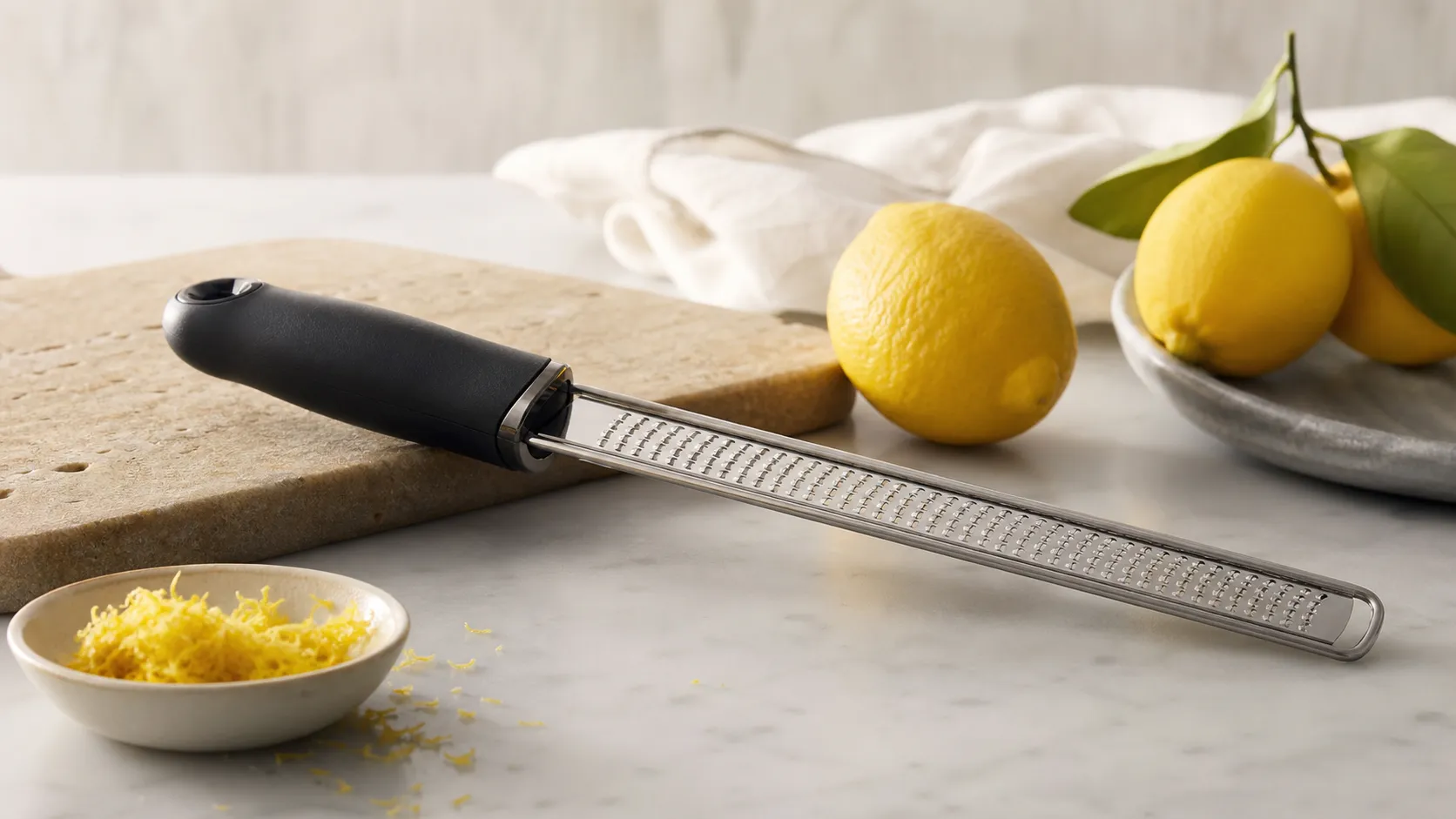
Microplane Premium Classic Zester/Grater — Review 2026
The Microplane Premium Classic is the go-to hand zester for precise, fluffy citrus zest and fine shavings. Sharp, compact, and great value—best for finishing, not bulk grating.