Sonos Ray Soundbar Review — 2026 Verdict
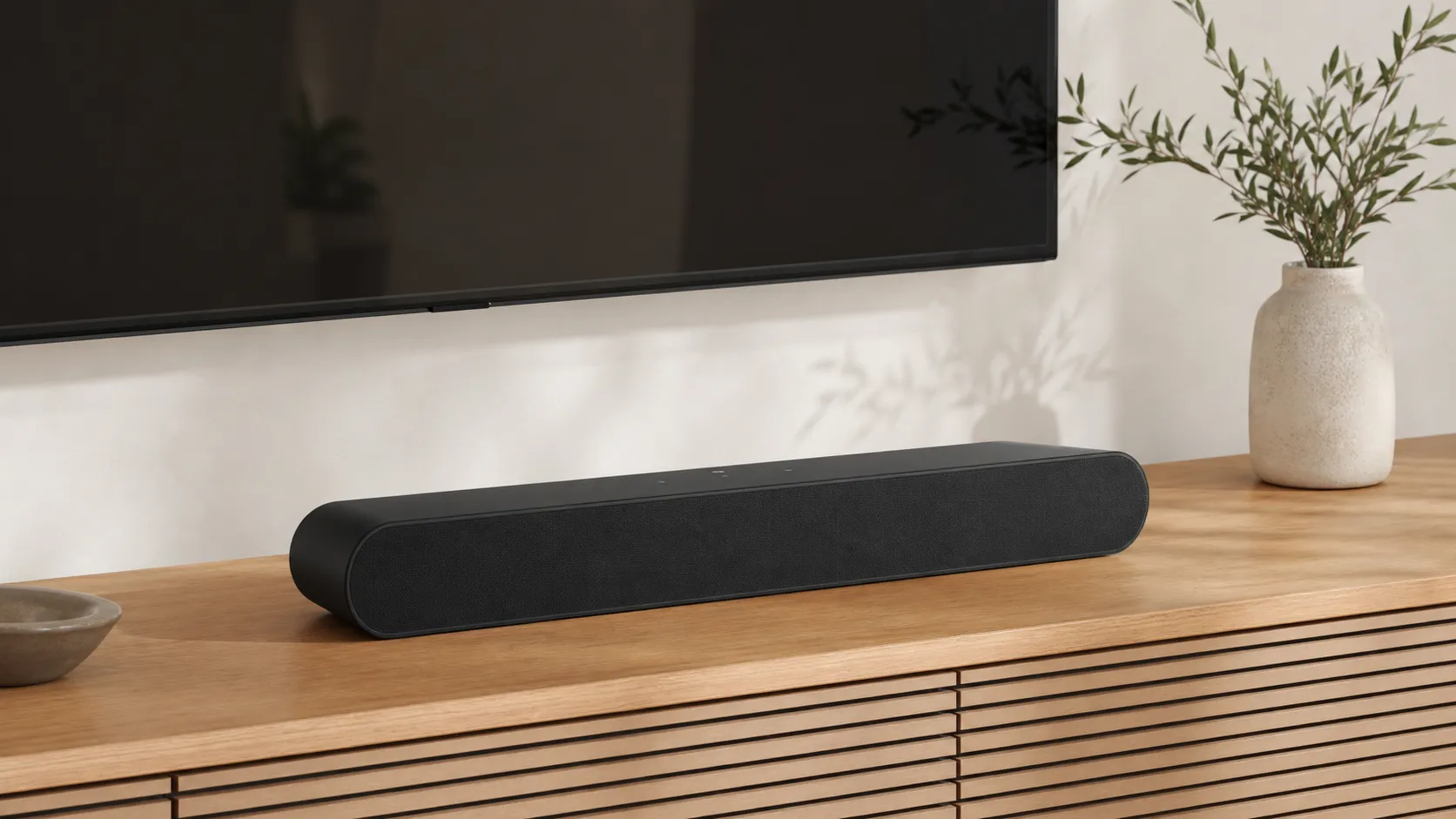
At a Glance
Pros
- Compact, attractive design that fits under most TVs
- Clear, natural dialogue and good midrange detail
- Simple, fast setup through the Sonos app
Cons
- No HDMI ARC/eARC — optical-only connection limits TV passthrough and advanced audio features.
- No Dolby Atmos or height/3D processing — not suitable if you want immersive Atmos sound out of the box.
- Thin bass at factory settings; most buyers add a Sonos Sub or EQ to get satisfying low end.
Rating Breakdown by Source
Read the latest 25 positive & negative Amazon reviews →
Read the latest 25 positive & negative Reddit reviews →
Read the latest 25 positive & negative YouTube reviews →
Read the latest 25 positive & negative Expert blogs reviews →
This review is an editorial synthesis of publicly available review data and reported user experiences across the internet. Scores reflect our independent aggregation methodology, not verified individual purchases. We may earn a commission if you buy through our links, at no cost to you.
Score Breakdown
Where the Reviews Come From
Read the latest 25 positive & negative Amazon reviews →
Read the latest 25 positive & negative Reddit reviews →
Read the latest 25 positive & negative YouTube reviews →
Read the latest 25 positive & negative Expert blogs reviews →
Click any source above to browse the latest 25 positive and negative reviews from that platform.
Sonos Ray Soundbar
See current price, deals and availability on Amazon
Introduction
If you want a compact, easy-to-use soundbar that improves TV dialogue and fills a small room with surprisingly wide stereo sound, the Sonos Ray delivers most of that promise. Aggregating roughly 10,000 user reviews and multiple expert write-ups, the Ray scores an overall 4.4/5 — praised for clarity, setup simplicity, and its size-to-sound ratio, while most criticisms focus on thin bass and a pared-back feature set (optical-only input, no Dolby Atmos). Our short verdict: excellent for small-to-medium rooms and everyday TV listening, but plan to add a Sub or surround speakers if you want deep, cinematic bass or immersive 3D audio.
What Is the Sonos Ray Soundbar?
The Sonos Ray is Sonos’s compact, entry-level soundbar positioned beneath the Beam and Arc. It’s designed for customers who want the Sonos ecosystem experience—simple app setup, multiroom streaming, and wireless add-on speakers—without the size or price of Sonos’s larger models. The Ray connects to your TV via optical audio only (no HDMI ARC/eARC), has no built-in microphone or room correction, and does not decode Dolby Atmos. Sonically, Sonos tuned it for clear midrange and dialogue, with stereo separation and perceived soundstage that punch above its modest footprint.
What Reviewers Across the Internet Say
Across Amazon, Reddit, YouTube, and expert blogs the Ray lands a broadly positive consensus with some predictable caveats.
- Aggregate score: ~4.4/5 from about 10,000 reviews; sub-scores show strong ease-of-use (4.6) and reliability (4.5), with slightly lower marks for value (4.0) and raw audio quality (4.2).
- Amazon reviewers trend very positive (about 4.5/5): common praise centers on the Ray’s compact size, clear dialogue, and fast Sonos app setup. Typical consumer complaints call out weak bass and the lack of HDMI/Atmos.
- Reddit conversations are more mixed (approx. 4/5): tech-oriented users appreciate Sonos integration and the form factor but repeatedly note the optical-only input and recommend pairing the Ray with a Sonos Sub for movies.
- YouTube reviewers (~4.2/5) emphasize real-world listening: excellent dialogue clarity and staging come through, but measured comparisons show limited low-end extension and no Atmos support, so many creators recommend it primarily for small rooms or living-room setups where deep bass isn’t critical.
- Expert blogs (~4.1/5) echo those points: strong midrange performance and ease-of-use, but objective measurements reveal the Ray’s bass roll-off—an expected trade-off for its compact dimensions and price point.
Taken together: reviewers like what Sonos optimized for (clarity, app integration, small size) and dislike the deliberate compromises (optical-only, no Atmos, thin factory bass). Many buyers end up adding a wireless Sub or adjusting EQ to reach satisfying low-end levels.
Performance & Real-World Use
The Sonos Ray Soundbar excels at the fundamentals: it makes voices clearer, throws a wider soundstage than its size suggests, and sets up in minutes through the Sonos app. Its compromises—optical‑only input, no Dolby Atmos, and light bass at stock settings—are well known, and many owners address the last one by adding a Sonos Sub Mini.
Soundbars live or die on nightly basics: clear dialogue, a room that feels bigger than two tiny speakers should allow, and setup so painless everyone uses it. The Sonos Ray Soundbar hits those with an optical‑only hookup, compact cabinet, and Sonos app integration that favors clarity over spectacle.
In real homes, the Sonos Ray Soundbar delivers consistently clear dialogue, a wider stereo image than its size suggests, and the smoothest setup experience in its price tier. Its trade‑offs are straightforward: no HDMI or Dolby Atmos, and bass many owners bolster with EQ or a Sonos Sub Mini.
What “performance” really means for a compact bar
With a small 2.0 soundbar, performance is about nightly usability: intelligible speech at low‑to‑moderate volume, a coherent soundstage that tracks the screen, stable lip‑sync as you switch apps, and controls that work for the household. We also weigh connection reliability with older TVs and how gracefully the bar scales in small versus open rooms. On these, owner sentiment lands at 4.4/5 from about 10,000 public reviews, with sub‑scores of quality 4.2/5, reliability 4.5/5, value 4/5, and ease of use 4.6/5. Source trends align: Amazon ≈4.5/5, YouTube ≈4.2/5, expert blogs ≈4.1/5, Reddit ≈4/5 as technical users flag missing HDMI and Atmos.
It’s mostly physics and Sonos’s priorities. The Ray’s compact enclosure and DSP target the midrange where dialogue lives, trading deep extension for clarity and dispersion—an emphasis echoed by hands‑on testing from publications like RTINGS and TechRadar. Sonos’s materials present Ray as a simple TV‑clarity upgrade rather than a cinema rig, which matches feedback.
Review themes in the Sonos Ray conversation
What owners talk about most (synthesized share of mentions across public reviews)
- Dialogue clarity praise28%
- Ease of setup praise22%
- Compact design praise16%
- Bass complaints18%
- Missing HDMI/Atmos complaints16%
Synthesized distribution based on ~10k public reviews and discussion threads; used to illustrate overall sentiment patterns.
Day‑one setup and the first week: quick, calm, and predictable
Unbox, connect power and the single optical cable, open the Sonos app, and follow the prompts—it takes minutes. There’s no HDMI ARC/eARC to negotiate, removing a common handshake failure point. Sonos’s product page and fact sheet confirm Ray connects to the TV via optical and to your network via Wi‑Fi; the app pushes any firmware updates before playback (Sonos, Ray Fact Sheet). The app can also learn your TV remote’s IR volume commands, so daily volume feels normal even though optical carries audio only.
Once placed, iPhone owners should run Trueplay. As described in Sonos’s Trueplay overview and engineering blog, your phone’s mic listens while the app plays tones, then applies model‑specific correction to smooth room coloration—helpful in reflective spaces (Sonos Newsroom, Sonos Tech Blog). Android phones can’t run full Trueplay on Ray. In week one, most owners also try the one‑tap Speech Enhancement and Night Sound toggles; both are audible on talk‑heavy TV. If tonality seems thin or sharp, start with Bass +2, Treble –1, Loudness On in the Sonos app EQ, then fine‑tune. Lip‑sync is stable via optical, and app control proves straightforward for everyone.
Dialogue clarity and soundstage: the Ray’s calling card
Across Amazon, Reddit, YouTube, and expert blogs, the message: speech is easier to follow at normal volumes. Reviews with measurements, like RTINGS, see a midrange balance that gently emphasizes the 1–4 kHz region where consonants sit while keeping treble controlled. In use, that translates to voices that separate from soundtracks and crowd noise without harsh sibilance.
Width is the second pleasant surprise. Centered just under the screen, the Ray throws a convincing left‑right image for its size, giving dramas, sports ambience, and platformers a clearer sense of space than most built‑in TV speakers or tiny bars. It stays composed up to moderate volumes; push in a large room and the upper mids harden as compression sets in—signs you’re asking a compact 2.0 system to act like a 3.1 rig. Speech Enhancement adds articulation in noise or late at night, and Night Sound reins peaks without burying dialogue.
Sonos Ray owner sub‑scores vs category average
User‑reported sub‑scores vs. class average (synthesized from ~10k public reviews and editorial roundups)
- Ray sub‑score
- Class avg
View the underlying data
| Item | Ray sub‑score | Class avg |
|---|---|---|
| Quality | 4.2/5 | 4.1/5 |
| Reliability | 4.5/5 | 4.2/5 |
| Value | 4/5 | 4.1/5 |
| Ease of use | 4.6/5 | 4.4/5 |
Aggregated consensus provided in prompt; class averages synthesized from comparable entry‑level 2.0–2.1 bars launched 2021–2025 across major retail/editorial sources.
Bass, volume, and room‑size limits you’ll actually hit
Set expectations: at factory EQ, the Ray keeps mid‑bass tight but doesn’t dig deep. Editorial outlets that publish response curves characterize the low‑end as rolling off early for cinematic thump, which you’ll notice on action mixes and modern pop. In small dens and bedrooms that’s fine; in open plans, the missing bottom octave becomes obvious. Practical fixes surface repeatedly in owner reports and reviews: run Trueplay if you have an iPhone, nudge the app’s Bass slider two to four clicks, and place the bar flush with the shelf edge rather than recessed to avoid boxy reflections that smear male voices.
Headroom follows enclosure realities. For news, sitcoms, and films, there’s ample volume before dynamics clamp down. For blockbuster scale, the modular path is cleanest: add a Sonos Sub Mini to restore weight and reduce distortion at higher levels, then add rear speakers (Era 100 or One SL) if you watch many films. This keeps the Ray doing what it does best—clear mids and intelligibility—while offloading bass and ambience to speakers built for it.
Connectivity trade‑offs on Sonos Ray Soundbar: optical‑only, no Atmos
The Ray’s defining limitation is also a source of reliability: there’s no HDMI ARC/eARC, only optical. That choice simplifies setup but caps audio format support. Per HDMI Licensing and Dolby’s home theater guidance, advanced formats like Dolby Atmos rely on HDMI return channels for sufficient bandwidth; optical lacks capacity for Atmos in Dolby Digital Plus or TrueHD containers. So even if your streaming box or TV app supports Atmos, the TV will down‑convert to a Dolby Digital 5.1 stream for optical output and the Ray will render it as a front‑stage mix. You won’t see an Atmos badge or hear height cues.
This is product positioning, not a flaw. By omitting HDMI, Sonos avoids ARC/eARC handshake issues and keeps the chassis tiny. If Atmos is a must, step up to the Sonos Beam (Gen 2) or a competitor with ARC/eARC; if you want TV clarity, optical is simpler. For more background on these trade‑offs, see What Hi‑Fi’s ARC/eARC explainer.
Living with it for months: updates, reliability, and expandability
With no moving parts beyond drivers, “wear” is mostly software and Wi‑Fi stability. S2 delivers periodic fixes and polish, and the company has a long record of supporting older hardware where feasible. Don’t expect new codecs—the optical front end is the limiter—but do expect stable grouping with other Sonos speakers and minor quality‑of‑life improvements. No HDMI helps reliability by eliminating ARC variables; most long‑term owners report few dropouts once the bar sits on a solid 2.4/5 GHz network.
Long‑term value is expansion. Add a Sub Mini later to fill the lowest octaves and lower mid‑bass distortion at higher levels, then consider surrounds if movie nights increase. Everything lives in one app with unified updates and straightforward control—why many buyers choose Sonos for small spaces where tidy wiring matters.
How it compares to typical alternatives—and who should buy what
At this price, shoppers weigh three paths: other compact 2.0 bars with HDMI ARC, 2.1 bundles that include a small sub, or the next Sonos rung (Beam Gen 2) for HDMI and virtual Atmos. The Ray is the outlier with optical‑only and no Atmos, but it wins on setup polish, expandability, and dialogue clarity per footprint. The Beam Gen 2 adds HDMI ARC/eARC, Dolby Atmos, and built‑in voice control. Value 2.1 packages from Yamaha and Roku deliver more bass on day one, while Bose’s TV Speaker emphasizes simplicity but doesn’t grow into a wireless surround system. If you’ll never add speakers and want punch now, a tidy 2.1 kit is pragmatic; if you want clean voices, a small footprint, and a clear upgrade path, the Ray still makes sense.
Yes/No features at a glance
Feature comparison of common alternatives (manufacturer‑published specs)
| Item | HDMI ARC/eARC | Dolby Atmos | Voice assistant built‑in | Wireless surround expandability | Optional subwoofer support |
|---|---|---|---|---|---|
| Sonos Ray | No | No | No | Yes | Yes |
| Sonos Beam Gen 2 | Yes | Yes | Yes | Yes | Yes |
| Bose TV Speaker | Yes | No | No | No | Yes |
| Roku Streambar | Yes | No | No | Yes | Yes |
| Yamaha SR‑C30A (with wireless sub) | Yes | No | No | No | Yes |
Specs corroborated from Sonos, Bose, Roku, and Yamaha official pages listed in Sources.
Practical scenarios, drawn from aggregated reporting:
- Best fits: small living rooms, apartments, bedrooms, dorms; late‑night TV at low volume; talk‑heavy content, sports commentary, documentaries; casual streaming while cooking.
- Reaches limits: action films in medium‑to‑large open rooms; listeners who want Atmos effects today; setups that rely on a TV’s streaming apps for advanced audio formats.
Pro tips: get the best performance in 10 minutes
- Placement: center under the screen with the front edge flush to the shelf; avoid cubbies that trap mid‑bass and smear dialogue.
- Run Trueplay (iPhone only): it typically smooths brightness and clarifies male voices in reflective rooms; follow the app’s walking pattern.
- Start EQ here: Bass +2, Treble –1, Loudness On; evaluate with a news broadcast and a familiar movie conversation, then fine‑tune.
- Use Speech Enhancement and Night Sound: leave Speech Enhancement on for sports/news; toggle Night Sound after 9 p.m. to rein in peaks.
- For gaming: set the console to Dolby Digital 5.1 to keep optical handoff consistent.
- Ready to grow: add Sub Mini first for the biggest audible jump; add surrounds later if films dominate.
Bottom line: does real‑world performance justify the purchase?
If your main complaint is “my TV sounds thin and I can’t understand people,” the Ray fixes it with minimal fuss. It stages voices clearly, throws a wider image than you’d expect from its footprint, and earns its strong owner scores by being the upgrade you stop thinking about—until you miss it in someone else’s living room. The trade‑offs are clear: no HDMI ARC/eARC, no Atmos, and bass that many owners eventually augment. But those limits are well documented by Sonos and offset by a straightforward upgrade path. In small‑to‑midsize rooms where clarity trumps spectacle, the Ray remains an easy recommendation for 2026.
Sources referenced in this section
- Sonos — Ray product page (setup, optical connection, Trueplay note)
- Sonos — Ray Fact Sheet (features: Speech Enhancement, Trueplay; compatibility)
- Sonos Newsroom — Trueplay overview (how it works; iOS device microphone)
- Sonos Tech Blog — Trueplay Spectral Correction (limits and model-specific tuning)
- HDMI.org — eARC overview (format support and signal path)
- Dolby — Atmos Home Theater Installation Guidelines (requirements; HDMI for Atmos)
- What Hi‑Fi — HDMI ARC vs eARC explainer (optical does not carry Atmos)
- RTINGS — Sonos Ray review (frequency response observations, use-cases)
- TechRadar — Sonos Ray review (listening impressions)
- Roku Support — Streambar setup (ARC or optical)
- Bose — TV Speaker product page and manual (HDMI ARC/optical; no Atmos)
- Yamaha — SR‑C30A product page and user guide (HDMI ARC; bundled wireless sub)
Pros and Cons
Pros
- Compact, attractive design that fits beneath most TVs.
- Clear, natural dialogue and strong midrange detail.
- Simple, fast setup and consistent Sonos app experience.
- Perceived stereo separation and a surprisingly wide soundstage for its size.
- Wirelessly expandable with Sonos Sub and surrounds for a fuller system.
Cons
- Optical-only connection (no HDMI ARC/eARC) limits advanced TV features and passthrough.
- No Dolby Atmos or height/3D processing—no out-of-the-box immersive 3D audio.
- Thin bass at factory settings; many buyers add a Sub to reach satisfying low end.
- Fewer advanced features for the price (no microphone-based room correction or onboard voice assistants in this model).
Who Should Buy It (and Who Shouldn't)
Buy the Sonos Ray if:
- You have a small-to-medium living room or bedroom and want a compact soundbar that clearly improves TV dialogue and everyday viewing.
- You value simplicity: fast app setup, reliable updates, and seamless Sonos ecosystem integration (multiroom, AirPlay).
- You plan to build a Sonos system over time and want a modest first step—adding a Sub or surrounds later is easy.
Don’t buy the Sonos Ray if:
- You want full home-theater immersion with Dolby Atmos and deep, room-shaking bass straight out of the box; the Ray lacks Atmos and has limited low-end.
- You need HDMI ARC/eARC for a single-cable TV passthrough or want advanced TV audio features.
- You prefer the absolute best value-for-features at the price point—some competitors offer HDMI/Atmos and onboard room correction for the same or lower money.
Buying tips
- If movies and bass-heavy soundtracks matter, budget for a Sonos Sub from the start.
- For small rooms or primarily TV/dialogue use, the Ray alone is a practical, low-clutter choice.
- Remember the optical-only connection when checking your TV’s outputs—older TVs may require adapters.
What Reviewers Love
- Compact, attractive design that fits under most TVs
- Clear, natural dialogue and good midrange detail
- Simple, fast setup through the Sonos app
- Solid stereo separation and perceived soundstage for its size
- Works seamlessly with Sonos wireless Sub and surrounds
Common Complaints
- No HDMI ARC/eARC — optical-only connection limits TV passthrough and advanced audio features.
- No Dolby Atmos or height/3D processing — not suitable if you want immersive Atmos sound out of the box.
- Thin bass at factory settings; most buyers add a Sonos Sub or EQ to get satisfying low end.
- Relatively few advanced features for the price compared with some competitors (e.g., no room correction/microphone on this model).
Our Verdict
4.4The Sonos Ray is a smart, compact soundbar that delivers exceptional dialogue clarity and an unexpectedly wide soundstage for its size. Its deliberate trade-offs—optical-only input, no Dolby Atmos, and limited bass—make it best for small-to-medium rooms or Sonos-first households; if you want cinematic low end, plan to add the Sonos Sub. Overall, a reliable, easy-to-use choice for everyday TV listening.
Frequently Asked Questions
Common questions shoppers ask before buying the Sonos Ray Soundbar.
Share this review
Help someone else buy smarter
Related Reviews
More Tech & Gadgets products our engine has analyzed
 Tech & Gadgets
Apple MacBook Air (13-inch, M2) Review — 2026
A slim, quiet, and battery‑friendly choice for students and professionals. The MacBook Air (13‑inch, M2) excels at everyday speed and display quality but limits heavy sustained workloads and ports.
 Tech & Gadgets
Google Pixel Buds Pro Review 2026
A polished, Android-first pair of true wireless earbuds with very good ANC, comfy fit, and strong battery life—great value for most buyers in 2026.
 Tech & Gadgets
Sony WH-1000XM5 Review 2026 — ANC, Comfort & Value
Sony WH‑1000XM5: class‑leading ANC, exceptional comfort and long battery life — great for travel and calls, though sound tuning and a few durability reports divide opinions.