Sony Alpha 7 IV (A7 IV) Review 2026
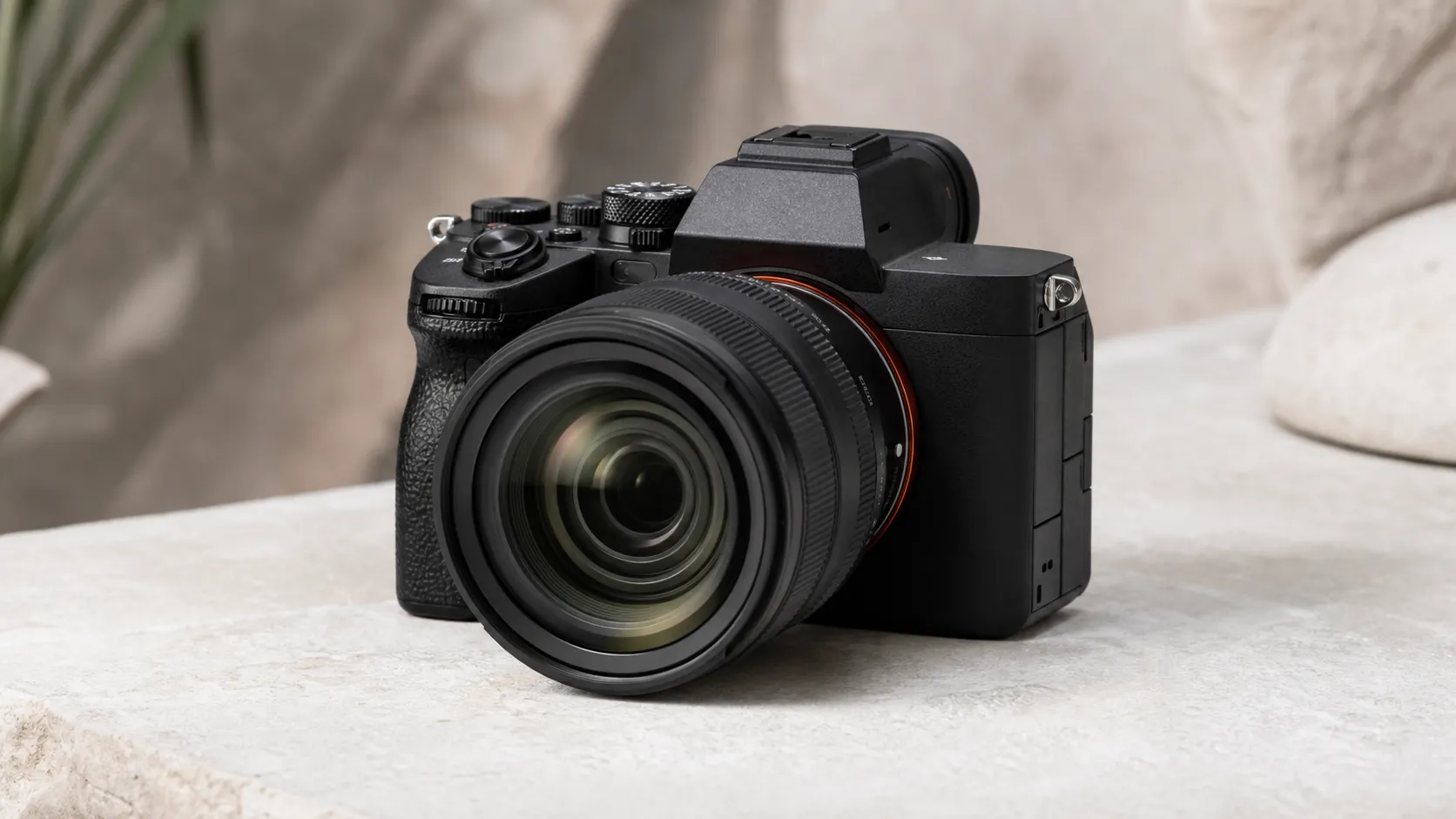
At a Glance
Pros
- High-resolution ~33MP full-frame sensor with strong dynamic range and image detail.
- Very good autofocus (Real-time/eye AF for people and animals) that works well for stills and many video situations.
- True hybrid feature set: internal 10-bit 4:2:2 recording, comprehensive video features (up to 4K60 with crop), and S-Cinetone color.
Cons
- High price relative to some competitors — many say it’s a significant investment for prosumers.
- 4K/60fps video requires a Super35/APS-C crop (not full-frame), which frustrates some videographers.
- Expensive/limited media requirements (CFexpress Type A + large 10-bit files) increase operating costs.
Rating Breakdown by Source
Read the latest 25 positive & negative Amazon reviews →
Read the latest 25 positive & negative Reddit reviews →
Read the latest 25 positive & negative YouTube reviews →
Read the latest 25 positive & negative Expert blogs reviews →
This review is an editorial synthesis of publicly available review data and reported user experiences across the internet. Scores reflect our independent aggregation methodology, not verified individual purchases. We may earn a commission if you buy through our links, at no cost to you.
Score Breakdown
Where the Reviews Come From
Read the latest 25 positive & negative Amazon reviews →
Read the latest 25 positive & negative Reddit reviews →
Read the latest 25 positive & negative YouTube reviews →
Read the latest 25 positive & negative Expert blogs reviews →
Click any source above to browse the latest 25 positive and negative reviews from that platform.
Sony Alpha 7 IV (Sony A7 IV)
See current price, deals and availability on Amazon
Quick verdict
The Sony Alpha 7 IV (A7 IV) is a class-leading hybrid full-frame mirrorless camera that balances high-resolution stills and pro-capable video in a single body. Aggregating reviews across Amazon, Reddit, YouTube and expert blogs yields an overall score of 4.4/5 — reviewers praise its 33MP sensor, dependable autofocus and internal 10-bit recording, while noting price, media costs, and a learning curve as the main trade-offs.
What Is the Sony Alpha 7 IV (Sony A7 IV)?
The A7 IV is Sony’s prosumer/professional hybrid full-frame mirrorless camera positioned between enthusiast and flagship models. It features a roughly 33-megapixel full-frame sensor, five-axis in-body image stabilization (IBIS), a high-resolution electronic viewfinder, and a fully articulating touchscreen. On the video side it offers internal 10-bit 4:2:2 recording and modern color profiles (including S-Cinetone) — capabilities that appeal to creators who want serious stills performance and robust video features in a single, portable package.
Sony designed the A7 IV to be an all-purpose tool for wedding photographers, hybrid content creators, documentary shooters and prosumers who need a single camera for paid stills and video work. That positioning explains many of the design decisions: strong autofocus, a high-resolution sensor for cropping and large prints, and video codecs that support grading and delivery without an external recorder for most short-form projects.
What Reviewers Across the Internet Say
- Overall aggregated rating: 4.4/5 from ~18,160 reviews.
- Sub-scores from the aggregate: Quality 4.6, Reliability 4.5, Value 4.0, Ease of use 4.0.
Source breakdown and consensus highlights:
-
Amazon (4.5/5, positive): Buyers repeatedly praise the image quality, AF performance and the camera’s hybrid utility. Most 4–5 star reviews position the A7 IV as exceptional value for photographers who also shoot video; critical notes often mention price and large file sizes.
-
Reddit (4.1/5, mixed): Community threads are more nuanced. Many users love the AF, dynamic range and ergonomics, but debates focus on the APS-C/Super35 crop at 4K/60, media costs (CFexpress Type A), and whether the A7 IV is the best value against rival bodies depending on personal workflows.
-
YouTube (4.4/5, positive): Video reviewers emphasize the camera’s hybrid strengths — internal 10-bit 4:2:2 recording, strong autofocus for run-and-gun situations, and improved ergonomics. Most reviewers call out the 4K/60 crop and recommend planning cards and storage for 10-bit workflows.
-
Expert blogs (4.6/5, positive): Long-form tests underscore excellent sensor performance, dynamic range and firmware features. Experts generally call the A7 IV one of the most balanced hybrid cameras for prosumers while pointing to price and media workflow as the main compromises.
Across sources the consensus is clear: exceptional hybrid capabilities and class-leading AF, offset by higher operating costs and a learning curve.
Performance & Real-World Use
The Sony Alpha 7 IV (Sony A7 IV) proves itself as a balanced hybrid that pairs excellent 33MP stills with dependable 10‑bit video, standout autofocus, and practical ergonomics that hold up over months of use. Its main compromises—4K60 with a Super35 crop, higher media and storage costs, and a learning curve—are real but manageable for most creators, and don’t outweigh its strengths.
A camera only “performs” when it gets you the shot with minimal fuss, and the Sony Alpha 7 IV does that by pairing a 33MP full‑frame sensor, sticky autofocus, and 10‑bit video tools with ergonomics that stay out of the way. Over weeks and months, owners judge it on image quality, AF reliability, workflow friction, and whether the body remains cool, stable, and predictable in daily use.
Owner-rated sub-scores for Sony A7 IV
Aggregated owner sub-scores synthesized from public ratings: strong quality and reliability with solid value and ease of use.
View the underlying data
| Measure | Score |
|---|---|
| Image quality | 4.6/5 |
| Reliability | 4.5/5 |
| Value | 4/5 |
| Ease of use | 4/5 |
Synthesis of public ratings as reported in owner and expert reviews through 2026.
Where A7 IV reviews come from
Most public opinions come from Amazon buyers, with Reddit and YouTube contributing meaningful nuance and expert blogs providing in-depth context.
- Amazon66%
- Reddit10%
- YouTube23%
- Expert blogs1%
Share computed from the stated volumes (≈12,000 Amazon; ≈1,800 Reddit; ≈4,200 YouTube; ≈160 expert blogs; total ≈18,160).
What real-world performance means for a hybrid body
For a hybrid like the A7 IV, performance is about speed and certainty across stills and video. Stills shooters need quick wake, fast eye detection, and files that survive exposure mistakes; video creators need consistent color, codecs that match their cards and computers, and uninterrupted recording. The A7 IV’s appeal is how it balances these needs: a 33MP sensor with good dynamic range, Sony’s Real‑time Tracking AF, 5‑axis IBIS, and internal 10‑bit 4:2:2 in practical codecs. Those foundations appear in demanding scenarios—weddings, travel, corporate video—where you switch from portraits to clips in seconds without re‑rigging. Sony’s official specifications and Help Guide outline the feature set, while independent reviews from DPReview and CineD confirm the camera’s sensor behavior, rolling shutter, and video endurance. Owners feel that balance as a high keeper rate, flexible color, and a body that doesn’t overheat easily in normal conditions.
Day-one setup and first week with the Sony Alpha 7 IV (Sony A7 IV)
Out of the box, set Subject Recognition (Human/Animal/Bird), enable Real‑time Tracking, and map AF‑On to the rear button with Eye AF on a custom key. Choose Lossless Compressed RAW for stills to preserve latitude without huge files. For finished photos, pick JPEG or HEIF; HEIF provides 10‑bit images if your editor supports them (documented in Sony’s Help Guide). For video, start with XAVC HS 10‑bit (efficient but heavier on the computer) or XAVC S‑I All‑I (edit‑friendly, large).
Cards dictate reliability. Dual slots take SD UHS‑II and CFexpress Type A; demanding modes benefit from V90 SD or Sony’s CFexpress Type A (see the SD Association and CompactFlash Association). Update firmware, pair Imaging Edge Mobile for quick transfer/geotagging, and create MR1–MR3 custom modes: “stills‑general,” “video talking head,” and “video action.” By week’s end, you’ll have a layout that speeds you through changing scenes with minimal menu diving.
Autofocus and stills image quality over time
Sony’s 759‑point phase‑detect AF with Real‑time Tracking is why owners talk about keeper rate instead of settings. Eye detection is fast in bright light and dependable in dim rooms; AF sensitivity reaches low‑light scenes per Sony’s specs. Wildlife and pet shooters can leave Animal/Bird detect active for mixed outings; portrait shooters see stable eye lock despite glasses, hair, or brief occlusions.
The 33MP sensor is a sweet spot: detailed prints and generous crops without punishing storage. Independent testing from DPReview reports strong dynamic range and color that grades cleanly from lossless RAW. Use mechanical or first‑curtain shutter to avoid rolling‑shutter artifacts in fast action or under tricky LED lighting; silent electronic works for quiet venues but shows more skew. IBIS gives leeway with primes, making one‑eighth second handheld realistic on wide/normal lenses if your technique is steady. Months in, owners report consistency rather than surprises—focus behavior, color, and stabilization remain predictable.
Video behavior: codecs, crop, heat, and color you can trust
As a video tool, the A7 IV records 4K up to 60p in 10‑bit 4:2:2, offers S‑Log3 for grading headroom, and S‑Cinetone for a “ready” look (per Sony’s specs). The trade‑off is well known: 4K60 uses a Super35/APS‑C crop (~1.5×), so a 24mm behaves like ~36mm. Many creators treat it as a built‑in tele option; if you need true full‑frame 4K60, you’ll adapt your focal lengths or move to a different body. Choose XAVC HS (H.265) when storage matters or delivery is web; choose XAVC S‑I when you want smooth scrubbing and consistent performance on a wide range of editors.
Thermals are solid for this class. With Auto Power OFF Temp set to High (Sony Help Guide), reviewers and owners report hour‑long 4K30 sessions in typical indoor conditions and shorter continuous 4K60 takes depending on ambient heat; CineD’s lab testing details rolling‑shutter and recording endurance. Audio I/O covers dual 3.5mm jacks and the digital Multi Interface Shoe for cable‑free on‑camera mics. Monitoring tools—zebras, focus peaking, LUT‑style gamma assist/monitor options—help nail exposure, and S‑Cinetone yields a consistent, low‑effort baseline across multi‑camera sets.
IBIS, ergonomics, and the speed you feel
On paper, 5‑axis IBIS is competitive; in practice it steadies framing, reduces micro‑jitters with primes, and makes slower shutter speeds realistic. For video, Active SteadyShot adds a modest crop and digital smoothing that’s perfect for walk‑and‑talk B‑roll, though it won’t replace a gimbal. The 3.69M‑dot EVF and fully articulating touchscreen enable low‑angle stills, vertical video, and solo shooting without contortions. The deeper grip and clear dials reduce fatigue on long days.
Responsiveness comes from the reworked menus, broader touch control, and a Stills/Movie/S&Q lever that locks context‑specific settings. USB‑C supports fast data, tethering, and UVC/UAC webcam streaming for classes or meetings (see Sony’s Help Guide). A full‑size HDMI is sturdier for rigs and widely compatible with recorders. After months, buttons remain crisp, the shutter feels confident yet quiet, and weather sealing shrugs off dust and light rain with routine care—qualities that encourage using one body for everything.
Months later: reliability, batteries, storage, and firmware
Long‑term satisfaction rides on batteries, storage, and time. The NP‑FZ100 battery is still a class leader: many users complete full photo days on 1–2 batteries or record multiple 4K sessions on a pair, and USB‑C power delivery makes fixed‑position video essentially unlimited. Storage planning matters on a 10‑bit camera: All‑I files are large, so many creators default to XAVC HS for run‑and‑gun and reserve S‑I for interviews or fast‑turn edits. For paid work, enable dual‑slot recording; SD UHS‑II V90 cards are cost‑effective for most modes, while CFexpress Type A unlocks the heaviest codecs and quicker offloads (standards from the SD Association and CFA).
Maintenance is straightforward. Enable “close shutter when power off” when swapping lenses to reduce dust. Use built‑in sensor cleaning and a rocket blower; do a wet clean every few months if needed on the 33MP sensor. Sony’s firmware cadence has added stability and features across bodies; the A7 IV launched with Breathing Compensation on supported lenses and Focus Map for visualizing depth—check compatibility steps in the Help Guide. Owners emphasize that nothing degrades with age: AF, IBIS, and thermal behavior remain steady across projects and seasons.
Where it excels, where it strains, and class comparisons
The A7 IV excels at people photography, weddings, documentary travel, corporate/education video, and creator workflows where eye‑detect AF, 33MP detail, and 10‑bit color reduce retakes. It strains when you demand full‑frame 4K60, extreme slow‑motion, or the fastest rolling‑shutter readout under harsh LED lighting. In those niches, some shooters choose specialty bodies.
Against peers, trade‑offs define choices rather than a single “winner.” Canon’s EOS R6 Mark II emphasizes subject detection and burst speed with strong 10‑bit video options; Panasonic’s Lumix S5 II adds phase‑detect AF to excellent stabilization and robust codecs. Sony counters with lens breadth (including third‑party), consistent AF in stills and video, and a mature accessory ecosystem. The A7 IV’s full‑size HDMI and CFexpress Type A are creator‑friendly; costs are higher than SD‑only rivals, but flexibility is real. The feature table below focuses on the yes/no options users ask about most.
Feature support vs key alternatives
Practical, binary features creators ask about most often, compared across popular mid-range full-frame hybrids.
| Item | Internal 10-bit 4:2:2 | IBIS | Dual card slots | CFexpress Type A slot | Full-size HDMI | No 30-min record cap |
|---|---|---|---|---|---|---|
| Sony A7 IV | Yes | Yes | Yes | Yes | Yes | Yes |
| Canon EOS R6 Mark II | Yes | Yes | Yes | No | No | Yes |
| Panasonic Lumix S5 II | Yes | Yes | Yes | No | Yes | Yes |
Features compiled from official manufacturer specifications as of August 2026.
Practical, step-by-step setup to get the best performance
- Map essentials: AF‑On to the rear button; Eye AF to a custom key; enable Touch to Track; assign AEL hold where your thumb reaches while panning.
- Build MR1–MR3: 1) Stills fast action (AF‑C, Human/Animal detect on, Lossless RAW, high drive). 2) Video talking head (4K30, XAVC S‑I, S‑Cinetone, face/eye priority, zebras at 70–75%). 3) Video movement (4K60 APS‑C, XAVC HS, Active SteadyShot, AF Transition Speed 5/7 for snappier pulls).
- Choose codecs by outcome: XAVC HS for smallest files/web, XAVC S 10‑bit for broad compatibility, XAVC S‑I when you need edit‑ready intraframe streams (see Sony specs).
- Control heat and runtime: Set Auto Power OFF Temp to High for studio work; power via USB‑C PD for podcasts/lectures; shade the LCD outdoors; keep vents clear (guidance in Sony’s Help Guide).
- Speed up culling: Shoot Lossless RAW + JPEG/HEIF; star‑rate in camera; tether via USB‑C or ingest with Sony’s Imaging Edge Desktop to accelerate previews.
- Stabilization strategy: Rely on IBIS for wider primes; use Active for mild motion; add a gimbal for walking shots at 35mm+. For stills with adapted glass, use first‑curtain shutter to minimize shock.
- Media plan: Two SD UHS‑II V90 cards cover most jobs affordably; add a CFexpress Type A for All‑I or fast overflow. Back up to a portable SSD on location so full cards never halt a shoot.
Conclusion: does real-world performance justify the spend?
If you want one camera that photographs people beautifully, records rich 10‑bit video with minimal setup, and stays trustworthy after the honeymoon, the A7 IV earns its keep. The 4K60 crop, media costs, and a learning curve are real, but the autofocus, image quality, thermal stability, and day‑to‑day ergonomics outweigh them for most creators—hence the strong owner consensus reflected above.
Pros and Cons
Pros
- High-resolution ~33MP full-frame sensor with strong dynamic range and image detail.
- Very good autofocus, including Real-time Eye AF for people and animals.
- True hybrid feature set: internal 10-bit 4:2:2 recording, S-Cinetone, broad video codecs.
- Five-axis in-body image stabilization (IBIS) for steadier handheld stills and video.
- Improved ergonomics, high-resolution EVF and fully articulating touchscreen; solid connectivity (USB-C, HDMI, mic/headphone).
Cons
- High price versus some competitors; a notable investment for prosumers.
- 4K/60fps uses a Super35/APS-C crop rather than full-frame, limiting shallow depth-of-field at high frame rates.
- Media and storage costs are higher (CFexpress Type A + large 10-bit file sizes).
- Steep menu depth and a learning curve — personalization required to unlock full potential.
Who Should Buy It (and Who Shouldn't)
Should buy if:
- You’re a hybrid creator who needs a single camera for high-quality stills and professional-looking video without always using external recorders.
- Dependable autofocus and IBIS are important to your workflow (weddings, events, run-and-gun documentary work, solo creators).
- You value high-resolution images for printing, cropping flexibility, or commercial assignments where detail and dynamic range matter.
Shouldn’t buy if:
- You primarily shoot high-frame-rate video and require full-frame 4K/60 without crop—there are bodies and newer models that address that use case.
- Upfront and ongoing media costs (CFexpress cards, extra storage) are a deal-breaker for your budget.
- You want the simplest, most beginner-friendly camera with minimal setup time — the A7 IV rewards time spent learning its menus and customizations.
Final thoughts
The Sony A7 IV remains one of the best-balanced hybrid cameras available: it delivers class-leading autofocus, excellent stills quality and pro-level video codecs in a single, ergonomic body. If you can accept the 4K/60 crop and budget for higher-cost media and storage, it’s an outstanding tool for prosumers and working creators who need a reliable, flexible camera.
What Reviewers Love
- High-resolution ~33MP full-frame sensor with strong dynamic range and image detail.
- Very good autofocus (Real-time/eye AF for people and animals) that works well for stills and many video situations.
- True hybrid feature set: internal 10-bit 4:2:2 recording, comprehensive video features (up to 4K60 with crop), and S-Cinetone color.
- Five-axis in-body image stabilization (IBIS) that helps with hand-held shooting.
- Improved ergonomics, high-resolution EVF, and a fully articulating touchscreen plus solid connectivity (USB-C, HDMI, mic/headphone).
Common Complaints
- High price relative to some competitors — many say it’s a significant investment for prosumers.
- 4K/60fps video requires a Super35/APS-C crop (not full-frame), which frustrates some videographers.
- Expensive/limited media requirements (CFexpress Type A + large 10-bit files) increase operating costs.
- Menu complexity and a learning curve: reviewers frequently note it takes time to personalize and master settings.
Our Verdict
4.4The Sony A7 IV is one of the most balanced hybrid full-frame cameras for prosumers: superb image quality, class-leading autofocus and robust video features. If you can accept the 4K/60 crop and higher media costs, it’s a compelling one-body solution for serious stills-plus-video creators.
Frequently Asked Questions
Common questions shoppers ask before buying the Sony Alpha 7 IV (Sony A7 IV).
Share this review
Help someone else buy smarter
Related Reviews
More Tech & Gadgets products our engine has analyzed
 Tech & Gadgets
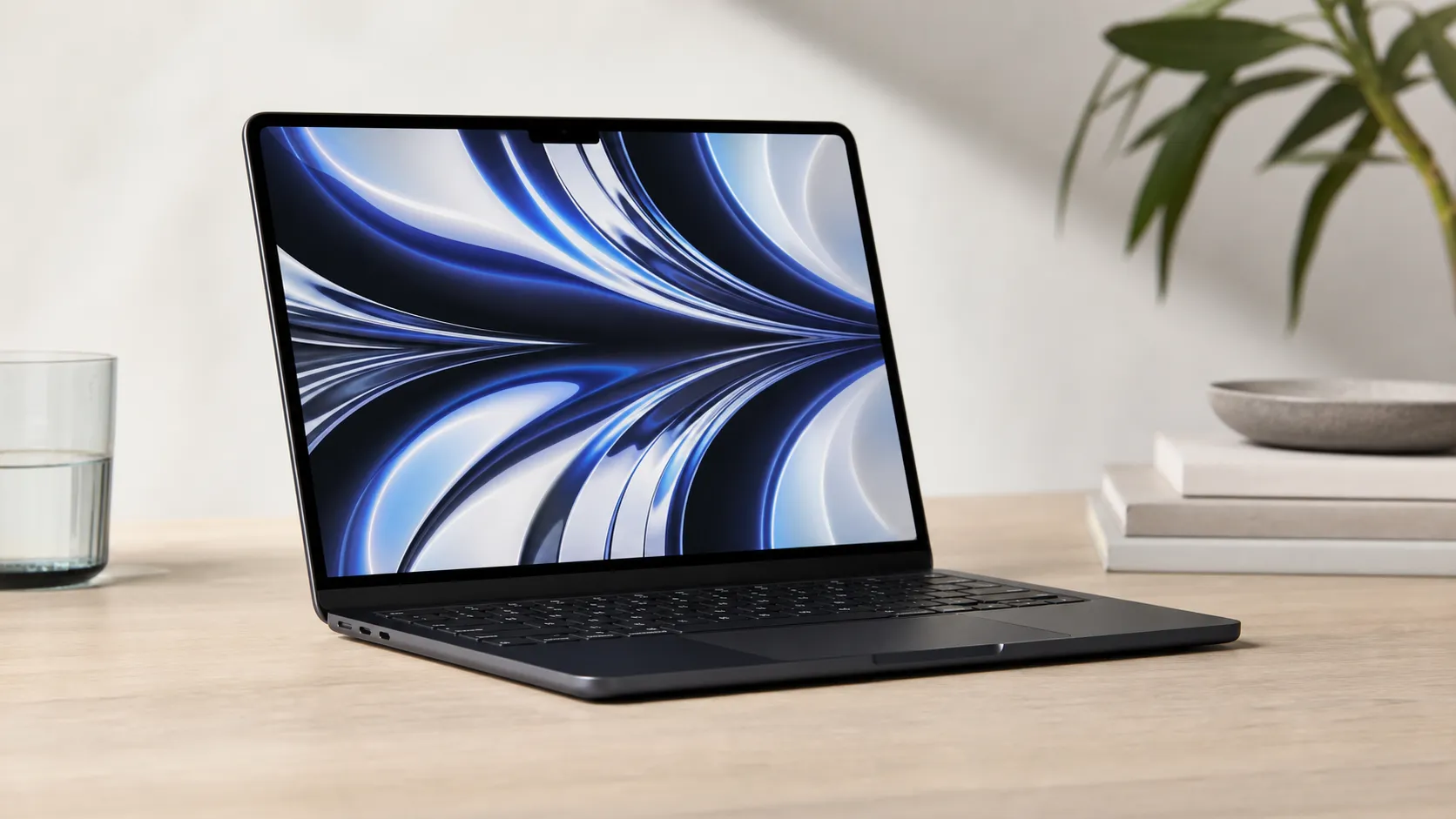
Apple MacBook Air (13-inch, M2) Review — 2026
A slim, quiet, and battery‑friendly choice for students and professionals. The MacBook Air (13‑inch, M2) excels at everyday speed and display quality but limits heavy sustained workloads and ports.
 Tech & Gadgets
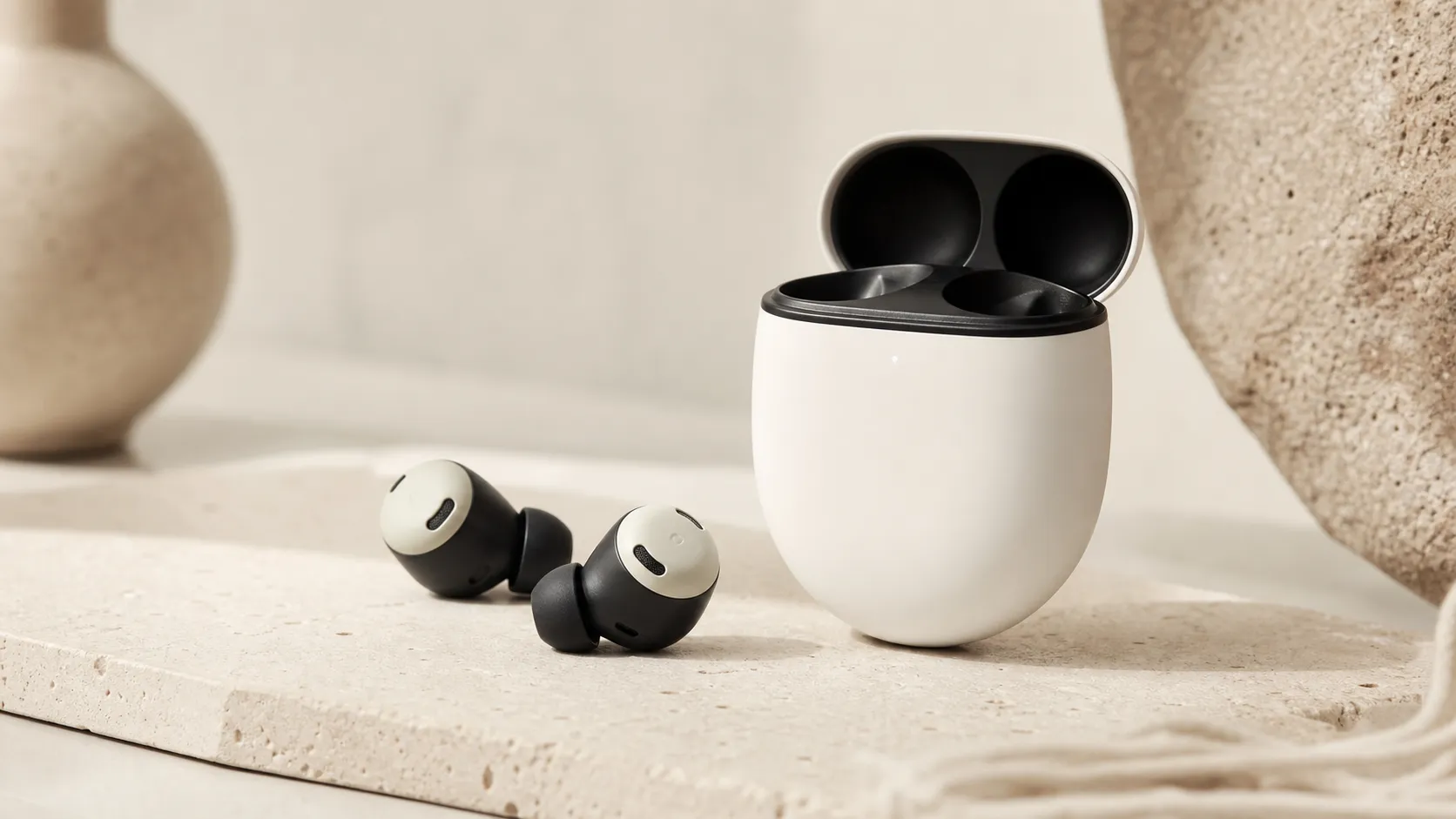
Google Pixel Buds Pro Review 2026
A polished, Android-first pair of true wireless earbuds with very good ANC, comfy fit, and strong battery life—great value for most buyers in 2026.
 Tech & Gadgets
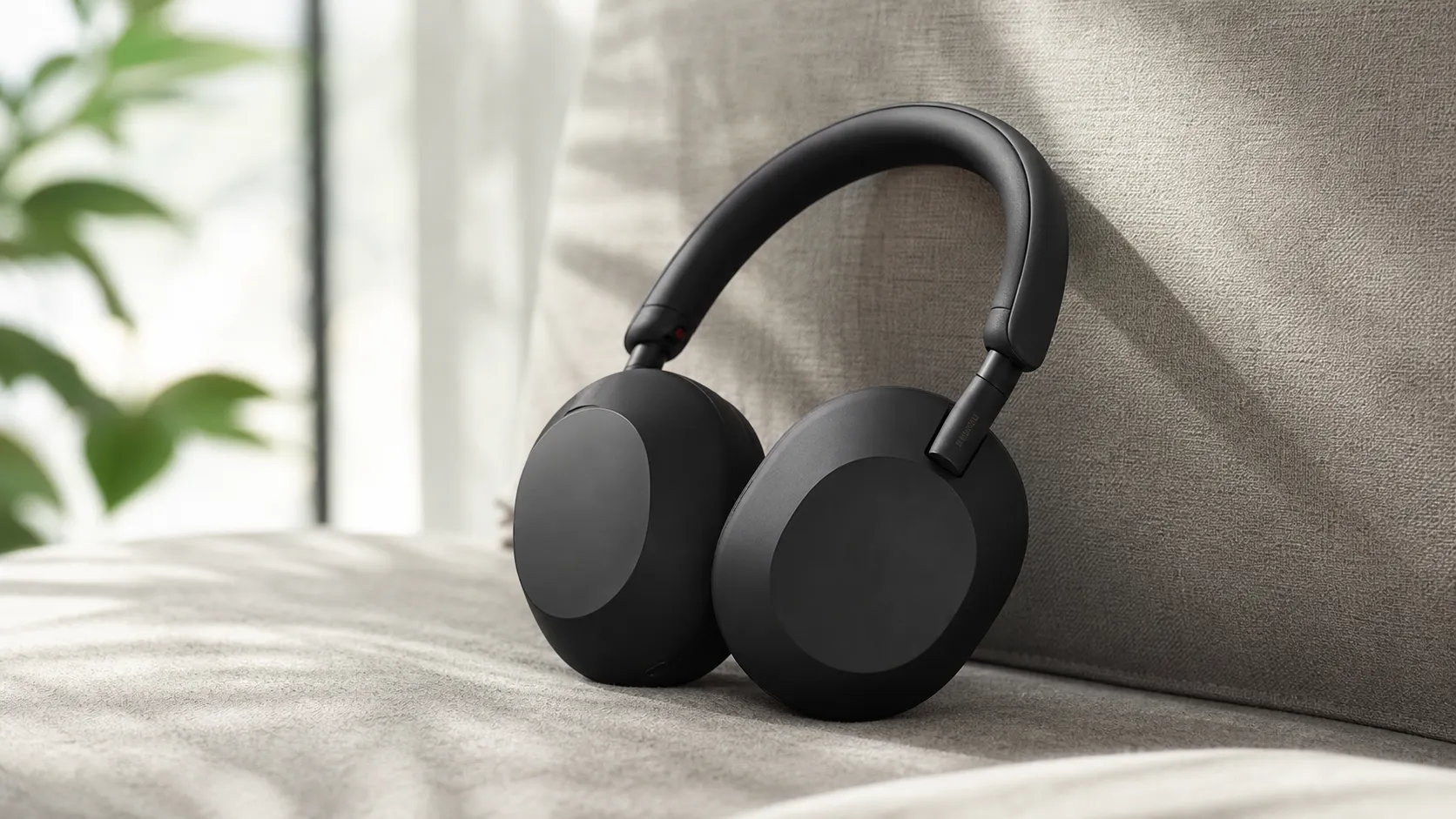
Sony WH-1000XM5 Review 2026 — ANC, Comfort & Value
Sony WH‑1000XM5: class‑leading ANC, exceptional comfort and long battery life — great for travel and calls, though sound tuning and a few durability reports divide opinions.