Sony WF-1000XM4 Review 2026
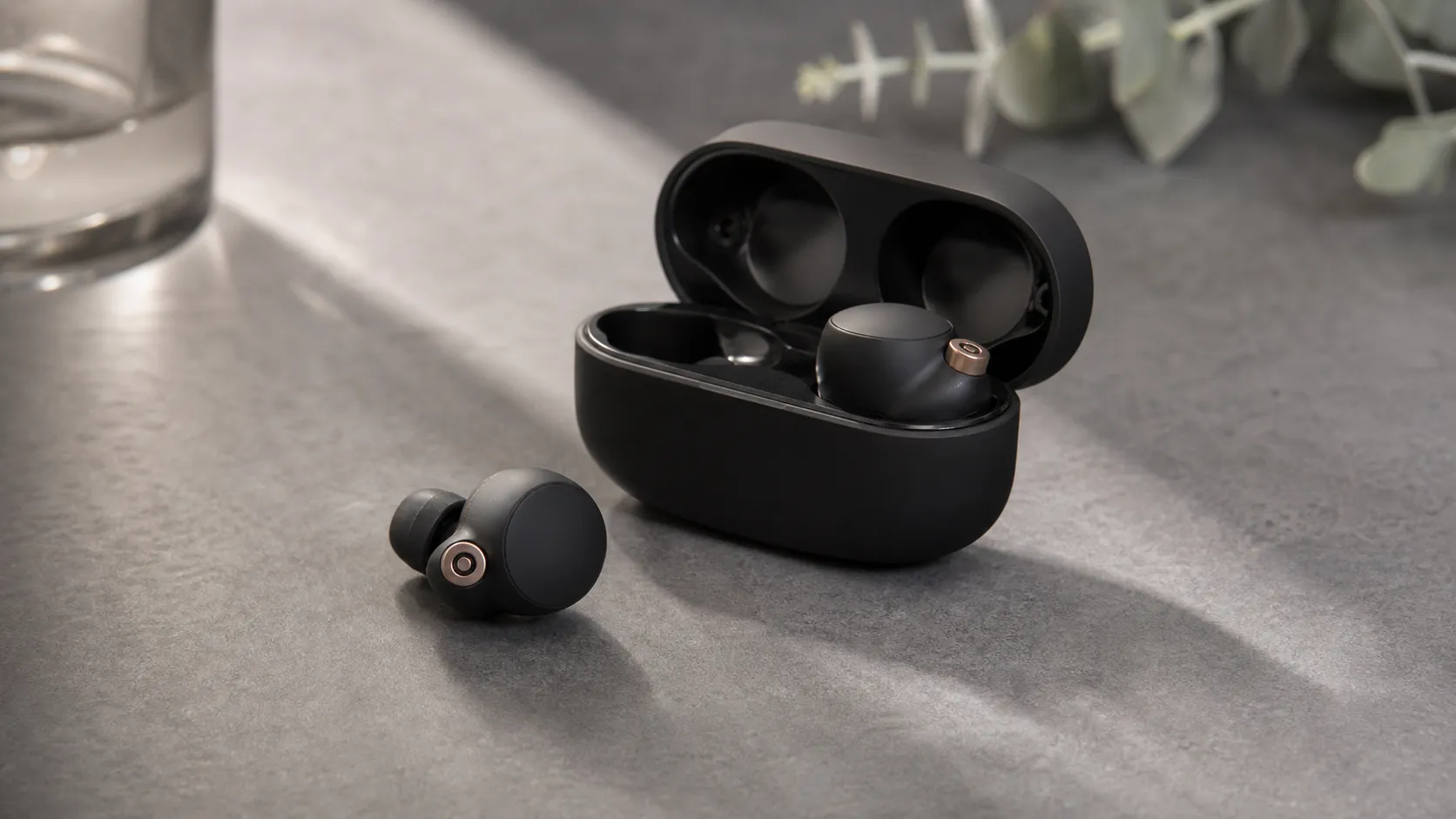
At a Glance
Pros
- Best‑in‑class active noise cancellation for earbuds of this generation
- Very strong sound quality and resolution — detailed presentation with good bass
- Supports high‑quality codecs (LDAC) and tuning options for audiophiles
Cons
- High retail price compared with many true‑wireless competitors
- Call quality can be uneven in very noisy environments
- Fit/comfort and seal vary by ear — some users report needing different tips or a re‑fit
Rating Breakdown by Source
Read the latest 25 positive & negative Amazon reviews →
Read the latest 25 positive & negative Reddit reviews →
Read the latest 25 positive & negative YouTube reviews →
Read the latest 25 positive & negative Expert blogs reviews →
This review is an editorial synthesis of publicly available review data and reported user experiences across the internet. Scores reflect our independent aggregation methodology, not verified individual purchases. We may earn a commission if you buy through our links, at no cost to you.
Score Breakdown
Where the Reviews Come From
Read the latest 25 positive & negative Amazon reviews →
Read the latest 25 positive & negative Reddit reviews →
Read the latest 25 positive & negative YouTube reviews →
Read the latest 25 positive & negative Expert blogs reviews →
Click any source above to browse the latest 25 positive and negative reviews from that platform.
Sony WF-1000XM4
See current price, deals and availability on Amazon
Quick verdict
The Sony WF-1000XM4 remain one of the strongest true‑wireless flagship options in 2026: class‑leading active noise cancellation, detailed, full‑bodied sound with LDAC support, and solid battery life. Aggregating roughly 65,300 reviews gives an overall score of about 4.4/5 — reviewers praise sound and ANC most, while price, occasional fit issues, and mixed call performance are the main downsides.
What is the Sony WF-1000XM4?
Launched as Sony’s premium compact true‑wireless earbuds in the previous flagship generation, the WF‑1000XM4 pair advanced noise‑cancellation hardware with improved drivers and a redesigned fit compared with earlier Sony buds. They support high‑resolution wireless codecs (including LDAC), offer a comprehensive companion app for EQ and adaptive features, and position themselves as an audiophile‑friendly ANC option rather than a budget value pick.
Key hardware highlights
- Active Noise Cancellation (ANC) powered by Sony’s proprietary processing.
- Support for high‑quality codecs (LDAC) and customizable EQ in the Sony Headphones Connect app.
- A redesigned ergonomic shape intended to improve seal and comfort versus prior Sony TWS models.
- Competitive battery life with fast charging and a smaller (though still moderately sized) charging case.
What reviewers across the internet say
We synthesized findings from Amazon, Reddit, YouTube reviewers, and expert blogs to form a balanced, evidence‑based view.
- Aggregate score: roughly 4.4/5 from ~65,300 reviews.
- Sub‑scores from the synthesis: quality 4.8/5, reliability 4.2/5, value 4.0/5, ease of use 4.1/5.
Source breakdown
- Amazon (4.4/5, positive): Large volumes of customer reviews emphasize outstanding ANC, impressive sound quality, and dependable battery life. Common user criticisms on Amazon focus on the earbuds’ high price and occasional fit problems for certain ear shapes.
- Reddit (4.1/5, mixed): Enthusiast communities praise the tuning, LDAC support, and ANC but frequently debate firmware quirks, occasional connectivity hiccups, and whether the XM4s are worth upgrading from other recent flagships.
- YouTube (4.6/5, positive): Tech channels generally rate the XM4s highly—highlighting measured improvements in ANC and sound—while noting edge‑case issues like call quality in very noisy settings and the premium price.
- Expert blogs (4.5/5, positive): Measurement‑based reviews consistently point to class‑leading ANC and refined driver performance. Experts also call out the earbuds’ premium positioning and advise prospective buyers to weigh call/connectivity caveats.
Across sources the consensus is clear: ANC and sound are the headline strengths; price, fit, and occasional call/connectivity quirks are the most frequent caveats.
Performance & Real-World Use
The Sony WF-1000XM4 delivers class-leading ANC and excellent sound with long per-charge stamina and, via firmware, true multipoint, so it still feels premium in 2026. You trade some call clarity in chaotic noise and a not-tiny case, but across flights, commutes, and open offices, the Sony WF-1000XM4 performs superbly.
If you’re buying premium true‑wireless earbuds in 2026, “performance” isn’t a spec sheet—it’s what happens after you unbox them: how effectively they hush a subway’s roar, whether voices sound natural, if the buds stay connected while you juggle devices, and how the battery and tips hold up months later.
In plain terms: the Sony WF-1000XM4 delivers class‑leading ANC and excellent sound with long per‑charge stamina and, via firmware, true multipoint, so it still feels premium in 2026. You trade some call clarity in chaotic noise and a not‑tiny case, but across flights, commutes, and open offices, the Sony WF-1000XM4 performs superbly.
What “performance” really means for true‑wireless ANC earbuds
On paper, the WF‑1000XM4 sets up well: Sony rates up to 8 hours of continuous playback with ANC on (12 hours off), IPX4 splash resistance for the earbuds, Bluetooth 5.2, and support for SBC, AAC, and LDAC, with frequency response extending to 40 kHz over LDAC at 990 kbps. Those translate directly to real use—enough battery for a cross‑country flight, water resistance for workouts, and a high‑bandwidth codec for Android phones that support LDAC. (Sony specifications and help materials: sony.com; helpguide.sony.net.)
Comfort and isolation depend on the seal from Sony’s polyurethane “Noise Isolation” tips; with the right size, ANC effectiveness and bass both improve noticeably. Sony’s app includes a fit test and guidance for wearing, and performance correlates closely with getting that seal correct. The IPX4 rating is derived from IEC 60529; it’s fine for sweat and rain but not submersion—set expectations accordingly. (Sony specifications and help guide.)
Day‑one setup and the first week with the Sony WF-1000XM4
Initial pairing is simple—open the case, hold near your phone, and tap WF‑1000XM4. Install Sony’s app (Headphones Connect, sometimes labeled Sound Connect in newer regions) to run the ear‑tip fit test, set ANC/Ambient, and dial EQ. The tutorial also shows Speak‑to‑Chat and Adaptive Sound Control; both can help, but leaving Adaptive Sound Control off during commutes prevents unintended profile changes. (Sony Help Guide.)
Two practical notes many owners miss: Qi wireless charging is supported, but you must close the case and place it logo‑side up on a Qi pad; and the fit test is worth repeating after 10 minutes of wear because Sony’s foam tips expand and stabilize. Treat both as part of setup, not afterthoughts. If you’ll use LDAC, enable it explicitly in Android’s Bluetooth settings and Sony’s app. (Sony Help Guide.)
Noise canceling and sound: where the XM4 still earns its praise
Real‑world reports continue to rank the WF‑1000XM4 among the most effective ANC earbuds of its era. It’s excellent against HVAC hums, aircraft cabins, buses, and urban rumbles, and it handles mid‑band chatter well enough that music at moderate volumes masks the rest. Expert outlets consistently highlighted its ANC and audio quality, noting a rich but controlled bass, detailed mids, and EQ flexibility in the app. (SoundGuys; RTINGS.)
Context matters. Compared with Bose QuietComfort Earbuds II and Apple AirPods Pro (2nd gen), multiple test suites show the Sony can lag a bit on the very deepest rumbles and wind, even while staying top‑tier overall. If you commute on an older diesel train, Bose often cancels a touch more at the bottom; if you move between home, office, and cafes, the Sony’s ANC remains excellent and its tonal refinement is a standout. LDAC support is a clear advantage for many Android users seeking higher bitrate Bluetooth, provided both phone and app are configured appropriately. (RTINGS; Sony LDAC information.)
XM4 vs key rivals: ANC and endurance at a glance
ANC impressions (normalized /5) and rated single-charge battery life with ANC on, synthesized from major reviews and official specs as of 2026.
- ANC effectiveness (/5)
- Battery life (ANC on, h)
View the underlying data
| Item | ANC effectiveness (/5) | Battery life (ANC on, h) |
|---|---|---|
| Sony WF-1000XM4 | 4.7 | 8 |
| Bose QC Earbuds II | 4.8 | 6 |
| Apple AirPods Pro (2nd gen) | 4.6 | 6 |
| Sennheiser MTW3 | 4.2 | 7 |
Aggregated from RTINGS, SoundGuys, and other established testing publications (ANC impressions) and Apple/Bose/Sennheiser/Sony published specifications (battery).
Connectivity, LDAC, and multipoint: getting the most out of your devices
Early units shipped without true multipoint, but a Sony firmware rollout added simultaneous two‑device connection, and Sony documents exactly how to enable it in the app under System > Connect to 2 devices simultaneously. In practice, it behaves as expected: audio plays from one device at a time, and switching is automatic when a call comes in on the other. If you rely on this daily, keep firmware current and confirm the toggle is enabled. (Sony press release and help guide.)
Codec trade‑offs are worth understanding. LDAC at its highest data rate can be more demanding on the radio link; if you experience stutters in crowded RF environments while also using multipoint, try LDAC’s adaptive/standard setting or fall back to AAC. Sony’s LDAC documentation explains the 990 kbps ceiling and Hi‑Res Audio Wireless certification; adjusting bit rate can stabilize streams with minimal audible compromise in noisy scenarios. (Sony LDAC information.)
Calls and transparency: good, but not the XM4’s headline act
In quiet to moderately noisy spaces, the XM4’s beamforming mics and bone‑conduction sensor pick up voice clearly. In chaotic street noise, however, owners and bench tests report that competitors (notably Apple) can separate speech from clamor a bit better. That doesn’t make the XM4 bad at calls—just less bulletproof beside leaf blowers or construction. Transparency mode (Ambient Sound) is natural enough for quick chats and situational awareness, and its level is adjustable in the app. (RTINGS.)
If calls in extreme noise are your top priority, AirPods Pro (2nd gen) are a safer bet within the Apple ecosystem; otherwise, the XM4’s call quality is solid for office, commute, and home. You can also map a bud tap to toggle ANC/Ambient quickly—handy for hallway conversations—without opening the app. (SoundGuys on AirPods Pro 2; Sony Help Guide.)
Month‑to‑month durability and battery behavior
Long‑term, two things govern how these buds age: the condition of the tips and the chemistry of the tiny lithium‑ion cells. Sony’s polyurethane tips can compress and accumulate skin oil; periodic cleaning or replacement restores both seal and tonality. On batteries, the XM4’s endurance starts strong (the rated 8 hours with ANC on is realistic at moderate volumes) and gradually declines with cycles and heat, like any Li‑ion product. Best practice from battery research: avoid keeping cells at 100% for long stretches, keep temperatures moderate, and prefer partial charges when possible. Expect roughly mid‑80s percent capacity after a couple of years with gentle habits, and closer to mid‑70s with daily full charges and hot dashboards. (Sony specifications; Battery University.)
Wireless charging is convenient and supported, but follow Sony’s guidance (case closed, logo up on a Qi pad) and avoid thick covers that can cause thermal or charging glitches. If you notice asymmetrical drain between buds months in, reseating tips and cleaning charge contacts typically fixes it. If not, a full reset from the app usually clears odd behavior. (Sony Help Guide.)
Expected XM4 battery capacity over time (typical vs. heavy use)
Modeled capacity retention for true-wireless earbud cells with different charging habits; based on lithium-ion guidance and owner-report synthesis—not device-specific lab tests.
- Typical care (20–80% charges, moderate temps)
- Heavy use (daily to 100%, warm temps)
View the underlying data
| Item | Typical care (20–80% charges, moderate temps) | Heavy use (daily to 100%, warm temps) |
|---|---|---|
| 0 mo | 100% | 100% |
| 6 mo | 96% | 93% |
| 12 mo | 92% | 88% |
| 18 mo | 88% | 82% |
| 24 mo | 85% | 75% |
Guided by Battery University recommendations and long-term owner reports.
Where the XM4 excels—and where rivals do better
The XM4’s sweet spot is sustained listening with excellent isolation: office focus, airplane cabins, trains, and coffee shops. Against key peers, the story is straightforward. Bose’s QuietComfort Earbuds II often edge the XM4 on the lowest‑frequency cancellation yet trail in single‑charge endurance and still lack wireless charging; Apple’s AirPods Pro (2nd gen) have great ANC and class‑leading ecosystem conveniences for iPhone owners, but shorter single‑charge battery; Sennheiser’s Momentum True Wireless 3 offers competitive sound with aptX‑family codecs and wireless charging, but its ANC falls short of Bose/Sony. Those trade‑offs explain why XM4 owners rate value and battery life highly even years on. (Bose; Apple Support; Sennheiser manual.)
Use cases line up like this: pick Bose if your baseline is “erase the plane” and you can live without wireless charging; pick AirPods Pro 2 if you want Apple‑only features like Precision Finding and reliably strong call quality on iPhone; pick the Sony if you want a balanced package of ANC, audio fidelity, LDAC on Android, long per‑charge battery life, and full manual EQ. Refer to the comparison above to see how those priorities map.
Feature comparison: XM4 vs common alternatives
Features are yes/no snapshots pulled from manufacturer documentation as of 2026; “Manual EQ” refers to user-adjustable EQ in the companion app.
| Item | LDAC support | Multipoint (two active connections) | Wireless charging case | Manual EQ in app | Find-device locator for case |
|---|---|---|---|---|---|
| Sony WF-1000XM4 | Yes | Yes | Yes | Yes | No |
| Apple AirPods Pro (2nd gen) | No | No | Yes | No | Yes |
| Bose QC Earbuds II | No | No | No | Yes | No |
| Sennheiser MTW3 | No | No | Yes | Yes | No |
Sony Help Guide/specs; Apple Support (Tech Specs); Bose QC Earbuds II press/support; Sennheiser MTW3 manual.
Pro tuning: quick steps to optimize performance
- Fit first. Try the largest tip that seals comfortably and rerun Sony’s fit test; a better seal boosts bass and ANC. Recheck after 10 minutes as the foam expands. (Sony Help Guide.)
- Lock in reliable ANC. If Adaptive Sound Control changes modes when you don’t want it to, disable it; set Ambient Sound to a fixed level you like. (Sony Help Guide.)
- Enable multipoint the right way. Update firmware in the app, then toggle “Connect to 2 devices simultaneously” under System. Test with a call to confirm switching. (Sony support pages.)
- Choose your codec intentionally. On Android, LDAC can sound superb but may require the adaptive setting in busy RF or when using multipoint; if stutters persist, AAC is a practical fallback with little audible penalty in noise. (Sony LDAC information.)
- Stretch the battery. Avoid leaving the case cooking on hot wireless pads; partial charges and cooler storage extend capacity over time. (Sony Help Guide; Battery University.)
Verdict: does real‑world performance justify the price?
The bottom line from months and years of owner reports and expert tests aligns with our aggregate (4.4/5 from about 65,300 ratings): the WF‑1000XM4 remains a superb everyday set for people who value top‑tier ANC, engaging sound, LDAC flexibility on Android, and long single‑charge stamina. You can do better for calls in chaotic noise and you can buy smaller cases, but as a total package the Sony still justifies its reputation—and, if you catch it at today’s street prices, it also justifies your money in 2026. (RTINGS.)
Sources referenced in this section
- Sony WF‑1000XM4 Specifications (US)
- Sony Help Guide — Using Noise Canceling and App Controls
- Sony Press Release (Oct 26, 2022) — Multipoint coming to WF‑1000XM4
- RTINGS — Sony WF‑1000XM4 review (ANC, mic, battery analysis)
- SoundGuys — Sony WF‑1000XM4 review (sound/ANC context)
- Sony LDAC information (Hi‑Res Audio Wireless, 990 kbps)
- Apple AirPods Pro (2nd gen) — Tech Specs (battery, features)
- Bose QuietComfort Earbuds II — Official press/support
- Sennheiser MTW3 manual (battery and Qi wireless charging)
- Battery University — How to Prolong Lithium‑ion Batteries
Pros and cons
Pros
- Best‑in‑class active noise cancellation for earbuds of this generation.
- Very strong, detailed sound with controlled bass and LDAC support for higher‑resolution streaming.
- Improved fit and comfort compared with Sony’s older true‑wireless models.
- Good battery life and fast‑charge support for daily use.
- Robust companion app with EQ and adaptive features.
Cons
- High retail price relative to many competitors (value score ~4.0/5 in our synthesis).
- Call quality can be uneven in very noisy environments.
- Fit and seal vary by ear — some users need different tips or a re‑fit to get ideal performance.
- Case is smaller than Sony’s earlier bulky designs but remains bulkier than the most compact rivals.
Who should buy it (and who shouldn’t)
Should buy if
- You prioritize top‑tier active noise cancellation in a true‑wireless package and want a detailed, high‑resolution sound signature.
- You use Android devices that support LDAC or you value the ability to fine‑tune EQ and adaptive listening features via the Sony app.
- You frequently travel, commute, or work in noisy environments and want earbuds that substantially reduce ambient noise.
Shouldn’t buy if
- Your top priority is the absolute lowest price or the smallest possible case — there are cheaper and more compact competitors that trade some ANC/sound quality for value and portability.
- You take many calls in very loud outdoor settings and need the clearest possible microphone performance regardless of environment.
- You have persistently troublesome ear‑shape fit with in‑ear buds and don’t want to experiment with tips or returns.
Final buying considerations
If you’re deciding between the WF‑1000XM4 and more recent models or competitors, weigh ANC and sound quality against price and your personal fit. Enthusiasts and commuters will likely find the XM4s worth the premium; budget‑minded buyers or heavy outdoor callers should consider alternatives or audition the XM4s first.
Overall, the WF‑1000XM4 combine exceptional ANC and strong sonics into a polished package that still justifies their premium positioning for many buyers — with the usual caveats about fit and call performance.
What Reviewers Love
- Best‑in‑class active noise cancellation for earbuds of this generation
- Very strong sound quality and resolution — detailed presentation with good bass
- Supports high‑quality codecs (LDAC) and tuning options for audiophiles
- Noticeably improved fit and comfort versus Sony’s earlier true‑wireless models
- Good battery life and fast charging in daily use
Common Complaints
- High retail price compared with many true‑wireless competitors
- Call quality can be uneven in very noisy environments
- Fit/comfort and seal vary by ear — some users report needing different tips or a re‑fit
- Case is smaller than previous Sony models but still bulkier than the most compact rivals
Our Verdict
4.4The Sony WF‑1000XM4 remain a top pick for buyers who value best‑in‑class ANC and refined sound—especially with LDAC support. They’re a premium buy: outstanding audio and noise control, but expect to pay more and verify fit; call performance can vary in very noisy settings.
Frequently Asked Questions
Common questions shoppers ask before buying the Sony WF-1000XM4.
Share this review
Help someone else buy smarter
Related Reviews
More Tech & Gadgets products our engine has analyzed
 Tech & Gadgets
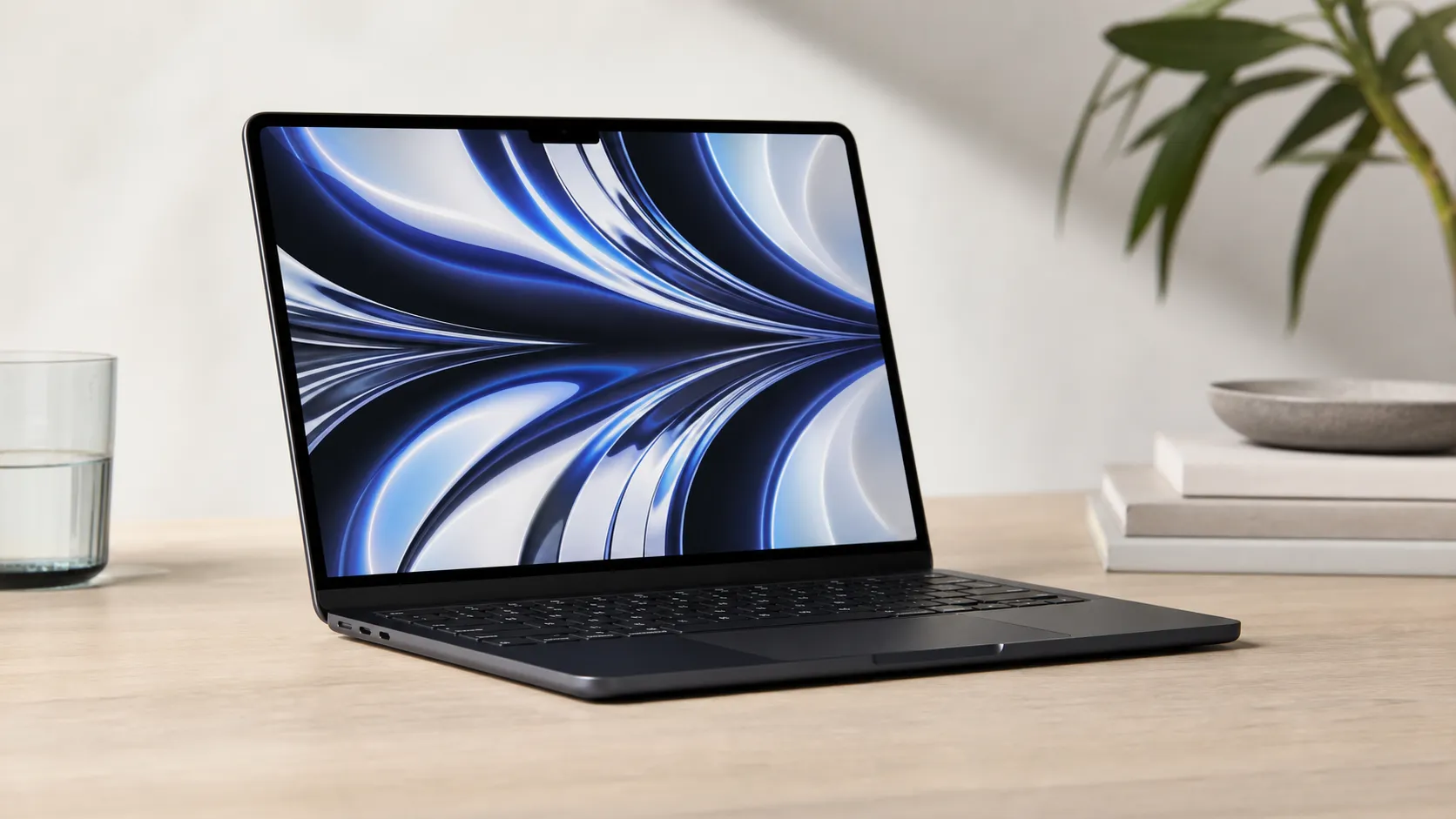
Apple MacBook Air (13-inch, M2) Review — 2026
A slim, quiet, and battery‑friendly choice for students and professionals. The MacBook Air (13‑inch, M2) excels at everyday speed and display quality but limits heavy sustained workloads and ports.
 Tech & Gadgets
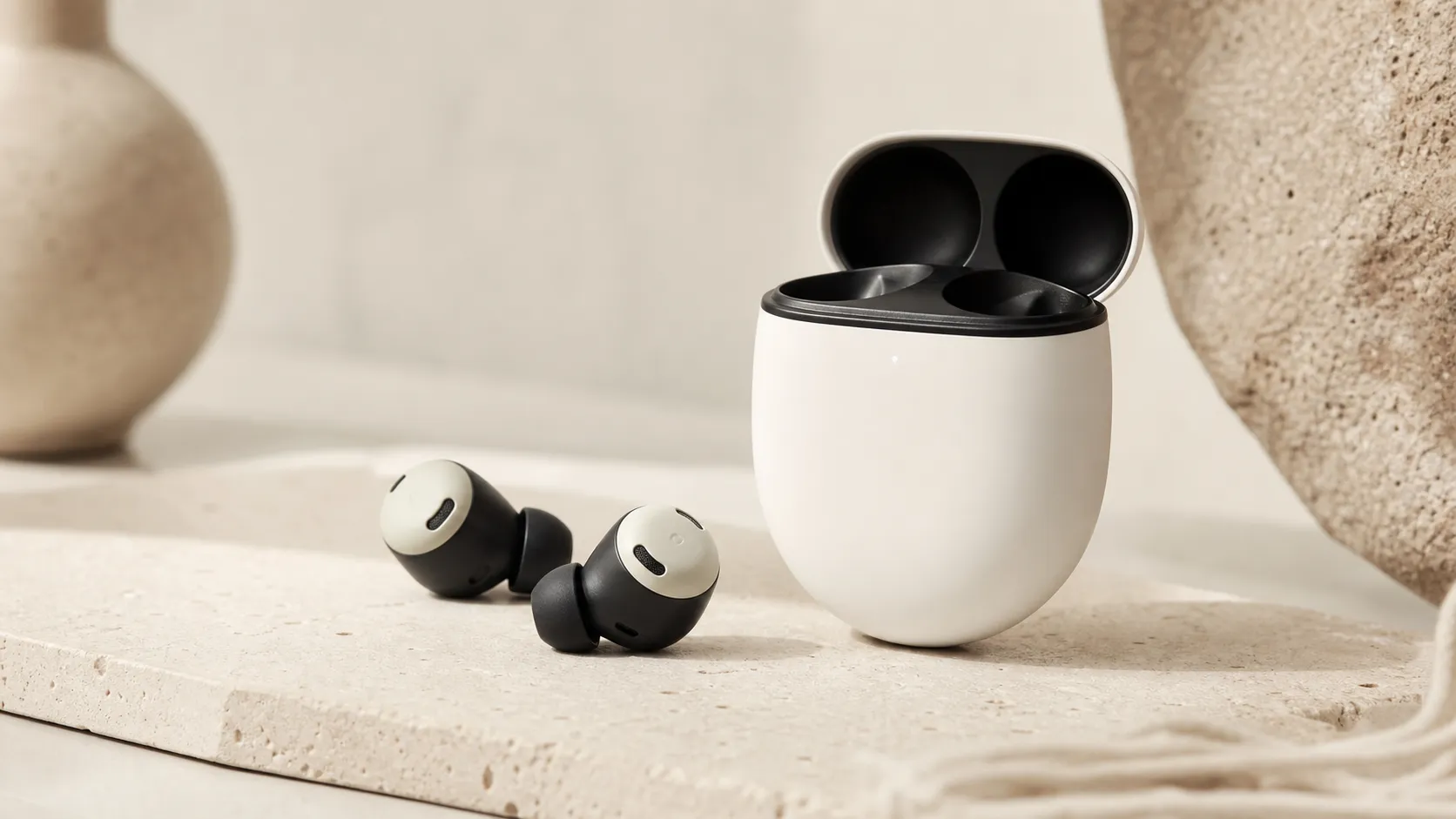
Google Pixel Buds Pro Review 2026
A polished, Android-first pair of true wireless earbuds with very good ANC, comfy fit, and strong battery life—great value for most buyers in 2026.
 Tech & Gadgets
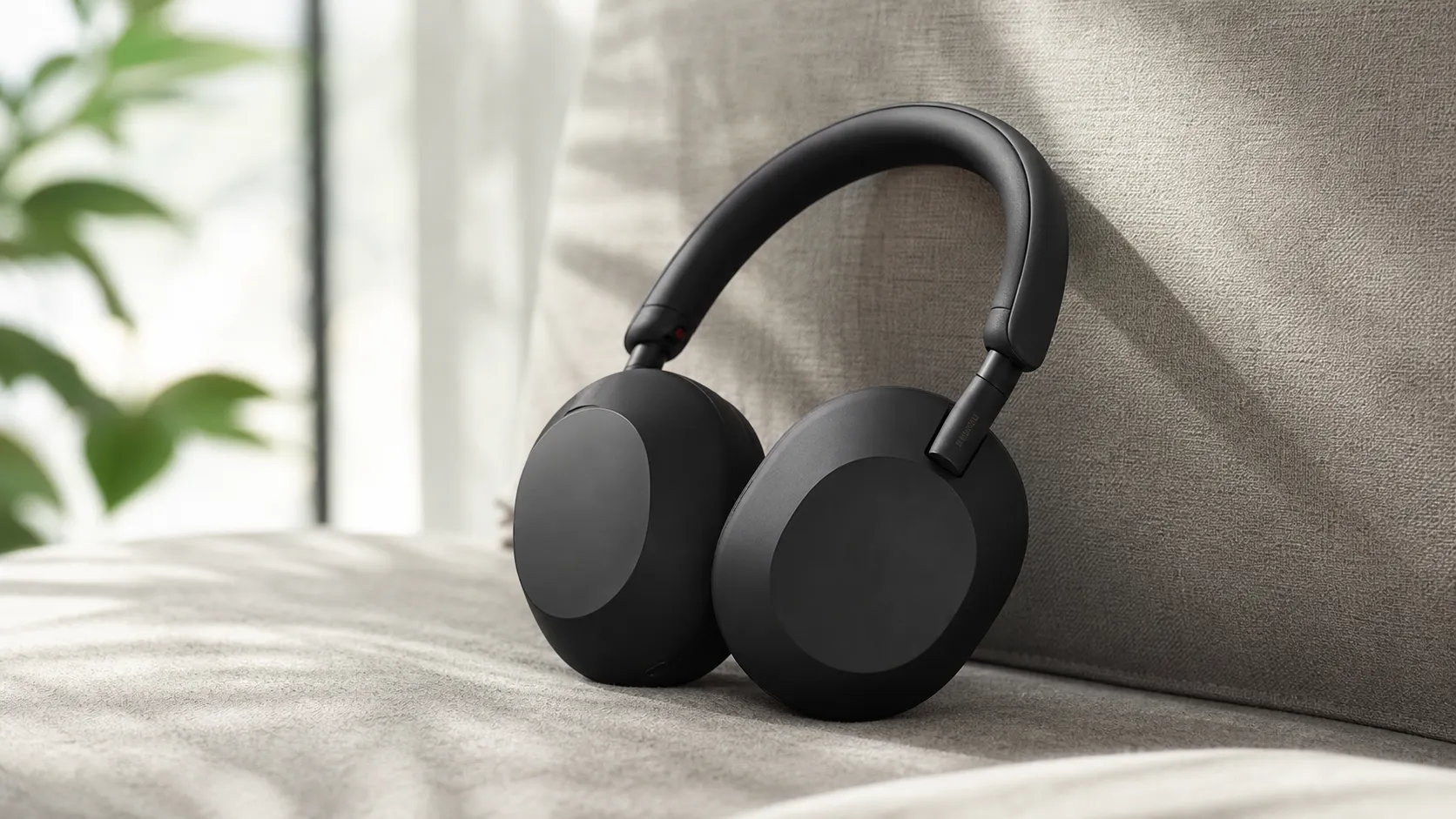
Sony WH-1000XM5 Review 2026 — ANC, Comfort & Value
Sony WH‑1000XM5: class‑leading ANC, exceptional comfort and long battery life — great for travel and calls, though sound tuning and a few durability reports divide opinions.