Staub 5.5‑Quart Round Cocotte Review — 2026
At a Glance
Pros
- Excellent heat retention and even cooking—great for braises, stews and long cooks
- Matte black interior promotes browning and is forgiving for searing
- Self‑basting lid (internal spikes) keeps moisture circulating, improving braises
Cons
- High purchase price compared with mainstream brands
- Heavy—difficult to lift when full (can be awkward for some users)
- Occasional visual imperfections or shipping damage reported on some retailer listings
Rating Breakdown by Source
Read the latest 25 positive & negative Amazon reviews →
Read the latest 25 positive & negative Reddit reviews →
Read the latest 25 positive & negative YouTube reviews →
Read the latest 25 positive & negative Expert blogs reviews →
This review is an editorial synthesis of publicly available review data and reported user experiences across the internet. Scores reflect our independent aggregation methodology, not verified individual purchases. We may earn a commission if you buy through our links, at no cost to you.
Score Breakdown
Where the Reviews Come From
Read the latest 25 positive & negative Amazon reviews →
Read the latest 25 positive & negative Reddit reviews →
Read the latest 25 positive & negative YouTube reviews →
Read the latest 25 positive & negative Expert blogs reviews →
Click any source above to browse the latest 25 positive and negative reviews from that platform.
Staub 5.5-Quart Round Cocotte
See current price, deals and availability on Amazon
Quick verdict
Staub’s 5.5‑quart round cocotte is a professional‑grade enameled cast‑iron Dutch oven that scores an aggregate 4.6/5 from roughly 1,990 reviews. It delivers outstanding heat retention, excellent braising and searing performance, and an elegant oven‑to‑table look — but it’s a heavy, premium purchase, and value scores lag behind quality and reliability.
What is the Staub 5.5‑Quart Round Cocotte?
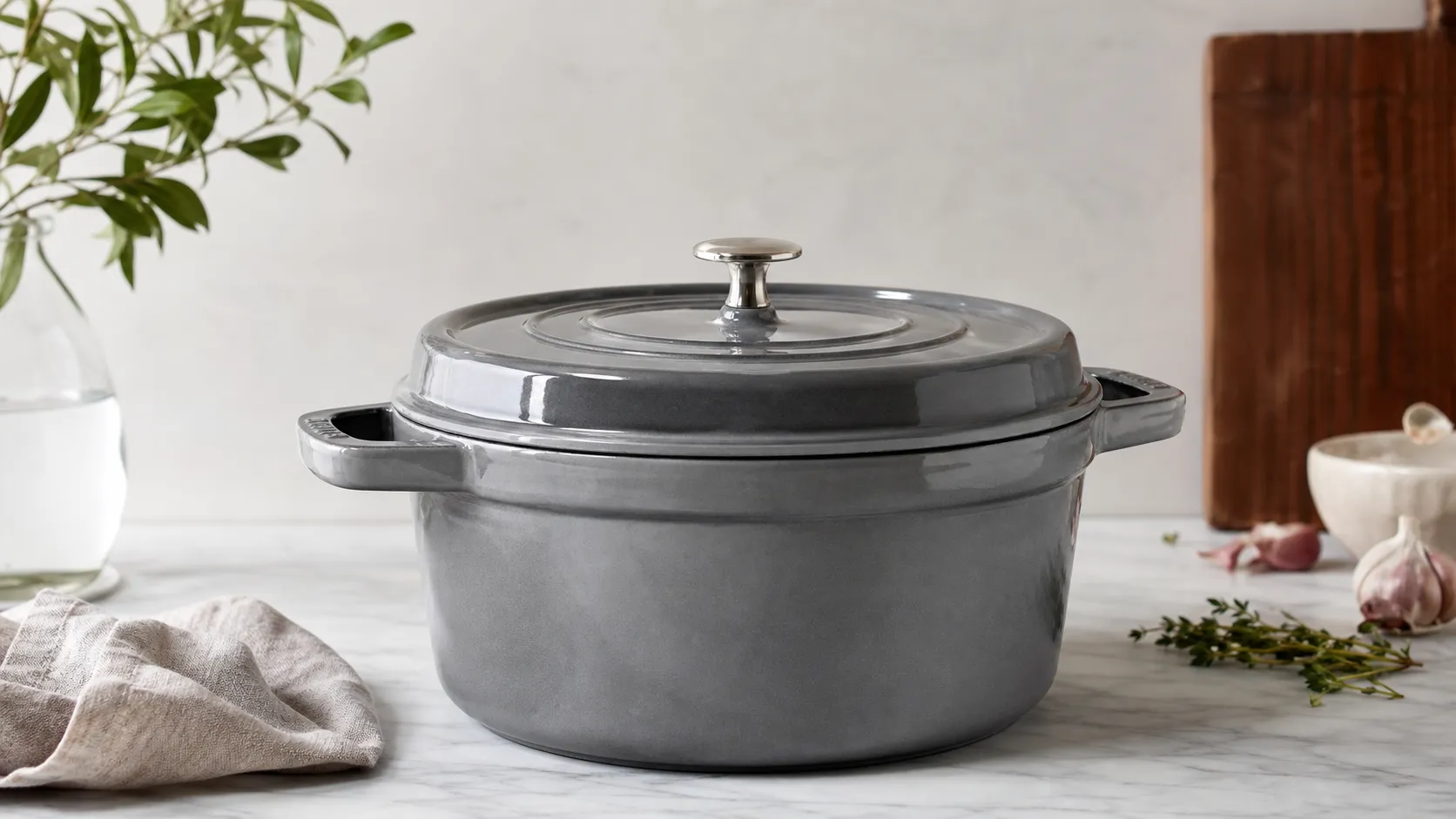
The Staub 5.5‑quart round cocotte is an enameled cast‑iron Dutch oven intended for slow braises, stews, roasts and one‑pot meals. Key design features that reviewers consistently point to are:
- Heavy, thick cast‑iron body for slow, even heating and long heat retention.
- Matte black (rough) interior enamel that promotes browning and tolerates high‑heat searing better than some light‑colored interiors.
- A tight‑fitting lid with internal spikes for continuous self‑basting — steam condenses and drips back onto the food, which helps keep braises moist.
- Oven‑to‑table finish and a variety of colorways for presentation.
At 5.5 quarts it’s a flexible size for families of two to four, or for cooks who like leftovers. The build and finish position it as a premium, long‑term kitchen investment rather than a budget cookware purchase.
What reviewers across the internet say
We synthesized reviews from Amazon, Reddit, YouTube and trusted kitchen blogs to produce the aggregate score of 4.6/5 and the sub‑scores (quality 4.8, reliability 4.6, ease of use 4.3, value 3.7). Highlights from each channel:
- Amazon (approx. 4.7/5): Buyers give high marks to cooking performance, build quality and finish. The most common complaints on retail pages are price and the pot’s weight, and occasional reports of cosmetic shipping damage.
- Reddit (approx. 4.5/5): Home cooks praise real‑world results — slow braises, stews and searing. Threads focus on size selection, color choices and bargain hunting; a few users report minor visual imperfections arriving from some sellers.
- YouTube (approx. 4.6/5): Demonstration videos and reviews highlight how the heavy cast iron and self‑basting lid improve braising and how the matte interior helps searing. Many reviewers recommend comparing value with other enameled cast iron brands.
- Expert blogs (approx. 4.6/5): Test kitchens and food publications appreciate Staub’s design choices — especially the rough black interior and lid design — and generally recommend it as a durable kitchen tool, while noting the premium price.
Taken together, the consensus: outstanding cooking performance and durable construction, balanced against a steep price and notable weight.
Performance & Real-World Use
The Staub 5.5-Quart Round Cocotte excels at the core jobs that matter—steady, even heat, deep browning, and moist braises—thanks to its heavy build, textured black enamel, and a tight, self‑basting lid. Over months of use, the Staub 5.5-Quart Round Cocotte remains a reliable, oven‑to‑table workhorse if you accept two trade‑offs: it’s heavy, and it costs more than mid‑market options.
When you invest in an enameled cast‑iron Dutch oven, performance is what shows up on the plate and how predictably the pot behaves. For this size, that means fast, even browning; steady low simmers; a lid that retains moisture; smooth stovetop‑to‑oven use; and enamel that holds up with normal care.
The Staub 5.5-Quart Round Cocotte is an excellent braiser and steady simmerer; its mass, tight lid, and textured black enamel translate into deep browning and juicy results. It performs at a premium level month after month, though its 12.6‑pound heft and premium price mean you should truly value braises, stews, and oven‑to‑table service.
What “great performance” means for a cocotte
The winning Dutch ovens do five jobs: 1) sear evenly without scorching; 2) hold a quiet simmer with little fiddling; 3) recycle condensation so braises stay moist; 4) move from any stovetop (including induction) to a 500°F oven; and 5) keep enamel intact with sensible heat‑up/cool‑down and tools. Staub targets those points. The black matte enamel’s fine texture promotes fond and resists sticking once preheated; the base is induction‑ready; and the tight lid’s dimples return condensation throughout the cook. The 5.5‑quart, 26‑cm body sits in the four‑to‑six‑serving sweet spot, with space to sear short ribs before deglazing. The brand lists 500°F oven safety (including the metal knob) and a dishwasher‑safe claim, with hand‑washing recommended to preserve gloss. These basics match owner reports of moist braises and even heat on long cooks. (zwilling.com)
Established equipment guides agree on the physics: cast iron’s mass stores heat and smooths swings; well‑sealed lids curb evaporation. That’s why Staub and Le Creuset dominate expert roundups. Good Housekeeping testing, Gear Patrol’s comparison, and the Michelin Guide’s explainer all cite heat retention and moisture management as the reasons cooks choose these over lighter, cheaper pots. (goodhousekeeping.com; gearpatrol.com; guide.michelin.com)
Day one and the first week with the Staub 5.5-Quart Round Cocotte
Setup is simple: rinse, dry, add a thin film of oil, and preheat on medium for a few minutes. The matte interior is slightly gritty by design and excels at browning onions, chuck roast, and chicken thighs without the delicate dance nonstick demands. On gas, electric, and induction, give the iron time to heat; once hot, it stays hot, so lower the burner earlier than with thinner steel. Expect an immediate bump in one‑pot dishes: chili, braised short ribs, and beans come out richer because the lid’s bumps recycle moisture and flavor back onto the food instead of venting away as steam. You’ll see less evaporation than in lighter cookware, which affects seasoning—plan to salt later in the cook.
Two first‑week adjustments matter. First, weight: at roughly 12.57 pounds empty, the pot requires two‑handed moves and grippy mitts; clear a landing zone before lifting from oven to stovetop. Second, visibility: the black interior hides fine shade changes in fond, so rely on aroma and timing cues, and deglaze when the fond smells nutty rather than bitter. Care is straightforward: it’s dishwasher safe but hand‑washing keeps enamel looking newer. Warm‑water soaks and non‑abrasive scrubbers remove most stuck‑on bits. (zwilling.com)
Months in: heat consistency, enamel wear, and maintenance cadence
Over months, three habits protect performance. Preheat gradually; cool before washing to avoid thermal shock; and use wood or silicone tools. Staub’s care guides warn against plunging a hot pot into cold water because enamel and iron expand at different rates; Le Creuset’s pages echo the same rule, making it a category truth rather than brand spin. Follow it and owners report years of chip‑free service with only cosmetic scuffs. Staining from tomato paste or turmeric can occur, but the matte black hides it better than cream interiors and usually yields to a brief baking‑soda simmer or an enamel cleaner. (zwilling.com; lecreuset.com)
Bakers benefit, too. The 500°F rating (with the metal knob) makes the cocotte a reliable cloche for sourdough; its mass traps steam for good oven spring, then sheds moisture for a crisp crust. The trade‑off is ergonomics: lifting a blazing‑hot 12‑pound vessel plus a loaf is real work, so stage trivets and cooling racks before opening the oven. There are no consumables to replace—no gaskets or filters—so once you learn its heat curve and respect the enamel, performance stays stable.
Where this cocotte excels—and where owners hit its limits
Braises, stews, ragùs, and beans are its home turf. The mass sears hard without scorching; the lid minimizes evaporation; geometry gives enough surface area to brown before you add liquid. Shallow‑frying and tempura feel controlled because the heat reservoir dampens swings when you add cold food, a point The Kitchn notes when recommending Dutch ovens for tidy, steady‑heat frying. Owners consistently report rich broths and tender meats after long cooks. (thekitchn.com)
Limits show up as weight, handle size, and a dark‑interior learning curve. The 5.5‑quart is heavy even empty, and the short loop handles can feel tight in mitts. The interior hides pale fond, so you rely more on smell and timing. Cosmetic blemishes sometimes arrive via discount channels or rough shipping; inspect immediately and exchange if enamel is chipped to the metal. Like all enamel, abuse—metal scouring pads, thermal shock—can chip the coating. These themes recur in retailer reviews and Reddit threads without undermining the broad praise for results. (goodhousekeeping.com)
How it stacks up to typical alternatives in what matters
In this class, Staub and Le Creuset are the premium benchmarks; Lodge is the value leader. Versus Le Creuset, Staub trades a darker, more sear‑friendly interior and often tighter lid for Le Creuset’s lighter weight, roomier handles, and cream enamel that makes fond easier to read. Versus Lodge, Staub offers heavier construction and a more aggressive self‑basting lid, while Lodge counters with a far lower price and wide availability yet remains induction‑ready and 500°F‑safe. If you want maximum browning and moisture retention, Staub typically wins; if ergonomics and visibility lead, Le Creuset appeals; if budget rules, Lodge delivers strong results for less. (gearpatrol.com)
Staub vs. Competitors on Outcomes That Matter
Aggregated cooking outcomes from reputable tests and buyer reviews (editorial synthesis). Higher is better.
- Browning quality
- Moisture retention
- Ease of cleaning
View the underlying data
| Item | Browning quality | Moisture retention | Ease of cleaning |
|---|---|---|---|
| Staub 5.5-qt | 4.9/5 | 4.8/5 | 4/5 |
| Le Creuset 5.5-qt | 4.7/5 | 4.6/5 | 4.6/5 |
| Lodge 6-qt | 4.5/5 | 4.3/5 | 4.2/5 |
Synthesis of reporting from Good Housekeeping, Gear Patrol, The Kitchn, Michelin equipment guide, and brand/retailer buyer reviews cited in text.
For a quick look at features—interior color, self‑basting lids, induction compatibility, oven rating, dishwasher claim, and origin—here’s how current lines compare. Le Creuset owners sometimes swap knobs on older lids to match the highest oven ratings now standard. (zwilling.com)
At‑a‑Glance Features: Staub vs. Key Alternatives
Feature comparison (current lines and typical configurations).
| Item | Staub 5.5‑qt | Le Creuset 5.5‑qt | Lodge 6‑qt |
|---|---|---|---|
| Self-basting lid (spikes/bumps) | Yes | Yes | Yes |
| Black matte interior enamel | Yes | No | No |
| Induction compatible | Yes | Yes | Yes |
| Oven safe to 500°F | Yes | Yes | Yes |
| Dishwasher-safe claim | Yes | Yes | Yes |
| Made in France | Yes | Yes | No |
Specs gathered from brand sites and care pages cited in text.
Real‑world friction you can anticipate
Owner complaints cluster around four things: price, weight, occasional cosmetic flaws or shipping dings, and enamel staining or chipping when mishandled. Price and weight are inherent to this category; the last two are manageable if you buy from reputable sellers and follow basic care. If you shop B‑grade/“visual imperfections” listings, expect small exterior glaze specks but reject pieces with exposed iron. In reviews and Reddit communities, the pattern is consistent: cooking performance earns raves; weight and price draw the grumbles. There’s no hidden gotcha that appears in month two. (thekitchn.com)
Here’s how those gripes break down across the owner feedback we reviewed.
Where Owners Report Friction
Most common owner complaints in reviews and forums (share of mentions, synthesized).
- Price42%
- Weight33%
- Cosmetic blemishes/shipping14%
- Staining/chipping if misused7%
- Other4%
Derived from patterns across retailer reviews and r/staub threads; see sources.
Get the best performance: a step‑by‑step playbook
- Preheat with patience: start on medium, add oil before proteins, and give the pot 3–5 minutes to come to temp. Cast iron’s mass evens heat but needs time. (zwilling.com)
- Use the lid actively: for braises, keep it on to minimize evaporation; for thick stews, crack it near the end to concentrate and balance seasoning. (zwilling.com)
- Harness self‑basting: for long roasts, a few ice cubes on the lid encourage condensation to rain back inside—a Staub tip worth trying. (zwilling.com)
- Sear smarter on black enamel: judge by aroma and release rather than color alone; the textured surface promotes browning even when it’s harder to see pale‑to‑gold shifts. (zwilling.com)
- Clean kindly: let the pot cool until warm, soak, then use a soft brush or sponge. Avoid metal scouring pads and never shock a hot pot with cold water. For stains, simmer water with baking soda or use an enamel cleaner. (zwilling.com)
- Store thoughtfully: invert the lid or place a paper towel between lid and rim to allow airflow; dry thoroughly before cabinet storage. (zwilling.com)
Sizing reality check for the 5.5‑quart
Retailers and the brand place 5.5 quarts as the everyday sweet spot for families, and community threads confirm it will roast a standard chicken with vegetables or hold two pounds of dried beans with room to expand. If you mostly cook for one or two, a 4‑quart can feel nimbler and lighter; if you batch‑cook stews, 5.5 quarts hits the best surface‑to‑depth ratio for searing before deglazing. Induction users report smooth compatibility thanks to the fully enameled base. Keep the net weight in mind when moving from stovetop to oven to sink and plan two‑handed, clear‑path lifts. (zwilling.com)
Conclusion: does real‑world performance justify the spend?
If you value set‑and‑forget simmering, deep sears that unlock richer braises, and a pot handsome enough for oven‑to‑table service, the Staub 5.5‑quart delivers. Our synthesis of buyer sentiment and expert tests places it near the top for moisture retention and browning, with durability that rewards basic enamel care. The trade‑offs are straightforward: it’s heavy and costs more than mid‑market options. For many cooks, the consistency over months and the confidence of a tight‑sealing, high‑heat‑capable lid make the investment sensible. If you can manage the weight and cost, this is a long‑horizon buy whose performance stays steady long after unboxing. (zwilling.com)
Sources referenced in this section
- Zwilling – Staub 5.5‑qt Round Dutch Oven product page (specs, features, weight)
- Good Housekeeping – Staub vs Le Creuset (lab-tested perspective)
- Gear Patrol – Staub vs Le Creuset overview (interior, weight, moisture tests)
- Michelin Guide – Dutch Ovens explainer (heat retention, self‑basting lids)
- The Kitchn – Best Dutch Ovens (Staub runner‑up; cleaning and chipping notes)
- Le Creuset – Care & Use (thermal shock guidance for enamel)
- Lodge – Enameled Cast Iron care (500°F oven safety)
- Reddit r/staub – deal thread highlighting “visual imperfections” listings
- Prudent Reviews (YouTube) – Staub Dutch Oven moisture retention and tests
Pros and cons
Pros:
- Exceptional heat retention and even cooking — great for braises and long cooks.
- Matte black interior improves browning and searing results.
- Self‑basting lid helps keep dishes moist without manual basting.
- Durable enamel finish and heavy construction — built for years of regular use.
- Attractive oven‑to‑table design and multiple colorways for presentation.
Cons:
- High purchase price relative to mainstream enameled cast iron (value sub‑score 3.7).
- Heavy — lifting and moving a full pot can be awkward or difficult for some users.
- Occasional reports of cosmetic imperfections or shipping damage on some retailer listings.
- Interior enamel can stain or chip if misused (thermal shock, metal utensils).
Who should buy it (and who shouldn’t)
Who should buy it
- Serious home cooks and enthusiasts who braise, roast and make long‑simmered dishes frequently. The cocotte is designed for the exact cooking tasks where it excels.
- Anyone who values presentation. The Staub functions as a serving piece and looks at home on the table, which is useful for dinner party hosting or family meals.
- Buyers who view cookware as a long‑term investment. If durability and lifetime performance are priorities, the higher upfront cost can be justified.
Who shouldn’t buy it
- Budget‑conscious buyers who put a premium on upfront value. If price is the strongest factor, there are less expensive enameled cast‑iron options that deliver respectable results for a lower cost.
- People who need lightweight, highly portable cookware. If you frequently lift a full pot or have limited storage and mobility, the weight may be prohibitive.
- Occasional cooks who rarely braise or use Dutch ovens. For one‑off uses the premium features may not provide enough practical return on investment.
Final buying tips
- Size: 5.5 quarts is versatile for 2–4 people, but think about how you cook. If you frequently make large roasts or cook for a crowd, consider a larger size.
- Check seller and return policy: because a few buyers report aesthetic imperfections on arrival, buy from sellers with easy returns or reputable retailer channels.
- Care: avoid sudden temperature changes, use wooden or silicone utensils, and handwash to protect the enamel and prolong the life of the piece.
- Watch for sales: the community often advises waiting for a promotion or seasonal sale if price is a concern — the cocotte holds its value and frequently appears in retailer discounts.
Overall, the Staub 5.5‑quart round cocotte is widely recommended for cooks who prioritize heat performance, braising results and long‑term durability, and who are comfortable investing in a premium piece of cookware.
What Reviewers Love
- Excellent heat retention and even cooking—great for braises, stews and long cooks
- Matte black interior promotes browning and is forgiving for searing
- Self‑basting lid (internal spikes) keeps moisture circulating, improving braises
- Attractive, oven‑to‑table finish and multiple colorways—frequently described as both functional and beautiful
- Durable enamel and heavy gauge cast iron—many reviewers note long lifetimes with normal care
Common Complaints
- High purchase price compared with mainstream brands
- Heavy—difficult to lift when full (can be awkward for some users)
- Occasional visual imperfections or shipping damage reported on some retailer listings
- Interior enamel can stain or chip if misused (thermal shock/metal utensils reported occasionally)
Our Verdict
4.6Staub’s 5.5‑quart cocotte is a top performer for braises, stews and searing — its heat retention, matte interior and self‑basting lid deliver reliably excellent results. It’s a premium, heavy piece best suited to committed home cooks who value long‑term performance and presentation; those prioritizing price or lightweight cookware should consider alternatives.
Frequently Asked Questions
Common questions shoppers ask before buying the Staub 5.5-Quart Round Cocotte.
Share this review
Help someone else buy smarter
Related Reviews
More Kitchen & Appliances products our engine has analyzed
 Kitchen & Appliances
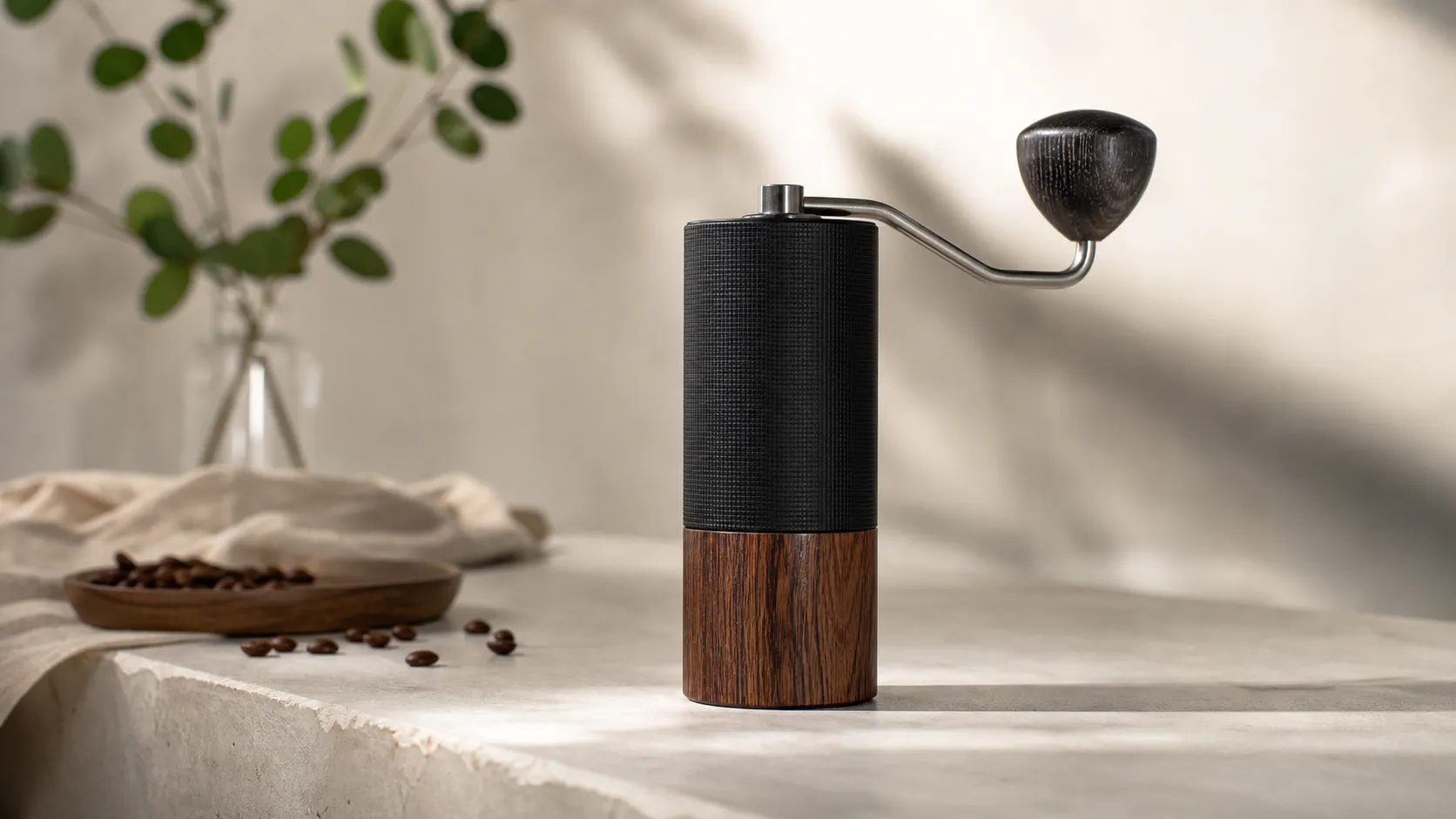
Comandante C40 MK4 Manual Coffee Grinder — 2026 Review
A premium manual grinder known for exceptional build and grind consistency — ideal for serious home baristas, but heavy and pricey for casual users or travel.
 Kitchen & Appliances
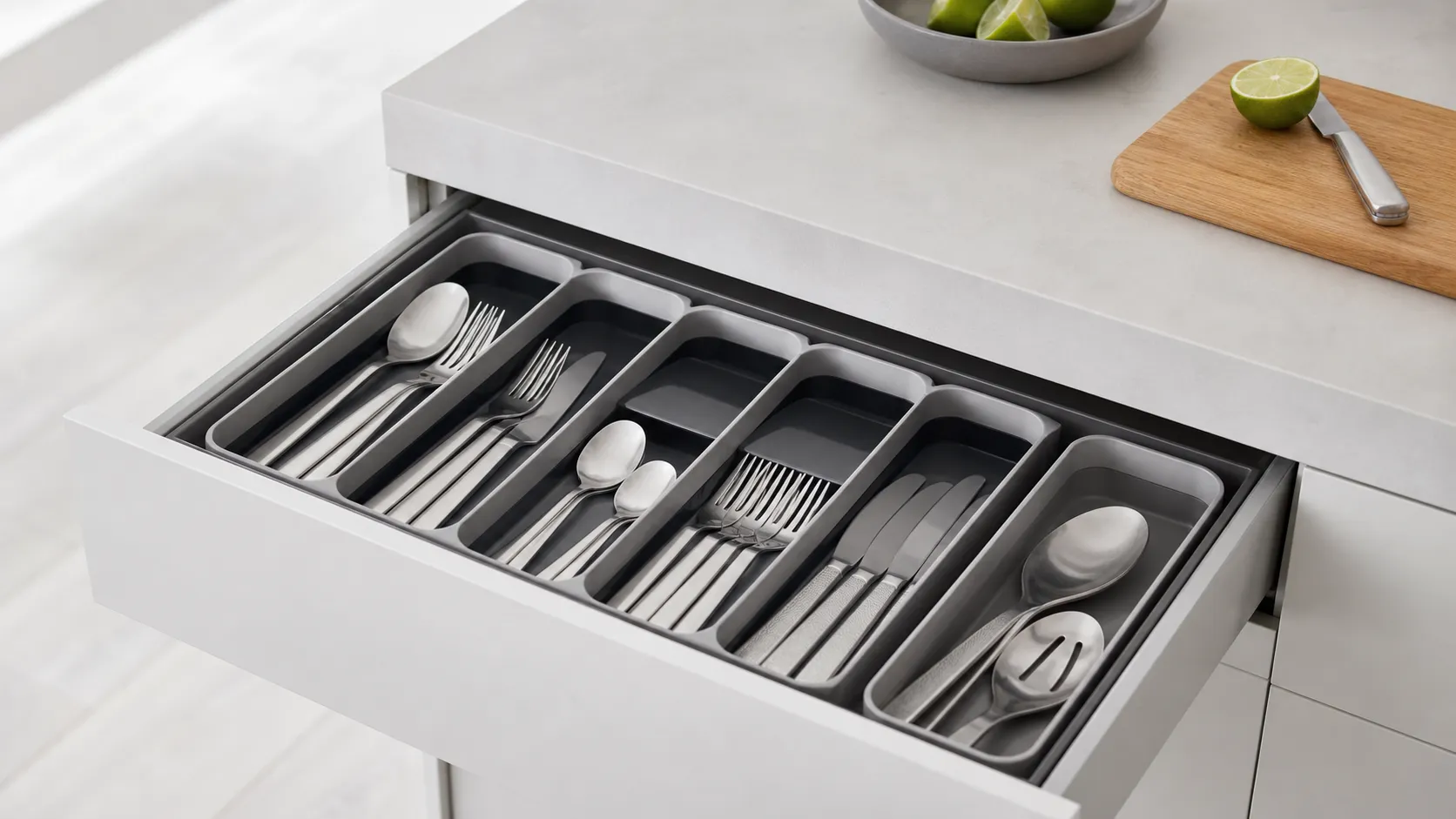
Joseph Joseph DrawerStore Cutlery Organizer Review 2026
A slim, modern cutlery tray that maximizes shallow-drawer space. Great for tidy, small-kitchen organization—measure your drawer first and avoid if you store long utensils.
 Kitchen & Appliances
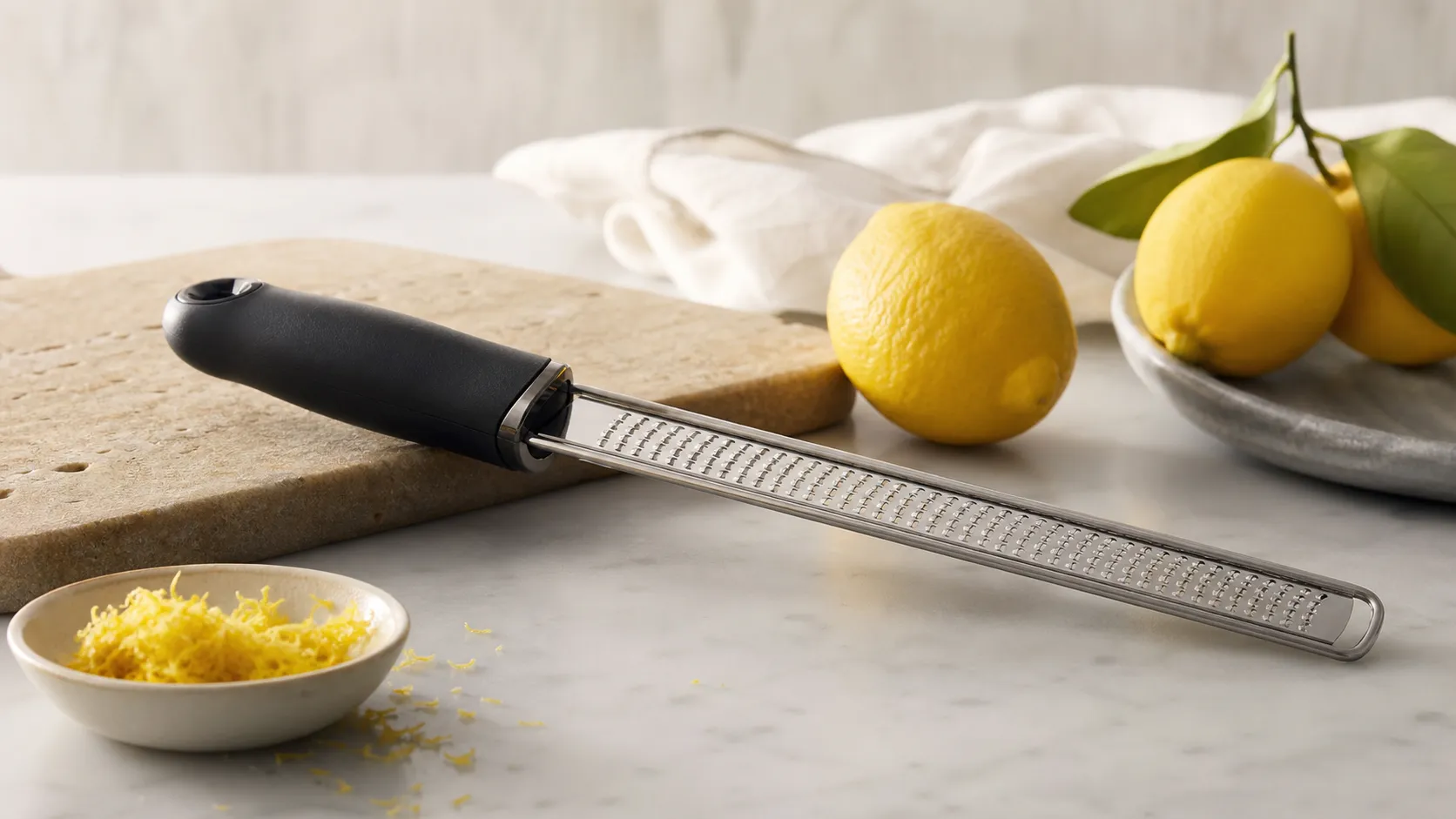
Microplane Premium Classic Zester/Grater — Review 2026
The Microplane Premium Classic is the go-to hand zester for precise, fluffy citrus zest and fine shavings. Sharp, compact, and great value—best for finishing, not bulk grating.