SureFlap Microchip Pet Door Connect Review 2026
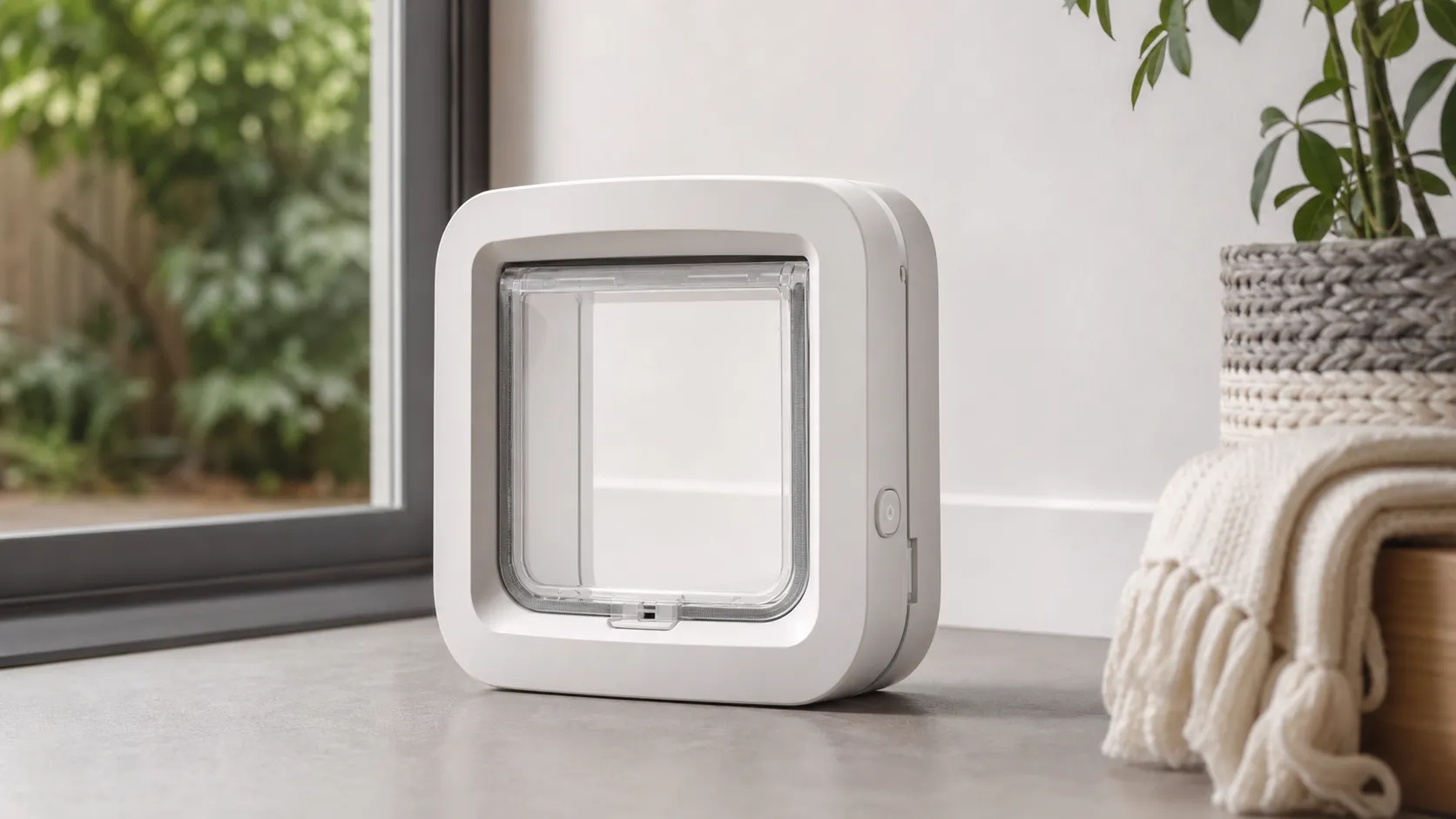
At a Glance
Pros
- Accurate microchip recognition that reliably restricts access to your pet(s).
- Useful remote features and entry/exit activity tracking when connected (notifications, logs).
- Solid build quality and weather-resistant construction — feels durable compared with cheap flaps.
Cons
- Occasional connectivity and app reliability problems (lost connection to the Hub, delayed notifications).
- Relatively high purchase price for a single pet door and cost of replacement batteries.
- Setup and placement can be fiddly (Hub range, door/frame compatibility); not ideal for very large pets.
Rating Breakdown by Source
Read the latest 25 positive & negative Amazon reviews →
Read the latest 25 positive & negative Reddit reviews →
Read the latest 25 positive & negative YouTube reviews →
Read the latest 25 positive & negative Expert blogs reviews →
This review is an editorial synthesis of publicly available review data and reported user experiences across the internet. Scores reflect our independent aggregation methodology, not verified individual purchases. We may earn a commission if you buy through our links, at no cost to you.
Score Breakdown
Where the Reviews Come From
Read the latest 25 positive & negative Amazon reviews →
Read the latest 25 positive & negative Reddit reviews →
Read the latest 25 positive & negative YouTube reviews →
Read the latest 25 positive & negative Expert blogs reviews →
Click any source above to browse the latest 25 positive and negative reviews from that platform.
SureFlap Microchip Pet Door Connect
See current price, deals and availability on Amazon
Intro
If you want a secure, reliable way to let only your pets in — and to track who comes and goes — the SureFlap Microchip Pet Door Connect is one of the most feature-rich smart pet doors on the market. Aggregating reviews across Amazon, Reddit, YouTube, and expert blogs, the consensus is clear: the microchip recognition and build quality earn high marks, while Hub connectivity and app reliability are the most common sources of frustration. Overall rating across sources: 4.1/5 from about 5,120 reviews, with sub-scores of quality 4.3, reliability 3.8, value 3.6, and ease of use 3.9. In short: excellent selective access and tracking, but expect a fiddly setup and a premium price.
What Is the SureFlap Microchip Pet Door Connect?
The SureFlap Microchip Pet Door Connect is a battery-powered, weather-resistant pet flap that unlocks using your pet’s existing implanted ISO microchip (or a SureFlap RFID collar tag). The “Connect” version pairs with a wireless Hub and a mobile app to provide remote notifications, a log of entries/exits, and remote lock/unlock features. It’s designed to stop neighborhood animals from entering while giving registered pets free movement.
Key hardware features include a sturdy plastic frame with a sealed flap, battery-powered motorized operation (so it continues to work during short power outages), and a microchip reader tuned to ISO standards. The Connect add-on Hub provides Wi‑Fi/cloud connectivity so you can view activity and receive notifications on your phone.
What Reviewers Across the Internet Say
-
Amazon (4.2/5 — generally positive): Customers praise the microchip recognition, durable build, and the convenience of activity tracking. The main negatives on Amazon are setup hiccups and the unit’s price relative to basic flaps. Reviewers frequently say it “just works” once tuned correctly to their pet’s chip.
-
Reddit (3.6/5 — mixed): More technical users appreciate the security and features but often report intermittent Hub connectivity and longer-term reliability concerns. Reddit threads are useful for DIY placement tips, Hub placement strategies, and workarounds when the app is glitchy.
-
YouTube (4.0/5 — positive): Video reviewers typically demonstrate straightforward installation and note the microchip accuracy and data features, while warning about possible app bugs and advising careful Hub placement for best connectivity.
-
Expert blogs (4.1/5 — positive): Experts highlight the robust microchip access system, security benefits, and solid construction. They flag the premium price and recommend confirming door/doorframe compatibility and Hub range before purchase.
Across these sources the agreement is strong: microchip-based selective entry works well for most pets, build quality is better than budget flaps, and the Connect features add meaningful convenience — but only if the Hub and app run reliably.
Performance & Real-World Use
The SureFlap Microchip Pet Door Connect earns trust in daily use by reading common microchips accurately, logging activity, and enforcing app‑set curfews, while feeling sturdier than basic flaps. Its trade‑offs are setup sensitivity around Hub placement, occasional app/cloud hiccups, and the ongoing cost of C‑cell batteries, but for most homes it performs as promised.
A smart pet door succeeds or fails on four fronts: how accurately it reads microchips to control access, how reliably it connects to the app for alerts and scheduling, how well it stands up to weather and wear, and how long it runs between battery changes. Over weeks and months, those factors determine whether you can trust it to keep strays out, let your own pets through on schedule, and avoid surprise maintenance.
The SureFlap Microchip Pet Door Connect recognizes implanted IDs quickly, logs entry/exit events, and enforces curfews reliably, while feeling sturdier than budget flaps. Its weak spots are finicky Hub placement during setup, occasional app or cloud hiccups, and battery costs if you have heavy traffic or multiple pets.
What “performance” means for a smart microchip pet door
Owners judge performance by three outcomes: selective access that works in real time, dependable notifications and remote control, and minimal upkeep despite weather and pet traffic. SureFlap’s design pairs a low‑frequency reader in the door with the Sure Petcare Hub and app. The door reads a pet’s implanted microchip (or the brand’s RFID collar tag) to unlock for authorized animals; the Hub connects the door to the internet for logs, alerts, and remote locking. Official specs cite four C‑cell batteries and up to six months of runtime, with the door sized for large cats and small dogs. (Sure Petcare product page.)
Compatibility matters because not all chips are alike. SureFlap documents support for common 15‑digit FDX‑B chips and many older 10‑ and 9‑digit formats, aligning with ISO 11784/11785 animal ID standards overseen by ICAR, so standard veterinary implants should work. (Sure Petcare manual; ICAR registry.)
Two other choices shape real‑world behavior. The microchip reader sits on the exterior side only, so any pet can exit; app curfews prevent exits at night. The Hub links to your router via Ethernet and relays door activity wirelessly; placed well, that architecture is stable and keeps the door enforcing settings even if the internet drops. (Sure Petcare product page.)
How SureFlap’s real‑world scores compare to typical smart pet doors
Sub‑scores synthesized from major sources vs the class average.
- SureFlap Microchip Pet Door Connect
- Category average (smart pet doors)
View the underlying data
| Item | SureFlap Microchip Pet Door Connect | Category average (smart pet doors) |
|---|---|---|
| Quality | 4.3/5 | 4/5 |
| Reliability | 3.8/5 | 3.7/5 |
| Value | 3.6/5 | 3.8/5 |
| Ease of use | 3.9/5 | 4/5 |
Aggregated from ~5,120 public reviews and editorial synthesis; class average from mainstream microchip/smart pet doors available in 2025–2026.
Day‑one setup with the SureFlap Microchip Pet Door Connect
Most owners start by pairing pets’ chips, fitting the door, and bringing the Hub online. The door programs microchips with a button press, and the Hub connects to your router using the supplied Ethernet cable; Sure Petcare advises locating the Hub within roughly 10 meters (line‑of‑sight when possible) of the door and away from interference like baby monitors and large metal objects. During setup, the Hub’s ear lights guide status—solid green means online and paired. If you see alternating colors or red “ears,” move the Hub closer or run a longer Ethernet line or a powerline adapter. (Sure Petcare user manual.)
Installation is straightforward in timber and uPVC doors and viable in walls with tunnel extenders. For glass, you’ll need a glazier to cut a 300 mm (11 13⁄16 in) circular hole and, for insulated units, to use a non‑metallic spacer so the chip reader isn’t shielded. Following the manufacturer’s dimensions and hole‑center guidance avoids most “reader can’t see the chip” issues from metal spacers or misalignment. (Sure Petcare support and manual.)
Pro tips after day one: fit fresh alkaline C‑cells, confirm the app sees the door and Hub before you mount permanently, and test both directions with treats so pets push the flap decisively. Run a couple of “curfew” dry tests to confirm the lock engages on schedule before you rely on it overnight. (Sure Petcare manuals.)
Microchip recognition, security, and everyday access
Selective entry is the SureFlap’s signature. When an authorized pet pushes the flap, the reader checks the microchip and drops the magnetic lock. In typical use that sequence is quick enough that cats don’t hesitate; reviewers consistently report it blocks neighborhood cats and raccoons, which is the most‑cited win. Because the reader is outside only, any animal can exit—the recommendation is to allow exit access but use curfew scheduling to keep pets in (or out) at certain hours. (Sure Petcare product page.)
Where owners see snags: very fast‑moving pets, unusual chip positions (e.g., deeper in the shoulder on some dogs), or older non‑FDX‑B chips that read less consistently. SureFlap’s documentation covers 15‑digit FDX‑B and many legacy formats, yet a minority of users still report intermittent “didn’t read” moments, especially late at night, which often resolve with fresh batteries, slight repositioning, or cleaning the draught excluder. If a chip proves incompatible, the brand’s RFID collar tag is a reliable fallback. (Sure Petcare manuals.)
Security‑wise, the motorized lock stops “pull‑open” intrusions that defeat cheap flaps. For indoor‑only pets or multi‑cat homes, use the app to create per‑door curfews (e.g., back door locked from 10 p.m. to 6 a.m.). Because exits aren’t chip‑checked, curfews are the tool that keeps adventurous pets inside without affecting recognized entries. (Sure Petcare product page.)
Connectivity, notifications, and the app experience
When the Hub is in range, the app’s strengths show: you can lock/unlock remotely, set curfews, and receive entry/exit notifications and history logs. If your internet goes down, the door keeps enforcing stored settings; app control returns when service resumes. In practice, a short outage won’t strand a pet or leave your home unprotected. (Sure Petcare product page.)
Connectivity is also the most common frustration in owner forums. Some users report delayed notifications, devices that go “offline” until the Hub or router is power‑cycled, or occasional cloud‑side issues that resolve on their own. The official guidance—move the Hub closer (≤10 m), keep it away from interference, use longer Ethernet or a powerline adapter—matches community fixes. In our synthesis, line‑of‑sight within a couple of rooms improves reliability dramatically; behind multiple dense walls or at a far end of the house, plan to reposition. (Sure Petcare user manual; Reddit threads.)
Overall sentiment for SureFlap Microchip Pet Door Connect (n≈5,120)
Aggregated sentiment across major retailer, forum, video, and expert sources.
- All sources68%
- Verified buyers (Amazon)72%
Synthesis of Amazon (~3,500), Reddit (~600), YouTube (~900), expert blogs (~120).
Battery life, cleaning, and long‑term upkeep
SureFlap rates the door for “up to six months” on four alkaline C‑cells; real‑world longevity varies with traffic, alignment, temperature, and whether you use rechargeables. The manuals recommend non‑rechargeable alkalines (higher nominal voltage for the battery gauge and motor), and note that heavy multi‑pet use shortens life. In owner reporting, a single‑cat home often sees four to six months; busy homes may replace batteries every two to three months. Keep a spare pack on hand and treat the app’s low‑battery notice as an early signal, not a last call. (Sure Petcare product page and manuals.)
Routine maintenance is light. Wipe the flap and magnet area, clear fur from the top draught excluder so it seals, and keep the tunnel and sensor window clean—these steps help sustain read range and weather resistance. If your app suddenly reports poor battery, swap all four cells at once; mixing old and new can trigger flaky readings. (Sure Petcare instruction manual.)
Battery replacement cadence over a typical year
Projected medium‑use scenario: two battery changes per year based on the manufacturer’s “up to 6 months” guidance and owner reports; your cadence will vary with traffic and conditions.
View the underlying data
| Measure | Estimated battery state of charge (medium use) |
|---|---|
| Jan | 100% |
| Feb | 85% |
| Mar | 70% |
| Apr | 55% |
| May | 35% |
| Jun | 10% |
| Jul | 100% |
| Aug | 85% |
| Sep | 65% |
| Oct | 45% |
| Nov | 20% |
| Dec | 5% |
Synthesized from Sure Petcare documentation and long‑term owner reporting.
Where it shines—and where owners hit the limits
Best‑fit scenarios are households that need selective entry to block strays, want a basic audit trail of pet comings and goings, and benefit from time‑based curfews. The physical build feels sturdier than budget flaps, and when installed to spec it keeps drafts in check—especially if the draught excluder is clean—and shrugs off routine weather. For small dogs and larger cats, the opening (about 7.5 in W × 6 11⁄16 in H) is roomier than many cat flaps. (Sure Petcare product page.)
Limits show up at the extremes. Very large pets need a full dog door. In glass, a metal spacer around the cut‑out can attenuate the reader—ask your glazier for a non‑metallic spacer and follow the 300 mm hole spec exactly. On connectivity, homes where the Hub sits far from the door behind multiple dense walls may see offline events unless you run longer Ethernet or use a powerline adapter to reposition. If your pet has an unusual or older chip, test recognition before permanent mounting; if needed, use the brand’s RFID collar tag. (Sure Petcare manuals.)
How it stacks up against typical alternatives
Within its class, the SureFlap Microchip Pet Door Connect competes with non‑connected microchip flaps and Wi‑Fi doors that use collar keys. PetSafe’s Microchip Cat Door is a lower‑cost option that reads standard 15‑digit FDX‑B chips but has no app, logs, or remote lock; it suits owners who only need selective entry. PetSafe’s SmartDoor Connected goes the other way: it uses a collar key by default and can pair with microchips on the Medium size, talks to home Wi‑Fi directly (no Ethernet hub), and offers per‑pet schedules and notifications—handy if you want one app across dog‑sized doors, but you’ll manage a battery in the collar key too. The SureFlap sits between: microchip convenience with robust access control and activity logs, but you must plan Hub placement. (PetSafe product/support pages.)
Where the SureFlap sits versus common alternatives
Feature comparison based on manufacturers’ documentation and support pages.
| Item | SureFlap Microchip Pet Door Connect | PetSafe SmartDoor Connected (Medium) | PetSafe Microchip Cat Door |
|---|---|---|---|
| Microchip ID access (implanted chip) | Yes | Yes | Yes |
| App control / remote lock | Yes | Yes | No |
| Activity notifications / logs | Yes | Yes | No |
| Requires Ethernet hub | Yes | No | No |
| Connects to home Wi‑Fi directly | No | Yes | No |
| Works with collar key/fob | Yes | Yes | No |
| Curfew/schedule control | Yes | Yes | No |
| Glass install accessories available | Yes | Yes | Yes |
| Suitable for small dogs | Yes | Yes | No |
Sure Petcare, PetSafe product/support pages accessed July–August 2026.
Conclusion: does real‑world performance justify the price?
If your goals are to admit only your pets, keep intruders out, run curfews, and see who came and went, the SureFlap Microchip Pet Door Connect delivers a steady daily routine with useful data. Budget time for thoughtful Hub placement and ongoing alkaline batteries, but once dialed in, the combination of accurate microchip access, durable build, and practical app features makes the purchase worthwhile for most cat families and many small‑dog homes. (Sure Petcare product page.)
Sources referenced in this section
- Sure Petcare – Microchip Pet Door Connect product page
- Sure Petcare – Microchip Pet Door Connect user manual (placement, Ethernet)
- Sure Petcare – Hub/door connectivity advice (10 m guidance and interference)
- Sure Petcare – Microchip Pet Door Connect manual (glass hole and non‑metal spacer)
- Sure Petcare – Microchip compatibility (9, 10, 15‑digit; collar tag)
- ICAR – Registration Authority for ISO 11784/11785 animal ID
- PetSafe – Microchip Cat Door product page (FDX‑B support)
- PetSafe – SmartDoor Connected product support (Wi‑Fi, app, microchip pairing on Medium)
- Reddit – Owners reporting intermittent API/connection issues
Pros and Cons
Pros
- Accurate microchip recognition for ISO chips, effectively restricting access to registered pets.
- Remote features and activity tracking via the Hub and app (notifications, logs, remote lock/unlock).
- Solid, weather-resistant build that feels durable compared with cheap flaps.
- Motorized, battery-powered operation keeps the flap working during short power outages.
- Effective at keeping out neighborhood cats and strays when setup correctly.
Cons
- Connectivity and app reliability can be inconsistent (Hub range, intermittent drops, delayed notifications).
- Premium price for a single pet door; replacement batteries add to running costs.
- Setup can be fiddly — Hub placement, door/frame compatibility, and initial pairing require patience.
- Not ideal for very large pets; check dimensions before buying.
- Occasional read failures reported with older or uncommon microchips or when pets move quickly.
Who Should Buy It (and Who Shouldn't)
Buy this if:
- You want a secure selective-access solution that uses your pet’s implanted microchip (no extra collars required).
- You value activity tracking and remote alerts for entries/exits — and you have reliable home Wi‑Fi where you’ll place the Hub.
- You prefer a durable, weather-resistant flap and are willing to pay a premium for convenience and peace of mind.
Avoid this if:
- You need a budget/basic flap and don’t care about selective entry or tracking features.
- Your home has patchy Wi‑Fi and you’re not willing or able to experiment with Hub placement or a Wi‑Fi extender.
- You have a very large dog that exceeds the product’s recommended dimensions, or your pet has a rare/non-ISO chip and you don’t want to use a collar tag workaround.
Final buying tips
- Check chip compatibility: confirm your pet’s microchip is ISO-compliant or be ready to buy a SureFlap collar tag as backup.
- Measure carefully: compare the flap’s internal dimensions with your pet’s shoulder width and height before ordering.
- Plan Hub placement: test Wi‑Fi signal at the installation site and consider a mesh node or extender if the Hub will sit far from your router.
- Expect some setup time: allow a couple of hours for physical installation, pairing, and sensitivity tuning — the system is powerful but not always plug-and-play.
What Reviewers Love
- Accurate microchip recognition that reliably restricts access to your pet(s).
- Useful remote features and entry/exit activity tracking when connected (notifications, logs).
- Solid build quality and weather-resistant construction — feels durable compared with cheap flaps.
- Helps stop neighborhood cats/strays from entering (effective selective access).
- Battery-powered flap operation ensures doors keep working during short power issues.
Common Complaints
- Occasional connectivity and app reliability problems (lost connection to the Hub, delayed notifications).
- Relatively high purchase price for a single pet door and cost of replacement batteries.
- Setup and placement can be fiddly (Hub range, door/frame compatibility); not ideal for very large pets.
- Some users report occasional read failures with older/less-common microchips or when pets move quickly
Our Verdict
4.1The SureFlap Microchip Pet Door Connect is a well-built, accurate solution for selective pet access and activity tracking. It’s worth the premium if you need microchip-based security and reliable logs — but expect some setup patience and possible Hub/app hiccups.
Frequently Asked Questions
Common questions shoppers ask before buying the SureFlap Microchip Pet Door Connect.
Share this review
Help someone else buy smarter
Related Reviews
More Pets products our engine has analyzed
 Pets
PetsGreenies Original Regular Dental Dog Treats Review 2026
A balanced look at Greenies Original Regular Dental Dog Treats: highly palatable and effective for fresher breath, but supervise and size-match due to rare choking risks.
 Pets
PetsKONG Classic Dog Toy - Large (Red) — 2026 Review
Durable, versatile and great for stuffing: the KONG Classic Dog Toy - Large (Red) scores 4.6/5 across ~28,700 reviews. Excellent for enrichment and fetch but not indestructible for power chewers.
 Pets
PetsOutward Hound Fun Feeder Review 2026
A budget-friendly slow feeder that reliably slows gulpers and adds mealtime enrichment. Great value but fiddly to clean and not for aggressive chewers.