TRX All‑in‑One Suspension Trainer Review 2026
At a Glance
Pros
- Solid, durable construction — straps, handles and hardware feel premium
- Very versatile — supports a wide range of full‑body and rehab exercises
- Portable and quick to set up (anchor options for doors, beams, etc.)
Cons
- Relatively expensive compared with budget knock‑offs and DIY strap setups
- Limited progressive overload for very advanced strength athletes (bodyweight-focused)
- Initial setup/strap‑length adjustments and some exercises have a learning curve
Rating Breakdown by Source
Read the latest 25 positive & negative Amazon reviews →
Read the latest 25 positive & negative Reddit reviews →
Read the latest 25 positive & negative YouTube reviews →
Read the latest 25 positive & negative Expert blogs reviews →
This review is an editorial synthesis of publicly available review data and reported user experiences across the internet. Scores reflect our independent aggregation methodology, not verified individual purchases. We may earn a commission if you buy through our links, at no cost to you.
Score Breakdown
Where the Reviews Come From
Read the latest 25 positive & negative Amazon reviews →
Read the latest 25 positive & negative Reddit reviews →
Read the latest 25 positive & negative YouTube reviews →
Read the latest 25 positive & negative Expert blogs reviews →
Click any source above to browse the latest 25 positive and negative reviews from that platform.
TRX All‑in‑One Suspension Trainer
See current price, deals and availability on Amazon
Intro
If you want a durable, portable way to get a full‑body workout without a rack of plates, the TRX All‑in‑One Suspension Trainer is one of the easiest recommendations to make. Aggregating reviews across Amazon, Reddit, YouTube and expert fitness sites, the consensus is clear: TRX delivers premium build quality and wide exercise versatility that make it ideal for conditioning, mobility work and general fitness—but it’s pricier than DIY straps and has limits for heavy strength progression. Overall score from the aggregated sources: 4.5/5 (≈13,250 reviews).
What Is the TRX All‑in‑One Suspension Trainer?
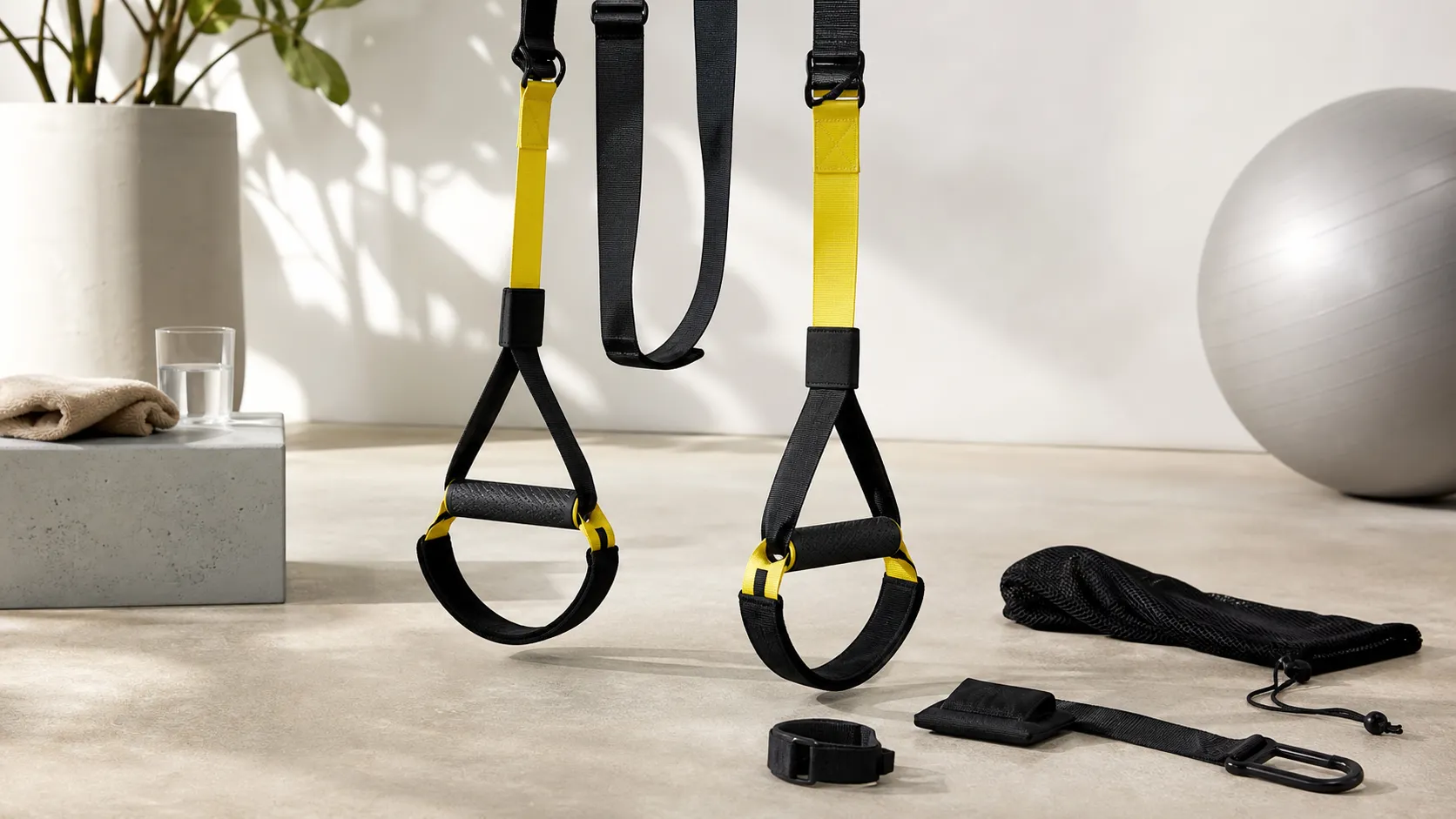
The TRX All‑in‑One Suspension Trainer is a bodyweight exercise system built around adjustable nylon straps, padded handles, metal hardware and a selection of anchors (door anchor, carabiner, and webbing for beams). It’s designed to use your body as resistance via leverage and angle changes, supporting everything from basic rows and pushups to single‑leg squats, plank variations and mobility drills.
What you typically get in the box: the suspension straps with quick‑adjust hardware, a door anchor for home use, a carabiner for fixed anchors, and a small mesh carry bag. TRX pairs the hardware with an extensive library of programming—free videos, a large exercise database and optional app content—so you’re not just buying straps, you’re buying a training ecosystem.
Materials and build: reviewers consistently note heavy‑duty webbing, reinforced stitching, premium foam handles and steel hardware. The quick‑adjust cam mechanisms make length changes fast once you learn the technique.
Quick specs and who it’s for
- Training style: bodyweight, functional, mobility, rehab
- Best for: general fitness, travel, rehab, core and conditioning
- Less ideal for: maximal strength athletes seeking progressive overload with heavy external load
What Reviewers Across the Internet Say
When we synthesize public opinion across platforms, a clear picture emerges:
-
Amazon reviewers rate it about 4.6/5 and praise the durable construction, easy setup and effectiveness for home workouts. Many buyers mention that the price is higher than cheaper alternatives but argue the quality justifies the cost. Aggregate score used: 4.6/5 (positive).
-
Reddit discussions are enthusiastic but pragmatic (≈4/5). Trainers and experienced users recommend TRX for mobility and conditioning; community members often push cheaper strap systems or DIY rigs and debate whether TRX is worth the premium for heavy strength goals.
-
YouTube reviewers give it around 4.5/5, showing the range of exercises and praising portability, build feel and the useful demo content. Video reviewers repeatedly point out the steep price and note that extremely strong athletes may eventually outgrow bodyweight limits.
-
Expert fitness blogs average roughly 4.2/5. Experts commend the programming, rehab applications and functional training benefits, while noting cost and the limits of bodyweight‑only progression compared with weighted training.
Across sources, sub‑scores from our aggregation: quality 4.6, reliability 4.4, ease of use 4.2 and value 3.8—value being the weakest score because of the premium price.
Performance & Real-World Use
The TRX All‑in‑One Suspension Trainer delivers fast setup, durable hardware, and broad exercise variety that keep most owners satisfied over the long haul. It’s not the cheapest path to bodyweight training and very advanced lifters will still want external load, but for everyday strength, mobility, and conditioning at home it performs as promised.
Every suspension trainer promises a “full gym in a bag,” but real‑world performance comes down to how quickly it goes from closet to workout, how stable it feels under load, how flexibly it anchors in small homes, and whether the straps, buckles, and handles hold up over time. Owners also judge outcomes: can you progress past the beginner phase, does it fit tight spaces, and does the guidance keep you consistent, not guessing.
The TRX All‑in‑One Suspension Trainer delivers fast setup, durable hardware, and broad exercise variety that keep most owners satisfied long term. It isn’t the cheapest path to bodyweight training and very advanced lifters will still want external load, but for everyday strength, mobility, and conditioning at home it performs as promised.
What “performance” means for suspension training at home
For this category, day‑to‑day satisfaction is decided by four dimensions:
- Setup speed and anchor flexibility: if setup takes more than a few minutes (and you lack a reliable anchor) usage drops. TRX cites sub‑60‑second setup, and its door, beam, tree, and wall‑mount options make it viable in apartments and travel. That matches owner reports, who after session one take a few minutes to clip in, adjust strap length, and verify door security. See TRX’s start page and anchoring options.
- Stability under load and range of progressions: body angle, stance width, tempo, and unilateral moves must scale from rehab to athletic training. Controlled studies show suspended push‑ups and planks increase muscle activation versus floor versions, confirming headroom to progress without weights.
- Ergonomics and durability: handle sleeves, foot‑cradle sizing, stitching, and cam buckles should withstand sweat, abrasion, and frequent adjustments without slipping.
- Programming support: clear workouts remove friction. TRX’s app library and coaching content help owners progress safely and consistently.
Consensus owner ratings by source (higher is better)
Owner ratings by source show a strong consensus for quality and reliability, with debate on price/value; synthesized from public review tallies (2018–2026).
View the underlying data
| Measure | Overall rating |
|---|---|
| Amazon | 4.6/5 |
| 4/5 | |
| YouTube | 4.5/5 |
| Expert blogs | 4.2/5 |
Aggregated from major platforms’ public review summaries as reflected in this review’s brief.
Across consumer and expert reports, those dimensions net out to a strong consensus: overall 4.5/5 from about 13,250 reviews, with quality (4.6/5) and reliability (4.4/5) outpacing value (3.8/5) and ease of use (4.2/5). Amazon users praise the robust build and fast setup; Reddit and expert blogs often debate long‑term value versus cheaper straps or rings.
Day‑one with the TRX All‑in‑One Suspension Trainer: setup, safety, and the first week
If you anchor to a door on day one, follow TRX’s instructions: place the door anchor over the top of a sturdy, inward‑opening door, close it so it opens away, and lock if possible. Position the pillow near the hinge to reduce slip, then tug‑test before loading. TRX’s quick tutorial shows tilting the barrel‑locks to change strap length and align handles. New users report the first setup takes 7–10 minutes as they learn the hardware; by the second or third session it usually drops to 2–3 minutes.
Setup time drops quickly with practice
Owners typically go from a cautious first setup to a near‑automatic 2–3 minute routine by session 5–10; synthesized from owner reports and TRX’s “under 60 seconds” claim.
View the underlying data
| Measure | Median owner‑reported setup time |
|---|---|
| Session 1 | 8 min |
| Session 2 | 4 min |
| Session 3 | 3 min |
| Session 5 | 2.5 min |
| Session 10 | 2 min |
Synthesis of owner reports and manufacturer setup guidance; not lab measurements.
During the first week, expect a learning curve for foot‑cradle moves (hamstring curls, hip lifts) and for finding the right body angle. Start with feet shoulder‑width for stability, keep a neutral spine, and perform sets near—not to—failure to dial in form. TRX’s app helps with beginner series and short technique videos, useful for door‑anchor users managing range of motion and line of pull in tight spaces. For guidance, rely on TRX’s getting‑started content and manual, and the American College of Sports Medicine for safe progression.
Build quality and durability after months of use
Across thousands of reports, TRX’s hallmark is hardware that holds up: dense handles, clean stitching, and cam buckles that hold bite without creep. Few credible reports of buckle slip appear with correct routing and clean teeth. Expect cosmetic wear—light fray at strap edges and scuffs on handle sleeves—without functional impact. The All‑in‑One kit ships with a door anchor and suspension anchor plus a mesh travel bag, and carries multi‑year coverage; current systems list two‑year warranties and 500–700 lb capacities (model/anchor), aligning with long‑term use.
Maintenance is simple: wipe straps and handles with a damp cloth (mild soap as needed), air‑dry before bagging, and avoid leaving them wet against painted doors. Inspect quarterly for nicks near the cam buckles or carabiner; replace if you see cuts or crushed webbing. If you train daily for years, consider a fixed anchor like the TRX Invizi‑Mount or a door‑hinge anchor to reduce repetitive abrasion at one point. Invizi‑Mount’s listed rating is 350 lb when installed into a suitable stud; follow the instructions.
Authoritative context: TRX’s product and Start Here pages outline anchors, setup, and model differences; their FAQ notes capacities and door‑use caveats, while the Invizi‑Mount page lists ratings for wall anchoring.
Training effect: what you can expect—and where it tops out
At a given angle, suspended exercises increase instability and co‑contractions versus floor or machine versions. Multiple peer‑reviewed EMG studies report higher activation of the pectorals, anterior deltoid, triceps, and key trunk stabilizers during suspended push‑ups and plank variations than on stable surfaces, confirming that angle changes offer a clear progression.
For general fitness, this yields time‑efficient total‑body sessions that improve strength, control, and mobility. For hypertrophy or maximal strength, the latest ACSM position stand emphasizes progressive overload via increased mechanical tension, volume, or proximity to failure. On TRX you can: 1) steepen the angle or elevate feet; 2) slow tempo or add pauses; 3) move to unilateral variants (single‑arm row with assisted grip, single‑leg squat with counterbalance); and 4) add external load (weight vest or a dumbbell between the feet for inverted rows). There is a ceiling: very strong athletes doing low‑rep work will prefer barbells or dumbbells for precise, heavy loading. That limitation—echoed in blogs and YouTube—comes with bodyweight tools, not a design flaw.
Cited evidence: electromyography studies in the Journal of Strength & Conditioning Research, a follow‑up JSCR paper on suspended push‑ups’ activation (2018), and open‑access analyses in the Journal of Sports Science & Medicine compare suspended with conventional pressing and trunk work.
Where it shines—and where owners hit its limits
Best‑fit scenarios include: small apartments (door anchor; compact footprint), frequent travelers (hotel doors and beams; fast setup), parents or desk‑bound workers (10–20‑minute strength‑mobility sessions), and rehab or return‑to‑sport work (gradual progressions and closed‑chain patterns). Here, owners praise the combination of speed, variety, and core engagement.
The common limits show up in four places:
- Overhead or vertical pulling in low‑ceiling rooms: you may need a fixed wall/ceiling anchor to create space for full‑range face pulls or Y‑flys.
- Door‑anchor constraints: some users feel the top‑of‑door line of pull is restrictive or less confidence‑inspiring than a fixed anchor. TRX’s guidance helps—use solid, inward‑opening doors and hinge‑side placement—but can’t change door geometry.
- Very heavy lower‑body strength: pistol‑squat assistance and hamstring curls are excellent, but barbell‑level loading isn’t practical without added weight.
- Single‑anchor versus dual‑anchor demands: gymnastics rings (dual anchor) allow different shoulder mechanics and more rotation for advanced skills. That adds variety rather than a deal‑breaker, but advanced athletes should be aware.
How it compares to typical alternatives
Compared with budget suspension straps, TRX’s advantage is refined hardware, consistent webbing, and polished programming. Many cheaper kits include a door anchor, but fewer provide robust tutorials, curated app content, or proven longevity; that is the core of the value debate on Reddit and blogs. Versus gymnastic rings, TRX is friendlier to lower‑body and mixed‑modal work (thanks to foot cradles and single‑anchor simplicity), while rings win for advanced calisthenics skills and rotational pressing/pulling. Against machines or free weights, TRX wins for portability and whole‑body stability demands; weights win for precise load increments.
Feature comparison: TRX vs budget straps vs rings
Feature comparison reflects typical inclusions and design choices for each tool class; check specific models for exceptions.
| Item | TRX All‑in‑One | Budget suspension straps | Gymnastic rings |
|---|---|---|---|
| Door anchor included | Yes | Yes | No |
| Numbered strap markings | No | No | Yes |
| Foot cradles for lower‑body moves | Yes | Yes | No |
| Single‑anchor design (one point) | Yes | Yes | No |
| App programming included/trial | Yes | No | No |
| Fixed wall/ceiling anchor sold by maker | Yes | Yes | Yes |
| Hinge‑anchor accessory available | Yes | No | No |
| Travel pouch included | Yes | Yes | No |
| Multi‑year warranty (2+ years typical) | Yes | No | No |
TRX product pages and manuals; representative listings for budget straps and rings.
If your goals are general strength, conditioning, mobility, or targeted core work, TRX’s ergonomics and ecosystem justify the price premium. If your primary goal is maximal strength or ring skills, treat TRX as a complement alongside a barbell or rings rather than a replacement.
Practical steps to get the best performance
- Choose the right anchor for your space: start with the included door anchor (hinge‑side, door opens away, lock if available). If you train daily, install a fixed anchor like TRX Invizi‑Mount into a load‑bearing stud or use the door‑hinge anchor for a semi‑permanent, no‑drill option.
- Set strap height quickly: memorize three “home” lengths (high for rows, mid for presses, low for legs). Tilt the barrel locks to adjust; even handle height matters for symmetry.
- Progress on purpose: follow ACSM principles—add angle first, then tempo and unilateral work, then external load as needed. A simple 8‑week template: Weeks 1–2 learn form (RPE 6–7), Weeks 3–4 add angle, Weeks 5–6 slow eccentrics/pauses, Weeks 7–8 introduce unilateral or light vest.
- Use the app for structure: pick a 3‑day split (push/pull/legs+core) or full‑body sessions 3–4×/week. Short technique videos are invaluable for foot‑cradle transitions and shoulder positioning.
- Maintain the system: wipe down weekly, inspect buckles quarterly, and retire straps that show cuts or crushed fibers. Avoid glass, hollow, or damaged doors.
- Combine wisely: if you outgrow bodyweight loads for a lift, keep the TRX for accessory and core work, and pair it with dumbbells, kettlebells, or a weighted vest for primary strength moves.
Does the TRX All‑in‑One Suspension Trainer justify the spend?
Yes. The hardware’s durability, fast setup, and breadth of scalable movements deliver positive outcomes for home users, travelers, and anyone prioritizing functional strength and mobility; that explains its strong long‑term ratings. While very strong athletes will still want barbells or heavier dumbbells for peak loading—and budget shoppers can mimic basics with cheaper straps or rings—the package of build quality, anchor flexibility, and programming support makes this kit a reliable daily driver for most goals.
Sources referenced in this section
- TRX Start Page: Door‑anchor instructions and safety
- ACSM Science Spotlight: 2026 Resistance Training Position Stand (overview of reviews)
- Electromyographic comparison of traditional and suspension push‑ups (JSCR via PubMed)
- EMG analysis of suspended push‑ups (Journal of Sports Science & Medicine, open PDF)
- TRX Invizi‑Mount (fixed anchor rating)
- TRX All‑in‑One (consumer manual)
Pros and Cons
Pros
- Solid, durable construction: premium straps, reinforced stitching and metal hardware that feel built to last.
- Extremely versatile: supports a wide range of full‑body exercises, mobility work and rehab drills.
- Portable: light enough for travel and quick to pack into the included bag.
- Strong support ecosystem: TRX‑produced programming, app videos and exercise libraries lower the barrier for beginners.
- Scalable: many exercises can be made easier or harder through angle, lever and foot position adjustments.
Cons
- Price: noticeably more expensive than budget knock‑offs and DIY strap setups; perceived value varies by buyer.
- Limited progressive overload: bodyweight focus makes long‑term maximal strength progression harder without added external load.
- Learning curve: initial strap length adjustments and some multi‑joint moves take practice to learn safely.
- Door anchor caveats: convenient but sometimes less stable than fixed overhead anchors, and users should confirm door strength before use.
Who Should Buy It (and Who Shouldn't)
Buy the TRX All‑in‑One Suspension Trainer if:
- You want a single, portable tool for full‑body conditioning, mobility and core training. TRX is ideal for travelers, home‑gym owners with limited space, coaches who teach remotely, and anyone rehabbing or prioritizing functional fitness.
- You value build quality, durability and an established training library. If you appreciate a premium kit that lasts and is backed by programming, TRX delivers.
Skip (or delay) buying TRX if:
- Your primary goal is heavy, long‑term strength and hypertrophy with progressive loading. Powerlifters and lifters chasing large, steady increases in capacity will find weighted training more effective for those goals.
- Price sensitivity is high and you’re comfortable with DIY or cheaper strap sets. Budget alternatives can deliver many of the same basic movements at a lower cost, though often with lower durability and support.
A middle ground : If you want the TRX experience without committing immediately, look for certified used units, older bundle sales or starter programs. Pair TRX with occasional barbell or kettlebell sessions to get the best of both worlds—functional conditioning and heavier mechanical overload.
What Reviewers Love
- Solid, durable construction — straps, handles and hardware feel premium
- Very versatile — supports a wide range of full‑body and rehab exercises
- Portable and quick to set up (anchor options for doors, beams, etc.)
- Well‑supported by TRX programming, videos and app content
- Good for core and functional training; scalable via body angle/lever changes
Common Complaints
- Relatively expensive compared with budget knock‑offs and DIY strap setups
- Limited progressive overload for very advanced strength athletes (bodyweight-focused)
- Initial setup/strap‑length adjustments and some exercises have a learning curve
- Door‑anchor use can feel less secure or restrictive compared with a fixed anchor point
Our Verdict
4.5The TRX All‑in‑One Suspension Trainer is a high‑quality, versatile bodyweight system that’s hard to beat for conditioning, mobility and travel‑friendly workouts. It’s worth the premium for buyers who value durability and TRX’s programming; strength athletes wanting continuous heavy overload should use TRX alongside weighted training.
Frequently Asked Questions
Common questions shoppers ask before buying the TRX All‑in‑One Suspension Trainer.
Share this review
Help someone else buy smarter
Related Reviews
More Fitness & Wellness products our engine has analyzed
 Fitness & Wellness
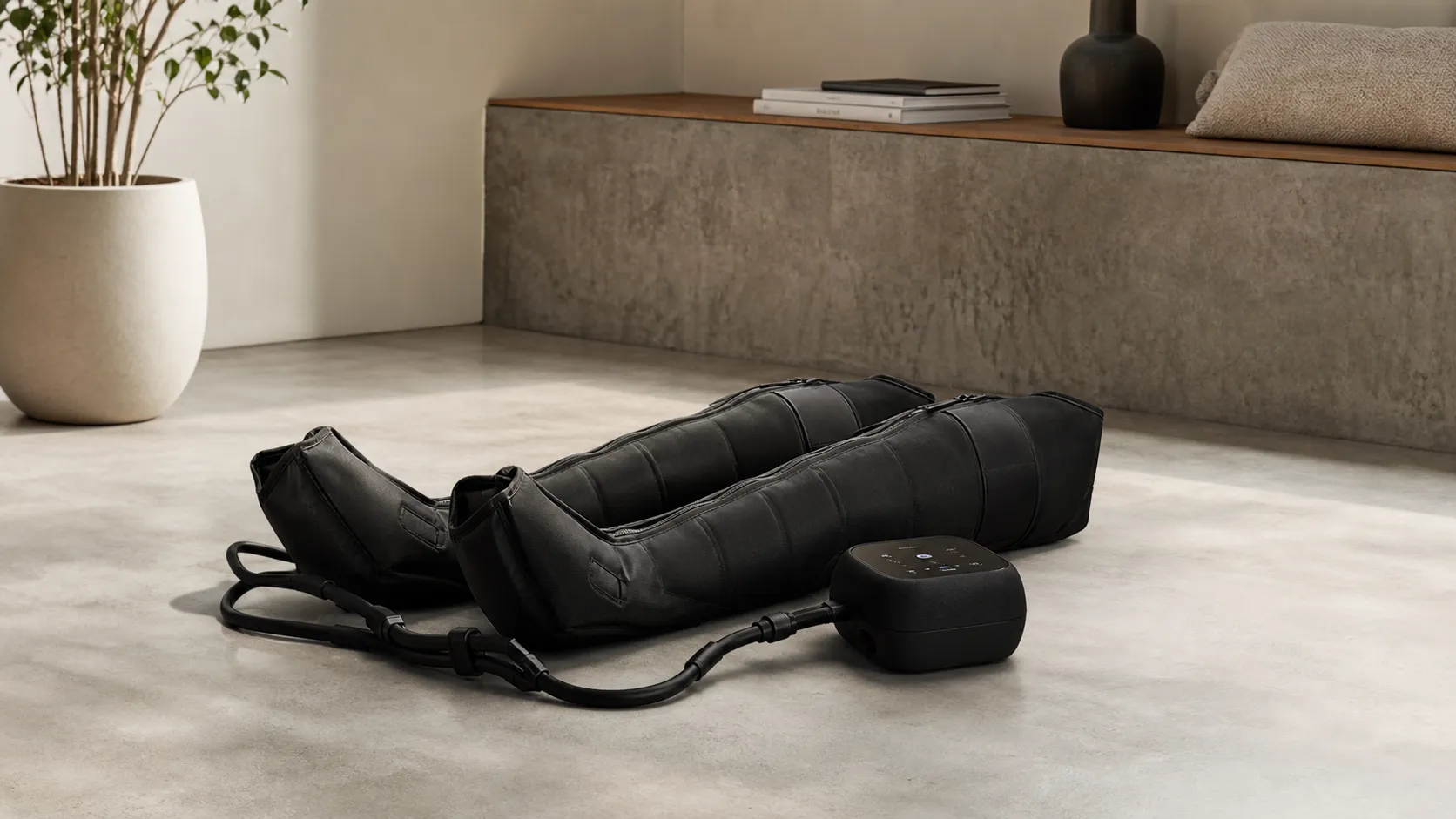
Hyperice Normatec 3.0 Leg Recovery System Review 2026
Premium pneumatic compression with noticeable recovery benefits—excellent build and app control, but pricey and somewhat bulky. Best for frequent athletes and clinics.
 Fitness & Wellness
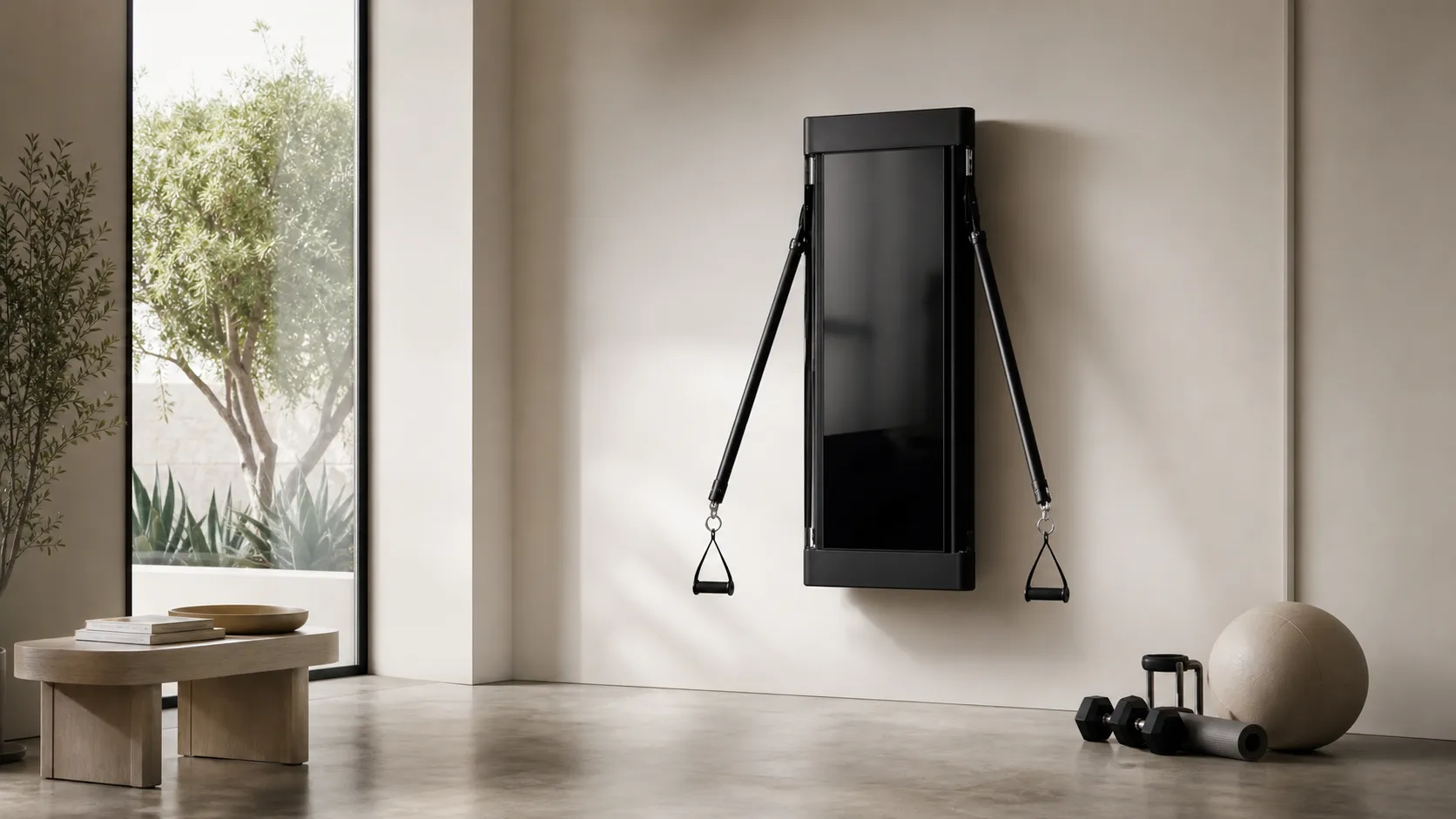
Tonal Smart Home Gym Review 2026
A high-end, wall-mounted smart gym with excellent coaching and space-saving design. Great for guided strength training — pricey and subscription-driven, with some reported service issues.
 Fitness & Wellness
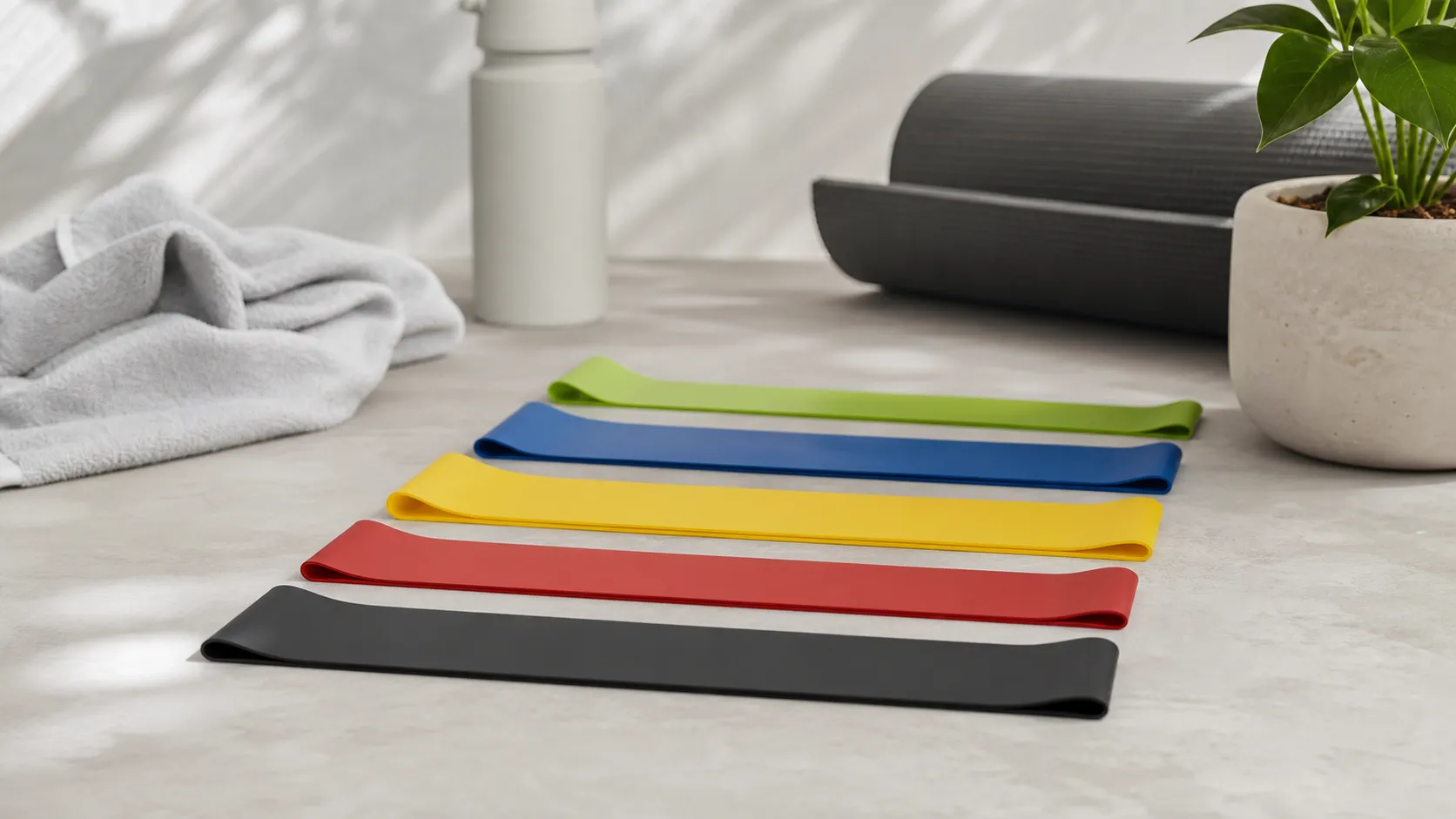
Fit Simplify Resistance Loop Bands Review 2026
Affordable, portable loop bands that excel for beginners, warm-ups, and rehab. Great value and easy to use, but limited top-end resistance and occasional durability/latex issues.