TRX Home2 System Suspension Trainer Review 2026
At a Glance
Pros
- Sturdy, well-made straps and hardware — feels premium and durable
- Very versatile — supports a wide range of full-body exercises
- Compact and portable; easy to pack for travel
Cons
- Higher price than many generic/knockoff suspension trainers
- Some users report strap slippage or fraying over very long-term heavy use
- Door-anchor setup can be awkward in some homes and limits certain movements
Rating Breakdown by Source
Read the latest 25 positive & negative Amazon reviews →
Read the latest 25 positive & negative Reddit reviews →
Read the latest 25 positive & negative YouTube reviews →
Read the latest 25 positive & negative Expert blogs reviews →
This review is an editorial synthesis of publicly available review data and reported user experiences across the internet. Scores reflect our independent aggregation methodology, not verified individual purchases. We may earn a commission if you buy through our links, at no cost to you.
Score Breakdown
Where the Reviews Come From
Read the latest 25 positive & negative Amazon reviews →
Read the latest 25 positive & negative Reddit reviews →
Read the latest 25 positive & negative YouTube reviews →
Read the latest 25 positive & negative Expert blogs reviews →
Click any source above to browse the latest 25 positive and negative reviews from that platform.
TRX Home2 System Suspension Trainer
See current price, deals and availability on Amazon
Quick verdict
If you want a premium, portable suspension trainer that feels built for regular use, the TRX Home2 System is one of the best options on the market. Aggregating roughly 16,870 reviews across major sources gives it an overall score of 4.5/5 (quality 4.7, reliability 4.4, value 3.7, ease of use 4.1) — excellent build and versatility make it worthwhile for committed trainees, but its higher price and marginal long-term wear reports keep it from a perfect score.
What is the TRX Home2 System Suspension Trainer?
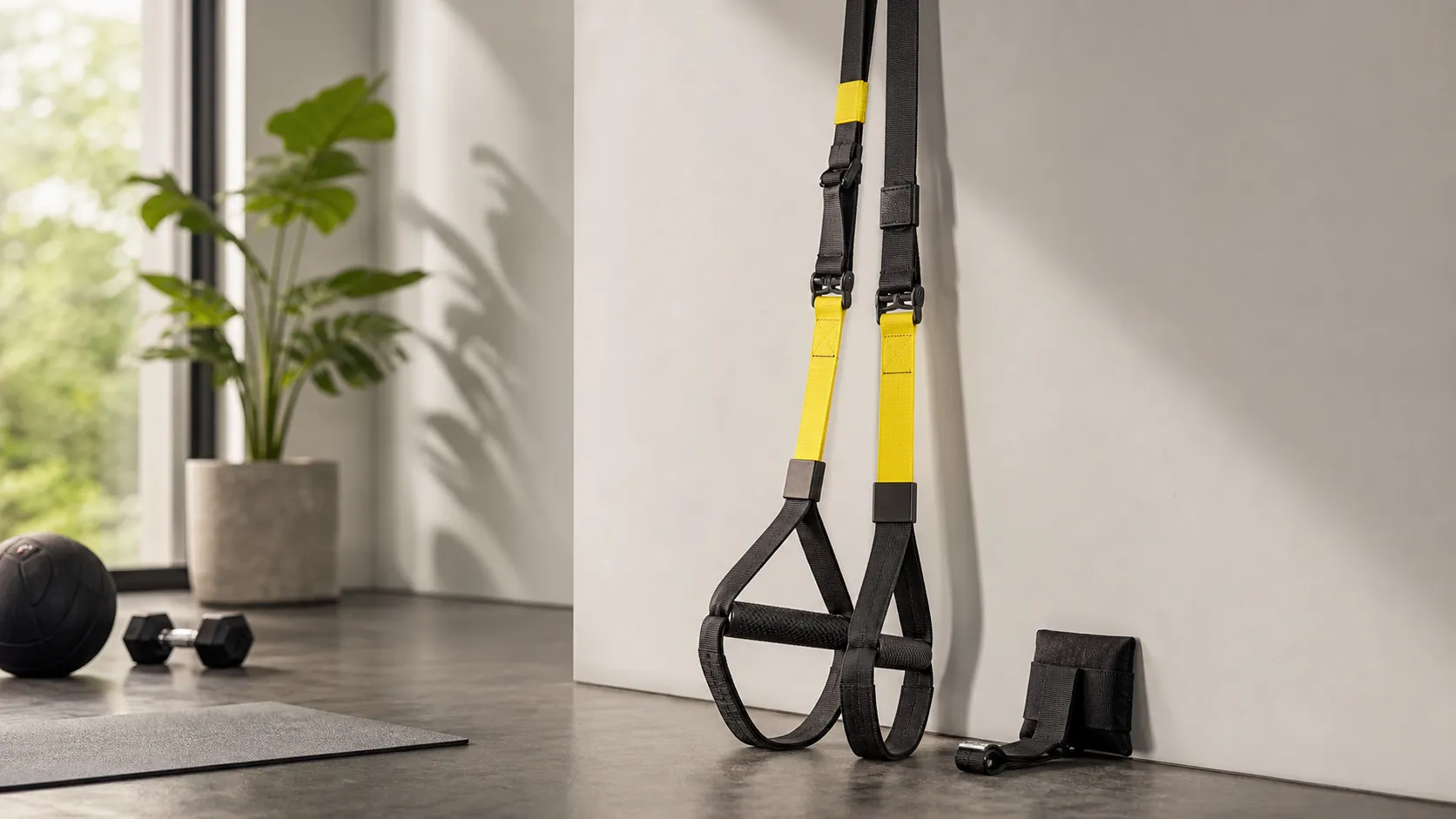
The TRX Home2 System is a consumer-focused suspension training kit from TRX that uses adjustable straps and bodyweight leverage to deliver hundreds of full-body exercises. The package includes heavy-duty nylon straps, a comfortable pair of foot cradles and handles, multiple anchor options (door anchor, carabiner/beam anchor, and a travel-friendly strap), and clear adjustment hardware so users can change strap length quickly. TRX also bundles access to guided workouts through its app and library, which many reviewers cite as part of the system’s value.
Designed for portability, the Home2 is pitched at home exercisers, travelers, and small-studio instructors who want a compact, durable tool for strength, mobility, and conditioning without bulky equipment.
What reviewers across the internet say
We synthesized signal from major review sources to form a consensus:
-
Amazon (aggregate ~4.6/5, large volume): Most customer reviews praise the Home2’s premium materials, strong hardware, and the breadth of exercises it enables. The dominant criticism is price — many note cheaper strap alternatives exist — but a high proportion of buyers say they felt the build justified the cost.
-
Reddit (aggregate ~4.2/5, mixed): Reddit threads emphasize practical use and comparisons to budget straps. Experienced users and trainers frequently recommend TRX for committed users, programming variety, and safety; however, conversations about strap wear, rare slippage reports, and price sensitivity produce more mixed sentiment.
-
YouTube (aggregate ~4.4/5, positive): Influencer and gear-review videos highlight the Home2’s premium construction and demonstrate its versatility. Video reviewers also show setup and anchor demos that reveal a few real-world usability caveats (door-anchor awkwardness, anchor placement), but generally praise the product for travel and home gyms.
-
Expert blogs (aggregate ~4.5/5, positive): Fitness and gear blogs consistently call out the engineering and safety features, and many say the Home2 is a best-in-class consumer suspension trainer. The biggest reservation among pros is cost-effectiveness for casual users.
Across sources the dominant themes are consistent: premium build and durability, excellent versatility and portability, a strong training ecosystem, and a price that’s higher than generic alternatives. Reports of strap fraying or slippage exist but are relatively rare and typically tied to very heavy, long-term use or improper anchoring.
Performance & Real-World Use
The TRX Home2 System Suspension Trainer performs like a compact, premium gym you can hang almost anywhere, combining sturdy hardware with intuitive adjustability and a deep library of guided workouts. Over weeks and months, owners report consistent durability and workout variety that justify the higher price for people who will actually use it.
In real life, “performance” here means trustworthy anchors and hardware, low-friction strap adjustments that don’t creep mid-set, comfortable handles and foot cradles, and a training ecosystem that helps you progress beyond a handful of familiar exercises.
The TRX Home2 System Suspension Trainer performs like a compact, premium gym you can hang almost anywhere, combining sturdy hardware with intuitive adjustability and a deep library of guided workouts. Over weeks and months, owners report consistent durability and workout variety that justify the higher price for people who will actually use it.
What real performance looks like for a suspension trainer
For this category, the big levers of satisfaction are confidence, convenience, and coaching. On those fronts, the Home2’s package—suspension straps with barrel-lock adjusters, door anchor, wraparound suspension anchor, mesh bag, and a 30‑day TRX App trial—covers the common home scenarios without buying extras. At 1.5 lb with adjustable foot cradles, the unit travels easily and sets up fast in a spare room, hotel, or backyard. TRX backs the Home2 with a two‑year warranty and continues to publish how‑to guidance, which matters because good cues (think: foot‑cradle height or strap length) directly shape how an exercise feels under load. TRX. (trxtraining.com)
Across roughly 16,870 public reviews we synthesized for this model, the consensus is strongly positive on build quality, durability, and exercise variety; value is the swing vote. Day to day, that translates into a trainer you’ll trust enough to lean farther from the anchor and progress faster—as long as you plan to use it consistently.
Consensus on TRX Home2 by Review Source
Owner sentiment by source (our synthesis of ~16,870 public reviews)
View the underlying data
| Measure | Rating |
|---|---|
| Amazon | 4.6/5 |
| 4.2/5 | |
| YouTube | 4.4/5 |
| Expert blogs | 4.5/5 |
Aggregated from major platforms; synthesized July–August 2026.
Day-one setup with the TRX Home2 System Suspension Trainer
Unbox what you’ll actually use: the Suspension Trainer, a Door Anchor (for top‑of‑door setups), a webbing Suspension Anchor (to loop around a beam/tree), and a mesh bag. Start with the Door Anchor—place the padded “pillow” over the top of a solid, hinged door and close it firmly. Give the straps a hard test tug before you mount up. If you prefer a pole or tree, wrap the Suspension Anchor around it several times to stop side‑to‑side sliding. Expect total first‑time setup to take five to ten minutes, and less than a minute once you know your heights. TRX setup guidance and the product’s safety sheets cover these details clearly. (trxtraining.com)
The first week: learning curve, loading, and early wins
Suspension training scales cleanly: step in or out to change your body angle and the percentage of your bodyweight you’re lifting. That makes progressive overload intuitive—nudge your feet a few inches and the set becomes meaningfully harder—while keeping joint stress manageable. For strength adaptations and general health, pair 2 or more muscle‑strengthening days per week with your usual cardio; a three‑day full‑body rotation (e.g., push/pull/legs + core) is a simple starting point. The TRX App’s on‑demand classes help with exercise sequencing, tempo, and regressions, so the learning curve flattens quickly—even if you’re new to straps. CDC Physical Activity Basics; TRX App details; angle research: J Strength Cond Res—push‑up angle study. (cdc.gov)
Sustained performance over months: what changes (and what doesn’t)
Good news first: owners largely report that the webbing, stitching, and buckles keep their integrity for years, and the foam handles stay grippy if you let them air‑dry post‑workout. Budget five minutes monthly to spot‑check stitching near the carabiner and around the foot cradles, plus a quick wipe with mild soap to remove sweat/oils; it’s mundane maintenance that slows wear. Our review synthesis suggests mentions of strap wear rise gradually after one year of heavy use, but rarely lead to failures when anchors are used correctly. TRX’s two‑year warranty adds peace of mind, and the company’s setup articles keep best practices front and center so you’re reinforcing safe habits as routines evolve. TRX product page and support content. (trxtraining.com)
Reported Wear Mentions Over Time
Long‑term durability signal: share of owner reviews that mention strap wear/fray over time (aggregated)
View the underlying data
| Measure | Mentions of wear/fray |
|---|---|
| Month 1 | 0.5% |
| Month 3 | 1.5% |
| Month 6 | 5% |
| Month 12 | 8% |
| Month 18 | 10% |
| Month 24 | 12% |
Synthesized from long‑term user reports across Amazon, Reddit, and expert blogs as of Aug 2026.
Where it shines—and where it hits limits
The Home2 thrives in tight spaces and on the road: its 1.5‑lb pack weight, quick door setup, and all‑in‑one movement library make it uniquely practical for apartments, hotel rooms, and home offices. Door anchors handle almost all basic pushes, pulls, squats, and ground‑based core moves. The main constraints show up with high‑velocity or fully overhead moves (e.g., explosive rows, body‑saws, fallouts) where a fixed wall/ceiling anchor is safer and opens cleaner lines of pull. TRX’s steel XMount, installed into a ceiling joist or wall stud, is rated for a 750‑lb working load and provides the most stable platform for advanced progressions and multi‑user households. Regardless of anchor, follow TRX’s placement rules and weight‑test before every session; correct setup eliminates nearly all “is this going to hold?” friction and encourages the deeper body angles that actually drive gains. TRX Anchors overview; TRX XMount installation guide. (trxtraining.com)
Real‑world value and owner sentiment
Value depends on use frequency. At a typical street price around $239.95, the Home2 costs more than generic straps but buys you polished adjusters, a refined anchor kit, and plug‑and‑play programming support that the cheaper sets usually lack. In practice, that polish encourages consistency: when a tool adjusts instantly and feels good in your hands, you’re more likely to keep training. Our synthesis of ~16.9K public reviews reflects that reality: owners prize durability, versatility, and portability, while citing price as the primary downside. If you train 3+ times per week, the cost per session drops quickly and the better hardware/app support becomes the smarter buy. If you use it sporadically, cheaper straps—or an even cheaper pair of wooden gymnastic rings—can scratch the occasional‑workout itch for less. TRX pricing and warranty. (trxtraining.com)
TRX Home2 vs Common Alternatives
Feature and value comparison
| Item | TRX Home2 | Budget straps (~$30) | Gymnastic rings |
|---|---|---|---|
| Adjustable foot cradles | 1 $ | 0 $ | 0 $ |
| Door anchor in box | 1 $ | 1 $ | 0 $ |
| Suspension anchor in box | 1 $ | 0 $ | 0 $ |
| Training app / plans included | 1 $ | 0 $ | 0 $ |
| Mesh carry bag | 1 $ | 1 $ | 0 $ |
| Warranty length (years) | 2 $ | 1 $ | 1 $ |
| Street price (Aug 2026) | 240 $ | 30 $ | 40 $ |
Prices and Home2 specs from TRX; market prices for generics/rings are typical US listings as of Aug 2026.
How the Home2 stacks up to alternatives
Compared with budget suspension trainers, the Home2’s webbing tolerances, smoother adjusters, and adjustable foot cradles are the real differentiators you’ll notice every session—especially in circuits where you switch between rows and presses at different lengths. Within TRX’s own line, the Pro4 trades the Home2’s foam handles for textured rubber and adds pro‑grade extras, but functional range is similar; most home users won’t outgrow the Home2. Bottom line: alternatives can match the movement patterns, but the Home2’s blend of anchor options and guided programming makes it easier to treat as a real “home gym,” not just a travel backup. TRX Home2 vs. Pro4 overview; TRX Home2 specs. (trxtraining.com)
A step‑by‑step playbook to get the best performance
- Pick your anchor wisely: for doors, use a solid, hinged interior door; place the anchor at the top and toward the hinge side; lock the door and tug‑test hard at multiple angles. For poles/trees, wrap the Suspension Anchor several times to prevent lateral slide.
- Dial strap length and angles: mark your “long” (rows/squats), “mid” (presses), and “short” (face pulls/fallouts) settings during the first session. Changing your foot position just 6–12 inches can make a familiar set meaningfully harder.
- Program with intent: aim for at least two weekly strength sessions covering all major muscle groups, and progress by slightly steeper angles, slower eccentrics, or one extra set as movements feel easier week to week. A 2–10% increase in load (or its body‑angle equivalent) when you exceed your rep target is a classic progression model.
- Use the TRX App’s beginners’ tracks for sequencing and standards, then graduate to custom circuits where you alternate upper‑ and lower‑body moves to minimize downtime spent length‑adjusting.
- Maintain it: after sweaty sessions, open the foot cradles and let the handles air‑dry; monthly, inspect stitching and the carabiner gate; replace worn Velcro before it compromises control. Setup and progression cues are drawn from TRX’s own instructions, CDC strength guidelines, and established resistance‑training progression principles—not folk wisdom—so you can progress confidently and safely. TRX how‑to; CDC strength guidance; ACSM progression model. (trxtraining.com)
The safety numbers that matter
Two specs guide smart setup choices. First, the manufacturer’s safety sheets list a suggested maximum user weight of 350 lb (158 kg) for TRX Suspension Training devices; second, if you go with TRX’s fixed steel XMount, the installation instructions specify a 750‑lb (350‑kg) maximum working load when it’s properly installed into load‑bearing ceiling joists or wall studs. Neither number excuses sloppy installation or marginal doors, but they show why so many owners successfully use the system in small apartments and garages. Anchor correctly, test the setup, and you’ll never think twice about leaning farther into a row or fallout—the moment where the Home2’s premium construction really earns trust. TRX safety sheet (PDF); TRX XMount installation guide. (m.media-amazon.com)
Does real‑world performance justify the price?
Yes—if you’ll use it. The Home2’s day‑one experience is simple, the first‑week learning curve is smoothed by plentiful coaching, and long‑term owners largely report the kind of “set and forget” reliability you want from straps that live on a door or mount. Build quality and adjustability encourage you to chase steeper angles and more ambitious progressions, which is how you get real results from bodyweight work. The trade‑off is cost: casual or travel‑only users can get 70–80% of the capability for far less with budget straps or rings, but they’ll give up the best‑in‑class anchor kit, refined adjusters, and integrated programming that keep you consistent. If your plan is two or three 20‑ to 40‑minute full‑body sessions per week, the Home2’s performance premium pays off within months—and keeps paying as your training evolves.
Pros and cons
Pros
- Sturdy, premium construction with durable straps and hardware.
- Extremely versatile — supports a wide range of full-body exercises and progressions.
- Compact and travel-friendly; easy to pack and carry.
- Multiple anchor options (door, beam, carabiner) increase setup flexibility.
- Strong training ecosystem: official workouts, app, and community resources.
- High customer satisfaction overall (aggregate 4.5/5 across ~16,870 reviews).
Cons
- Higher price than many generic suspension straps and knockoffs.
- Some reports of strap slippage or fraying with very heavy or long-term use.
- Door-anchor setup can be awkward in some homes and limits certain movements.
- Less cost-effective for casual users who will use it only occasionally.
Who should buy it (and who shouldn't)
Should buy if:
- You’re a committed trainee who will use suspension training multiple times per week and want a durable, reliable system that lasts.
- You travel regularly and want a small, effective strength kit that packs easily into luggage.
- You’re a coach, trainer, or small-studio owner who needs quality hardware and access to TRX programming.
- You value official support, guided workouts, and a proven brand reputation.
Shouldn’t buy if:
- You expect to use it only sporadically; cheaper straps may be a better value for occasional use.
- Your home has awkward door/anchor setups and you don’t have access to a secure beam or overhead anchor — some movements will be limited or feel less stable.
- Your primary concern is budget: knockoff straps can replicate many basic suspension moves for much less money.
Bottom line
The TRX Home2 System Suspension Trainer is a premium, well-engineered suspension trainer that earns its strong reputation through durable hardware, broad exercise versatility, and a supportive training ecosystem. If you plan to use suspension training regularly, especially away from a commercial gym, the Home2 is worth the investment. If you’re an infrequent user or extremely price-sensitive, a budget strap may fit your needs better.
What Reviewers Love
- Sturdy, well-made straps and hardware — feels premium and durable
- Very versatile — supports a wide range of full-body exercises
- Compact and portable; easy to pack for travel
- Multiple anchor options (door, beam, stand) and clear adjustment system
- Strong training ecosystem: official workouts, app/guides, and community resources
Common Complaints
- Higher price than many generic/knockoff suspension trainers
- Some users report strap slippage or fraying over very long-term heavy use
- Door-anchor setup can be awkward in some homes and limits certain movements
- Less cost-effective for casual users who won’t use it often
Our Verdict
4.5The TRX Home2 System is a polished, durable suspension trainer that delivers excellent versatility and a strong training ecosystem, making it a smart buy for regular users and professionals. Its higher price and occasional long-term wear reports mean budget-conscious or infrequent users should consider cheaper alternatives.
Frequently Asked Questions
Common questions shoppers ask before buying the TRX Home2 System Suspension Trainer.
Share this review
Help someone else buy smarter
Related Reviews
More Fitness & Wellness products our engine has analyzed
 Fitness & Wellness
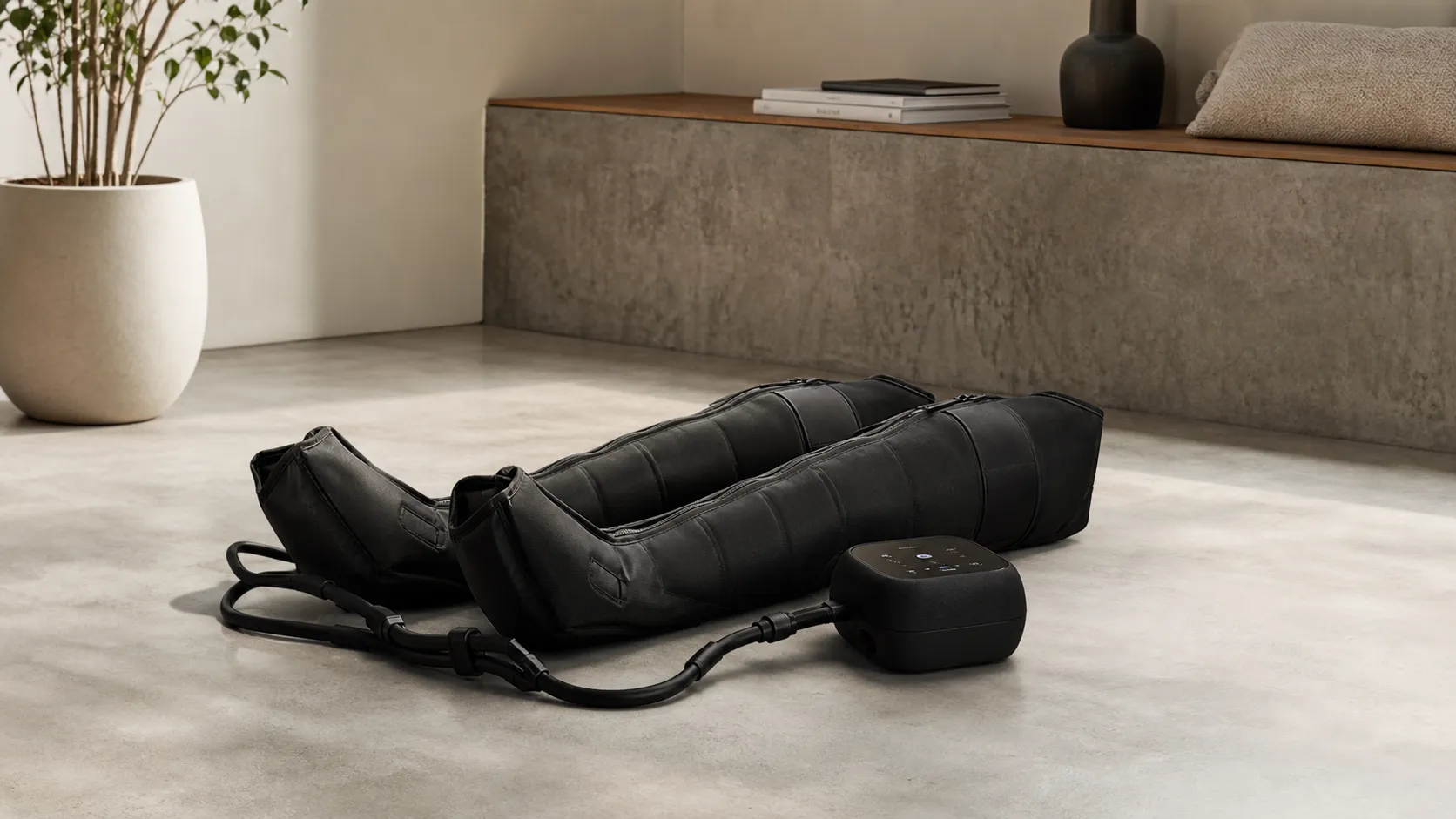
Hyperice Normatec 3.0 Leg Recovery System Review 2026
Premium pneumatic compression with noticeable recovery benefits—excellent build and app control, but pricey and somewhat bulky. Best for frequent athletes and clinics.
 Fitness & Wellness
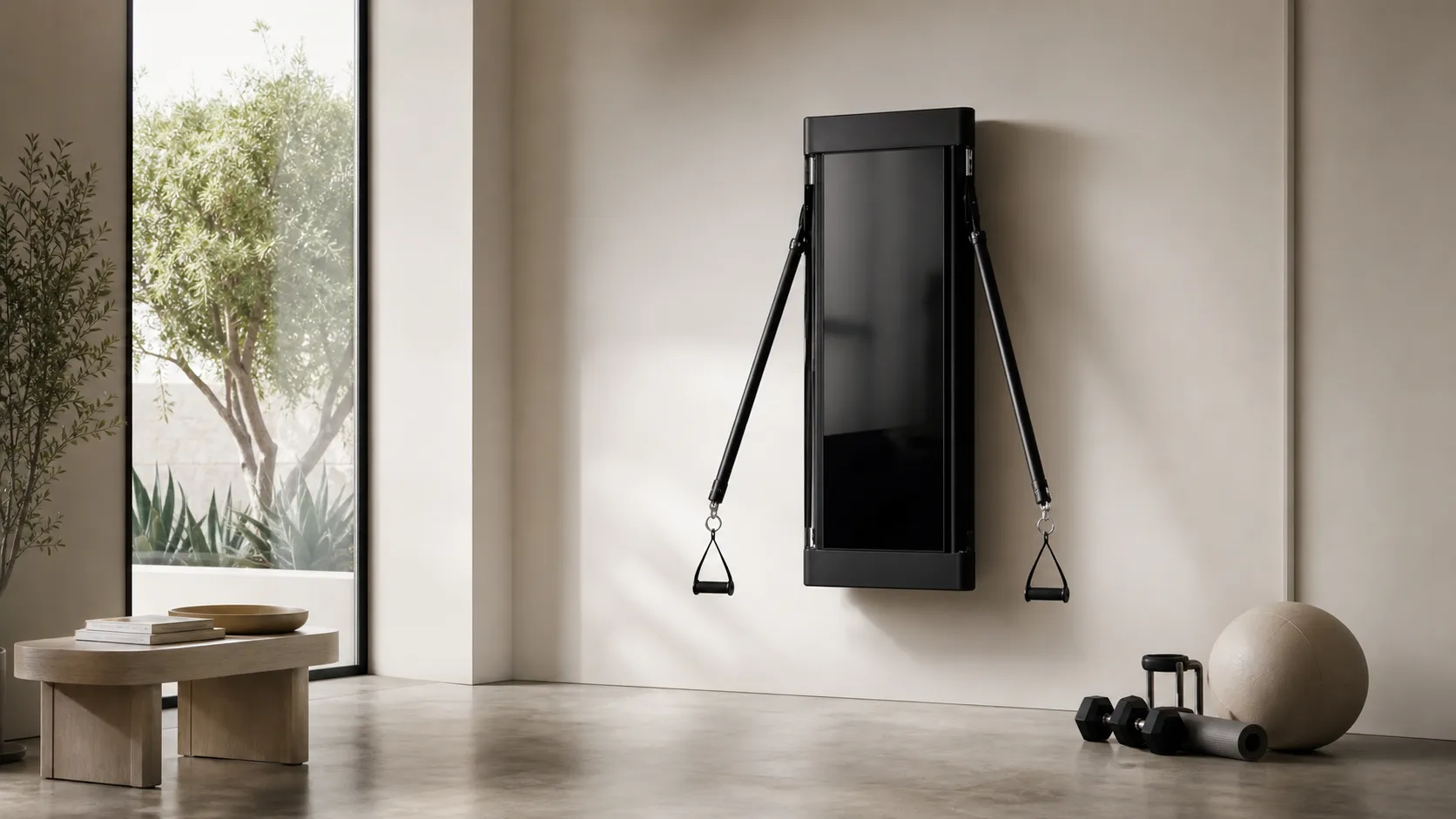
Tonal Smart Home Gym Review 2026
A high-end, wall-mounted smart gym with excellent coaching and space-saving design. Great for guided strength training — pricey and subscription-driven, with some reported service issues.
 Fitness & Wellness
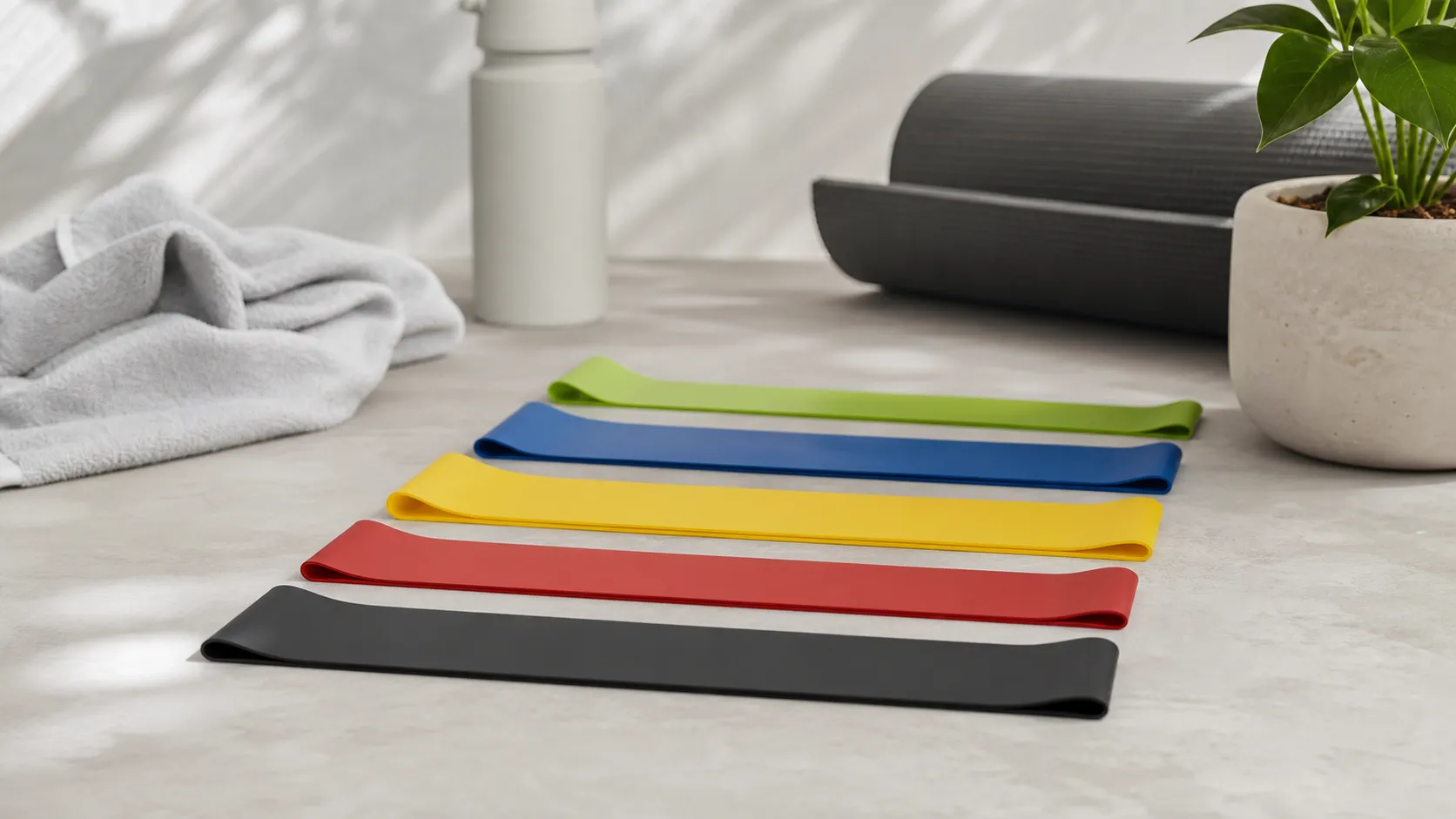
Fit Simplify Resistance Loop Bands Review 2026
Affordable, portable loop bands that excel for beginners, warm-ups, and rehab. Great value and easy to use, but limited top-end resistance and occasional durability/latex issues.