Whisker Litter‑Robot 4 Review (2026)
At a Glance
Pros
- Saves daily scooping time — consistent “no-scoop” convenience widely praised.
- Good odor containment compared with standard litter boxes (drawer + OdorTrap system).
- Works well in multi-cat households and provides visit/weight logging via app.
Cons
- High upfront price relative to non-robotic options and many alternatives.
- Intermittent sensor/firmware errors and occasional motor stalls reported by owners.
- Requires periodic deep cleaning/disassembly (litter can infiltrate internal components).
Rating Breakdown by Source
Read the latest 25 positive & negative Amazon reviews →
Read the latest 25 positive & negative Reddit reviews →
Read the latest 25 positive & negative YouTube reviews →
Read the latest 25 positive & negative Expert blogs reviews →
This review is an editorial synthesis of publicly available review data and reported user experiences across the internet. Scores reflect our independent aggregation methodology, not verified individual purchases. We may earn a commission if you buy through our links, at no cost to you.
Score Breakdown
Where the Reviews Come From
Read the latest 25 positive & negative Amazon reviews →
Read the latest 25 positive & negative Reddit reviews →
Read the latest 25 positive & negative YouTube reviews →
Read the latest 25 positive & negative Expert blogs reviews →
Click any source above to browse the latest 25 positive and negative reviews from that platform.
Whisker Litter-Robot 4
See current price, deals and availability on Amazon
Quick verdict — is it worth it?
The Whisker Litter-Robot 4 (LR4) is a high-end automatic litter box that delivers real, day-to-day convenience for busy and multi‑cat households. Aggregating roughly 11,720 reviews across marketplaces and forums yields a 4.2/5 overall score: most buyers love the time saved and better odor control, while reliability and long‑term costs are the main complaints. If you want a largely hands‑free solution and can accept potential sensor or maintenance tradeoffs, the LR4 is one of the strongest automated options available.
What is the Whisker Litter-Robot 4?
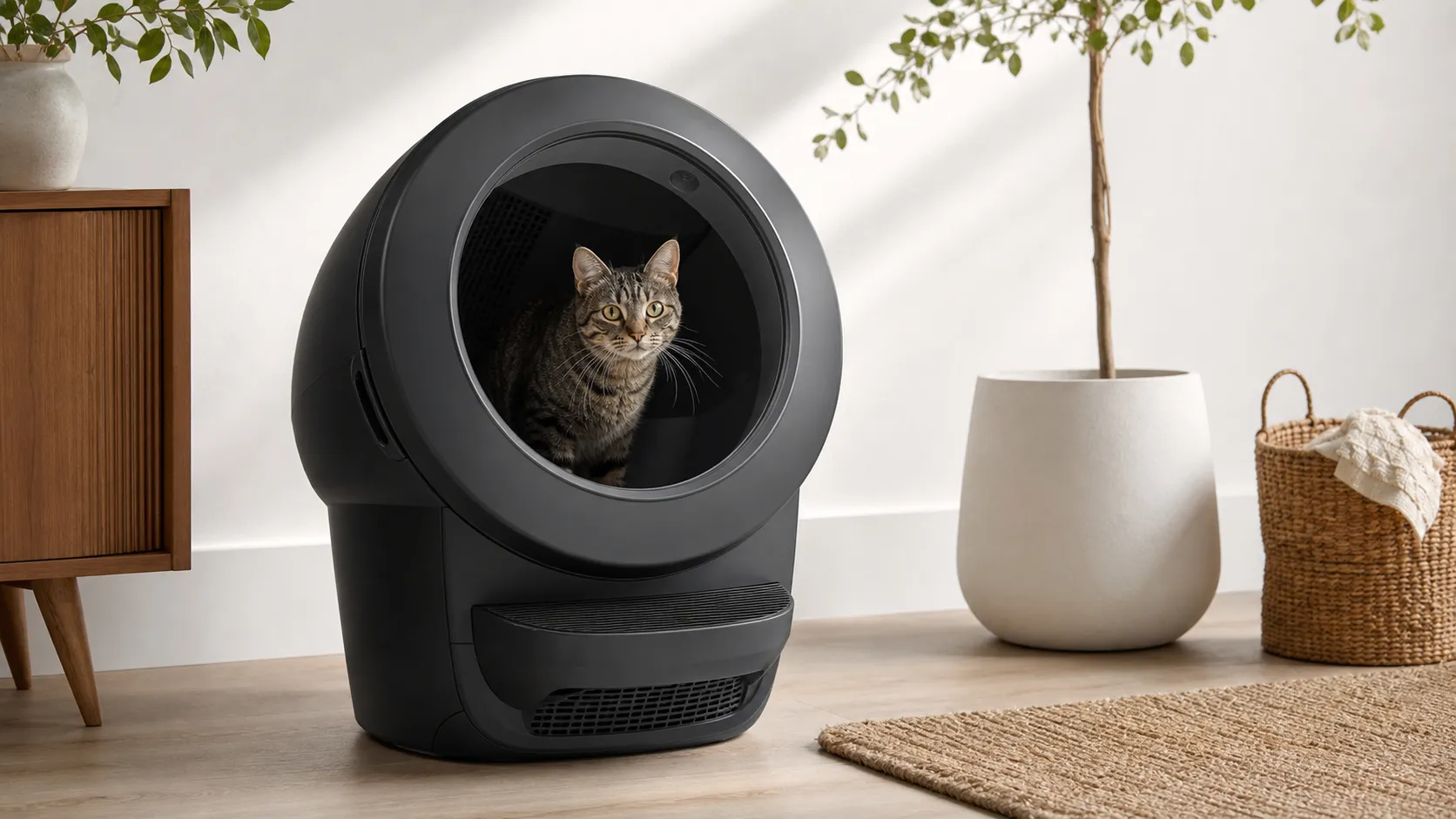
The Litter-Robot 4 is Whisker’s latest consumer automatic litter box intended to replace daily scooping. It uses an automated cycle to separate clumps from clean litter, depositing waste into a sealed drawer below. Key consumer-facing features include:
- Automatic cleaning cycles and adjustable settings.
- A sealed waste drawer with OdorTrap elements for improved smell control.
- App connectivity with visit and weight logs, cycle control, and notifications.
- Designed for multi‑cat households and compatible with most clumping litters.
Taken together, these features position the LR4 as a convenience device for pet parents who want to reduce scooping, improve odor management, and monitor multiple cats without constant manual intervention.
What reviewers across the internet say
We synthesized ratings and comments from Amazon, Reddit, YouTube, and expert pet‑tech blogs to find the consensus.
-
Amazon buyers (average ~4.4/5) are the largest single group and generally praise the LR4 for saving time, reducing odor, and working well with several cats. Positive reviews focus on the “no‑scoop” lifestyle shift. Negative Amazon reviews concentrate on early failures, sensor errors, and frustration over the high price.
-
Reddit conversations average around 3.8/5 and are mixed: many long‑term owners are enthusiastic and share troubleshooting tips, but the subreddit also contains frequent threads about OmniSense or sensor faults, drawer‑full false alerts (DFI), and occasional motor or parts failures. The community actively shares fixes, firmware notes, and parts-sourcing advice.
-
YouTube reviewers (≈4.1/5) commonly show hands‑on demos and emphasize convenience, quieter operation compared with some older automatic models, and improved odor control. Video reviewers also often document setup tips and how to choose compatible litter; some creators show interactions with customer support when issues arise.
-
Expert blogs and pet‑tech reviewers rate it around 4/5. Experts praise the engineering, app features, and multi‑cat suitability while calling out the high upfront cost and the device’s tradeoffs: strong convenience, but maintenance and reliability are the key considerations.
Across sources the aggregated sub‑scores are: quality 4.3, reliability 3.7, value 3.5, ease of use 4.4 — a profile that lines up with the broad takeaway: excellent convenience, good build quality, but reliability and ongoing cost lower the value score.
Performance & Real-World Use
In daily use, the Whisker Litter-Robot 4 reliably removes scooping from your routine, keeps odors contained better than most boxes, and runs quietly, but you must embrace light maintenance and occasional sensor care. For multi-cat homes or busy owners who’ll follow Whisker’s upkeep guidance, the Whisker Litter-Robot 4 delivers convenience that generally outweighs its price and consumables over months of ownership.
Autoclean boxes live or die on three things: do they spare you from scooping, keep odors in check, and hold up with real cats in real homes. Owner reports show a pattern: this drum‑style robot is convenient when maintained, but sensors and upkeep decide satisfaction. Across public reviews, daily usability and odor control are strong; reliability and ongoing costs are the caveats.
Owner Ratings by Source (synthesized)
Aggregate snapshot based on public sources as of Aug 1, 2026.
View the underlying data
| Measure | Average rating |
|---|---|
| Amazon (~8,500) | 4.4/5 |
| Reddit (~2,500) | 3.8/5 |
| YouTube (~600) | 4.1/5 |
| Expert blogs (~120) | 4/5 |
Compiled from public listings and editorial reviews (Amazon listing; r/litterrobot via GummySearch; YouTube reviews; Wired and other expert blogs).
What “performance” means for a self‑cleaning litter box
For products like this, performance isn’t a single spec—it’s a stack of outcomes that determines whether you forget it’s there or babysit it. We look at setup friction, cat acclimation, cycle reliability (no stalls, no missed clumps), odor capture between drawer changes, noise in shared spaces, app utility (alerts, logs, remote controls), and what it’s like to clean and service after months of dusty reality. The Whisker design tackles these with a sifting globe, a sealed drawer, and a sensor suite that detects cats, litter level, and drawer capacity. Those sensors—lasers plus a weight scale under the base (OmniSense and DFI)—govern cycle timing, visit tracking, and “drawer full” alerts, and they’re central to both its best behaviors and its most common complaints. Whisker’s product page and documentation make this architecture clear, including safety interlocks that pause a cycle if a cat returns. (whisker.com)
Day‑one setup and the first week with the Whisker Litter-Robot 4
Assembly is simple: seat the globe, insert the drawer, add clumping litter to the MAX line, pair the unit in the Whisker app, and run a test cycle. Expect roughly 15–25 minutes including Wi‑Fi pairing; the app walks you through calibration and cycle‑delay settings so skittish cats don’t see motion immediately after a visit. The laser curtain and weight sensors create a multi‑zone safety net—if a cat re‑enters, cycling pauses—and the app starts logging visits and weight so you can verify acclimation. Many owners report cats accept the new box within days when you place it beside the old tray, leave the old one a bit dirty to encourage migration, and set a longer delay in week one. Whisker’s manual and help videos cover the basics; if the waste‑gauge looks off during onboarding, the company documents simple sensor‑cleaning and DFI calibration steps that typically resolve it. (litter-robot.com)
Odor control, noise, and everyday usability
Odor management is one of the LR4’s biggest wins. In normal use the sealed drawer and carbon filter contain smells until bag‑change time, and you can add Whisker’s OdorTrap cartridges for extra help in small rooms or multi‑cat homes. Owners and expert reviewers highlight lower day‑to‑day odor than with open pans or most rake‑style robots, provided that clumps don’t smear on the rubber liner and the drawer is changed on schedule. Noise is another bright spot: independent reviewers like Cats.com have measured low cycling noise compared with older designs, making the unit viable in offices and bedrooms for many households. In the app, expected niceties—cycle control, sleep schedules, visit and weight logs—prove useful rather than gimmicky once you’ve lived with them for a week. (whisker.com)
How the Whisker Litter-Robot 4 holds up after six months
Long‑term reports put reliability mid‑pack for premium boxes: many units run for months with only routine care, while a vocal minority encounter false “drawer full” notices or misreads after bag changes. The pattern isn’t mysterious—dust, bag edges, and litter on the sensor windows can confuse the DFI lasers, causing premature full alerts or a stuck blue light. Whisker’s support docs prescribe a ladder of fixes (bag fit, quick wipe of the three laser windows, firmware check, and a guided DFI recalibration), and those steps clear many cases. If a sensor actually fails, Whisker ships warranty parts. The core motor and gearbox are less frequently the issue in LR4‑era reports; most reliability threads revolve around the optical sensors and, less often, weight calibration after moving the unit or changing litter. Keeping the robot on a solid, level surface and resisting the urge to “pack” the drawer bag are small habits that reduce headaches. (litter-robot.com)
Upkeep, consumables, and the effort after month one
A self‑cleaner is only as easy as its maintenance rhythm. For a two‑cat home, expect to empty the drawer about twice per week, top up litter weekly, and deep clean (full globe wash, base wipe‑down, sensor dusting) every 4–8 weeks depending on litter type and humidity. Whisker’s own maintenance guidance mirrors that cadence and emphasizes keeping the sensor bezels clear; stretching deep cleans longer typically means rising odors or more false alerts. The OdorTrap cartridges are optional but helpful in small spaces; Whisker recommends replacing them every few weeks, and the drawer’s carbon filter should be refreshed regularly as well. If power flickers are common where you live, Whisker sells a backup battery that slots into the LR4 and can run the unit through short outages so cycles don’t stall mid‑drum. Set aside a half hour for the first deep clean to learn the assembly order—after that, the routine is quick. (litter-robot.com)
Typical Maintenance Cadence Over 12 Weeks (2‑cat household)
Synthesized from Whisker’s published guidance and owner reports; cadence will vary by cat count, litter type, humidity, and diet.
- Drawer emptying events (/wk)
- Litter top-ups (/wk)
- Deep cleans (/wk)
View the underlying data
| Item | Drawer emptying events (/wk) | Litter top-ups (/wk) | Deep cleans (/wk) |
|---|---|---|---|
| Week 1 | 2 | 1 | 0 |
| Week 2 | 2 | 1 | 0 |
| Week 3 | 2 | 1 | 0 |
| Week 4 | 2 | 1 | 1 |
| Week 5 | 2 | 1 | 0 |
| Week 6 | 2 | 1 | 0 |
| Week 7 | 2 | 1 | 0 |
| Week 8 | 2 | 1 | 1 |
| Week 9 | 2 | 1 | 0 |
| Week 10 | 2 | 1 | 0 |
| Week 11 | 2 | 1 | 0 |
| Week 12 | 2 | 1 | 1 |
Based on Whisker’s LR4 maintenance article and long-form reviews discussing cadence.
Where it excels—and where owners hit the limits
The LR4 shines in multi‑cat households that generate enough volume for daily cycling; odor stays contained, the app logs who’s visiting by weight signature, and scooping is gone. It’s also a good fit for single‑cat homes where the box sits near people—quiet cycles and sealed waste mean fewer complaints from housemates. The pain points cluster around edge cases: very lightweight or sticky litters can smear and amplify odors, tiny bathrooms concentrate smells when you open the drawer, and deep cleans take longer if litter dust cakes the globe seal or base ledges. A minority of owners run into DFI misreads (especially if the liner is bunched or overstuffed), but cleaning and calibration steps clear many without parts replacement. In compact apartments or homes with one finicky cat that hates enclosed spaces, a large open pan with frequent scooping may still be the least‑fussy solution—even expert reviewers who recommend LR4 flag price and maintenance trade‑offs as the key decision. (wired.com)
How it stacks up to alternatives you’re considering
Against other high‑end boxes, the LR4’s drum‑and‑drawer, multi‑sensor design sits near the top for odor containment and app polish. PETKIT’s Pura Max 2 approaches the experience with a sealed waste bin and app control; owners like its built‑in deodorizer module, but it still relies on standard clumping litter, liners, and similar maintenance rhythms. CatGenie A.I. is the outlier—it uses washable granules and a detergent cycle tied to water and a drain, eliminating a waste drawer but committing you to plumbing, proprietary supplies, and a different odor profile. If you value minimal infrastructure changes and broad litter compatibility, the LR4 remains the most widely recommended “set it next to the old box and start” pick; if you want a plumbed solution or an integrated deodorizer sprayer, the alternatives have their niches. (petkit.com; catgenie.com)
Feature Comparison: LR4 vs Pura Max 2 vs CatGenie A.I.
High‑level features most owners ask about when cross‑shopping; details vary by model.
| Item | Whisker LR4 | PETKIT Pura Max 2 | CatGenie A.I. |
|---|---|---|---|
| Self-cleaning | Yes | Yes | Yes |
| Uses standard clumping litter | Yes | Yes | No |
| Requires water/drain hookup | No | No | Yes |
| App control/alerts | Yes | Yes | Yes |
| Sealed waste drawer/bag | Yes | Yes | No |
Drawn from official product pages and CatGenie FAQ.
Pro tips: concrete steps to get the best results
Small setup choices pay off for months:
- Place it on a rigid, level surface with a couple inches of clearance; soft rugs can confuse the weight scale. After placement or a litter change, tap Reset in the app to zero the weight reading.
- Start with a reliable clumping clay, fill to the MAX line, and set a longer cycle delay (7–15 minutes) for week one to improve acceptance and reduce smearing.
- Fit the liner flat to the drawer’s sides so it can’t intrude into the laser curtain. If you get a flashing blue light after a change, empty the drawer, smooth the bag, wipe the three laser windows in the bezel, check for a firmware update, then run the documented DFI recalibration before contacting support.
- In small rooms, add an OdorTrap pack in the holder and replace it on the schedule Whisker recommends; swap the carbon filter regularly to keep drawer odors down.
- Budget a quick weekly wipe of the rim and sensor windows and a deeper globe wash every month or two; it’s easier to maintain a clean seal than rescue a caked one later.
- If outages are common where you live, install the official backup battery so the unit can finish cycles during brief power cuts. These habits—along with avoiding super‑light, sticky, or silica litters—reduce misreads, keep odors at the drawer stage, and preserve the “hands‑off” feeling buyers want. (litter-robot.com)
Real‑world value versus price: our take
The LR4 doesn’t erase maintenance—you’ll still top up litter, change a bag, and occasionally deep clean—but the hours it gives back and the odor control it delivers make it an easy recommendation for multi‑cat homes and busy households that will use its app data. The main reason not to buy is if the price, consumables, and the possibility of sensor troubleshooting would sour the experience; if that’s the case, an open pan plus daily scoops remains simple and reliable. Owners who accept the learning curve and commit to routine care generally report months of smooth, quiet service and a house that smells less like a litter box. If that’s the outcome you’re after, Whisker’s design and support ecosystem justify the premium better than most rivals. (engadget.com; reviewed.com; goodhousekeeping.com)
Sources referenced in this section
- Whisker — Litter-Robot 4 product page
- Whisker — Litter-Robot 4 manual (PDF)
- YouTube — Whisker: Calibrate OmniSense/DFI
- Wired — Which Litter-Robot model is right for you?
- Engadget — Litter-Robot 4 review
- Reviewed — Litter-Robot 4 review
- Good Housekeeping — Litter-Robot 4 review
- Cats.com — Litter-Robot 4 review (measured noise)
- PETKIT — Pura Max 2 product page
- CatGenie — A.I. FAQ (plumbing requirement)
- Apple App Store — CatGenie app
Pros and cons
Pros
- Saves daily scooping time; consistent “no‑scoop” convenience for many owners.
- Better odor containment than standard litter boxes thanks to the drawer + OdorTrap system.
- Works well in most multi‑cat households and provides visit/weight logs via the app.
- Relatively easy day‑to‑day use and intuitive app controls.
- Active owner community and responsive retailer/Whisker support help resolve many issues.
Cons
- High upfront price compared with classic litter boxes and many alternatives.
- Reliability is inconsistent for some owners: sensor/firmware errors and occasional motor stalls are reported.
- Requires periodic deep cleaning and occasional disassembly; litter can infiltrate internal parts if neglected.
- Ongoing consumable and replacement‑parts cost (OdorTraps, liners, motors/sensors) affects long‑term value.
Who should buy it — and who shouldn’t
Buy the Litter‑Robot 4 if:
- You value your time and want to eliminate daily scooping; the LR4 will deliver the most obvious benefit here.
- You live in a multi‑cat household and want tracked visit and weight data to monitor pet health and usage patterns.
- You’re willing to accept an upfront premium for convenience and to budget for consumable replacements.
- You’re comfortable performing periodic deep cleaning and following community tips for optimal reliability.
Don’t buy the LR4 if:
- You’re on a tight budget or want the lowest lifetime cost — cheaper non‑automated boxes or lower‑cost self‑cleaning models will cost less initially and in consumables.
- You need rock‑solid, maintenance‑free reliability at all costs — while many owners report trouble‑free years, a sizable minority report sensor or motor issues and some hands‑on maintenance.
- You use a non‑clumping or unusual litter: the LR4 performs best with recommended clumping litters, so compatibility matters.
Final buying tips
- Keep extra OdorTraps and liners on hand, especially in multi‑cat homes. Consumables move faster than you expect.
- Follow Whisker’s setup and cleaning instructions carefully to reduce sensor and litter‑infiltration issues; community guides can help for deeper maintenance tasks.
- If reliability is a top concern, factor in the experiences reported on Reddit and Amazon when deciding whether to buy new or wait for a sale or extended warranty.
What Reviewers Love
- Saves daily scooping time — consistent “no-scoop” convenience widely praised.
- Good odor containment compared with standard litter boxes (drawer + OdorTrap system).
- Works well in multi-cat households and provides visit/weight logging via app.
- Relatively easy day-to-day use and intuitive app controls.
- Whisker/retailer support and the active owner community helps resolve many problems.
Common Complaints
- High upfront price relative to non-robotic options and many alternatives.
- Intermittent sensor/firmware errors and occasional motor stalls reported by owners.
- Requires periodic deep cleaning/disassembly (litter can infiltrate internal components).
- Replacement parts / accessories (OdorTraps, liners) add ongoing cost.
Our Verdict
4.2The Whisker Litter‑Robot 4 delivers genuine time savings and noticeably better odor control, especially for multi‑cat households. It’s not perfect — sensor and occasional motor issues plus ongoing consumable costs lower the value — but for buyers who prioritize convenience and are prepared for periodic maintenance, it remains one of the best automatic litter boxes available.
Frequently Asked Questions
Common questions shoppers ask before buying the Whisker Litter-Robot 4.
Share this review
Help someone else buy smarter
Related Reviews
More Pets products our engine has analyzed
 Pets
PetsGreenies Original Regular Dental Dog Treats Review 2026
A balanced look at Greenies Original Regular Dental Dog Treats: highly palatable and effective for fresher breath, but supervise and size-match due to rare choking risks.
 Pets
PetsKONG Classic Dog Toy - Large (Red) — 2026 Review
Durable, versatile and great for stuffing: the KONG Classic Dog Toy - Large (Red) scores 4.6/5 across ~28,700 reviews. Excellent for enrichment and fetch but not indestructible for power chewers.
 Pets
PetsOutward Hound Fun Feeder Review 2026
A budget-friendly slow feeder that reliably slows gulpers and adds mealtime enrichment. Great value but fiddly to clean and not for aggressive chewers.