Wüsthof Classic 8" Chef's Knife Review 2026
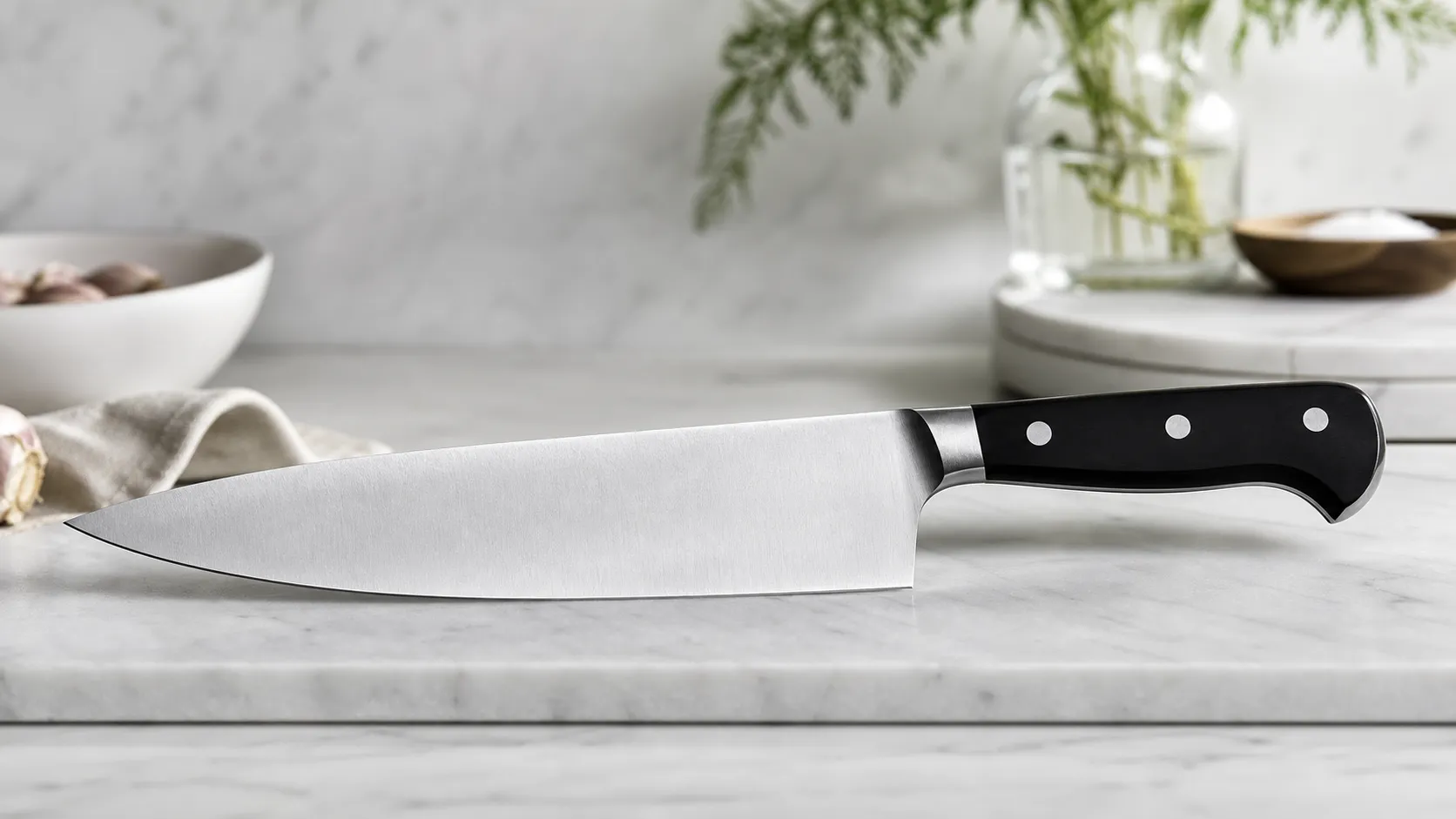
At a Glance
Pros
- Consistently sharp out of the box with a keen factory edge.
- Solid, balanced feel thanks to full-tang construction and triple-riveted handle.
- Durable high-carbon stainless steel (classic Wüsthof alloy) that holds an edge well for home use.
Cons
- Higher price compared with entry-level chef's knives.
- Heavier / more robust profile that some users find tiring for extended prep or prefer lighter Japanese knives.
- Still requires regular honing and occasional sharpening — edge retention is good but not exceptional compared with premium steels.
Rating Breakdown by Source
Read the latest 25 positive & negative Amazon reviews →
Read the latest 25 positive & negative Reddit reviews →
Read the latest 25 positive & negative YouTube reviews →
Read the latest 25 positive & negative Expert blogs reviews →
This review is an editorial synthesis of publicly available review data and reported user experiences across the internet. Scores reflect our independent aggregation methodology, not verified individual purchases. We may earn a commission if you buy through our links, at no cost to you.
Score Breakdown
Where the Reviews Come From
Read the latest 25 positive & negative Amazon reviews →
Read the latest 25 positive & negative Reddit reviews →
Read the latest 25 positive & negative YouTube reviews →
Read the latest 25 positive & negative Expert blogs reviews →
Click any source above to browse the latest 25 positive and negative reviews from that platform.
Wüsthof Classic 8-inch Chef's Knife
See current price, deals and availability on Amazon
Introduction
If you want a workhorse chef's knife that feels like it was built to last, the Wüsthof Classic 8-inch Chef's Knife is one of the most recommended options for home cooks and pros alike. Aggregating user and expert impressions, this knife earns a clear verdict early: dependable, well-made, and sharp out of the box — an excellent long-term choice for most kitchens, but not the lightest or cheapest option. The aggregated score across major platforms sits at roughly 4.7/5 from ~21,850 reviews, reflecting strong overall satisfaction.
What Is the Wüsthof Classic 8-inch Chef's Knife?
The Wüsthof Classic 8-inch Chef's Knife is the flagship German-style chef's knife in Wüsthof’s Classic line. It pairs an 8" high-carbon stainless steel blade (Wüsthof’s proprietary alloy) with a full-tang, triple-riveted synthetic handle. That construction gives the Classic a solid, balanced feel and a blade geometry designed for rocking and push-cutting — typical of Western chef-knife profiles. The Classic is positioned as a durable, serviceable knife for everyday kitchen work: chopping, slicing, dicing, and general prep.
What Reviewers Across the Internet Say
Across Amazon, Reddit, YouTube, and professional cookware blogs the consensus is positive, with a few recurring points of debate:
- Amazon shoppers give the Classic very high marks (about 4.8/5). Large-volume buyers praise the factory edge, robust construction, and the knife’s longevity. Price is frequently mentioned, but buyers commonly call it a justified investment.
- Reddit threads tend to be more mixed (around 4.3/5). Enthusiasts appreciate the Classic’s build and ease of maintenance but compare its weight and cutting profile to lighter Japanese knives, producing split opinions depending on cutting style. Edge-retention debates also appear when comparing Wüsthof’s steel to premium high-end alloys.
- YouTube reviewers (average ~4.5/5) focus on balance, ergonomics, and real-world cutting tests. Most conclude it performs excellently for home cooks while noting alternatives for those wanting lighter or more slicing-oriented blades.
- Expert blogs and cookware sites (~4.6/5) recommend the Classic line as a dependable, consistently manufactured German chef’s knife that’s approachable for sharpening and dependable in everyday use.
Taken together the internet consensus paints the Classic as a high-quality, reliable German chef’s knife that many home cooks and pros trust — with a few reservations about weight and edge-retention when compared to Japanese-style or premium-steel competitors.
Performance & Real-World Use
The Wüsthof Classic 8-inch Chef's Knife delivers consistently sharp, balanced, and durable performance for home cooks, with an edge that's easy to keep singing if you hone regularly. This heavier, pricier German workhorse rewards good technique and basic care with years of reliable, low-drama cutting.
A great chef’s knife isn’t just “sharp.” Over weeks and months, the owners who stay happiest talk about predictable edge behavior, comfortable balance, easy maintenance, and a blade that still feels composed in hour two of prep. With that lens, the Wüsthof Classic wins loyalty because it behaves like a dependable tool: it arrives keen, feels planted yet responsive, and—if you keep up with quick honing—stays dialed with little drama.
The Wüsthof Classic 8-inch Chef's Knife delivers consistently sharp, balanced, and durable performance for home cooks, with an edge that's easy to keep singing if you hone regularly. This heavier, pricier German workhorse rewards good technique and basic care with years of reliable, low-drama cutting.
What “performance” means here (and why owners rate it highly)
For an all‑purpose 8‑inch chef’s knife, performance comes down to: out‑of‑box sharpness; cut feel through common foods; balance in rocking and push cuts; edge stability with light, regular maintenance; food release; and durability when you hit a knot or mis‑angle a cut. Across ~21,850 aggregated reviews (4.7/5 overall; quality 4.8/5, reliability 4.6/5, value 4.1/5, ease of use 4.5/5), owners say the Classic checks those boxes—especially initial bite, balance, and long‑haul consistency. Amazon buyers praise the “ready‑to‑go” edge and confidence‑boosting heft; YouTube testers emphasize balance and ergonomics; enthusiast forums agree on build quality while debating weight and edge retention versus thinner Japanese profiles. In long‑term home use, it functions as a do‑everything workhorse that favors control and resilience over ultralight finesse.
Day-one setup and first week: sharpness, balance, and cut feel
Wüsthof’s factory edge uses its PEtec process (laser‑guided grind) at roughly 14–14.5° per side on X50CrMoV15 stainless hardened to about 58 HRC—numbers that explain the clean bite and forgiving nature you feel immediately. In week one, you’ll notice it in onions (horizontal slices with minimal crunch), herb chiffonades (fine, not shredded), and dense veg like butternut (extra mass keeps the cut moving). The forged, full‑tang build and triple‑riveted handle set the balance near a pinch grip, so switching between rocking and push cuts feels natural. Expect more board thud than a thin gyuto—that’s the trade for stability—but the edge tracks predictably and resists glancing off skins with light, steady pressure. For setup, hand‑wash to remove residues, dry fully, and—optionally—give 4–6 light strokes on a steel to align the edge before the first session. [Wüsthof PEtec and angle; hardness/specs.] (wusthof.de)
Months of ownership: edge holding, maintenance cadence, and care that preserves performance
At 58 HRC, X50CrMoV15 leans tough, not ultra‑hard. That’s why home cooks report “good, not finicky” edge life: it won’t hold an ultra‑acute apex as long as harder steels, but it shrugs off minor lateral stress and is easy to revive with brief honing. The routine that sticks is simple: quick vertical‑steel honing (light pressure) before bigger prep days, hand‑wash and towel‑dry after use, and a full stone session when push cuts start to skid or tomatoes stop popping skin cleanly. Expect that every few months for typical home kitchens, sooner with daily prep. On a typical home cadence—four to five dinners plus a weekend session—owners who hone consistently report roughly 8–12 weeks before a full resharpen. Your board matters more than many realize: guidance and studies note that well‑maintained wood is kinder to edges than glass/stone and some scarred plastics, which can accelerate dulling and trap residue. Avoid dishwashers and the temptation to pry or twist in hard foods—best for longevity on this steel and temper. [Steel background; hand‑wash care; board/edge implications.] (einsal.com)
Two tweaks extend time between stone sessions: switch to a fine ceramic or diamond honing rod when a standard steel stops restoring bite, and add a micro‑bevel—one or two degrees steeper, 2–3 light strokes per side—after sharpening to toughen the apex against carrot knots. Wipe promptly after acidic foods (citrus, tomatoes); 1.4116’s ~15% chromium resists rust well, but chloride‑rich residue can spot if it air‑dries on the edge. If you sharpen at home, keep passes light to avoid over‑thinning near the bolster; relieving that area slightly prevents a “smile” that lifts the heel off the board later. If your honing strokes feel scratchy, slow down and reduce pressure—alignment, not abrasion, is the goal. (wusthof.com)
Edge sharpness over 12 weeks of typical home use
Sharpness declines faster without routine honing; values synthesize owner reports and mainstream maintenance guidance, not lab measurements.
- Weekly honing
- No honing
View the underlying data
| Item | Weekly honing | No honing |
|---|---|---|
| Week 0 | 4.8/5 | 4.8/5 |
| Week 2 | 4.7/5 | 4.3/5 |
| Week 4 | 4.6/5 | 4.1/5 |
| Week 6 | 4.6/5 | 3.8/5 |
| Week 8 | 4.5/5 | 3.6/5 |
| Week 10 | 4.5/5 | 3.4/5 |
| Week 12 | 4.4/5 | 3.2/5 |
Synthesis of reported owner experience and general guidance from Epicurious and manufacturer care pages.
Where it excels—and where you’ll hit its limits
The Classic excels at what most home cooks do: rock‑chopping aromatics, halving squash and melons, portioning proteins, and mixed prep that alternates push cuts and rocking. The slightly thicker German profile gives authority in tall, dense produce and keeps the edge from feeling twitchy on awkward cuts. Food release is decent for a polished German grind; starchy slices may cling, but a brief “mini‑wedge” motion breaks them free. If you meal‑prep 60–90 minutes, the handle swell and finger guard reduce pinch‑grip fatigue, and the added mass helps the tip track straight through long herbs and cabbage ribbons. Tradeoffs show up when you want laser‑thin raw‑fish slices or whisper‑fine brunoise at pro speed; a lighter, thinner gyuto or sujihiki glides more effortlessly. And like any chef’s knife, this is not for bones or frozen foods—micro‑rolling or chips can happen if you twist through joints or hit anything harder than your board. If you often butterfly through the backbone, add a boning knife or shears and keep the Classic for everything else. [Use/care caveats.] (wusthof.com)
How it stacks up against popular alternatives
Three knives anchor most shortlists: this Wüsthof Classic, the budget‑friendly Victorinox Fibrox Pro, and a Japanese option like Shun Classic. The Victorinox is lighter and stamped with a grippy handle; it’s also dishwasher‑tolerant and NSF‑certified for commercial kitchens—great for value and convenience, but it gives up some edge stability and long‑term feel versus a forged full‑tang. Shun Classic sharpens to a very acute edge and feels glide‑y through fine slices, but its harder steel and thinner geometry ask for gentler technique and more careful board choices; Shun’s free sharpening program offsets some maintenance friction. Its VG‑MAX core runs about 60–61 HRC per the Shun catalog, which boosts micro‑edge crispness but demands gentler technique to avoid lateral chipping. Over months, our synthesis shows Wüsthof winning on balanced control and predictable upkeep, Victorinox on price/performance and wet‑hand grip utility, and Shun on finesse and out‑of‑cut smoothness. Choose Wüsthof if you want a long‑lasting, low‑maintenance “main knife” that favors competence over flash. [Victorinox NSF/dishwasher; Shun tang and sharpening program; NSF standards overview.] (victorinox.com, nsf.org, shun.kaiusa.com)
Real‑world comparison across popular 8-inch chef’s knives
Comparative scores reflect aggregated reporting from owner reviews and expert commentary; not lab measurements.
| Item | Out-of-box sharpness | Edge retention (home use, honed weekly) | Ease of sharpening | Balance/ergonomics | Value |
|---|---|---|---|---|---|
| Wüsthof Classic 8" | 4.8/5 | 4.4/5 | 4.6/5 | 4.6/5 | 3.9/5 |
| Victorinox Fibrox Pro 8" | 4.3/5 | 3.8/5 | 4.2/5 | 4.2/5 | 4.7/5 |
| Shun Classic 8" | 4.7/5 | 4.6/5 | 3.6/5 | 4.2/5 | 3.7/5 |
Synthesized from large-sample owner feedback and long-term editorial impressions across major outlets.
Getting the best out of your Wüsthof Classic 8-inch Chef's Knife: step-by-step
- Board and station: Use a well‑oiled end‑ or edge‑grain wooden board (or a quality soft plastic you replace when deeply scarred). Keep a side towel to wipe starches that increase sticking. [Board guidance.] (pubmed.ncbi.nlm.nih.gov)
- Daily upkeep: Before bigger prep, place a honing steel vertically on the board, tip planted, and make 4–6 very light strokes per side at roughly the existing angle. This re‑aligns the apex without removing much metal and keeps tomato tests easy. [Technique reference.] (epicurious.com)
- Sharpening cadence: When you need more pressure to bite or the blade slides on onion skin, it’s time for stones. A 1,000‑grit to reset and a 3,000–6,000 to refine work well; match the existing 14–15° per side so you’re not fighting the geometry. [Angle/spec and stone approach.] (wusthof.de)
- Washing and storage: Hand‑wash, towel‑dry immediately, and store in a block, sheath, or on a magnetic strip with the edge protected. Skip dishwashers—heat, detergent, and rattling dull edges and can stress handles. [Care guidance.] (wusthof.com)
- Technique tweaks: For herbs, pull‑slice with the tip planted; for carrots and squash, use a gentle forward push rather than straight down to keep tracking; for proteins, long single strokes reduce tearing. Small changes make the knife feel sharper, longer.
Feature comparison (manufacturer‑published specs)
Yes/No features from manufacturer documentation.
| Item | Wüsthof Classic 8" | Victorinox Fibrox Pro 8" | Shun Classic 8" |
|---|---|---|---|
| Full tang | Yes | No | Yes |
| Forged blade | Yes | No | Yes |
| Bolster | Yes | No | Yes |
| Dishwasher-safe | No | Yes | No |
| NSF certified | No | Yes | No |
| Free sharpening program | No | No | Yes |
| PEtec edge (laser-guided) | Yes | No | No |
Wüsthof product and PEtec pages; Victorinox Fibrox & NSF pages; Shun catalog.
Why the steel and grind feel the way they do
Under the hood: X50CrMoV15 (EN 1.4116) is a martensitic stainless formulated for cutlery—about 0.5% carbon for hardness, ~15% chromium for corrosion resistance, with molybdenum and vanadium for wear resistance and finer grain. Heat‑treated near 58 HRC, it aims for a middle path—hard enough to keep a fine apex for home use, tough enough to handle minor board contact and imperfect technique without dramatic chipping. Paired with Wüsthof’s ~14–14.5° per‑side PEtec grind, you get the out‑of‑box bite owners notice plus quick recoverability on basic stones. This explains the consensus: you may hone more often than with boutique super‑steels, but total maintenance time stays low and success is easier, especially for beginners. [Steel datasheet; PEtec.] (einsal.com)
Real-world value and who will love it most
If you prioritize pure lightness and whisper‑thin slicing, a Japanese gyuto will feel more effortless for fine work. If you want maximum dollar efficiency, the Victorinox Fibrox Pro remains a smart pick. But if you want a knife that feels planted, sharp, and trustworthy week after week—and that you can keep peak‑performing with a 60‑second hone and occasional, low‑stress sharpening—the Classic’s premium makes sense. That’s why broad owner ratings skew positive despite notes about weight and price: the knife fades into the background and lets you cook without fuss.
Conclusion: does the performance justify the purchase?
Yes—so long as you want a resilient, balanced, forged German chef’s knife and are comfortable with a bit of heft. The Classic’s sharp, predictable edge, easy maintenance, and durable build make it a standout long‑term partner in home kitchens, and the tradeoffs (price, weight, and “good not extreme” edge life) are easy to live with for most cooks.
Sources referenced in this section
- Wüsthof Classic 8" Chef’s Knife – official product page
- Wüsthof – What is PEtec? (edge angle and process)
- Walzwerke Einsal – 1.4116 / X50CrMoV15 steel datasheet
- Victorinox – Swiss Classic vs. Fibrox (NSF for Fibrox)
- Shun Cutlery – 2025 catalog (full tang; free sharpening program)
- Epicurious – How to sharpen and hone a knife (technique)
- NSF – Food Equipment Standards overview (what NSF means)
- Cutting boards and Salmonella cross-contamination – PubMed
Pros and Cons
Pros
- Consistently sharp out of the box with a keen factory edge.
- Solid, balanced feel thanks to full-tang construction and a triple-riveted handle.
- Durable high-carbon stainless steel that holds an edge well for home kitchens.
- Premium finish and fit — the knife feels built to last.
- Relatively easy to resharpen and widely supported by sharpening services and accessories.
Cons
- Higher price than many entry-level chef's knives; upfront cost is significant.
- Heavier, more robust profile that some cooks find tiring for extended prep or prefer lighter Japanese alternatives.
- Edge retention is good but not exceptional compared with very high-end steels — requires routine honing and periodic sharpening.
- Not immune to chipping or rolling if abused (cutting bone, frozen food); it's durable but not indestructible.
Who Should Buy It (and Who Shouldn't)
Who should buy it
- Home cooks who want a reliable, long-lasting all-purpose chef’s knife that performs across tasks.
- Buyers who prefer a balanced, full-bodied German knife profile for rocking and push-cut techniques.
- People who value a predictable sharpening experience and wide access to sharpening services.
- Shoppers looking for a premium feel and construction and who view higher upfront cost as an investment.
Who shouldn’t buy it
- Cooks who prefer very lightweight, thin-bladed Japanese-style knives for precise slicing or long, single-plane pulls.
- Those on a tight budget who need a capable but inexpensive chef’s knife; there are cheaper alternatives that perform well enough for occasional use.
- Users who routinely cut frozen foods or bone-heavy tasks without proper technique — a cleaver or specialty tool is better for that work.
Final thoughts
The Wüsthof Classic 8-inch Chef's Knife is a textbook example of a premium German chef's knife: solid, balanced, easy to maintain, and built for years of daily use. If you prioritize durability and a comfortable, weighty feel, it’s one of the best long-term buys in its class. If you prefer a lighter slicing knife or need a lower upfront cost, consider Japanese-style alternatives or budget options.
What Reviewers Love
- Consistently sharp out of the box with a keen factory edge.
- Solid, balanced feel thanks to full-tang construction and triple-riveted handle.
- Durable high-carbon stainless steel (classic Wüsthof alloy) that holds an edge well for home use.
- Well-made finish and fit — feels premium and built to last.
- Relatively easy to resharpen and widely-supported by sharpeners and accessory ecosystem.
Common Complaints
- Higher price compared with entry-level chef's knives.
- Heavier / more robust profile that some users find tiring for extended prep or prefer lighter Japanese knives.
- Still requires regular honing and occasional sharpening — edge retention is good but not exceptional compared with premium steels.
- Blade can chip or roll if misused (cutting bone, frozen food); not indestructible.
Our Verdict
4.7The Wüsthof Classic 8-inch Chef's Knife is a reliable, well-made workhorse that offers excellent out-of-box sharpness, solid balance, and long-term value for most home cooks. It’s pricier and heavier than some alternatives, but for durability and predictable maintenance it’s a top pick in the German-chef-knife category.
Frequently Asked Questions
Common questions shoppers ask before buying the Wüsthof Classic 8-inch Chef's Knife.
Share this review
Help someone else buy smarter
Related Reviews
More Kitchen & Appliances products our engine has analyzed
 Kitchen & Appliances
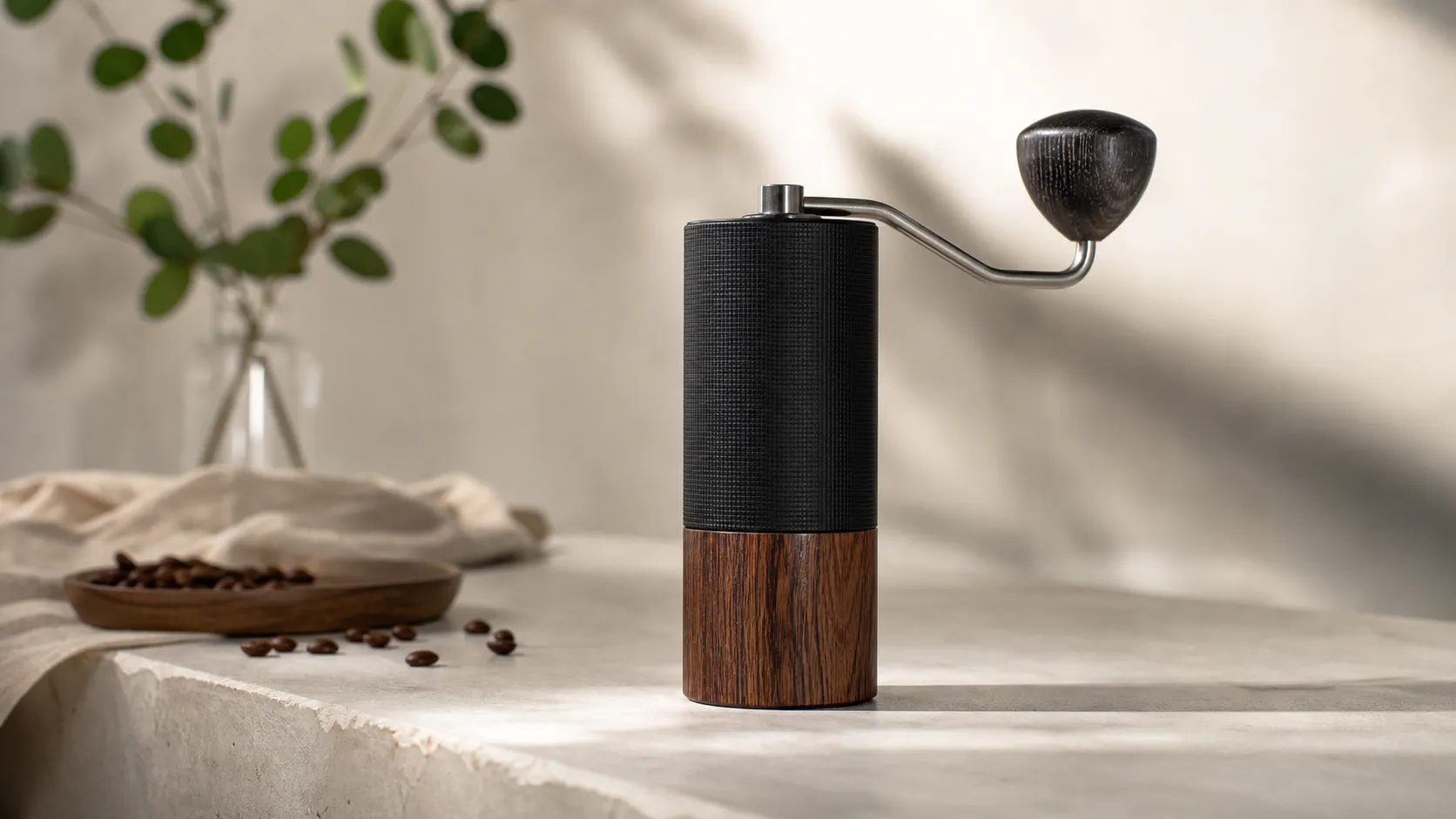
Comandante C40 MK4 Manual Coffee Grinder — 2026 Review
A premium manual grinder known for exceptional build and grind consistency — ideal for serious home baristas, but heavy and pricey for casual users or travel.
 Kitchen & Appliances
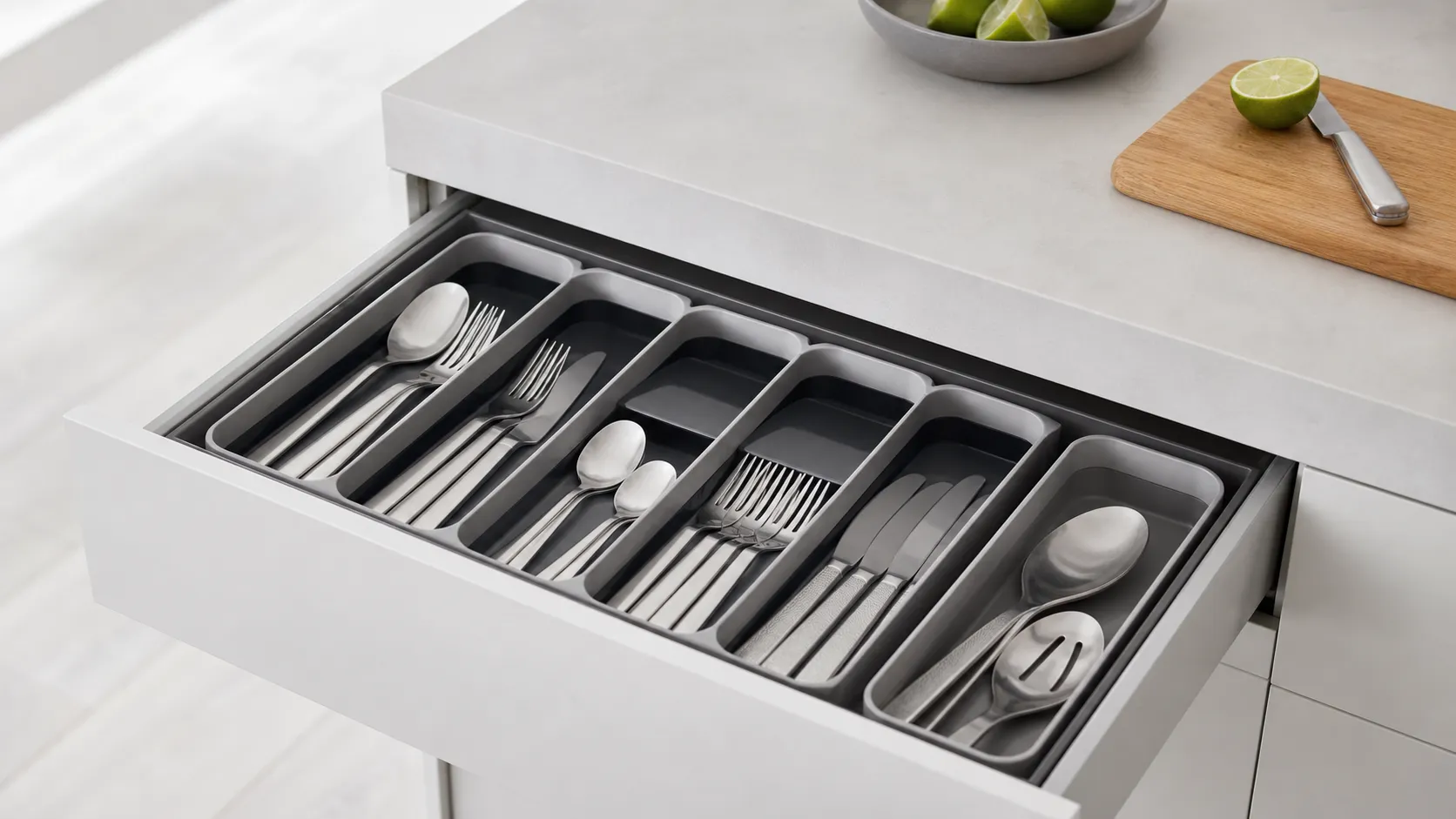
Joseph Joseph DrawerStore Cutlery Organizer Review 2026
A slim, modern cutlery tray that maximizes shallow-drawer space. Great for tidy, small-kitchen organization—measure your drawer first and avoid if you store long utensils.
 Kitchen & Appliances
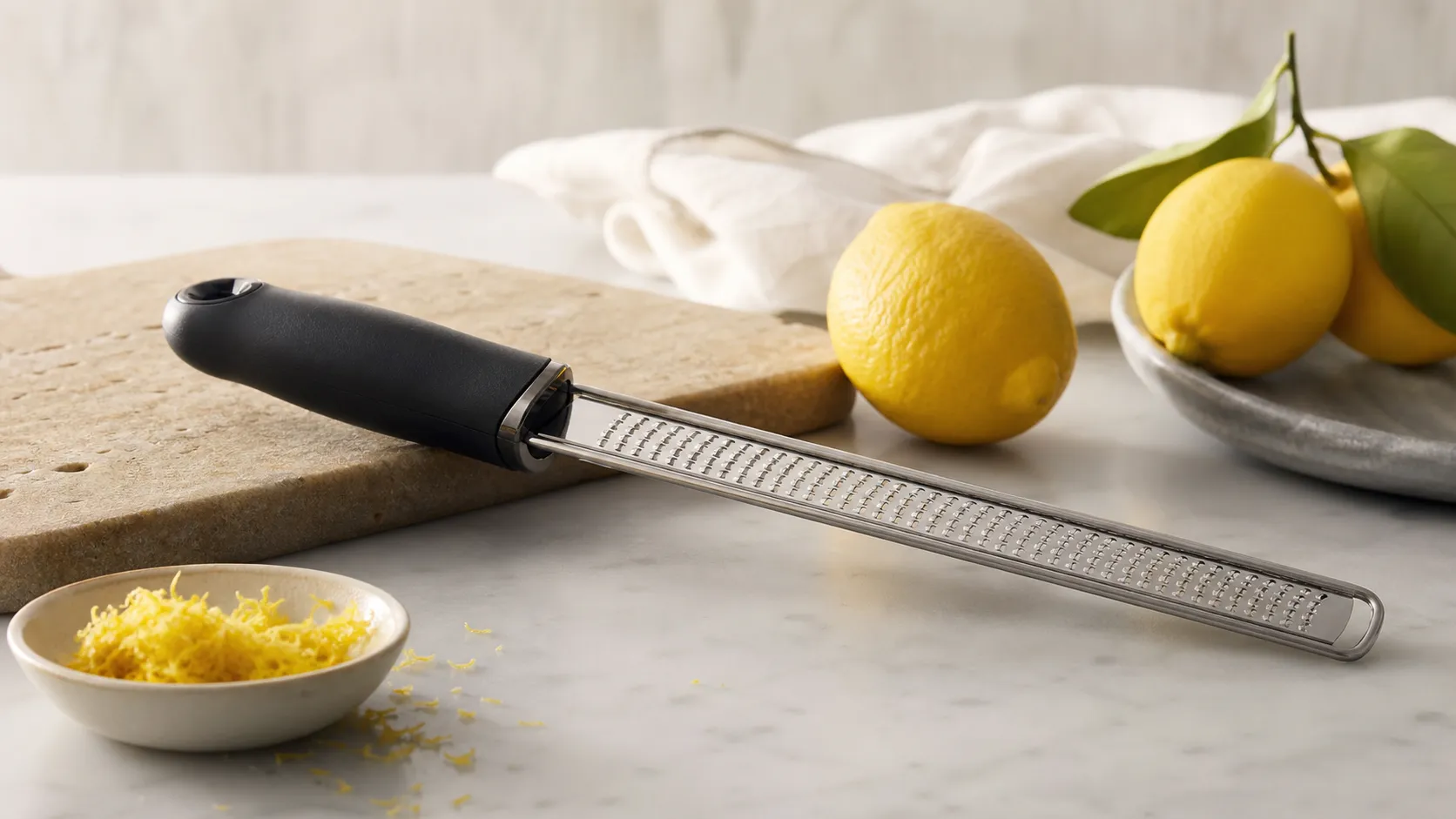
Microplane Premium Classic Zester/Grater — Review 2026
The Microplane Premium Classic is the go-to hand zester for precise, fluffy citrus zest and fine shavings. Sharp, compact, and great value—best for finishing, not bulk grating.