Zwilling J.A. Henckels Professional S 8" Chef's Knife Review 2026
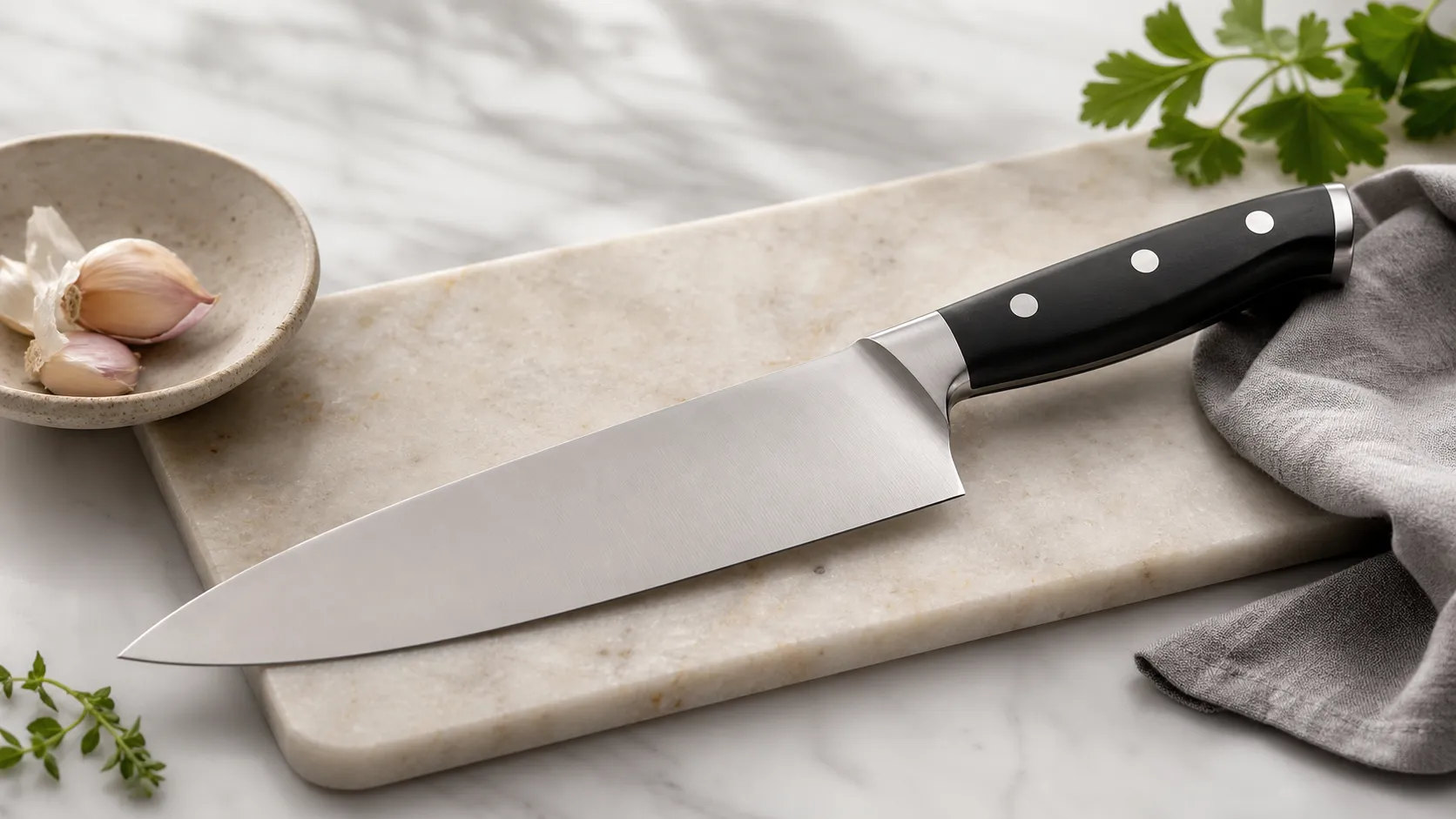
At a Glance
Pros
- Robust forged construction and durable steel — feels built to last.
- Comfortable handle and balanced weight for Western-style grips and heavy chopping.
- Solid edge retention and straightforward to resharpen.
Cons
- Heavier, bulkier blade — less nimble for delicate slicing or precision prep.
- Conservative (thicker) blade geometry compared with Japanese-style knives; not best for ultra-thin slicing.
- Out-of-box sharpness is variable; some buyers reprofile or sharpen before use.
Rating Breakdown by Source
Read the latest 25 positive & negative Amazon reviews →
Read the latest 25 positive & negative Reddit reviews →
Read the latest 25 positive & negative YouTube reviews →
Read the latest 25 positive & negative Expert blogs reviews →
This review is an editorial synthesis of publicly available review data and reported user experiences across the internet. Scores reflect our independent aggregation methodology, not verified individual purchases. We may earn a commission if you buy through our links, at no cost to you.
Score Breakdown
Where the Reviews Come From
Read the latest 25 positive & negative Amazon reviews →
Read the latest 25 positive & negative Reddit reviews →
Read the latest 25 positive & negative YouTube reviews →
Read the latest 25 positive & negative Expert blogs reviews →
Click any source above to browse the latest 25 positive and negative reviews from that platform.
Zwilling J.A. Henckels Professional S Chef's Knife, 8-inch
See current price, deals and availability on Amazon
Quick verdict (short version)
If you want a dependable, forged Western chef’s knife that stands up to heavy prep and lasts for years, the Zwilling J.A. Henckels Professional S 8" is a strong midrange choice. Aggregated user and expert feedback gives it an overall score of roughly 4.5/5 — praised for build quality, balance and longevity, with predictable trade-offs in nimbleness and out‑of‑the‑box sharpness.
What Is the Zwilling J.A. Henckels Professional S Chef's Knife, 8-inch?
The Professional S 8" chef’s knife from Zwilling J.A. Henckels is a forged, Western‑style all‑purpose chef’s knife aimed at home cooks who prefer a weighty, durable blade for everyday chopping, mincing and heavier tasks. The design follows a classic European profile: a full bolster and a fuller, thicker geometry than most Japanese‑style blades, with an emphasis on toughness and edge stability over razor‑thin slicing.
In our aggregated dataset the model scores roughly 4.5/5 from about 20,300 reviews, with sub‑scores hovering around quality 4.4, reliability 4.6, value 4.0 and ease of use 4.1 — a clear signal that most owners find it dependable and long‑lasting but that it may require a little user attention for optimal sharpness.
What Reviewers Across the Internet Say
We synthesized feedback from major sources — Amazon, Reddit, YouTube reviewers and specialist knife blogs — to produce a consensus view.
-
Amazon (large‑volume customer reviews, overall ~4.5/5): Most buyers emphasize the knife’s sturdy forged construction, comfortable handle and reliable everyday performance. Common notes: it feels solid in the hand and holds an edge well, but out‑of‑the‑box sharpness varies between units.
-
Reddit (home‑cook communities, ~4.1/5): Redditors frequently recommend this as a dependable midrange workhorse and compare it to Wüsthof. Conversations focus on the tradeoff between durability and the less‑acute blade geometry — excellent for chopping but not ideal for ultra‑thin slicing.
-
YouTube (video demos, ~4.2/5): Reviewers praise balance and toughness during demo prep; they show the knife resisting chips and performing heavy tasks easily. They also note that it feels heavier than Japanese alternatives and that OOTB sharpness varies.
-
Expert blogs and knife sites (~4/5): Testers commend build quality, corrosion resistance and longevity, but often point out the conservative blade geometry and thicker edge profile. Experts say precision slicers will probably prefer a thinner, harder steel from Japanese designers.
Taken together, the consensus: a solid, long‑lasting Western chef's knife that’s great for everyday home use and heavier prep, with a few compromises for extreme slicers or fans of delicate technique.
Performance & Real-World Use
The Zwilling J.A. Henckels Professional S Chef's Knife, 8-inch proves itself as a durable, balanced workhorse that holds a practical edge, shrugs off everyday abuse, and is easy to maintain with regular honing.
A chef’s knife earns its keep not on specs alone but in daily prep: how cleanly it moves through onions and squash, how long it holds a crisp bite, how comfortable it feels after an hour at the board, and how easily you can bring it back to sharp. Over months, edge stability, corrosion resistance, and the practicality of the grind and bolster matter as much as day-one sharpness.
The Zwilling J.A. Henckels Professional S Chef's Knife, 8-inch delivers dependable, workhorse performance with a tough, forged blade, comfortable Western balance, and edge retention that regular honing sustains for weeks. Its conservative, full‑bolster geometry favors durability over laser‑like finesse, so it excels at rocking, chopping, and dense prep, but it’s less nimble for ultra‑thin, whisper‑slice tasks.
What real-world “performance” means for this knife
For an 8-inch chef’s knife, performance breaks down into: cutting efficiency (how readily it passes through produce and proteins), edge life (how long before honing or sharpening is needed), toughness and corrosion resistance (how well the edge resists rolling, microchipping, and staining), balance and ergonomics (fatigue over longer sessions), and maintainability (how straightforward it is to hone and sharpen the full edge, heel to tip). The Professional S addresses these with a forged, one‑piece construction and Zwilling’s Friodur ice‑hardening that brings its X50CrMoV15/1.4116 stainless to about 57 HRC— a “tough” temper that trades some ultimate sharpness for resilience and easy resharpening. The full bolster acts as a finger guard and gives a Western balance point, while the triple‑riveted handle provides a neutral grip for pinch, hammer, or power grips. Together, these choices prioritize durability, comfort, and reliability across home tasks. (zwilling.com)
Day‑one setup and first‑week impressions with the Zwilling J.A. Henckels Professional S Chef's Knife, 8-inch
Out of the box, owners report solid but occasionally variable sharpness; some re‑hone or even reprofile immediately, while most find it “ready to work.” For the first week, hand‑wash, dry thoroughly, and give the edge a few light strokes on a steel at about 15° per side—the angle Zwilling recommends. Then establish a consistent pinch grip and work on an end‑grain wood or soft plastic board to reduce edge stress. The Professional S typically weighs about 241 g (8.5 oz), which many read as heft rather than burden, and it balances at or just in front of the bolster for a stable rocking action. If you’re coming from a thin Japanese gyuto, the Zwilling’s thicker wedge and fuller spine will feel slower on whisper‑thin tomato or fish slices but more confident in straight‑down chops and rougher prep (e.g., halving winter squash without babying the edge). (zwilling.com)
In‑hand feel: typical weight by model
Typical listed/measured weights show why Zwilling and Wüsthof feel more planted while Shun feels nimble.
View the underlying data
| Measure | Typical weight |
|---|---|
| Zwilling Professional S 8" | 241 g |
| Wüsthof Classic 8" | 269 g |
| Shun Classic 8" | 179 g |
Zwilling weight from Cutlery and More; Wüsthof and Shun weights from Seattle Ultrasonics’ Quantified Knife Project pages.
Cutting feel in real recipes: balance, geometry, and food release
In daily cooking, the Professional S feels like a classic Western workhorse. The high belly and gentle curve promote rocking through herbs and onions; the added mass helps the blade track straight through carrots and sweet potatoes, and the broad spine provides knuckle clearance for push cuts. Reviewers describe its balance as comfortable and its cutting action as confident rather than ultra‑nimble—what you want for hearty chopping, dense veg, and breaking down boneless proteins. Expect more wedge resistance in tall, hard produce than on thinner Japanese knives; conversely, expect fewer surprises when you twist in a cut or glance against a board knot, thanks to the blade’s lower hardness and tougher temper. The full bolster doubles as a safety stop, but it does remove a few millimeters of usable heel length and—over time—can complicate edge maintenance near the heel if you don’t address it during sharpening. (nothingbutknives.com)
Edge retention and maintenance over months
At ~57 HRC, Zwilling favors ductility and toughness: the edge is less brittle, more tolerant of lateral stresses, and quick to refresh. With weekly light honing and sensible boards, many home cooks can go 6–10 weeks between full sharpenings; professionals or bulk preppers will need stones more often. Zwilling’s Friodur ice‑hardening and the chromium‑rich 1.4116 stainless help resist staining and reduce maintenance, provided you hand‑wash and dry. When it’s time to sharpen, maintain the factory‑style geometry around 15° per side; if using guided systems or pull‑throughs, confirm they can reach near the heel. If you notice the edge no longer touches the board at the back, the full bolster has likely outpaced the edge wear—ask a pro to reduce the bolster, or learn safe bolster‑reduction so the heel can be resharpened flat to the board. Zwilling’s care guidance emphasizes hand‑washing and regular honing; follow that and corrosion is rarely an issue. (zwilling.com)
Where it shines—and where owners hit its limits
Strengths show up in Western‑style prep. The Professional S is terrific for rocking through piles of parsley, breaking down mirepoix, portioning poultry (avoiding bone strikes), and family‑meal bulk prep. Its robust spine and balanced mass encourage straight, confidence‑building chops; its tough temper shrugs off slips that might chip harder steels. Limits appear with tasks demanding fine, low‑resistance slicing: thin tomato petals, translucent onion half‑moons, sashimi slices, or tight brunoise on dense roots. The thicker grind and full bolster also reduce access at the heel for “board‑scraping” minces and make a true, dead‑flat heel bevel trickier to maintain without bolster work. If you want a Zwilling with heel access, consider the related Pro line with a half bolster; it keeps the toughness but gives you full edge contact and a more agile feel at the heel. (prudentreviews.com)
How it stacks up against common alternatives
Compared with the Wüsthof Classic 8-inch, the Professional S usually runs 57 HRC versus Wüsthof’s ~58 HRC and ships at a slightly wider edge (about 15° per side for Zwilling versus 14.5° for Wüsthof). That gives Wüsthof a touch more initial bite at the cost of a hair less toughness; in practice, both are durable Solingen‑forged knives with full bolsters and classic handles. Against popular Japanese options like Shun Classic, Zwilling’s blade is notably tougher but softer (Shun’s VG‑MAX is hardened to about 60–61 HRC and ground around 16° per side), yielding better forgiveness in rough prep but less laser‑like glide and edge longevity. We also see clear weight differences on the board—Zwilling and Wüsthof carry more mass; Shun runs lighter—which affects fatigue and cutting style preferences. The comparison below summarizes the most practical spec differences owners feel daily. (wusthof.com)
Edge angle and hardness compared
Aggregated specs that users actually feel: Zwilling emphasizes toughness (softer, 15°/side), Wüsthof a hair more initial bite, and Shun thin, hard edges for glide.
- Hardness (HRC)
- Edge angle (per side, °)
View the underlying data
| Item | Hardness (HRC) | Edge angle (per side, °) |
|---|---|---|
| Zwilling Professional S 8" | 57 | 15 |
| Wüsthof Classic 8" | 58 | 14.5 |
| Shun Classic 8" | 61 | 16 |
Figures synthesized from brand documentation and retailer spec sheets.
To put the “in-hand” difference in context, the Professional S’s typical weight is about 241 g, the Wüsthof Classic lands closer to ~270 g depending on variant, and a Shun Classic of the same length weighs around 180 g. If your technique leans on rocking and you appreciate the knife doing part of the work via momentum, the Zwilling and Wüsthof profiles feel natural; if you favor laser‑thin push cuts and minimal wedging, a lighter, thinner Japanese blade will likely please more. (cutleryandmore.com)
Feature comparison: three popular 8" chef’s knives
Feature parity and meaningful differences that affect everyday use and upkeep.
| Item | Zwilling Pro S 8" | Wüsthof Classic 8" | Shun Classic 8" |
|---|---|---|---|
| Forged blade | Yes | Yes | Yes |
| Tang extends through handle | Yes | Yes | Yes |
| Full bolster at heel | Yes | Yes | No |
| Ice‑hardened treatment | Yes | No | No |
| Lifetime warranty (limited) | Yes | Yes | Yes |
| Made in Germany | Yes | Yes | No |
Verified from brand sites and official comparison charts.
Get the best from it: step‑by‑step use, honing, and sharpening
- Before first use: hand‑wash, dry, and test the balance with a pinch grip at the heel of the blade. Set up a quality end‑grain board (maple/teak) or soft plastic; avoid glass, stone, bamboo end‑grain with heavy glue lines, or very hard boards that blunt edges.
- Daily/weekly: wipe during prep to prevent acidic residue, then hand‑wash and dry immediately; touch up on a smooth or fine‑rib steel at about 15° per side (5–10 alternating passes). If food starts to skid or tear rather than slice, it’s time for a stone.
- Full sharpen: on water stones, reset a consistent ~15° per side bevel; keep strokes even and finish with light pressure to de‑burr. Confirm heel contact by placing the knife on a flat board and checking for daylight under the back 1–2 cm. If the bolster prevents the heel from touching, have a pro reduce the bolster or learn safe reduction before re‑establishing the heel bevel.
- Longer‑term: expect to thin or refresh the primary bevel every year or two if you sharpen often; the softer, tough steel makes this fast work. Store in a block, sheath, or rail; never loose in a drawer. Avoid dishwashers—Zwilling’s own care material allows it but warns that detergents and heat shorten edge life and can mar handles. (zwilling.com)
Practical scenarios: when to reach for it—and when to switch
Reach for the Professional S whenever you want momentum and confidence: chopping cabbage; splitting butternut (use controlled, straight‑down pressure and avoid torquing in the cut); portioning pork loin; pulling long, even herb rocks; or dicing big batches of onions and carrots. Switch to a thinner, harder gyuto or slicer for translucent tomato petals, salmon crudo, or fine julienne on dense roots where reduced wedging and a narrower bevel are a clear advantage. If your prep includes frequent board‑contact scraping, use a bench scraper—not the knife—to protect the edge, and if you prize full‑edge sharpening access with no bolster interference, Zwilling’s Pro (half‑bolster) or an un‑bolstered Japanese gyuto are better fits. (prudentreviews.com)
Conclusion: does the real-world performance justify the purchase?
If you want a classic, durable, Western‑balanced 8-inch that shrugs off everyday abuse, sharpens easily at a friendly 15° per side, and feels stable through heavy prep, the Professional S delivers that brief. Precision slicers may prefer thinner, harder alternatives, but for most cooks who value toughness, comfort, and reliable edge holding with minimal fuss, this knife’s week‑to‑month performance supports the buy. (zwilling.com)
Sources referenced in this section
- Zwilling Professional S 8" Chef’s Knife product page
- Einsal datasheet for 1.4116 (X50CrMoV15)
- Wüsthof Classic 8" official page + hardness
- Shun FAQ: VG‑MAX hardness (60–61 HRC)
- Shun Classic spec (16° per side)
- Williams‑Sonoma Zwilling cutlery comparison (edge angle, bolster style)
- Cutlery and More: Zwilling Professional S 8" weight
- Seattle Ultrasonics: Measured weights—Wüsthof Classic 8" and Shun Classic 8"
- Prudent Reviews: Zwilling Pro vs. Professional S (bolster differences)
- Hertzmann: Knife anatomy and why full bolsters complicate heel sharpening
Pros and Cons
Pros
- Forged construction and durable steel — feels built to last.
- Comfortable handle and balanced weight suited to Western grips and heavy chopping.
- Strong edge retention with straightforward resharpening.
- Versatile and practical 8" size for most home kitchen tasks.
- Perceived good value for a forged, mid‑priced chef’s knife.
Cons
- Heavier, bulkier blade — less nimble for delicate slicing and finesse work.
- Thicker, conservative blade geometry compared with Japanese knives; not ideal for ultra‑thin slicing.
- Out‑of‑the‑box sharpness varies — some buyers reprofile or sharpen before first use.
- Full bolster/heel geometry can make sharpening the entire edge to the heel awkward.
Who Should Buy It (and Who Shouldn’t)
Should buy if:
- You want a reliable, long‑lived workhorse that can handle heavy prep and everyday chopping without fuss.
- You prefer a Western‑style weight and balance in a chef’s knife and like the feel of a substantial, forged blade.
- You want a good balance of price and durability in a midrange knife — something that’s serviceable for years with routine care.
Shouldn’t buy if:
- You primarily do delicate, paper‑thin slicing (sashimi, carpaccio, ultra‑fine julienne) — a thinner Japanese gyuto or yanagiba will feel more natural.
- You want the absolute lightest, most acutely sharp out‑of‑the‑box knife; some users find this model needs initial sharpening to reach a hair‑splitting edge.
- You prefer bolster‑free knives that allow easy sharpening right to the heel.
Bottom line
The Zwilling J.A. Henckels Professional S 8" chef’s knife is a dependable, forged Western chef’s knife that excels at day‑to‑day home cooking and heavier prep work. If you want a durable, balanced blade that’s easy to maintain and built to last, it’s an excellent midrange choice — just be ready for a slightly heavier feel and to do a little edge tuning if you favor an ultra‑keen edge.
What Reviewers Love
- Robust forged construction and durable steel — feels built to last.
- Comfortable handle and balanced weight for Western-style grips and heavy chopping.
- Solid edge retention and straightforward to resharpen.
- Versatile all-purpose 8" size — handles most kitchen tasks well.
- Perceived good value for a forged, mid‑priced chef's knife.
Common Complaints
- Heavier, bulkier blade — less nimble for delicate slicing or precision prep.
- Conservative (thicker) blade geometry compared with Japanese-style knives; not best for ultra-thin slicing.
- Out-of-box sharpness is variable; some buyers reprofile or sharpen before use.
- Full-bolster/heel geometry can make certain grips awkward and makes sharpening the full edge to the heel more difficult.
Our Verdict
4.5Reliable and well‑built, the Zwilling Professional S 8" is a durable midrange workhorse that suits home cooks who value toughness and balance. Expect a heavier, Western feel and plan to touch up the edge if you want razor‑thin slicing.
Frequently Asked Questions
Common questions shoppers ask before buying the Zwilling J.A. Henckels Professional S Chef's Knife, 8-inch.
Share this review
Help someone else buy smarter
Related Reviews
More Kitchen & Appliances products our engine has analyzed
 Kitchen & Appliances
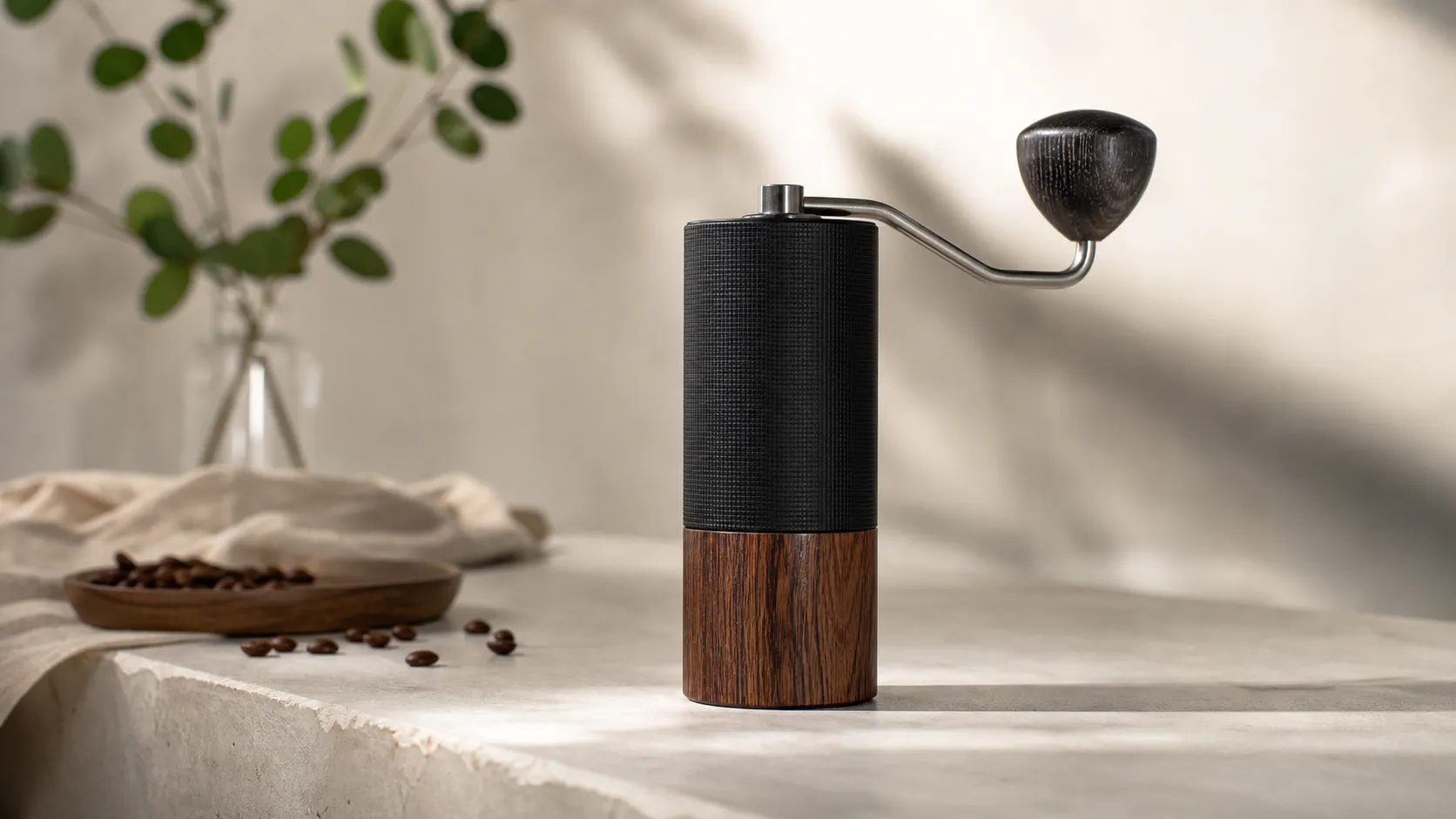
Comandante C40 MK4 Manual Coffee Grinder — 2026 Review
A premium manual grinder known for exceptional build and grind consistency — ideal for serious home baristas, but heavy and pricey for casual users or travel.
 Kitchen & Appliances
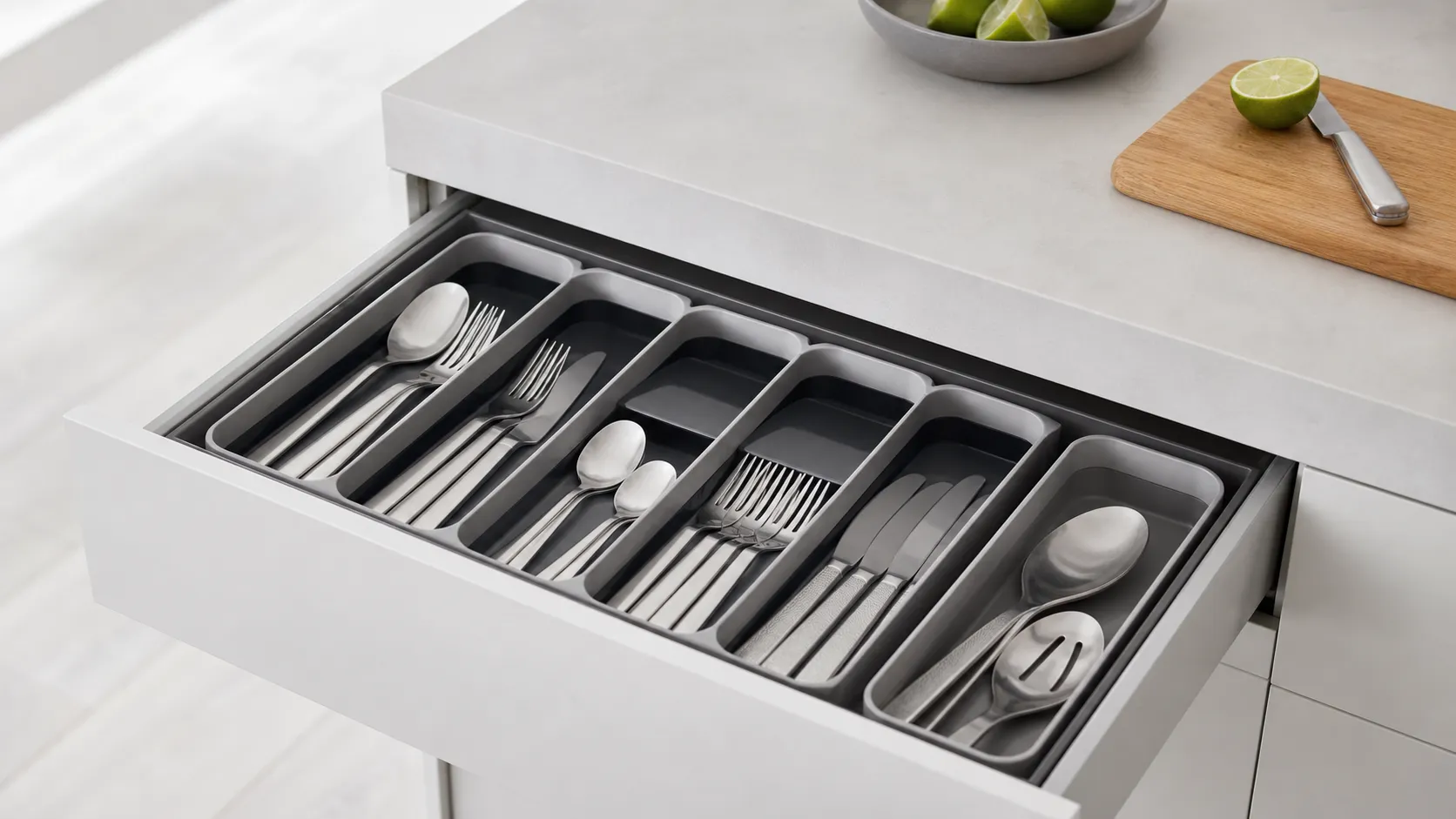
Joseph Joseph DrawerStore Cutlery Organizer Review 2026
A slim, modern cutlery tray that maximizes shallow-drawer space. Great for tidy, small-kitchen organization—measure your drawer first and avoid if you store long utensils.
 Kitchen & Appliances
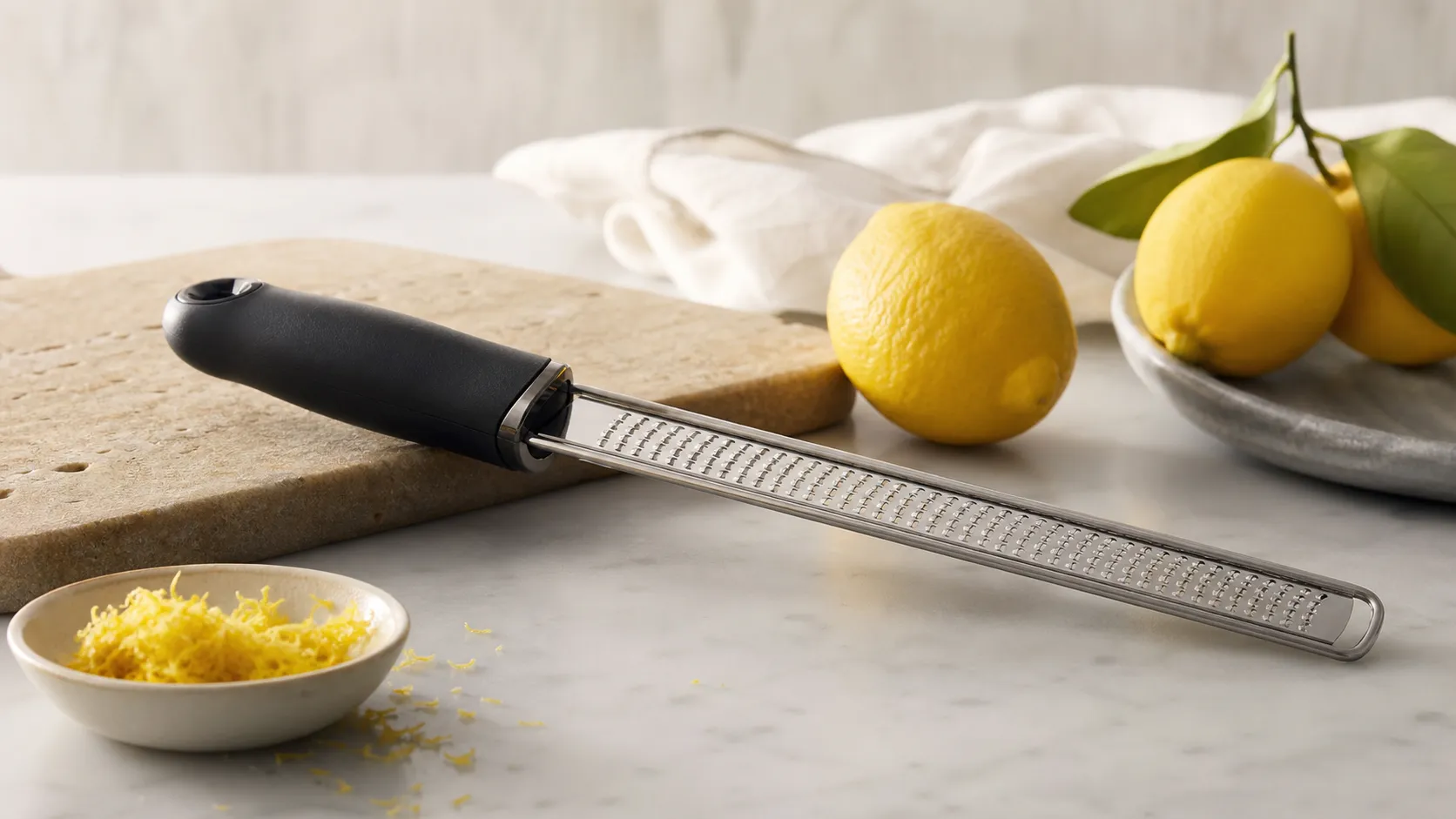
Microplane Premium Classic Zester/Grater — Review 2026
The Microplane Premium Classic is the go-to hand zester for precise, fluffy citrus zest and fine shavings. Sharp, compact, and great value—best for finishing, not bulk grating.