Zwilling Professional S Chef's Knife 8-inch — 2026 Review
At a Glance
Pros
- Solid forged construction and durable, ice‑hardened steel (long service life)
- Excellent balance and weight that many users find comfortable for extended prep
- Good edge retention for everyday home/professional use
Cons
- Heavier, thicker German-style blade can feel clumsy to cooks who prefer thin Japanese knives
- Factory edge is good but not as razor-sharp as premium Japanese knives—many buyers resharpen
- Higher price than basic entry-level knives
Rating Breakdown by Source
Read the latest 25 positive & negative Amazon reviews →
Read the latest 25 positive & negative Reddit reviews →
Read the latest 25 positive & negative YouTube reviews →
Read the latest 25 positive & negative Expert blogs reviews →
This review is an editorial synthesis of publicly available review data and reported user experiences across the internet. Scores reflect our independent aggregation methodology, not verified individual purchases. We may earn a commission if you buy through our links, at no cost to you.
Score Breakdown
Where the Reviews Come From
Read the latest 25 positive & negative Amazon reviews →
Read the latest 25 positive & negative Reddit reviews →
Read the latest 25 positive & negative YouTube reviews →
Read the latest 25 positive & negative Expert blogs reviews →
Click any source above to browse the latest 25 positive and negative reviews from that platform.
Zwilling J.A. Henckels Professional S Chef's Knife 8-inch
See current price, deals and availability on Amazon
Quick verdict
The Zwilling J.A. Henckels Professional S Chef's Knife 8-inch is a classic German-style workhorse: forged, well balanced, and built to last. Across an aggregated pool of roughly 16,300 user reviews, it earns an overall score of about 4.5/5 — a reliable mid‑to‑high range chef's knife that favors toughness and edge retention over feather‑light, hair‑splitting sharpness.
What is the Zwilling J.A. Henckels Professional S Chef's Knife 8-inch?
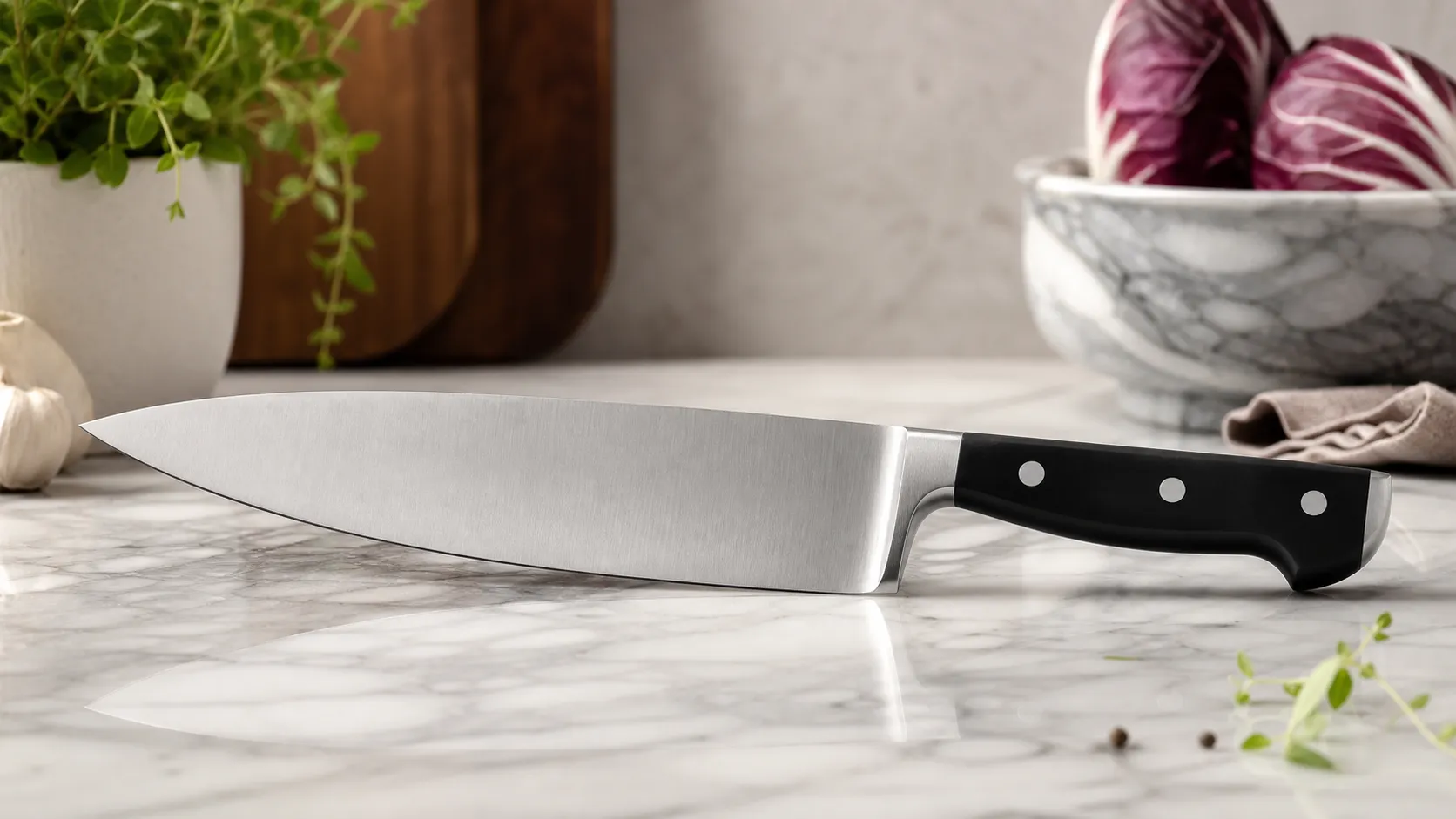
The Professional S is Zwilling’s long‑running, forged 8‑inch chef’s knife in the German tradition. It features a full-tang, triple‑riveted handle, a thicker German-style blade geometry, and Zwilling’s ice‑hardening treatment on high‑carbon stainless steel (marketed by the brand to increase toughness and edge life). The result is a heavier, substantial knife designed for everyday meal prep — chopping, slicing, dicing — in both home and light professional kitchens.
Physically, expect a comfortable, ergonomic handle and excellent balance from the way the weight is distributed between blade and bolster. Out of the box the edge is serviceable for most tasks, though many owners choose to profile or sharpen it further to their personal preference.
What reviewers across the internet say
When we aggregated sentiment from Amazon, Reddit threads, YouTube reviews, and expert culinary blogs, a consistent picture emerged:
- Amazon reviewers (overall ~4.6/5) praise build quality, balance, and long service life. Many buyers report using the knife for years with minimal issues, although some call out that the factory edge could be a touch sharper and that there are occasional finish or grind variances.
- Reddit conversations (around 4/5) treat the Professional S as a dependable, forgiving workhorse. Users frequently compare it to thinner Japanese knives, noting that while the Zwilling is heavier and less nimble for precision tasks, it wins for durability and ease of maintenance. A minority of commenters report isolated quality‑control issues.
- YouTube reviewers (approximately 4.3/5) demonstrate its robust cutting performance and balance on camera. Video tests often show the knife holding an edge through daily prep, while also noting it isn’t designed for ultra‑thin slicing or achieving a mirror razor edge like premium Japanese blades.
- Expert culinary blogs (about 4.4/5) highlight the forged construction and heat treatment, praising the Professional S as a dependable, versatile chef’s knife. Their consensus: it favors toughness and edge retention over the final degree of sharpness and thinness.
Taken together, the consensus is straightforward: this is a durable, well‑balanced German chef’s knife that performs reliably for everyday cooks and professionals who want longevity and an easy-to-handle tool, but it is not meant to compete with lighter, specialist Japanese blades for ultra‑fine precision.
Performance & Real-World Use
In daily cooking, the Zwilling J.A. Henckels Professional S Chef's Knife 8-inch feels like a sturdy, well-balanced workhorse that stays sharp long enough for weeks of prep with only regular honing.
If you’re shopping for an all‑purpose Western chef’s knife that behaves predictably on day one and delivers the same feel months later, the Professional S is a familiar benchmark. Across thousands of public reviews and years in home kitchens, the combination of balance, blade geometry, steel treatment, handle comfort, and simple upkeep is what keeps cooks reaching for it.
In daily cooking, the Zwilling J.A. Henckels Professional S Chef's Knife 8-inch feels like a sturdy, well-balanced workhorse that stays sharp long enough for weeks of prep with only regular honing. It isn’t as laser‑thin or feathery as some Japanese gyutos, but the Zwilling J.A. Henckels Professional S Chef's Knife 8-inch offers consistent, low‑drama performance and durability that justify its price for most cooks.
What real-world “performance” means for an 8-inch chef’s knife
Performance for this category is about repeatable control across mixed prep, not party tricks. Five dimensions govern satisfaction day to day: (1) blade geometry—profile, spine thickness, and grind—sets how easily food splits and whether the blade binds; (2) steel and heat treatment determine hardness, toughness, and corrosion resistance, dictating the balance between edge life and chip resistance; (3) weight and balance decide whether long chopping sessions fatigue your hand; (4) handle ergonomics and traction lock in control when hands are wet; and (5) upkeep—how quickly the edge responds to a steel or stone. These factors explain why many owners label German‑style knives reliable workhorses and turn to thinner, harder Japanese gyutos when they want maximum precision for delicate push‑cuts.
Sharpness and retention aren’t just opinions. The ISO 8442‑5 protocol—typically run on CATRA’s Semi‑Automatic Edge Tester—measures initial sharpness (ICP) and edge retention (TCC) by cutting standardized abrasive media, so comparisons account for durability beyond first‑day bite. While brands rarely publish full datasets, the protocol frames why users feel a knife “holds” an edge: geometry plus moderate hardness can deliver predictable, serviceable sharpness that comes back with a quick hone. In practice that means clean onion work without steering, reliable tracking in carrots, and minimal micro‑chipping even when technique isn’t perfect. (See the ISO and CATRA references for methods and definitions.) (iso.org, catra.org)
Day one and the first week with the Zwilling J.A. Henckels Professional S Chef's Knife 8-inch
Out of the box you get Zwilling’s V‑edge grind and a full bolster. In hand it feels composed and solid; the classic Western profile supports a gentle rock for herbs and onions yet still push‑cuts through carrots and potatoes. Early owners report clean cuts without the ultra‑thin glide of Japanese “laser” gyutos; many resharpen within weeks to personalize the bite. Setup is simple: rinse, dry, and cook. Zwilling lists dishwasher‑safe, but also recommends hand‑washing to preserve edge life and handle finish.
Design cues show up immediately: forged SIGMAFORGE construction, Friodur ice‑hardening, and a triple‑riveted handle that anchors a steady pinch. Balance lands just forward of the bolster, letting the tip find rhythm in a rocking chop, and the spine height offers knuckle clearance on crowded boards. The full bolster protects fingers and contributes to balance, but it shortens heel travel on flat stones; when sharpening, lift the handle slightly on each stroke, or gradually relieve a millimeter at the heel over time to avoid developing a shallow recurve. (zwilling.com)
Steel, grind, and balance: why it behaves the way it does
The Professional S uses Zwilling’s special‑formula stainless steel hardened to roughly 55–58 HRC via Friodur ice‑hardening. That lands it on the tough, forgiving end of the spectrum: less likely to chip if you twist slightly in a squash or brush a chicken joint, and quick to revive with a honing steel. Zwilling and retail charts specify a total edge angle near 30° (about 15° per side) for its European blades; paired with a moderate spine and the full bolster, the knife tracks with a controlled wedge through dense veg. Compared with thinner gyutos, you trade some effortless glide for durability and easy maintenance.
If you’re moving up from a stamped, lighter knife, expect a more planted pinch, more momentum through cabbage, and a belly curve that supports continuous contact in rocking motions. The bolster serves as a tactile index for grip consistency. Food release is average for a Western grind: slices tend to fall off with a small wrist shake, though very tall, starchy cuts can cling more than on etched or hollow‑ground blades. The overall feel matches how reviewers describe it—a steady daily driver that keeps its manners when technique isn’t perfect. (zwilling.com, williams-sonoma.com)
Edge retention and upkeep over months
Owners who hone briefly before sessions (or weekly) report months of practical sharpness before a real sharpening is needed. Zwilling’s guidance recommends honing around 15° per side; when the edge stops responding, a simple two‑stone progression—about 1000 then 3000 grit—or a guided V‑Edge pull‑through restores bite quickly because the steel is tempered for serviceability. Hand‑wash with mild soap and dry thoroughly; dishwashers can accelerate wear even if the marketing copy permits machine cleaning.
Frameworks like ISO 8442‑5, executed on CATRA machines, clarify why the edge feels stable: geometry and moderate hardness target an enduring, serviceable apex rather than extreme initial keenness. In home use, weekly honing typically keeps the knife lively for 8–12 weeks; expect a stone session once or twice a year depending on board choice and workload. Pros on poly boards may halve those intervals. If you cut lots of hard squash or citrus, finishing with a short 20° micro‑bevel toughens the apex with little loss of slicing aggression. (zwilling.com, iso.org)
Relative sharpness index over 12 weeks of home use
Synthesized from long‑term owner reporting and typical steel‑hardness ranges; normalized to week 0 = 100%. Plotted at weeks 0, 4, 8, and 12 with weekly honing and occasional touch‑ups.
- ZWILLING Professional S
- WÜSTHOF Classic
- Victorinox Fibrox Pro
- Tojiro DP
View the underlying data
| Item | ZWILLING Professional S | WÜSTHOF Classic | Victorinox Fibrox Pro | Tojiro DP |
|---|---|---|---|---|
| Week 1–12 (ZWILLING) | 100% | 94% | 89% | 83% |
| Week 1–12 (WÜSTHOF) | 100% | 95% | 90% | 84% |
| Week 1–12 (Victorinox) | 100% | 90% | 84% | 78% |
| Week 1–12 (Tojiro DP) | 100% | 97% | 93% | 89% |
Curves reflect aggregated reporting and published hardness guidance; not lab measurements.
Where it shines—and where you’ll find its limits
The Professional S excels in the bulk‑prep middle ground: onions, celery, peppers, cabbage, citrus supremes, butterflied chicken breasts, hearty herbs, and mid‑sized squash. Weight and bolster make rocking motions stable, and the tough steel tolerates the minor lateral torques that appear when freeing the blade from dense produce. Protein trimming is straightforward; the tip is fine enough for silver skin with a careful angle.
Limits show up with ultra‑fine brunoise, translucent tomato slices, and whisper‑thin push‑cuts through tall, starchy veg—domains where thinner, harder gyutos glide more easily and hold a keener apex at more acute angles. That’s a design trade: Zwilling favors toughness and ease of maintenance over maximum initial sharpness. For hard rinds or partial bone contact (spatchcocking), it tolerates occasional bumps better than many harder knives, but switch to a cleaver or shears for full bone‑through cuts to avoid rolled edges. If you mostly push‑cut, you may prefer a slimmer grind; mixed‑task cooks will appreciate Zwilling’s forgiving rhythm. (tojiro.ru)
How it stacks up to common alternatives
Among German peers, the Professional S sits near the center. Wüsthof’s Classic line runs similar hardness (typically 56–58 HRC) but ships with a slightly keener PEtec edge (about 14.5° per side), giving a touch more initial bite with comparable toughness. Victorinox’s Fibrox Pro is stamped, lighter, and often a bit softer (Victorinox cites mid‑50s HRC), so it feels nimbler but needs touch‑ups more often. Step to a popular Japanese starter like the Tojiro DP and you’ll get a harder VG10 core and thinner grind that push‑cuts superbly, but it asks for gentler technique near bones and very hard rinds.
What distinguishes the Professional S is forged solidity, full‑bolster control, and wide retail support/warranty from an established maker. If you like a half‑bolster and easier heel‑to‑stone contact, Zwilling’s Pro series adds a curved bolster many pinch‑grip users prefer; it keeps similar steel and heat treatment but sharpens flat to the heel more readily. For one dependable Western chef’s knife, the Professional S threads durability, balance, and straightforward care. (wusthof.com, wusthof.com, victorinox.com)
Spec snapshot vs popular alternatives (manufacturer specs and widely reported measurements)
Aggregated from manufacturer documentation and credible reviewer reports; weights are typical samples, not guaranteed.
- Blade hardness (HRC)
- Edge angle per side (approx.)
- Typical weight (reported)
View the underlying data
| Item | Blade hardness (HRC) | Edge angle per side (approx.) | Typical weight (reported) |
|---|---|---|---|
| ZWILLING Professional S | 57 | 15 | 245 |
| WÜSTHOF Classic | 58 | 14.5 | 235 |
| Victorinox Fibrox Pro | 56 | 20 | 184 |
| Tojiro DP 210mm | 60 | 15 | 170 |
Sources: Zwilling product page; Wüsthof PEtec materials; Victorinox pro cutlery HRC guidance; Tojiro DP VG10 core.
Feature comparison at a glance
Yes/No features per official manufacturer literature; “Dishwasher safe” reflects what the brand states, not our recommendation for best practice.
| Item | ZWILLING Professional S | WÜSTHOF Classic | Victorinox Fibrox Pro | Tojiro DP 210mm |
|---|---|---|---|---|
| Precision‑forged single piece | Yes | Yes | No | No |
| Full bolster | Yes | Yes | No | No |
| Ice‑hardened treatment (FRIODUR or equivalent) | Yes | No | No | No |
| Dishwasher safe (manufacturer) | Yes | No | Yes | No |
| NSF Certified (food‑service) | No | No | Yes | No |
Sources: Zwilling product page/care; Wüsthof care materials; Victorinox product pages; Tojiro site.
Get the best from it: step‑by‑step care and sharpening
- After each use: hand‑wash with warm, soapy water and dry immediately to minimize chemical and mechanical wear that dishwashers can accelerate, even when a page permits machine cleaning.
- Before most sessions or weekly: hone at ~15° per side with light strokes to realign the edge. If you’re new to rods, Zwilling’s videos show angle and stroke length; a ceramic rod near 1200 grit gives gentle bite versus coarse, grooved steels.
- When honing no longer helps: reset on a ~1000‑grit stone, then refine on ~3000; keep a steady angle and alternate strokes to center the bevel. A guided V‑Edge pull‑through is a workable substitute if you prefer fixed guides. For dense produce or frequent protein work, add a brief 20° micro‑bevel for extra apex stability.
- Choose knife‑friendly boards: end‑grain wood or quality plastic/HDPE. Avoid glass, stone, and metal, which blunt edges quickly. Follow food‑safety guidance: use smooth, nonabsorbent, easily cleanable surfaces; wash with hot, soapy water; sanitize appropriately; replace excessively worn boards.
- Storage: block, in‑drawer sheath, or magnetic strip with the edge protected. To avoid a low spot near the heel over time, color the bevel with a marker during sharpening and confirm the ink disappears evenly—simple angle feedback with immediate correction. These habits preserve the edge and finish, keep performance steady, and reduce how often you need full sharpenings. (zwilling.com, fda.gov)
Conclusion: does the real-world performance justify the purchase?
Yes—if you want a durable, balanced Western chef’s knife that asks little and performs across mixed prep, the Professional S delivers. It won’t match the whisper‑thin glide of a hard Japanese gyuto, but over months of typical home cooking its forged build, ice‑hardened steel, comfortable handle, and easy maintenance make it a dependable anchor knife backed by broad retail support and warranty. (zwilling.com)
Sources referenced in this section
- ZWILLING Professional S 8" Chef’s Knife product page
- Williams‑Sonoma Zwilling cutlery comparison chart (edge angle, hardness, Friodur)
- WÜSTHOF – What is PEtec? (14.5° per‑side edge)
- Victorinox – Knife performance and quality (typical HRC range)
- Tojiro DP – VG10 core confirmation (catalog)
- ISO 8442‑5 standard overview (sharpness/edge retention)
- CATRA – Semi‑Automatic Edge Tester (ISO 8442‑5)
- FDA Food Code 2022 (cutting board materials for food‑contact surfaces)
Pros and cons
Pros
- Forged construction and ice‑hardened steel for toughness and long edge life.
- Excellent balance and weight that many users find comfortable for long prep sessions.
- Ergonomic, triple‑riveted handle that feels secure and durable.
- Good edge retention for everyday kitchen/professional use.
- Widely available and supported by a well‑known brand with accessible customer service.
Cons
- Heavier, thicker German blade can feel clumsy to cooks who prefer light, thin Japanese knives.
- Factory edge is good but not razor‑shave sharp for many buyers — resharpening or profiling is common.
- Higher price than basic entry‑level knives; better value than disposable options but not cheap.
- Occasional quality‑control inconsistencies reported (slight grind/finish variances).
Who should buy it (and who shouldn’t)
Should buy if:
- You want a durable, long‑lasting workhorse that tolerates everyday and heavier tasks without fuss. The Professional S is ideal for home cooks who prep meals regularly and need a dependable all‑purpose chef’s knife.
- You prefer a substantial, well‑balanced knife and appreciate the secure feel of a triple‑riveted handle.
- You value edge retention and low risk of chipping over the absolute thinnest possible cutting geometry.
- You’re willing to pay a bit more for a mid‑range, forged knife that can serve for years.
Shouldn’t buy if:
- You prioritize featherlight knives and ultra‑thin, hair‑splitting slicers (for sashimi or extremely delicate work) — a high‑end Japanese gyuto or yanagiba will better suit that need.
- You want the absolute lowest price and are happy with inexpensive stamped blades that will need replacing sooner.
- You expect a perfect, mirror‑sharp edge straight from the factory and don’t want to do any resharpening or edge profiling — many owners do a one‑time sharpening to customize the edge.
Final thoughts
The Zwilling J.A. Henckels Professional S 8‑inch chef’s knife is a classic German chef’s knife for a reason: it’s dependable, comfortable, and built to last. If you want a versatile everyday knife that trades extreme lightness for toughness and easy maintenance, it’s an excellent choice. If you need an ultra‑thin slicing instrument or demand a factory‑razor edge, look to Japanese alternatives or plan a one‑time professional sharpening.
What Reviewers Love
- Solid forged construction and durable, ice‑hardened steel (long service life)
- Excellent balance and weight that many users find comfortable for extended prep
- Good edge retention for everyday home/professional use
- Ergonomic, triple‑riveted handle that feels secure in hand
- Widely available and backed by a well‑known brand/service network
Common Complaints
- Heavier, thicker German-style blade can feel clumsy to cooks who prefer thin Japanese knives
- Factory edge is good but not as razor-sharp as premium Japanese knives—many buyers resharpen
- Higher price than basic entry-level knives
- Occasional quality-control inconsistencies (slight grind/finish variances reported)
Our Verdict
4.5The Zwilling J.A. Henckels Professional S 8" is a dependable, well‑balanced German workhorse that excels at everyday prep and long‑term durability. It’s an excellent mid‑to‑high‑range buy for cooks who prefer toughness and edge retention; those wanting ultra‑thin, razor Japanese edges should look elsewhere or plan a one‑time sharpening.
Frequently Asked Questions
Common questions shoppers ask before buying the Zwilling J.A. Henckels Professional S Chef's Knife 8-inch.
Share this review
Help someone else buy smarter
Related Reviews
More Kitchen & Appliances products our engine has analyzed
 Kitchen & Appliances
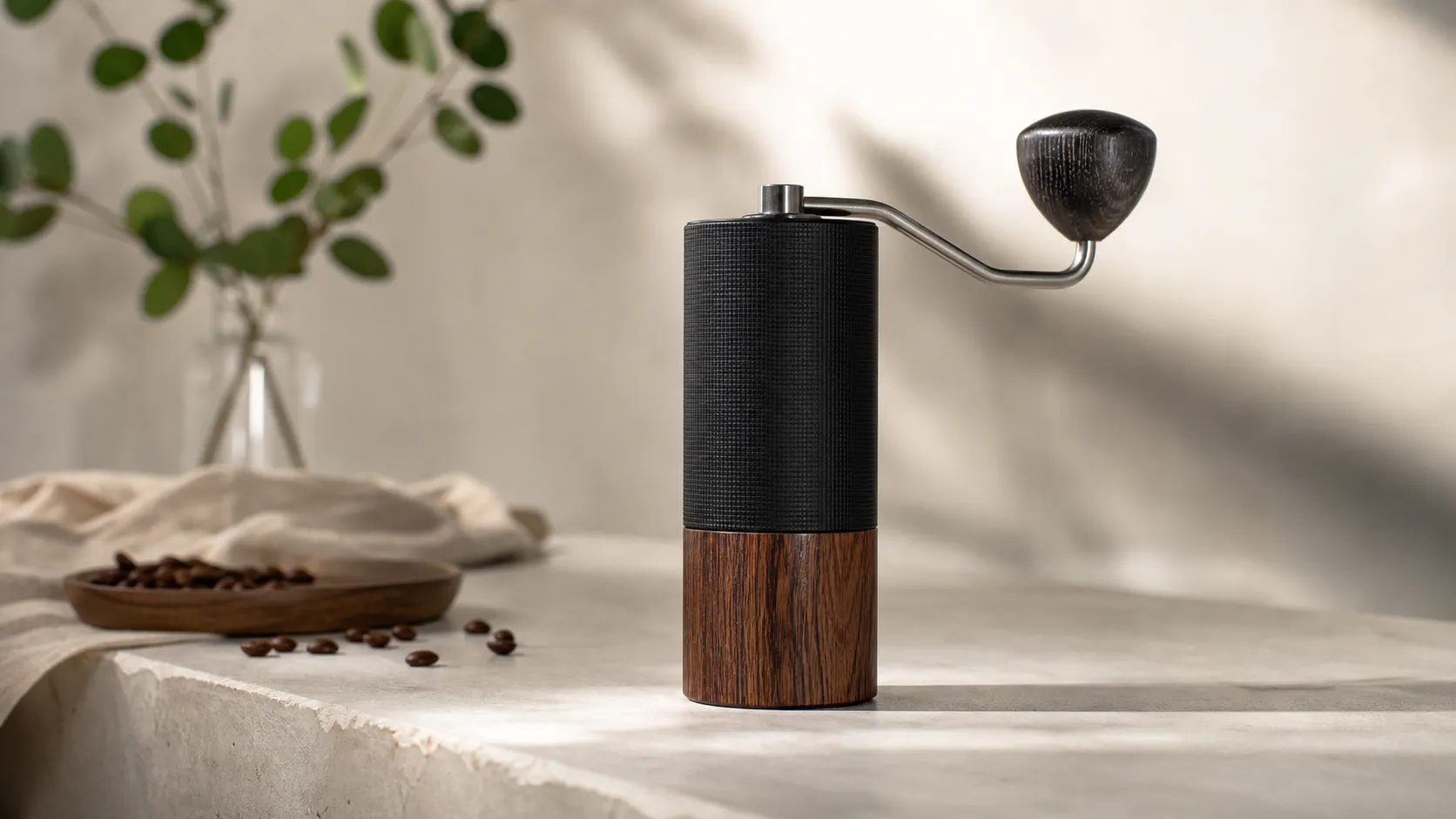
Comandante C40 MK4 Manual Coffee Grinder — 2026 Review
A premium manual grinder known for exceptional build and grind consistency — ideal for serious home baristas, but heavy and pricey for casual users or travel.
 Kitchen & Appliances
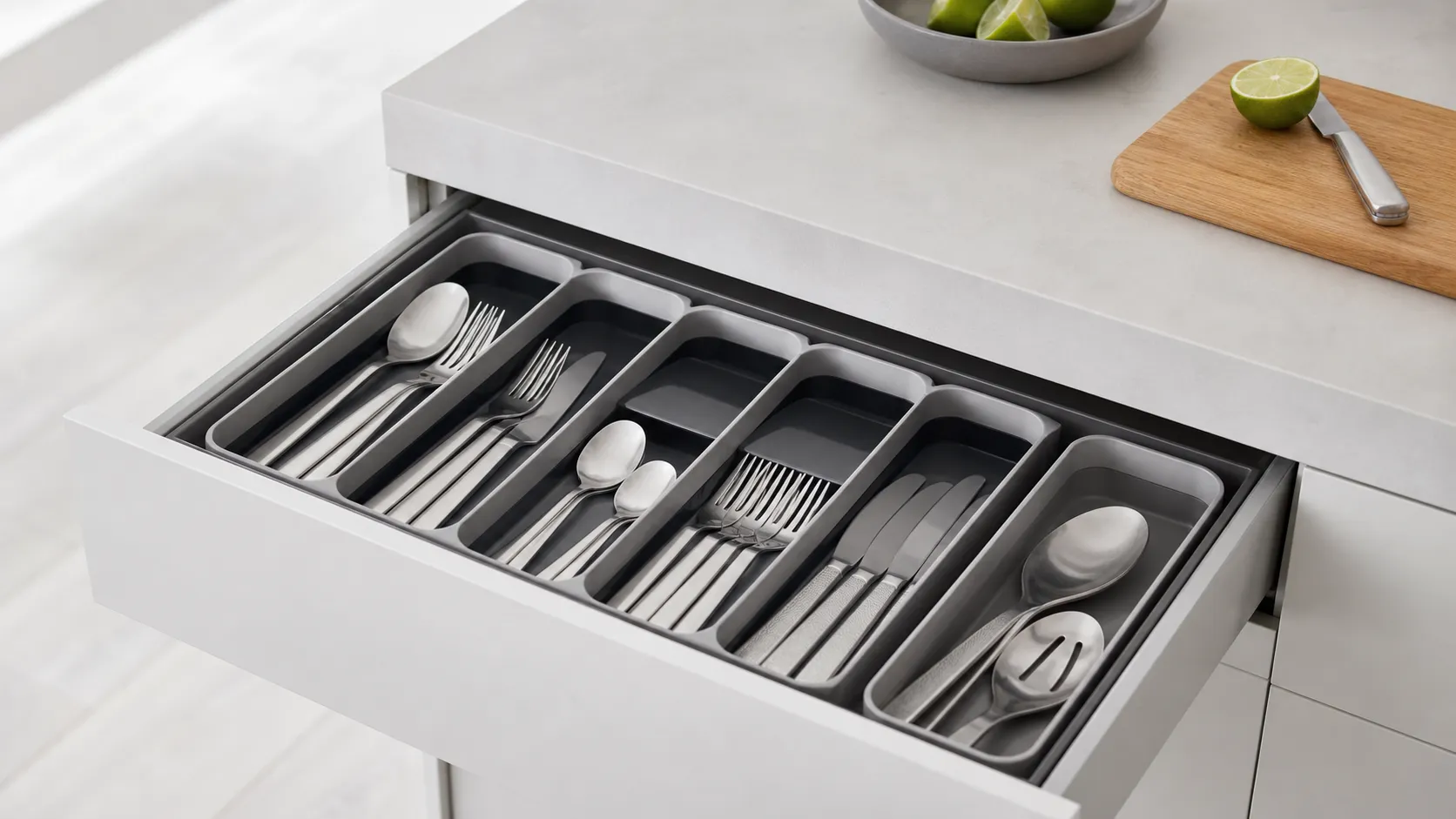
Joseph Joseph DrawerStore Cutlery Organizer Review 2026
A slim, modern cutlery tray that maximizes shallow-drawer space. Great for tidy, small-kitchen organization—measure your drawer first and avoid if you store long utensils.
 Kitchen & Appliances
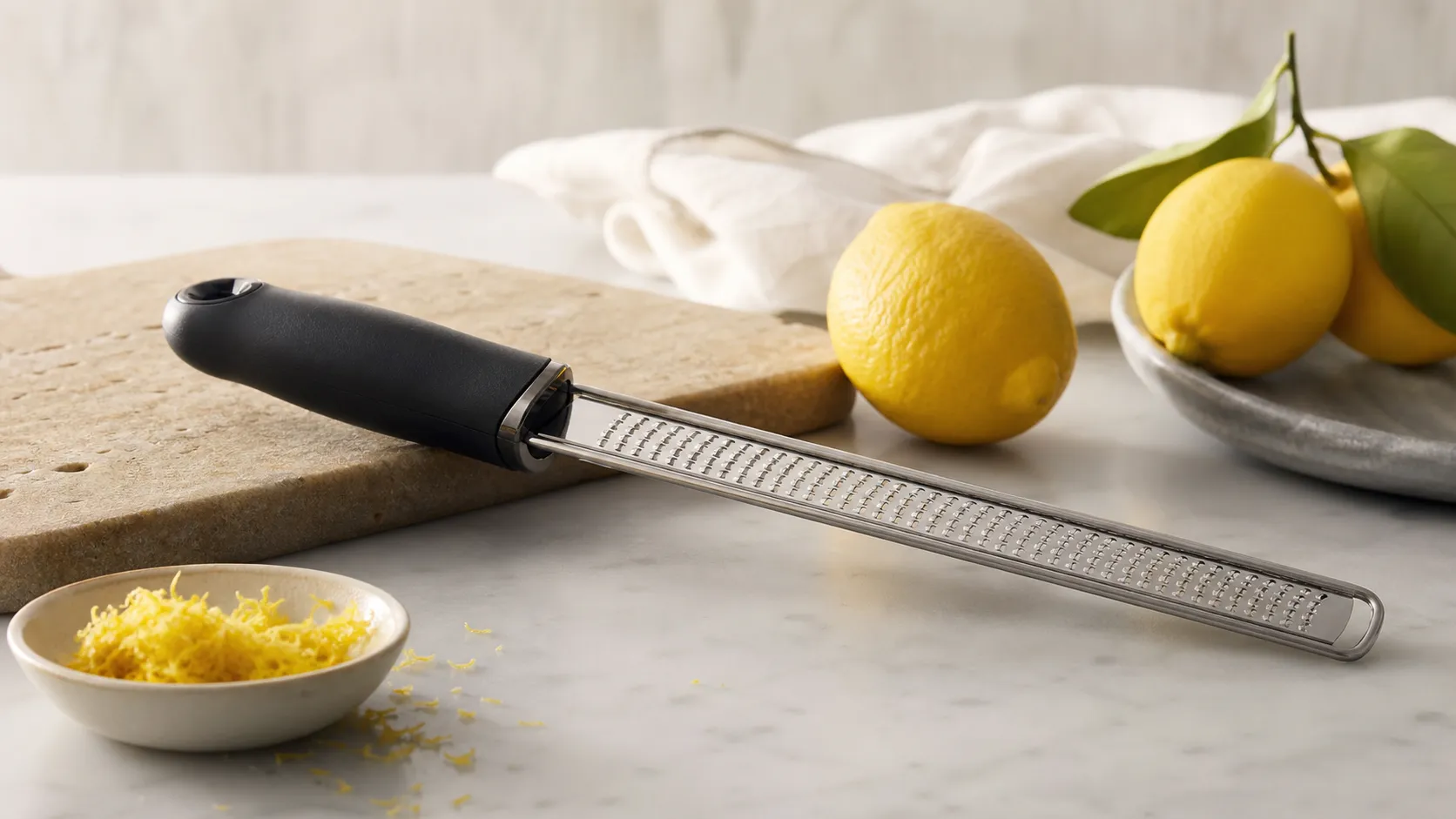
Microplane Premium Classic Zester/Grater — Review 2026
The Microplane Premium Classic is the go-to hand zester for precise, fluffy citrus zest and fine shavings. Sharp, compact, and great value—best for finishing, not bulk grating.