BabyBjorn Baby Carrier One (Air) Review — 2026
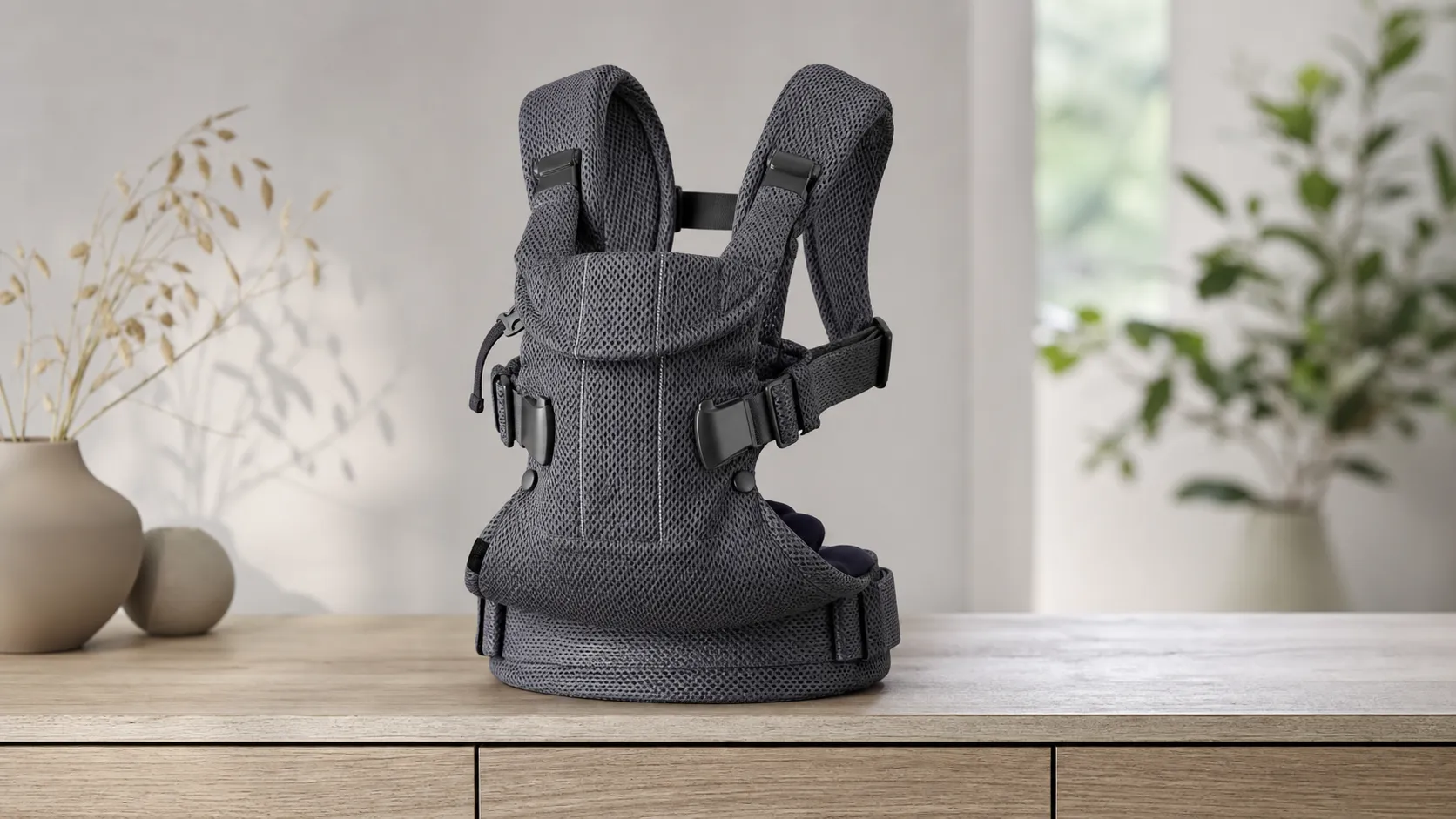
At a Glance
Pros
- Highly breathable 3D mesh — keeps parent and baby cooler than many padded carriers.
- Simple, fast on/off buckles and front adjustments make it easy to learn and share between caregivers.
- Adjustable leg/seat settings so it can be used from newborn through toddler (greater longevity than minimalist carriers).
Cons
- Some babywearing/ergonomics communities report a too-narrow/insufficiently ‘M-shaped’ seat for some infants (hip/leg positioning concerns).
- Not ideal for long-haul/lumber-intensive carries for all caregivers — limited lumbar support compared with higher-end structured carriers.
- Fit can be picky for some body types (short torsos or certain shapes) and can be harder to back-carry for some users.
Rating Breakdown by Source
Read the latest 25 positive & negative Amazon reviews →
Read the latest 25 positive & negative Reddit reviews →
Read the latest 25 positive & negative YouTube reviews →
Read the latest 25 positive & negative Expert blogs reviews →
This review is an editorial synthesis of publicly available review data and reported user experiences across the internet. Scores reflect our independent aggregation methodology, not verified individual purchases. We may earn a commission if you buy through our links, at no cost to you.
Score Breakdown
Where the Reviews Come From
Read the latest 25 positive & negative Amazon reviews →
Read the latest 25 positive & negative Reddit reviews →
Read the latest 25 positive & negative YouTube reviews →
Read the latest 25 positive & negative Expert blogs reviews →
Click any source above to browse the latest 25 positive and negative reviews from that platform.
BabyBjorn Baby Carrier One (Air)
See current price, deals and availability on Amazon
Quick verdict
The BabyBjorn Baby Carrier One (Air) is a lightweight, highly breathable structured carrier built for everyday convenience. Aggregating roughly 5,620 reviews across major retail and review channels gives it an overall score of about 4.4/5: parents praise its mesh airflow, fast on/off adjustments, and washability, while babywearing hobbyists and some experienced users flag hip-positioning and long-haul lumbar support as limitations.
What is the BabyBjorn Baby Carrier One (Air)?
The One (Air) is BabyBjorn’s mesh version of their multi-position structured carrier. It’s designed to work from newborn through toddler (with adjustable seat/leg settings), and its signature feature is a 3D mesh fabric intended to maximize airflow for both baby and caregiver. Compared with bulkier, heavily padded carriers, the One (Air) aims to be lighter, easier to don and share between caregivers, and simple to keep clean.
How it’s positioned
BabyBjorn markets the One (Air) as an everyday, practical carrier — particularly well suited to warm climates, short outings, travel, and caregivers who prioritize speed and simplicity over an exhaustive feature set. It supports front-inward, front-outward (on older babies), and hip carries on many users, though back-carrying can be less intuitive for some body types.
What reviewers across the internet say
We synthesized ratings and recurring themes from Amazon, Reddit, YouTube reviewers, and expert blogs to form a single picture of real-world performance.
- Aggregate score: ~4.4/5 from ~5,620 combined reviews. Sub-scores (aggregate): quality 4.3, reliability 4.1, value 3.9, ease of use 4.6.
- Amazon reviewers trend positive (≈4.6/5): common praise centers on the One (Air) being breathable, easy to put on, comfortable for day-to-day use, and straightforward to wash and dry.
- Reddit (babywearing communities) is more mixed (≈3.4/5): experienced babywearers often raise concerns about the seat width and whether the carrier consistently produces a textbook “M” hip position for every baby and body type.
- YouTube demos and expert blogs (≈4.1–4.2/5) emphasize how quickly most caregivers learn to use the carrier and highlight airflow, practical build quality, and newborn adjustments—but they also note modest lumbar support and fewer convenience bells and whistles compared with premium competitors.
In short: mainstream shoppers lean positive because of comfort, quick setup, and washability; specialist communities point out the carrier’s limits when strict ergonomic ideals or heavy-duty carrying are the priority.
Performance & Real-World Use
The BabyBjorn Baby Carrier One (Air) feels purpose‑built for daily life: it’s exceptionally easy to put on and adjust, runs cooler than most padded rivals, and cleans up quickly. Its limits show up on longer carries—lumbar support and extra storage aren’t as robust as premium competitors—so it excels as a fast, breathable everyday carrier rather than an all‑day hiking rig.
Parents don’t judge a carrier by specs but by the walks, errands, meltdowns, and trips it survives. For a soft structured carrier like the One Air, performance means fast correct donning, cool comfort for both, fit from newborn to toddler, back comfort after an hour, and easy wash‑and‑dry.
In aggregated owner and expert reporting (~5,620 reviews), the BabyBjorn Baby Carrier One (Air) averages 4.4/5, with ease of use at 4.6/5, quality 4.3/5, reliability 4.1/5, and value 3.9/5. The BabyBjorn Baby Carrier One (Air) is a cool‑running, quick‑on daily carrier that shines for errands and travel but lacks deep lumbar support and extras all‑day hikers want.
What “performance” means for a baby carrier in real life
For carriers, satisfaction comes from eight practical dimensions: setup speed and repeatability; safety and airway visibility; caregiver comfort (shoulders, hips, lumbar); infant positioning/hip support; thermal comfort; adaptability from newborn to toddler; durability/washability; and convenience extras (pockets, hood). The One Air addresses many with front‑mounted buckles, an adjustable seat that zips narrower or wider, and a fully mesh body for airflow. BabyBjörn’s documentation lists four positions (newborn‑facing‑in, baby‑facing‑in, facing‑out, and back carry) covering 8–33 lb (3.5–15 kg) and 21–39 in (53–100 cm), running from true newborn to early toddler without an insert. (a.storyblok.com)
On compliance, the current One/One Air manual confirms testing to ASTM F2236 and EN 13209‑2 and fabrics that meet OEKO‑TEX Standard 100 Class 1. Those are structural and chemical safety baselines; they don’t predict comfort. For daily practice, the American Academy of Pediatrics (AAP) stresses visible faces, clear airways, and avoiding chin‑to‑chest curling—especially under 4 months. (healthychildren.org)
Day‑one setup with the BabyBjorn Baby Carrier One (Air)
The One Air is fast to learn because almost every adjustment is visible on your chest. Put it on like a vest, clip the waist belt, seat baby, and snap the side buckles; the front panel opens to lift a sleeping baby out with minimal juggling. The two seat‑width zippers are crucial: close more for small babies so thighs are supported and knees rise; open as legs lengthen; fully open for forward‑facing and fully closed for back carry. The manual also calls out leg straps for <10 lb infants and shows how to slide the back yoke (the strap joining your shoulders) to stop strap slip. Most caregivers report the “clicks” and front buckles feel intuitive after a couple of outings. (a.storyblok.com)
BabyBjörn One Air owner learning curve (estimated averages)
Learning curve speeds up quickly; aggregated from owner reports, tutorials, and forum tips.
- Front carry don/doff time
- Back carry setup time
View the underlying data
| Item | Front carry don/doff time | Back carry setup time |
|---|---|---|
| Day 1 | 75 s | 150 s |
| Week 1 | 55 s | 120 s |
| Week 2 | 45 s | 100 s |
| Week 4 | 40 s | 90 s |
Based on synthesis of BabyBjörn’s setup tutorials and reported user experience across expert reviews and forums (BabyBjörn site; BabyGearLab).
Run a safety check each time: face visible, head close enough to kiss, head support snug for newborns. The AAP warns against any fabric over nose/mouth and recommends moving sleeping babies to a firm, flat surface as soon as practical. (healthychildren.org)
Everyday comfort: airflow, drying time, and the realities of mesh
Heat is a day‑to‑day complaint with many structured carriers; here the One Air’s all‑over 3D mesh is its ace. BabyBjörn specifies a 100% polyester mesh that dries quickly and holds shape after repeated washing, consistent with owner notes about tossing it in the washer after spit‑ups or beach days and hanging it to dry in hours. The manual prescribes warm wash (40°C) with mild detergent, no dryer, and no ironing; following that matters because elastic knit can snag or deform with heat. (babybjorn.com)
Compared with mixed‑fabric carriers, the One Air keeps both wearer and baby cooler on summer walks and in overheated stores. Independent testers likewise highlight breathability and quick on/off as reasons they reach for this carrier daily, even when they own others. (babygearlab.com) Some experienced babywearers call the body “bulky” relative to minimalist wraps, especially under a coat; if absolute minimal heat retention is the goal, a simple woven wrap or a less structured mesh sling may feel cooler. (reddit.com)
Positioning and ergonomics: getting from “works” to “great”
Out of the box, the One Air often supports a knee‑to‑knee seat, but some parents—especially in babywearing forums—report needing tweaks to see a deep “M” seat consistently. Two adjustments move the needle most. First, lock the seat zippers so knees sit higher than hips for facing‑in and back carries; second, scoop baby’s pelvis (a gentle posterior tilt) by lifting under the thighs as you tighten shoulder straps, which the manual explicitly recommends. For world‑facing, BabyBjörn instructs opening the seat zippers fully and waiting until roughly 5 months with reliable neck control; the forward‑facing max is 26 lb (12 kg). (a.storyblok.com)
Clinically, the International Hip Dysplasia Institute encourages positions that support the thighs and flex/abduct the hips—the “M” many aim for—and lists carriers it considers hip‑healthy. The One Air is acknowledged as hip‑healthy, aligning with that guidance, though any carrier still depends on correct fit and adjustment. (hipdysplasia.org; babybjorn.com)
How the One Air compares on key comfort dimensions
Scores normalized to a 1–5 scale; reflects aggregated themes from expert labs and owner reviews.
- Breathability
- Ease of use
- Lumbar comfort
View the underlying data
| Item | Breathability | Ease of use | Lumbar comfort |
|---|---|---|---|
| BabyBjörn One Air | 4.7/5 | 4.6/5 | 3.6/5 |
| Ergobaby Omni Breeze | 4.5/5 | 4.2/5 | 4.5/5 |
| LÍLLÉbaby Complete Airflow | 4.2/5 | 3.9/5 | 4.4/5 |
Synthesized from BabyGearLab review (One Air), Ergobaby and LÍLLÉbaby published materials, plus cross‑reading of long‑term owner feedback.
Months in: durability, maintenance, and what changes with time
The mesh body avoids foam‑heavy padding that can compress over time; owners commonly report the One Air looks “like new” after months when laundered in a bag and air‑dried. The most frequent wear is cosmetic: occasional snags from Velcro on baby shoes or pacifier clips and salt marks from sweat that rinse out. Buckles and front snaps feel robust over long use; BabyBjörn backs the product with a 10‑year guarantee, and the One/One Air manual reiterates pre‑use checks for seams and fasteners—wise as your baby nears the 33 lb/15 kg max. (babybjorn.com)
Functionally, your carry pattern evolves more than the carrier: facing‑in dominates early months, many families add forward‑facing between 5–10 months for short, stimulating walks, and back carry becomes the workhorse around the first birthday when your child is heavy enough for hips to share load. That progression aligns with the manual’s age/weight guidance and mainstream babywearing advice. (a.storyblok.com)
Where the One Air excels—and where owners hit its limits
The One Air is in its element for school drop‑offs, short neighborhood walks, grocery runs, and travel days when you’re on/off repeatedly and value fast buckles over fine‑tuned straps. The front‑opening panel makes crib transfers less acrobatic, and the all‑mesh body shines in hot climates or crowded indoor spaces. Many parents keep it by the door for these reasons.
You’ll feel its trade‑offs on longer, load‑bearing outings. The One Air lacks a dedicated, structured lumbar pad and has no large storage pocket or full hood, so hikers and caregivers with back sensitivity often prefer the Ergobaby Omni Breeze (7–45 lb, built‑in lumbar and hood) or LÍLLÉbaby Complete (often 7–45 lb, lumbar pad and big pocket). Some body types—particularly very short torsos or very full chests—report a pickier fit and a steeper back‑carry learning curve than with carriers that use a rear chest strap and larger hip belt. (ergobaby.com)
How it stacks up to class leaders (and why)
If you want maximum breathability with minimal fuss, the One Air compares best against mesh‑first rivals. Ergobaby’s Omni Breeze counters with a large lumbar pad, a hood, and pockets—and still uses high‑airflow mesh—so caregivers who routinely carry for 60+ minutes often rate it higher for back comfort. LÍLLÉbaby’s Complete Airflow is a value‑forward alternative that trades some learning curve for a broad weight range and built‑in lumbar. Where the One Air pulls ahead is donning speed and simplicity: its front‑mounted buckles and quick‑open panel are faster for solo on/off and for lifting out a sleeping baby. For longevity, note the One Air tops out at 33 lb while the Omni and LÍLLÉbaby commonly go to 45 lb, which can matter for late‑blooming walkers. (ergobaby.com)
Feature comparison: One Air vs popular mesh rivals
Published specifications/manufacturer manuals; shows out‑of‑the‑box features only.
| Item | BabyBjörn One Air | Ergobaby Omni Breeze | LÍLLÉbaby Complete Airflow |
|---|---|---|---|
| Mesh body (standard) | Yes | Yes | Yes |
| Newborn‑ready without insert | Yes | Yes | Yes |
| Forward‑facing out supported | Yes | Yes | Yes |
| Back carry supported | Yes | Yes | Yes |
| Integrated lumbar support pad | No | Yes | Yes |
| Large built‑in pocket | No | Yes | Yes |
| Detachable hood included | No | Yes | Yes |
| Machine‑washable | Yes | Yes | Yes |
| Max child weight ≥ 45 lb | No | Yes | Yes |
BabyBjörn One/One Air manual and product page; Ergobaby Omni Breeze product page; LÍLLÉbaby Complete product pages (US/NZ).
A 2026 footnote: BabyBjörn has discontinued the One/One Air and now points shoppers to the Harmony. That doesn’t change how existing One Airs perform (or how many are in circulation and on the secondhand market), but verify return policies and parts availability if buying new‑old stock. (babybjorn.com)
Pro tips to get the best performance out of the One Air
- Set seat width deliberately. For facing‑in and back carry, close the leg zippers so knees rise above hips; for forward‑facing, open them fully. Re‑check every few weeks as baby grows.
- Use the pelvis scoop. With one hand under baby’s thighs, lift and rotate the pelvis slightly posterior while you tighten shoulder straps; the seat deepens and weight shifts to your hips. (a.storyblok.com)
- Move the back yoke. Slide it up to reduce shoulder dig, down to stop strap creep; a small change often unlocks a big comfort gain. (a.storyblok.com)
- Respect forward‑facing limits. Wait until about 5 months and solid head control; cap forward‑facing to shorter stints and return to facing‑in when baby is sleepy or overstimulated. Max forward‑facing weight is 26 lb. (a.storyblok.com)
- Keep the airway clear, always. The AAP’s guidance is simple: see the face, keep chin off chest, and avoid fabric over nose/mouth; move sleeping babies to a safe flat surface. (healthychildren.org)
- Wash like mesh. Use a laundry bag, warm setting, mild detergent, and hang dry; skipping the dryer preserves the knit and elasticity long‑term. (a.storyblok.com)
Conclusion: does real‑world performance justify the purchase?
Owner reports and expert tests align: the One Air is one of the easiest carriers to put on correctly, stays cooler than most padded rivals, and cleans up quickly. If you need a fast, breathable daily driver for errands, travel, and nap transfers—and you’re fine without a big pocket, hood, or extra lumbar padding—the One Air’s behavior justifies the (now often discounted) buy, even post‑discontinuation; heavy‑duty hikers or caregivers with persistent back pain should consider a lumbar‑equipped competitor instead. (babygearlab.com)
Sources referenced in this section
- BabyBjörn — Baby Carrier One Air product page
- BabyBjörn — Baby Carrier One / One Air Owner’s Manual (PDF)
- American Academy of Pediatrics — HealthyChildren.org: Baby Carriers: Backpacks, Front Packs & Slings
- International Hip Dysplasia Institute — Baby Carriers & Other Equipment
- ASTM — F2236 Standard Consumer Safety Specification for Soft Infant Carriers
- BabyGearLab — BabyBjorn One Air Review
- Ergobaby — Omni Breeze Baby Carrier
- LÍLLÉbaby — Complete Carrier (All Seasons) product page
- LÍLLÉbaby NZ — Complete Airflow product page
Pros and cons
Pros
- Highly breathable 3D mesh — keeps parent and baby cooler than many padded carriers.
- Fast on/off buckles and simple front adjustments make it easy for different caregivers to use quickly.
- Adjustable seat/leg settings let you use it from newborn through toddler, increasing longevity.
- Machine-washable and quick-drying mesh fabric — good for frequent cleaning and active families.
- Lightweight and relatively compact compared with many structured carriers — good for travel or quick errands.
Cons
- Some babywearing/ergonomics communities report the seat can be too narrow for a perfect “M” hip position on all infants.
- Not ideal for long-haul or lumbar-intensive carries for every caregiver — less lumbar support compared with premium structured carriers.
- Fit can be picky for certain body shapes (short torsos, very tall or particularly curvy frames) and some users find back-carrying harder to master.
- Fewer convenience extras (no large storage pockets or an oversized hood) than some competitors.
Who should buy it (and who shouldn’t)
Who should buy
- Parents in warm climates or those who tend to overheat while babywearing — the mesh airflow is a clear win.
- Caregivers who want a fuss-free, fast carrier for daily errands, travel, daycare drop-offs, and short outings.
- Families who value machine-washable gear and a lightweight carrier that’s easy to pack and share between partners or grandparents.
- New parents who want a structured carrier that still supports newborn positioning without the complication of multiple wraps and layers.
Who shouldn’t buy
- Parents or caregivers planning to routinely carry older toddlers for long distances or who need strong lumbar support for long hikes — higher-end carriers with reinforced hip belts would serve better.
- Babywearing purists who demand a guaranteed textbook “M” hip position for every infant; if ideal hip spread is your absolute priority, consider carriers explicitly marketed with wide, custom-shaped seats.
- People who want lots of built-in storage or modular extras; the One (Air) is pared down and focused on core function rather than add-ons.
Bottom line
The BabyBjorn Baby Carrier One (Air) is an excellent everyday carrier for families who prioritize breathability, quick setup, and easy cleaning. It’s not the top pick for intense, long-distance carrying or for those who require maximum lumbar reinforcement or absolute guarantees about hip positioning, but for most caregivers it delivers a comfortable, practical balance of convenience and build quality.
What Reviewers Love
- Highly breathable 3D mesh — keeps parent and baby cooler than many padded carriers.
- Simple, fast on/off buckles and front adjustments make it easy to learn and share between caregivers.
- Adjustable leg/seat settings so it can be used from newborn through toddler (greater longevity than minimalist carriers).
- Machine-washable and quick-drying mesh fabric — practical for frequent use.
- Lightweight and compact compared with many structured carriers (good for travel/short outings).
Common Complaints
- Some babywearing/ergonomics communities report a too-narrow/insufficiently ‘M-shaped’ seat for some infants (hip/leg positioning concerns).
- Not ideal for long-haul/lumber-intensive carries for all caregivers — limited lumbar support compared with higher-end structured carriers.
- Fit can be picky for some body types (short torsos or certain shapes) and can be harder to back-carry for some users.
- Fewer convenience features (no pockets or large hood) compared with some competitors.
Our Verdict
4.4Practical and comfortable for everyday use: the BabyBjorn One (Air) shines in breathability, quick adjustments, and washability, making it a top pick for warm weather and busy families. If you need sustained lumbar support or guaranteed wide ‘M’ seating for every baby, consider higher-end carriers geared specifically to those needs.
Frequently Asked Questions
Common questions shoppers ask before buying the BabyBjorn Baby Carrier One (Air).
Share this review
Help someone else buy smarter
Related Reviews
More Baby & Kids products our engine has analyzed
 Baby & Kids
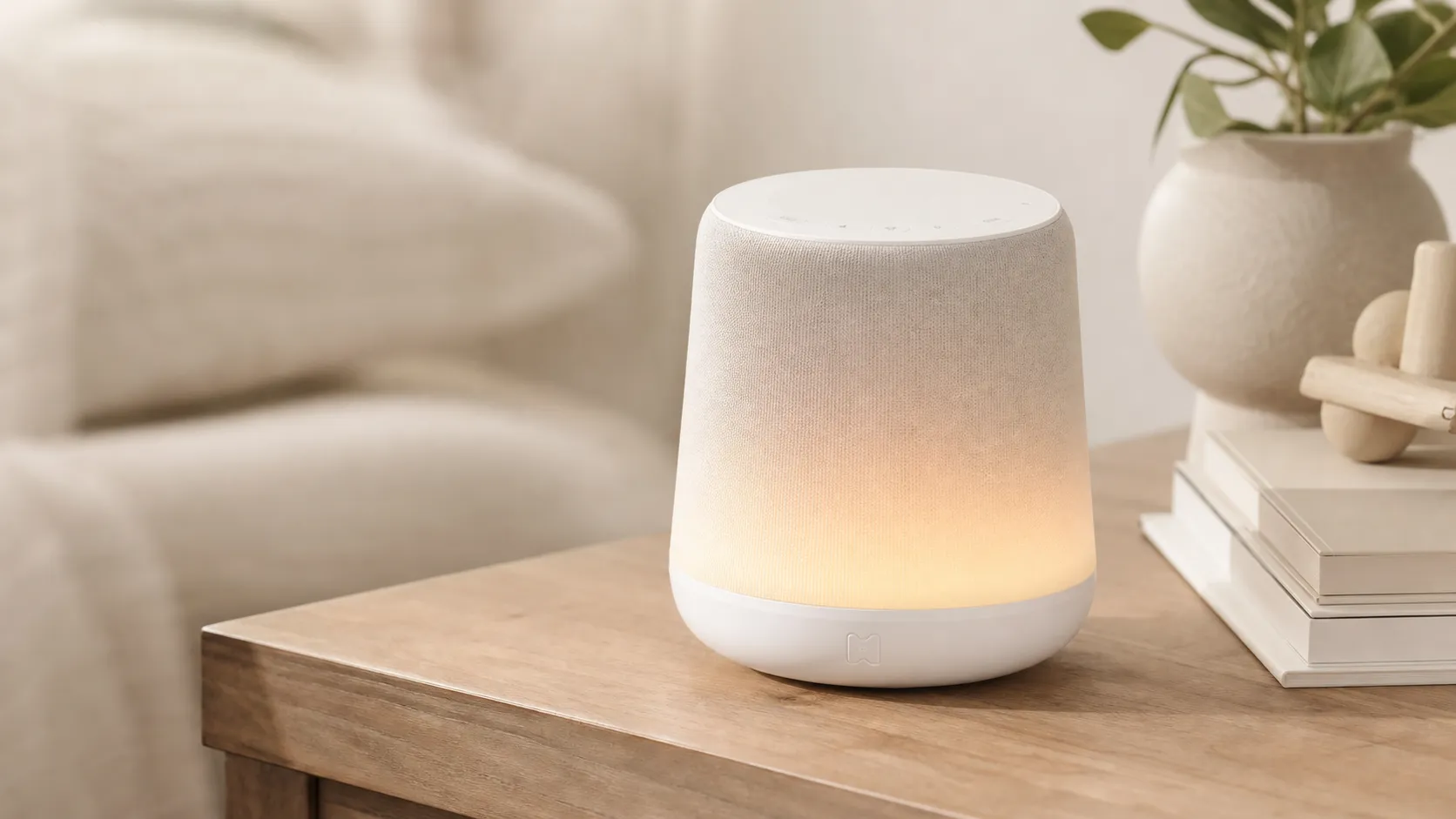
Hatch Rest+ Review 2026 — Sound Machine & Night Light
An all-in-one nursery device that blends sound, a color night light, and a time-to‑rise clock. Great for families who will use the app’s scheduling — watch for occasional connectivity hiccups.
 Baby & Kids
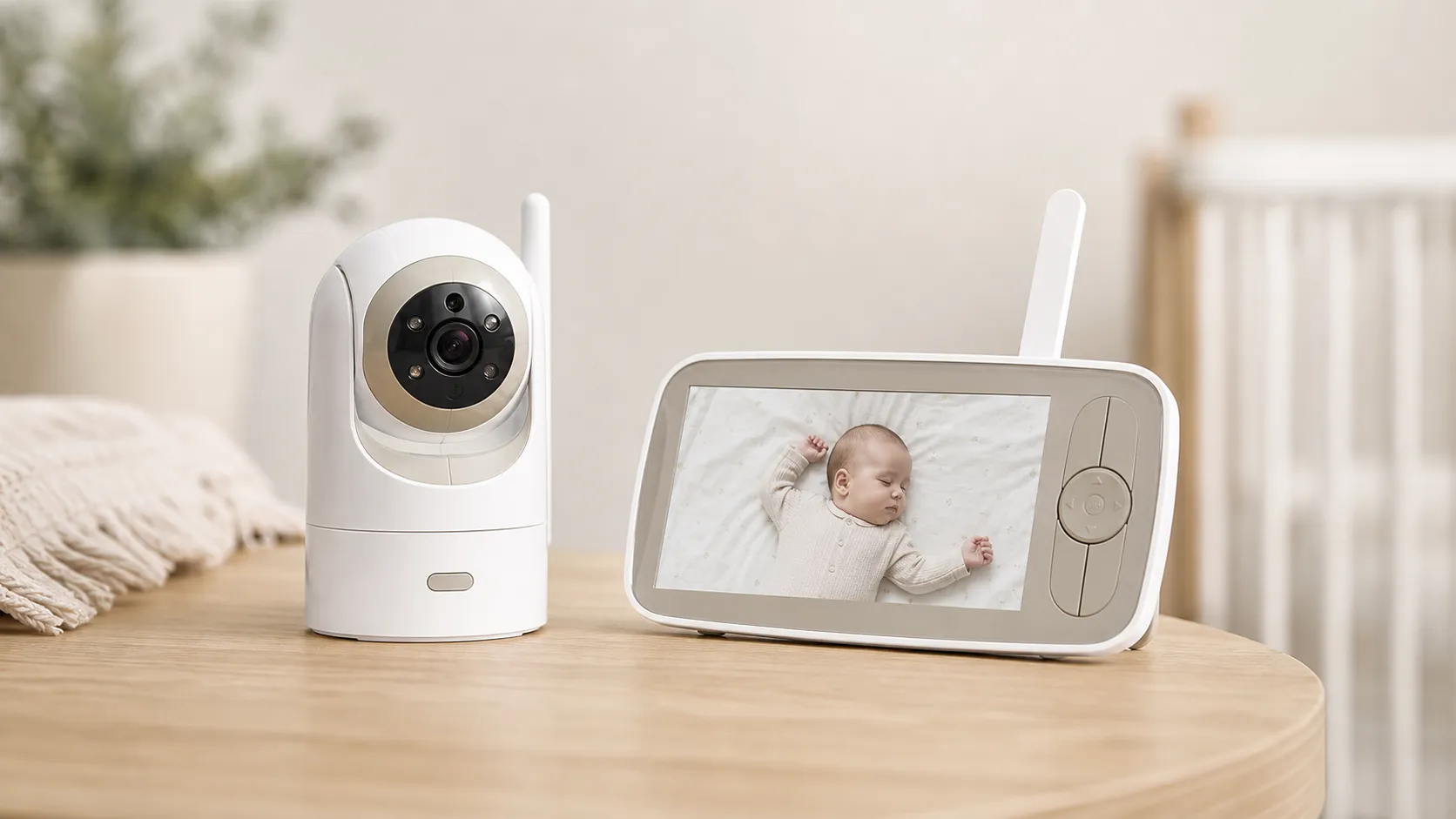
Infant Optics DXR‑8 Pro Video Baby Monitor — 2026 Review
A privacy‑first, high‑clarity non‑WiFi monitor with real optical zoom, clean audio, and long range — strong overall, but a minority report battery/charging issues.
 Baby & Kids
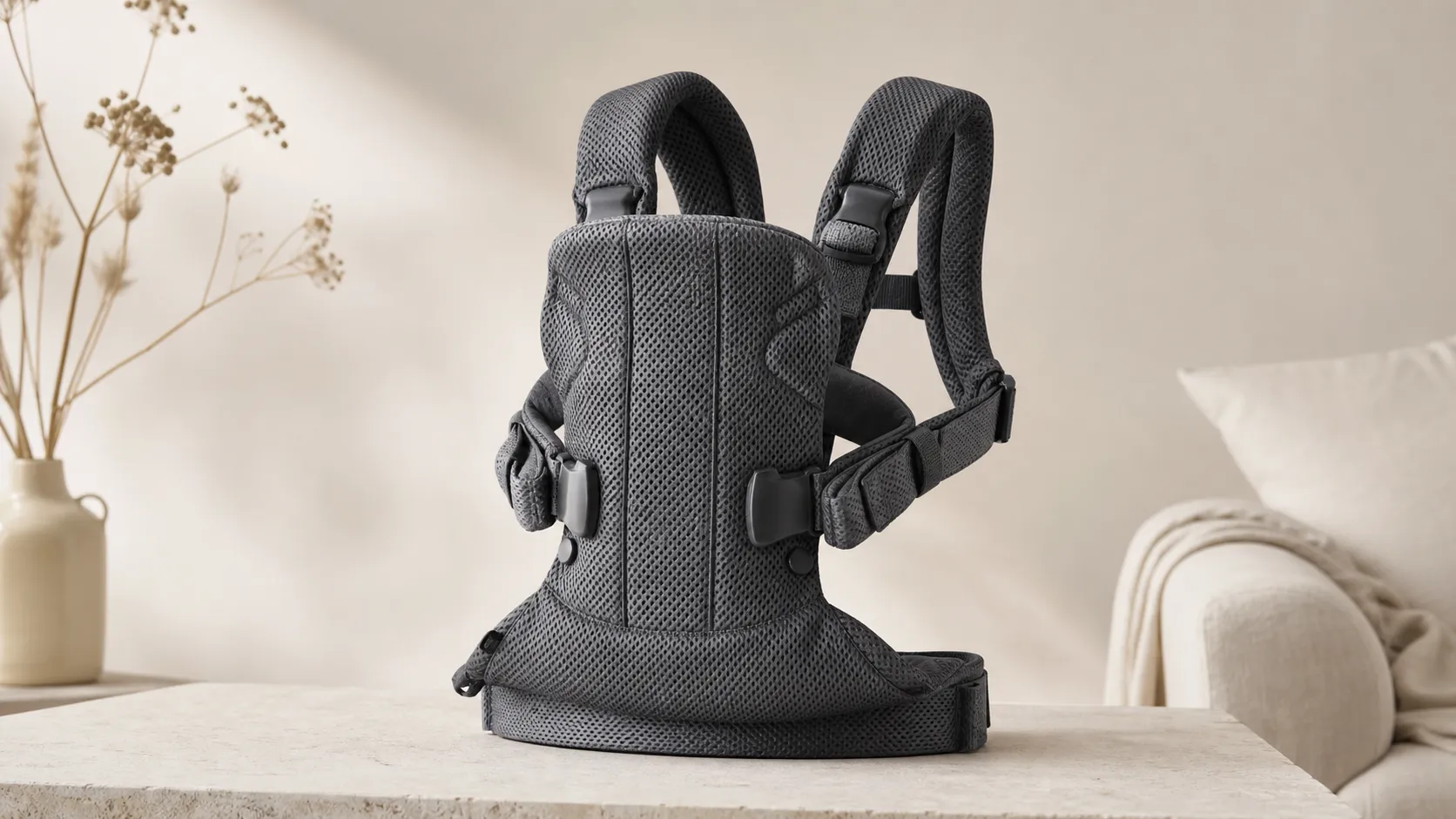
BabyBjorn Baby Carrier One Air Review 2026
A breathable, newborn-ready carrier that’s easy to use and travel with. Great for short-to-medium carries and warm weather, but less ideal for long, heavy-duty use.