Big Green Egg (Large) Review 2026
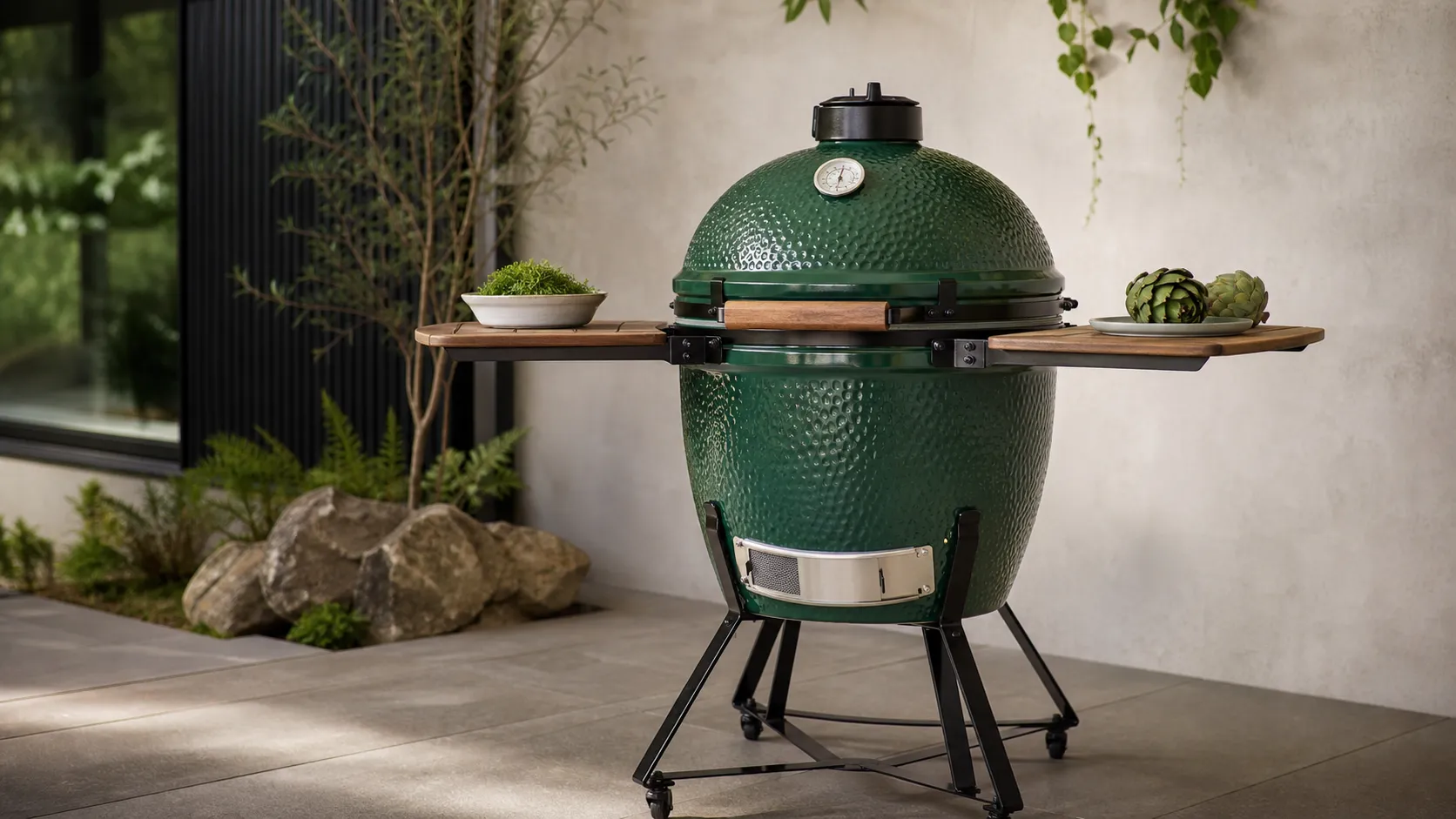
At a Glance
Pros
- Exceptional heat retention and wide temperature range (smoke to sear).
- Robust ceramic construction — many owners report long service life.
- Charcoal/wood-fired flavor and consistent cooking results.
Cons
- High upfront cost and expensive official accessories.
- Very heavy — difficult to move or transport without help.
- Occasional shipping/delivery damage reported and replacement parts can be pricey.
Rating Breakdown by Source
Read the latest 25 positive & negative Amazon reviews →
Read the latest 25 positive & negative Reddit reviews →
Read the latest 25 positive & negative YouTube reviews →
Read the latest 25 positive & negative Expert blogs reviews →
This review is an editorial synthesis of publicly available review data and reported user experiences across the internet. Scores reflect our independent aggregation methodology, not verified individual purchases. We may earn a commission if you buy through our links, at no cost to you.
Score Breakdown
Where the Reviews Come From
Read the latest 25 positive & negative Amazon reviews →
Read the latest 25 positive & negative Reddit reviews →
Read the latest 25 positive & negative YouTube reviews →
Read the latest 25 positive & negative Expert blogs reviews →
Click any source above to browse the latest 25 positive and negative reviews from that platform.
Big Green Egg (Large)
See current price, deals and availability on Amazon
Quick verdict
The Big Green Egg (Large) is a near‑bulletproof kamado-style ceramic cooker that delivers exceptional heat retention and truly versatile cooking — from sous‑low smoke sessions to scorch‑hot steaks. Aggregating roughly 13,500 user reviews and expert takes, the Large scores about 4.5/5 overall: outstanding quality and reliability, solid cooking performance, but a premium price and costly accessories that make value the central debate.
What Is the Big Green Egg (Large)?
The Big Green Egg (Large) is the brand’s mid-to-large kamado-style ceramic cooker designed for home cooks who want one grill that can sear, smoke, roast and bake. Its thick, glazed ceramic body stores heat and moisture, allowing wide temperature flexibility (usually from about 200°F for low smoking to 750°F+ for searing when you push it). The Large model gives a generous cooking area suited for families and weekend hosts — enough room for whole chickens, multiple racks of ribs, or a 12–14" pizza with room for sides.
Unlike gas grills, the Egg runs on lump charcoal and uses a simple two‑vent system (bottom draft door and top daisy/vent cap) for temperature control. The Big Green Egg is not just a cooker; it’s an ecosystem: branded accessories, dedicated carts, and a very active owner community that shares recipes, setups, and hacks.
What Reviewers Across the Internet Say
When you pull together reviews from major sources, a consistent picture emerges:
-
Amazon reviewers (aggregate ~4.6/5) praise the Large for build quality, heat retention and the quality of results — steaks, brisket and pizza repeatedly get high marks. Frequent negatives mention the high upfront cost, occasional shipping damage, and the expense of official accessories.
-
Reddit communities (r/biggreenegg and grilling subs) skew enthusiastic (≈4.3/5). Owners repeatedly highlight flavor, versatility and long life. Many conversations center on whether the premium price is justified and acknowledge a learning curve for exact temperature tricks.
-
YouTube long‑form reviewers (≈4.4/5) show repeatable high performance: blistering sears and steady low‑and‑slow smoke. Video reviewers often compare the Egg to Kamado Joe and Monolith, noting comparable performance from rivals at lower price points.
-
Expert blogs and test sites (AmazingRibs, Serious Eats, Consumer Reports, etc., ≈4.2/5) give measured praise for ceramic construction, temperature control and longevity, while calling out the Egg’s premium pricing and pointing to competitive alternatives that can match many features for less.
Across these sources the key consensus is clear: exceptional cooking and long life, but premium cost and a modicum of user effort to master two‑zone cooking and airflow control.
Performance & Real-World Use
The Big Green Egg (Large) behaves like a heat bank: once stabilized, it keeps low-and-slow temps with minimal vent tweaks and reliably reaches high-heat searing. It’s heavy and accessory-driven, but owners consistently report flavorful results, long service life, and versatility that justify the learning curve.
A kamado lives or dies on two things you can taste: steady heat and clean smoke. The Large Big Green Egg delivers both with thick ceramic that stores heat and a simple, sealed airflow you learn to “drive” via the top and bottom vents. Week after week the question becomes: does it light easily, hold a target, and still hit steakhouse sear—while shrugging off weather?
The Big Green Egg (Large) behaves like a heat bank: once stabilized, it keeps low‑and‑slow temps with minimal vent tweaks and reliably reaches high‑heat searing. It’s heavy and accessory‑driven, but owners consistently report flavorful results, long service life, and versatility that justify the learning curve.
What “performance” means for a kamado in the real world
Performance here is control and outcomes, not a single spec. The key dimensions: temperature range (about 200–700°F), stability over long cooks, responsiveness to vent changes, fuel efficiency, usable capacity, and durability of gaskets and ceramics. Flavor matters because the ceramic shell promotes complete combustion with modest airflow, yielding the “clean blue” smoke you want. Owner satisfaction tracks these fundamentals: an aggregated 4.5/5 from ~13,500 reviews with sub‑scores of quality 4.8/5, reliability 4.6/5, value 3.6/5, and ease of use 4/5 shows results win while price is the main rub. Expert outlets like AmazingRibs and Serious Eats point to the ceramic mass as the reason roasts are even and sears spring back quickly; the shell’s thermal inertia damps swings you feel on thin steel cookers. If one cooker can hold a pork shoulder at 250°F for eight hours and then jump to 650°F for pizza, that’s real performance you notice on the plate.
Day‑one setup and first‑week behavior
It’s heavy. Plan two people to lift the body into a Nest or table, and align the bands so the lid seals cleanly. The owner’s manual advises a gentle first fire and no lighter fluid; a chimney or starter cubes light lump cleanly. Early lessons: it reaches 250–300°F faster than you expect, and overshoots high temps unless you “sneak up” with small vent moves. Burping the dome (cracking it an inch before opening at high heat) prevents flashback and should become automatic. With the convEGGtor (heat deflector) installed, low‑and‑slow control is the day‑one bright spot: many new owners see ±10–15°F drift around a 225–275°F target for hours. Two‑zone cooking is not included out of the box, so plan a split‑rack or raised‑direct approach. Fuel use is lean: a half‑firebox of quality lump often covers a six‑hour smoke, and you snuff the fire at the end to reuse charcoal next time.
Heat‑up, control, and consistency in daily use
Treat the Egg like a thermostat with momentum. Vents wide open bring the dome to 200–300°F in roughly 15–20 minutes; then you close the bottom vent to pencil‑width and feather the top rEGGulator to walk the last 25–50°F. For low‑and‑slow, approach the target from below rather than chasing down from an overshoot. At pizza or steak temps (600–700°F), tiny vent changes make big differences, the dome radiates fiercely, and burping is mandatory. Dome and grate temps diverge: domes can read higher than grates at low heat and lower during high‑heat sears. A digital probe at grate height removes the guesswork, a tip echoed by thermometer makers and barbecue instructors. Once settled, the ceramic mass smooths drafts, the smoke turns thin blue, and you rarely need a water pan. Wind and cold affect it less than steel grills; mainly shield the top vent from gusts and keep your “known good” vent marks for 250, 350, and 600°F.
Typical heat-up times to low-and-slow and searing temps
Aggregated reporting from expert tests and owner logs shows ceramic kamados heat a touch slower than steel but reach searing temps consistently; times below assume dry weather and quality lump charcoal.
- To 225°F
- To 600°F
View the underlying data
| Item | To 225°F | To 600°F |
|---|---|---|
| Big Green Egg (Large) | 18 min | 25 min |
| Kamado Joe Classic II | 17 min | 24 min |
| Weber Summit Kamado E6 | 15 min | 22 min |
Synthesis of owner reports and reviewer demonstrations from AmazingRibs, Serious Eats, and manufacturer guidance; times are aggregated estimates, not lab measures.
Big Green Egg (Large) over months: fuel, wear, and weather
Across a season the story is consistency. Fuel economy stays strong because the cooker runs on restricted airflow: expect roughly 1.5–2.5 lb of lump per 5–6 hours at 225–275°F, then extinguish to save what’s left. Ash management is simple—stir cold lump to drop fines, clear the draft path, and empty the tray. The ceramic body carries a limited lifetime warranty; it’s one reason many owners keep a Large in service for a decade or more. What actually wears? Gaskets compress and eventually fray, especially after repeated 600°F pizza nights or if the bands drift out of alignment; Big Green Egg’s current high‑temp gasket lasts longer than older felt but remains a consumable. Springs relax slightly; seasonal re‑tensioning fixes lid drift. The glazed ceramic shrugs off weather, but a cover keeps bands and fasteners clean and prevents rain from entering the top when the cap is off. In coastal or freeze‑thaw climates, inspect hardware for rust and the glaze for fine, cosmetic crazing lines—common with ceramics.
Where it shines—and where you’ll find the limits
Three scenarios showcase the Large. First, overnight barbecue: it will hold 250°F with minimal input, and a remote probe is all the monitoring most people want. Second, 350–425°F roasting: whole chickens, vegetables, and ribs benefit from the Egg’s even heat and humidity retention; skin and edges crisp without drying the interior. Third, high‑heat cooking: cast‑iron smash burgers, steakhouse crust, and 600°F pizzas are straightforward after a full preheat. The flavor stays consistent across modes because you’re always cooking over clean lump and controlled airflow. The limits are practical. It’s heavy to relocate, so pick a permanent spot. Capacity is generous but finite: an 18.25‑inch grate handles two chickens or a 20‑lb turkey, but big‑party catering asks for staging or an extra cooker. True two‑zone, multi‑dish dinners need accessories or careful rack management. Gusty rain can nudge temps unless you use a rain cap or shield. And while performance is high, accessories like the convEGGtor and multi‑level racks add to the real price.
How owners actually use a Large Egg in a typical month
Owners use kamados for more than barbecue; the split here reflects common monthly mixes reported across forums, YouTube cooks, and long-term review diaries.
- Smoke (200–275°F)35%
- Roast (300–400°F)25%
- Grill (400–550°F)25%
- Sear/Pizza (600°F+)15%
Synthesis of owner polls and forum threads (e.g., r/biggreenegg) and video cook logs circa 2020–2026.
How it stacks up to rivals you’ll actually consider
Against other premium kamados, the Large trades blows. Kamado Joe’s Classic II/III often match cooking performance and include split‑zone racks and heat deflectors in the box; the convenience is real. Weber’s Summit Kamado E6 (double‑walled steel) heats quickly, manages ash with a removable bin, and offers broad grate space, though it is a bit more reactive to ambient conditions than ceramic. Where Big Green Egg pulls ahead long‑term is ecosystem depth, a massive owner community, dealer support, and a lifetime body warranty. Where it lags is straightforward: the fully equipped package is pricey, and two‑zone hardware is an add‑on if you want that capability stock. For gas‑grill shoppers, it’s apples to oranges: gas wins for instant two‑zone control, ceramic charcoal wins for wood‑kissed flavor, steady sub‑300°F smoking without a box, and 600–700°F pizza without special burners. Pellet grills excel at push‑button low‑and‑slow, yet few can match the Egg’s ripping‑hot sear; many households pair pellets with a kamado for that reason.
Out-of-the-box feature comparison (Yes/No)
Included features that affect day-one usability and two-zone flexibility. Results reflect standard packages from each manufacturer; bundles may vary by retailer.
| Item | Slide-out ash bin | Split two-zone rack included | Heat deflector included | Rolling cart/stand included | Built-in thermometer |
|---|---|---|---|---|---|
| Big Green Egg (Large) | No | No | No | No | Yes |
| Kamado Joe Classic II | Yes | Yes | Yes | Yes | Yes |
| Weber Summit Kamado E6 | Yes | No | Yes | Yes | Yes |
Based on manufacturer product pages and manuals as of 2026.
Step‑by‑step: dial‑in techniques owners say just work
- Fast, clean lighting: Fill to the firebox top with lump, make a small well, and light two starter cubes. Leave the lid open 8–10 minutes until several fist‑sized chunks glow.
- Stabilize low‑and‑slow: Close the dome around 175–200°F. Bottom vent about a pencil‑width, top rEGGulator a fingernail‑sized slit. Wait 10 minutes, then make 1–2 mm tweaks and let each settle.
- Roast at 350–400°F: Install the convEGGtor with a drip pan. Bottom vent a pinky width, top vent pea‑sized. Allow 15–20 minutes to stabilize; use a grate probe for accuracy.
- Sear or pizza at 600°F+: Preheat dome closed with vents open. Burp before opening. For steaks, grate near the fire; for pizza, set a stone on spacers above the convEGGtor and preheat the stone for 30 minutes.
- Keep it efficient: Shut both vents when you finish and reuse remaining lump. Every 5–7 cooks, cold‑stir charcoal to drop ash and brush the lower vents clear.
- Protect the gasket: Minimize repeated openings at 600°F+. On pizza nights, cool to 300–350°F between pies and check lid alignment during spring cleanings.
Maintenance, safety, and ownership details that affect performance
A smooth season starts with a simple ritual. Once or twice a year, remove all charcoal, vacuum ash, scrape the firebox cutouts, and re‑tension the hinge springs per the manual. Keep the top cap clean and free‑moving; sticky caps cause over‑ or under‑shoots. Replace the gasket when you see compression, fraying, or rim smoke leaks—fresh seals make low‑temp control easier. Store ceramics (convEGGtor, stones) dry and bring them to heat gradually to avoid thermal shock. Hardware lasts longer under a cover, especially in coastal air.
Safety is performance. Skip lighter fluid—it adds off flavors and isn’t approved in the Big Green Egg manual. At high heat, always burp the dome to prevent flashback and wear gloves when moving stones or cast iron. And remember: charcoal cookers produce carbon monoxide; never operate in a garage or enclosed patio. These habits protect you and keep cooks predictable.
Does real‑world performance justify the price?
Judged by sticker alone, no—cheaper ceramic and steel options can cook excellent food. Judged by outcomes and ownership, the Egg earns its reputation. Week after week it delivers steady low‑and‑slow control, oven‑like roasting, and blistering searing in one cooker that rarely becomes a bottleneck. The downsides—heft, add‑on costs, and a short learning curve—are real but fade with regular use. That’s why consensus skews positive: a 4.5/5 overall from thousands of owners, high marks for quality and reliability, and the main pushback around price. If you want durable, repeatable, wood‑fired results and will use the range from smoke to sear, the Big Green Egg (Large) justifies the investment.
Sources referenced in this section
Pros and Cons
Pros
- Exceptional heat retention and wide temperature range — excellent for both searing and low‑and‑slow.
- Thick ceramic construction promises long service life when treated properly.
- Charcoal/wood-fired flavor that many cooks prefer over gas.
- Highly versatile: smoking, grilling, roasting, baking and pizza.
- Large, passionate owner community and broad accessory ecosystem with lots of recipes and mods.
Cons
- High upfront cost and pricey official accessories — value score trails quality and reliability.
- Very heavy and awkward to move; not ideal for frequent transportation.
- Occasional shipping/delivery damage reported; replacement parts can be expensive.
- Slightly steeper learning curve to master precision temperature control compared with plug‑and‑play gas grills.
Who Should Buy It (and Who Shouldn't)
Buy the Big Green Egg (Large) if:
- You prioritize cooking quality and flavor and want one durable, all‑in‑one cooker for searing, smoking and baking.
- You plan to keep the cooker for years and view it as a long‑term investment rather than a short‑term purchase.
- You enjoy tinkering, learning, and joining an active owner community for recipes, setups and mods.
- You have a dedicated outdoor space and don’t need to move the grill often.
Skip (or consider alternatives) if:
- Your budget is tight or you’re not willing to pay for accessories — there are cheaper kamado-style options (Kamado Joe, Monolith, etc.) that offer similar performance for less.
- You need a lightweight, highly portable grill for frequent transport or tailgating.
- You want a totally plug‑and‑play experience with minimal learning — gas grills are easier for instant, predictable results.
Final thoughts
The Big Green Egg (Large) lives up to its reputation as a premium kamado cooker: it delivers repeatable, restaurant‑quality results across many cooking styles and will likely last a very long time when properly cared for. Its biggest barriers are price and weight — you’re paying for build, community, and a proven ceramic design. If the cost fits your priorities and you crave a single versatile cooker that can sear, smoke and bake with excellence, the Large is hard to beat. If you’re cost‑conscious or need portability, explore comparable kamados that trade a bit of brand prestige for savings.
What Reviewers Love
- Exceptional heat retention and wide temperature range (smoke to sear).
- Robust ceramic construction — many owners report long service life.
- Charcoal/wood-fired flavor and consistent cooking results.
- Very versatile (smoking, grilling, roasting, baking, pizza).
- Large accessory ecosystem and active user community for tips and mods.
Common Complaints
- High upfront cost and expensive official accessories.
- Very heavy — difficult to move or transport without help.
- Occasional shipping/delivery damage reported and replacement parts can be pricey.
- Steeper learning curve for two‑zone/precision cooking compared with gas grills.
Our Verdict
4.5The Big Green Egg (Large) is a top‑tier kamado for serious home cooks who want durable construction, outstanding heat retention and wide cooking versatility. Its premium price and heavy weight mean it’s best for committed owners with a fixed outdoor setup; value‑minded or highly mobile buyers should compare competitors.
Frequently Asked Questions
Common questions shoppers ask before buying the Big Green Egg (Large).
Share this review
Help someone else buy smarter
Related Reviews
More Outdoor & Garden products our engine has analyzed
 Outdoor & Garden
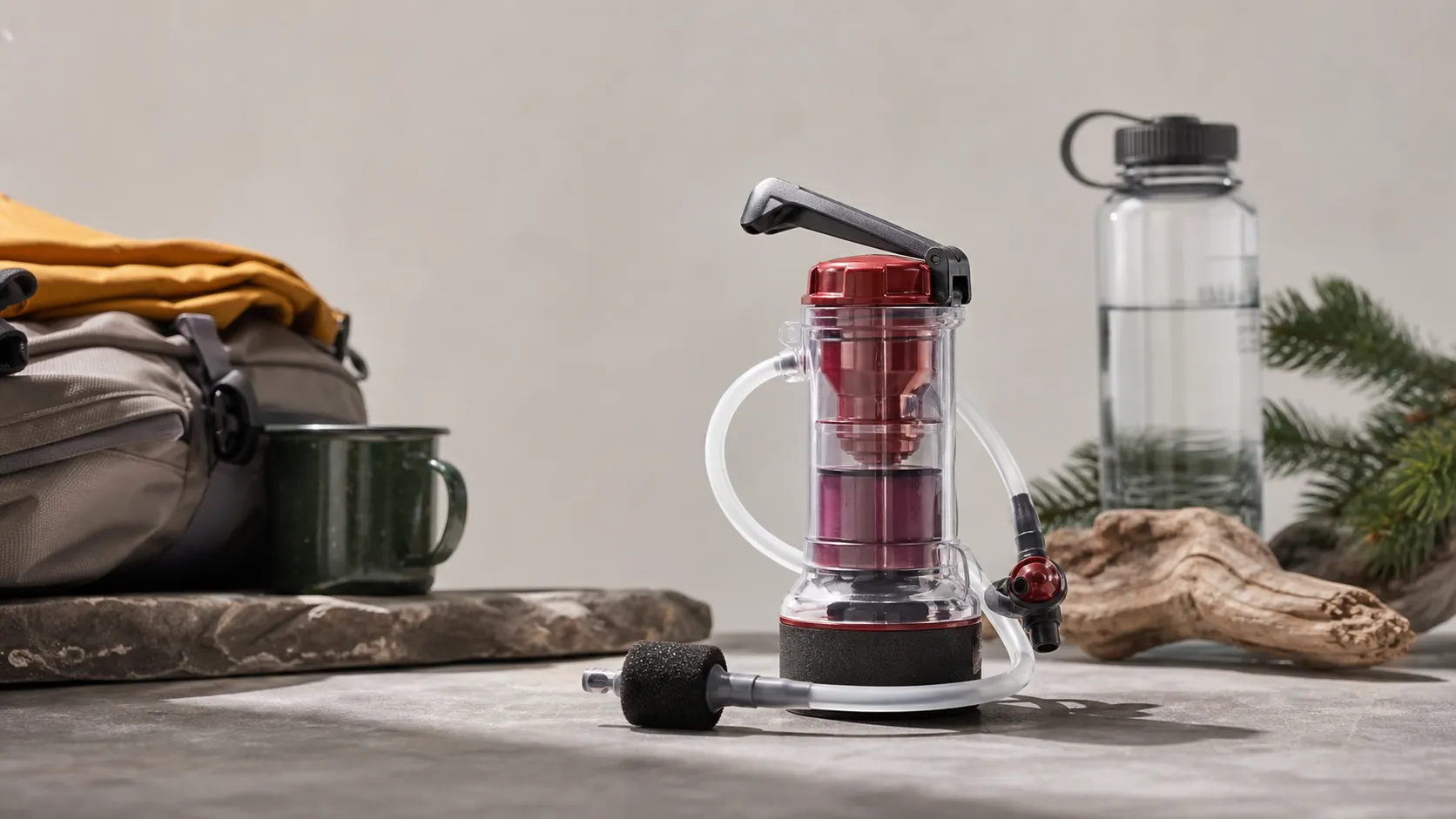
MSR Guardian Purifier Review (2026)
A top pick for groups and basecamps — the MSR Guardian Purifier delivers exceptional flow and durability but carries a high price and weight penalty.
 Outdoor & Garden
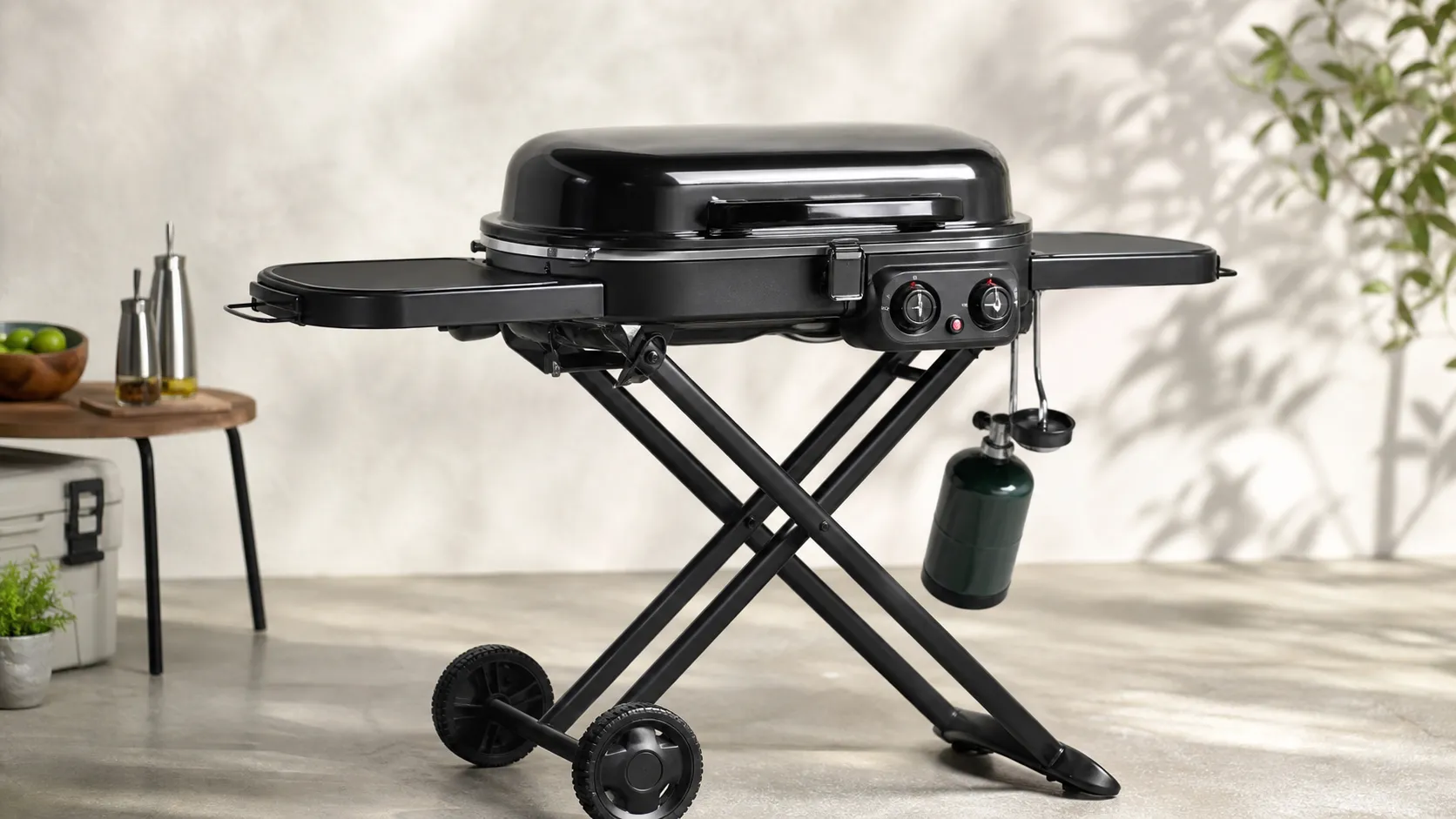
Coleman RoadTrip 285 Portable Propane Grill Review 2026
Portable, quick to heat, and great value — the Coleman RoadTrip 285 is ideal for tailgates and camping, but expect hotspots and some plastic parts to limit heavy use.
 Outdoor & Garden
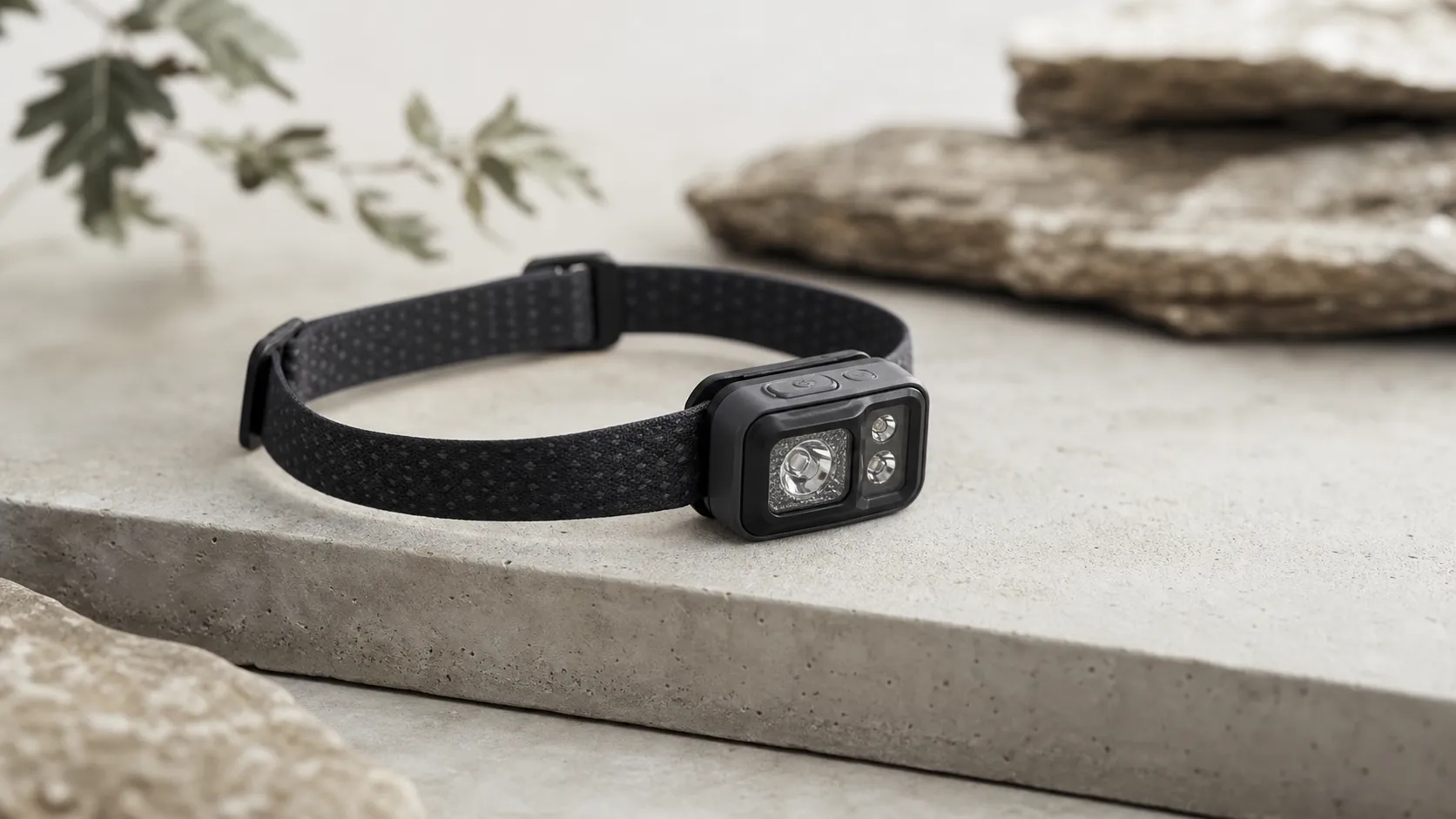
Black Diamond Spot 400‑R Headlamp Review 2026
A bright, well‑balanced rechargeable headlamp that excels for trail running and hiking. Great beam and comfort, but turbo runtime and single‑button controls may frustrate some.