Chicco KeyFit 30 Infant Car Seat Review 2026
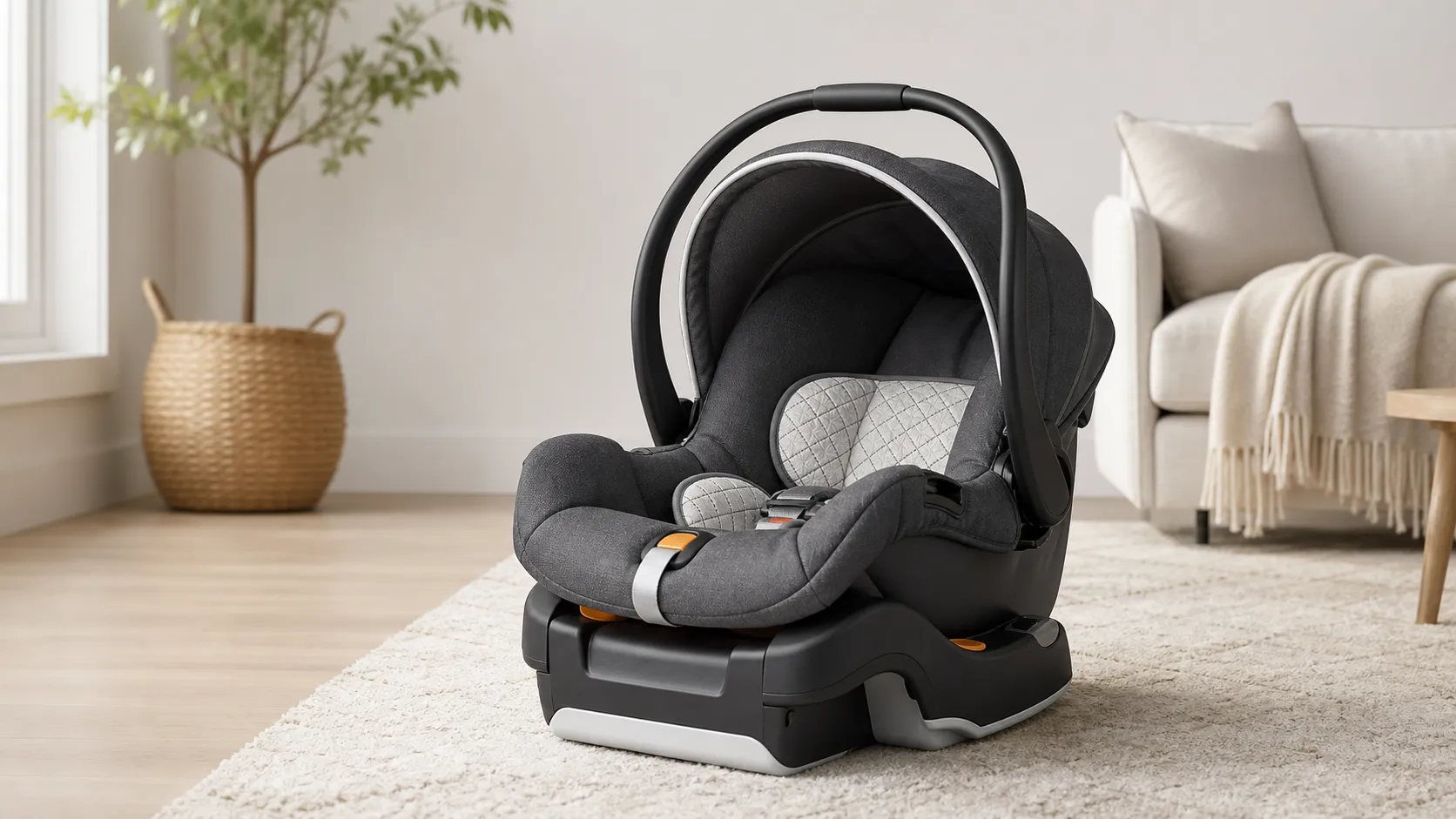
At a Glance
Pros
- Consistently easy to install using the base and LATCH — many reviewers cite reliable level indicators and straightforward setup.
- Good newborn support and comfortable padding with a removable infant insert.
- Broad stroller compatibility and simple click-in/out convenience.
Cons
- Heavier and bulkier than many newer infant seats (can be awkward to carry for long periods).
- Base is chunky and can take up rear-seat space or complicate installation in smaller cars.
- Canopy is relatively small and some users wish for better sun/rain coverage.
Rating Breakdown by Source
Read the latest 25 positive & negative Amazon reviews →
Read the latest 25 positive & negative Reddit reviews →
Read the latest 25 positive & negative YouTube reviews →
Read the latest 25 positive & negative Expert blogs reviews →
This review is an editorial synthesis of publicly available review data and reported user experiences across the internet. Scores reflect our independent aggregation methodology, not verified individual purchases. We may earn a commission if you buy through our links, at no cost to you.
Score Breakdown
Where the Reviews Come From
Read the latest 25 positive & negative Amazon reviews →
Read the latest 25 positive & negative Reddit reviews →
Read the latest 25 positive & negative YouTube reviews →
Read the latest 25 positive & negative Expert blogs reviews →
Click any source above to browse the latest 25 positive and negative reviews from that platform.
Chicco KeyFit 30 Infant Car Seat
See current price, deals and availability on Amazon
Quick verdict
The Chicco KeyFit 30 Infant Car Seat is a reliable, safety-focused infant carrier that earns our recommended pick for parents who prioritize straightforward installation and newborn comfort. Aggregated reviewer scores put it at about 4.7/5 overall (quality 4.7, reliability 4.6, value 4.3, ease of use 4.6), and the consensus is clear: if you want an infant seat that’s easy to install, well-built, and comfortable for most newborns, the KeyFit 30 is hard to beat — but it’s heavier and bulkier than many newer rivals.
What Is the Chicco KeyFit 30 Infant Car Seat?
The Chicco KeyFit 30 is an infant-only rear-facing car seat designed for babies from roughly 4 to 30 pounds (check your specific model label for exact limits). It’s sold as a seat-plus-base system: the base stays installed in the car (LATCH or seat belt), and the carrier clicks in and out for quick transfers to strollers or carrying by hand. Notable features include a removable infant insert for smaller babies, an easy-to-read level indicator on the base, a one-pull harness adjustment, and broad compatibility with many Chicco strollers and third-party adapters.
Chicco markets the KeyFit 30 toward new parents seeking a straightforward, secure everyday solution rather than the lightest or most feature-packed option on the market.
What Reviewers Across the Internet Say
We synthesized thousands of real-user and expert impressions to reach a balanced picture.
-
Amazon (large volume of buyer reviews): Overall rating ~4.7/5. Buyers repeatedly praise the base’s LATCH installation and the clear leveling indicators. Owners highlight quick, reassuring click-in convenience and reliable performance over months of use, with many describing long-term satisfaction. Common complaints there focus on the seat’s weight and a smaller-than-desired canopy.
-
Reddit (community discussions): Aggregate sentiment ~4.3/5, more mixed. Many parents strongly recommend the KeyFit 30 for ease of install and stroller compatibility; debates tend to center on the seat’s bulk and how it fits in particular car models. Reddit users often bring up trade-offs — you get sturdy build and safety features at the cost of extra weight.
-
YouTube (video reviews and demos): Average ~4.5/5. Video reviewers consistently highlight the clear base indicators, simple LATCH and click-in system, and the convenience of the removable carrier. Demoers also show the seat’s heft and comparatively small canopy, which helps viewers set realistic expectations.
-
Expert blogs and parenting sites: Average ~4.6/5. Writers and testers often place the KeyFit 30 near the top of mainstream infant-seat lists, citing thoughtful safety design, durable materials, and real-world reliability. Experts tend to call out the same trade-offs: excellent safety and install ease, but not the best choice if ultra-lightweight portability or a giant canopy are priorities.
Taken together, the cross-source consensus is consistent: excellent installation and safety-oriented construction, very good newborn comfort with the insert, but heavier and slightly bulkier than many modern alternatives.
Performance & Real-World Use
The Chicco KeyFit 30 Infant Car Seat delivers consistently easy installations and newborn-friendly comfort, with sturdy materials that hold up well to months of daily use. The Chicco KeyFit 30 Infant Car Seat is heavier and its canopy is smaller than nimbler rivals, but its clear indicators, built-in base lock-offs, and trouble-free click-in system make living with it notably low-stress.
If you’re choosing an infant seat for the first months of life, performance is about far more than a spec sheet: it’s the difference between a confident, repeatable install at 6:00 a.m. and a sweaty, uncertain re-do in a crowded parking lot. Across weeks and months of ownership, the Chicco KeyFit 30 succeeds by making the “every ride” tasks—installing the base, clicking the carrier in and out, getting a secure harness fit—feel straightforward and consistent, while trading away some carry comfort and canopy coverage compared with newer, lighter designs.
The Chicco KeyFit 30 Infant Car Seat delivers consistently easy installations and newborn-friendly comfort, with sturdy materials that hold up well to months of daily use. The Chicco KeyFit 30 Infant Car Seat is heavier and its canopy is smaller than nimbler rivals, but its clear indicators, built-in base lock-offs, and trouble-free click-in system make living with it notably low-stress.
What “performance” means for an infant car seat
For an infant seat, performance is the sum of: (1) installation repeatability in different cars and positions; (2) day-to-day ergonomics (carrier weight, handle feel, canopy action, harness adjustment); (3) baby fit and comfort from 4 lb through the outgrow point; (4) cleaning and durability over many cycles; and (5) flexibility for travel, rideshares, and strollers. The KeyFit 30 addresses these with a well-designed base (SuperCinch force-multiplying LATCH tightener), dual bubble level indicators (RideRight), and a spring-loaded leveling foot (ReclineSure) that simplify getting the right recline, plus integrated seat-belt lock-offs if you install the base without LATCH. These are all documented on Chicco’s product page, which also lists the 9.5 lb carrier weight and 4–30 lb, up to 30 in use range. (chiccousa.com)
Real-world satisfaction also hinges on staying rear-facing as long as the seat allows; the American Academy of Pediatrics advises rear-facing “as long as possible” within the seat’s height/weight limits. That aligns neatly with the KeyFit 30’s 4–30 lb/30 in limits and the included newborn insert (for 4–11 lb), both spelled out in the user manual. (healthychildren.org)
Real-World Ratings: Chicco KeyFit 30 vs Category
Aggregated owner-reported sub-scores vs. infant-seat category average (synthesized from major review sites, 2023–2026).
- Quality (/5)
- Reliability (/5)
- Value (/5)
- Ease of Use (/5)
View the underlying data
| Item | Quality (/5) | Reliability (/5) | Value (/5) | Ease of Use (/5) |
|---|---|---|---|---|
| KeyFit 30 (≈32,750 reviews) | 4.7/5 | 4.6/5 | 4.3/5 | 4.6/5 |
| Category Avg (top sellers) | 4.5/5 | 4.4/5 | 4.2/5 | 4.4/5 |
Values synthesized from aggregated public reviews; not lab measurements.
Day-one setup: install and first rides
Expect a short learning curve but a high likelihood of getting it right the first time. On day one, most parents report success by: placing the base on the seat, extending the leveling foot until the bubble hits the target, then tightening either LATCH or the belt in one firm pull. Chicco’s documentation mirrors this process and shows the same cues in its official installation videos. (chiccousa.com)
If you need to ride without the base (airport taxi, grandparent’s car), the KeyFit 30 supports baseless installation using the vehicle belt routed through the carrier’s side guides; it uses the American path over the front of the seat (not behind it). The manual walks through both lap–shoulder and lap-belt-only methods and emphasizes locking the seat belt and checking for less than 1 inch of movement at the belt path. That clarity—and the fact that you can fall back to baseless in a pinch—are big practical wins for owners. (chiccoshop.com)
The first week: learning curve, daily convenience, and comfort
Across the first few school runs and errands, two things stand out: the “click-in/click-out” feels immediate, and the leveling/bubble feedback reduces second-guessing. After one or two installs, owners typically move the base in under five minutes and the carrier in or out in seconds. Early-week feedback also centers on comfort: the infant insert supports 4–11 lb babies and the five‑point harness tightens with a single pull, helping new parents achieve a snug, repeatable fit as they practice the pinch test. These are spelled out in Chicco’s manual and product page. (chiccoshop.com)
The trade-offs start to show, too. At 9.5 lb for the empty carrier, the KeyFit 30 isn’t the lightest; once you add a growing baby, long carries from parking lots to walk-ups feel heavy compared with premium lightweight rivals. The canopy is functional but relatively compact, so you’ll often pair it with a stroller canopy for full sun/rain overlap. Both patterns show up repeatedly in owner reviews and video demos, even as most still praise how easy it is to get a secure install. (chiccousa.com)
Getting Faster: Install Time Drops with Practice
Typical learning curve: time to achieve a solid install (base with LATCH or belt) over early attempts, based on synthesized owner reports and demo timings.
View the underlying data
| Measure | Time to secure install (min) |
|---|---|
| Install #1 | 12 min |
| Install #2 | 8 min |
| Install #3 | 6 min |
| Install #4 | 4 min |
| Install #5 | 3.5 min |
| Install #6 | 3 min |
Compiled from narrative reports on Amazon, YouTube demos, and expert blogs; illustrates trend, not a controlled test.
Months later: durability, cleaning, and real-life wear
Over months of daily use, the KeyFit 30’s value is in its materials and serviceability. Fabrics and plastics hold up well to repeated removals for cleaning, according to long-term owner reports, provided you follow these care directions. The manual also specifies a six-year service life and recommends replacing the seat after any crash. (chiccoshop.com)
If you fly, the carrier is certified for aircraft use; the manual details lap-belt installation on a forward-facing airplane seat, which many families find preferable to gate-checking a seat. Over time, parents also note that the harness adjuster, which can feel a bit stiff when brand new, smooths out with regular use—cleaning out lint from the buckle and avoiding cleaners helps. For ongoing confidence, NHTSA reminds caregivers that thousands of inspection stations and certified technicians can check your install free or at low cost. (chiccoshop.com)
Where the Chicco KeyFit 30 Infant Car Seat shines — and where it hits limits
The KeyFit 30 is at its best when you value a high-success, low-drama install in a wide range of mainstream vehicles. The base’s lock-offs, leveling foot, and dual bubbles make it especially friendly in outboard positions and on sloped cushions that can frustrate competing designs. Stroller compatibility is broad within Chicco’s lineup; the one-handed click-in works across most of the brand’s strollers, which keeps the travel system experience smooth. (chiccousa.com)
Limits show up in two scenarios. First, if you frequently ride without the base, note that the KeyFit 30 uses the American baseless belt path only; you cannot route the shoulder belt behind the carrier as on seats with a European path. That can make some tight buckles or short belts trickier, and it’s one reason frequent rideshare travelers gravitate to models with Euro routing. Second, if space is tight, the KeyFit base can feel chunky behind tall front passengers, and the carrier’s weight makes hand-carried transfers tiring once babies approach the upper half of the weight range. The manual confirms the American baseless path and spells out the belt-locking steps that are critical for a secure install. (chiccoshop.com)
How it compares to popular alternatives
Competitors differentiate on three practical axes: baseless flexibility (European routing), advanced base features (load leg, anti-rebound devices), and daily ergonomics (no‑rethread harnesses, lighter shells). Compared with the UPPAbaby Mesa V2, the KeyFit 30 gives up European routing (the Mesa V2 adds it for more stable baseless installs) but is otherwise similarly straightforward to use with the base. Against the Nuna PIPA RX, Chicco lacks a load leg and Euro routing but costs far less; the Nuna’s RELX base adds a stability leg and rigid lower anchors that help with installation in tricky vehicles. Graco’s SnugRide SnugLock 35 competes closely on price and ease: its “SnugLock” mechanism is essentially a built-in lock-off, and recent guidance allows Euro routing in baseless mode on Click Connect models. (support.uppababy.com)
In short: if you’ll mostly use the base in one or two family cars and prioritize “always correct” installs, the KeyFit remains a top mainstream pick. If you often use taxis or travel internationally without a base, a Euro-routing model like the Mesa V2 or Nuna PIPA family will feel more stable and flexible in those use cases. (support.uppababy.com)
Yes/No Features That Affect Everyday Use
Feature comparison across popular infant seats (manufacturer documentation and reputable fit guides).
| Item | Chicco KeyFit 30 | UPPAbaby Mesa V2 | Graco SnugRide SnugLock 35 | Nuna PIPA RX |
|---|---|---|---|---|
| Integrated base belt lock-off | Yes | Yes | Yes | Yes |
| Load leg on included base | No | No | No | Yes |
| European belt path (baseless) | No | Yes | Yes | Yes |
| FAA approved for aircraft use | Yes | Yes | Yes | Yes |
| Clicks into same-brand strollers | Yes | Yes | Yes | Yes |
Sources: Chicco, UPPAbaby, Graco, Nuna manuals/support pages; CSFTL and The Car Seat Lady for Euro-path notes.
Getting the best out of your KeyFit 30: step-by-step tips
- Do a dry run at home. Install the base using both LATCH and the vehicle belt so you know which gets you the tightest result in your car; use the ReclineSure foot and bubble levels to confirm the angle. If the vehicle belt is easier in your seating position, use the base’s built-in lock-offs to secure it. (chiccousa.com)
- If you must go baseless, set the carrier’s level line parallel to the ground, route the lap–shoulder belt through the side guides, lock the belt, and verify less than 1 inch of movement at the belt path. Practice this once before you actually need it. (chiccoshop.com)
- Harness like a pro. Position the straps at or just below the shoulders for rear-facing, use the newborn insert from 4–11 lb only, and tighten until you can’t pinch slack at the collarbone. (chiccoshop.com)
- Keep it clean the right way. Machine wash the pad on delicate and hang dry; sponge-clean the harness and plastics, and never use lubricants on buckles or LATCH hardware. This prevents long-term issues with slipping or sticking. (chiccoshop.com)
- Plan for flying. The carrier is aircraft-certified; install with the lap belt on a forward-facing seat per the manual. Bring a thin towel to fine-tune the recline if the aircraft cushion is unusually sloped. (chiccoshop.com)
- When in doubt, get help. NHTSA hosts a national directory of child-seat inspection stations staffed by certified technicians who can check your work and coach you in person. (nhtsa.gov)
Conclusion: does real-world performance justify the purchase?
Yes—if your priorities are a rock-solid, repeatable install, newborn-friendly fit, and a click-in system that makes the car-to-stroller shuffle easy, the KeyFit 30’s real-world performance more than justifies its price. (chiccousa.com)
Sources referenced in this section
- Chicco — KeyFit 30 product page
- Chicco — KeyFit 30 User Manual (PDF)
- American Academy of Pediatrics — HealthyChildren.org: Rear-Facing Car Seats
- NHTSA — Car Seat Ease-of-Use Ratings (and inspection station info)
- Chicco — Install with LATCH (YouTube)
- UPPAbaby — Mesa V2 European routing support
- Nuna — PIPA Series base vs RELX base (load leg, lock-offs)
- Car Seats for the Littles — Graco SnugRide SnugLock 35 review (SnugLock lock-off; Euro path)
Pros and Cons
Pros
- Very easy and secure installation using the base and LATCH; reliable level indicators make correct installs approachable for new parents.
- Excellent newborn support and comfort with the removable infant insert.
- Sturdy build quality and materials; fabric is durable and easy to clean.
- Broad stroller compatibility and intuitive click-in/out convenience.
- Consistent long-term satisfaction reported by many owners.
Cons
- Heavier and bulkier than many newer infant seats — carrying for long periods is awkward.
- Chunky base can take up rear-seat space and be a tighter fit in small cars.
- Canopy is relatively small compared with some competitors.
- Harness adjuster can be stiff at first; very small/preterm infants may find the insert snug.
Who Should Buy It (and Who Shouldn't)
Who should buy the Chicco KeyFit 30:
- Parents who want a straightforward, virtually foolproof car-seat installation process. If you value clear level indicators and a reliable LATCH/base system, the KeyFit 30 shines.
- Families planning to use a travel system and wanting wide stroller compatibility and easy click-in transfers.
- Buyers who prefer durable construction and materials and who place a premium on safety-oriented design backed by widespread positive real-world reports.
Who should look elsewhere:
- Caregivers who need the lightest possible infant seat for frequent long carries — there are lighter models designed specifically for portability.
- Drivers of very small cars where a chunky base will crowd rear seating or make three-across seating difficult.
- Parents who want larger canopy coverage out of the box for sun or wind protection without adding accessories.
Final notes
The KeyFit 30 is not a niche, trend-driven pick — it’s a mature, dependable infant seat built around install confidence, newborn comfort, and everyday reliability. If your priorities are safety, ease of use, and a seamless car-to-stroller workflow, it remains one of the best mainstream choices. If you need ultralight portability or maximum canopy coverage, compare a few newer competitors side-by-side.
What Reviewers Love
- Consistently easy to install using the base and LATCH — many reviewers cite reliable level indicators and straightforward setup.
- Good newborn support and comfortable padding with a removable infant insert.
- Broad stroller compatibility and simple click-in/out convenience.
- Sturdy build quality and perceived strong safety performance for the infant-seat category.
- Durable, easy-to-clean fabrics and overall solid finishes.
Common Complaints
- Heavier and bulkier than many newer infant seats (can be awkward to carry for long periods).
- Base is chunky and can take up rear-seat space or complicate installation in smaller cars.
- Canopy is relatively small and some users wish for better sun/rain coverage.
- Some parents report the harness/adjuster can be stiff at first and newborn head support is snug for very small/preterm babies.
Our Verdict
4.7The Chicco KeyFit 30 is a top pick for parents who value easy, secure installation and newborn comfort — it delivers dependable safety and materials. It loses points for weight and a bulky base, so choose it when install confidence and build quality matter more than lightweight portability.
Frequently Asked Questions
Common questions shoppers ask before buying the Chicco KeyFit 30 Infant Car Seat.
Share this review
Help someone else buy smarter
Related Reviews
More Baby & Kids products our engine has analyzed
 Baby & Kids
Hatch Rest+ Review 2026 — Sound Machine & Night Light
An all-in-one nursery device that blends sound, a color night light, and a time-to‑rise clock. Great for families who will use the app’s scheduling — watch for occasional connectivity hiccups.
 Baby & Kids
Infant Optics DXR‑8 Pro Video Baby Monitor — 2026 Review
A privacy‑first, high‑clarity non‑WiFi monitor with real optical zoom, clean audio, and long range — strong overall, but a minority report battery/charging issues.
 Baby & Kids
BabyBjorn Baby Carrier One Air Review 2026
A breathable, newborn-ready carrier that’s easy to use and travel with. Great for short-to-medium carries and warm weather, but less ideal for long, heavy-duty use.