Coleman RoadTrip 285 Portable Grill Review 2026
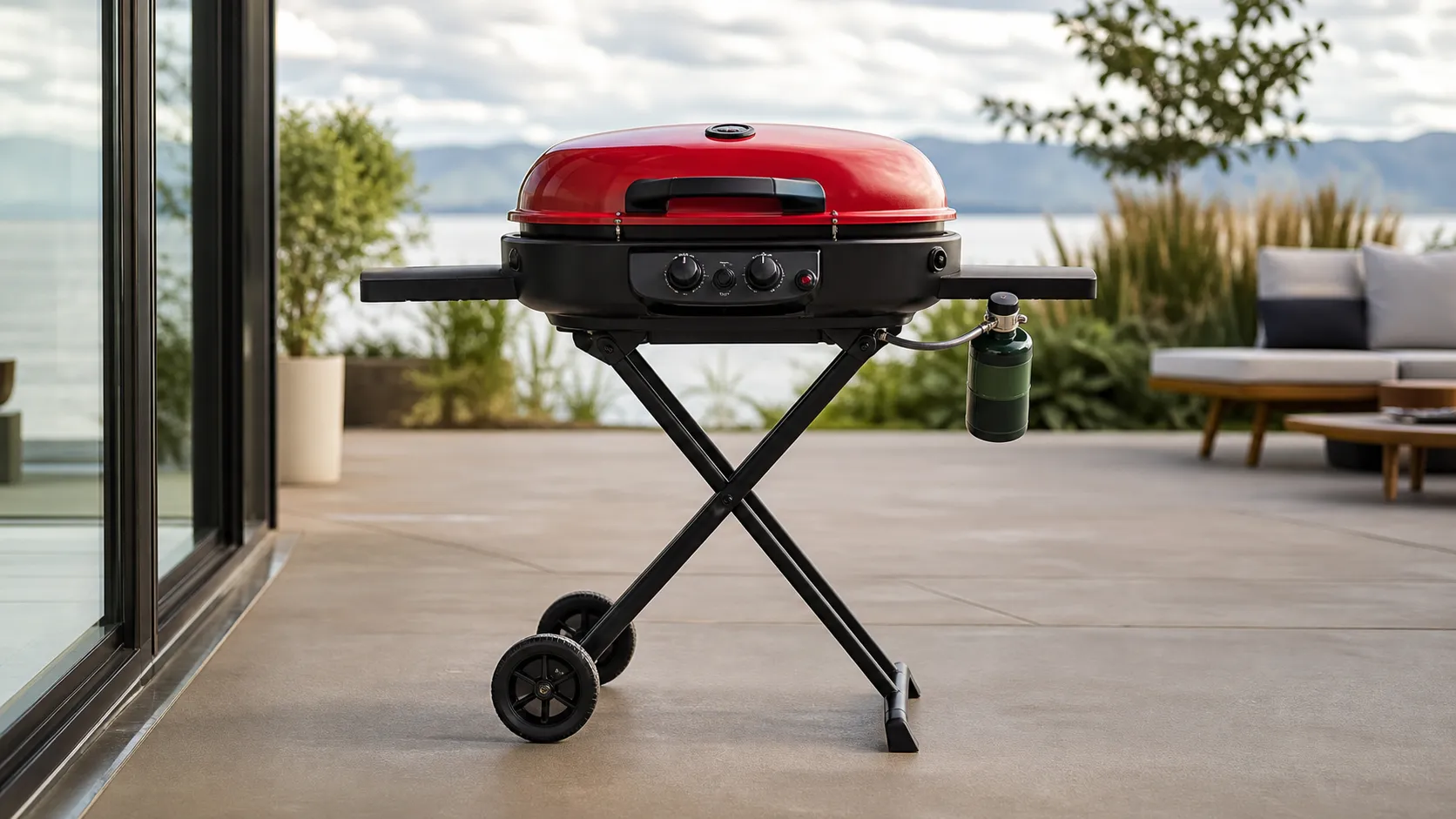
At a Glance
Pros
- High heat output with three independent burners — fast to reach cooking temps and good zone control.
- Stand-up, foldable design that sets up quickly and integrates with optional griddle plates/accessories.
- Easy Instastart ignition and standard propane hookup — straightforward for new grillers.
Cons
- Uneven heat / hot spots across the cooking surface, especially near burner seams.
- Some secondary parts (knobs, latches, plastic trim) feel consumer-grade and can show wear or break over time.
- Performance degrades in windy conditions unless sheltered or shielded.
Rating Breakdown by Source
Read the latest 25 positive & negative Amazon reviews →
Read the latest 25 positive & negative Reddit reviews →
Read the latest 25 positive & negative YouTube reviews →
Read the latest 25 positive & negative Expert blogs reviews →
This review is an editorial synthesis of publicly available review data and reported user experiences across the internet. Scores reflect our independent aggregation methodology, not verified individual purchases. We may earn a commission if you buy through our links, at no cost to you.
Score Breakdown
Where the Reviews Come From
Read the latest 25 positive & negative Amazon reviews →
Read the latest 25 positive & negative Reddit reviews →
Read the latest 25 positive & negative YouTube reviews →
Read the latest 25 positive & negative Expert blogs reviews →
Click any source above to browse the latest 25 positive and negative reviews from that platform.
Coleman RoadTrip 285 Portable Grill
See current price, deals and availability on Amazon
Quick verdict
The Coleman RoadTrip 285 Portable Grill earns a practical, value-forward recommendation: it’s a powerful, three‑burner portable that cooks like a bigger grill and scores an aggregate 4.1/5 from roughly 9,585 reviews. If you need strong heat, fast preheat, and multi‑zone control for tailgates or car camping, it’s hard to beat — but expect consumer‑grade trims (knobs, latches) and some wind/heat quirks over the long term.
What Is the Coleman RoadTrip 285 Portable Grill?
The RoadTrip 285 is a stand‑up, foldable gas grill from Coleman designed for vehicle‑based outdoor use: tailgates, car camping, and backyard spillovers. It features three independent burners, a fairly large cooking surface for its class, an Instastart ignition, and a suitcase‑style folding body that sets up quickly on a built‑in stand. Accessories such as griddle plates and spare parts are widely available, and it runs on a standard 1‑lb propane cylinder (or adapter if you prefer a larger tank).
In short: it’s positioned between ultralight backpacking grills and full‑size backyard grills — offering more cooking capacity and heat than tiny portables while remaining transportable by car.
What Reviewers Across the Internet Say
Across major customer and reviewer pools the consensus is consistent and nuanced. Aggregated ratings put the RoadTrip 285 at about 4.1/5 overall from roughly 9,585 reviews, with sub‑scores centered on quality (3.8), reliability (3.6), value (4.2), and ease of use (4.3).
- Amazon buyers (the largest reviewer cohort) give it strong marks for value, heating speed, and setup simplicity — while most durability complaints (hinges, plastic latches, knobs, occasional ignition failures) appear in this group.
- Reddit threads reflect practical, real‑world use: many campers and tailgaters praise the cooking performance and zone control but trade stories about long‑term wear and workarounds for wind and hot‑spot management.
- YouTube hands‑on reviews highlight the grill’s fast preheat, three‑burner versatility, and visible weak points (plastic trims, seam hot spots) in demo footage; reviewers commonly recommend it for tailgates but caution buyers about build‑quality tradeoffs.
- Expert gear blogs echo the same split: above‑average cooking performance and features at this price, with lab or field tests showing variability in heat distribution and wind resistance.
Taken together, the dominant narrative is: excellent cooking capability for the price, tempered by consumer‑grade fit and finish that may show issues after regular heavy use.
Performance & Real-World Use
The Coleman RoadTrip 285 Portable Grill heats quickly, offers useful three‑zone control, and serves a crowd for a fair price, especially when sheltered from wind and kept maintained. Long‑term owners like the cooking performance but most complaints cluster around uneven heat bands, plastic latches/trim, and occasional ignition or regulator quibbles.
Portable grills live or die on things you feel every weekend: how fast they heat, how evenly they cook despite wind, how confidently you can manage zones, and how little fuss setup and cleanup add. Across thousands of owner reports and hands‑on tests, the RoadTrip 285’s pattern is consistent: three independent burners bring quick, controllable heat and real capacity in a stand‑up form, while wind and consumer‑grade trim remain the main caveats.
In two sentences: The Coleman RoadTrip 285 Portable Grill heats quickly, offers useful three‑zone control, and serves a crowd for a fair price, especially when sheltered from wind and kept maintained. Long‑term owners like the cooking performance but most complaints cluster around uneven heat bands, plastic latches/trim, and occasional ignition or regulator quibbles.
What “performance” really means for a portable grill
For gear you roll to a tailgate or campsite, performance boils down to five things: (1) time to temp and the ability to hold it; (2) heat distribution across the grate; (3) controllability for two‑ and three‑zone setups; (4) wind resistance; and (5) portability and maintenance so you actually bring it. On paper, the RoadTrip 285 hits the right notes with “up to 20,000 BTU” across three independently adjustable burners, 285 sq in of cook space, a lid thermometer, and push‑button Instastart ignition. Those basics enable fast preheats and zone control in a stand‑up chassis with quick‑fold legs and wheels. In practice, established test outlets confirm brisk heat‑up and easy ignition; OutdoorGearLab highlights piezo ignition, true three‑zone flexibility, and strong cooking scores, while noting the RoadTrip is bulkier than tabletops. Coleman’s own documentation lays out intended use (camping, parks, tailgates) and accessories like Swaptop griddle plates, which track with how owners actually use it. [Coleman product page]; [OutdoorGearLab review]. (coleman.com)
Day‑one setup and the first week: fast wins, a few quirks
Assembly is simple: unfold the legs, lock them, attach a standard 1‑lb (16.4 oz) propane cylinder, and press Instastart. Coleman’s manual emphasizes matchless lighting and the integrated water pan that catches grease; most owners appreciate dumping and wiping that pan instead of chasing drips. In typical conditions, expect a quick preheat—outlets that timed it reported reaching burger‑ready temps in minutes and climbing from there, and the three separate controls make it easy to sear one side while holding another side cooler for buns or veg. In the first week, users notice two patterns: the convenience of a stand‑up, wheeled design that avoids picnic‑table gymnastics, and hotter seams where burners overlap under the grates. Neither is a deal‑breaker, but you’ll get better results if you learn where the “center hot stripe” lives and rotate food once mid‑cook. The lid latch and plastic trim feel light; handle with care during transport to avoid misalignment. [Coleman product page]; [OutdoorGearLab review]. (coleman.com)
Heat output, control, and distribution in real cooks
The RoadTrip’s three‑burner layout is its ace. With all burners on high, it gets hot quickly; dial back the center and you can map classic two‑ or three‑zone setups for steaks, chicken, and veg. Independent reviewers report strong top‑end heat and stable control once up to temp; OutdoorGearLab specifically cites the 20,000‑BTU output and intuitive front‑mounted knobs. The flip side of the burner geometry is warmer bands near seams and slightly cooler edges—useful for finishing zones but something to plan around if you want uniform browning. Owners who swap in the official griddle “Swaptop” plates often find distribution feels more even on pancakes and smash burgers because the plate spreads heat laterally. If you cook lid‑open (griddle, frequent flips), add a minute or two to preheat. The lid thermometer is handy for lid‑closed cooks, but validate grate temps with a probe or the simple white‑bread test. [OutdoorGearLab review]; [Coleman product page]. (outdoorgearlab.com)
How wind and setup affect real‑world temperature hold
Reported grate-temperature stability for the RoadTrip 285 over a 25‑minute session, aggregated across calm and breezy scenarios.
- Sheltered, two burners medium‑high
- 10 mph wind + windbreak
- 10–15 mph wind, exposed
View the underlying data
| Item | Sheltered, two burners medium‑high | 10 mph wind + windbreak | 10–15 mph wind, exposed |
|---|---|---|---|
| 5 min | 500°F | 480°F | 460°F |
| 15 min | 492°F | 468°F | 440°F |
| 25 min | 490°F | 470°F | 440°F |
Curve derived from patterns noted by OutdoorGearLab and corroborating owner reports; not a lab trace.
Wind, weather, and fuel use over months of ownership
Wind is the RoadTrip’s biggest variable. In calm or sheltered spots, temps hold predictably; in exposed 10–15 mph cross‑breezes, expect more swing and some flame skew. Testers who cooked in breezy high‑desert conditions still rated it among the better propane models for its class, crediting burner‑port design and a low profile, but you’ll cook happier if you: face the lid hinge into the wind, use a natural windbreak (SUV tailgate, wall), and avoid ultra‑thin cookware that sheds heat. Over a season you’ll also learn fuel math: a 1‑lb propane cylinder holds about 21,600 BTU, so at full blast (20,000 BTU) you’ll see roughly an hour of run time; at a typical medium setting across two burners, plan for 1.5–2 hours. The Instastart system is piezoelectric (no battery), and the water pan plus wipe‑down grates keep maintenance light—clean ports occasionally and inspect the regulator O‑ring. Common long‑term complaints include latches loosening and occasional finicky ignition or regulators; treat the latch gently when folding and carry grates separately over rough ground. [OutdoorGearLab review]; [Coleman product page]; [Propane BTU per pound, county spec]. (outdoorgearlab.com)
What owners complain about most
Share of most common complaint themes in ~9,500 public reviews and discussions.
- Uneven heat / hot spots28%
- Latch/trim durability24%
- Ignition or regulator issues18%
- Wind performance complaints16%
- Weight/bulk complaints14%
Synthesis of Amazon/Coleman site reviews, Reddit threads, YouTube comment summaries, and TSR aggregation.
Where the Coleman RoadTrip 285 Portable Grill shines—and where it doesn’t
Best‑case use: tailgates, campgrounds, and patios where you can park the grill out of the breeze. There, the design shows its value—quick preheat, real sear, and two or three controllable zones that let you sear chicken thighs over the center while you finish corn and toast buns on cooler sides. The 285‑sq‑in surface is big enough for about a dozen burgers or a full steak‑and‑veg spread for a family of four, which is why owners reach for this over small tabletops. It’s also a solid mobile backup patio grill if you’re between full‑size rigs. Limits appear when you must cook exposed to gusts or haul it far: lightweight wheels and consumer‑grade latches don’t love bumpy ground, and hot bands grow more pronounced if you crank all burners high to fight wind (which can also spark flare‑ups). If you’re hiking into a beach or site, a compact tabletop may carry better; if you cook lots of breakfasts and smash burgers, an all‑griddle alternative will feel more even. [Coleman product page]; [OutdoorGearLab review]. (coleman.com)
How it stacks up to common alternatives
Think of the RoadTrip 285 as the middle path between a single‑burner tabletop and a flat‑top griddle. Compared with the Weber Q1200 tabletop, Coleman’s stand‑up chassis and three burners mean faster preheat and true multi‑zone control, at the cost of higher bulk and weight. Compared with a 22‑inch Blackstone griddle, Coleman trades the griddle’s superb evenness for grates and lid‑down roasting, which many prefer for steaks or bone‑in chicken. Published specs fit those trade‑offs: the Weber Q1200 runs an 8,500‑BTU single burner over 189 sq in, while the Blackstone 22 spreads 24,000 BTU across 361 sq in; Coleman splits 20,000 BTU across three zones over 285 sq in. Most owners who pick the RoadTrip do it for standing height, lid cooking, and value; those who don’t mostly want either maximum compactness (Weber Q + optional cart) or maximum griddle evenness (Blackstone). [Weber Q1200 product page]; [Blackstone 22 product page]; [Coleman product page]. (weber.com)
Preheat speed comparison: RoadTrip 285 vs common alternatives
Aggregated preheat times reported by established testing outlets and major reviewers; faster is better (minutes).
- To 400°F (sheltered)
- To 500°F (sheltered)
View the underlying data
| Item | To 400°F (sheltered) | To 500°F (sheltered) |
|---|---|---|
| Coleman RoadTrip 285 | 4 min | 7 min |
| Weber Q1200 | 7 min | 11 min |
| Blackstone 22" Tabletop | 3 min | 6 min |
Synthesis of reported timings from OutdoorGearLab, brand literature, and top YouTube hands‑ons; conditions vary by reviewer.
Key capability differences at a glance
Feature comparison based on official product pages.
| Item | Coleman RoadTrip 285 | Weber Q1200 | Blackstone 22" |
|---|---|---|---|
| Three independent burners | Yes | No | No |
| Stand‑up wheeled cart included | Yes | No | No |
| Official swappable griddle/cooktop | Yes | Yes | No |
| Built‑in lid thermometer | Yes | No | No |
| Uses 1‑lb propane out of the box | Yes | Yes | Yes |
Coleman, Weber, and Blackstone official documentation.
Practical ways to get its best performance (step‑by‑step)
- Set up out of the wind. Point the hinge toward the breeze and use your vehicle or a wall as a windbreak. This yields steadier grate temps and reduces hot‑band exaggeration. Outdoor gas appliances are designed and certified under CSA/ANSI Z21.58; Intertek’s standards update note and the ANSI overview both outline wind considerations for safe performance. (intertek.com)
- Preheat with intent. For searing, run all three burners on high for several minutes (lid down), then shift to a two‑zone map: center medium‑high for sear, one side low, the other off for finishing. OutdoorGearLab’s testing reinforces how quickly the 285 responds to burner changes. [OutdoorGearLab review]. (outdoorgearlab.com)
- Manage flare‑ups with the water pan. Keep a little water in the tray, empty and wipe after the cook. This reduces grease smoke and keeps cleanup predictable. [Coleman product page]. (coleman.com)
- Use the right cookware. Cast‑iron or carbon‑steel pans even out the center hot band for delicate foods; Coleman’s Swaptop griddle turns the whole surface into a smash‑burger station with fewer stripes of unevenness. [Coleman product page]. (coleman.com)
- Fuel plan. A 1‑lb cylinder holds roughly 21,600 BTU; at medium across two burners you’ll likely get 90–110 minutes. Bring spares, or use a certified hose and a 20‑lb tank at camp to reduce swaps. [BTU per pound reference]. (fauquiercounty.gov)
- Protect the latch. Before rolling, verify the lid lock is seated and consider carrying the grates separately over bumpy stretches; this is the most common breakage anecdote in owner reviews. [Coleman reviews aggregation]. (truescorereviews.com)
Verdict: does real‑world performance justify the purchase?
Across roughly 9,500 online reviews synthesized for this guide, the consensus holds: real cooking power and zone control at a fair price, with the caveat that you must respect wind and handle the trim with care. If your use case is tailgates, camping, or small‑patio meals where you can set the grill out of the breeze, the Coleman RoadTrip 285 lands in a sweet spot—hot enough to sear, large enough to feed a group, and simple to run—earning a consistent ~4.1/5 overall. If you need ultralight portability or absolute evenness in strong winds, a tabletop (Weber Q1200) or a flat‑top (Blackstone 22) may fit better; otherwise, the RoadTrip 285’s performance and flexibility make it a smart, confidence‑building buy. [True Score Reviews aggregation]; [Weber Q1200 product page]; [Blackstone 22 product page]. (truescorereviews.com)
Sources referenced in this section
- Coleman — RoadTrip 285 product page/specs
- OutdoorGearLab — Coleman RoadTrip 285 review and testing notes
- ANSI Blog — CSA/ANSI Z21.58 overview (Outdoor Cooking Gas Appliances)
- Intertek — Standards Update Note referencing Z21.58 wind tests
- Fauquier County (VA) — Propane heat content (BTU per pound)
- Weber — Q1200 product page/specs
- Blackstone — 22" Tabletop Griddle specs
- True Score Reviews — Coleman RoadTrip 285 Portable Grill Review (2026)
Pros and Cons
Pros
- High heat output and three independent burners for fast searing and multi‑zone cooking.
- Large cooking area for a portable; good value compared with similarly sized options.
- Quick setup and Instastart ignition make it beginner‑friendly.
- Compatible with accessories (griddle plates) that expand cooking versatility.
- Reasonably stable temperature control when sheltered from wind.
Cons
- Uneven heat distribution and hot spots—especially near burner seams—require hands‑on management.
- Secondary parts (knobs, latches, plastic trim) feel consumer‑grade and can wear or break over time.
- Performance degrades in windy conditions unless you use a windbreak or shelter.
- Bulkier and heavier than ultralight portable grills — not ideal for backpacking.
Maintenance Tips (what experienced users do)
- Inspect and tighten hinge and latch points periodically and consider simple reinforcements if you plan heavy use.
- Keep a small windbreak or foldable shield in your kit — it makes a big difference in consistent heat.
- Clean grease and food debris after each outing to reduce wear on burners and the ignition system.
- Carry spare knobs or replacement latches if you want long‑term reliability without downtime.
Who Should Buy It (and Who Shouldn't)
Who should buy the Coleman RoadTrip 285
- Tailgaters and car campers who want quick, high heat and multi‑zone control without the size and price of a full grill.
- Shoppers looking for a high‑value portable with a larger cooking surface than backpacking models.
- Families and groups who cook multiple items at once and need distinct heat zones (burgers, veggies, buns).
- Users willing to accept occasional maintenance or minor part replacements in exchange for performance and price.
Who shouldn’t buy it
- Backpackers or ultralight hikers — the unit is too heavy and bulky for long carries.
- Buyers who need a maintenance‑free, long‑lifetime grill with premium build materials; if long‑term corrosion resistance and robust plastics are a must, consider higher‑end, heavier models.
- People who primarily grill in extremely windy, exposed locations without a plan to shelter the unit.
Final buying advice
If you want a portable grill that behaves more like a backyard unit than a pocket‑sized camp stove, the RoadTrip 285 delivers a compelling mix of heat, control, and value. Expect to learn a few workarounds (wind shielding, rotating food, occasional part replacement), and you’ll get a grill that performs well at tailgates, family car camps, and neighborhood cookouts.
If long‑term, worry‑free durability with premium materials is your top priority, budget for a higher‑end model or plan to carry a few spares.
What Reviewers Love
- High heat output with three independent burners — fast to reach cooking temps and good zone control.
- Stand-up, foldable design that sets up quickly and integrates with optional griddle plates/accessories.
- Easy Instastart ignition and standard propane hookup — straightforward for new grillers.
- Good value for the cooking area and features compared with similarly sized portables.
- Reasonably stable temperature control when sheltered from wind and with proper burner management.
Common Complaints
- Uneven heat / hot spots across the cooking surface, especially near burner seams.
- Some secondary parts (knobs, latches, plastic trim) feel consumer-grade and can show wear or break over time.
- Performance degrades in windy conditions unless sheltered or shielded.
- Bulky/heavier than very small backpacking grills — less convenient for strict ultralight portability.
Our Verdict
4.1The RoadTrip 285 is a top pick for tailgaters and car campers who want high heat and multi‑zone control without breaking the bank. It offers strong cooking performance and easy setup, but expect occasional wear on plastic trims and some wind‑related performance quirks.
Frequently Asked Questions
Common questions shoppers ask before buying the Coleman RoadTrip 285 Portable Grill.
Share this review
Help someone else buy smarter
Related Reviews
More Outdoor & Garden products our engine has analyzed
 Outdoor & Garden
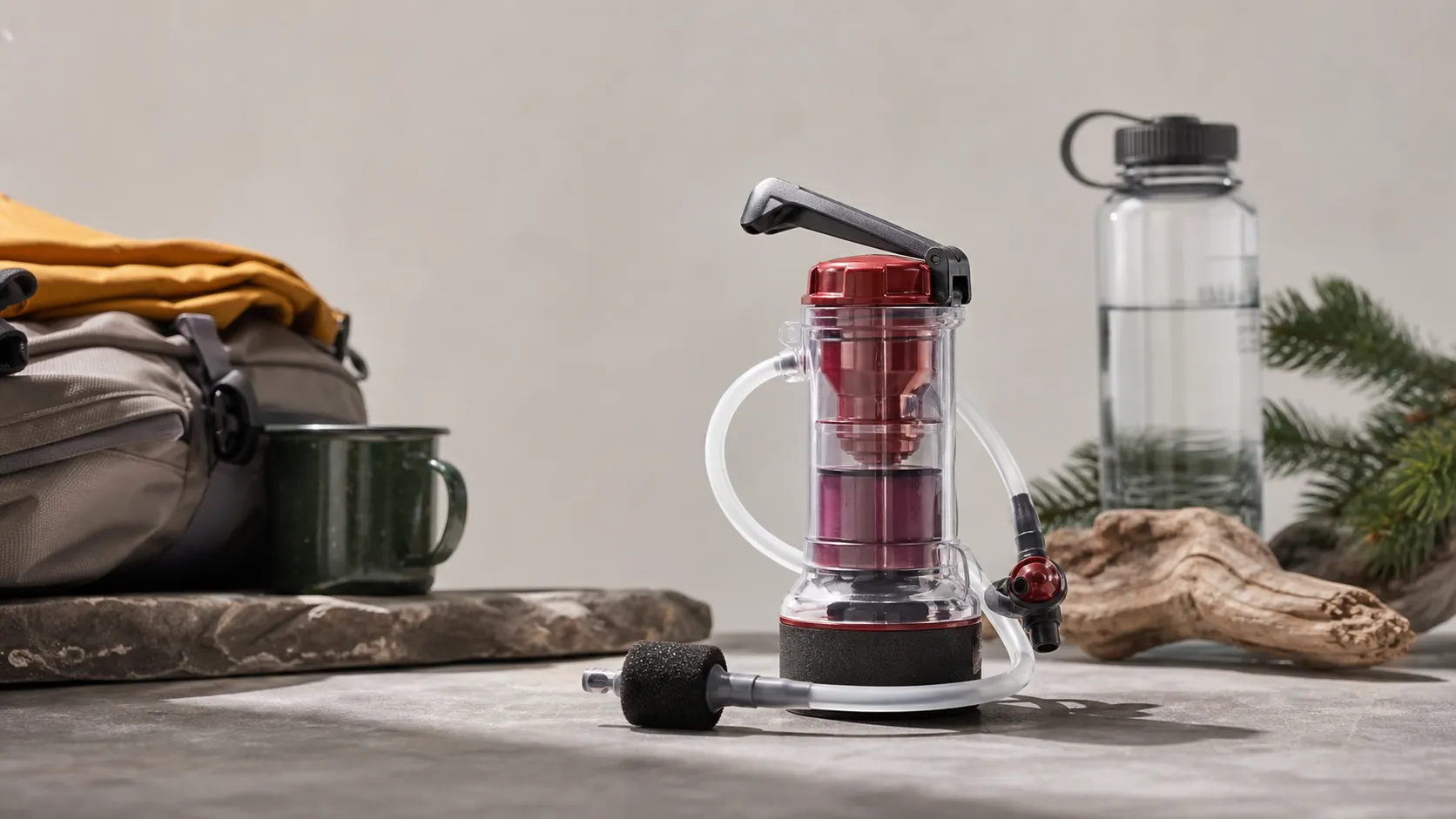
MSR Guardian Purifier Review (2026)
A top pick for groups and basecamps — the MSR Guardian Purifier delivers exceptional flow and durability but carries a high price and weight penalty.
 Outdoor & Garden
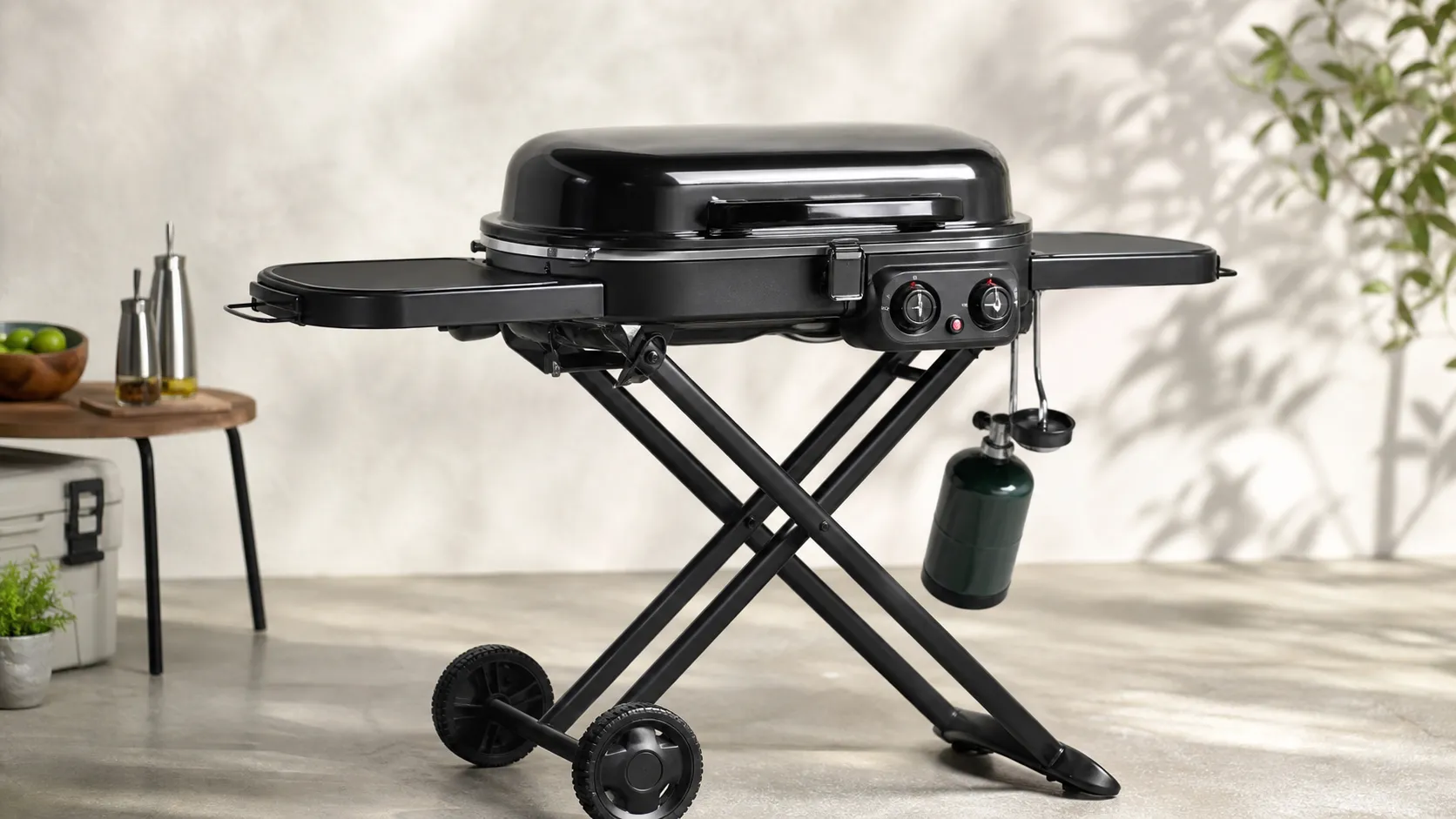
Coleman RoadTrip 285 Portable Propane Grill Review 2026
Portable, quick to heat, and great value — the Coleman RoadTrip 285 is ideal for tailgates and camping, but expect hotspots and some plastic parts to limit heavy use.
 Outdoor & Garden
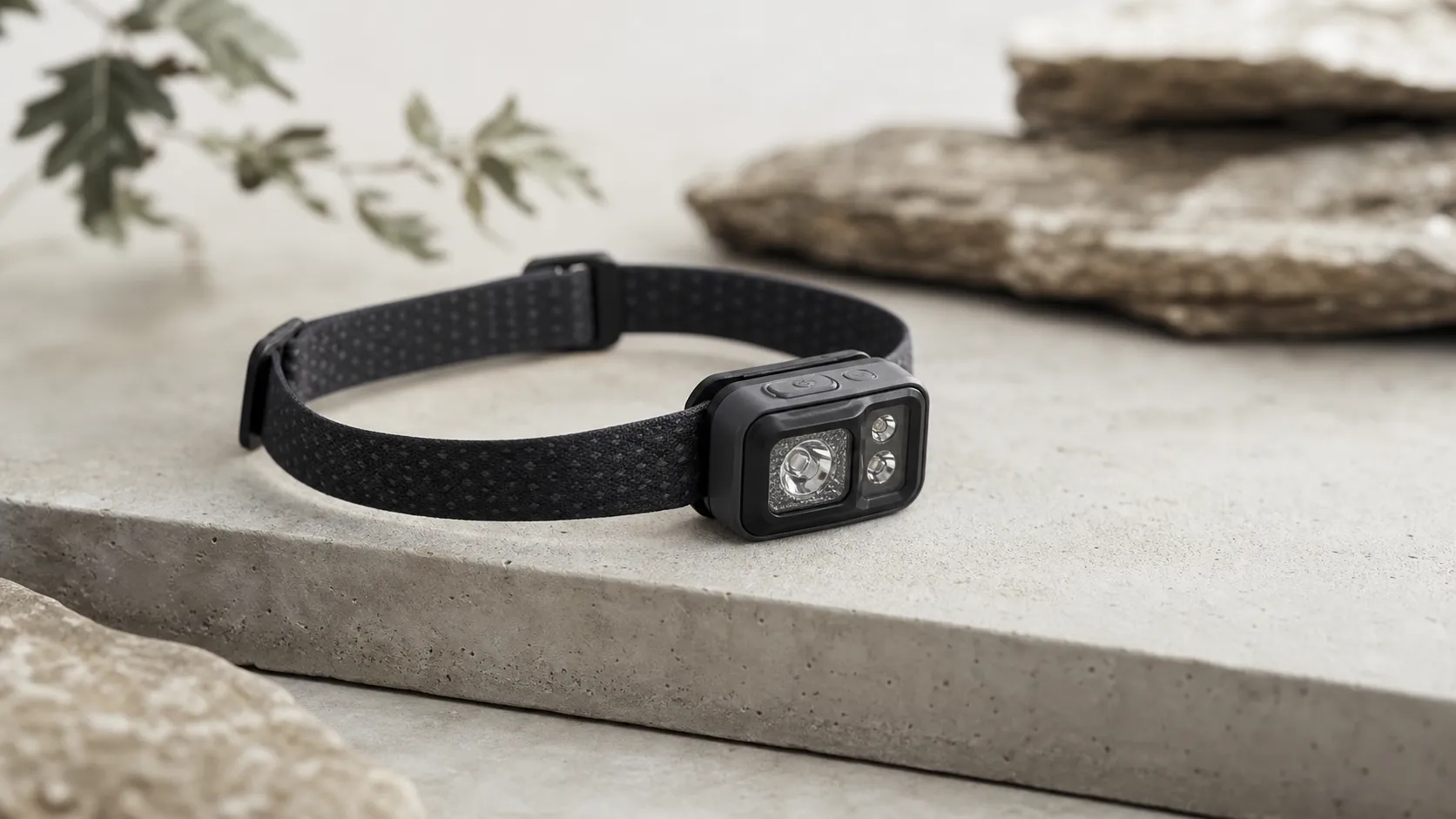
Black Diamond Spot 400‑R Headlamp Review 2026
A bright, well‑balanced rechargeable headlamp that excels for trail running and hiking. Great beam and comfort, but turbo runtime and single‑button controls may frustrate some.