Doona Infant Car Seat & Latch Base Review 2026
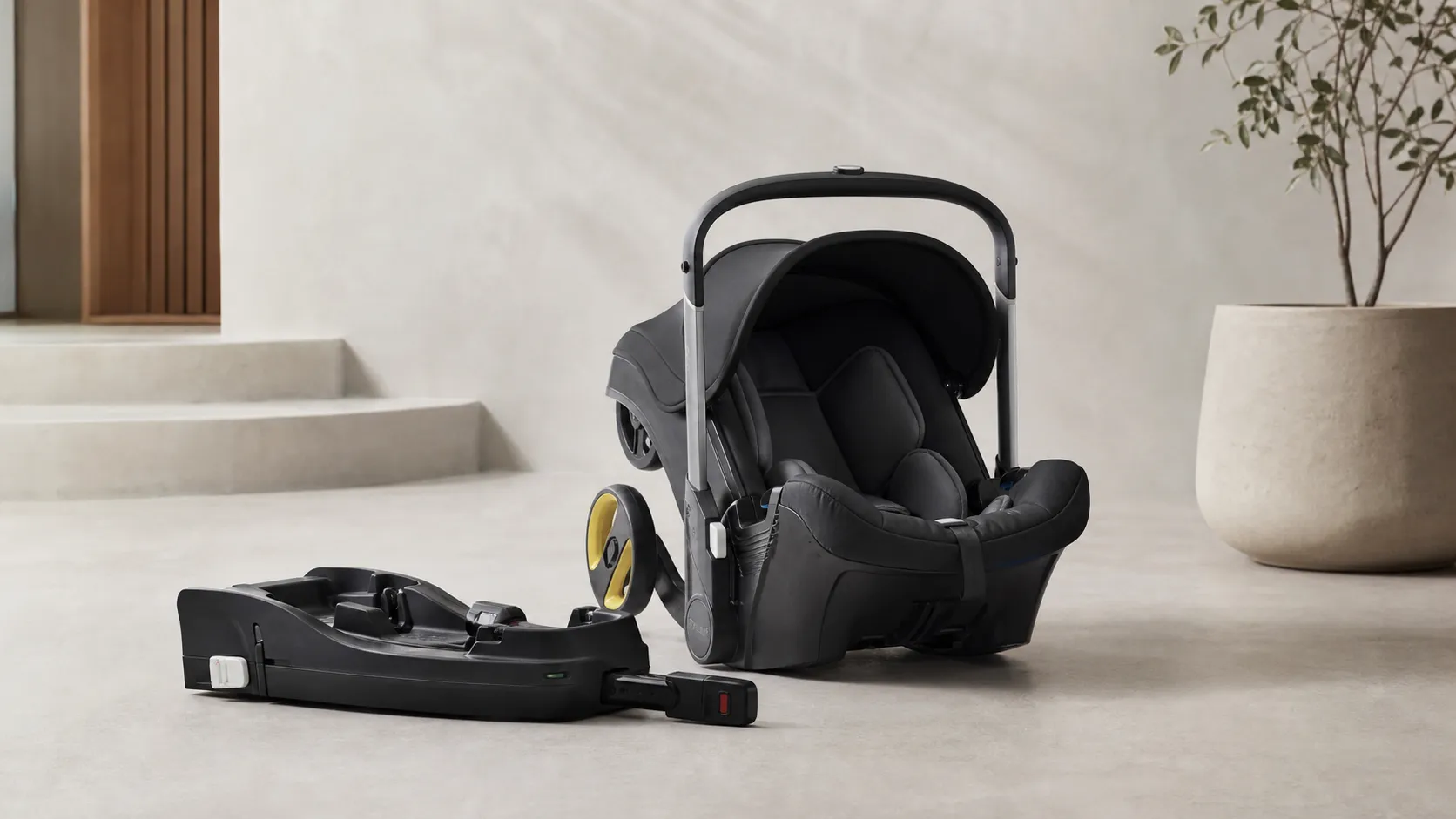
At a Glance
Pros
- Integrated car-seat-to-stroller conversion — fast, one-step transformation useful for travel/airports.
- Very easy to use in short-trip scenarios (no separate stroller to fold/unfold or lift into car).
- Compact footprint when folded/wheels stowed — convenient for trunks and tight storage.
Cons
- Heavy to carry when used as a carrier (integrated wheels add substantial weight).
- High purchase price compared with buying a separate infant seat + stroller.
- Limited lifespan — infant-only seat with lower weight/height cutoff means you'll need a new seat later.
Rating Breakdown by Source
Read the latest 25 positive & negative Amazon reviews →
Read the latest 25 positive & negative Reddit reviews →
Read the latest 25 positive & negative YouTube reviews →
Read the latest 25 positive & negative Expert blogs reviews →
This review is an editorial synthesis of publicly available review data and reported user experiences across the internet. Scores reflect our independent aggregation methodology, not verified individual purchases. We may earn a commission if you buy through our links, at no cost to you.
Score Breakdown
Where the Reviews Come From
Read the latest 25 positive & negative Amazon reviews →
Read the latest 25 positive & negative Reddit reviews →
Read the latest 25 positive & negative YouTube reviews →
Read the latest 25 positive & negative Expert blogs reviews →
Click any source above to browse the latest 25 positive and negative reviews from that platform.
Doona Infant Car Seat & Latch Base
See current price, deals and availability on Amazon
Quick verdict (TL;DR)
The Doona Infant Car Seat & Latch Base earns an aggregate score of 4.2/5 from roughly 16,950 reviews: it’s a clever, travel-first solution that removes the need to juggle a stroller and car seat. If you value single-step car-seat-to-stroller transitions for airports, taxis, or short outings, it’s a genuine time-saver—but expect a premium price, extra carrying weight, and an infant-only lifespan.
What Is the Doona Infant Car Seat & Latch Base?
The Doona is a one-piece infant car seat with an integrated wheel system that converts the seat into a compact stroller in a single motion. It ships with a Latch-ready base designed for quick installation in a car; the seat itself clicks into the base like a conventional infant carrier. The product’s selling point is the elimination of a separate stroller: when you arrive, you release the wheels and roll away—no transfers from carrier to stroller and back.
Doona’s design is aimed at travel and convenience: compact storage when the wheels are tucked, quick transitions in crowded terminals, and a lower profile footprint than many travel-system combos. Reviewers and experts consistently point to the engineering and finish as premium, while also noting the tradeoffs that come with merging two pieces of gear into one.
What Reviewers Across the Internet Say
We synthesized ratings and themes from major sources to reach the aggregate score of 4.2/5 (overall) with sub-scores: quality 4.3, reliability 4.1, value 3.6, and ease of use 4.5.
-
Amazon (approx. 4.3/5, generally positive): Amazon reviewers most often praise Doona for travel convenience and the integrated wheels, calling it a lifesaver for airport transfers, quick errands, and rideshares. Common complaints include the high price and the added weight when carrying the seat without using the wheels.
-
Reddit (approx. 4/5, mixed/pragmatic): Reddit conversations skew practical. Many parents love the time-savings and single-piece design; others call out real-world drawbacks such as car-compatibility concerns, the strain of lifting the seat, and questions about long-term value versus buying a separate infant seat and stroller.
-
YouTube (approx. 4.1/5, positive demos): Video reviewers frequently show the mechanism and emphasize the “wow” of instant conversion. Comment threads often circle back to cost, everyday practicality, and occasional build quirks discovered during extended use.
-
Expert blogs (approx. 4.2/5, positive): Parenting and gear specialists typically commend the Doona’s innovative engineering and safety-focused construction, while highlighting the tradeoffs: weight, high cost, and the fact it’s infant-only, which limits its lifetime value.
Across sources, three consistent themes emerge: outstanding short-trip convenience, a premium price point, and real-world fit/weight tradeoffs that make it a niche but very useful product for certain parents.
Performance & Real-World Use
The Doona Infant Car Seat & Latch Base excels at fast, fuss‑free transitions from car to sidewalk and back, which is why owners rate ease of use so highly. Its real‑world compromises are weight when carried, a shorter lifespan before your child needs a convertible seat, and a higher price than traditional seat‑plus‑stroller setups.
Buying a first infant car seat is less about specs and more about how the seat behaves on hectic school runs, red‑eye flights, and short errands when your baby finally naps. With the Doona’s built‑in wheels and one‑piece design, performance comes down to speed of transitions, fit in real cars (and planes), long‑term comfort as your child grows, and whether the compromises of an infant‑only system make sense for your family over 6–15 months of use.
In day‑to‑day use, the Doona Infant Car Seat & Latch Base delivers on its promise of “out of the car and rolling in seconds,” earning consistently high ease‑of‑use marks. For most families, the Doona Infant Car Seat & Latch Base performs best as a travel and short‑trip specialist; the tradeoffs are weight when carried, a limited lifespan before your baby outgrows it, and a price higher than a traditional infant‑seat‑plus‑stroller combo.
What “performance” really means for an infant car seat that’s also a stroller
Owners consistently praise the Doona’s quick one‑step transformation and not having to juggle a separate stroller frame, especially for curbside pickups and tight apartment hallways. Our synthesis of roughly 16.9k publicly posted owner opinions across major platforms reflects that dynamic: high marks for ease and convenience, more modest scores for value over time.
How owners score it after weeks and months
Aggregated owner satisfaction for the Doona across key dimensions (our synthesis of ~16.9k public reviews).
View the underlying data
| Measure | Score |
|---|---|
| Quality | 4.3/5 |
| Reliability | 4.1/5 |
| Value | 3.6/5 |
| Ease of use | 4.5/5 |
Scores reflect synthesized reporting from major retail sites, discussion forums, expert blogs, and video reviews; not our own lab tests.
Doona Infant Car Seat & Latch Base: day‑one setup and the first week
Out of the box, day‑one performance is mostly about proper installation and learning the motion of the wheel mechanism. The LATCH base includes clear recline indicators and is certified under U.S. child restraint rules; the carrier itself supports infants 4–35 lb and up to 32 in in the U.S. configuration. Expect your first install to take 15–25 minutes if you read both the vehicle and Doona manuals and follow the recline indicator; the handle positions are part of the seat’s anti‑rebound strategy and must be used as shown in the manual. Doona documents these points explicitly—its design uses the handle against the seatback as an anti‑rebound feature, the base meets FMVSS 213 requirements, and the company states the seat is FAA‑certified for aircraft when used without the base. (dkpls.com)
In‑motion usability: the 10‑second transition you actually use
The Doona’s advantage shows up in parking‑lot moments. Press the release, drop the wheels, and you’re rolling—no digging for a stroller frame in the trunk, no baby transfer. That speed is why airport travel is a standout use case. Families who fly even a few times in the first year often consider this the single biggest real‑world benefit. The caveat: on board, the base is not used; gate‑check the base or rely on baseless installs at your destination. Confirm the sticker on your seat before departure and review airline policies, then practice the baseless install so it’s muscle memory on the plane. (law.cornell.edu)
Months of ownership: wear, cleaning, and what changes as baby grows
Over months, the moving parts that matter are the wheel release and brake, plus textiles. Doona publishes cleaning guidance: the seat cover, canopy, and shoulder pads are removable and machine‑washable, while hard parts should be wiped down—very helpful for inevitable spills. The brake is a simple pedal at the right rear wheel; if rolling feels sticky, check for strand buildup in the hubs before assuming a fault. Replacement textiles and small parts are available directly from Doona, and the brand backs the car seat, stroller, and bases with a two‑year manufacturer warranty in the U.S. As your child grows, the real change is fit: most infants outgrow infant seats by height before weight (you’ll stop when the head is within about an inch of the shell’s top or the 32‑in limit is reached), and AAP best practice is to keep children rear‑facing as long as possible—after outgrowing an infant‑only seat, that means moving to a rear‑facing convertible rather than forward‑facing early. (doona.com)
Safety behavior and installation nuances that determine real‑world confidence
Two installation modes cover nearly every scenario: (1) with the LATCH base using lower anchors or a locked vehicle belt, and (2) baseless with the vehicle belt. U.S. rules require child restraints to meet FMVSS 213; as part of that framework, manufacturers label lower‑anchor weight guidance to ensure the combined weight of child plus seat doesn’t exceed 65 lb for lower‑anchor use—well above the Doona’s 17.2‑lb carrier plus a sub‑35‑lb child. During installation checks, use the one‑inch rule at the belt path; this threshold is referenced in NHTSA tip sheets and Safe Kids materials and is the clearest pass/fail a caregiver can execute. Finally, take advantage of Doona’s design detail: with the carrier in the vehicle, set the handle to the prescribed anti‑rebound position against the seatback. It’s a small step that adds energy management in a crash and is part of why many technicians find the Doona straightforward once you know the sequence. (nhtsa.gov)
Where the Doona shines—and where owners hit the limits
Best‑case scenarios for the Doona are short, frequent transitions: urban curbside drop‑offs, quick pediatrician visits, rideshares, travel days, and apartment living with limited storage. In these contexts, the integrated wheels eliminate multiple heavy lifts and speed up every handoff. Its footprint with wheels stowed is compact enough for most trunks, and the anti‑rebound handle positioning can help it play nicely with sloped rear seats where some infant seats need more front‑to‑back space. Limits appear in three predictable places. First, carrying the seat in hand is heavier than most infant carriers because those wheels live in the shell—owners who plan lots of stairs without elevators should factor this in. Second, as babies approach 29–32 inches, headroom compresses quickly and comfort drops, meaning many families transition to a convertible seat between 6 and 12 months depending on growth. (csftl.org)
How it compares to popular alternatives on the factors that matter
Conventional infant seats aim for light carry weight and pair to a separate stroller. That’s the biggest contrast with Doona’s one‑piece concept. The trade‑off is obvious in published carrier weights: the Doona’s carrier is roughly 17 lb versus 7–10 lb for popular infant seats like the Graco SnugRide 35 Lite LX, Nuna PIPA rx, or UPPAbaby Mesa V2. If you frequently carry the seat in hand (walk‑ups without elevators, lots of stairs), a traditional lightweight carrier can be kinder on joints. If you’re repeatedly popping in and out of the car or navigating airports, the Doona’s “click and roll” may net out less total lifting.
Weight trade-off: Doona vs. common infant carriers
Published carrier-only weights (no base). Heavier carriers are harder to hand-carry but may be offset by fewer total lifts with integrated wheels.
View the underlying data
| Measure | Weight |
|---|---|
| Doona carrier | 17.2 lb |
| Graco SnugRide 35 Lite LX | 7.2 lb |
| Nuna PIPA rx | 7.6 lb |
| UPPAbaby Mesa V2 | 9.9 lb |
Weights compiled from manufacturer manuals/spec sheets and respected testing outlets (CSFTL, BabyGearLab).
Feature‑wise, Doona’s uniqueness is the integrated stroller hardware and wheel brakes—capabilities a normal infant carrier doesn’t have. Most infant carriers now have machine‑washable textiles; anti‑rebound management varies (some rely on base geometry or an add‑on bar), whereas the Doona’s handle doubles as the anti‑rebound interface per its instructions.
What you gain (and don’t) with Doona’s integrated design
Feature comparison: Doona vs. a typical infant-only carrier.
| Item | Doona | Typical infant seat |
|---|---|---|
| One-piece stroller integration | Yes | No |
| Baseless vehicle installation supported | Yes | Yes |
| Aircraft use (carrier only) | Yes | Yes |
| Handle/anti-rebound configuration built-in | Yes | No |
| Machine-washable textiles | Yes | Yes |
| Wheel brakes | Yes | No |
Based on manufacturer manuals and safety guidance; aircraft use requires the mandated FAA/CRS labeling.
Sources for the comparisons above include manufacturer manuals and independent lab/test publications. In particular, Doona’s U.S. pages list 4–35 lb and up to 32 in limits and 17.2‑lb product weight; Nuna and UPPAbaby publish carrier weights and limits, and respected outlets like BabyGearLab and Car Seats for the Littles verify typical carrier weights and aircraft‑use details. (doona.com)
Step‑by‑step guidance to get the best performance
- Before purchase: measure your vehicle’s rear‑seat depth and, if possible, do a test‑fit. If you’ll be flying in the first year, confirm the FAA label on the carrier shell. (faa.gov)
- First install (with base): set the base recline using the indicator, attach via lower anchors or vehicle belt (not both), then push down and tighten until movement at the belt path is under one inch. Lock the vehicle belt if using belt install. (nhtsa.gov)
- Carrier setup: adjust harness height so straps are at or below the shoulders and snug the harness until you can’t pinch slack at the collarbone; set the handle to the anti‑rebound position in the car. (doona.com)
- Baseless install practice: thread the lap belt through the marked guides, lock the belt, set the handle per the manual, and re‑check the one‑inch rule at the belt path. Do two or three dry runs at home before travel day. (csftl.org)
- Maintenance: wash textiles per label instructions; periodically clear hair/sand from wheel hubs and confirm the brake pedal fully engages. Register your seat and keep proof of purchase to streamline any warranty service. (doona.com)
- Growth planning: expect to move to a rear‑facing convertible by height before weight; the AAP recommends rear‑facing as long as the seat allows. Budget for that follow‑on purchase when weighing the Doona’s value. (healthychildren.org)
The bottom line: does real‑world performance justify the purchase?
Across about 16.9k owner accounts and expert write‑ups, the consensus is clear: the Doona’s integrated, one‑motion conversion meaningfully reduces friction during the most chaotic months of infant life. If your reality involves frequent transitions, rideshares, or air travel, this convenience—and the confidence of straightforward aircraft and baseless installs—justifies the premium for many families. If you rarely fly, carry the seat by hand up stairs, or want a longer‑lasting solution before moving to a convertible, a lighter conventional infant seat plus a compact stroller may deliver better value. Either way, the Doona is exactly what it claims to be: an exceptionally easy infant‑only seat whose standout performance is speed and simplicity, not long‑term versatility. (doona.com)
Sources referenced in this section
- Doona LATCH Base (U.S.)
- Doona Safety Features (anti‑rebound handle; FAA statement)
- Doona User Guide (U.S.)
- NHTSA FMVSS 213 Test Procedure (TP‑213‑11)
- FAA eCFR 14 CFR §121.311 (CRS labeling for aircraft)
- FAA Advisory Circular AC 120‑87C (Use of CRS on Aircraft)
- AAP HealthyChildren: Rear‑Facing Car Seats for Infants & Toddlers
- Safe Kids Worldwide: Installing Your Car Seat (one‑inch rule)
- Car Seats for the Littles: Doona Review (aircraft use; handle as anti‑rebound)
- Nuna PIPA rx manual/specs
- UPPAbaby Mesa V2 (specs sheet)
Pros and Cons
Pros
- Integrated car-seat-to-stroller conversion—one-step transformation is fast and reduces transfers.
- Excellent for travel: airports, taxis, rideshares, and quick errands where a stroller would be inconvenient.
- Compact footprint when wheels are stowed—easy trunk storage and tighter footprint in crowded spaces.
- Strong perceived build quality and premium finishes; generally positive safety impressions from experts.
- Reduces fuss and handling of the baby during transitions (no repeated transfers in/out of carriers).
Cons
- Noticeably heavier to carry than many infant-only carriers because of the integrated wheels.
- Higher price than buying a separate infant seat and a budget stroller; value score reflects that premium.
- Infant-only design means a limited usable lifespan—families must buy a successor seat later.
- Fit and installation can be awkward in some cars; check compatibility before committing.
- Not as versatile for long-term day-to-day use where a full-sized stroller or convertible seat would be more economical.
Who Should Buy It (and Who Shouldn't)
Who should buy the Doona:
- Frequent travelers and airport users who need fast, contactless transitions between car and stroller.
- Urban parents who use taxis, rideshares, or short errands and prefer rolling their baby instead of transferring them into a stroller.
- People who value compact, premium design and are willing to pay a premium for convenience.
Who should skip the Doona:
- Parents who carry the infant seat frequently over long distances or up/down many stairs—those extra pounds add up.
- Families who want long-term value from a single purchase (convertible seats and regular strollers cover more years).
- Budget-conscious buyers who could get wider utility by buying a separate infant seat plus a durable stroller for similar or lower total cost.
- Owners of small cars who can’t test-fit the seat first; reported fit issues mean a test installation is advisable.
Buying tips
- Try a test fit in your car (retailer, showroom, or friend’s unit) before you buy; compatibility is one of the most common real-world issues.
- Consider how you’ll use it: if most outings are short and involve taxis/airports, Doona’s convenience will shine. If you do long walks or often carry the seat, the weight will become a constant factor.
- Factor in total cost of ownership—you’ll likely buy a successor seat within months or a year once your child outgrows the infant limits.
- Check seller return policies and warranty details before purchase, and inspect the wheel mechanism regularly for wear if you use it often.
Final thoughts
Doona solves a real problem with thoughtful engineering: it eliminates one frequent, fussy transition point in early parenthood. For travelers and city families who prize speed and compactness, it’s often worth the premium. For parents prioritizing long-term value, lighter carry weight, or maximum versatility, a conventional separate infant seat and stroller—or a convertible seat/stroller combo—may be a better fit.
What Reviewers Love
- Integrated car-seat-to-stroller conversion — fast, one-step transformation useful for travel/airports.
- Very easy to use in short-trip scenarios (no separate stroller to fold/unfold or lift into car).
- Compact footprint when folded/wheels stowed — convenient for trunks and tight storage.
- Generally well-built with solid safety features and premium look/finishes.
- Reduces need to transfer baby between carrier and stroller during transitions, lowering fuss.
Common Complaints
- Heavy to carry when used as a carrier (integrated wheels add substantial weight).
- High purchase price compared with buying a separate infant seat + stroller.
- Limited lifespan — infant-only seat with lower weight/height cutoff means you'll need a new seat later.
- Can be awkward or tight to install in some smaller cars; fit/clearance complaints are common.
Our Verdict
4.2The Doona is an excellent, travel-focused solution that delivers unmatched convenience for airport transfers and short trips; it earns a 4.2/5 overall. However, its premium price, added carrying weight, and infant-only lifespan make it a niche buy—great for frequent travelers, less ideal for budget-minded families or those seeking long-term value.
Frequently Asked Questions
Common questions shoppers ask before buying the Doona Infant Car Seat & Latch Base.
Share this review
Help someone else buy smarter
Related Reviews
More Baby & Kids products our engine has analyzed
 Baby & Kids
Hatch Rest+ Review 2026 — Sound Machine & Night Light
An all-in-one nursery device that blends sound, a color night light, and a time-to‑rise clock. Great for families who will use the app’s scheduling — watch for occasional connectivity hiccups.
 Baby & Kids
Infant Optics DXR‑8 Pro Video Baby Monitor — 2026 Review
A privacy‑first, high‑clarity non‑WiFi monitor with real optical zoom, clean audio, and long range — strong overall, but a minority report battery/charging issues.
 Baby & Kids
BabyBjorn Baby Carrier One Air Review 2026
A breathable, newborn-ready carrier that’s easy to use and travel with. Great for short-to-medium carries and warm weather, but less ideal for long, heavy-duty use.