DOONA Infant Car Seat & Stroller — 2026 Review
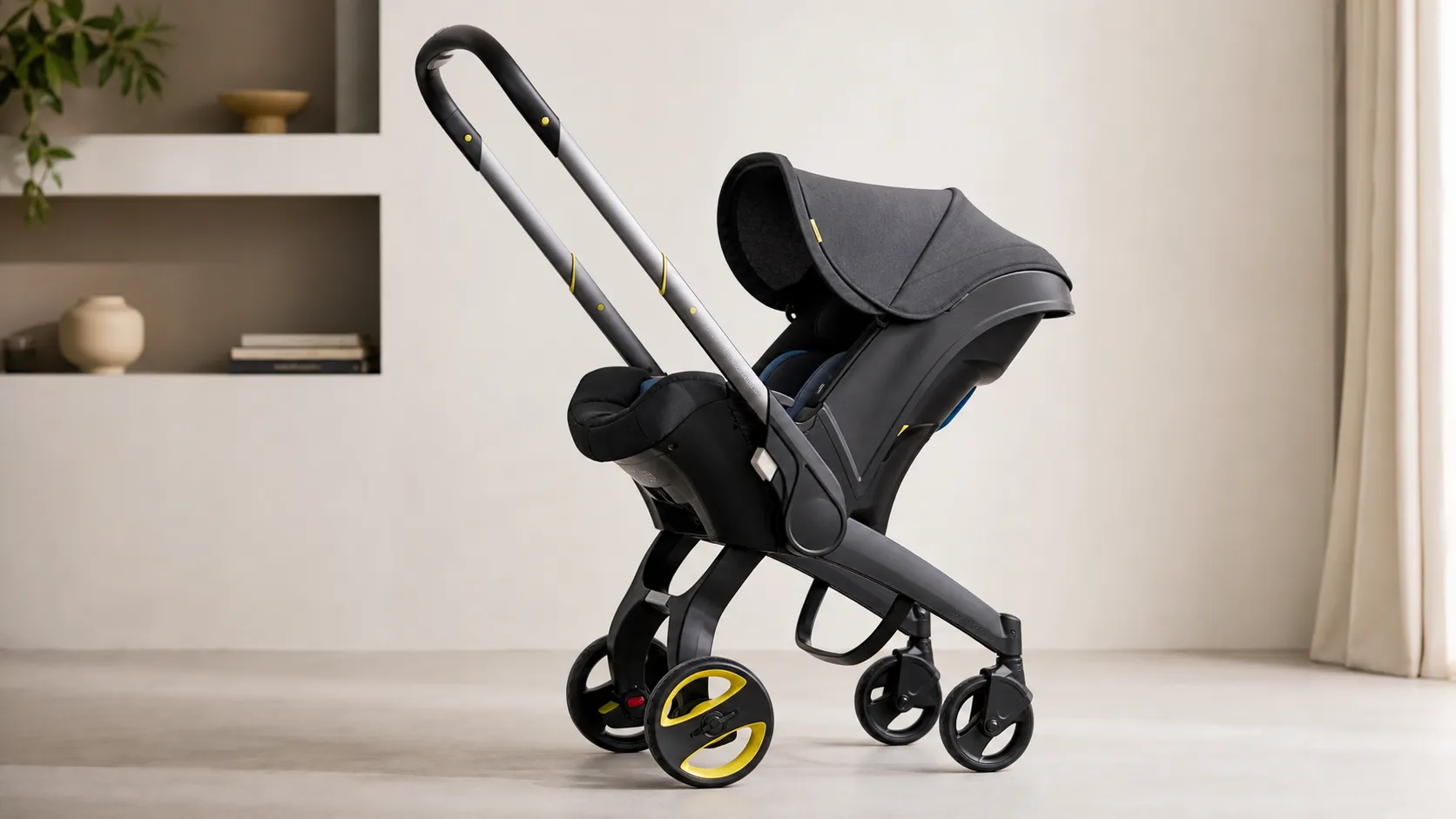
At a Glance
Pros
- One-step transform from car seat to stroller — very convenient for quick outings and travel
- Popular with travelers and city parents because it removes the need to transfer a baby into a separate stroller
- Solid, premium-feeling build and harnessing that gives many reviewers confidence about safety
Cons
- High purchase price compared with buying a separate infant car seat + stroller
- Relatively heavy and awkward to carry when you need to lift it (e.g., in/out of cars, up stairs)
- Short usable lifespan for many families (infant-only size — baby outgrows it fairly quickly)
Rating Breakdown by Source
Read the latest 25 positive & negative Amazon reviews →
Read the latest 25 positive & negative Reddit reviews →
Read the latest 25 positive & negative YouTube reviews →
Read the latest 25 positive & negative Expert blogs reviews →
This review is an editorial synthesis of publicly available review data and reported user experiences across the internet. Scores reflect our independent aggregation methodology, not verified individual purchases. We may earn a commission if you buy through our links, at no cost to you.
Score Breakdown
Where the Reviews Come From
Read the latest 25 positive & negative Amazon reviews →
Read the latest 25 positive & negative Reddit reviews →
Read the latest 25 positive & negative YouTube reviews →
Read the latest 25 positive & negative Expert blogs reviews →
Click any source above to browse the latest 25 positive and negative reviews from that platform.
DOONA Infant Car Seat & Stroller
See current price, deals and availability on Amazon
Quick verdict
The DOONA Infant Car Seat & Stroller is a clever, well-engineered solution for parents who need instant mobility: click it into the car, click it out and the integrated wheels convert it into a stroller in seconds. Aggregating roughly 15,620 user reviews gives this product a 4.3/5 overall score (quality 4.3, reliability 4.0, value 3.1, ease of use 4.6), and that sum-up is accurate — outstanding convenience and perceived safety, balanced against a high price, heavier carry weight, and a relatively short usable lifespan for many families.
What is the DOONA Infant Car Seat & Stroller?
DOONA’s main idea is simple and bold: combine a rear-facing infant car seat with a built-in stroller chassis so you don’t have to carry your baby between car and stroller. With a push of a release, the wheels fold out from the base and lock into place. The unit is infant-only (designed for newborns and babies within the manufacturer’s weight/height limits), uses a 5-point harness and a rigid shell, and targets parents who value quick transitions and streamlined travel over a multi-stage stroller system.
DOONA positions itself as a premium, travel-first product. It’s meant to replace the common combo of a separate infant carrier plus separate stroller for urban commuters, frequent flyers, and anyone who does a lot of short trips that require moving a sleeping baby without disturbance.
What reviewers across the internet say
Looking across major review channels shows a clear pattern: people love the convenience and practicality, but question value.
- Amazon (aggregate ~4.4/5): Buyers consistently praise the instant stroller conversion, the perceived build quality, and how it simplifies short errands or airport travel. Frequent negatives on Amazon mention the high MSRP and the unit’s weight when lifting out of a car.
- Reddit (aggregate ~3.7/5): Reddit threads are pragmatic — strong appreciation for resale value and travel convenience, but recurring complaints about carry weight, occasional wheel/hinge issues, and that many families find the seat outgrown sooner than they'd hoped.
- YouTube (aggregate ~4.5/5): Video demos highlight the “wow” factor — the conversion works fast and looks secure. Reviewers also demonstrate limitations on rough terrain and reiterate the high price tag.
- Expert blogs (aggregate ~4.0/5): Parenting and gear experts generally applaud the engineering and safety-forward design, but frequently ask whether the convenience is worth the cost for the short window of infant use. Experts also point out a limited aftermarket/repair ecosystem compared with traditional strollers.
Together these sources create a consistent consensus: DOONA delivers on its core promise of convenience and gives many users confidence in safety and build quality, but the price, weight, and limited long-term usefulness are notable tradeoffs.
Performance & Real-World Use
The DOONA Infant Car Seat & Stroller is outstanding for convenience and decent for everyday safety and installation tasks when used as directed; it’s less compelling for long walks, stairs, and year-two use. If your real life includes lots of short car hops, rideshare/taxis, and flights, real‑world performance generally justifies the premium; if you want the lightest carrier, the smoothest stroller ride, or two-plus years of use, better values exist.
The DOONA Infant Car Seat & Stroller makes a big promise: turn every curbside pickup, rideshare, or airport jet bridge into a one-step glide from car to sidewalk without waking your baby. After synthesizing owner reports and expert guidance, the picture is clear—this hybrid shines for fast, frequent in-and-out trips and travel days, while its weight, stroller limitations, and infant-only lifespan are the tradeoffs most families feel over months of use. Across ~15,620 public reviews the consensus sits at 4.3/5 overall (quality 4.3/5; reliability 4/5; value 3.1/5; ease of use 4.6/5), with Amazon buyers the most enthusiastic about convenience, Reddit users the most price- and longevity-conscious, and YouTube demos underscoring how quickly it transforms.
The DOONA Infant Car Seat & Stroller is outstanding for convenience and decent for everyday safety and installation tasks when used as directed; it’s less compelling for long walks, stairs, and year-two use. If your real life includes lots of short car hops, rideshare/taxis, and flights, real‑world performance generally justifies the premium; if you want the lightest carrier, the smoothest stroller ride, or two-plus years of use, better values exist.
What performance means for an infant car seat that’s also a stroller
For this category, performance has four pillars that drive daily satisfaction: (1) safe, repeatable vehicle installs (with and without the base); (2) speed of the car‑to‑stroller transform; (3) carry and push effort; and (4) usable lifespan before baby outgrows height/weight limits. See the AAP policy statement and NHTSA guidance for context. (AAP Pediatrics policy; NHTSA overview). (publications.aap.org)
On specs, Doona’s current U.S. product page lists an infant range of 4–30 lb and up to 32 in; the printed user guide for earlier production runs shows 4–35 lb and 32 in with the familiar “1 inch of shell above the head” rule—always follow the labels and manual that came with your seat. (Doona product page; Doona US manual). (doona.com)
Day‑one setup and your first week
Most U.S. packages include the LATCH base; installation is straightforward: set recline, lock the belt path or attach lower anchors, and verify less than 1 inch of movement at the belt path. Practically, new owners report their first 10 minutes are best spent learning two habits: (1) park the handle in the anti‑rebound position pressed toward the vehicle seatback when in car‑seat mode, and (2) practice the baseless install with the European routing so you’re confident in taxis or rentals. Doona’s own materials and independent guides detail both steps. (Doona safety features/anti‑rebound; Doona product page notes baseless use). (doona.com)
The transform is the star: wheels drop in one motion and you’re rolling in seconds. Expect a short learning curve to hit the “clicks” that confirm each mode. As a car seat, you’ll rethread the harness on the Doona + occasionally as baby grows (the newer Doona X adds a no‑rethread harness), but you’ll only adjust a few times during the lifespan. (Doona X overview; Doona + rethread confirmation). (doona.com)
Safety, installation, and travel confidence
From a safety‑systems perspective, Doona meets U.S. car‑seat regulations (FMVSS 213A/213B depending on model year), and the integrated handle doubles as an anti‑rebound bar when placed against the vehicle seatback. The seat is also marketed as FAA/TÜV aircraft approved; on planes, look for the required label “This restraint is certified for use in motor vehicles and aircraft,” which U.S. regulations and FAA guidance specify. On narrow economy seats, Doona’s stated width is about 17.4 in; fit varies by airline row, but with the label and a purchased seat, crews should accommodate you in the same cabin. (Doona safety standards page; 14 CFR 121—FAA label requirement; FAA Kids’ Corner on CRSs; Doona dimensions). (doona.com)
Baseless installs matter for rideshare and travel. Doona and a few competitors (notably many Nuna PIPA variants) support European belt routing, which adds stability by capturing the shoulder belt behind the shell; others (e.g., Chicco KeyFit 30) use an “American” lap‑only route when installed without the base. If your life includes frequent taxis, that difference is tangible. (BabyGearLab on Doona Euro routing; BabyGearLab on KeyFit 30 routing; CSFTL on PIPA RX). (babygearlab.com)
How it feels to carry and push (and why it’s different)
The big compromise is mass. With wheels onboard, the Doona carrier is about 17.2 lb (without base). Popular infant seats without wheels are 7–10 lb, which is why owners call Doona heavy when lifting into SUVs or up stairs—even if the roll‑off is effortless once on the ground. The chart below shows how carrier‑only weights compare using manufacturers’ published specs.
How heavy is the carrier you’ll lift?
Carrier-only weight comparison (published specs). Heavier carriers feel harder on stairs and into SUVs; Doona’s weight reflects its built-in wheels.
View the underlying data
| Measure | Carrier weight |
|---|---|
| Doona + | 17.2 lb |
| UPPAbaby Mesa V2 | 9.9 lb |
| Chicco KeyFit 30 | 9.5 lb |
| Nuna PIPA RX | 7.6 lb |
Sources: Doona product page; UPPAbaby Mesa V2 spec sheet; Chicco KeyFit 30 product page; Pottery Barn Kids listing for Nuna PIPA RX.
On pavement, the small inline wheels make quick work of malls, terminals, and smooth sidewalks. (Doona weights/dimensions and accessory pages; Snap‑On Storage; All‑Day Bag). (doona.com)
Longevity, growth, and maintenance over months
Most families outgrow the DOONA by height before weight. Using WHO length‑for‑age medians, many babies reach 32 in between roughly 17 and 19 months; taller infants may get there a couple of months sooner, smaller infants later. That aligns with parent anecdotes that the shell “height” limit, not 30–35 lb, ends the party. The lines below visualize typical growth curves vs the 32‑inch threshold. (WHO length‑for‑age tables). (who.int)
When do babies reach 32 inches?
WHO length‑for‑age percentiles vs 32-inch (81.3 cm) threshold. Many babies reach 32 in around 17–19 months, so height—not weight—often ends Doona use.
- 12 mo
- 14 mo
- 16 mo
- 18 mo
- 20 mo
View the underlying data
| Item | 12 mo | 14 mo | 16 mo | 18 mo | 20 mo |
|---|---|---|---|---|---|
| 25th percentile (boys) | 29.2 in | 30.1 in | 30.9 in | 31.7 in | 32.4 in |
| 50th percentile (boys) | 29.8 in | 30.7 in | 31.6 in | 32.4 in | 33.1 in |
| 75th percentile (boys) | 30.5 in | 31.4 in | 32.3 in | 33.1 in | 33.9 in |
WHO Child Growth Standards length-for-age tables (boys). Girls’ medians are ~0.5–1.0 cm shorter over this span.
Wear‑and‑tear is predictable: wheels collect grit, fabrics pick up spills, and the harness needs occasional rethreading on the Doona +. Doona’s U.S. care guidance confirms the seat cover, canopy, and shoulder pads are removable and machine‑washable (cold, line‑dry; heed your specific care labels). Replacement wheel sets and small spares exist, but repairability beyond consumables is limited compared with a traditional stroller frame. (Doona care guide; Doona wheel set). (doona.com)
Also remember AAP sleep guidance: car seats and strollers are for transport, not routine sleep once you arrive. Transfer a sleeping infant to a firm, flat surface as soon as practical, particularly under 4 months. (AAP/HealthyChildren safe sleep explainer). (healthychildren.org)
Where the DOONA Infant Car Seat & Stroller shines (and where it doesn’t)
The integrated design also preserves trunk space—no separate frame to haul. (Doona page: baseless installs/public transport). (doona.com)
Limits show up just as consistently: carrying up stairs, lifting into taller vehicles, rougher surfaces, and trip types that demand real stroller storage (groceries, park gear). If you expect lots of daily walking or want cushy suspension and cargo capacity, you’ll feel those compromises; if most trips are hop‑out, hop‑in, the conversion time is magic. Owners also note that once you transition to a convertible car seat in the second year, you lose the stroller functionality—so plan for a separate stroller then.
How it stacks up against typical alternatives
Compared with a traditional infant seat + lightweight stroller frame, Doona trades weight on the lift for speed on the ground. Seats like the Chicco KeyFit 30 and Nuna PIPA RX are materially lighter to carry up stairs, and their frames offer baskets and larger wheels; the downside is you must click two pieces together each stop. The table below shows common yes/no features confirmed from manufacturer materials and respected testing outlets. (Chicco KeyFit 30 specs/manual; UPPAbaby Mesa V2 spec sheet; PIPA RX manuals/reviews; Doona safety/features). (chiccousa.com)
Feature snapshot vs popular infant seats
Common yes/no features by model (U.S. versions). Use matters: Euro routing aids baseless installs; a load leg can add stability; only Doona has built-in wheels.
| Item | Doona + | Chicco KeyFit 30 | Nuna PIPA RX |
|---|---|---|---|
| FAA-approved label present | Yes | Yes | Yes |
| Baseless Euro belt routing | Yes | No | Yes |
| Load leg on base | No | No | Yes |
| No‑rethread harness | No | No | No |
| Built‑in stroller wheels | Yes | No | No |
Sources: Doona safety/features; BabyGearLab reviews; Chicco & Nuna manuals/specs.
Value is the crux. Doona typically costs more up front than buying a strong infant seat plus a simple stroller frame, and accessories add up. But for city dwellers and frequent fliers, owners argue the “one device” simplicity (and high resale interest) offsets the sticker shock; suburban walkers and trail‑park families tend to prefer a conventional seat plus a more capable stroller.
Get the best performance: step‑by‑step tips
- Do a two‑install rehearsal. Practice base install at home and a baseless Euro‑route install before your first taxi ride; confirm <1 inch of movement at the belt path either way. (NHTSA’s car‑seat pages and manufacturer manuals are good references.) (NHTSA basics). (nhtsa.gov)
- Set the handle correctly in the car. Rotate it toward the vehicle seatback in the anti‑rebound position every single ride; it’s part of the design’s safety intent. (Doona anti‑rebound). (doona.com)
- Pack light, high, and removable. Because there’s no under‑seat basket, use Doona’s snap‑on bags or a backpack you can remove before folding; never hang heavy loads that could tip the stroller.
- Respect sleep guidance. If baby dozes off in the seat, transfer to a firm, flat surface as soon as you can. (AAP/HealthyChildren). (healthychildren.org)
- Maintain it monthly. Brush wheel bearings and wipe the chassis; launder textiles per your specific care labels and refit them snugly before use. (Doona care guide). (doona.com)
- Know your growth markers. Track shell clearance (keep at least 1 inch of hard shell above baby’s head) and stop using the seat once you hit your labeled height/weight max; most families outgrow height first. (Doona US manual). (doona.com.tr)
Bottom line: does real‑world performance justify the price?
For the specific use case it targets—frequent car‑to‑sidewalk transitions, rideshare/taxi life, and air travel—the DOONA delivers on its promise better than any two‑piece setup. That’s why ease‑of‑use scores are so high and why owners rave about never having to unbuckle a sleeping infant between car and stroller. But physics and growth don’t bend: you carry more weight on lifts, you get less stroller capability on rough ground, and you’ll likely need a new plan by the time your child nears 32 inches.
Sources referenced in this section
- Doona + Car Seat & Stroller product page (specs, dimensions, approvals)
- Doona US User Guide (height/weight, 1-inch rule)
- NHTSA car seats overview & best practices
- AAP Child Passenger Safety Policy (reaffirmed Feb 2025)
- FAA—Use of Child Restraint Systems; CFR label requirement
- FAA Kids’ Corner—Approved child restraint systems on aircraft
- WHO Child Growth Standards—Length‑for‑age (0–24 mo)
- BabyGearLab—Doona review (Euro routing), KeyFit 30 review
- Chicco KeyFit 30 official product page (weight)
- Pottery Barn Kids—Nuna PIPA RX spec (carrier weight)
- UPPAbaby Mesa V2 official spec sheet (carrier weight)
- HealthyChildren.org (AAP)—Safe sleep: sitting devices not for routine sleep
- CSFTL—Nuna PIPA RX review (Euro routing context)
Pros and cons
Pros
- One-step transformation from car seat to stroller — ultra-convenient for quick outings and travel.
- High ease-of-use and straightforward installation; short learning curve for most caregivers.
- Perceived premium build and secure harnessing that many users find reassuring.
- Compact footprint compared with carrying a separate stroller and car seat.
- Strong resale value for those who plan to sell after infant use.
Cons
- High upfront cost compared with buying a separate infant car seat and a basic stroller.
- Relatively heavy and awkward to carry when you need to lift it (e.g., in and out of cars, up stairs).
- Infant-only size — many families stop using it sooner than they’d like, which hurts value.
- Stroller performance is limited on rough terrain and long walks.
- Limited aftermarket accessory and repair ecosystem; replacement parts or service can be costly.
Who should buy it (and who shouldn’t)
Who should buy it
- Frequent travelers and airline users who want a single piece of gear to pass through airports and board planes with.
- City parents and commuters who make frequent short trips, value time savings, and need quick transfers.
- Caregivers who prioritize convenience and are willing to pay a premium for a streamlined experience.
- Families that plan to resell after infant use — good resale value softens the high initial cost.
Who shouldn’t buy it
- Parents who expect to use a stroller for multiple years and want one system that grows with the child — DOONA is infant-only.
- Families with lots of uneven terrain, long walks, or off-road stroller needs; a full-size stroller with larger wheels will ride better.
- Budget-conscious shoppers who would rather buy an affordable car seat plus stroller combo for more flexibility and longer service life.
- Anyone for whom frequent heavy lifting (up stairs, into trunks) is a dealbreaker — the unit’s weight is a common pain point.
How to decide
If your life includes many short, time-sensitive outings, or you travel often, DOONA’s integrated design can be a genuine productivity and sanity saver. If you rarely travel by air, do long walks on mixed surfaces, or need a stroller that adapts to a toddler, you’ll probably get more long-term value from a separate car seat and a convertible stroller system.
Final practical tips: try one in person to test lifting/fit in your car, compare the price against a new infant car seat plus stroller you like, and factor resale into your cost calculation if you expect to sell after roughly a year of use.
What Reviewers Love
- One-step transform from car seat to stroller — very convenient for quick outings and travel
- Popular with travelers and city parents because it removes the need to transfer a baby into a separate stroller
- Solid, premium-feeling build and harnessing that gives many reviewers confidence about safety
- Straightforward installation and intuitive operation — most users report a short learning curve
- Compact footprint compared with carrying a separate stroller plus car seat
Common Complaints
- High purchase price compared with buying a separate infant car seat + stroller
- Relatively heavy and awkward to carry when you need to lift it (e.g., in/out of cars, up stairs)
- Short usable lifespan for many families (infant-only size — baby outgrows it fairly quickly)
- Stroller performance is limited on rough terrain and storage/accessory ecosystem is costly
Our Verdict
4.3The DOONA excels at one thing: making transitions effortless. It’s a high-quality, travel-ready piece of gear that will save time and hassle for frequent flyers and urban parents, but the heavy weight, high cost, and short usable lifespan mean it’s not the best value for everyone.
Frequently Asked Questions
Common questions shoppers ask before buying the DOONA Infant Car Seat & Stroller.
Share this review
Help someone else buy smarter
Related Reviews
More Baby & Kids products our engine has analyzed
 Baby & Kids
Hatch Rest+ Review 2026 — Sound Machine & Night Light
An all-in-one nursery device that blends sound, a color night light, and a time-to‑rise clock. Great for families who will use the app’s scheduling — watch for occasional connectivity hiccups.
 Baby & Kids
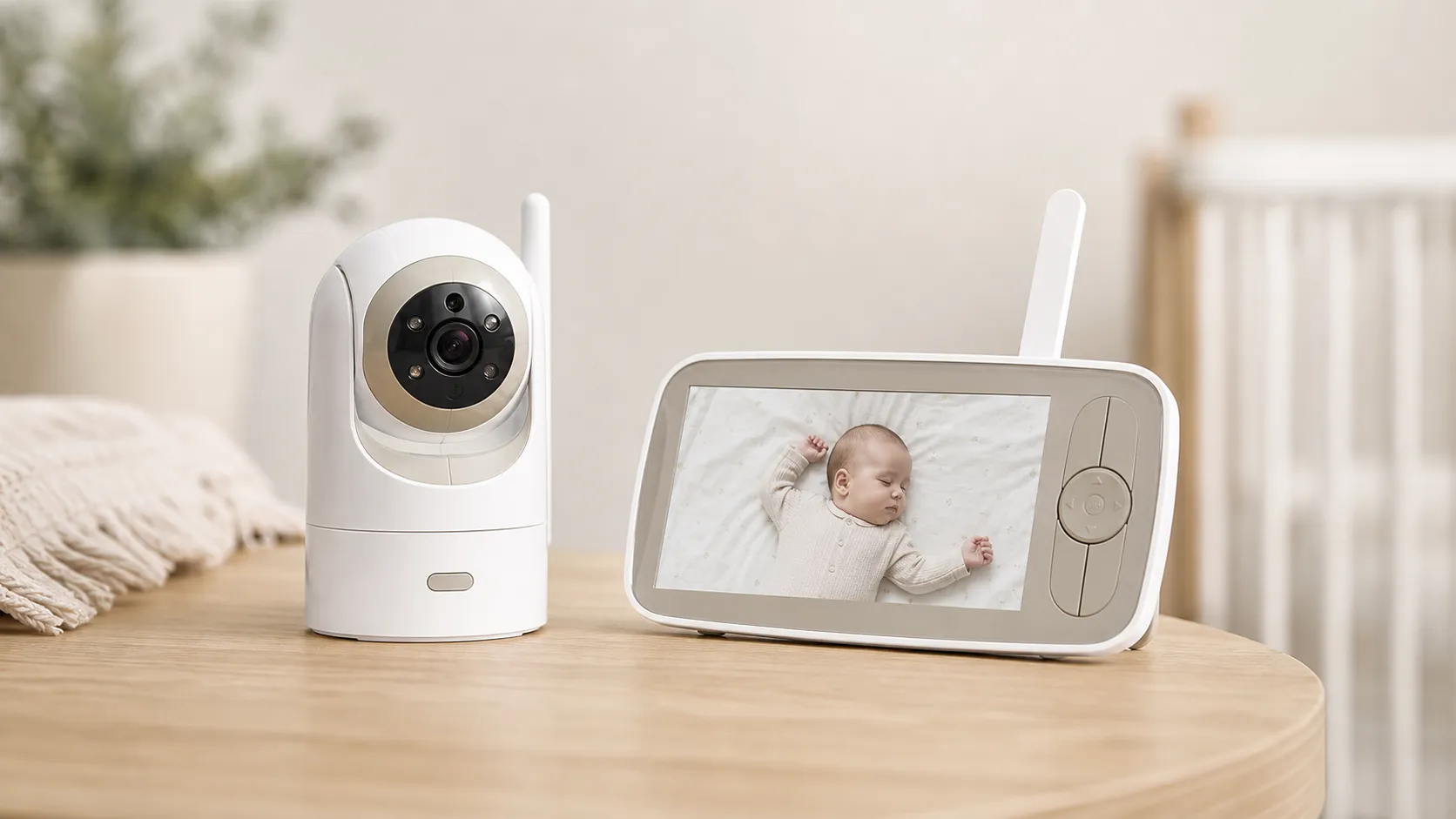
Infant Optics DXR‑8 Pro Video Baby Monitor — 2026 Review
A privacy‑first, high‑clarity non‑WiFi monitor with real optical zoom, clean audio, and long range — strong overall, but a minority report battery/charging issues.
 Baby & Kids
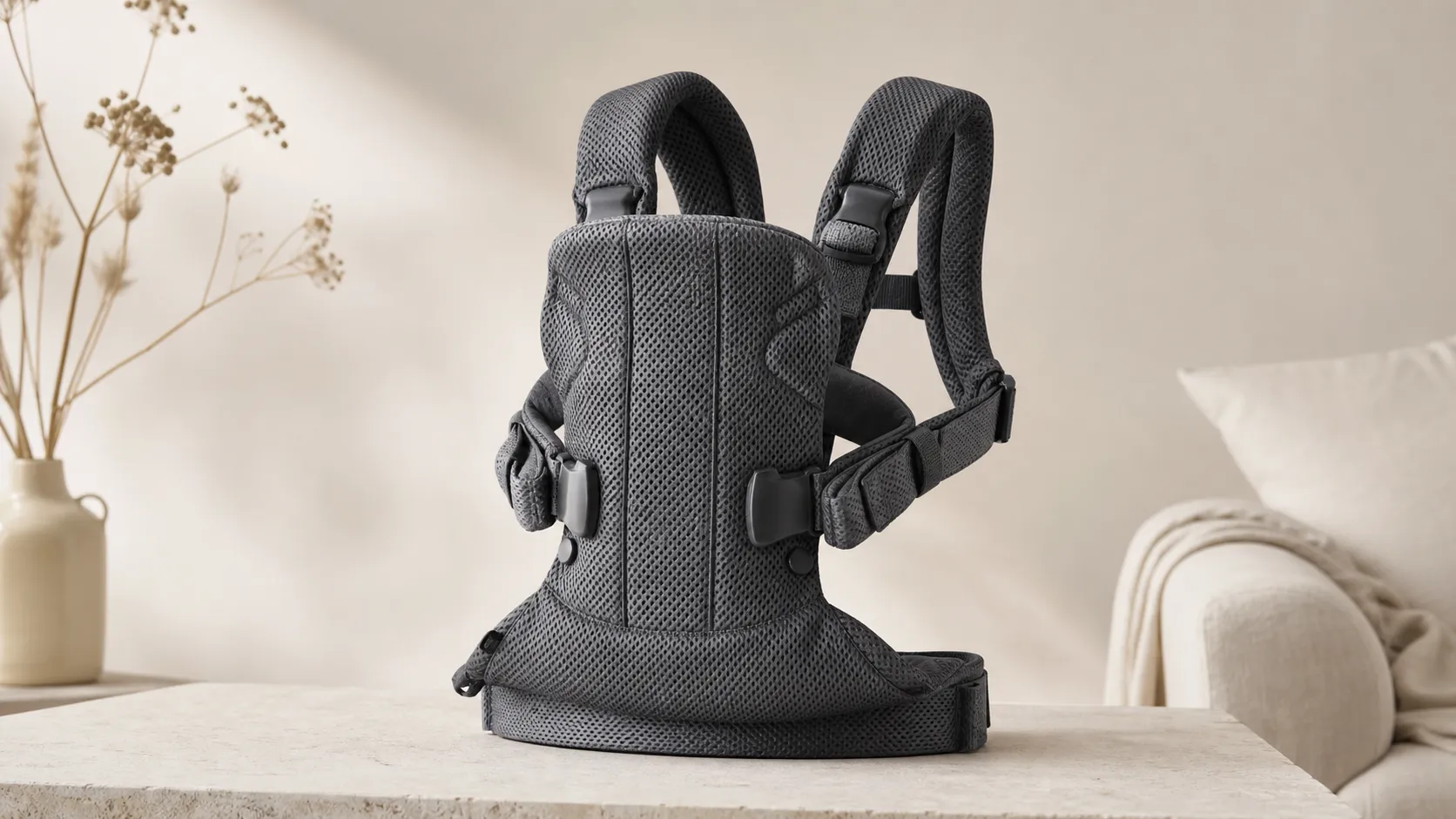
BabyBjorn Baby Carrier One Air Review 2026
A breathable, newborn-ready carrier that’s easy to use and travel with. Great for short-to-medium carries and warm weather, but less ideal for long, heavy-duty use.