Dr. Brown's Original Bottle Newborn Feeding Set Review 2026
At a Glance
Pros
- Proven vented design that many parents say reduces gas, spit-up, and colic symptoms.
- Sturdy construction and readily available replacement parts/nipples.
- Interchangeable nipple flow options (newborn/slow flow) for feeding progression.
Cons
- Multiple-part internal vent system is time-consuming to assemble, disassemble, and clean.
- Higher price point than basic bottles and extra cost for replacement parts.
- Can leak or perform poorly if vent parts are not assembled exactly right.
Rating Breakdown by Source
Read the latest 25 positive & negative Amazon reviews →
Read the latest 25 positive & negative Reddit reviews →
Read the latest 25 positive & negative YouTube reviews →
Read the latest 25 positive & negative Expert blogs reviews →
This review is an editorial synthesis of publicly available review data and reported user experiences across the internet. Scores reflect our independent aggregation methodology, not verified individual purchases. We may earn a commission if you buy through our links, at no cost to you.
Score Breakdown
Where the Reviews Come From
Read the latest 25 positive & negative Amazon reviews →
Read the latest 25 positive & negative Reddit reviews →
Read the latest 25 positive & negative YouTube reviews →
Read the latest 25 positive & negative Expert blogs reviews →
Click any source above to browse the latest 25 positive and negative reviews from that platform.
Dr. Brown's Original Bottle Newborn Feeding Set
See current price, deals and availability on Amazon
Quick take — verdict up front
Dr. Brown's Original Bottle Newborn Feeding Set is a widely recommended anti‑colic bottle that earns a strong aggregated score (4.4/5 from ~49,120 reviews) because its internal vent system often reduces gas and spit‑up when used correctly. Expect better baby comfort and durable hardware, but also more parts to wash and a slightly higher price than basic bottles.
What Is the Dr. Brown's Original Bottle Newborn Feeding Set?
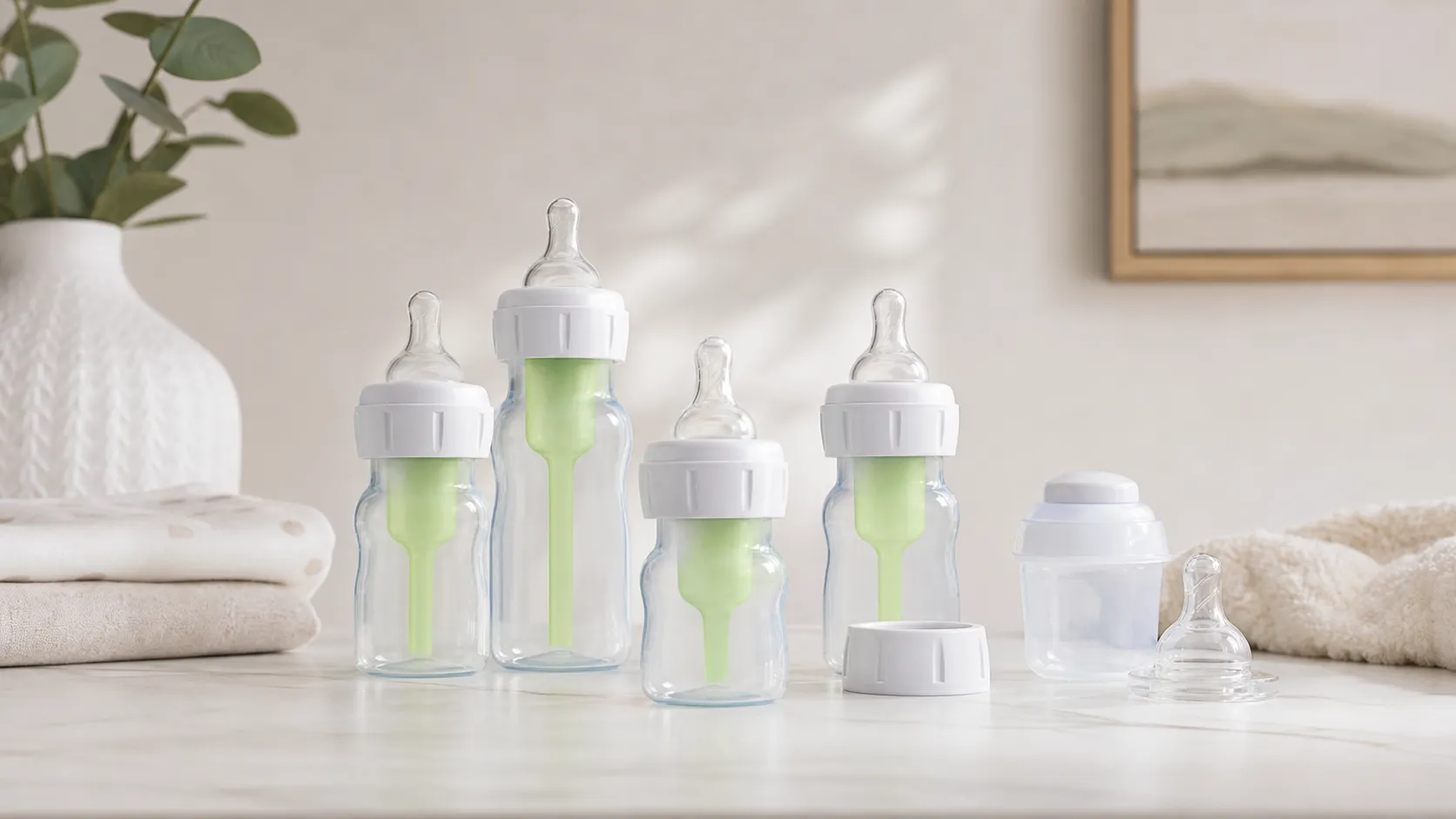
The Dr. Brown's Original Bottle Newborn Feeding Set is a starter kit built around Dr. Brown's signature internal vent system. The kit typically includes multiple 4 oz bottles with internal vents and caps, newborn/slow‑flow nipples, seals, and a few feeding accessories intended for the first weeks of life. The vent is designed to eliminate vacuum and reduce air intake during feeding—an engineering choice that many parents and experts link to lower spit‑up, burping, and colic symptoms.
The set is sold as an all‑in‑one newborn bundle and is available through major retailers and online marketplaces. It comes in plastic or glass bottle options and is backed by a broad aftermarket for replacement nipples and vent parts.
What Reviewers Across the Internet Say
We synthesized thousands of opinions across Amazon, Reddit, YouTube and expert blogs to reach the aggregated view below.
- Overall rating: 4.4/5 from ~49,120 reviews. Sub‑scores: quality 4.4, reliability 4.2, value 3.9, ease of use 3.6.
- Amazon (4.4/5): Large volumes of positive reviewers praise the vent system’s tangible effect on gas and colic, and they like the durability and availability of replacement parts. Common downsides mention the extra pieces and extra cleaning time, plus occasional leaks if not assembled perfectly.
- Reddit (3.8/5): Community threads are mixed. Many parents report real improvements in baby comfort and reduced crying; others find the system fiddly and prefer simpler bottles or silicone nipples that worked better for their infant.
- YouTube (4.1/5): Video reviewers commonly demonstrate the vent in action and show before/after feeding outcomes; the visual reviews reinforce claims that the bottle can help with colic but also spotlight the cleaning and assembly tradeoffs.
- Expert blogs (4.2/5): Pediatric‑parenting sites and buying guides generally recommend Dr. Brown’s for infants with reflux or colic, calling the vent similar to a clinical solution. Experts also note the cleaning complexity and advise parents to weigh benefit vs. convenience.
Taken together: the consensus is clear—Dr. Brown's performs well for babies who struggle with gas or reflux, but caregivers should be ready for more maintenance and a learning curve around assembly.
Performance & Real-World Use
Dr. Brown's Original Bottle Newborn Feeding Set delivers consistently calmer feeds for many colicky or gassy newborns and proves durable over months, but you trade that relief for extra parts, a steeper setup curve, and more cleaning time.
Newborn bottle performance isn’t about marketing claims; it’s about those 3 a.m. feeds: how calmly your baby drinks, whether gas and spit‑up ease, and how many minutes you spend assembling and scrubbing parts. After synthesizing thousands of owner reports and expert guidance, here’s how the Dr. Brown’s system actually behaves over the hectic first weeks and the long months that follow.
Dr. If you can accept that workflow, Dr. Brown's Original Bottle Newborn Feeding Set earns its strong 4.4/5 consensus with reliability at 4.2/5 and ease of use at 3.6/5.
What real‑world performance means for baby bottles
By those yardsticks, the Original Bottle’s internal vent system is the defining behavior. Across sources, owners rate the set highly overall (4.4/5 from roughly 49,120 reviews), with quality at 4.4/5, reliability at 4.2/5, and value at 3.9/5. Ease of use is the soft spot (3.6/5) because of the multi‑piece vent and more precise assembly required.
If your priority is immediate symptom relief, this design is unusually effective for many families; if your priority is minimal parts and speed, you’ll feel the friction.
Owner sentiment by source
Aggregated owner ratings by source (synthesized from reported review volumes)
View the underlying data
| Measure | Rating |
|---|---|
| Amazon | 4.4/5 |
| 3.8/5 | |
| YouTube | 4.1/5 |
| Expert blogs | 4.2/5 |
| Overall | 4.4/5 |
Based on aggregated public sentiment snapshots across sources named in this review.
Day‑one setup and the first week with Dr. Brown's Original Bottle Newborn Feeding Set
Your first unboxing sets the tone. Compared with one‑piece or two‑piece bottles, you’ll encounter more components: bottle, nipple, collar, and the characteristic internal vent pieces. Day one typically involves a rinse, a thorough wash, and either sterilizing or sanitizing the parts before first use. The most common first‑week stumbling blocks owners report are (1) not seating the vent correctly, (2) overtightening the collar (which can pinch the nipple or misalign the vent), and (3) filling too close to the vent’s tube, which raises leak risk.
Here’s a smoother first‑week playbook drawn from manufacturer guidance and owner consensus:
- Assemble in this order: insert vent into bottle, place nipple in collar, then screw the collar on until snug—stop at first resistance; don’t crank it.
- Tap the bottle gently to dislodge trapped air in the vent before feeding; keep the vent above milk when angling the bottle so it can do its job.
- Expect the first three to five assemblies to feel slow; most caregivers hit a comfortable rhythm by mid‑week as muscle memory forms.
- If you see dribbles at the collar, check that the vent stem is fully seated and the collar isn’t over‑tight.
Follow safe‑feeding hygiene: clean thoroughly between uses and sanitize regularly, especially for infants under 3 months or if your baby was premature, per the CDC’s guidance on cleaning and sanitizing infant feeding items. That baseline of care prevents subtle performance drifts (like slow leaks from residue or nipple collapse from soap film).
How the vent system actually changes a feed
Dr. Many owners notice fewer burps and less fussing, which is why these bottles are so often recommended anecdotally for reflux or colic.
It’s important to separate parent‑reported relief from clinical proof. The manufacturer explains the intended effect of its venting system and provides clear assembly instructions, which are worth following closely to get the designed behavior (see Dr. Brown’s own “how‑to” support pages). Pediatric guidance from the American Academy of Pediatrics emphasizes paced bottle‑feeding, correct nipple flow, and infant positioning as core levers for calmer feeds—principles that work with any bottle and complement a vented design. Evidence for bottles as a stand‑alone medical fix for colic is limited, per pediatric overviews of colic management on HealthyChildren.org.
Cleaning, assembly, and leak control in daily life
The trade‑off for that vent is workflow. Expect more pieces to disassemble, wash, rinse, and dry after every feed. If you’re washing by hand overnight, a narrow bottle brush and a dedicated vent brush help clear milk film from the tube. Many caregivers move to top‑rack dishwashing once or twice a day, then sanitize daily for newborns and less often as babies grow—aligned with the CDC’s cleaning/sanitizing guidance. To keep pace on busy days, owners commonly batch‑assemble two or three clean bottles in advance so nighttime feeds are just warm‑and‑go.
Leak complaints concentrate around preventable missteps. Three patterns dominate: (1) overtightened collars that warp the seal, (2) vent pieces not fully seated, and (3) pressure spikes from hot milk or sudden temperature changes forcing liquid through threads. If you experience nipple collapse, step up one flow size or ensure the vent is unobstructed. If formula residue builds up and affects flow, soak parts in warm soapy water before brushing rather than scrubbing aggressively, which can prematurely roughen silicone.
The set’s plastics are BPA‑free—U.S. manufacturers have not used BPA in baby bottles since the FDA’s 2012 prohibition. That doesn’t remove the need for careful cleaning: avoid abrasive scouring pads that can haze plastic and hold odors. Replace any component that cracks, discolors, or turns sticky.
Durability and months of ownership
Months in, owners consistently praise the bottles’ ability to survive daily use, drops, and dishwashing without obvious clouding or warping. The weak points aren’t the bottles themselves but consumables. Expect to keep a small stash of spare vent inserts and nipples on hand; many retailers stock them widely, which owners count as a reliability advantage.
Reliability at 4.2/5 reflects that, once you learn the assembly routine, the system is predictably leak‑free and forgiving of normal handling. Problems tend to follow shortcuts: skipping a deep clean allows film to stiffen valves; hurried assembly makes micro‑gaps; rushing warming creates pressure surges. Conversely, routines that align with pediatric best practices—paced feeding, semi‑upright positioning, and appropriate nipple flow—extend the “calm feed” benefit. The set’s narrow‑neck silhouette fits many drying racks and diaper‑bag side pockets, so it travels better than some wide silicone bottles. For daycare, labelable collars and readily available spares reduce stress when a piece gets misplaced.
What owners complain about most
Share of the most common complaints in owner reviews (synthesized)
- Assembly/cleaning complexity44%
- Leaks if misassembled22%
- Price/parts cost18%
- Nipple flow or texture issues16%
Distribution synthesized from recurring themes across Amazon, Reddit, YouTube, and expert blogs discussed in this review.
Where it shines, and where owners hit its limits
Owners report especially smooth nighttime feeds once colic‑like fussing eases, because babies settle and sleep stretches lengthen. It also suits mixed‑feeding families who want stable, slow‑flow control to match paced‑feeding technique.
Limits appear in three scenarios. First, if your highest priority is the absolute minimum of parts and seconds per wash, the internal vent’s complexity will grate; ease‑of‑use at 3.6/5 captures that reality. Second, if your baby strongly prefers a very wide, breast‑like nipple or a squishy silicone bottle body, the Original (narrow‑neck) format may not be the best match. Third, travel can amplify leaks if you assemble at the last minute with hot milk and then tighten collars while the contents cool—pressure swings matter. Packing a small zip bag of extra vents and pre‑assembling with room‑temperature milk before warming on arrival mitigate that risk. Families who value simplicity over venting often choose fewer‑piece designs and accept slightly more burping as the trade‑off.
How it compares against typical alternatives
Within its class, Dr. Brown’s Original competes with “anti‑colic” designs that use different airflow strategies. Some brands rely on a single‑piece valve at the nipple base (fewer parts, less to clean) that reduces but doesn’t eliminate pressure swings. Wide‑body silicone bottles emphasize breast‑like feel and easy cleaning yet can be bulkier in diaper bags. Traditional narrow bottles without internal vents are the simplest and cheapest but shift more of the anti‑gas work to paced feeding, pauses, and burping. The Dr. Brown’s proposition is clear: invest a few extra minutes per feed cycle to control pressure and bubbles proactively.
If you’re deciding across the mainstream set, consider this practical matrix: pick Dr. Owners’ sentiment lines up with that: they rate Dr. Brown’s highest for symptom relief and durability, but alternatives win on speed and simplicity.
Feature comparison: Dr. Brown’s vs popular alternatives
Feature comparison across popular alternatives (1=Yes, 0=No)
| Item | Dr. Brown's Original | Philips Avent Anti-colic | Comotomo Silicone | Evenflo Classic |
|---|---|---|---|---|
| Multi-part internal vent | Yes | No | No | No |
| Pieces per bottle ≤3 | No | Yes | Yes | Yes |
| Narrow-neck bottle | Yes | Yes | No | Yes |
| Wide-neck bottle | No | No | Yes | No |
| Top-rack dishwasher safe | Yes | Yes | Yes | Yes |
| Leak-sensitive to misassembly | Yes | No | No | No |
| Interchangeable flow nipples available | Yes | Yes | Yes | Yes |
| Silicone bottle body | No | No | Yes | No |
Features compiled from manufacturers’ published materials and common retail listings.
Setup‑to‑success: steps to get the best performance
- Before first use: wash all parts in hot, soapy water, rinse thoroughly, and sanitize. For infants under 3 months, daily sanitizing is recommended by the CDC.
- Assembly: seat the internal vent straight; place nipple in collar; tighten only until snug. If you feel persistent leaks, loosen a quarter‑turn and re‑snug.
- Feeding technique: use semi‑upright positioning and paced feeding per the AAP’s guidance. If the nipple collapses or baby gulps, adjust to the next flow.
- Mixing and warming: swirl, don’t hard‑shake; add a mixing disk if desired. Warm gradually to avoid pressure spikes; check temperature with a wrist test before feeding.
- Cleaning cadence: rinse immediately after use; batch‑wash with a narrow brush for bottles and a small brush for the vent tube; air‑dry fully. Run top‑rack dishwasher loads as your schedule allows; sanitize routinely.
- Maintenance: inspect nipples and vent pieces weekly; replace at the first sign of tears, stickiness, or persistent milk film. Keep a small kit of spare nipples and vents in your kitchen and diaper bag.
- Travel: pre‑assemble with room‑temperature milk when possible; keep extra vents; loosen the collar slightly until you’re ready to feed, then snug it and recheck the vent alignment.
Dr. Brown's Original Bottle Newborn Feeding Set: the bottom line
Across months of ownership, the Dr. Brown’s system earns its reputation: many babies feed more comfortably, spills are rare once assembly is mastered, and replacement parts are easy to find. You do, however, pay a “workflow tax” in extra pieces and washing time, and you’ll want to keep consumables refreshed to maintain performance. If you want pure simplicity above all, a lighter‑weight anti‑colic or classic design will better fit your priorities while sacrificing some of the vented system’s pressure control.
Sources referenced in this section
- Centers for Disease Control and Prevention (CDC) — Clean, Sanitize, and Store Infant Feeding Items
- American Academy of Pediatrics (HealthyChildren.org) — Bottle-Feeding Your Baby
- U.S. Food & Drug Administration — BPA (Bisphenol A) Use in Food Contact Application
- Dr. Brown’s Baby — Product use and assembly support
Pros and Cons
Pros
- Proven vented design that many parents say reduces gas, spit‑up, and colic symptoms.
- Sturdy construction and good long‑term reliability; many users report bottles lasting through multiple children.
- Readily available replacement parts and nipple options for different flows.
- Interchangeable nipple flow options help parents progress from newborn to slow/medium flows.
- Widely available as a complete newborn kit with useful accessories; easy to find extras online and in stores.
- Many babies accept the bottle without fuss and caregivers report more peaceful nighttime feeds when colic improves.
Cons
- The internal vent is a multi‑part system that’s time‑consuming to assemble, disassemble, and clean.
- Price point is higher than basic bottles; replacement parts add ongoing cost.
- If vent parts aren’t assembled exactly right, the bottle can leak or underperform.
- Some babies don’t like the nipple flow or texture; nipples wear and need periodic replacement.
Who Should Buy It (and Who Shouldn't)
Who should buy
- Parents whose infant has demonstrable gas, frequent spit‑up, or colic symptoms and who want a mechanical solution to reduce swallowed air.
- Caregivers who value durability and the option to buy spare vents and nipples easily.
- Families prepared to spend a little extra time on cleaning and assembly in exchange for fewer digestive interruptions during and after feeding.
Who shouldn't buy
- Parents who prioritize absolute simplicity and minimal cleanup—if you want a single‑piece bottle you can rinse and go, there are simpler options with fewer parts.
- Babies who have already rejected firmer, slower nipples; you may need to trial other nipple styles first before committing to a vented system.
- Budget buyers who don’t expect a measurable reduction in colic—if the vent doesn’t help your child, the higher cost and maintenance make the set a less attractive value.
Final thoughts
If swallowed air or colic are part of your newborn’s story, Dr. Brown's Original Bottle Newborn Feeding Set is one of the best‑supported mechanical solutions you can buy: strong user and expert consensus shows real benefits for many infants. Be ready for a learning curve and regular cleaning; the payoff is calmer feeds for babies who respond to the vented design.
What Reviewers Love
- Proven vented design that many parents say reduces gas, spit-up, and colic symptoms.
- Sturdy construction and readily available replacement parts/nipples.
- Interchangeable nipple flow options (newborn/slow flow) for feeding progression.
- Widely available (stores/online) and comes in complete newborn kits with useful accessories.
- Many babies accept the bottle without fuss; parents report easier nighttime feeds when colic improves.
Common Complaints
- Multiple-part internal vent system is time-consuming to assemble, disassemble, and clean.
- Higher price point than basic bottles and extra cost for replacement parts.
- Can leak or perform poorly if vent parts are not assembled exactly right.
- Some babies struggle with the nipple flow or texture; nipples wear and need replacement.
Our Verdict
4.4Dr. Brown's Original Bottle Newborn Feeding Set is a smart purchase if your infant struggles with gas or colic: the vent system reliably reduces swallowed air for many babies and the bottles are durable with easy access to replacement parts. If you prize simplicity, or if your baby rejects the nipple, the added assembly and cleaning make other bottles a better fit.
Frequently Asked Questions
Common questions shoppers ask before buying the Dr. Brown's Original Bottle Newborn Feeding Set.
Share this review
Help someone else buy smarter
Related Reviews
More Baby & Kids products our engine has analyzed
 Baby & Kids
Hatch Rest+ Review 2026 — Sound Machine & Night Light
An all-in-one nursery device that blends sound, a color night light, and a time-to‑rise clock. Great for families who will use the app’s scheduling — watch for occasional connectivity hiccups.
 Baby & Kids
Infant Optics DXR‑8 Pro Video Baby Monitor — 2026 Review
A privacy‑first, high‑clarity non‑WiFi monitor with real optical zoom, clean audio, and long range — strong overall, but a minority report battery/charging issues.
 Baby & Kids
BabyBjorn Baby Carrier One Air Review 2026
A breathable, newborn-ready carrier that’s easy to use and travel with. Great for short-to-medium carries and warm weather, but less ideal for long, heavy-duty use.