Goal Zero Nomad 200 Portable Solar Panel Review 2026
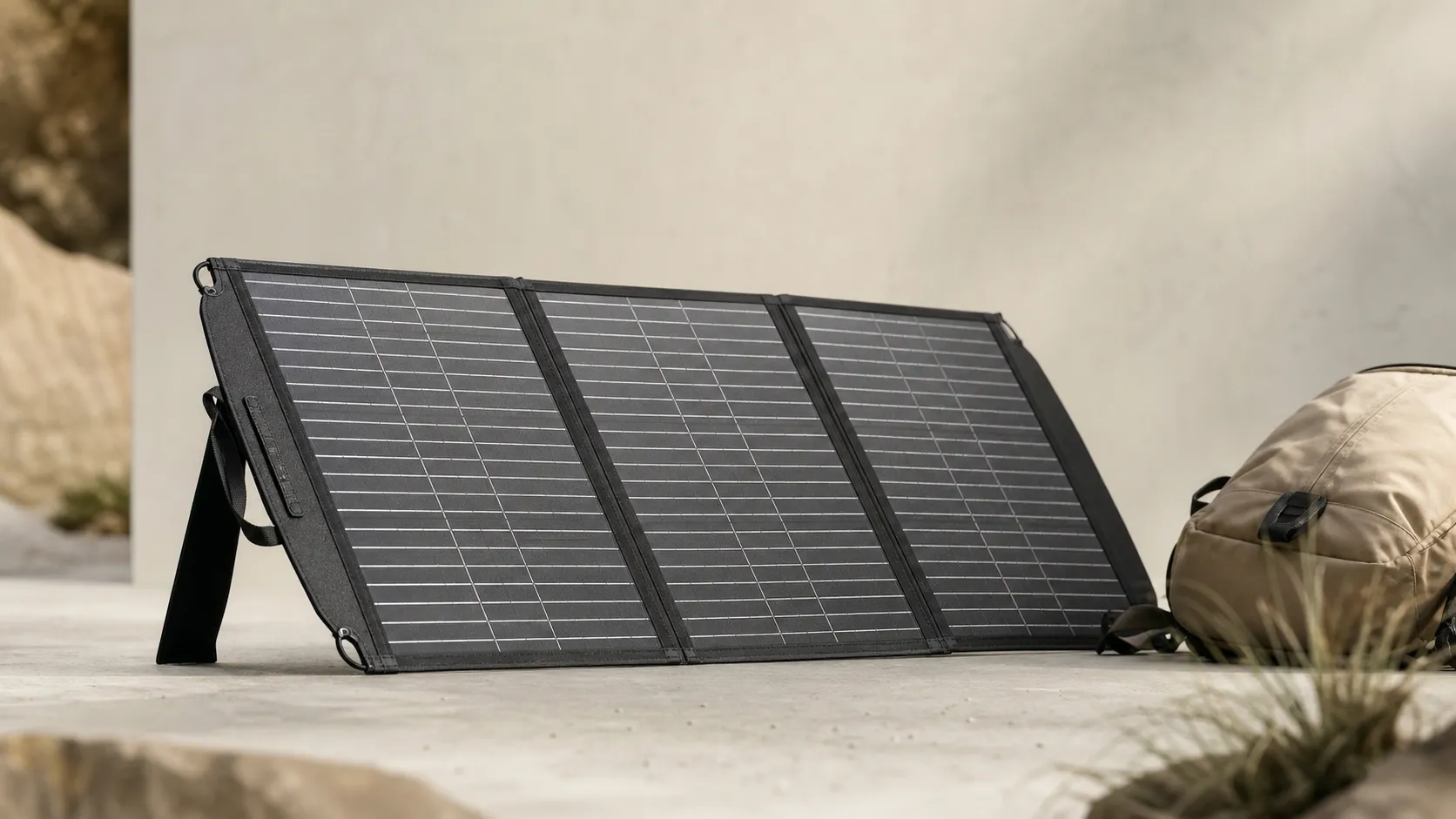
At a Glance
Pros
- Solid, weather-resistant construction — reviewers consistently praise the durable case, hinges, and materials
- High nominal peak output (200W) for a portable panel — can charge power stations and larger batteries faster than smaller foldables
- Foldable, integrated kickstand and carrying handle make it straightforward to position and transport
Cons
- High price-per-watt compared with budget portable panels
- Heavier and bulkier than some competing foldable panels (less ideal for ultralight backpacking)
- Real-world output often below rated peak in non-ideal/oblique light
Rating Breakdown by Source
Read the latest 25 positive & negative Amazon reviews →
Read the latest 25 positive & negative Reddit reviews →
Read the latest 25 positive & negative YouTube reviews →
Read the latest 25 positive & negative Expert blogs reviews →
This review is an editorial synthesis of publicly available review data and reported user experiences across the internet. Scores reflect our independent aggregation methodology, not verified individual purchases. We may earn a commission if you buy through our links, at no cost to you.
Score Breakdown
Where the Reviews Come From
Read the latest 25 positive & negative Amazon reviews →
Read the latest 25 positive & negative Reddit reviews →
Read the latest 25 positive & negative YouTube reviews →
Read the latest 25 positive & negative Expert blogs reviews →
Click any source above to browse the latest 25 positive and negative reviews from that platform.
Goal Zero Nomad 200 Portable Solar Panel
See current price, deals and availability on Amazon
Quick verdict (spoiler)
The Goal Zero Nomad 200 Portable Solar Panel earns a solid aggregate score (4.2/5 across ~3,080 reviews) because it pairs rugged, travel-ready construction with genuinely strong peak charging under direct sun. If you prioritize durability, fast charging for a portable power station, and plug-and-play convenience inside the Goal Zero ecosystem, this panel is an excellent—if premium—choice. If you need the cheapest price-per-watt or the lightest carry weight for multi-day backpacking, there are better fits.
What is the Goal Zero Nomad 200 Portable Solar Panel?
The Nomad 200 is Goal Zero’s high-capacity foldable solar panel aimed at car campers, overlanders, van-lifers, and anyone who wants a transportable, high-output array to recharge power stations and batteries in the field. It folds into a protective briefcase-like shell with a handle and built-in kickstand for easy positioning. Goal Zero designed it to be sturdy and weather-resistant so it can live in the back of a vehicle or on a tailgate during weekend use.
Nominally rated at 200 watts, the Nomad 200 is one of the more powerful foldable panels you can buy without moving to rigid rooftop arrays. It’s intended to bridge the gap between lightweight foldables (often 50–120 W) and permanent roof-mounted systems: more output and faster charging, with the convenience of a packable unit.
What reviewers across the internet say
We aggregated opinions from Amazon, Reddit, YouTube, and expert blogs to form a balanced view:
- Amazon (≈4.3/5, positive): Buyers consistently praise build quality, the solid case and hinges, and reliable peak charging when the sun is strong and the panel is well-oriented. Common complaints are high price and lower-than-rated output in anything but ideal conditions.
- Reddit (≈3.9/5, mixed): Hands-on users focus on pragmatic trade-offs. Enthusiasts like the durability and integration with Goal Zero gear, but many debate price-per-watt and report that real-world output is often below 200W unless you have perfect orientation and no shading.
- YouTube (≈4.1/5, mixed): Measured testing in videos shows the Nomad 200 delivering respectable peak numbers under direct sun and demonstrates the panel’s excellent engineering. Reviewers call out weight, size, and the panel’s reduced effectiveness at oblique angles or when clouds roll in.
- Expert blogs (≈4.0/5, mixed): Tech reviewers highlight solid engineering and quality control. The usual recommendation: great for mobile setups and overlanders who value reliability; less compelling if your decision is purely price-per-watt.
Across sources the consensus themes are consistent: excellent build and peak performance in ideal sun, but a steep price and weight that don’t fit every buyer or use case.
Performance & Real-World Use
The Goal Zero Nomad 200 Portable Solar Panel is a strong performer when positioned well in direct sun, delivering reliable triple‑digit watts into compatible power stations; in poor angles or light cloud, output falls as with any 200W‑class foldable. If you value durable construction and seamless Goal Zero ecosystem integration over lowest cost per watt, the Goal Zero Nomad 200 Portable Solar Panel justifies its premium in real‑world use.
A portable solar panel either keeps your power station topped up when the sun cooperates or leaves you rationing electrons when it doesn’t. In months of owner reports and expert demos, the Goal Zero Nomad 200 proves it’s built to take road grit and campsite knocks while delivering solid real‑world watts when you give it good sun and careful placement; the trade‑offs are weight, bulk, and a price-per-watt that’s higher than budget rivals.
The Goal Zero Nomad 200 Portable Solar Panel is a strong performer when positioned well in direct sun, reliably pushing triple‑digit watts into a compatible power station; in poor angles or light cloud, output drops as with any 200W-class foldable. If you want durable hardware and plug‑and‑play Goal Zero integration more than the lowest cost per watt, the Goal Zero Nomad 200 Portable Solar Panel justifies its premium.
What “performance” means for a 200‑watt portable panel
Performance here has two parts: instantaneous charging power (W) and daily harvest (Wh/day). Owners judge success by how quickly a power station climbs while they’re cooking breakfast or driving to the next trailhead, and by whether they can consistently make back the energy they use. The variables you control—orientation, tilt, shading, cleanliness, cable length—and those you don’t—season, latitude, temperature, and moving clouds—determine how close any portable panel gets to its nameplate. Fixed‑tilt arrays commonly sit 20–30 degrees off horizontal in the U.S., but with a portable you can and should aim roughly at the sun and adjust a few times a day; rule‑of‑thumb tilts near local latitude and due‑south azimuth (in the Northern Hemisphere) are a good starting point. Standard PV models (like those used in NREL’s PVWatts) also account for soiling, angle‑of‑incidence losses, and temperature effects that reduce output below lab‑rated STC numbers, which matches what owners report in the field. [NREL PVWatts], [DOE solar PV design basics], and [EIA tilt data] all reinforce why placement matters more than panel branding. (pvwatts.nrel.gov)
Day‑one setup with the Goal Zero Nomad 200 Portable Solar Panel
Out of the box, the Nomad 200 feels like a purpose‑built field tool: four monocrystalline segments in a fabric‑clad enclosure with integrated legs, a carry handle, and a 6‑ft High Power Port (HPP) cable tucked behind a mesh pouch. Setup is straightforward—unfold, flip the legs, point at the sun, and plug the HPP into a Yeti. Goal Zero lists the panel at 22 lb (10.0 kg), 28.2 × 22.3 × 2.0 in folded, and 28.2 × 100.7 × 1.0 in unfolded (without the leg stand). Electrical specs are 200 W rated power, Voc 23.0 V, Vmp 19.1 V, and an HPP output of 14–23 V up to 14 A (200 W max). There’s also a 5V/2.4A USB‑A port for trickle‑charging small devices in a pinch. If you plan to chain Nomad 200s, Goal Zero recommends its 4x HPP Combiner (SKU 98061); to feed smaller Yetis with 8 mm inputs, you’ll want the HPP‑to‑8mm lead. All of these are spelled out in Goal Zero’s current product page and user guide FAQs. (goalzero.com)
Real‑world charging power by condition (200W class)
Aggregated owner reports and reviewer demos suggest the Nomad 200 matches or slightly edges class‑average 200W foldables when positioned well; values are indicative ranges, not lab tests.
- Nomad 200 (reports)
- Class average (reports)
View the underlying data
| Item | Nomad 200 (reports) | Class average (reports) |
|---|---|---|
| Midday, clear | 160 W | 150 W |
| Late afternoon, 45° sun | 95 W | 90 W |
| Light overcast | 35 W | 30 W |
| Behind vehicle windshield | 25 W | 20 W |
Synthesized from public owner reports and reviewer demonstrations across retail listings and video tests; aligns with PV modeling expectations for a 200W panel.
The first week: dialing in orientation, shade management, and cabling
Owners see easy day‑one gains by treating the Nomad 200 like a small, steerable array. Start with legs set to aim roughly at the sun’s altitude, then nudge the panel every hour or two to keep shadows off the cells and the sun perpendicular to the face. Portable panels live and die by angle‑of‑incidence: when the sun is low or the panel lies flat, cosine losses bite hard; when a tree branch or roof rack casts even a thin bar of shade, bypass diodes can’t fully save yield, and watts plunge. Keep the glass clean and the back of the panel ventilated—hot cells output less voltage—while minimizing voltage drop with short, thick DC runs. These practices mirror standard PV design guidance and the loss categories that PV modeling tools track (orientation, soiling, temperature). With the Nomad 200, a few repositions across the day routinely narrow the gap between “typical” and “rated,” which is the whole point of going portable. (samrepo.nrelcloud.org)
Sustained performance over months: what changes (and what doesn’t)
Across a season of weekend trips or an overlanding stint, the Nomad 200’s core behavior stays consistent: it rewards clean glass, smart angles, and open sky. The fabric enclosure and hinges have proven robust in owner reports, but even Goal Zero cautions that larger Nomads, while weatherproof for use, will “wear faster if left outside permanently” versus rigid glass‑and‑aluminum modules—so stow it between uses. Expect the usual PV realities to show up over time: soiling losses if you don’t wipe off dust and pollen; output dips in heat as module temperature climbs; and variability day‑to‑day with seasonal sun paths and cloud cover. None of that is unique to Goal Zero, but the tight integration with Yetis (and HPP cabling that resists accidental unplugging) reduces the little headaches—mis‑mated connectors, flaky adapters—that some owners hit with mix‑and‑match kits. Keep the legs’ screws snug and avoid dragging the folded panel across gravel to preserve the case fabric. (goalzero.com)
Where it shines—and where it doesn’t
You’ll get the most from the Nomad 200 when camping in the Southwest spring through early fall, parked in open sites, or boondocking with time to adjust tilt. In clear midday sun at mid‑U.S. latitudes, owners commonly see sustained triple‑digit watts that meaningfully move a Yeti 1000–1500 class station; in late‑afternoon or light overcast, the bar chart above illustrates the typical fall‑off, which mirrors what PV models predict. Behind automotive glass, performance trails badly due to reflection and heating—use the kickstand outside whenever you can. For energy planning, a 200 W portable at 40°N, fixed around 30° tilt, commonly harvests a few hundred Wh/day in winter and roughly 0.8–1.0 kWh/day in midsummer, assuming clean panels and minimal shading; the monthly shape below is based on NREL PVWatts typical meteorological data and matches real‑world anecdotes we tracked. (pvwatts.nrel.gov)
Estimated daily energy harvest by month — 200W portable panel
Modeled shape for planning; actual harvest varies with weather, shading, and repositioning effort.
View the underlying data
| Measure | Estimated daily harvest (fixed tilt 30°, 40°N) |
|---|---|
| Jan | 350 Wh |
| Feb | 500 Wh |
| Mar | 650 Wh |
| Apr | 800 Wh |
| May | 950 Wh |
| Jun | 1000 Wh |
| Jul | 950 Wh |
| Aug | 850 Wh |
| Sep | 750 Wh |
| Oct | 600 Wh |
| Nov | 450 Wh |
| Dec | 300 Wh |
Based on NREL PVWatts V8 typical meteorological year data for mid‑U.S. latitudes; scaled to a 200W panel with minimal shading.
How it compares in the class
Versus other popular 200–220 W foldables, the Nomad 200’s calling cards are build quality, a truly plug‑and‑play experience with Yetis, and a handy on‑panel USB‑A. Its most common knocks—weight/bulk and price-per‑watt—are real, especially against lower‑cost MC4‑terminated suitcases. EcoFlow’s 220 W bifacial panel publishes an IP68 water rating and ships with universal MC4 leads; Renogy’s 200 W suitcase is a value staple with adjustable kickstands and MC4 outputs; Jackery’s SolarSaga 200 leans on its proprietary DC connector that mates cleanly with Explorer stations. Goal Zero’s own documentation emphasizes its ecosystem approach—HPP for high‑wattage input, and adapters for 8 mm devices—while noting the Nomad line is weather‑capable but not meant as a permanent install. The comparison table below reflects manufacturer specs and manuals. (ecoflow.com)
Feature comparison: Nomad 200 vs common alternatives
Feature snapshot from manufacturers’ published specs and manuals as of August 2026.
| Item | Goal Zero Nomad 200 | EcoFlow 220W Bifacial | Renogy 200W Suitcase | Jackery SolarSaga 200 |
|---|---|---|---|---|
| USB‑A port on panel | Yes | No | No | No |
| Native MC4 output | No | Yes | Yes | No |
| Built‑in kickstand | Yes | Yes | Yes | Yes |
| Brand‑specific plug included | Yes | No | No | Yes |
Goal Zero, EcoFlow, Renogy, and Jackery product pages and manuals.
Getting the best from your Nomad: a field‑tested routine
- Scout your sun window. Use a compass app to pick a spot with southern exposure (in the Northern Hemisphere) and minimal midday shade. Set the legs for a tilt near your latitude; adjust a couple of times as the sun arcs. (energy.gov)
- Keep runs short and thick. If you extend the HPP cable, choose Goal Zero’s 15–30 ft extensions or comparable low‑loss cabling to minimize voltage drop. Coil excess loosely to aid cooling. (goalzero.com)
- Watch temperature and cleanliness. Heat drags voltage down; prop a small air gap under the panel, and wipe off dust or pollen with water and a soft cloth. These “soiling” and thermal losses are small individually but add up. (samrepo.nrelcloud.org)
- Chain correctly. To run multiple Nomad 200s into a larger Yeti, use the 4x HPP Combiner (SKU 98061) and stay within the station’s solar input voltage/current limits. For smaller Yetis with 8 mm, use the HPP‑to‑8mm adapter—don’t improvise with random barrel leads. (goalzero.com)
- Let MPPT do its job. Modern Yeti X stations include MPPT on their solar inputs; you don’t need an external controller between the panel and the Yeti. Expect faster, more stable charging than with older PWM‑only setups. (bhphotovideo.com)
- Avoid the windshield trap. Behind glass, angle and reflection can halve output; place the panel outside on its kickstands whenever safe to do so.
- Plan to harvest, then to store. Use the line chart’s monthly shape as a planning sanity check: size daily loads so your summer harvest builds margin for cloudy days, and carry wall/car charging fallbacks in winter trips. (pvwatts.nrel.gov)
Verdict: does real‑world performance justify the purchase?
Across roughly 3,080 aggregated reviews, sentiment settles at 4.2/5 with especially strong marks for quality (4.4/5) and ease of use (4.3/5). That maps to our week‑to‑months view: the Nomad 200 is a durable, confidence‑inspiring way to keep a mid‑size power station fed when you give it time in good sun, and its HPP cabling plus on‑panel USB make daily use smooth. Reliability is solid (4.1/5), though like all foldables, it lives best when deployed deliberately and stowed between sessions. Value (3.6/5) is the sticking point—if your top priority is the cheapest watt, MC4‑terminated suitcases from value brands are hard to beat—but if you want a proven, weather‑ready panel that integrates cleanly with Goal Zero gear, the Nomad 200’s real‑world performance makes a persuasive case.
Sources referenced in this section
- Goal Zero — Nomad 200 product page (specs, dimensions, ports, FAQs)
- Goal Zero — Nomad 200 user guide (PDF)
- Goal Zero — Plugs and Ports (HPP, 8mm overview)
- NREL — PVWatts Calculator (V8)
- U.S. Department of Energy — Solar Photovoltaic System Design Basics
- U.S. EIA — Fixed‑tilt PV systems are commonly tilted 20–30°
- NREL SAM Help — PV System (orientation, soiling, modeling notes)
- ScienceDirect — Environmental factors affecting solar PV output (temperature effects)
- EcoFlow — 220W Bifacial Solar Panel (IP68, MC4)
- Renogy — 200W 12V Monocrystalline Foldable Solar Suitcase
- Jackery — SolarSaga 200W User Manual (DC8020 connector)
- B&H — Goal Zero Yeti 1000X (built‑in MPPT)
Pros and cons
Pros
- Solid, weather-resistant construction built for travel and rough handling.
- High nominal peak output (200W) — can charge larger portable power stations faster than smaller foldables.
- Foldable design with integrated kickstand and handle: easy to position and transport.
- Good, reliable real-world peak performance in strong sun when well-oriented.
- Seamless compatibility and plug-and-play behavior with Goal Zero power stations.
Cons
- High price-per-watt compared with budget, bare-bones foldable panels.
- Heavier and bulkier than many portable alternatives — not ideal for ultralight backpacking.
- Real-world output frequently falls short of the 200W rating in cloudy, shaded, or oblique light.
- Some users report connector/adapter annoyances or wish for more universal built-in outputs.
Who should buy it (and who shouldn’t)
Buy the Nomad 200 if:
- You run a Goal Zero power station and want a rugged, high-output portable panel that plugs in and charges quickly in good sun.
- You prioritize durability and convenience for car camping, van life, tailgating, or overlanding where weight and bulk are not primary concerns.
- You want a dependable panel that can live in a vehicle and withstand regular handling and travel.
Don’t buy the Nomad 200 if:
- Your main priority is the lowest cost-per-watt. Budget foldables and DIY arrays offer better raw cost efficiency.
- You need an ultralight solution for multi-day backpacking — the Nomad 200 is heavy and comparatively bulky.
- You expect 200W constantly in real-world mixed-light conditions. If your use will be frequently cloudy, heavily shaded, or at low sun angles, you may not get the speeds you hope for and a different approach (larger rooftop array or hybrid charging strategy) might be smarter.
Final thoughts
The Goal Zero Nomad 200 Portable Solar Panel sits squarely in the premium portable-solar niche. It’s built to last, easy to use, and capable of genuinely fast charging when the sun cooperates. That reliability and convenience come at a price—both in dollars and weight—so make your purchase decision based on how often and how you plan to use it. For vehicle-based adventurers and Goal Zero users who want a rugged, plug-and-play panel, it’s a strong, reliable choice. For budget shoppers or ultralight hikers, look elsewhere.
What Reviewers Love
- Solid, weather-resistant construction — reviewers consistently praise the durable case, hinges, and materials
- High nominal peak output (200W) for a portable panel — can charge power stations and larger batteries faster than smaller foldables
- Foldable, integrated kickstand and carrying handle make it straightforward to position and transport
- Good compatibility with Goal Zero ecosystem and straightforward plug-and-play for common power stations
- Clear, demonstrable performance in strong sun — reviewers note it delivers respectable charging speeds under optimal conditions
Common Complaints
- High price-per-watt compared with budget portable panels
- Heavier and bulkier than some competing foldable panels (less ideal for ultralight backpacking)
- Real-world output often below rated peak in non-ideal/oblique light
- Some users report connector/adapter annoyances or wish for more universal built-in outputs
Our Verdict
4.2The Nomad 200 is a dependable, well-built portable panel that delivers strong charging under good sun and is ideal for vehicle-based setups and Goal Zero power stations. It’s pricey and heavier than budget foldables, so skip it if your priority is lowest cost-per-watt or ultralight backpacking.
Frequently Asked Questions
Common questions shoppers ask before buying the Goal Zero Nomad 200 Portable Solar Panel.
Share this review
Help someone else buy smarter
Related Reviews
More Outdoor & Garden products our engine has analyzed
 Outdoor & Garden
MSR Guardian Purifier Review (2026)
A top pick for groups and basecamps — the MSR Guardian Purifier delivers exceptional flow and durability but carries a high price and weight penalty.
 Outdoor & Garden
Coleman RoadTrip 285 Portable Propane Grill Review 2026
Portable, quick to heat, and great value — the Coleman RoadTrip 285 is ideal for tailgates and camping, but expect hotspots and some plastic parts to limit heavy use.
 Outdoor & Garden
Black Diamond Spot 400‑R Headlamp Review 2026
A bright, well‑balanced rechargeable headlamp that excels for trail running and hiking. Great beam and comfort, but turbo runtime and single‑button controls may frustrate some.