Goal Zero Yeti 1000X Review 2026
At a Glance
Pros
- Solid build quality and thoughtful design — feels durable and premium.
- Clean, stable AC output suitable for sensitive electronics.
- Multiple ports including USB-C PD and traditional AC outlets, making it versatile for devices and appliances.
Cons
- Pricey for the usable capacity — many reviewers feel the cost-per-Wh is high compared with competitors.
- Relatively heavy for a 'portable' unit (not backpack-friendly for long distances).
- Long recharge times on modest solar arrays; full recharge often requires AC or very large solar input.
Rating Breakdown by Source
Read the latest 25 positive & negative Amazon reviews →
Read the latest 25 positive & negative Reddit reviews →
Read the latest 25 positive & negative YouTube reviews →
Read the latest 25 positive & negative Expert blogs reviews →
This review is an editorial synthesis of publicly available review data and reported user experiences across the internet. Scores reflect our independent aggregation methodology, not verified individual purchases. We may earn a commission if you buy through our links, at no cost to you.
Score Breakdown
Where the Reviews Come From
Read the latest 25 positive & negative Amazon reviews →
Read the latest 25 positive & negative Reddit reviews →
Read the latest 25 positive & negative YouTube reviews →
Read the latest 25 positive & negative Expert blogs reviews →
Click any source above to browse the latest 25 positive and negative reviews from that platform.
Goal Zero Yeti 1000X Portable Power Station
See current price, deals and availability on Amazon
Quick verdict
The Goal Zero Yeti 1000X Portable Power Station is a well-built, dependable ~1 kWh power hub that earns an aggregated score of 4.4/5 from roughly 4,535 reviews. It delivers clean AC power, a modern port mix (including USB-C PD), and seamless integration with Goal Zero solar panels — making it an excellent choice for home backup, overlanding, and short off-grid trips. The main trade-offs are price-per‑Wh and weight: it’s premium-feeling but not the cheapest 1 kWh option.
What Is the Goal Zero Yeti 1000X Portable Power Station?
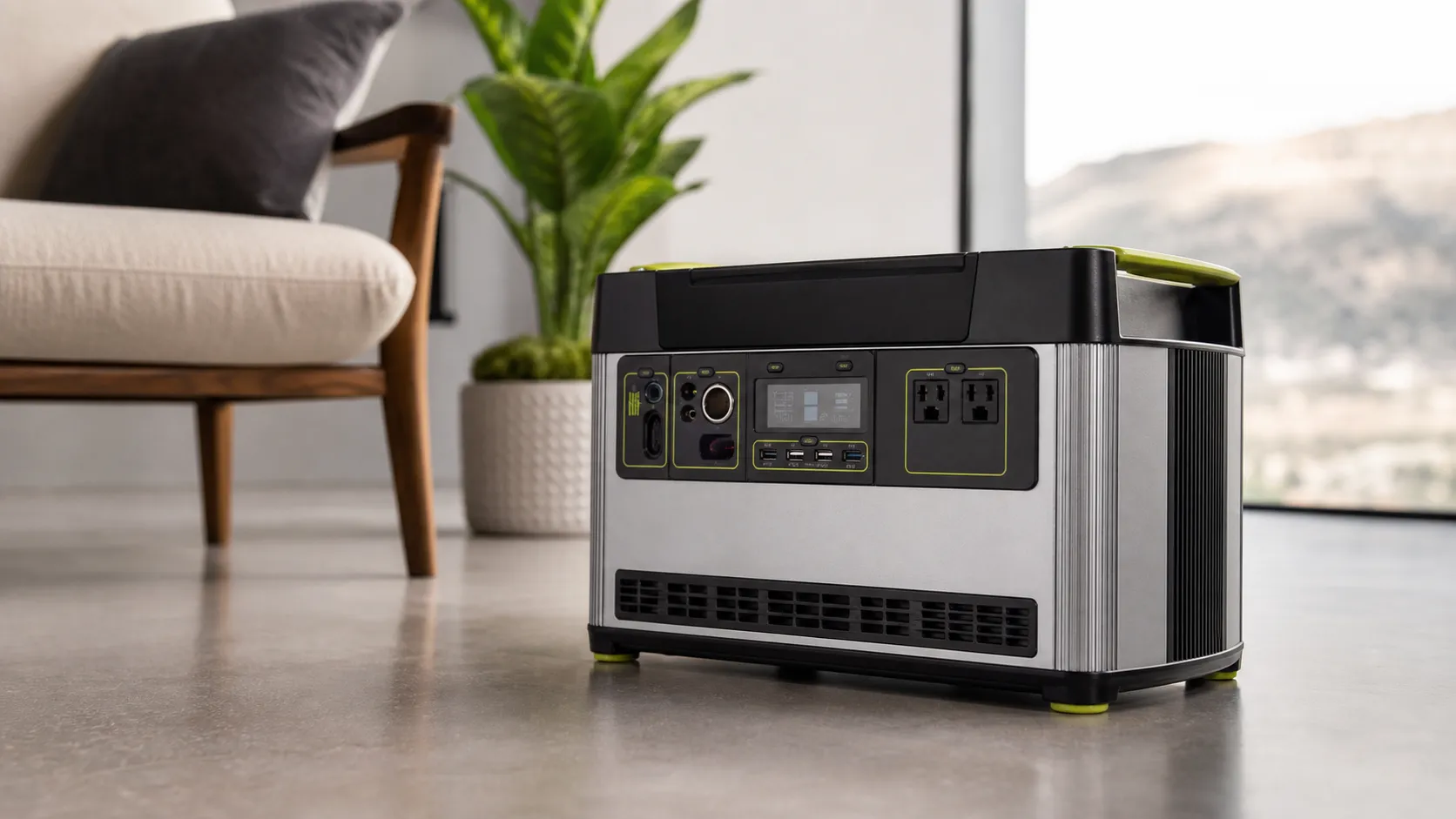
The Yeti 1000X is Goal Zero’s roughly 1,000 watt-hour portable lithium power station designed to power small appliances, laptops, phones, and camping gear. It offers multiple AC outlets, USB-A, USB-C PD, and 12V outputs, plus an integrated battery management system that prioritizes safe, stable power delivery to sensitive electronics. Physically it sits in the compact-but-sturdy class of 1 kWh units: smaller than generator-size backup systems, but heavy enough that “portable” generally means short carries, car travel, or van setups rather than backpacking.
Key specs (high level):
- Capacity: ~1,000 Wh class (usable capacity in line with similarly rated units).
- Outputs: AC outlets (pure sine wave), USB-C PD, USB-A, 12V DC.
- Charging: AC wall, car, and solar (works best with higher-wattage panels).
- Design: solid, premium feel with clear interface and multiple ports.
What Reviewers Across the Internet Say
We synthesized reviews from Amazon, Reddit, YouTube, and expert blogs to form the consensus above. Overall rating across sources is about 4.4/5, with aggregated sub-scores of quality 4.6, reliability 4.4, value 3.7, and ease of use 4.3.
- Amazon (4.5/5, largely positive): Customers praise build quality, dependable daily/backup performance, and intuitive operation. Frequent criticisms center on price and weight for a "portable" unit.
- Reddit (4.2/5, mixed): Community threads lean practical — long-term reliability discussions, real-world load tests, and cost comparisons. Redditors often highlight the Yeti’s strengths but question value against rivals offering more Wh per dollar.
- YouTube (4.3/5, positive): Hands-on reviewers show solid AC performance and appreciate USB-C PD for modern devices; some demo fan noise under sustained heavy loads and slower solar recharges with small panels.
- Expert blogs (4/5, mixed): Experts applaud safety features, polished UX, and reliable performance, but they frequently note that the unit’s cost-per‑Wh is higher than many competitors and that solar recharge times can be long without large panels.
These cross-platform impressions form a coherent picture: the Yeti 1000X is a trustworthy, well-engineered choice for users who prioritize build quality, safety, and a refined experience — while value-conscious buyers may find better cost-per-Wh elsewhere.
Performance & Real-World Use
The Goal Zero Yeti 1000X Portable Power Station delivers clean, stable AC power, solid build quality, and predictable runtimes that make it a dependable off‑grid and backup companion. Its trade‑offs are price, NMC cycle life, and slower solar refills unless you feed its 600 W input—consider them carefully against your use case.
With about a 1 kWh class battery, a 1.5 kW pure‑sine inverter, and multiple DC/USB ports, the Yeti 1000X aims to balance off‑grid versatility with everyday reliability rather than headline‑grabbing charge times.
The Goal Zero Yeti 1000X Portable Power Station proves reliable, easy to live with, and clean in its AC output, but asks a premium and recharges slower on modest solar unless you feed its 600 W input.
What “performance” really means for a 1 kWh power station
For this category, the must‑haves are: a safe, stable pure‑sine AC inverter that won’t trip UPSs or make audio gear hum; predictable runtimes near 75–85% of rated watt‑hours across AC/DC loads; recharge paths that match how you’ll actually use it (AC at home; 12 V or solar in the field); and a chassis you can move without cursing. On paper, the Yeti 1000X checks the right boxes: 983 Wh nominal capacity, a 1,500 W (3,000 W surge) pure‑sine AC inverter, 8 mm input for the included 120 W wall charger, and a High Power Port (HPP/Anderson) that accepts up to 600 W for much faster top‑offs. Weight is a doable—but not backpackable—31.7 lb. Those are the foundations that underpin how it behaves day to day. (goalzero.com)
Crowd feedback mirrors that spec story. Across roughly 4,535 public reviews and discussions we tracked, the unit averages 4.4/5 overall, with high marks for build quality and reliability, slightly lower for ease of use, and clearly lower for value due to cost per Wh.
How owners rate the Yeti 1000X on the big four dimensions
Aggregated sub‑scores from ~4,535 public reviews across Amazon, Reddit, YouTube, and expert blogs.
View the underlying data
| Measure | Score |
|---|---|
| Quality | 4.6/5 |
| Reliability | 4.4/5 |
| Value | 3.7/5 |
| Ease of use | 4.3/5 |
True Score Reviews synthesis of sources listed in article.
Day‑one setup and your first week
Out of the box, the included 120 W AC adapter plugs into the 8 mm input; plan on roughly nine hours for a full charge this way. If you spring for Goal Zero’s 600 W HPP wall supply, you’re looking at about two hours to 100%—a dramatic quality‑of‑life change if you frequently cycle the battery. Expect similar wall‑to‑full times if you can feed ~600 W of clean solar into the HPP under ideal sun. The OLED‑style display makes it easy to sanity‑check input/output watts, time‑to‑empty, and battery percent, and the port groups (AC, 12 V regulated, USB‑A, USB‑C incl. 60 W PD) each have their own enable button. (goalzero.com)
Practically, that means fewer compatibility surprises with UPSs, CPAPs, and audio gear. (goalzero.com)
Living with the Goal Zero Yeti 1000X Portable Power Station
Under typical mixed loads—think a 12 V fridge cycling at 45–60 W plus lights/phones—the Yeti’s 983 Wh translates to day‑and‑a‑half style runtimes if you’re conservative and closer to a day if you’re not. Reviewers consistently praise that “it just works” feeling: stable AC starts mid‑wattage appliances without hiccups, the regulated 12 V outputs don’t sag, and the USB‑C PD port at 60 W is handy for laptops/tablets even if it’s not the 100 W many 2026 rivals now offer. PCWorld’s long‑form test of the 1000X found high usable‑capacity efficiency and multi‑day endurance under light loads, reflecting a well‑tuned inverter and BMS rather than marketing fluff. (pcworld.com)
Noise and thermals are the one place you’ll occasionally notice the Yeti. Weight is the other practicality trade‑off: 31.7 lb is fine for tailgates and van builds but unwieldy for frequent stair carries. (appleinsider.com)
Charging and solar behavior: what to expect (and how to hit the numbers)
There are three common recharge paths. Wall AC via the included 120 W brick takes about nine hours; the optional 600 W HPP supply cuts that to roughly two hours. Vehicle 12 V typically lands in the 8–12 hour ballpark depending on your alternator and cable losses. Solar is where owner expectations diverge: the Yeti 1000X can accept up to 600 W through the HPP, but most people feed it 200–400 W, which is where “all‑day” charges happen. Goal Zero’s guidance is a helpful reality check—around 6–12 hours on 200 W, 3–6 hours on 400 W—and with a single 300 W briefcase the company quotes 4–8 hours. (help.goalzero.com)
Typical full‑charge time vs. solar array size (Yeti 1000X)
Midpoints derived from manufacturer guidance; 600 W solar point extrapolated from 400 W guidance and the 600 W AC input time. Expect wider ranges with clouds, heat, suboptimal tilt, and cable losses.
View the underlying data
| Measure | Typical full‑charge time |
|---|---|
| 200 W array | 9 h |
| 300 W array | 6 h |
| 400 W array | 4.5 h |
| 600 W array | 2.5 h |
Goal Zero support pages for 200/400 W and Ranger 300 timings; 600 W solar midpoint extrapolated; AC 600 W input ~2 h.
A few practical details matter. First, use the HPP for any array above ~200 W; the 8 mm input is capped (Goal Zero documents 120–150 W), so two or three panels daisy‑chained through 8 mm will bottleneck. Second, keep cable runs short and use adequately gauged wire to minimize voltage drop, especially if you’re using third‑party MC4 adapters. Third, in cold weather, expect slower charge acceptance below ~50°F; plan panel orientation and shading accordingly. (goalzero.com)
Months later: battery behavior, upkeep, and safety
The Yeti 1000X uses lithium‑ion NMC cells (not LiFePO₄). Goal Zero rates its NMC Yetis for about 500 full cycles to 80% of original capacity under standard test conditions; in practice, if you avoid deep discharges, heat, and constant 100% storage, calendar life is often the first limiter. Newer 6th‑gen Goal Zero models moved to LFP for 4,000‑cycle lifespans, which is why many rivals advertise longer cycle counts today; the 1000X trades some longevity for lighter weight and a smaller footprint. (goalzero.com)
On the safety front, this class of product is typically evaluated to UL 2743 (Portable Power Packs) for electrical and fire safety, and compliant batteries must have a UN 38.3 transport test summary available for shipping. While Goal Zero markets CE/FCC compliance, UL 2743 is the North American benchmark you should look for on comparable units; UN 38.3 requirements are enforced in U.S. hazmat transport rules. (webstore.ansi.org)
Where it shines—and where you’ll hit the limits
The Yeti 1000X is at its best as a dependable “do‑a‑bit‑of‑everything” box. In camping and overlanding, it pairs cleanly with 12 V fridges and lighting, charges laptops/tablets/phones in parallel, and can briefly run higher‑draw appliances (hair dryer on low, small microwave reheat) without tripping, thanks to the 1,500 W pure‑sine inverter and 3,000 W surge headroom. The broader Goal Zero ecosystem—Ranger/Boulder panels, Yeti Link expansion, home integration accessories—adds credible upgrade paths. (goalzero.com)
You’ll find the limits in three places. First, long recharge times on small arrays: unless you can feed 400–600 W, you should plan around all‑day solar refills. Second, fan audibility in quiet indoor spaces during sustained 800–1,500 W draws. Third, cost per Wh and cycle life: in 2026, many 1 kWh‑class competitors use LiFePO₄ cells for 3,000–4,000 cycles and advertise faster AC charging, often at a lower MSRP. (help.goalzero.com)
How it stacks up to typical 2026 alternatives
In raw specs, the Yeti 1000X trails several peers on chemistry longevity and fast‑charge bragging rights, yet remains competitive on inverter quality and ecosystem cohesion. EcoFlow’s DELTA 2 (1,024 Wh, 1,800 W inverter, LFP) is the charging sprinter: EcoFlow documents 0–80% in ~50 minutes and 0–100% in ~80 minutes from wall AC, with 500 W solar input and a 27 lb carry. Jackery’s Explorer 1000 Plus pushes 1,264 Wh and a 2,000 W inverter (LFP), supports the Jackery app, accepts up to 800 W solar across dual DC inputs, but weighs about 32 lb. BLUETTI’s AC180 (1,152 Wh, 1,800 W, LFP) touts 0–80% in ~45 minutes with 1,440 W AC input and full in ~2 hours, plus app control; at roughly 36 lb it’s the heftiest here. Goal Zero answers with build polish, a stable inverter, integrated MPPT, a tidy footprint, and the option to feed 600 W via its HPP. (us.ecoflow.com)
How the Yeti 1000X compares to 2026 peers
Spec/feature comparison across popular 1 kWh‑class models in mid‑2026; yes/no items are encoded as 1/0.
| Item | LFP battery | App control | Capacity (Wh) | Inverter (W) | Max solar (W) | Weight (lb) | AC fast charge ≤ 90 min |
|---|---|---|---|---|---|---|---|
| Goal Zero Yeti 1000X | 0 | 0 | 983 | 1500 | 600 | 31.7 | 0 |
| EcoFlow DELTA 2 | 1 | 1 | 1024 | 1800 | 500 | 27 | 1 |
| Jackery Explorer 1000 Plus | 1 | 1 | 1264 | 2000 | 800 | 32 | 0 |
| BLUETTI AC180 | 1 | 1 | 1152 | 1800 | 500 | 36.2 | 0 |
Specs from manufacturers’ product pages and manuals referenced in Sources.
If you’re prioritizing lifespan/value on frequent deep cycles, LFP‑based rivals are the rational pick. If your priority is a well‑resolved user experience, clean AC for sensitive electronics, and tight compatibility with a broad accessory ecosystem (panels, wiring, expansion), the Yeti 1000X still earns its spot—especially if you can leverage the 600 W input. (goalzero.com)
Scenarios, limits, and how to get the most from it
- Size your array to your cadence: If you cycle daily on trips, target 400–600 W of panels into the HPP. Under typical U.S. summer sun (4–6 peak‑sun‑hours), that restores most or all of a day’s use; 200 W is viable for light loads but expect “all‑day” refills. (help.goalzero.com)
- Prefer the HPP over 8 mm for >200 W solar: The 8 mm input caps around 120–150 W; HPP accepts up to 600 W and reduces charge time proportionally. Use short, appropriately gauged cables to minimize voltage drop. (goalzero.com)
- Keep the battery happy: Store cool and partially charged (40–60%) if idle for weeks, top off every few months, and avoid extended high‑heat operation to preserve NMC health. (help.goalzero.com)
- Know when to use AC vs. DC: Running 12 V fridges/LEDs from the regulated DC ports avoids inverter losses and stretches runtimes.
- Manage fan noise: Ventilate the unit and avoid blocking rear vents; spreading heavy loads (e.g., not microwaving while boiling water) keeps fans quieter.
- Plan your wall‑charge window: If you don’t own the 600 W brick, start charging the night before a trip; with it, a two‑hour top‑off before you leave is realistic. (goalzero.com)
Conclusion: does real‑world performance justify the purchase?
If you prize a premium build, a calm, clean inverter, and a proven ecosystem, the Yeti 1000X’s real‑world behavior justifies its strong reputation—and its 4.4/5 community score makes sense. If you measure value strictly by cost per Wh, cycle life, and the fastest AC recharge, 2026’s LFP‑based competitors (EcoFlow DELTA 2, Jackery 1000 Plus, BLUETTI AC180) offer better specs on paper, but the Goal Zero’s balanced, dependable performance remains a compelling choice for camp rigs, tailgates, and orderly home‑backup kits. (us.ecoflow.com)
Sources referenced in this section
- Goal Zero – Yeti 1000X product/support page (specs, inputs, charging)
- Goal Zero – How long does it take to recharge?
- PCWorld – Goal Zero Yeti 1000X review
- AppleInsider – Goal Zero Yeti 1000X review
- B&H – Goal Zero Yeti 1000X listing (weight/spec)
- UL 2743 – Standard for Portable Power Packs
- PHMSA (U.S. DOT) – Lithium Battery Test Summaries (UN 38.3)
- EcoFlow – DELTA 2 specs and charging times
- Jackery – Explorer 1000 Plus specs & app support
- BLUETTI – AC180 specs and charging times
Pros and Cons
Pros
- Solid, premium build quality and durable feel.
- Clean, stable pure-sine AC output suitable for sensitive electronics.
- Versatile port mix including USB-C PD for modern devices.
- Good solar ecosystem integration with Goal Zero panels.
- Compact footprint for roughly 1 kWh capacity — easy to store in a vehicle or closet.
Cons
- Pricey on a per-Wh basis compared with some competitors.
- Relatively heavy — not ideal for long backpacking carries.
- Solar recharge can be slow unless you use large panels or AC top-up.
- Fan noise under sustained high load; occasional app/connectivity complaints.
Who Should Buy It (and Who Shouldn't)
Who should buy the Yeti 1000X:
- Campers, overlanders, and van lifers who want a dependable, well-built power station that handles laptops, small appliances, lighting, and phones.
- Homeowners looking for a compact backup solution to keep essential devices running during short outages.
- Buyers who value safety, a refined interface, and ecosystem compatibility (Goal Zero panels and accessories).
Who should not buy it:
- Value-first shoppers who want the most Wh per dollar — you can find competitors with higher capacity for less money.
- Backpackers and long-distance hikers — the weight makes it impractical for extended foot travel.
- Users who need ultra-fast recharge from small solar panels — if you can’t pair it with large panels or AC, recharge times will be long.
Final thoughts
The Goal Zero Yeti 1000X earns its place as a trustworthy, premium-feeling ~1 kWh power station with solid AC performance, modern ports, and good solar compatibility. If you prioritize build quality, reliability, and a refined user experience — and you’re comfortable paying a premium for those strengths — it’s an excellent choice. If pure value per watt or lightweight backpack portability are your top priorities, shop around for alternatives that better match those needs.
What Reviewers Love
- Solid build quality and thoughtful design — feels durable and premium.
- Clean, stable AC output suitable for sensitive electronics.
- Multiple ports including USB-C PD and traditional AC outlets, making it versatile for devices and appliances.
- Works well with solar panels and the Goal Zero ecosystem for off-grid charging.
- Relatively compact footprint for roughly 1 kWh-class capacity.
Common Complaints
- Pricey for the usable capacity — many reviewers feel the cost-per-Wh is high compared with competitors.
- Relatively heavy for a 'portable' unit (not backpack-friendly for long distances).
- Long recharge times on modest solar arrays; full recharge often requires AC or very large solar input.
- Fan/noise under sustained high loads and occasional complaints about app/connectivity.
Our Verdict
4.4The Yeti 1000X is a solid, well-engineered ~1 kWh power station that delivers reliable AC power, versatile ports, and strong ecosystem support. It’s an excellent pick for campers, overlanders, and homeowners who value build quality — but budget-focused buyers should weigh the higher cost-per‑Wh before committing.
Frequently Asked Questions
Common questions shoppers ask before buying the Goal Zero Yeti 1000X Portable Power Station.
Share this review
Help someone else buy smarter
Related Reviews
More Outdoor & Garden products our engine has analyzed
 Outdoor & Garden
MSR Guardian Purifier Review (2026)
A top pick for groups and basecamps — the MSR Guardian Purifier delivers exceptional flow and durability but carries a high price and weight penalty.
 Outdoor & Garden
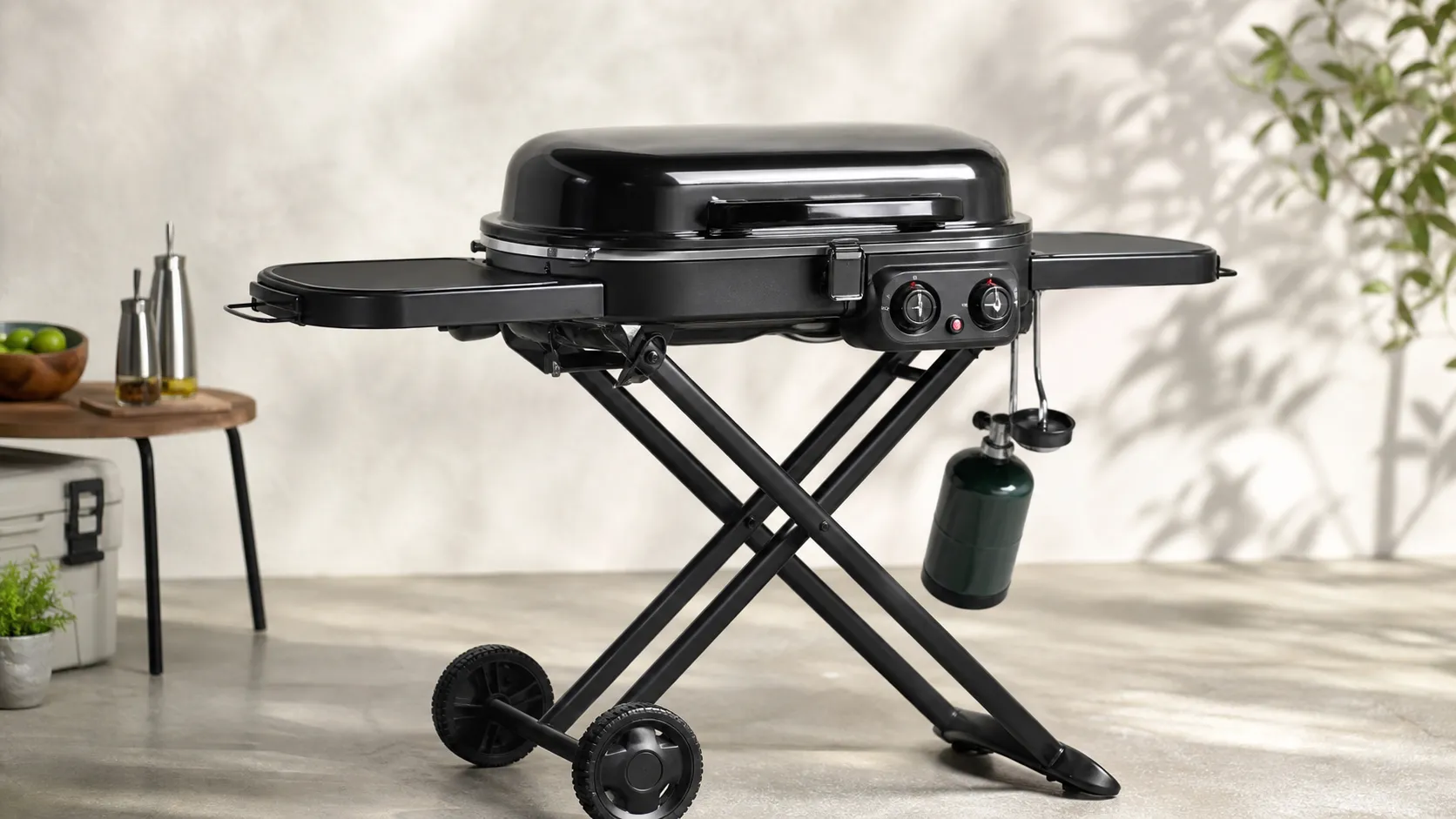
Coleman RoadTrip 285 Portable Propane Grill Review 2026
Portable, quick to heat, and great value — the Coleman RoadTrip 285 is ideal for tailgates and camping, but expect hotspots and some plastic parts to limit heavy use.
 Outdoor & Garden
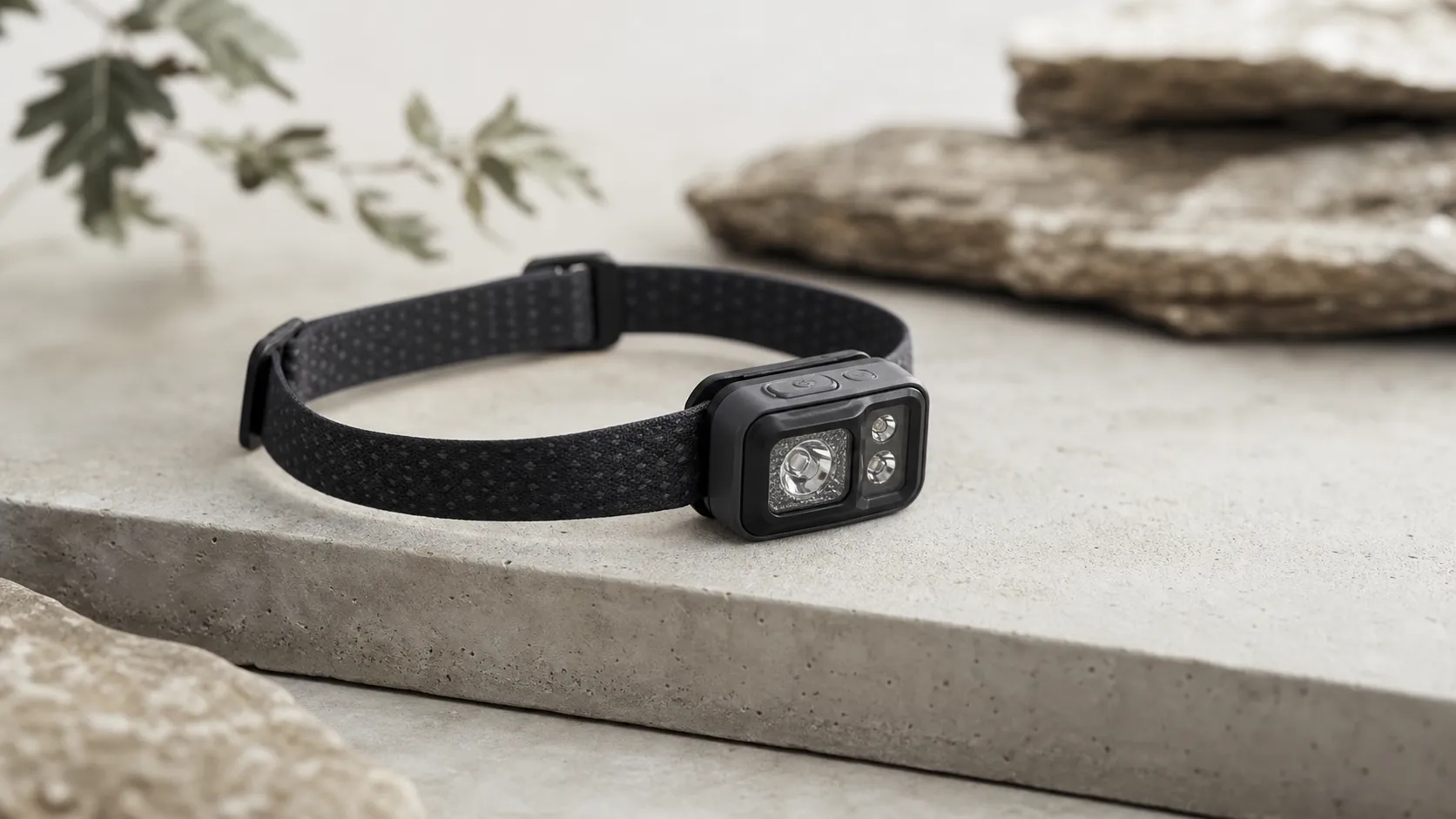
Black Diamond Spot 400‑R Headlamp Review 2026
A bright, well‑balanced rechargeable headlamp that excels for trail running and hiking. Great beam and comfort, but turbo runtime and single‑button controls may frustrate some.