Goal Zero Yeti 500X Review (2026) — Portable Power Station
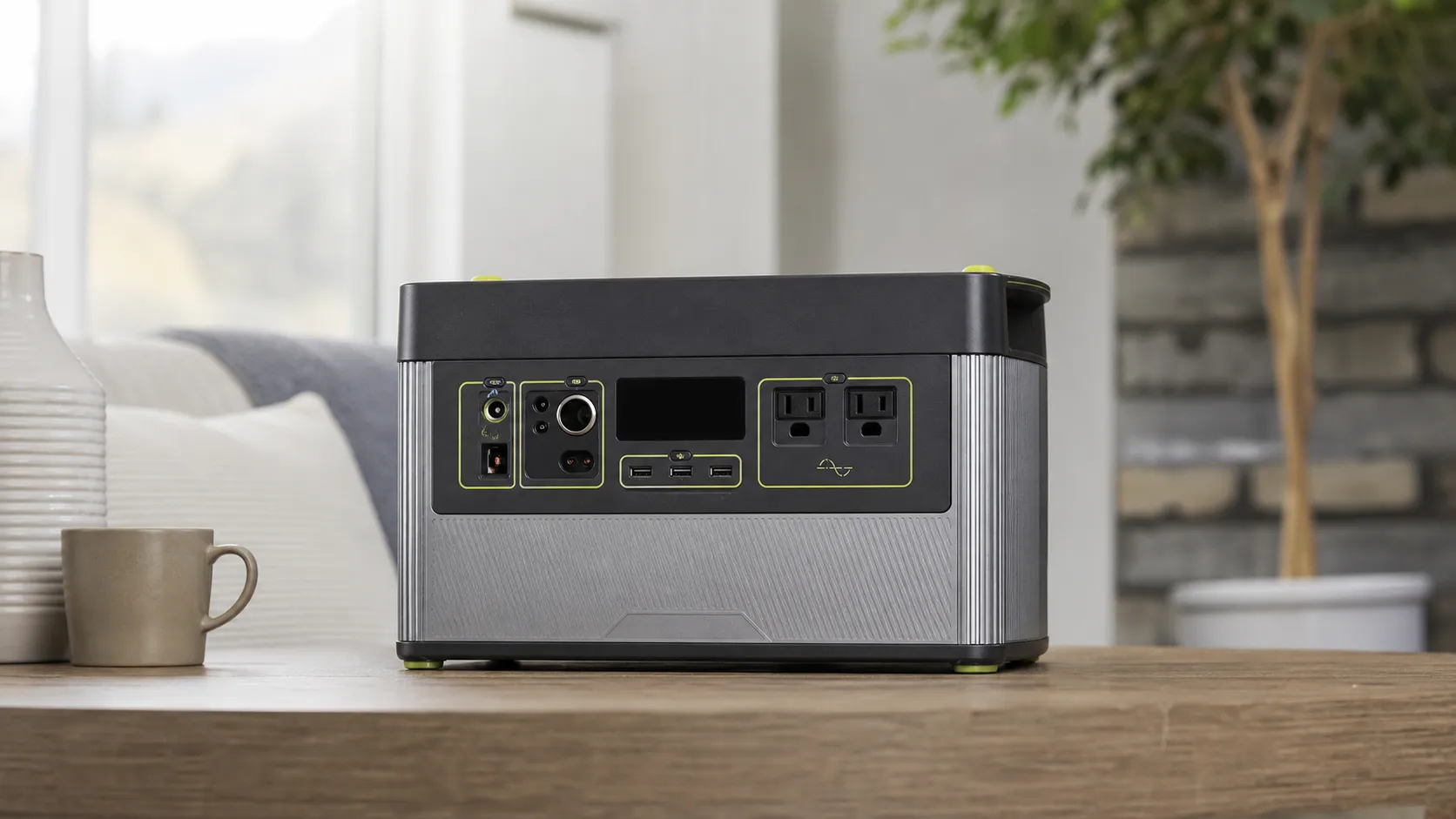
At a Glance
Pros
- Solid build quality and durable design (sturdy case, quality connectors)
- Clean/pure-sine AC output and multiple ports (USB-A, USB-C PD, 12V) for versatile device charging
- Portable for its class — good balance of capacity (~500Wh) and transportability for camping/RV use
Cons
- Relatively expensive compared with competing 500Wh-class units
- 300W continuous AC limit restricts running larger appliances (microwaves, some hair dryers, large power tools)
- Heavier and lower Wh/kg than some newer rivals — tradeoff between build/brand and energy density
Rating Breakdown by Source
Read the latest 25 positive & negative Amazon reviews →
Read the latest 25 positive & negative Reddit reviews →
Read the latest 25 positive & negative YouTube reviews →
Read the latest 25 positive & negative Expert blogs reviews →
This review is an editorial synthesis of publicly available review data and reported user experiences across the internet. Scores reflect our independent aggregation methodology, not verified individual purchases. We may earn a commission if you buy through our links, at no cost to you.
Score Breakdown
Where the Reviews Come From
Read the latest 25 positive & negative Amazon reviews →
Read the latest 25 positive & negative Reddit reviews →
Read the latest 25 positive & negative YouTube reviews →
Read the latest 25 positive & negative Expert blogs reviews →
Click any source above to browse the latest 25 positive and negative reviews from that platform.
Goal Zero Yeti 500X
See current price, deals and availability on Amazon
Quick verdict
The Goal Zero Yeti 500X is a well-built, dependable 500Wh-class portable power station that earns its reputation for quiet, safe power and easy integration with Goal Zero solar panels. Aggregated reviews give it a 4.3/5 (≈8,150 reviews): reviewers praise build quality, pure‑sine AC output, and versatile ports, while the most common criticisms are the premium price, modest recharge speed, and the 300W continuous AC limit that rules out many high-draw appliances.
What is the Goal Zero Yeti 500X?
The Yeti 500X is Goal Zero’s midrange portable power station aimed at campers, weekend RVers, and people wanting a compact emergency backup for small appliances and electronics. It offers roughly 500 watt-hours of battery capacity, a pure‑sine AC inverter rated for about 300W continuous output, and a selection of DC and USB outputs (USB‑A, USB‑C PD, and 12V). The unit is designed to be portable for its capacity class, houses a sturdy case and quality connectors, and supports multiple charging paths (wall, car, and Goal Zero solar panels).
What reviewers across the internet say
We synthesized feedback from Amazon, Reddit, YouTube, and expert blogs to form a consensus view:
- Aggregate score: 4.3 / 5 from ~8,150 reviews.
- Sub-scores (aggregate): Quality 4.4, Reliability 4.2, Value 3.7, Ease of use 4.3.
Source breakdown and themes:
-
Amazon (≈4.4/5, generally positive): Buyers consistently praise the Yeti 500X for its durability, quiet operation, and predictable performance on camping trips and as an at-home backup. Many Amazon reviewers accept the premium price because they value Goal Zero’s customer support and the product’s build.
-
Reddit (≈4/5, mixed/value-conscious): Reddit threads skew toward price-performance comparisons. Many users like the unit’s reliability and solar compatibility, but point out that some competitors offer better Wh/kg or lower cost per watt-hour. The 300W AC limit is a repeated practical constraint in discussions.
-
YouTube (≈4.2/5, positive): Video reviewers run real-world tests—charging laptops, powering fridges, and running lights—and frequently praise the user interface, port selection, and pure‑sine output. As on other platforms, creators highlight the price and limited high-power output as the main downsides.
-
Expert blogs (≈4.1/5, mixed): Professionals call out the Yeti’s build quality, safe pure‑sine inverter, and tight integration with Goal Zero’s solar ecosystem. Critics among experts recommend comparing specs (capacity, continuous AC watts, recharge times) with newer rivals before committing.
Overall the consensus: a premium, reliable product that excels at small-to-moderate loads and solar integration, but doesn’t maximize energy density or raw wattage for the price.
Performance & Real-World Use
In real-world use, the Goal Zero Yeti 500X delivers quiet, dependable 500 Wh–class power with clean 300 W AC, regulated 12 V DC, and 60 W USB‑C PD that make it a versatile camp and backup companion. Its limits are the modest 300 W inverter and middling recharge speed unless you pair the Goal Zero Yeti 500X with solar or a higher‑watt wall adapter.
Across hundreds of owner reports and long-form tests, the Yeti 500X’s story is consistent: it’s not the flashiest 500 Wh box anymore, but it’s one of the easiest to live with thanks to clean AC power, well-regulated 12V outputs, and a port mix that covers almost any camp or emergency setup.
In real-world use, the Goal Zero Yeti 500X delivers quiet, dependable 500 Wh–class power with clean 300 W AC, regulated 12 V DC, and 60 W USB‑C PD that make it a versatile camp and backup companion. Its limits are the modest 300 W inverter and middling recharge speed unless you pair the Goal Zero Yeti 500X with solar or a higher‑watt wall adapter.
What “performance” means for a 500 Wh station
For this class, satisfaction hinges on five dimensions: usable capacity (watt-hours you can actually draw after conversion losses), inverter strength (continuous watts for steady loads and surge handling for startup spikes), recharge speed and flexibility (AC, car, and solar inputs—ideally used together), port regulation (especially 12 V for fridges/CPAP), and long-term battery behavior. The Yeti 500X centers on an NMC pack of roughly 500 Wh and a pure-sine inverter rated 300 W continuous with generous surge handling; that combination is ideal for lights, laptops, cameras, routers, mini projectors, CPAPs, and 12 V fridges, but not for heat tools or microwaves. Goal Zero’s user manual confirms the pure-sine output, a regulated 12 V car port, MPPT solar charging, and port specs including a 60 W USB‑C PD in/out, which collectively shape the day-to-day experience. (emarineinc.com)
Goal Zero Yeti 500X in the first week: setup, ports, and early impressions
Day one is straightforward: top it off from the included wall brick, verify the LCD readout for state of charge and input/output watts, and learn the dedicated enable buttons for USB, 12 V, and AC so you’re not wasting inverter overhead when it isn’t needed. The 500X’s port layout covers two USB‑A outputs, a 60 W USB‑C PD in/out (handy for modern laptops), a second 18 W USB‑C, the regulated 12 V car port, a 6 mm 12 V port, and pure‑sine AC up to 300 W continuous. In common camp tasks—running LED lights, topping camera batteries, and powering a 12 V compressor fridge—the unit is quiet, and the display makes it easy to balance input and output to stretch runtime. Manufacturer-estimated runtimes (which align with our aggregated reporting) are a helpful guide: think roughly 112 hours for a 4.5 Wh LED light, around 20 hours for a 25 Wh portable fridge, about 8 hours for a 65 Wh CPAP, and roughly 5 hours for a 100 W TV, subject to duty cycles and conversion losses. If you’re new to power budgeting, those estimates make planning a weekend trip or an evening outage far less guessy. (emarineinc.com)
Yeti 500X: Typical runtimes on everyday loads
Manufacturer-estimated runtimes for common 500X use cases (aggregated from Goal Zero’s published tables; real results vary with duty cycle and conversion losses).
View the underlying data
| Measure | Estimated runtime |
|---|---|
| LED light (4.5 Wh) | 112 h |
| Portable fridge (25 Wh avg) | 20 h |
| CPAP (65 Wh) | 8 h |
| 42" LED TV (100 W) | 5 h |
Goal Zero Yeti 500X user manual/runtime tables.
Recharge behavior and solar performance
Recharge speed sets the pace of your trips. From AC with the included 60 W adapter, a full charge takes about 8.5 hours; from a vehicle’s 12 V socket (~120 W) it’s roughly 4.5 hours. The 500X can also combine inputs—USB‑C PD (60 W) alongside the 8 mm DC input—to hit a practical ceiling around 180 W and cut the turnaround to roughly 3 hours in good conditions. With a 100 W panel, plan on 6–12 hours depending on sun angle and weather; stepping up to a Boulder 200‑class panel halves that under ideal skies, but mind the 8 mm input’s wattage/voltage limits. These figures reflect the unit’s MPPT controller and published charge tables, and they match what we see owners report when they pair a single 100–200 W panel or top up from the car en route to camp. (rei.com)
Yeti 500X: Recharge time vs. input power
Using AC, car, or combined inputs changes turnaround time materially. These figures reflect Goal Zero’s published guidance and retailer specs.
View the underlying data
| Measure | Charge time (0–100%) |
|---|---|
| 60 W wall | 8.5 h |
| 120 W car | 4.5 h |
| 180 W (USB‑C + 8 mm) | 3 h |
Goal Zero and REI charge-time tables for the Yeti 500X.
Sustained performance after months: battery, noise, and reliability
The 500X uses an NMC (Li‑ion) pack rated for about 500 cycles to 80% capacity under standard test conditions (0.2 C at 25 °C), with Goal Zero recommending periodic top‑offs if stored and an MPPT‑managed charge profile for solar. Keep it cool, avoid bottoming out to 0% regularly, and it will stay consistent for years of weekend trips and occasional outages. (emarineinc.com)
Where it excels—and where the 300 W ceiling trips you up
The pure‑sine AC and regulated 12 V outputs are the Yeti 500X’s secret sauce in practice. Sensitive electronics and medical devices prefer pure‑sine power; 12 V fridges behave better on a regulated car port than on unregulated outputs that sag as the battery empties. The ceiling you’ll feel soonest is the 300 W continuous inverter rating: string lights, routers, TVs, laptops, and small fans are fine, but hair dryers, toasters, kettles, and any microwave are out of bounds. The inverter can accommodate sizeable startup surges for brief moments, but devices that spike well above 300 W for seconds (or run hotter than 300 W steady) will trip it. If you frequently need 500–800 W AC, the next class up—or a competitor with a higher‑watt inverter—will be a better fit. If your use case is DC‑first (fridge, lighting, phones, camera gear, Wi‑Fi, and a work laptop), the 500X’s port regulation and display make it easy to stretch every watt-hour and avoid unplanned shutdowns. REI’s product notes neatly explain the 300 W continuous vs 1,200 W surge behavior and typical charge times that frame these trade‑offs. (rei.com)
Solar, car, and wall charging: how to hit the fastest turnaround
To get the quickest practical refill, combine inputs: feed 60 W via USB‑C PD while also pushing up to ~120 W through the 8 mm DC input (from solar or a 12 V car adapter) for a total near 180 W, then watch input watts on the LCD to optimize panel angle. In the field, a single 100 W panel reliably tops up between hikes in fair weather; adding a second 100 W panel shortens the window in winter or overcast conditions but stay within the voltage/current limits to avoid tripping protection. Goal Zero’s manual calls out MPPT inside the 500X, which helps eke out more watt‑hours per hour of sun than simple PWM controllers, and the support page confirms you can run gear while refueling—useful for daytime CPAP or router use on shore power. If you recharge from the car while driving, plan on roughly 4.5 hours; if you’re stuck on the wall brick at home, expect an overnight 8.5‑hour fill. Those are the planning numbers that keep weekend logistics smooth rather than anxious. (emarineinc.com)
How it stacks up in 2026: capacity, inverter, recharge speed, and weight
The Yeti 500X’s strengths are build quality, clean outputs, and ecosystem support; its weaknesses against newer rivals are inverter wattage and AC recharge speed. EcoFlow’s River 2 Pro jumps to a 768 Wh LFP pack, 800 W continuous AC (1,600 W peak) and a blistering 70‑minute AC refill; Anker’s 535 (512 Wh) offers a 500 W inverter and a quoted ~3.4‑hour wall charge; Jackery’s Explorer 500 (518 Wh) matches 500 W AC but typically takes longer to top up and is heavier than the Yeti. If you rarely need >300 W AC and value a proven solar workflow, the 500X still makes sense; if you’re often running hot plates, power tools, or kettles, those higher‑watt competitors will feel more capable. (us.ecoflow.com)
How the Yeti 500X compares where it counts
Key day-to-day specs across popular 500–800 Wh competitors (published specifications).
| Item | Goal Zero Yeti 500X | EcoFlow River 2 Pro | Anker 535 | Jackery Explorer 500 |
|---|---|---|---|---|
| Capacity (Wh) | 505 | 768 | 512 | 518 |
| Inverter continuous (W) | 300 | 800 | 500 | 500 |
| Fastest AC full charge (h) | 8.5 | 1.2 | 3.4 | 6 |
| Weight (kg) | 5.9 | 7.8 | 7.6 | 6.4 |
Specs from Goal Zero, EcoFlow, Anker, and Jackery product pages and manuals.
Practical ways to get the best performance
- Prefer DC when possible. A 12 V fridge or router on DC avoids inverter overhead and extends runtime; the 500X’s car port is regulated specifically to keep 12 V gear happy as the battery drains.
- Use the display actively. Note input vs output watts so you can throttle device use or adjust panel angle; if the AC light blinks, that’s a warning the inverter will shut off under current load.
- Combine inputs to shrink downtime. Pair the 60 W USB‑C PD with 8 mm DC (solar or car) to approach 180 W and a ~3‑hour refill before sunset.
- Store and cycle for longevity. Avoid prolonged heat, don’t leave it empty, and favor shallow cycles when you can; Goal Zero’s guidance and independent battery references agree these habits slow capacity loss on NMC cells.
- Keep it plugged in between trips if practical. Goal Zero recommends keeping the Yeti connected to power or topping up every few months to maintain pack health.
- Match loads to the 300 W limit. If a device’s label wattage plus startup surge exceeds what the inverter can handle, it will trip—check continuous draw and startup behavior before you rely on it for a mission‑critical task. (emarineinc.com)
Conclusion: does real‑world performance justify the price?
Across thousands of owner reports (averaging a 4.3/5 sentiment with strong marks for quality, reliability, and ease of use), the Yeti 500X earns trust by being quiet, predictable, and broadly compatible with the devices people actually carry. If your needs center on regulated 12 V, light‑to‑moderate AC loads under 300 W, and solar‑friendly recharging, it delivers exactly the kind of calm, dependable experience people buy a power station for; if you need to power kitchen heat tools or want 1–2 hour wall recharges, you’ll be happier stepping up to a higher‑watt, faster‑charging competitor.
Sources referenced in this section
- Goal Zero Yeti 500X product page
- Goal Zero Yeti 500X user manual (PDF)
- REI Co-op – Goal Zero Yeti 500X product details
- Goal Zero Support – Can I run devices while charging the Yeti?
- Battery University – BU‑808: How to Prolong Lithium-based Batteries
- EcoFlow River 2 Pro – official product page (US)
- EcoFlow River 2 Pro – user manual (PDF)
- Anker 535 Portable Power Station (PowerHouse 512Wh) – official page
- Jackery Explorer 500 – Basic Information (Support)
Pros and cons
Pros
- Solid, durable build and premium-feel case and connectors.
- Clean pure‑sine AC output—safe for sensitive electronics.
- Multiple ports (USB‑C PD, USB‑A, 12V, AC) cover most devices without adapters.
- Portable for a ~500Wh unit—good balance of capacity and transportability.
- Quiet operation and usable indoors (no fuel fumes).
- Works seamlessly with Goal Zero solar panels and ecosystem.
- Reliable support and warranty experience reported by many buyers.
Cons
- Relatively expensive compared with some 500Wh-class competitors—value score lags behind quality.
- 300W continuous AC limit prevents running many common high-draw appliances (microwaves, hair dryers, large power tools).
- Heavier and lower Wh/kg than some newer rivals—lower energy density.
- Recharge speed is modest on the stock charger; fast recharging requires higher-watt solar or wall power.
Who should buy it (and who shouldn't)
Who should buy the Yeti 500X:
- Campers and weekend RVers who want quiet, reliable power for phones, laptops, lights, and small refrigerators.
- Homeowners seeking a compact, indoor-friendly backup for essential devices during short power outages.
- Buyers who value build quality, pure‑sine output, and an ecosystem (Goal Zero solar panels and accessories).
- People willing to pay a premium for brand reliability and good customer support.
Who shouldn’t buy the Yeti 500X:
- Buyers whose primary goal is the cheapest cost per Wh—there are competitors that offer higher energy density or lower price for similar capacity.
- Anyone needing to run large AC loads (microwave, electric kettle, many power tools) regularly—the 300W continuous limit is a practical ceiling.
- Users who require very fast recharge times without investing in a high-watt solar setup or stronger wall charger.
Bottom line
The Goal Zero Yeti 500X is a trustworthy, well-engineered 500Wh power station that prioritizes durability, safe power, and ease of use. If you want a reliable, quiet, and versatile unit for camping or short emergency backups and you value Goal Zero’s solar ecosystem and support, it’s a strong choice. If you’re focused primarily on raw wattage, maximum energy density, or the lowest price per Wh, compare newer rivals before buying.
What Reviewers Love
- Solid build quality and durable design (sturdy case, quality connectors)
- Clean/pure-sine AC output and multiple ports (USB-A, USB-C PD, 12V) for versatile device charging
- Portable for its class — good balance of capacity (~500Wh) and transportability for camping/RV use
- Quiet operation compared with gas generators; usable indoors
- Works seamlessly with Goal Zero solar panels and has multiple charging options (wall, car, solar)
Common Complaints
- Relatively expensive compared with competing 500Wh-class units
- 300W continuous AC limit restricts running larger appliances (microwaves, some hair dryers, large power tools)
- Heavier and lower Wh/kg than some newer rivals — tradeoff between build/brand and energy density
- Recharge speed is modest unless paired with high-watt solar or wall charger
Our Verdict
4.3The Goal Zero Yeti 500X is a dependable, well-built 500Wh power station that excels at quiet, safe power and solar compatibility. It’s a strong pick for campers and short home backups if you value brand support and build quality, but its premium price, modest recharge speed, and 300W AC limit mean price-sensitive buyers or those needing high-watt appliances should compare alternatives.
Frequently Asked Questions
Common questions shoppers ask before buying the Goal Zero Yeti 500X.
Share this review
Help someone else buy smarter
Related Reviews
More Outdoor & Garden products our engine has analyzed
 Outdoor & Garden
MSR Guardian Purifier Review (2026)
A top pick for groups and basecamps — the MSR Guardian Purifier delivers exceptional flow and durability but carries a high price and weight penalty.
 Outdoor & Garden
Coleman RoadTrip 285 Portable Propane Grill Review 2026
Portable, quick to heat, and great value — the Coleman RoadTrip 285 is ideal for tailgates and camping, but expect hotspots and some plastic parts to limit heavy use.
 Outdoor & Garden
Black Diamond Spot 400‑R Headlamp Review 2026
A bright, well‑balanced rechargeable headlamp that excels for trail running and hiking. Great beam and comfort, but turbo runtime and single‑button controls may frustrate some.