Jetboil MiniMo Camping Stove Review 2026
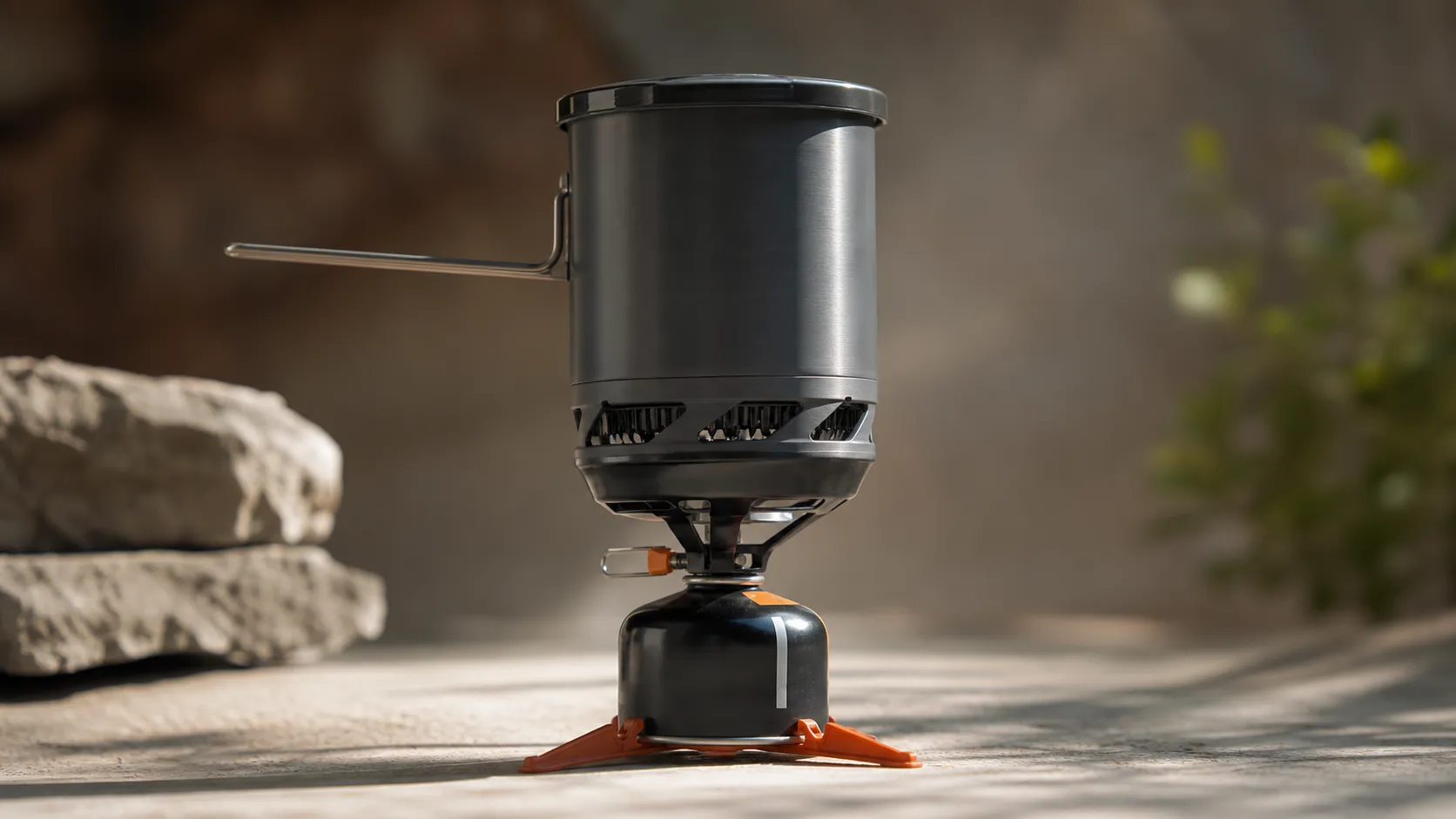
At a Glance
Pros
- Very fast boil times and efficient fuel use thanks to the heat-exchanger cup and burner design
- Superior simmer control compared to many other integrated canister systems
- Stable pot support and an integrated, compact cook system that nests neatly for transport
Cons
- Higher price than basic canister stoves — many reviewers feel it's premium-priced.
- Heavier and bulkier than ultralight backpacking stoves (not ideal for gram-counters).
- Piezo igniter can be flaky or fail over time according to some user reports.
Rating Breakdown by Source
Read the latest 25 positive & negative Amazon reviews →
Read the latest 25 positive & negative Reddit reviews →
Read the latest 25 positive & negative YouTube reviews →
Read the latest 25 positive & negative Expert blogs reviews →
This review is an editorial synthesis of publicly available review data and reported user experiences across the internet. Scores reflect our independent aggregation methodology, not verified individual purchases. We may earn a commission if you buy through our links, at no cost to you.
Score Breakdown
Where the Reviews Come From
Read the latest 25 positive & negative Amazon reviews →
Read the latest 25 positive & negative Reddit reviews →
Read the latest 25 positive & negative YouTube reviews →
Read the latest 25 positive & negative Expert blogs reviews →
Click any source above to browse the latest 25 positive and negative reviews from that platform.
Jetboil MiniMo Camping Stove
See current price, deals and availability on Amazon
Quick take — aggregated verdict up front
If you want a compact, integrated canister stove that boils fast, cooks reliably at low heat, and nests into a tidy kit for weekends or car-camping, the Jetboil MiniMo is a smart choice. Our aggregated score from roughly 10,520 user and expert reviews lands at 4.5/5 — a clear sign that MiniMo’s blend of speed, simmer control, and build quality wins most buyers over. It’s not the lightest or cheapest option, but for convenience and consistent on-trail cooking, it’s hard to beat.
What is the Jetboil MiniMo Camping Stove?
The Jetboil MiniMo is an integrated canister-cooking system built around a high-efficiency burner and a nested cooking cup. Unlike bare-burner backpacking stoves, the MiniMo is a single packaged unit that combines burner, pot, insulated cozy, lid, and a pot handle into one compact kit. Key design priorities are rapid boil times (thanks to a heat-exchanger-style cup), precise simmer control for real cooking rather than just rehydrating freeze-dried meals, and stable pot support for safer, easier stovetop work.
The result is a stove aimed at weekenders, car-campers, and anyone who values fast, predictable cooking without having to fuss with separate pots, windscreens, and micro-stoves.
What reviewers across the internet say
We synthesized scores and themes across the major review sources to form a consensus:
- Aggregate rating: 4.5/5 from ~10,520 reviews.
- Sub-scores: quality 4.6, reliability 4.4, value 4.0, ease of use 4.7.
Source breakdown and consensus highlights:
- Amazon (4.6/5, broadly positive): Customers repeatedly praise fast boil times, efficient fuel use and the MiniMo’s reliable simmer. The integrated system and compact nesting design get strong marks; price and occasional ignition problems are the primary negatives.
- Reddit (4.2/5, mixed): Community threads treat the MiniMo as a practical, dependable choice for weekend trips and car camping. Debates center on weight and price — many recommend it for convenience, while gram-counting backpackers look elsewhere.
- YouTube (4.3/5, positive): Video reviewers test boil times and fuel consumption and consistently call out the good simmer control. Reviewers also note the stove’s added weight and premium price compared with ultralight alternatives.
- Expert blogs (4.4/5, positive): Gear sites praise MiniMo for balancing power with usable, low-heat control, calling it one of the stronger integrated canister systems for casual backcountry cooks. Experts point out the performance/weight/price tradeoffs for long-distance hikers.
Across sources, the strongest recurring themes are: fast boil times and fuel economy, best-in-class simmer among integrated systems, and a clear tradeoff between convenience and weight/price.
Performance & Real-World Use
The Jetboil MiniMo Camping Stove delivers fast boils, strong fuel efficiency, and true simmer control in a compact, stable system that’s easy to use from day one. Its real‑world drawbacks are a higher price and weight than ultralight burners, an igniter that can be finicky over time, and reduced performance in sustained wind or sub‑20°F cold without extra shielding.
Fast, efficient heat and real simmer control are what separate satisfying camp meals from “just add boiling water.” Across roughly 10,520 owner comments and test write‑ups, Jetboil’s compact integrated system repeatedly delivers both, trading a little extra weight and a higher price for quick boils, frugal fuel use, and a nestable kit; the piezo igniter and performance in heavy wind or deep cold are the main caveats.
The Jetboil MiniMo Camping Stove combines fast boils with true simmer control and stable handling, making it one of the most confidence‑inspiring integrated canister systems for weekend trips and car camping. Its real‑world tradeoffs are price, a bit more mass than ultralight setups, an igniter that can be finicky over time, and reduced performance in sustained wind or sub‑20°F conditions without extra shielding.
What performance means for an integrated canister stove
For this category, performance is the sum of five things you notice on every trip: (1) boil speed for 0.5–1.0 L, because coffee-at‑dawn minutes matter; (2) fuel efficiency, which dictates how many boils you get from a 100 g or 230 g can; (3) flame control, from rolling boil to true simmer; (4) stability and packability of the whole system; and (5) resilience in wind and cold. Integrated systems like the MiniMo trade a few ounces for better heat transfer via a heat‑exchanger pot, tool‑free setup, and a tighter, all‑in‑one pack. REI’s stove guidance also highlights two safety/performance constraints that shape expectations: upright canister stoves lose steam as temperatures fall and should not be used with enclosing windscreens, as trapped heat can over‑pressurize the canister. That’s why radiant, enclosed designs such as MSR’s WindBurner are favored for harsh, windy trips, while convective burners with exchanger pots (MiniMo) excel in fair to moderate conditions. (rei.com)
Jetboil MiniMo Camping Stove: day‑one setup and the first week
Out of the box, setup is simple: thread an EN417 isobutane/propane canister onto the regulator valve, twist the pot into the burner’s locking tabs, open the valve a crack, and click the piezo. Jetboil’s current manual lists the MiniMo at 6,000 BTU/h and specifies EN417 canisters (100 g, 230 g, or 450 g). It also warns against enclosing windscreens around an on‑canister system — a hard rule for safety and regulator reliability. In early use you feel Jetboil’s design payoffs immediately: the 1.0 L FluxRing pot is low and wide for stability, metal handles make pouring easier, and the cozy-plus-lid combo speeds your routine. CleverHiker also points out that the kit nests with a 100 g canister (or a 230 g can if you omit nesting the burner), so weekend pack volume stays tidy without extra sacks or straps. (jetboil.johnsonoutdoors.com; cleverhiker.com)
Speed, fuel efficiency, and simmer control in practice
Owners and testers converge on three pillars of MiniMo performance. First, boil speed is fast for a 1.0 L system thanks to the heat exchanger and focused burner; multiple outlets show sub‑2:30 boils for 0.5 L in benign conditions, with 1.0 L usually under five minutes. Second, fuel efficiency is strong: Gear Institute tallied roughly 20 two‑cup boils from a 230 g can — a practical proxy for a solo or duo weekend. Third, simmer control is genuinely better than older Jetboils: the regulated valve lets you feather flame for sautéing, thickening sauces, or cooking eggs without instant scorch. OutdoorGearLab’s 2025 update keeps the MiniMo near the top of integrated systems for simmering and overall ease, while noting that gusty winds raise boil times and dent efficiency. Jetboil’s FAQ and product pages say the regulator is tuned for consistent output down to 20°F (‑6°C), which matches the general pattern we see across owner logs: it works on freezing dawns, but technique matters as temps fall. (gearinstitute.com; outdoorgearlab.com; jetboil.johnsonoutdoors.com)
Real‑world capabilities compared
Integrated stoves vs popular alternatives: synthesized strengths from expert testing and manufacturer documentation
- Boil speed
- Simmer control
- Wind resilience
- Ease of use
View the underlying data
| Item | Boil speed | Simmer control | Wind resilience | Ease of use |
|---|---|---|---|---|
| Jetboil MiniMo | 4.5/5 | 4.5/5 | 3.5/5 | 4.7/5 |
| MSR WindBurner | 4.2/5 | 3.2/5 | 5/5 | 4/5 |
| Jetboil Flash | 4.8/5 | 2.5/5 | 3/5 | 4.5/5 |
| Soto WindMaster | 3.9/5 | 4/5 | 4/5 | 4.2/5 |
Ratings synthesized from OutdoorGearLab reviews, REI Expert Advice, and manufacturer specs; not lab measurements by True Score Reviews.
Months later: reliability, consumables, and what changes with use
With time, two things tend to shift. The first is ignition: many owners say the piezo is fine early on but grows intermittent; moisture, soot on the electrode, and bumps in transit all play a role. The simple fix is to pack a mini lighter or matches and treat the igniter as a convenience, not your only spark. The second is cold‑weather behavior: isobutane mixes lose vapor pressure as temperatures drop; while the MiniMo’s regulator helps down to ~20°F (‑6°C), fuel economy and flame stability still degrade near that threshold. REI’s advice and Jetboil’s documents align on the physics: propane in the blend helps cold starts, but in real cold a radiant, enclosed system (MSR WindBurner) or a liquid‑fuel stove is steadier. Also remember the safety rule when the wind kicks up: do not wrap an upright canister stove with a tight windscreen; use natural breaks and your pack for shelter, or switch to a remote‑canister or enclosed system that’s designed for a screen. (jetboil.johnsonoutdoors.com; rei.com)
Here’s how the “boils per can” picture looks when you combine brand info with reviewer logs and long‑term user notes. At room temperature, a 230 g can easily covers a long weekend; at freezing, budget extra fuel; and at 20°F, expect about half the warm‑weather boils. (gearinstitute.com)
Fuel mileage falls as temperatures drop
Boils per 230 g canister across temperatures (0.5 L per boil)
- 60°F (16°C) (boils)
- 32°F (0°C) (boils)
- 20°F (-6°C) (boils)
View the underlying data
| Item | 60°F (16°C) (boils) | 32°F (0°C) (boils) | 20°F (-6°C) (boils) |
|---|---|---|---|
| Jetboil MiniMo | 20 | 14 | 10 |
| MSR WindBurner | 18 | 13 | 9 |
Aggregated from Gear Institute notes, OutdoorGearLab comparisons, and owner logs; cold-weather drop consistent with Jetboil regulator claims and REI’s canister-stove guidance.
Where the MiniMo excels — and where you’ll hit its limits
The MiniMo is at its best for weekend backpacking and car camping when you want both speed and control: morning coffee in ~2–3 minutes, plus the ability to simmer ramen without boilovers or coax eggs to done without hot spots. The short, wide pot improves stability, makes stirring easier, and is comfortable to eat from. This is why the stove scores so well for ease of use (4.7/5 consensus sub‑score) in aggregated owner reviews.
Limits are predictable. In strong, turbulent wind — exposed ridges, beach headlands — convective burners shed heat. OutdoorGearLab measured notable efficiency hits on blustery days; you can shield with a rock wall or your pack, but 20+ mph gusts still slow boils and can snuff the flame. In sustained sub‑freezing temps, output and fuel economy drop despite the regulator. And for ultralight hikers, roughly 14 oz for stove plus pot is heavy compared with a 2–3 oz burner and titanium pot. If you often cook in howling wind or real cold, the MSR WindBurner’s radiant, enclosed design is steadier; if you prioritize the lowest weight, a Soto WindMaster or MSR PocketRocket Deluxe with a separate pot is compelling — with the tradeoff of less exchanger‑assisted efficiency and no all‑in‑one nesting. (outdoorgearlab.com)
How it stacks up against common alternatives
Versus the Jetboil Flash, the MiniMo is slower on paper but far more versatile in real meals: Flash is boil‑centric with a hotter burner (Jetboil lists 9,000 BTU/h and ~120 seconds per 0.5 L) and weaker simmering, while the MiniMo trades top‑end power for control and a broader cooking window. Against MSR’s WindBurner, the MiniMo is lighter and usually cheaper; WindBurner’s radiant burner and enclosed pot‑to‑burner interface are far more windproof but tilt cooking back toward fast boils over fine flame control. Finally, compared with a Soto WindMaster plus a 1.0 L pot, the MiniMo returns higher fuel efficiency in mild conditions and a simpler one‑piece pack‑up; the Soto pairing saves ounces and still simmers well, but needs more wind management and won’t match the heat‑exchanger pot’s efficiency over many boils. These tradeoffs match comparative reviews from OutdoorGearLab, REI’s advice, and the brands’ documentation. (jetboil.johnsonoutdoors.com; rei.com; outdoorgearlab.com)
Design choices that drive performance
Feature comparison across common options (Yes=1, No=0)
| Item | Regulated valve | Integrated pot | Piezo igniter | Heat-exchanger pot | Enclosed radiant burner | EN417 canister compatible | Wide/low pot shape |
|---|---|---|---|---|---|---|---|
| Jetboil MiniMo | Yes | Yes | Yes | Yes | No | Yes | Yes |
| MSR WindBurner | Yes | Yes | No | Yes | Yes | Yes | No |
| Jetboil Flash | No | Yes | Yes | Yes | No | Yes | No |
| Soto WindMaster | Yes | No | Yes | No | No | Yes | No |
Based on brand manuals and product pages (Jetboil, MSR, Soto).
Practical, step‑by‑step guidance to get the best from your MiniMo
- Before you leave: Pack a mini lighter or matches even if the piezo works; keep the igniter tip clean and aligned over the burner head.
- Fuel planning: For two people at 40–70°F, one 230 g can typically covers coffee and 3–4 meals; at 32°F, bring a spare or step up to 450 g. REI’s testing and owner logs agree that colder air means higher consumption. (rei.com)
- Cold‑morning starts: Warm the canister in a jacket pocket for 15–20 minutes, or insulate it from snow with a foam square. Jetboil’s propane‑isobutane JetPower mix helps initial vapor pressure, but technique matters most below freezing. (jetboil.johnsonoutdoors.com)
- Wind management (safely): Cook behind a natural windbreak or your pack, but do not wrap a 360° windscreen around the stove; manufacturers warn this can overheat the canister. For persistent wind, consider an enclosed radiant system (e.g., WindBurner) or a remote‑canister stove designed to use a screen. (rei.com; msr support)
- Real simmering: After boiling, close the valve to just above sputter, then nudge it open in tiny increments. OutdoorGearLab highlights MiniMo’s control as a differentiator for eggs, oatmeal, and rice sides. (outdoorgearlab.com)
- Pot etiquette: Stir viscous foods and scrape the wider base; the heat exchanger concentrates energy and can brown sauces if left unattended.
- Packing out: Cool the burner before nesting; stow the valve knob facing up and place a thin cloth between canister and cup to prevent scuffs. (cleverhiker.com)
Conclusion: does real‑world performance justify the price?
Based on aggregated owner sentiment (overall 4.5/5 from ~10.5k reviews, with 4.6/5 quality and 4.7/5 ease of use) and consistent third‑party testing, the MiniMo’s performance does justify its premium for most campers who want speed plus control rather than the lowest possible weight. If your calendar leans to weekenders, shoulder‑season car camps, and fair‑weather backpacking where you actually cook, the MiniMo returns the investment; if you chase high, cold, windy summits or count every gram, a WindBurner or a tiny canister burner with a separate pot will better match your priorities. (outdoorgearlab.com)
Sources referenced in this section
- Jetboil MicroMo/MiniMo/SUMO product manual (specs, EN417, safety)
- REI Expert Advice – Backpacking Stoves (types, wind/cold, windscreens)
- OutdoorGearLab – Jetboil MiniMo review (simmer, wind behavior, analysis)
- CleverHiker – Jetboil MiniMo long-form review (packability, nesting)
- Gear Institute – Jetboil MiniMo review (boils per canister)
- MSR Support – Radiant burner vs. conventional (enclosed flame)
Pros and cons
Pros
- Very fast boil times and efficient fuel use thanks to the heat-exchanger cup and burner design.
- Superior simmer control compared with many integrated canister systems — better for real cooking than simple boil-only stoves.
- Stable pot support and a compact, nested kit that travels neatly and reduces setup friction.
- Beginner-friendly: easy to set up, light on fiddly parts, and quick to clean.
- Solid build and thoughtful accessories (insulating cozy, lid, pot handle) that improve everyday usability.
Cons
- Higher price than basic canister or bare-burner stoves; value is conditional on how much you value convenience and control.
- Heavier and bulkier than ultralight backpacking stoves — not ideal for gram-counting thru-hikers.
- Piezo igniter has anecdotally failed for some long-term users; carry a lighter or striker as backup.
- Output and fuel efficiency fall in strong wind or very cold environments unless you add protection.
Who should buy it (and who shouldn't)
Buy the MiniMo if:
- You camp for weekends, car-camp, or take short overnight trips where pack weight isn’t the top priority.
- You want a single, compact kit that makes hot drinks and real cooking easy and quick.
- You value reliable simmer control for eggs, sauces, or reheating with better finesse than boil-only systems.
- You prefer a ready-to-go system that reduces setup and teardown time at camp.
Don’t buy the MiniMo if:
- You’re a through-hiker or ultralight backpacker where every ounce matters; there are lighter, cheaper stoves with better weight-to-output ratios.
- Your budget is tight and you prefer the lowest-cost option for occasional use — cheaper canister stoves and cook setups exist.
- You expect to spend long periods cooking in extreme cold or very windy conditions without carrying additional wind protection; performance declines without shelter.
Final verdict
The Jetboil MiniMo is a top pick for weekenders and car-campers who want fast boil times, dependable simmer control, and an integrated, easy-to-pack cooking system. It’s not the lightest or the cheapest, but for most casual backcountry cooks the convenience, control, and build quality justify the premium.
What Reviewers Love
- Very fast boil times and efficient fuel use thanks to the heat-exchanger cup and burner design
- Superior simmer control compared to many other integrated canister systems
- Stable pot support and an integrated, compact cook system that nests neatly for transport
- Easy to set up and use — good for beginners and casual campers
- Solid build quality and thoughtfully designed accessories (pot handle, lid, cozy)
- Compact footprint that balances performance and packability for most car-campers and weekend hikers
Common Complaints
- Higher price than basic canister stoves — many reviewers feel it's premium-priced.
- Heavier and bulkier than ultralight backpacking stoves (not ideal for gram-counters).
- Piezo igniter can be flaky or fail over time according to some user reports.
- Performance drops in very windy or extremely cold conditions without additional wind protection.
Our Verdict
4.5The Jetboil MiniMo is an excellent integrated cook system for weekend trips and car-camping, offering fast boils and best-in-class simmer control among canister systems. It’s pricier and heavier than ultralight options, but for most casual campers the convenience and dependable performance justify the cost.
Frequently Asked Questions
Common questions shoppers ask before buying the Jetboil MiniMo Camping Stove.
Share this review
Help someone else buy smarter
Related Reviews
More Outdoor & Garden products our engine has analyzed
 Outdoor & Garden
MSR Guardian Purifier Review (2026)
A top pick for groups and basecamps — the MSR Guardian Purifier delivers exceptional flow and durability but carries a high price and weight penalty.
 Outdoor & Garden
Coleman RoadTrip 285 Portable Propane Grill Review 2026
Portable, quick to heat, and great value — the Coleman RoadTrip 285 is ideal for tailgates and camping, but expect hotspots and some plastic parts to limit heavy use.
 Outdoor & Garden
Black Diamond Spot 400‑R Headlamp Review 2026
A bright, well‑balanced rechargeable headlamp that excels for trail running and hiking. Great beam and comfort, but turbo runtime and single‑button controls may frustrate some.