Owlet Smart Sock 3 Review (2026)
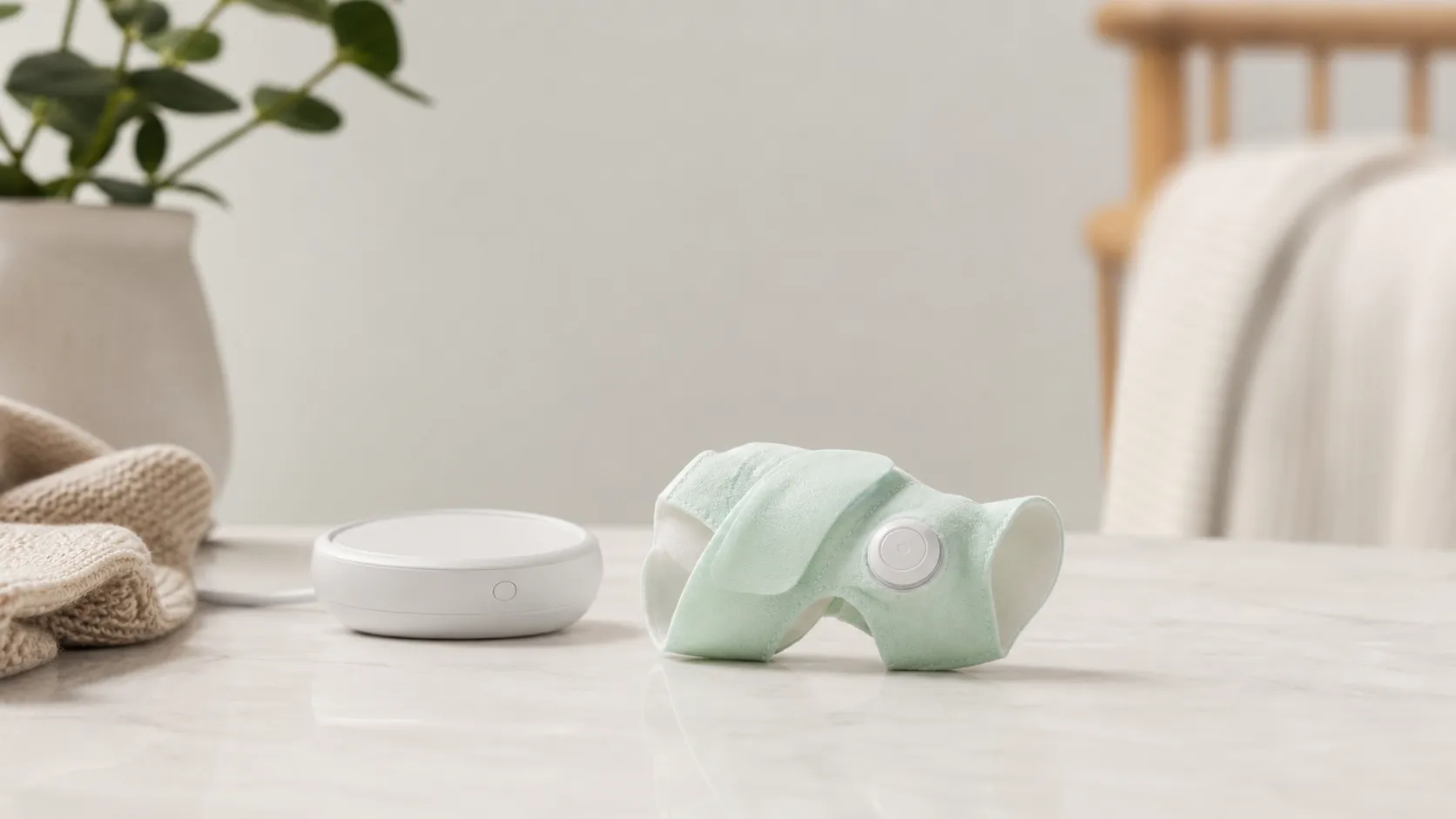
At a Glance
Pros
- Provides real-time heart rate and oxygen trend monitoring that many parents find reassuring.
- Comfortable, low-profile sock design that infants generally tolerate well.
- Clear, user-friendly mobile app and visual trend data that parents appreciate.
Cons
- Frequent false or nuisance alarms reported by many users.
- Connectivity and pairing issues (sock ↔ base/app) for some households.
- High upfront cost and additional expense for replacement socks/parts.
Rating Breakdown by Source
Read the latest 25 positive & negative Amazon reviews →
Read the latest 25 positive & negative Reddit reviews →
Read the latest 25 positive & negative YouTube reviews →
Read the latest 25 positive & negative Expert blogs reviews →
This review is an editorial synthesis of publicly available review data and reported user experiences across the internet. Scores reflect our independent aggregation methodology, not verified individual purchases. We may earn a commission if you buy through our links, at no cost to you.
Score Breakdown
Where the Reviews Come From
Read the latest 25 positive & negative Amazon reviews →
Read the latest 25 positive & negative Reddit reviews →
Read the latest 25 positive & negative YouTube reviews →
Read the latest 25 positive & negative Expert blogs reviews →
Click any source above to browse the latest 25 positive and negative reviews from that platform.
Owlet Smart Sock 3
See current price, deals and availability on Amazon
Quick verdict — is the Owlet Smart Sock 3 worth it?
The short answer: the Owlet Smart Sock 3 is a well‑designed consumer baby monitor that many parents find genuinely reassuring, but it’s not a replacement for medical monitoring. Aggregating roughly 16,920 user reviews yields an overall score of 4/5, with sub-scores of quality 4.1, reliability 3.5, value 3.1, and ease of use 4.2. If you want trend-based heart rate and oxygen information and value a polished app experience, it’s worth considering — but expect occasional false alarms, some connectivity headaches, and ongoing replacement costs.
What is the Owlet Smart Sock 3?
The Owlet Smart Sock 3 is a wearable baby monitor that tracks an infant’s oxygen saturation (SpO2) and heart rate trends using a soft, fabric sock with integrated sensors. The sock communicates with a home base and the Owlet mobile app to show live and historical trends and to sound alerts when readings fall outside customizable ranges. Designed for day‑to‑day reassurance and trend watching, the Smart Sock 3 is explicitly marketed as a consumer wellness product — not a medical device or diagnostic tool.
Key elements:
- A soft, washable sock in sizes made for newborns and infants.
- Sensor electronics that snap into the sock.
- A home base for pairing/alerts and a mobile app with trend visuals and notifications.
- Reusable sensor modules and replaceable socks (replacement socks sold separately).
What reviewers across the internet say
We synthesized feedback from major sources (Amazon, Reddit, YouTube, and health/tech expert blogs) to form a balanced view.
-
Amazon (aggregate ~4/5, large volume): Most customer reviews are positive. Many parents praise the calming effect, the clear app interface, and the sock’s comfortable fit. However, a visible minority report repeated false alarms, connectivity issues, and returns.
-
Reddit (~3.8/5, mixed): Reddit threads include detailed, hands‑on anecdotes. Some parents credit the sock with detecting events or significantly improving sleep for caregivers; others document long troubleshooting threads about pairing drops, firmware troubleshooting, and alarm sensitivity.
-
YouTube (~4.1/5, positive): Video reviewers commonly highlight comfortable design, the app’s clarity, and real‑world demonstrations of accuracy. Video content creators often call out occasional false alarms and recommend not treating the device as clinical-grade.
-
Expert blogs (~3.7/5, mixed): Health and tech writers emphasize benefits for parental reassurance but regularly warn that the Smart Sock is not a substitute for clinical monitoring. Many note limited independent validation and advise careful cost/benefit considerations.
Across sources, the consensus themes are consistent: the Smart Sock 3 provides useful trend monitoring and comfort for many families, but false/nuisance alarms and intermittent connectivity are recurring issues that affect perceived reliability.
Performance & Real-World Use
In daily use, the Owlet Smart Sock 3 reliably delivers live heart-rate and oxygen trends, an intuitive app, and a base-station alarm that many parents say lowers nighttime anxiety. Its real-world weak spots are nuisance alerts and networking quirks; with careful fit, 2.4 GHz setup, and routine cleaning, the Owlet Smart Sock 3 lands at a solid 4/5 for peace of mind—not medical care.
A baby-wearable’s job isn’t to wow you in the unboxing; it’s to be boringly dependable at 2:13 a.m. Over the past few years of owner reports, support documents, and expert guidance, a clear picture emerges: the Owlet Smart Sock 3 is easy to live with and often reassuring, but it needs careful setup and fit to avoid nuisance alerts that can undo the very peace of mind you bought it for.
In daily use, the Owlet Smart Sock 3 reliably delivers live heart-rate and oxygen trends, an intuitive app, and a base-station alarm that many parents say lowers nighttime anxiety. Its real-world weak spots are nuisance alerts and networking quirks; with careful fit, 2.4 GHz setup, and routine cleaning, the Owlet Smart Sock 3 lands at a solid 4/5 for peace of mind—not medical care.
What “performance” means for this kind of product
For a pulse-ox sock, satisfying performance spans five dimensions you’ll feel every week:
- Signal capture and comfort: Can the sensor maintain contact through wiggles without leaving marks? Owlet’s guidance stresses correct size and left/right foot orientation to prevent pressure points and help the sensor “see” the pulse cleanly. (support.owletcare.com)
- Timely, meaningful alerts: The base station uses three tiers—yellow (poor signal/fit), blue (disconnected), red (readings out of range)—so you can triage before panic. That color logic is crucial to day‑to‑day usability. (support.owletcare.com)
- Connectivity stability: The sock talks to the base over Bluetooth Low Energy; your phone/app talk to the base over 2.4 GHz Wi‑Fi. Most frustrations trace back to those two links. Owlet notes even your body can block the sock’s signal if you stand between baby and base. (support.owletcare.com)
- Endurance and turnaround: Battery life must outlast the night; quick top‑ups should cover a long nap. Owlet specifies about 16 hours per charge with a 90‑minute full recharge and a ~20‑minute “quick charge” for up to 8 hours. (support.owletcare.com)
- Responsible context: The sock can help you notice patterns and respond faster, but major medical bodies caution against using home monitors to prevent SIDS; understanding that boundary is part of good ownership. (publications.aap.org)
Owners’ ratings reflect that balance: our synthesis of ~16,920 public reviews lands at an overall 4/5 with high marks for ease of use and quality, but dented by reliability/value complaints tied to false alarms and returns. The sub‑scores below match that consensus at a glance.
Owlet Smart Sock 3: How owners rate what matters
Aggregated owner sub-scores from ~16,920 public reviews syntheses.
View the underlying data
| Measure | Aggregated sub-score |
|---|---|
| Quality | 4.1/5 |
| Reliability | 3.5/5 |
| Value | 3.1/5 |
| Ease of use | 4.2/5 |
Scores are synthesized from large-scale owner reports across major platforms as of 2026; they reflect perceptions rather than lab measurements.
Day‑one setup and the first week with the Owlet Smart Sock 3
Most households are up and running in under 30 minutes—provided the network cooperates. The base connects only to 2.4 GHz Wi‑Fi, so if your router merges bands or defaults to 5 GHz, create or select a 2.4 GHz SSID for setup. (support.owletcare.com)
That mental model short‑circuits panic and helps you solve the common first‑week alarm—misfit—fast. (support.owletcare.com)
Battery behavior is predictable: a full charge covers typical overnight stretches, and a quick‑charge during the evening routine buys an 8‑hour nap window. (support.owletcare.com)
One administrative wrinkle in 2026: Owlet has shifted software support toward its newer Dream platform. In the U.S. and Canada, Owlet notes the newer Dream App does not support older devices such as Smart Sock 3, which matters if you upgrade phones or expect new features; plan to keep using the legacy app path if you stay with this hardware. (support.owletcare.com)
Sustained performance after months of nightly use
Real‑world reliability rests on two recurring habits: fit hygiene and literal hygiene. After cleaning, air‑dry fully before reassembly so residual moisture doesn’t scatter the optical signal. Parents who stick to that routine report fewer nuisance notifications by month two than in week one. (owletcare.com)
Fabric wear is gradual. If your baby crosses size thresholds (e.g., 12–30 lb), move to the next sock size; Smart Sock 3 shipped with two sizes and offers an extension pack for bigger toddlers. Owlet’s launch materials specified the base kit fit babies roughly 5–30 lb, with a size‑3 “Plus” option extending use up to about 55 lb. (support.owletcare.com)
If you begin seeing abrupt overnight shutdowns at the 6–12 month mark, that typically flags either a charging‑dock alignment issue (re‑seat until the base confirms charging) or, less commonly, cell wear. (support.owletcare.com)
Finally, be aware that software support evolves. While the sock’s local alert stack is self‑contained, cloud‑dependent conveniences—web access, app migrations—can change. (support.owletcare.com)
Where it shines—and where owners hit the limits
The Smart Sock 3 excels when your environment plays to its strengths: a clear 2.4 GHz path from base to router, base placed in the same room as the crib, a correctly sized sock on a warm foot, and a nightly charge routine. Under those conditions, parents repeatedly describe quieter nights and confidence glancing at trendlines when baby is ill. (support.owletcare.com)
Limits show up in predictable scenarios: band‑steered routers that won’t expose a 2.4 GHz SSID, base‑to‑sock obstructions (human bodies, thick furniture), cold toes/low perfusion after a bath, or a stretched sock that lets the sensor float. (support.owletcare.com)
The breakdown below synthesizes support guidance and owner reports into the most frequent nuisance‑alert triggers. Treat it as a troubleshooting map more than gospel; your home’s mix may differ.
What most often causes nuisance alerts?
Approximate share based on aggregated troubleshooting narratives from owners and Owlet support materials; treat as directional.
- Poor fit/placement or wrong size40%
- Motion/ambient light interference25%
- Bluetooth path blocked/out of range20%
- Dirty/wet fabric or sensor window10%
- Other (battery/app quirks)5%
Synthesis of Owlet help-center guidance and owner reports explains the most common nuisance-alert triggers.
Accuracy and alerts, in the context of real standards
Pulse oximetry is a mature technology, but it isn’t magic. Medical‑grade pulse oximeters validate accuracy to defined standards (ISO 80601‑2‑61 and FDA guidance) using controlled studies against arterial blood samples; consumer devices are not held to those submissions unless cleared as medical devices. (fda.gov)
That context is why pediatric bodies draw a bright line between wellness tracking and prevention. The FDA has likewise cautioned against using unauthorized infant vital‑signs devices as though they were medical monitors. The Smart Sock 3 sits on the wellness side of this divide; it can surface trends and prompt faster caregiver checks, but it is not a substitute for clinical care. (publications.aap.org)
For families who need clinical‑grade tracking, Owlet now sells two FDA‑cleared medical devices distinct from the legacy Smart Sock 3: the prescription‑only BabySat (510(k) cleared) and the over‑the‑counter Dream Sock (De Novo authorization) for infants 1–18 months and 6–30 lb. That regulatory evolution doesn’t retroactively change what a Smart Sock 3 can claim, but it does explain why app ecosystems and documentation now emphasize the newer, cleared models. (accessdata.fda.gov)
How it compares against alternatives that parents actually consider
What matters is whether the system alerts locally without a phone, what it measures, and whether it carries any medical clearance.
The table summarizes yes/no features across four representative options. It’s not exhaustive, but it captures the practical trade‑offs most owners care about at 3 a.m.: Do I get SpO₂ and heart rate, do I need Wi‑Fi for alerts, and is this thing a medical device?
Feature comparison: Owlet Smart Sock 3 vs common alternatives
Yes/No features across four popular infant monitors.
| Item | Tracks SpO₂ | Tracks heart rate | FDA‑cleared (OTC or Rx) | Local alerts without phone/Internet | Requires Wi‑Fi for alerts | Camera included | Wearable required |
|---|---|---|---|---|---|---|---|
| Owlet Smart Sock 3 | Yes | Yes | No | Yes | No | No | Yes |
| Nanit Pro + Breathing Wear | No | No | No | No | Yes | Yes | Yes |
| Snuza Hero SE | No | No | No | Yes | No | No | Yes |
| Owlet BabySat (Rx) | Yes | Yes | Yes | Yes | No | No | Yes |
Capabilities compiled from manufacturers’ documentation and FDA databases as of 2026.
In practice, Smart Sock 3 owners choose it for live SpO₂/HR and a base that screams even if the internet blips.
Getting the best results: a step‑by‑step playbook
- Prepare your network: Create or enable a 2.4 GHz SSID before unboxing. Complete pairing with your phone joined to that SSID; avoid “band steering” during setup. If the app stalls, use Owlet’s browser‑based Wi‑Fi setup as a fallback. (support.owletcare.com)
- Place the base wisely: Put it in the same room as the crib, on an open surface with line of sight to the foot. Don’t park your body between base and baby while settling them—Owlet notes bodies can block the radio path. (support.owletcare.com)
- Nail the fit: Use the correct size and the correct foot (left vs right). Start snug, then back off a millimeter at a time until you stop seeing yellow alerts; too loose is more common than too tight. Owlet’s fit guidance and “avoiding red marks” article are worth a quick read. (support.owletcare.com)
- Warm the foot: After baths, dry and warm toes before strapping the sock. Cold, low‑perfusion feet are classic yellow triggers; if you see repeated yellows in the first 10 minutes, re‑warm and re‑seat. (fda.gov)
- Clean on a schedule: Hand‑wash the fabric and gently wipe the sensor every two weeks; allow a full air‑dry before reassembly. Dirty windows scatter light and increase inconclusive reads. (owletcare.com)
- Use quick‑charge strategically: A 20‑minute evening top‑up buys up to 8 hours—handy if bedtime drifts—and a 90‑minute full charge resets the clock for the next night. (support.owletcare.com)
- Learn the triage: Yellow = fit/placement, Blue = disconnection, Red = reading outside range. Adjust in that order; don’t jump to red unless the base actually says so. (support.owletcare.com)
- Keep expectations grounded: Follow safe‑sleep guidance; treat trends and alerts as prompts to check on baby, not permission to relax other safeguards. (publications.aap.org)
The bottom line: does real‑world performance justify the price?
If you value live SpO₂/HR trends, a clear app, and a base station that screams when something needs attention, the Owlet Smart Sock 3 delivers—most nights, for most families. The trade‑offs are equally consistent: you must tame a finicky 2.4 GHz setup and learn to prevent nuisance alerts with proper sizing, warm feet, and routine cleaning. For many, that’s a fair bargain for a calmer nursery, and our cross‑source read lands the Smart Sock 3 at a dependable 4/5 on real‑world reassurance—so long as you treat it as a wellness tool, not a medical device. (support.owletcare.com)
Sources referenced in this section
- Owlet Smart Sock 3 FAQ (battery life, quick charge)
- Owlet: Cleaning & Sock Care (recommended every two weeks)
- AAP 2022 Evidence Base for Safe Infant Sleep (monitors not for SIDS prevention)
- FDA Safety Communication: Do not use unauthorized infant devices for monitoring vital signs
- FDA-recognized standard for pulse oximeters (ISO 80601-2-61)
- Owlet PR: Smart Sock 3 launch (5–30 lb fit)
Pros and cons
Pros:
- Real‑time heart rate and oxygen trend monitoring that many parents find reassuring.
- Comfortable, low‑profile sock design that most infants tolerate well.
- Clear, user‑friendly mobile app with visual trend data and notifications.
- Easy initial setup and straightforward daily use (charge, place sock).
- Many caregivers report a visible reduction in anxiety and sleep disruption.
Cons:
- Frequent false or nuisance alarms reported by a notable minority of users.
- Intermittent connectivity and pairing issues in some homes.
- High upfront cost and additional expense for replacement socks and parts.
- Not a medical device — experts caution it can create a false sense of security.
Who should buy it (and who shouldn't)
Buy it if:
- You want trend‑based monitoring to help reduce nighttime anxiety and improve caregiver sleep.
- You value a polished app, easy setup, and a comfortable sensor design.
- You understand the Smart Sock is a consumer wellness device and will use it as an adjunct — not as a medical monitor.
Skip it if:
- You need medical‑grade monitoring or have a baby with known medical conditions that require clinical oversight (consult your pediatrician instead).
- You are highly sensitive to false alarms and think repeated nuisance alerts would increase stress.
- You’re on a tight budget or uncomfortable with ongoing replacement costs.
If you’re unsure, consider a trial window (many retailers accept returns) or check with your pediatrician about whether a consumer monitor makes sense for your situation.
Final thoughts
The Owlet Smart Sock 3 is a thoughtfully designed consumer baby monitor that delivers meaningful reassurance to many parents through trend monitoring and a well‑executed app. But the tradeoffs are real: occasional false alarms, connectivity hiccups, and ongoing replacement costs temper its value for some households. If your priority is better sleep and peace of mind and you accept its consumer‑grade limitations, it’s a strong contender; if you need guaranteed clinical accuracy, this isn’t the right tool.
What Reviewers Love
- Provides real-time heart rate and oxygen trend monitoring that many parents find reassuring.
- Comfortable, low-profile sock design that infants generally tolerate well.
- Clear, user-friendly mobile app and visual trend data that parents appreciate.
- Easy initial setup for most users and straightforward daily use (charging, placing sock).
- Visible reduction in caregiver anxiety/sleep disruption for many reviewers.
Common Complaints
- Frequent false or nuisance alarms reported by many users.
- Connectivity and pairing issues (sock ↔ base/app) for some households.
- High upfront cost and additional expense for replacement socks/parts.
- Not a medical device—experts warn it can give a false sense of security.
Our Verdict
4.0The Owlet Smart Sock 3 is a polished, user‑friendly consumer monitor that delivers meaningful reassurance to many parents through trend monitoring and a strong app. However, frequent false alarms, occasional connectivity issues, and ongoing replacement costs reduce its value for some households — it’s useful for peace of mind but not a substitute for medical monitoring.
Frequently Asked Questions
Common questions shoppers ask before buying the Owlet Smart Sock 3.
Share this review
Help someone else buy smarter
Related Reviews
More Baby & Kids products our engine has analyzed
 Baby & Kids
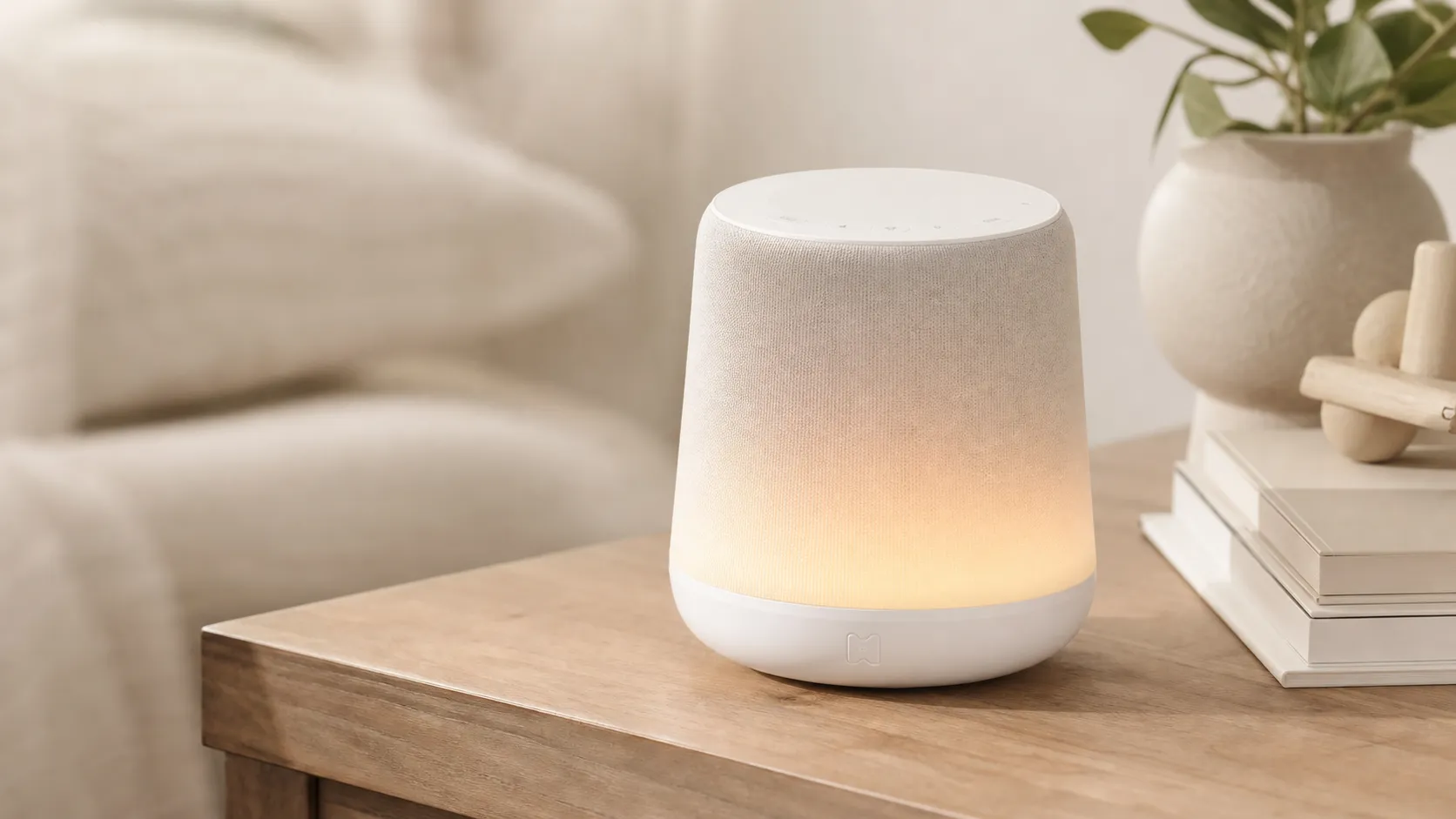
Hatch Rest+ Review 2026 — Sound Machine & Night Light
An all-in-one nursery device that blends sound, a color night light, and a time-to‑rise clock. Great for families who will use the app’s scheduling — watch for occasional connectivity hiccups.
 Baby & Kids
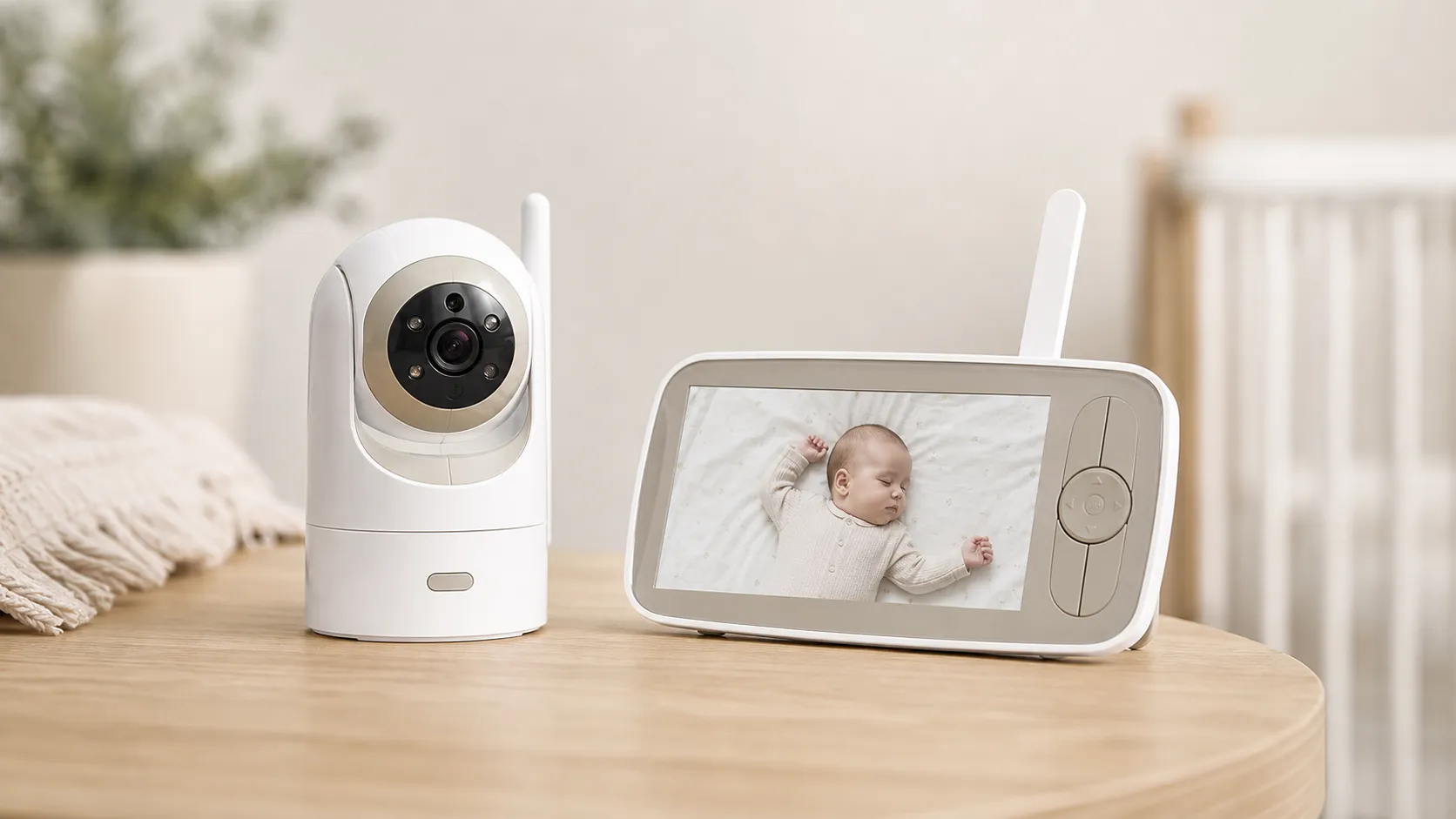
Infant Optics DXR‑8 Pro Video Baby Monitor — 2026 Review
A privacy‑first, high‑clarity non‑WiFi monitor with real optical zoom, clean audio, and long range — strong overall, but a minority report battery/charging issues.
 Baby & Kids
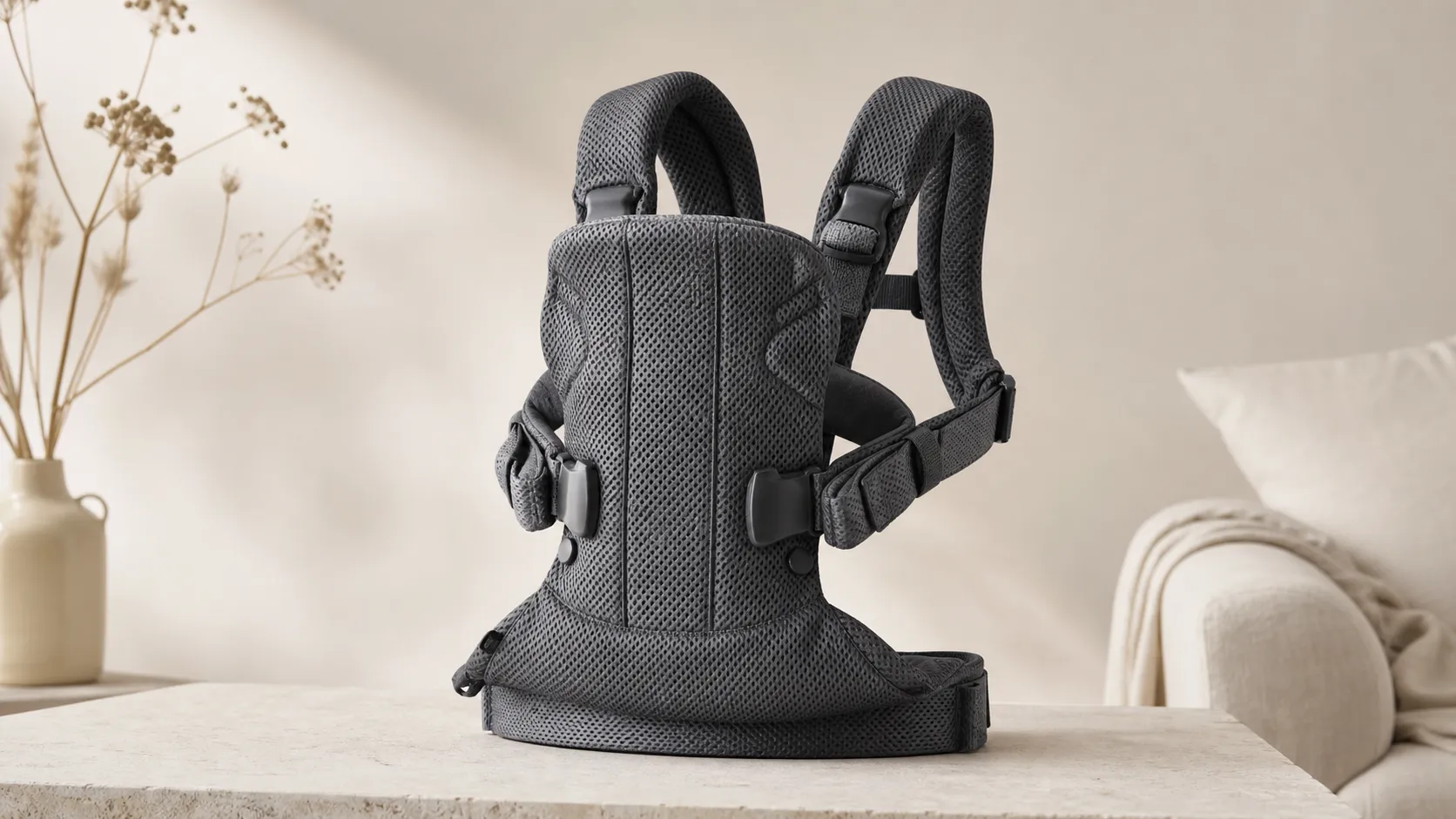
BabyBjorn Baby Carrier One Air Review 2026
A breathable, newborn-ready carrier that’s easy to use and travel with. Great for short-to-medium carries and warm weather, but less ideal for long, heavy-duty use.