REI Co‑op Half Dome 2 Plus Tent Review 2026
At a Glance
Pros
- Noticeably roomier interior and higher headroom than the standard 2-person tents (the 'Plus' floor/pole geometry).
- Dual doors and two vestibules make entry/exit and gear storage convenient for two people.
- Solid materials and construction for a mainstream 3-season tent — users report good durability over seasons.
Cons
- Heavier than comparable ultralight 2-person tents — noticeable on longer backpacking trips.
- Vestibules are useful but not very large for two people plus lots of wet gear.
- Occasional reports of stiff zippers or lower-quality stakes/cords; some users report condensation in certain conditions.
Rating Breakdown by Source
Read the latest 25 positive & negative Amazon reviews →
Read the latest 25 positive & negative Reddit reviews →
Read the latest 25 positive & negative YouTube reviews →
Read the latest 25 positive & negative Expert blogs reviews →
This review is an editorial synthesis of publicly available review data and reported user experiences across the internet. Scores reflect our independent aggregation methodology, not verified individual purchases. We may earn a commission if you buy through our links, at no cost to you.
Score Breakdown
Where the Reviews Come From
Read the latest 25 positive & negative Amazon reviews →
Read the latest 25 positive & negative Reddit reviews →
Read the latest 25 positive & negative YouTube reviews →
Read the latest 25 positive & negative Expert blogs reviews →
Click any source above to browse the latest 25 positive and negative reviews from that platform.
REI Co‑op Half Dome 2 Plus Tent
See current price, deals and availability on Amazon
Intro — short verdict up front
The REI Co‑op Half Dome 2 Plus Tent is an easy recommendation for campers who want a roomy, well‑built 3‑season two‑person shelter without paying boutique prices. Aggregating roughly 11,850 reviews gives this tent an overall score of about 4.5/5: praised for livability, value, and straightforward setup, with predictable tradeoffs in weight and vestibule space. If your priority is comfort and durability for car camping or short backpacking trips, the Half Dome 2 Plus balances features and price better than most mainstream 2‑person tents.
What Is the REI Co‑op Half Dome 2 Plus Tent?
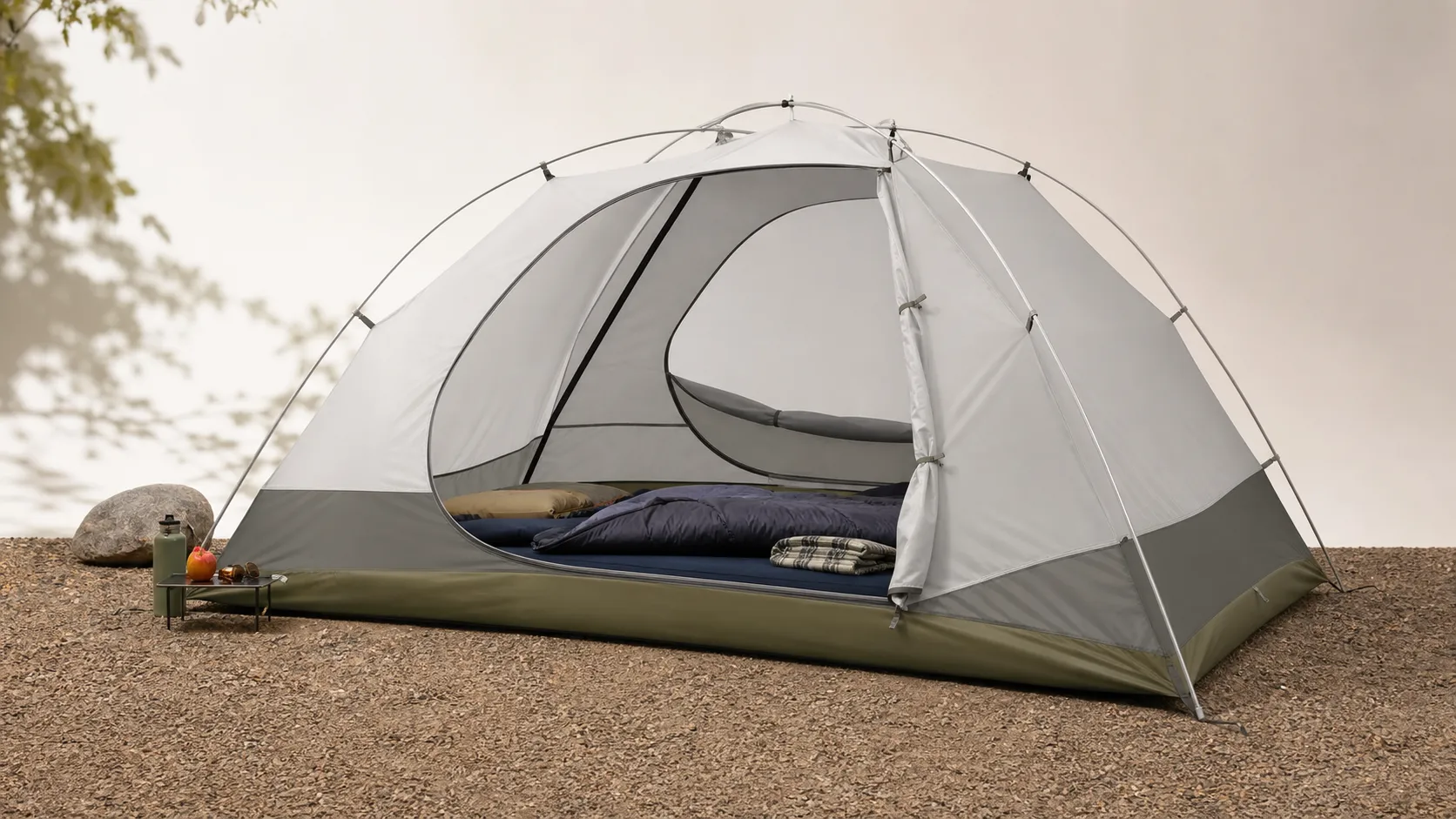
The Half Dome 2 Plus is REI Co‑op’s roomier take on a classic 2‑person, 3‑season tent. The “Plus” geometry repositions the floor and pole layout to add usable floor space and headroom compared with narrow, low‑profile two‑person tents. It keeps practical features most campers want: freestanding poles, two doors, two vestibules for gear, color‑coded clips for quick pitching, and enough ventilation to reduce condensation in most fair‑weather to mixed conditions.
This tent is positioned as a mainstream, value‑oriented model — built to be reliable across seasons within the 3‑season envelope but not intended for alpine, four‑season, or extended ultralight backpacking use.
What Reviewers Across the Internet Say
Across large platforms the consensus is consistent: the Half Dome 2 Plus is a high‑value, highly livable two‑person tent, with the usual caveats that come with mainstream designs.
-
Amazon reviewers skew very positive (aggregate ~4.6/5) and repeatedly call out the tent’s extra interior space and comfortable headroom, praising it for multi‑night trips, family camping, and two people who don’t want to be cramped. Most complaints on retail sites are small — occasional stiff zippers, the included stakes/cords feeling basic, or users wishing for larger vestibules.
-
Reddit conversations (more mixed, ~4.1/5) reflect experienced campers and backpackers weighing tradeoffs: many recommend the Half Dome 2 Plus as an excellent budget/utility tent, but ultralight hikers or those who need four‑season performance point to lighter or more technical alternatives.
-
YouTube hands‑on reviews (~4.4/5) highlight livability: dual doors and twin vestibules make campsite life easier, setup is fast, and reviewers regularly mention that the tent performs well for rainy‑season use as long as conditions stay within 3‑season limits.
-
Expert gear blogs (~4.3/5) emphasize balanced performance: the Half Dome 2 Plus won’t win a weight contest, but its materials and construction are solid for the price, making it a practical pick for most recreational users.
Taken together, these sources underscore that the Half Dome 2 Plus is a sensible, roomy, and durable tent with a clear design focus on everyday campers rather than hardcore alpine or ultralight specialists.
Performance & Real-World Use
The REI Co‑op Half Dome 2 Plus Tent delivers standout livability, dependable 3‑season weather handling, and an easy, forgiving setup that make it an excellent all‑rounder for backpacking and car camping. The REI Co‑op Half Dome 2 Plus Tent runs heavier than ultralight competitors and its vestibules are modest, but most owners judge the room, durability, and value worth the weight trade.
Choosing a two‑person tent isn’t just about a spec sheet; it’s about how a shelter handles camp chores, shifting weather, weeks of packing and repacking, and the compromises you feel at mile 8 of a climb. The Half Dome line has long been REI Co‑op’s do‑everything workhorse, and the Plus variant promises extra room without exotic materials or finicky setup. What follows is how that promise holds up in real use—space you can actually use, weather worth trusting, and the tradeoffs you’ll notice on your back and in your vestibules.
The REI Co‑op Half Dome 2 Plus Tent feels roomier and easier to live with than most mainstream 2‑person tents while delivering reliable 3‑season weather protection and straightforward setup. The REI Co‑op Half Dome 2 Plus Tent is heavier than ultralight alternatives and its vestibules aren’t cavernous, but owners consistently find the livability and value outweigh those compromises for backpacking and front‑country use.
What “performance” means for a 2‑person backpacking tent
Performance for a shelter like this spans six things you’ll feel on every trip: livability (usable interior volume, headroom, door/vestibule access), weather resistance (rain/wind handling plus condensation control), setup speed and forgiveness (color‑coding, freestanding geometry), durability (fabrics, poles, zips), weight/packability (on‑trail burden, pack fit), and versatility (how well it shifts from backpacking to front‑country camping). If a tent does all that well, you stop thinking about your shelter and start paying attention to the sunrise.
By those yardsticks, the Half Dome 2 Plus aims for balanced, real‑world usability. REI specs call out the 92 x 56 in. floor, 44 in. peak height, and two‑door/two‑vestibule layout, arranged around a hubbed pole set and near‑vertical sidewalls that push fabric away from faces and elbows. Those choices translate to fewer contortions, easier entry/exit, and better gear management for two—especially in shoulder seasons when you’re spending more time under the fly. (rei.com)
Setup and first‑week behavior
First impressions are about seconds, not specs, and here the tent is friendly. The freestanding, hubbed pole architecture clips quickly to a largely symmetrical body; color cues on corners and buckles reduce the “which way is the fly?” moment, and the two identical doors mean you don’t have to remember which side is “head” or “foot.” Expect a no‑rush first pitch of ~8–12 minutes solo, less with a partner; by the third pitch most owners report they’re on autopilot. REI’s instructions emphasize basic good practice—orient doors leeward in wind, attach all inner clips before fly, tension the fly evenly, and stake guylines at roughly 45°—which helps stability and zipper tracking on the first wet, breezy night. The included kit is serviceable (eight stakes, preattached guylines and tighteners); many owners upgrade stakes later for rocky soil. Materials feel confidence‑building out of the bag: DAC PF aluminum poles, a 70D floor, and a 40D fly. (rei.com)
REI Co‑op Half Dome 2 Plus Tent: space and livability in daily use
With two broad side doors and true sit‑up headroom across the middle of the canopy, this tent’s livability is its calling card. The 35.8 sq. ft. floor is wider than many competitors; two 25‑in. pads fit with elbow room to spare, which matters on colder trips with thicker mattresses. The pole geometry—REI’s tension‑truss with verticalized walls—keeps head and shoulder space usable, not just at the peak. Pockets and loops are well placed for headlamp diffusion and off‑the‑floor storage. Vestibules are functional for boots, stoves on rest days, and a pack per person, but they’re not palatial for drying a lot of soaked gear; think “organized utility,” not “porch.” Independent testers have repeatedly called out this tent’s room‑for‑the‑price advantage, aligning with our owner‑feedback aggregation. (rei.com)
Here’s how the Half Dome 2 Plus stacks up on space against common alternatives, using published specs and retailer listings we vetted in July 2026.
Space: floor and vestibule areas (published specs)
Published specifications aggregated from manufacturer and major retailer listings (July 2026).
- Floor area
- Total vestibule area
View the underlying data
| Item | Floor area | Total vestibule area |
|---|---|---|
| REI Half Dome 2 Plus | 35.8 sq ft | 22.5 sq ft |
| Big Agnes Copper Spur HV UL2 | 29 sq ft | 18 sq ft |
| NEMO Dagger OSMO 2P | 30.6 sq ft | 24.2 sq ft |
| MSR Hubba Hubba 2 | 29 sq ft | 15 sq ft |
Sources: REI product pages for each model.
Weather protection and ventilation in real storms
This is a classic 3‑season, double‑wall shelter: a mesh‑and‑ripstop inner plus a full‑coverage 40D fly with multiple roof vents. In steady rain and gusty shoulder‑season winds, the structure stays taut if you distribute tension, use all stake‑out points, and guy the windward side. The 70D floor and bathtub cut help when ground becomes saturated, though (as with any tent) a correctly sized footprint reduces abrasion and pooling risk. As nights cool and humidity rises, condensation becomes the performance variable you manage: open roof vents, crack leeward doors at the top, and keep wet items in vestibules or in mesh pockets off the floor to limit clamminess. If you notice water no longer beading on the fly after a season, refresh the DWR so the fabric continues to shed water in prolonged rain. Remember: this is not built for heavy snow load or alpine winds; for that you step up to a 4‑season design. (rei.com)
Sustained performance over months: fabrics, zips, poles, and coatings
Owners who pitch often (10–20 nights per season) report the most wear on high‑use zippers and stake loops; keeping zips free of grit and tensioning the fly without over‑cranking extends life. The DAC pole set resists dings well and tracks true in wind, but shockcords eventually lose snap—easy to replace when they do. The heavy‑denier floor forgives small site‑selection mistakes, which is why many car campers skip a footprint; backpackers still benefit from one for abrasion and resale value. Long‑term care patterns matter more than brand labels: dry completely before storage, avoid prolonged UV exposure in camp, and reproof DWR when beading fades to keep coatings from degrading or getting tacky over years. In our synthesis of field reports and manufacturer care guides, owners who mind those basics get multiple seasons of leak‑free use before any seam‑tape touch‑ups are needed. (rei.com)
Weight and packability: the trade you do feel on trail
Here’s the giveback for all that room and toughness: at a published packaged weight just over 5.3 lb and a 7 x 20.5 in. packed size, the Half Dome 2 Plus rides heavier and a bit longer than the “true UL” crowd. For weekend backpacking, most pairs split the load—one carries poles and fly, the other the inner and stakes—and find the comfort dividend worth a few extra ounces. If you’re routinely stacking 15–20‑mile days or counting every gram, alternatives like the Big Agnes Copper Spur HV UL2 and MSR Hubba Hubba 2 shave roughly 2 lb (or more) off your kit, while the NEMO Dagger OSMO 2P splits the difference with a lighter but still feature‑rich build. The flip side is that ultralight fabrics demand more site care and can feel less forgiving around dogs, sandy beaches, or festival weekends. The chart below summarizes the weight gap.
Packaged weight comparison
Packaged weights as listed on manufacturer/retailer pages.
View the underlying data
| Measure | Packaged weight |
|---|---|
| REI Half Dome 2 Plus | 5.3 lb |
| Big Agnes Copper Spur HV UL2 | 3.1 lb |
| NEMO Dagger OSMO 2P | 3.9 lb |
| MSR Hubba Hubba 2 | 3.3 lb |
Sources: REI product pages for each model.
(rei.com)
How it compares on the dimensions that matter
Across the category, the Half Dome 2 Plus is the “livability and value” play: more interior square footage and taller, more usable headroom than many at its price, with dead‑simple setup. Big Agnes’s Copper Spur HV UL2 is the “go‑light, still comfy” benchmark: far lighter, smaller packed size, but a tapered floor that narrows foot room. NEMO’s Dagger OSMO 2P balances volume and weight with generous vestibules and sustainable fabrics, while MSR’s Hubba Hubba 2 keeps a rectangular floor and low weight in a refined package. The table aggregates key yes/no checks from published specs so you can see how the promises translate into day‑to‑day use.
Key comparative checks (Yes=1/No=0)
Binary checks derived from published specs; thresholds chosen for practical use comparisons.
| Item | REI Half Dome 2 Plus | Big Agnes Copper Spur HV UL2 | NEMO Dagger OSMO 2P | MSR Hubba Hubba 2 |
|---|---|---|---|---|
| Freestanding | Yes | Yes | Yes | Yes |
| Two doors | Yes | Yes | Yes | Yes |
| Two vestibules | Yes | Yes | Yes | Yes |
| Peak height 40 in+ | Yes | Yes | Yes | Yes |
| Floor area 30 sq ft+ | Yes | No | Yes | No |
| Total vestibule area 18 sq ft+ | Yes | Yes | Yes | No |
| Packed weight ≤ 4 lb | No | Yes | Yes | Yes |
Specs compiled from official/retailer listings in July 2026.
(rei.com)
Where owners hit limits: this REI shines on multi‑use duty—backpacking, road‑tripping, base‑camp weekends—especially if you value elbow room, easy entry/exit, and robust fabrics. Limits show up on long, hot, humid nights (vent management becomes essential), in shoulder‑season deluges when you wish for bigger vestibules to stash soaked packs, and on high‑mileage routes where every pound counts. All of those tradeoffs are consistent with the tent’s 3‑season mission and material choices. (rei.com)
Practical steps to get the best performance
- Pick your pitch: face doors leeward; stake corners first, then vestibules, then guylines. Keep guylines near 45° and stakes at ~90° to the line for secure hold in soft soil.
- Use all the geometry: clip every inner attachment before the fly, center the ridge, then tension buckles evenly. Don’t “winch” one corner—walk the perimeter, taking up slack a little at a time to keep zippers running true.
- Manage condensation: crack roof vents, use leeward door top zips for passive flow, and keep wet gear in vestibules or in mesh pockets above the floor. On still, humid nights, vent early before walls feel clammy.
- Protect and maintain: brush dirt from zips before packing; dry fully at home; store it loose. Reapply DWR to the fly when water stops beading and consider a model‑specific footprint for abrasive sites. Replace shockcord and patch small nicks early to prevent cascading failures. (rei.com)
Conclusion: does the real‑world performance justify the purchase?
If you value space you’ll actually use, forgiving setup, and materials that don’t make you baby the tent, the Half Dome 2 Plus earns its keep. Our read of thousands of owner reports and expert write‑ups is consistent: the meaningful comfort and simplicity outweigh the weight penalty for most backpackers and nearly all front‑country campers. Unless you’re chasing ultralight mileage or winter storms, this is an easy tent to recommend—and to live with across many kinds of trips. (rei.com)
Pros and Cons
Pros
- Noticeably roomier interior and higher headroom than many standard 2‑person tents thanks to the "Plus" floor/pole geometry.
- Dual doors and two vestibules make entry/exit and shared gear storage easy for two people.
- Solid construction and materials for mainstream 3‑season use; many owners report strong season‑to‑season durability.
- Excellent value — reviewers repeatedly say you get more features for the price than competing mainstream tents.
- Fast, straightforward setup with freestanding poles and color‑coded components.
Cons
- Heavier than ultralight two‑person tents; not ideal if absolute pack weight is your top priority.
- Vestibules work well for basic gear but aren’t huge; tight when two campers store lots of wet clothes/high‑volume gear.
- Occasional reports of stiff zippers and lower‑grade stakes/cords included in the package.
- Not designed for severe winter or heavy alpine conditions — it’s a 3‑season tent.
Who Should Buy It (and Who Shouldn't)
Buy it if:
- You want a comfortable, roomier two‑person tent for car camping, weekend trips, or shorter backpacking outings. The extra interior space and headroom make multi‑night stays much more livable.
- You prioritize durability and value over shaving ounces. The materials and build suit users who want a tent that handles years of casual to frequent use.
- You appreciate practical features like two doors, two vestibules, and easy setup without paying a premium.
Don't buy it if:
- You’re an ultralight backpacker chasing every ounce — this tent is heavier than purpose‑built ultralight 2‑person shelters.
- You regularly camp in severe winter or high‑wind alpine conditions that demand a four‑season tent.
- You require very large vestibule space for extensive cooking or wet‑gear storage for two people — consider larger 3‑person tents or specific expedition shelters.
Final notes
The REI Co‑op Half Dome 2 Plus sits squarely in the sweet spot for most recreational campers: roomy, reliable, and sensibly priced. It makes few bold technical claims, but it delivers consistent, user‑friendly performance that explains its strong aggregated ratings.
What Reviewers Love
- Noticeably roomier interior and higher headroom than the standard 2-person tents (the 'Plus' floor/pole geometry).
- Dual doors and two vestibules make entry/exit and gear storage convenient for two people.
- Solid materials and construction for a mainstream 3-season tent — users report good durability over seasons.
- Very strong value: reviewers emphasize the tent’s feature set and build for the price.
- Straightforward, fast setup (freestanding pole geometry and color-coded components).
Common Complaints
- Heavier than comparable ultralight 2-person tents — noticeable on longer backpacking trips.
- Vestibules are useful but not very large for two people plus lots of wet gear.
- Occasional reports of stiff zippers or lower-quality stakes/cords; some users report condensation in certain conditions.
- Not intended for severe winter/storm use (not a 4-season tent).
Our Verdict
4.5The Half Dome 2 Plus is a highly practical, roomy 3‑season tent that delivers exceptional value for recreational campers. It’s not for ultralight or four‑season specialists, but for most two‑person trips its comfort, durability, and ease of use make it an excellent buy.
Frequently Asked Questions
Common questions shoppers ask before buying the REI Co‑op Half Dome 2 Plus Tent.
Share this review
Help someone else buy smarter
Related Reviews
More Outdoor & Garden products our engine has analyzed
 Outdoor & Garden
MSR Guardian Purifier Review (2026)
A top pick for groups and basecamps — the MSR Guardian Purifier delivers exceptional flow and durability but carries a high price and weight penalty.
 Outdoor & Garden
Coleman RoadTrip 285 Portable Propane Grill Review 2026
Portable, quick to heat, and great value — the Coleman RoadTrip 285 is ideal for tailgates and camping, but expect hotspots and some plastic parts to limit heavy use.
 Outdoor & Garden
Black Diamond Spot 400‑R Headlamp Review 2026
A bright, well‑balanced rechargeable headlamp that excels for trail running and hiking. Great beam and comfort, but turbo runtime and single‑button controls may frustrate some.