Sea to Summit Ultra‑Sil Dry Sack Review 2026
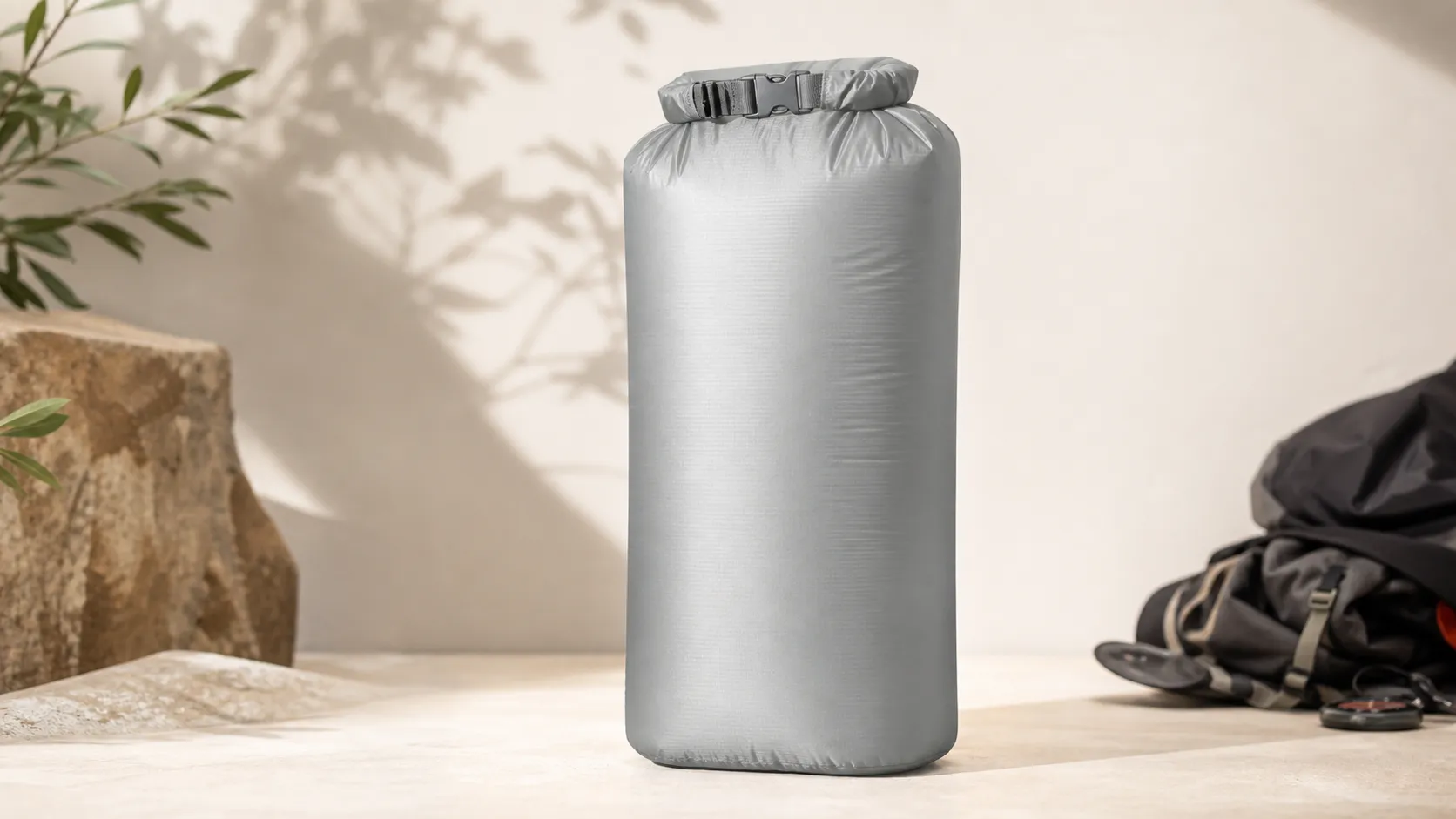
At a Glance
Pros
- Extremely lightweight and packs down very small (excellent for ultralight backpacking).
- Wide range of sizes available, making them versatile for organizing and protecting different gear.
- Material is durable for its weight — resists tears and holds up to regular trail use.
Cons
- Not guaranteed watertight for full submersion — best for rain/splash, not prolonged underwater use.
- Roll-top closure can be fiddly with gloves or in cold/wet conditions.
- Thin, silicone-coated fabric trades abrasion resistance for weight — can scuff or wear faster than heavier PVC dry bags.
Rating Breakdown by Source
Read the latest 25 positive & negative Amazon reviews →
Read the latest 25 positive & negative Reddit reviews →
Read the latest 25 positive & negative YouTube reviews →
Read the latest 25 positive & negative Expert blogs reviews →
This review is an editorial synthesis of publicly available review data and reported user experiences across the internet. Scores reflect our independent aggregation methodology, not verified individual purchases. We may earn a commission if you buy through our links, at no cost to you.
Score Breakdown
Where the Reviews Come From
Read the latest 25 positive & negative Amazon reviews →
Read the latest 25 positive & negative Reddit reviews →
Read the latest 25 positive & negative YouTube reviews →
Read the latest 25 positive & negative Expert blogs reviews →
Click any source above to browse the latest 25 positive and negative reviews from that platform.
Sea to Summit Ultra-Sil Dry Sack
See current price, deals and availability on Amazon
The Sea to Summit Ultra‑Sil Dry Sack is one of those small pieces of gear that can change how you pack. Lightweight, incredibly packable and offered in a wide range of sizes, it’s become a favorite among ultralight backpackers and multi-day hikers who need weather protection without the weight penalty. Our aggregated look across roughly 6,650 user reviews and multiple expert sources gives this sack a clear early verdict: excellent for rain and splash protection in backpacking contexts, but not a substitute for heavy-duty marine dry bags if you need guaranteed submersion protection.
What Is the Sea to Summit Ultra‑Sil Dry Sack?
The Ultra‑Sil Dry Sack is a roll-top dry bag constructed from Sea to Summit’s Ultra‑Sil fabric — a silicone‑coated nylon that prioritizes minimal weight and packability. It’s available in many sizes (from small stuff-sacks to large 35L+ options), and its simple, low-profile design doubles as an internal organizer and weather shield inside a pack. The idea is to protect clothes and gear from rain, condensation, and splashes while adding almost no bulk or ounces to your kit.
Unlike heavy laminated PVC or thick TPU marine bags, the Ultra‑Sil trades absolute abrasion resistance and guaranteed long-term submersion protection for dramatic reductions in weight and compressed volume. That tradeoff is intentional: it’s engineered for the trails, not whitewater.
What Reviewers Across the Internet Say
We synthesized feedback from four main sources — Amazon, Reddit, YouTube, and expert outdoor blogs — to form a balanced picture.
- Aggregate score: 4.5/5 from ~6,650 reviews. Sub-scores in our synthesis: quality 4.4, reliability 4.2, value 4.1, ease of use 4.3.
- Amazon (4.6/5): Large numbers of buyers praise the Ultra‑Sil for its tiny packed size, low weight, and surprising durability for backpacking. A minority of users report seam or closure problems when the bag was aggressively submerged.
- Reddit (4.3/5): Long-term users recommend the sack for backpacking and trip organization, repeatedly cautioning it isn’t a substitute for heavy-duty dry bags in kayaks or for frequent submersion.
- YouTube (4.5/5): Hands-on reviewers emphasize packability and weight savings. Water tests typically show strong splash and rain resistance, but most reviewers warn against trusting the Ultra‑Sil for full underwater immersion.
- Expert blogs (4.4/5): Gear writers praise the fabric and seam construction for the weight class, calling it best-in-class for ultralight backpacking while noting the limits compared with marine-grade dry sacks.
The consensus: outstanding for ultralight and backpacking uses; good for general rain protection; not designed for prolonged underwater duty.
Performance & Real-World Use
The Sea to Summit Ultra-Sil Dry Sack delivers excellent rain-and-spray protection at a fraction of the weight of marine-grade bags when used for interior pack storage and rolled correctly. The Sea to Summit Ultra-Sil Dry Sack isn’t built for routine submersion or deck lash-ons, but as an ultralight, durable organizer it consistently performs above its denier class.
Ultralight hikers and paddlers judge dry sacks by three things that matter on real trips: do they keep gear dry in rain and spray, do they add almost no weight or bulk, and can you live with them every day without babying the fabric or fighting the closure. Inside a pack, those tradeoffs decide whether you end a storm with a warm puffy and a dry sleeping bag—or a long, wet night.
The Sea to Summit Ultra-Sil Dry Sack nails the ultralight brief for interior storage: it’s very light for its volume, seals reliably against rain and splash when rolled correctly, and the fabric outperforms its denier for routine backpack use. The Sea to Summit Ultra-Sil Dry Sack is not a submersion-proof kayak bag, and Sea to Summit’s guidance confirms water can seep through any roll‑top when held underwater—use it accordingly and satisfaction is high.
What “performance” means for a dry sack in real life
On trail, performance is more than “did my stuff get wet.” Four dimensions decide satisfaction:
- Protection headroom: fabric waterproof rating and seam construction versus likely exposure. Sea to Summit lists a 2,000 mm hydrostatic head with fully taped seams—plenty for rain, wet ground, and pack sweat, but not for routine external lash‑on paddle use. (seatosummit.com)
- Weight‑to‑capacity: organize by liters without a weight penalty. The 20 L Ultra‑Sil is 58 g; the 20 L Sea to Summit Lightweight Dry Bag is 91 g; a comparable 20 L SealLine Discovery is about 312 g—why hikers prefer the Ultra‑Sil. (seatosummit.com | seatosummit.com | rei.com)
- Handling and closure reliability: roll tightly three or more turns; the Ultra‑Sil’s non‑wicking Hypalon strip and Field Repair buckle support a consistent seal and easy service in the field. (support.seatosummit.com)
- Durability fit to task: 30D Ultra‑Sil CORDURA nylon trades abrasion resistance for weight savings; ideal inside a backpack, not for frequent deck lash‑ons against hardware and rocks. Sea to Summit steers paddle users to heavier lines. (seatosummit.com)
Weight by bag type at 20 liters
Weight gap explains why hikers choose the Ultra‑Sil for interior storage: 20 L models by type (published specs).
View the underlying data
| Measure | Weight |
|---|---|
| Sea to Summit Ultra‑Sil (20 L) | 58 g |
| Sea to Summit Lightweight (20 L) | 91 g |
| SealLine Discovery (20 L) | 312 g |
Weights from manufacturer/retailer specs: Sea to Summit Ultra‑Sil and Lightweight tech sheets; REI’s SealLine Discovery 20 L page.
How the Sea to Summit Ultra-Sil Dry Sack feels from day one
Setup is simple: choose sizes by task (3–5 L for first‑aid/repair/toiletries, 8–13 L for spare layers, 20 L for a sleeping bag), practice the roll‑top at home, and color‑code or label for fast grabs. The instructions emphasize aligning the stiffened edge and Hypalon strip, purging some air, then rolling firmly at least three times before clipping; done right, the seal is repeatable even after dozens of openings. (support.seatosummit.com)
On day one you’ll notice the semi‑translucent fabric: you can see contents’ outlines without opening—handy in a dim tent. The oval base helps keep it from rolling away on slick ground. Both details match Sea to Summit’s spec sheet and translate to quick wins in camp. (seatosummit.com)
Shakedown before committing valuables: pack dry tissues, close per instructions, then shower it or leave it in steady rain. Do not sink‑test and expect perfection—Sea to Summit explicitly cautions that water can seep through any roll‑top over time if submerged. (support.seatosummit.com)
Materials and design: why it protects as well as it does for the weight
The Ultra‑Sil uses 30D siliconized CORDURA nylon with a polyurethane interior coating, taped seams, and a non‑wicking Hypalon roll‑top—choices that maximize strength‑to‑weight and block rain and spray. Sea to Summit quotes a 2,000 mm hydrostatic head for the fabric and fits 15 mm Field Repair buckles; these buckles are replaceable with a screwdriver. Those touches matter after months of opening, stuffing, and cinching. (seatosummit.com)
CORDURA’s description of ultralight nylon 6,6 yarns aligns with field reports: high tear strength for minimal mass. That’s why the Ultra‑Sil tolerates frequent stuffing inside a pack without seam failures, yet weighs far less than TPU‑coated or PVC river bags. The tradeoff is clear: abrasion over sharp edges (bear cans, cookware rims) will scuff 30D faster than 70D–420D alternatives. (cordura.com)
Hydrostatic head (mm) by Sea to Summit line
Waterproof fabric ratings by use case: higher HH backs external lash‑on and paddle use; lower HH targets interior pack storage.
View the underlying data
| Measure | Hydrostatic head |
|---|---|
| Ultra‑Sil Dry Bag | 2000 mm |
| Lightweight Dry Bag | 10000 mm |
| Big River Dry Bag | 10000 mm |
Sea to Summit product pages and ‘How to Choose the Correct Dry Bag’ article list HH thresholds and recommendations.
In the pack, in the rain: how it behaves on trail
Used as intended—inside a backpack as modular storage—the Ultra‑Sil keeps clothing and insulation dry in rain and wet‑through conditions, provided you roll tightly and don’t over‑compress enough to let the roll try to uncoil. Sea to Summit categorizes this model for internal use and points paddle users to heavier, higher‑HH lines (Lightweight or Big River). That mapping matches owner reports. (seatosummit.com)
Expect minor condensation if you trap damp gear; a dry sack is not a dehumidifier. Sea to Summit notes wet items won’t “dry out” inside a bag—hang socks and gloves when you can, and isolate wet gear so moisture doesn’t migrate. (support.seatosummit.com)
On fast days with frequent kit changes, the slick fabric slides in and out of a tight pack, and the semi‑translucence helps confirm contents without opening in the rain. The Field Repair buckle means a broken clasp won’t end a trip—carry a spare and swap it in minutes. (seatosummit.com)
Months of use: wear patterns, upkeep, and what changes
Over a season, owners see a consistent pattern with 30D silnylon: the sack resists tearing well for its weight; high‑friction zones develop shiny scuffs; the closure keeps sealing if you maintain roll discipline; lifespan depends on avoiding abrasion and punctures. Sea to Summit recommends routine inspection of the roll‑top and stitching and reiterates the three‑roll closure—habits that keep performance consistent. (support.seatosummit.com)
Coatings pick up grime and “wet out” sooner when dirty. Wipe grit, dry fully before storage, and skip machine washing. For phones or cameras, Sea to Summit’s advice is to double‑bag electronics—small device bag inside a larger external bag for redundancy—especially if boats or thigh‑deep fords are in the plan. (nrs.com | support.seatosummit.com)
If a buckle fails, replace it with a Sea to Summit Field Repair unit sized to your bag (15 mm on the Ultra‑Sil). That salvages a trip and prevents tossing an otherwise sound product—a real value win over time. (seatosummit.com)
Where it shines—and where you’ll hit its limits
Best use cases: a color‑coded, featherweight organizer that keeps insulation and clothes dry inside a pack on backpacking and bikepacking trips; a stuff sack for a puffy or sleeping bag you might set briefly on wet ground; a liner within a larger duffel. Sea to Summit’s “How to Choose” guide explicitly positions the Ultra‑Sil for ultralight pack storage. (seatosummit.com)
Limits appear when you ask it to be a river bag. The brand’s FAQ says the Ultra‑Sil isn’t recommended for paddle sports and pegs its fabric at 2,000 mm versus the 10,000 mm used on the Lightweight and Big River lines. If you plan routine deck lash‑ons or expect submersion (capsizes, deep fords), step up to those heavier lines; water can creep through any roll‑top closure when submerged. (seatosummit.com)
Cold‑weather quirk: thin webbing and a small 15 mm buckle are harder to manipulate in bulky gloves. Pre‑rolling one turn indoors and leaving a small air pillow speeds closure and helps the roll take a set so you can clip with less fumbling. Sea to Summit’s help articles back the three‑plus‑roll technique; practice pays off. (support.seatosummit.com)
Feature comparison within Sea to Summit dry bag family
Where the Ultra‑Sil fits in Sea to Summit’s lineup (feature flags).
| Item | Internal‑use focus | Paddle‑use recommended | bluesign‑approved fabric | Field Repair Buckle | Hypalon non‑wicking closure |
|---|---|---|---|---|---|
| Ultra‑Sil Dry Bag | Yes | No | Yes | Yes | Yes |
| Lightweight Dry Bag | No | Yes | Yes | Yes | Yes |
| Big River Dry Bag | No | Yes | No | Yes | Yes |
Features and recommendations compiled from Sea to Summit product pages and support/guide articles.
How it compares to typical alternatives
Against heavier “marine‑grade” roll‑tops (70D–420D nylon/TPU or PVC), the Ultra‑Sil wins decisively on grams and packability while trading away abrasion headroom and submersion tolerance. Sea to Summit’s Lightweight Dry Bag (70D, 10,000 mm HH) and Big River (420D with 10,000 mm HH) are the brand’s answers for external lash‑on boating and mixed backcountry abuse; they feel stiffer and tougher in hand and are explicitly recommended for paddle use. (seatosummit.com)
Versus a trash‑compactor‑bag liner, the Ultra‑Sil is far more organized and durable in daily handling, though a liner still earns a place for redundancy in prolonged storms. Compared to DCF/Dyneema sacks, Ultra‑Sil is generally less expensive and more forgiving to pack, while DCF options can be lighter and stiffer but pricier and less translucent.
Get the best performance: step‑by‑step
- Choose sizes by “one use per bag” (sleeping kit, spare clothes, electronics, repair/med). Color‑code for speed.
- Practice the seal: align edges, squeeze out air, roll tightly at least three times, then buckle; aim the buckle back toward the body of the bag so the roll stays loaded. (support.seatosummit.com)
- Double‑bag critical electronics (phone, PLB) and keep them inboard, never lashed outside. Sea to Summit recommends this, and it’s cheap insurance. (support.seatosummit.com)
- Avoid abrasion: don’t wedge the sack against cookware rims or bare metal; if you must, buffer with clothing. Use a tougher bag for external lash‑on. (seatosummit.com)
- Maintenance: brush off grit, dry completely before storage, and periodically inspect the roll‑top and seams. Carry a spare 15 mm Field Repair buckle (and a small Phillips). (seatosummit.com)
- Know the limits: the Ultra‑Sil fabric is waterproof for its purpose (2,000 mm HH), but if submersion is likely, switch to a 10,000 mm bag and still avoid prolonged underwater holds—water can enter any roll‑top through the closure over time. (seatosummit.com)
Conclusion: does real‑world performance justify the purchase?
Yes—if you use it as designed. The Ultra‑Sil is best‑in‑class for ultralight backpacking and travel organization: it’s remarkably light, easy to live with, and—rolled correctly—dependably keeps rain and spray off your gear. Owners who ask it to be a kayak deck bag are the ones who come away disappointed; if that’s your use case, Sea to Summit’s own Lightweight or Big River lines are the right tool. Used to its strengths, the Ultra‑Sil’s long‑term performance and convenience justify the spend. (seatosummit.com)
Sources referenced in this section
Pros and Cons
Pros
- Extremely lightweight and packs down to a tiny size — ideal for ultralight backpacking.
- Wide range of sizes lets you organize gear and scale protection to the load.
- Material offers an excellent weight-to-durability ratio for trail use.
- Low-profile, minimalist design that integrates well inside a pack.
- Good balance of performance and portability compared with heavier dry-bag alternatives.
Cons
- Not guaranteed watertight for prolonged submersion—best for rain and splash protection.
- Roll-top closure can be fiddly with gloves or in cold, wet conditions.
- Thin silicone-coated fabric trades abrasion resistance for weight — will scuff and show wear sooner than heavy marine bags.
- Higher cost per ounce compared with heavy-duty kayak dry bags; value depends on intended use.
Who Should Buy It (and Who Shouldn't)
Who should buy:
- Ultralight and multi-day backpackers who prioritize weight and packability over absolute watertightness.
- Hikers and campers who need lightweight organization and rain protection for clothes and electronics inside a pack.
- Travelers who want a compact, lightweight sack for stashing wet clothes or for compressing a sleeping bag liner.
- Anyone who values versatility: use as a stuff-sack, internal organizer, or emergency weather barrier.
Who shouldn’t buy:
- Kayakers, canoeists, or whitewater users who need guaranteed watertight performance for submersion and prolonged water exposure.
- Anyone who routinely hauls gear in abrasive marine environments where a heavy-duty PVC or laminated dry bag is more appropriate.
- Users who need a fuss-free closure while wearing thick gloves in cold conditions — the roll-top can be tricky in those moments.
If your primary objective is to keep gear bone-dry during river runs or to submerge a bag intentionally, look for a marine-rated dry bag or waterproof case designed specifically for prolonged submersion. But if you want a lightweight, space-saving solution for trail use, the Ultra‑Sil is one of the best options in its class.
What Reviewers Love
- Extremely lightweight and packs down very small (excellent for ultralight backpacking).
- Wide range of sizes available, making them versatile for organizing and protecting different gear.
- Material is durable for its weight — resists tears and holds up to regular trail use.
- Simple, low-profile design that doubles as gear organization inside a pack.
- Good balance of performance and portability compared with heavier dry-bag alternatives.
Common Complaints
- Not guaranteed watertight for full submersion — best for rain/splash, not prolonged underwater use.
- Roll-top closure can be fiddly with gloves or in cold/wet conditions.
- Thin, silicone-coated fabric trades abrasion resistance for weight — can scuff or wear faster than heavier PVC dry bags.
- Higher cost per ounce compared with heavy-duty kayak dry bags (value depends on intended use).
Our Verdict
4.5If you’re a hiker or ultralight backpacker who prioritizes ounces and packability, the Sea to Summit Ultra‑Sil Dry Sack is a top pick: excellent rain and splash protection in a tiny package. However, don’t rely on it for prolonged submersion or heavy marine use — choose a marine-rated dry bag for those needs.
Frequently Asked Questions
Common questions shoppers ask before buying the Sea to Summit Ultra-Sil Dry Sack.
Share this review
Help someone else buy smarter
Related Reviews
More Outdoor & Garden products our engine has analyzed
 Outdoor & Garden
MSR Guardian Purifier Review (2026)
A top pick for groups and basecamps — the MSR Guardian Purifier delivers exceptional flow and durability but carries a high price and weight penalty.
 Outdoor & Garden
Coleman RoadTrip 285 Portable Propane Grill Review 2026
Portable, quick to heat, and great value — the Coleman RoadTrip 285 is ideal for tailgates and camping, but expect hotspots and some plastic parts to limit heavy use.
 Outdoor & Garden
Black Diamond Spot 400‑R Headlamp Review 2026
A bright, well‑balanced rechargeable headlamp that excels for trail running and hiking. Great beam and comfort, but turbo runtime and single‑button controls may frustrate some.