Tommee Tippee Closer to Nature Baby Bottles Review 2026
At a Glance
Pros
- Breast-like soft nipple shape praised for helping latch and breast/bottle switching
- Wide neck and simple shape make filling and cleaning straightforward
- Affordable and widely available (many sizes and starter packs)
Cons
- Nipple durability — some users report tearing, stretching, or faster wear than expected.
- Anti-colic/venting effectiveness is inconsistent; some babies still show gassiness or colic-like symptoms.
- Occasional leaking when not assembled perfectly or after heavy use.
Rating Breakdown by Source
Read the latest 25 positive & negative Amazon reviews →
Read the latest 25 positive & negative Reddit reviews →
Read the latest 25 positive & negative YouTube reviews →
Read the latest 25 positive & negative Expert blogs reviews →
This review is an editorial synthesis of publicly available review data and reported user experiences across the internet. Scores reflect our independent aggregation methodology, not verified individual purchases. We may earn a commission if you buy through our links, at no cost to you.
Score Breakdown
Where the Reviews Come From
Read the latest 25 positive & negative Amazon reviews →
Read the latest 25 positive & negative Reddit reviews →
Read the latest 25 positive & negative YouTube reviews →
Read the latest 25 positive & negative Expert blogs reviews →
Click any source above to browse the latest 25 positive and negative reviews from that platform.
Tommee Tippee Closer to Nature Baby Bottles
See current price, deals and availability on Amazon
Intro
If you want a bottle that many parents say helps babies accept bottle feeding quickly, the Tommee Tippee Closer to Nature Baby Bottles deserve a close look. Aggregated customer and reviewer data give these bottles a strong overall score (4.6/5 from ~50,850 reviews) thanks to a breast-like silicone nipple, wide-neck convenience, and affordable availability. Our verdict up front: excellent for easing breast-to-bottle transitions and everyday convenience, but expect to replace nipples periodically and be cautious if you need a guaranteed anti-colic solution.
What Is the Tommee Tippee Closer to Nature Baby Bottles?
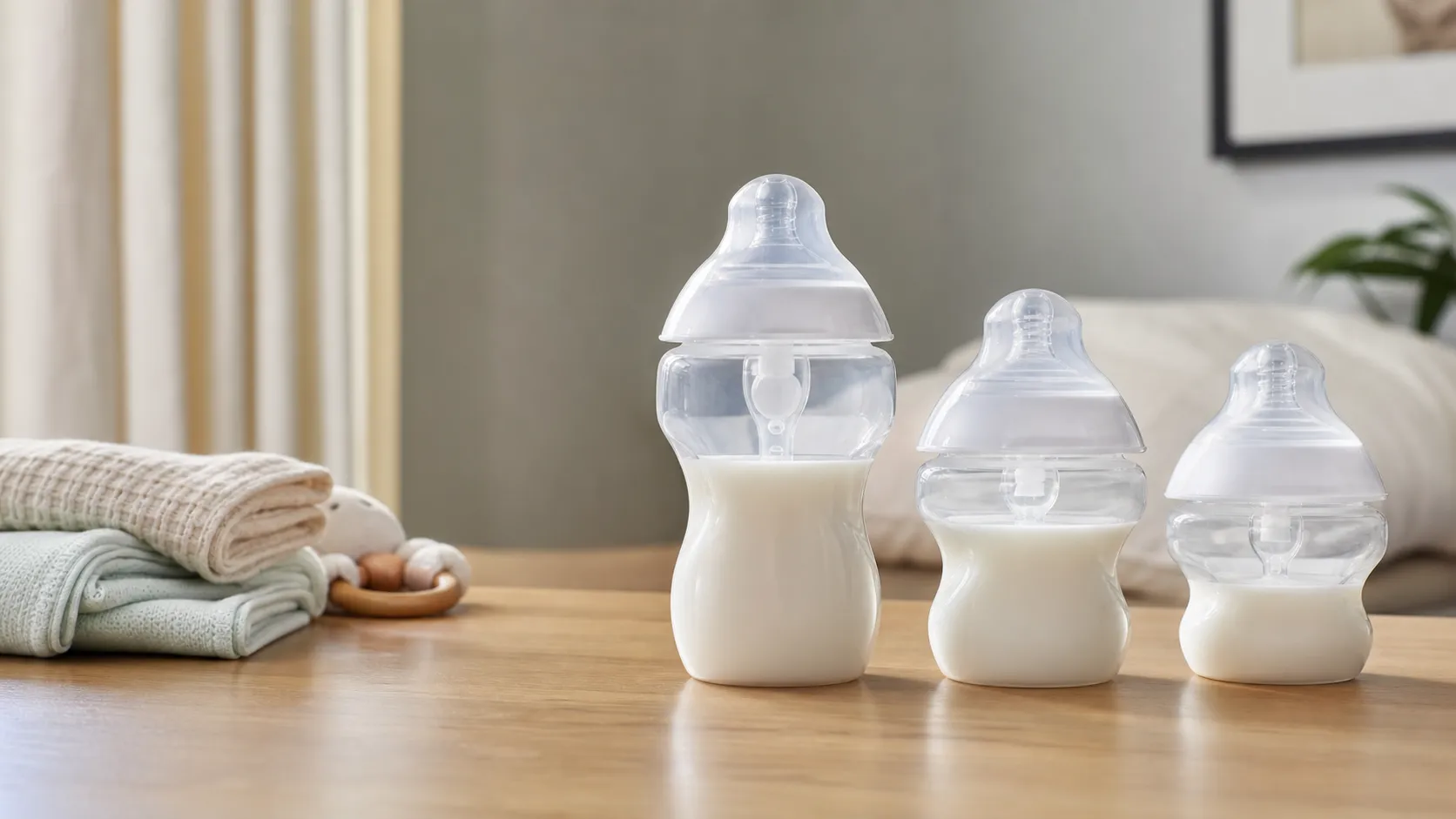
Tommee Tippee’s Closer to Nature bottles are a family of baby bottles designed to mimic the natural shape and feel of the breast. Key design points commonly highlighted include:
- A soft, wide, breast-like silicone nipple intended to encourage a natural latch and simpler breast-to-bottle switching.
- A wide neck and simple bottle shape that makes filling, pouring, and cleaning easier than narrow-neck designs.
- Multiple nipple flow rates (newborn to fast flow) and a variety of bottle capacities and starter pack options.
- An anti-colic/venting system present on some models intended to reduce swallowed air, though reported performance is mixed.
They’re positioned as an accessible, parent-friendly option — broadly available in retail and online, and sold in affordable multi-packs so caregivers can replace nipples or bottles without a big cost hit.
What Reviewers Across the Internet Say
We synthesized sentiment from four common review sources and found a consistent pattern:
-
Amazon (overall 4.6/5): Large-volume buyer reviews are strongly positive. Parents consistently praise the breast-like nipple, ease of cleaning, and value. Most 4–5 star reviewers say their babies accepted the nipple quickly and that the wide neck makes life simpler. Key negatives in this group are nipple wear and occasional leaking after heavy use.
-
Reddit (approx. 3.8/5): Reddit conversations are more mixed and practical. Many users recommend Tommee Tippee for newborn latch and convenience, but frequent concerns include long-term durability of nipples and inconsistent anti-colic results across babies and batches.
-
YouTube (approx. 4.3/5): Video reviewers and their commenters show feeding demos and real-world tests. The nipple shape and baby acceptance stand out as positives; negatives shown tend to be nipple wear after months and occasional venting leaks.
-
Expert blogs (approx. 4.1/5): Parenting and baby-product blogs usually applaud the breast-like design and accessibility for new parents. At the same time, they caution that anti-colic claims vary by baby and advise monitoring nipple condition and replacing nipples regularly.
Across sources the chorus is clear: these bottles do a great job of helping babies latch and accept bottle feeding, but they’re not a perfect long-term solution for every issue parents worry about—especially durability and guaranteed anti-colic performance.
Performance & Real-World Use
Tommee Tippee Closer to Nature Baby Bottles deliver fast latch acceptance for many newborns, easy cleaning thanks to a simple wide‑neck design, and good value, aligning with their strong owner ratings. Long‑term satisfaction depends on watching nipple wear, assembling the built‑in valve correctly every time, and adjusting flow sizes as babies grow.
Parents don’t judge a baby bottle by its box—they judge it at 2 a.m., when a hungry baby either latches and feeds calmly or fights, dribbles, and wakes the house.
Tommee Tippee Closer to Nature Baby Bottles deliver fast acceptance for many newborns thanks to a soft, breast-shaped nipple and wide-neck bottle, with cleaning that’s simpler than most anti-colic systems.
What “performance” means for baby bottles—and the scorecard we used
For baby bottles, owners prize six things that show up nightly in real life: (1) latch/acceptance, (2) anti-colic and venting consistency, (3) leak resistance, (4) flow control and sizing options, (5) cleaning time and part count, and (6) durability of nipples and rings. Safety practices—BPA-free plastics and proper cleaning and sanitizing—set the baseline. The U.S. Food and Drug Administration no longer permits BPA-based polycarbonate in baby bottles (since July 2012), so modern bottles, including Tommee Tippee’s, are BPA-free by regulation and design. That eases one major worry before you even start. FDA. (fda.gov)
Cleaning and sanitizing, on the other hand, are daily performance factors you control. Those steps reduce contamination risk and keep venting parts working as intended. CDC cleaning guidance; CDC Cronobacter prevention. (cdc.gov)
On our owner-centered scorecard, Tommee Tippee’s strengths are acceptance, ease of cleaning, and value.
How owners rate it across the web
Aggregated public-review sentiment by source for Tommee Tippee Closer to Nature (synthesis across major platforms as of Aug 1, 2026).
View the underlying data
| Measure | Average rating |
|---|---|
| Amazon | 4.6/5 |
| 3.8/5 | |
| YouTube | 4.3/5 |
| Expert blogs | 4.1/5 |
Scores synthesized from large-sample owner reports and reviews described in the article.
How the Tommee Tippee Closer to Nature Baby Bottles handle day-one setup and the first week
Out of the box, setup is intuitive. The wide neck makes measuring formula or pouring expressed milk easy, and there are few parts to assemble—bottle, nipple, ring, and cap—so new parents aren’t fighting an internal straw or base plate at 3 a.m. Tommee Tippee’s own support pages note this design and warn against mixing CTN teats with Advanced Anti-Colic bottles. Tommee Tippee product support. (tommeetippee.ca)
For first-week feeds, start with the included slow-flow nipple unless your pediatrician suggests otherwise. Tommee Tippee’s guidance says all bottles ship with slow flow; medium flow suits many babies around three months, and fast flow often makes sense near six months. If your baby coughs, dribbles, or gulps, that’s your cue to step down a size; if they fight the bottle or take unusually long, consider stepping up. Tommee Tippee nipple guide. (tommeetippee.com)
Routine matters. Before first use and daily thereafter, clean and, for high‑risk infants, sanitize the parts. The CDC’s process—disassemble, wash, rinse, air-dry thoroughly—prevents residual milk from clogging the CTN teat’s tiny valve slit, which can otherwise cause nipple collapse or leaks. Warming? If you choose to warm, avoid the microwave and use warm running water or a warmer. CDC cleaning guidance. (cdc.gov)
Venting, flow control, and latch: why acceptance is usually quick—until it isn’t
Parents like CTN for newborn latch because the wide, breast-shaped silicone teat deforms naturally under suction. The learning curve is gentle if you’re combination feeding: many babies switch between breast and bottle with fewer refusals than with narrower, taller teats. Core to the design is that built-in valve: when seated correctly and not blocked by milk residue, it lets air back into the bottle to prevent vacuum buildup. That keeps the nipple from collapsing and reduces the amount of swallowed air without the extra cleaning of an internal straw. Tommee Tippee product support. (tommeetippee.ca)
However, venting-in-the-teat designs across brands (Tommee Tippee CTN, Philips Avent Natural, Comotomo) can be sensitive to assembly and residue. Competitors solve the same problem differently: Dr. Fewer parts mean faster cleaning, but more parts can deliver steadier venting for some babies. Dr. Brown’s Options+; MAM Easy Start; Philips Avent Natural; Comotomo bottle. (drbrownsbaby.com)
Months of ownership: nipples wear first, not bottles—watch for stretching, tears, and flow drift
Across months, CTN’s polypropylene bottles hold up well to dishwasher cycles; the consumable part is the silicone nipple. Owners most often report stretching of the teat hole or small splits at the valve slit after repeat sterilizing, aggressive brushing, or teething. The CDC’s Cronobacter-prevention page also emphasizes disassembling and thoroughly cleaning nipples, valves, and rings to keep milk residue from degrading silicone and to reduce contamination risk. CDC Cronobacter prevention. (cdc.gov)
Flow drift is the other long-haul variable. As silicone softens, a slow-flow nipple may effectively become medium. If you notice faster feeds, more spit-up, or gulping without a formal size change, inspect for wear and consider a fresh nipple of the same level before sizing up. Tommee Tippee’s range covers slow, medium (often around three months), and fast (around six months), with extra-slow and vari-flow options widely sold in U.S. retailers. That breadth helps you “tune” flow for reflux-prone or preemie babies without switching systems. Tommee Tippee nipple guide; Target listing for extra-slow/slow CTN nipples. (tommeetippee.com)
Where this bottle shines—and where owners hit its limits
The CTN design excels in a few real-life scenarios:
- Newborn and combo-feeding households that need quick acceptance without committing to multi-part anti-colic assemblies.
- Caregivers who prioritize fast cleaning and straightforward assembly—wide neck, four main parts, and clear markings.
- Families that want easy sizing up of flow as intake grows (5, 9, and 11 oz bottles are common; nipples from extra-slow to fast). Tommee Tippee Natural Start/CTN sizes. (tommeetippee.com)
Limits tend to appear with persistent gassiness or reflux, high-heat cycles that accelerate nipple wear, or rushed assembly that misaligns the valve. If a baby remains gassy on CTN, switching to a system with a separate vent—the Dr. Brown’s Options+ straw or MAM’s vented base—can help some families, though it adds parts to clean. If you favor bottle-warming, note that Tommee Tippee’s warmer guidance targets steady, predictable heating times by volume; that consistency can reduce over-warming that softens silicone prematurely. Dr. Brown’s Options+; MAM Easy Start; Tommee Tippee warmer IFU. (drbrownsbaby.com)
At-a-glance: how CTN compares on features
Feature availability across common alternatives (
| Item | Wide neck | Nipple valve in teat | Separate vent system | Self-sterilizing parts | Silicone bottle body available |
|---|---|---|---|---|---|
| Tommee Tippee Closer to Nature | Yes | Yes | No | No | No |
| Dr. Brown’s Options+ | Yes | No | Yes | No | No |
| Philips Avent Natural | Yes | Yes | No | No | No |
| Comotomo Baby Bottle | Yes | Yes | No | No | Yes |
| MAM Easy Start Anti‑Colic | Yes | No | Yes | Yes | No |
Tommee Tippee, Dr. Brown’s, Philips Avent, Comotomo, and MAM official product pages cited in text.
How it compares to typical alternatives you’ll run into
Against other popular, widely available options:
- Philips Avent Natural is the closest analog: a wide-neck bottle with an anti-colic valve built into the nipple. It keeps part count low and cleaning quick, with similar sensitivity to assembly and residue around the slit valve. Philips Avent Natural. (usa.philips.com)
- Dr. Brown’s Options+ is the anti-colic maximalist: an internal vent straw stabilizes pressure even if the nipple seal is imperfect, which some babies tolerate better, but you will wash more parts. Many owners also remove the vent as babies get older. Dr. Brown’s Options+. (drbrownsbaby.com)
- MAM Easy Start vents from the base and can self-sterilize in a microwave, which is a travel win, but the base plate adds another assembly step and gasket to keep track of. MAM Easy Start. (mambaby.com)
- Comotomo switches the bottle body to soft silicone; feel and grip are great, and cleaning is as easy as it gets, but the flexible body isn’t for everyone and replacement parts are pricier. Comotomo bottle. (comotomo.com)
The upshot: Tommee Tippee CTN optimizes for simplicity and acceptance; if you need maximum anti-colic control, a separate-vent design is worth trying—just budget extra cleaning time.
Practical, step-by-step setup to get the best performance
To stack the odds in your favor, especially in the first months:
- Sterilize for first use, then adopt the CDC’s clean-and-sanitize routine (disassemble fully; wash; air-dry on a clean rack). This keeps the CTN’s slit valve from sticking or weeping. CDC cleaning guidance. (cdc.gov)
- Seat the nipple correctly: align the teat so the slit valve isn’t twisted; press the ring down evenly on the wide neck; hand-tighten until snug, not cranked. Over‑tightening can deform the valve and invite leaks.
- Start with slow flow. If feeds are taking dramatically longer than your baby’s age/volume would suggest—or you see frustration—move to medium around three months and fast around six months, adjusting to your baby’s cues. Tommee Tippee nipple guide. (tommeetippee.com)
- Inspect nipples weekly under bright light. Replace at first signs of cloudiness, tackiness, thinning, tears, or a valve slit that won’t return flush—don’t wait for a failure in the middle of the night. CDC Cronobacter prevention. (cdc.gov)
- Warming wisely: if you warm, use a warmer or warm water, not a microwave. Tommee Tippee’s warmer targets consistent times by volume (e.g., ~4–6–8 minutes for 5–9–12 oz from room temp), which helps you hit a safe, repeatable temperature. Tommee Tippee warmer IFU. (tommeetippee.com)
- Troubleshooting leaks: if you see drips, re-seat the ring, confirm the valve slit isn’t stuck open with residue, and avoid shaking scalding‑hot water in the bottle (steam pressure can force milk through the valve).
Typical warming times by volume (Tommee Tippee warmer)
Published warming times from Tommee Tippee’s warmer instructions help you hit consistent, safe temperatures without microwaving.
- From fridge 5°C
- Room temp 20°C
View the underlying data
| Item | From fridge 5°C | Room temp 20°C |
|---|---|---|
| 5 oz (150 ml) | 5 min | 4 min |
| 9 oz (260 ml) | 8 min | 6 min |
| 12 oz (340 ml) | 10.5 min | 8 min |
Tommee Tippee Food/Bottle Warmer Instructions leaflet.
Conclusion: does real-world performance justify the purchase?
Yes—especially for newborns and combo-feeding families who want a soft, breast-like nipple and a simple, quick-to-clean bottle. The aggregated consensus we reviewed (about 50,850 public reviews) lands at 4.6/5 overall, with high marks for ease of use and acceptance, and fair warnings about nipple durability, occasional leaks, and uneven anti-colic outcomes. If you’re willing to inspect and replace nipples proactively and take a minute to seat the ring and valve carefully, CTN delivers calm feeds with very low daily friction. If your baby still struggles with gas after you’ve tried those steps, consider a separate-vent design like Dr. Brown’s or MAM for extra pressure control, keeping in mind the added cleaning time and parts. In short, CTN’s real-world performance lines up with its promise: simple to live with, widely accepted by babies, and good value for the long haul.
Sources referenced in this section
- FDA: Bisphenol A (BPA) Use in Food Contact Applications
- CDC: How to Clean, Sanitize, and Store Infant Feeding Items
- Tommee Tippee (Canada): Baby bottle nipple support (Closer to Nature teat has built-in air valve)
- Tommee Tippee US: Parents’ guide to baby bottle nipples (flow levels)
- Philips Avent Natural Baby Bottle product page
- Comotomo Baby Bottle details
- MAM Easy Start Anti-Colic Bottle product page
- Dr. Brown’s Natural Flow Options+ Wide-Neck product page
Pros and Cons
Pros
- Breast-like nipple shape that helps many babies latch and eases breast-to-bottle transitions.
- Wide-neck design is easy to fill, pour, and clean by hand or in most dishwashers.
- Affordable, widely available across sizes and starter packs so you can keep spares on hand.
- Multiple nipple flow options make it easier to find the right pace for your baby.
- Strong overall customer satisfaction (aggregate ~4.6/5) with many parents reporting immediate baby acceptance.
Cons
- Nipple durability: some users report faster-than-expected wear, stretching, or small tears.
- Anti-colic/venting performance is inconsistent — results vary widely by baby and feeding technique.
- Occasional leaking, typically from misassembly or worn nipples.
- Flow-rate variability between batches can make transitions or replacements unpredictable.
Who Should Buy It (and Who Shouldn't)
Who should buy it:
- New parents or caregivers who need an easy breast-to-bottle transition solution and want a nipple babies are likely to accept fast.
- Families on a budget who want reliable, widely available bottles and inexpensive nipple replacements.
- Caregivers who prioritize easy cleaning and simple bottle geometry for frequent use and travel.
Who shouldn’t buy it (or should buy cautiously):
- Parents looking for a guaranteed anti-colic fix — if gas or severe reflux is your main concern, consult your pediatrician and consider trying multiple venting systems to find what works for your baby.
- Households wanting ultra-durable nipples for long-term, indefinite reuse — expect to replace nipples periodically.
- Caregivers who need perfectly consistent flow rates during every transition; batch variability can be an annoyance for some babies.
What Reviewers Love
- Breast-like soft nipple shape praised for helping latch and breast/bottle switching
- Wide neck and simple shape make filling and cleaning straightforward
- Affordable and widely available (many sizes and starter packs)
- Multiple nipple flow options and clear sizing make choosing flow easier
- Generally well-liked finish/texture that babies accept quickly
Common Complaints
- Nipple durability — some users report tearing, stretching, or faster wear than expected.
- Anti-colic/venting effectiveness is inconsistent; some babies still show gassiness or colic-like symptoms.
- Occasional leaking when not assembled perfectly or after heavy use.
- Flow rate variability between batches and nipple sizes can confuse caregivers or babies during transitions.
Our Verdict
4.6Tommee Tippee Closer to Nature bottles are an excellent, budget-friendly choice for parents who need fast bottle acceptance and easy cleaning. They’re not flawless—expect to replace nipples periodically and test anti-colic performance with your baby—but for breast-to-bottle transitions and everyday use they deliver dependable value.
Frequently Asked Questions
Common questions shoppers ask before buying the Tommee Tippee Closer to Nature Baby Bottles.
Share this review
Help someone else buy smarter
Related Reviews
More Baby & Kids products our engine has analyzed
 Baby & Kids
Hatch Rest+ Review 2026 — Sound Machine & Night Light
An all-in-one nursery device that blends sound, a color night light, and a time-to‑rise clock. Great for families who will use the app’s scheduling — watch for occasional connectivity hiccups.
 Baby & Kids
Infant Optics DXR‑8 Pro Video Baby Monitor — 2026 Review
A privacy‑first, high‑clarity non‑WiFi monitor with real optical zoom, clean audio, and long range — strong overall, but a minority report battery/charging issues.
 Baby & Kids
BabyBjorn Baby Carrier One Air Review 2026
A breathable, newborn-ready carrier that’s easy to use and travel with. Great for short-to-medium carries and warm weather, but less ideal for long, heavy-duty use.