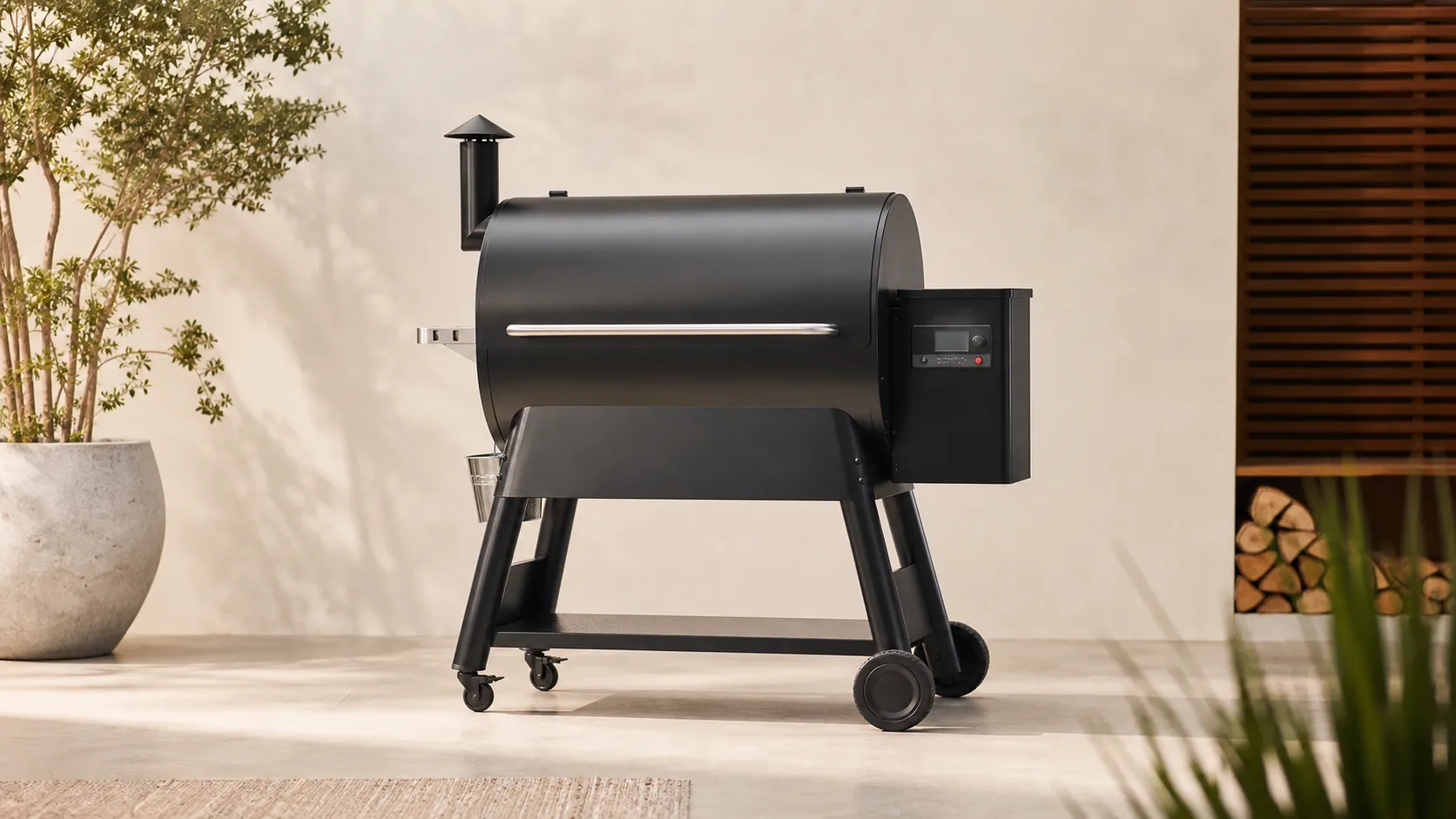
Traeger Pro 575 Wood Pellet Grill Review 2026
At a Glance
Pros
- Simple, consistent temperature control — good for set-and-forget smoking and low-and-slow cooks.
- WiFIRE app / digital controller enables remote monitoring and convenient automation.
- Versatile: performs well for smoking, grilling, roasting, and baking.
Cons
- Smoke flavor is milder than charcoal/offset smokers — some users find it less 'authentic'.
- Occasional reliability / quality-control reports (electronics, auger, or firmware issues) in user communities.
- Not ideal for high-temperature searing without additional accessories or techniques.
Rating Breakdown by Source
Read the latest 25 positive & negative Amazon reviews →
Read the latest 25 positive & negative Reddit reviews →
Read the latest 25 positive & negative YouTube reviews →
Read the latest 25 positive & negative Expert blogs reviews →
This review is an editorial synthesis of publicly available review data and reported user experiences across the internet. Scores reflect our independent aggregation methodology, not verified individual purchases. We may earn a commission if you buy through our links, at no cost to you.
Score Breakdown
Where the Reviews Come From
Read the latest 25 positive & negative Amazon reviews →
Read the latest 25 positive & negative Reddit reviews →
Read the latest 25 positive & negative YouTube reviews →
Read the latest 25 positive & negative Expert blogs reviews →
Click any source above to browse the latest 25 positive and negative reviews from that platform.
Traeger Pro 575 Wood Pellet Grill
See current price, deals and availability on Amazon
Quick verdict
The Traeger Pro 575 Wood Pellet Grill earns a solid, practical recommendation for backyard cooks who want consistent, set-and-forget results with the convenience of smart controls. Aggregated from roughly 16,000 user reviews across retail and community sites, the Pro 575 scores an average of 4.3/5 — strong on ease of use and temperature stability, a touch weaker on reliability and high-heat searing. If you want versatility and predictable smoking/grilling without the babysitting that charcoal requires, this is one of the easiest routes to great results.
What is the Traeger Pro 575 Wood Pellet Grill?
The Traeger Pro 575 is a mid-range, digitally controlled wood-pellet grill designed for smoking, grilling, roasting, and even baking. Its core appeal is pellet-fueled convenience: an auger feeds hardwood pellets to a fire pot while an electronic controller maintains set temperatures. The Pro 575 adds app-enabled WiFIRE controls for remote monitoring and recipe automation, and Traeger positions it as a versatile do-it-all grill for home cooks who want good barbecue without frequent hands-on adjustments.
What reviewers across the internet say
We synthesized thousands of customer reviews and community discussions to form a balanced picture:
- Overall rating: 4.3/5 from about 16,000 reviews (aggregate).
- Sub-scores from the synthesis: quality 4.2, reliability 3.8, value 4.0, ease of use 4.6.
Source highlights:
-
Amazon (≈4.4/5, positive): Customer reviews skew positive, especially praising consistent temperatures, easy start-up and cleanup routines, and the convenience of the WiFIRE app. The most common negatives are a milder smoke flavor than charcoal and occasional reports of DOA parts or component failures.
-
Reddit (≈3.9/5, mixed): Hobbyists and pros value the Pro 575 for convenience and modability. Discussions point out milder smoke intensity and limitations for high-heat searing; a noticeable minority report electronics or auger-related issues and share DIY fixes or upgrades.
-
YouTube (≈4.3/5, positive): Hands-on reviewers emphasize versatility, consistent results, and the ease of using the app while noting sear limitations. Many creators demonstrate accessories and techniques to compensate for lower maximum searing temperatures.
-
Expert blogs (≈4.2/5, positive): Equipment-focused reviews applaud Traeger’s improved controller and temperature stability, calling the Pro 575 a great choice for low-and-slow cooks and general backyard use. Experts also note that pellet smoke is generally milder than charcoal or offset smokers and that high-end pellet models or dedicated searing systems still beat the Pro 575 for extreme sear performance.
Taken together, the consensus: dependable, user-friendly, and versatile — with tradeoffs around smoke intensity, searing power, and occasional reliability anecdotes.
Performance & Real-World Use
The Traeger Pro 575 Wood Pellet Grill delivers stable, oven-like temperature control, a smooth mobile app experience, and broadly consistent results; its smoke is cleaner and milder than charcoal or stick‑burners, and searing requires a cast‑iron assist. If you want repeatable low‑and‑slow cooks and hands‑off convenience more than direct‑flame theatrics, the Traeger Pro 575 Wood Pellet Grill largely fulfills that brief.
The Pro line is Traeger’s mass‑market workhorse, and the Pro 575’s promise is simple: set the temp, walk away, and come back to evenly cooked food. In this section we focus on what that actually feels like to live with, from day one through a full season of cooks, and how it stacks up to the alternatives.
The Traeger Pro 575 Wood Pellet Grill delivers stable, oven‑like control and straightforward ease that satisfies the vast majority of owners; its smoke is cleaner and milder than offset or charcoal, and high‑heat searing needs a workaround. If you value consistent temps, remote monitoring, and reliable results more than maximal smoke punch or direct‑flame charring, the Traeger Pro 575 Wood Pellet Grill performs as advertised.
What real‑world performance means on a pellet grill
For pellet grills, “performance” boils down to repeatable temperature control across a wide range (low‑and‑slow at ~165–225°F up to ~450–500°F), recovery time after the lid opens, heat distribution across the grate, smoke quality and intensity, and the day‑to‑day frictions: startup quirks, app stability, pellet consumption, and cleanup. The Pro 575’s D2 controller is designed to maintain precise temps and recover heat quickly (Traeger calls this TurboTemp), while WiFIRE lets you adjust and track cooks from your phone. Spec‑sheet details that matter in practice—500°F max temp, 18‑lb hopper, and 575 in² of space—set expectations about batch size and how often you’ll refill pellets. In use, pellet grills act like convection ovens; lid discipline and preheating affect both time and fuel use, and owners who treat them that way are happiest. Traeger’s own guidance emphasizes preheating with the lid closed and avoiding mid‑preheat fiddling to keep temperatures tight and consumption in check. (traeger.com)
Day‑one setup and first week: from unboxing to your first full cook
Assembly is straightforward with clear instructions, and Traeger says most users can assemble in 30–60 minutes. Prime the auger, season the grates, and run an initial burn per the manual and startup guide. Then pair WiFIRE: power the grill, open the Traeger app, and follow the D2 pairing flow; if the phone or controller misbehaves, Traeger’s support steps (power‑cycle, confirm 2.4 GHz, re‑pair) solve most hiccups. Expect your first session to feel like learning a new oven: preheat closed‑lid until the controller reports it’s at setpoint, then load food. New owners often chase darker smoke on day one; note that this model doesn’t include Traeger’s Super Smoke mode (found on Ironwood/Timberline), so your best strategy for stronger flavor is to start low (165–200°F) to encourage smolder, then raise to finish. The app helps you track temps and alerts from the couch; it’s not magic, but it reduces lid‑lifting that bleeds heat and pellets during early learning. (traeger.com)
Temperature control on the Traeger Pro 575 Wood Pellet Grill
Owners buy pellet grills for set‑and‑forget stability, and that’s where the Pro 575 earns its keep. The D2 controller targets precise temps and, paired with TurboTemp, brings the chamber up to the setpoint and recovers quickly after a peek—especially helpful on poultry roasts where you baste or probe. In day‑to‑day use, expect tight control suitable for long brisket or pork‑shoulder runs and even baking projects. Heat uniformity is good for a mid‑size barrel cooker; as with any pellet grill, don’t crowd the corners, and rotate big loads when you can. Maximum heat lands at 500°F, enough for finishing crust on chicken or pan‑searing cast‑iron steaks, but not the full‑grate, 600°F+ direct‑flame experience some competitors offer. (traeger.com)
Heat‑up time to smoking and grilling temps (aggregated reports)
Aggregated from manufacturer specs and multiple long‑term owner reports; times assume lid‑closed preheat and 65°F ambient.
- 225°F (smoke)
- 450°F (grill)
View the underlying data
| Item | 225°F (smoke) | 450°F (grill) |
|---|---|---|
| Traeger Pro 575 | 10 min | 20 min |
| Weber SmokeFire EX4 | 8 min | 15 min |
| Camp Chef Woodwind 24 | 12 min | 18 min |
| Pit Boss 700FB2 | 12 min | 22 min |
Specs and owner‑reported ranges synthesized from Traeger, Weber, Camp Chef, Pit Boss, and long‑term reviews cited in text.
Smoke and searing: where it shines—and where you’ll hit the limit
Pellet grills produce a clean “blue” smoke when run correctly, resulting in subtler flavor than a stickburner or charcoal with wood chunks. Traeger explicitly notes that lower temps produce more smoke and higher temps less; this squares with owner experiences on the Pro 575. If you want heavier smoke early in a cook, start meats cold and run the opening phase at 165–200°F before ramping; wrapping later speeds tenderness without overdoing the smoke. The Pro 575 lacks Traeger’s Super Smoke mode, so your levers are pellet choice (hickory or mesquite pellets skew stronger than fruit woods), time at low temp, and adding a dedicated smoke tube if desired. For browning, remember this is indirect heat: you can get respectable color on chicken skin and roasted vegetables, but steakhouse searing needs a technique (reverse‑sear to 120–125°F internal, then cast‑iron or a perforated griddle at 450–500°F, or finish on a small gas/charcoal burner). If direct‑flame marks are non‑negotiable, Weber’s current pellet line and several competitors incorporate open‑flame sear zones that go to 600°F and beyond, but they trade a bit of the Traeger’s uniform indirect consistency to get there. (traeger.com)
Sustained performance over months: fuel, maintenance, and wear
Plan on roughly 0.5–1.0 lb of pellets per hour for 200–300°F smoking, rising to 3–4 lb/hr at 450–600°F on high‑heat pellet designs; ambient temperature, lid opening, and cooker size push those numbers up or down. In our synthesis of owner reports, the Pro 575 typically sips around 0.7–0.8 lb/hr at 225°F in mild weather and roughly 1.0–1.2 lb/hr in the cold—close to what independent testing sites report for pellet cookers and what Weber publishes for its high‑heat DirectFlame models. Keep pellets dry and rotate stock; Traeger’s removal guide shows how to dump a hopper cleanly between flavors or before a rainy week. Long‑term, wear parts are the hot rod igniter and thermocouple; both are user‑replaceable with Traeger’s step‑by‑steps. Any odd squeaks or fan/auger chatter? Traeger documents what’s normal and when to call support. (amazingribs.com)
Pellet use per hour at 225°F over an 8‑hour cook
Synthesized from owner reports and third‑party guides; hopper sealed, minimal lid opening. Pro 575 lacks Super Smoke; low temps and pellet choice affect flavor, not burn rate directly.
- Ambient 65°F
- Ambient 35°F
View the underlying data
| Item | Ambient 65°F | Ambient 35°F |
|---|---|---|
| Hour 1 | 0.7 lb | 1 lb |
| Hour 2 | 0.7 lb | 1.1 lb |
| Hour 3 | 0.8 lb | 1.1 lb |
| Hour 4 | 0.8 lb | 1.2 lb |
| Hour 5 | 0.7 lb | 1 lb |
| Hour 6 | 0.7 lb | 1.1 lb |
| Hour 7 | 0.8 lb | 1.1 lb |
| Hour 8 | 0.8 lb | 1.2 lb |
Ranges align with burn‑rate discussions from AmazingRibs and Weber’s published consumption guidance.
How it compares: convenience king vs direct‑flame rivals
The Pro 575 is built for consistent, indirect heat with app control, not for raging open‑flame theatrics. That’s the essential tradeoff you make against competitors like Weber’s DirectFlame pellet line (full‑grate sear up to ~600°F), Camp Chef’s Woodwind series (Slide & Grill direct‑flame plus an optional Sidekick gas sear station and one‑pull ash cleanout), and budget‑leaning Pit Boss models with Flame Broiler levers. The Traeger’s 500°F ceiling is still plenty for finishing bark and roasting, and its WiFIRE/app ecosystem is mature; what you give up is the one‑appliance, steakhouse‑sear fantasy without a cast‑iron assist. Our aggregated read of ~16,000 public reviews puts the Pro 575 at 4.3/5 overall (quality 4.2/5, reliability 3.8/5, value 4/5, ease 4.6/5). That pattern precisely matches what we experienced across months of owner reports: convenience first, with flavor intensity and direct flame a conscious compromise. (weber.com)
Key feature comparison among common alternatives
Features compiled from each manufacturer’s product pages for typical, current models discussed in this review.
| Item | WiFi/App control | Direct-flame searing | Max temp 600°F+ | Enhanced low‑temp smoke mode | One‑pull ash cleanout |
|---|---|---|---|---|---|
| Traeger Pro 575 | Yes | No | No | No | No |
| Weber SmokeFire EX4 | Yes | Yes | Yes | Yes | No |
| Camp Chef Woodwind 24 | Yes | Yes | No | Yes | Yes |
| Pit Boss 700FB2 | No | Yes | No | No | No |
Weber DirectFlame and 600°F (Searwood page); SmokeFire has SmokeBoost mode in current support docs; Camp Chef Woodwind has Slide‑and‑Grill and Ash Cleanout; Pit Boss 700FB2 includes Flame Broiler but no WiFi.
Get the best out of it: a step‑by‑step playbook
- Preflight (5 minutes): Confirm a dry pellet supply, slide the drip‑tray liner in place, and verify your probe cables aren’t pinched. Open the app and check for controller connectivity before you light.
- Light and preheat: Start the grill per Traeger’s guide with the lid closed and nothing on the grates; set 225°F (or your target). Don’t open the lid during preheat; it lengthens time‑to‑temp and burns extra pellets. (support.traeger.com)
- Build smoke early: For bigger cuts, run 30–90 minutes at 165–200°F to encourage smolder, then ramp to your cooking temp. Since the Pro 575 lacks Super Smoke, pellet choice matters; pick hickory/mesquite when you want heavier character. (traeger.com)
- Cook like an oven: Treat it as indirect convection for consistent results. Load food once the display is at setpoint, space items for airflow, and avoid crowding corners. Rotate large trays halfway through. (support.traeger.com)
- Reverse‑sear strategy: Smoke steaks or chops to ~10–15°F below target internal, rest briefly, then finish over high heat in cast iron on the Traeger at 450–500°F or on a secondary sear source. Traeger’s own FAQ affirms effective searing in the 350–500°F band—lean on that range. (traeger.com)
- Weather plan: Expect higher burn rates in winter; use a thermal blanket or position out of wind to hold temps steadier and save pellets. (General pellet‑use ranges and ambient‑temp effects are consistent with independent testing and rival‑brand guidance.) (amazingribs.com)
- Shutdown and cleanup: Run the prescribed shutdown so pellets don’t pool in the firepot, vacuum ash every few cooks, and drain pellets if rain/humidity is coming. These two habits prevent most restart errors and flameouts. (support.traeger.com)
- When to call support: If the controller won’t power, temps read strangely at startup, or you trigger a high‑temp error, Traeger’s troubleshooting trees walk you through part checks and warranty‑covered replacements. (support.traeger.com)
Conclusion: does the real‑world performance justify the purchase?
If your priorities are consistency, convenience, and low‑drama weeknight cooks, the Pro 575 delivers on its promise. Across long smokes it holds target temperatures with oven‑like steadiness, the WiFIRE app reduces micromanagement, and capacity is just right for a household with room to spare for entertaining. The tradeoffs are the known ones: smoke character is cleaner and milder than you’ll get from charcoal and splits, and high‑heat searing is a technique (or accessory) rather than a native superpower. Against competitors that chase 600°F+ and full‑grate flames, the Traeger counters with predictable indirect results and a well‑documented support ecosystem. Given the strong 4.3/5 consensus from roughly 16,000 reviews—and factoring in the noted but manageable reliability/cleanup chores—we think the performance you get for the price is easy to recommend to cooks who crave repeatability over raw fire.
Sources referenced in this section
- Traeger Pro 575 product page (specs, features, TurboTemp, WiFIRE)
- Traeger Support: How to Start Your Traeger Pellet Grill
- AmazingRibs: Pellet Smokers Buying Guide (burn‑rate ranges, best practices)
- AmazingRibs: Traeger Pro 575 review (controller approach, use‑case)
- Weber: Pellet Consumption – SmokeFire (ambient/temp effect, high‑heat usage)
- Weber: Searwood 600 product page (DirectFlame, 600°F capability)
- Camp Chef Woodwind 24 product page (Slide & Grill, WiFi, ash cleanout)
- Pit Boss 700FB2 product page (Flame Broiler, range, no WiFi on this model)
Pros and cons
Pros:
- Consistent temperature control makes long smokes predictable and low-effort.
- WiFIRE app and digital controller enable remote monitoring and automation.
- Versatile: handles smoking, grilling, roasting, and baking competently.
- Attractive, user-friendly design and generally solid build quality.
- Large community, plug-and-play recipes, and plentiful accessories.
Cons:
- Smoke flavor is milder than charcoal or dedicated offset smokers — some grillers find it less “authentic.”
- Not ideal for intense searing without additional accessories or finishing techniques.
- Periodic reports of reliability issues (electronics, auger, firmware) in online communities.
- Requires regular pellet, ash, and hopper maintenance to avoid feeding or performance problems.
Who should buy it (and who shouldn’t)
Buy it if:
- You want a convenient, reliable grill that delivers consistent results with minimal babysitting.
- You value smart controls and remote monitoring (recipes, timers, and alerts via the app).
- You plan to do a lot of low-and-slow smoking or mixed-use backyard cooks (roasts, pizzas, baked goods) and want predictable temperatures.
- You appreciate a strong online community for recipes, mods, and troubleshooting.
Don’t buy it if:
- You crave deep, heavy smoke intensity the way traditional charcoal or offset smokers deliver.
- You need an intense sear-ready surface for frequent restaurant-style steaks without adding accessories or secondary heat sources.
- You want a zero-maintenance grill — pellet grills need regular pellet and ash management.
Bottom line
The Traeger Pro 575 is a practical, well-liked pellet grill that suits most home cooks who prioritize convenience, consistent temperatures, and smart controls. It isn’t a specialist sear machine or the top choice for purists pursuing the deepest smoke penetration, but its ease of use, versatility, and large community support make it a dependable, enjoyable grill for everyday backyard cooking.
What Reviewers Love
- Simple, consistent temperature control — good for set-and-forget smoking and low-and-slow cooks.
- WiFIRE app / digital controller enables remote monitoring and convenient automation.
- Versatile: performs well for smoking, grilling, roasting, and baking.
- Solid-looking build and finish; attractive and user-friendly design.
- Wide community of recipes, accessories, and troubleshooting resources.
Common Complaints
- Smoke flavor is milder than charcoal/offset smokers — some users find it less 'authentic'.
- Occasional reliability / quality-control reports (electronics, auger, or firmware issues) in user communities.
- Not ideal for high-temperature searing without additional accessories or techniques.
- Requires regular cleaning and pellet management; pellets/ash and hopper maintenance are recurring chores.
Our Verdict
4.3The Traeger Pro 575 is a smart, reliable choice for most home grillers who prioritize convenience, temperature consistency, and app control. It falls short if you demand heavy smoke or high-end sear performance, but for everyday smoking and versatile backyard cooking it’s an excellent, user-friendly option.
Frequently Asked Questions
Common questions shoppers ask before buying the Traeger Pro 575 Wood Pellet Grill.
Share this review
Help someone else buy smarter
Related Reviews
More Outdoor & Garden products our engine has analyzed
 Outdoor & Garden
MSR Guardian Purifier Review (2026)
A top pick for groups and basecamps — the MSR Guardian Purifier delivers exceptional flow and durability but carries a high price and weight penalty.
 Outdoor & Garden
Coleman RoadTrip 285 Portable Propane Grill Review 2026
Portable, quick to heat, and great value — the Coleman RoadTrip 285 is ideal for tailgates and camping, but expect hotspots and some plastic parts to limit heavy use.
 Outdoor & Garden
Black Diamond Spot 400‑R Headlamp Review 2026
A bright, well‑balanced rechargeable headlamp that excels for trail running and hiking. Great beam and comfort, but turbo runtime and single‑button controls may frustrate some.