Braun ThermoScan 7 Review 2026
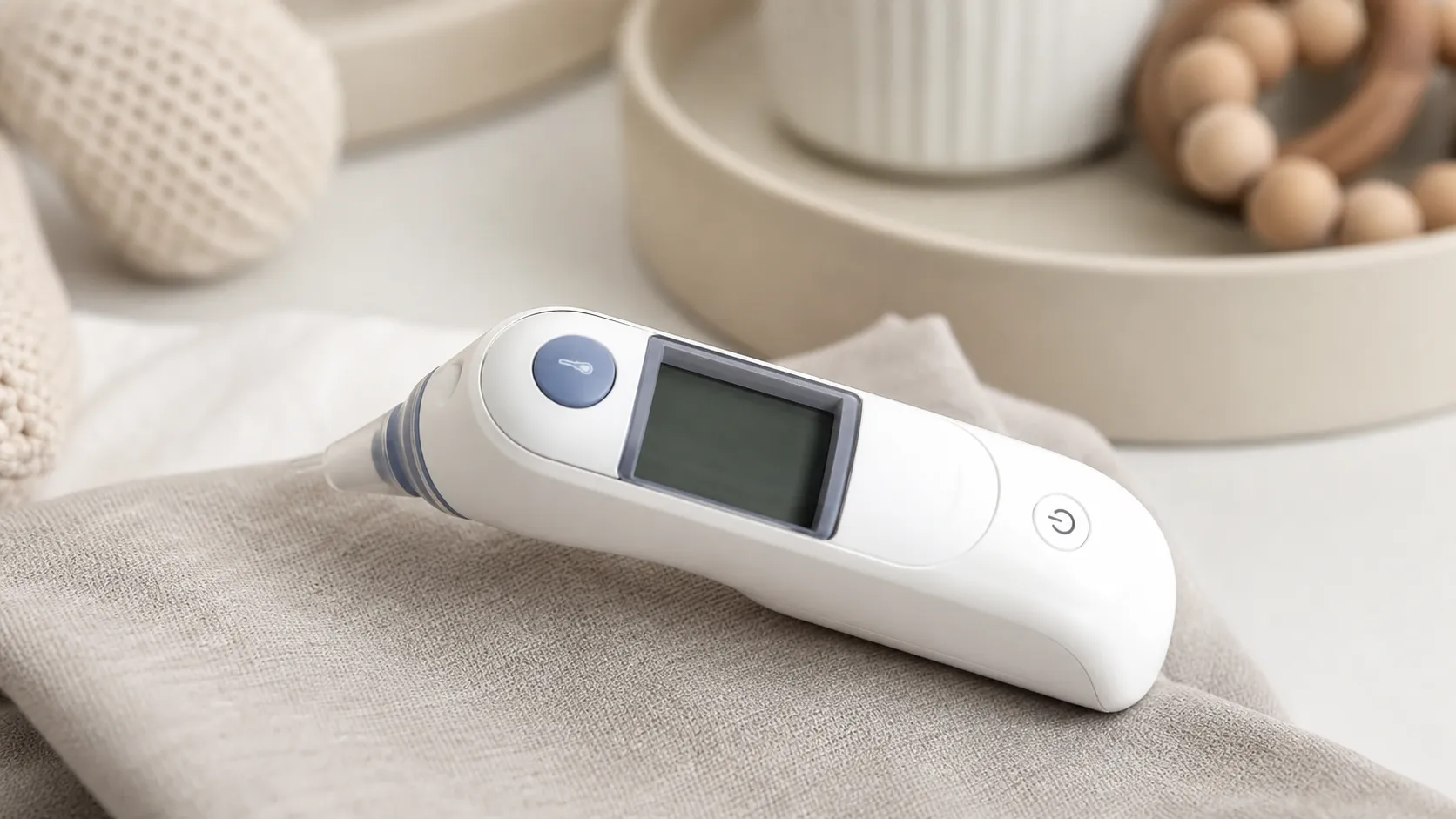
At a Glance
Pros
- Quick, generally accurate readings (when properly positioned).
- Age-adjustable fever guidance (helpful for parents to interpret results).
- Pre-warmed tip and positioning/ExacTemp guidance improve comfort and reduce error.
Cons
- Accuracy depends strongly on correct positioning and a clear ear canal (earwax or wrong angle gives inconsistent readings).
- Recurring cost and waste from single-use probe covers; some find replacements expensive or easy to lose.
- Less suitable for newborns and very young infants (many recommend rectal readings for infants under ~3 months).
Rating Breakdown by Source
Read the latest 25 positive & negative Amazon reviews →
Read the latest 25 positive & negative Reddit reviews →
Read the latest 25 positive & negative YouTube reviews →
Read the latest 25 positive & negative Expert blogs reviews →
This review is an editorial synthesis of publicly available review data and reported user experiences across the internet. Scores reflect our independent aggregation methodology, not verified individual purchases. We may earn a commission if you buy through our links, at no cost to you.
Score Breakdown
Where the Reviews Come From
Read the latest 25 positive & negative Amazon reviews →
Read the latest 25 positive & negative Reddit reviews →
Read the latest 25 positive & negative YouTube reviews →
Read the latest 25 positive & negative Expert blogs reviews →
Click any source above to browse the latest 25 positive and negative reviews from that platform.
Braun ThermoScan 7 Ear Thermometer
See current price, deals and availability on Amazon
Intro
If you need a fast, clinically respected ear thermometer for a busy household or a pediatric practice, the Braun ThermoScan 7 is a compelling pick. Aggregating roughly 10,000 user reviews gives it an overall score of about 4.3/5 — users and experts agree it’s quick, generally accurate when used correctly, and features helpful age-adjusted guidance, but it’s technique-sensitive and carries recurring costs for single-use probe covers. This review breaks down how it performs in real life and whether it’s the right thermometer for your family or clinic.
What Is the Braun ThermoScan 7 Ear Thermometer?
The Braun ThermoScan 7 is a digital ear (tympanic) thermometer designed for home and professional use. It measures infrared heat from the eardrum and provides a temperature reading in a few seconds. Key features that set this model apart include:
- ExacTemp positioning system that gives audio/visual guidance to help you aim the probe correctly.
- Pre-warmed tip to reduce measurement bias caused by a cold probe touching the ear canal.
- Age-adjustable fever guidance so the displayed result is contextualized for infants, children, and adults.
- Single-use probe covers (disposable) to reduce cross-contamination.
Braun positions the ThermoScan 7 as a clinical-grade device that’s approachable for parents — fast readouts, a clear display, and interpretation help make it attractive to non-professionals who want near-clinic performance at home.
What Reviewers Across the Internet Say
The consensus across major sources is mostly positive but nuanced:
-
Amazon (overall ~4.4/5): Large-volume customer reviews praise speed, clear display, and consistent readings when users follow Braun’s positioning guidance. Negative comments most often mention the ongoing cost of probe covers and occasional inconsistent readings if the probe isn’t correctly positioned or the ear canal contains wax.
-
Reddit (~3.6/5): Community threads are mixed. Many users — especially parents and health professionals — praise its clinic-grade feel and the age-adjust feature. Critics point out technique sensitivity, the impact of earwax, and preference for temporal/non-contact thermometers in certain scenarios.
-
YouTube (~4.1/5): Video reviewers highlight fast measurement, the helpful ExacTemp guidance, and the age-adjust display. Demonstrations emphasize correct positioning; reviewers frequently call out the cost of probe covers and compare ear to temporal and non-contact types.
-
Expert blogs (~4/5): Pediatric and consumer-health writers generally endorse ear thermometry for older infants and children, laud Braun’s clinical pedigree and features, and warn about limitations: newborns and small infants are often recommended to be measured rectally, and earwax or improper technique can skew results.
Putting these sources together, the dominant themes are: accurate and speedy when used properly; technique and ear-canal condition matter; age-adjust and positioning aids are highly valued; and disposable probe covers and occasional reading variability are common complaints.
Performance & Real-World Use
Used with correct placement and a fresh lens filter, the Braun ThermoScan 7 produces fast, repeatable readings and its age‑based color guidance reduces second‑guessing at 2 a.m. The only ongoing compromises are technique sensitivity (including wax management) and the recurring cost of LF40 lens filters, both of which most owners find manageable over time.
If you’re buying an ear thermometer to get fast, trustworthy readings on restless kids (and adults) at all hours, performance comes down to two things: how consistently it matches clinical reality and how easily a tired parent can repeat the process without second‑guessing the result. Over months of ownership, the Braun ThermoScan 7’s repeatability, interpretation aids, and consumables management matter more than marketing claims.
In plain terms: when you use it correctly, owners report quick, consistent results that track with clinical expectations, and the age‑based color guidance reduces doubt. The flip side is that technique and earwax are real variables, and the ongoing cost of probe covers is the only notable “tax” of living with it long‑term.
What “good performance” means for an ear thermometer
For this category, satisfaction is defined by six things you feel in real life: speed (1–2 seconds), repeatability (same ear, back‑to‑back readings within a few tenths), clinical alignment (tracks with rectal/oral when you account for site differences), comfort (no wincing, no wake‑ups at 2 a.m.), interpretation (clear fever guidance by age), and logistics (hygiene covers, cleaning, and batteries). Braun targets those with a pre‑warmed tip to reduce “cold probe” error, ExacTemp light/beep to confirm placement, and Age Precision color‑coded guidance. Infrared clinical thermometers like this are built to recognized standards—ASTM E1965 and ISO 80601‑2‑56—which set performance and safety baselines. ASTM E1965; ISO 80601‑2‑56.
Across the evidence base, tympanic thermometry is considered a clinically acceptable, rapid proxy for core temperature in children when technique is correct, which is why it’s used widely in pediatric screening. See a meta‑analysis of new‑generation tympanic devices in children. (https://pmc.ncbi.nlm.nih.gov/articles/PMC7216633/)
Braun ThermoScan 7: day‑one setup and week‑one learning
Unbox, insert the two AAs, snap on a lens filter, pick the age band (0–3 months, 3–36 months, 36 months–adult), and you’re ready. Expect a 1–2 second measurement once the ExacTemp light pulses and turns solid with a confirmation beep. In the first few days, most owners discover two technique truths:
- Angle and depth matter. The probe must seal gently in the canal; a shallow, “just inside” placement can read low, while touching canal walls can skew results.
- Always recheck in the same ear. Left/right ears can differ by a couple tenths in any person; use one ear consistently for trend tracking.
Braun’s instructions emphasize those points and the hygiene rule: use a fresh lens filter each time, then eject it; the ThermoScan 7 is specified to use LF40 lens filters only. The manual also explains ExacTemp’s placement check and age selection. (https://www.braunhealthcare.com/us_en/thermometer/thermoscan-7/; https://www.braunhealthcare.com/wp-content/uploads/sites/4/irt6520_for_us_ca_om_a001684r5_r5_15jun22_manual.pdf)
What owners rate—and where they dock points
The consensus from large‑volume feedback is stable: high marks for speed, ease, and perceived accuracy when users follow the placement guidance and on‑screen cues; deductions for ongoing lens‑filter costs and occasional inconsistent readings when technique slips or the ear canal isn’t clear. Our synthesis of public ratings lands at 4.3/5 overall from roughly 10,000 reviews, with ease of use the strongest sub‑score. By source, sentiment clusters as follows: Amazon about 4.4/5 (≈8,000 reviews) with praise for speed and consistency; Reddit around 3.6/5 (≈600) with mixed, technique‑sensitive threads; YouTube about 4.1/5 (≈1,200) highlighting fast reads and age adjust; and expert blogs around 4/5 endorsing ear thermometry for older infants and up.
What owners actually rate: sub-scores at a glance
Aggregated sub-scores reported across the web for Braun ThermoScan 7 (synthesized from owner and expert reports).
View the underlying data
| Measure | Average score |
|---|---|
| Quality | 4.2/5 |
| Reliability | 4/5 |
| Value | 3.6/5 |
| Ease of use | 4.3/5 |
Synthesis of large-sample public ratings and expert roundups referenced in this review.
Why does the “technique” caveat show up so often? Two confounders dominate: earwax and shallow placement. Wax can insulate or deflect the sensor’s view of the eardrum; a shallow seal lets ambient air dilute the reading. Even clinical guidance stresses correct positioning—and warns you not to dig out wax with cotton swabs, which can push wax deeper or injure the canal. For wax management, follow public‑health advice and use softening drops or professional care rather than self‑clearing with objects. (https://www.cdc.gov/healthy-swimming/prevention/preventing-swimmers-ear.html)
Sustained performance after months of ownership
The hardware is robust. The pre‑warmed tip and ExacTemp logic don’t “wear out” with normal home use; long‑term satisfaction hinges on stocking lens filters and the modest battery draw. Braun specifies about 350 measurements from the included AA batteries—often spanning several illness seasons before a swap. (Manual: https://www.braunhealthcare.com/wp-content/uploads/sites/4/irt6520_for_us_ca_om_a001684r5_r5_15jun22_manual.pdf)
Consumables are the predictable cost: genuine LF40 lens filters typically run about $10 for 40 (retailers vary). A family logging ~80–100 readings per year (across a few illnesses and occasional retests) will use 2–3 boxes annually. Over two years, the budget looks like this—useful for planning. (Example price: https://delivery.publix.com/store/publix/products/17088101-braun-lens-filters-ear-40-ea)
The real long‑term cost: it’s mostly the filters
Two-year typical household cost of ownership, assuming ~180 readings and one retest in three (device + consumables).
- Device (one-time)60%
- Lens filters (LF40)36%
- AA batteries4%
Device price midpoint and consumables pricing synthesized from current U.S. retail listings; battery cost assumed for one replacement set.
Cleaning and storage are simple: wipe the probe with 70% isopropyl alcohol, store in its case, and replace filters rather than reusing them. The device stores recent readings so you can spot a trend without opening an app—plenty for overnight monitoring. (https://www.braunhealthcare.com/us_en/thermometer/thermoscan-7/)
Where the Braun ThermoScan 7 shines
- Rapid checks on squirming kids. The 1–2 second capture window and pre‑warmed tip minimize movement‑related misses and avoid the “cold probe flinch.” (https://www.braunhealthcare.com/us_en/thermometer/thermoscan-7/)
- Middle‑of‑the‑night clarity. The backlit screen and age‑based colors turn a groggy 100.2°F vs. 100.4°F debate into a simple green/yellow/red cue for that age. (https://www.braunhealthcare.com/us_en/thermometer/thermoscan-7/)
- Clinics’ screening logic, at home. Tympanic readings are widely used in pediatric triage as a quick proxy for core temperature—useful when you need a decision fast. Evidence syntheses support their utility with correct placement. (https://pmc.ncbi.nlm.nih.gov/articles/PMC7216633/)
Where it hits real‑world limits
- Newborns and very young infants. For babies under about 3 months, pediatric bodies recommend rectal readings for the most reliable measurement, and any fever at or above 100.4°F (38.0°C) should trigger a call to your pediatrician. Tympanic becomes practical later in infancy with correct technique; follow your clinician’s guidance. (American Academy of Pediatrics: https://www.healthychildren.org/English/health-issues/conditions/fever/Pages/Fever-and-Your-Baby.aspx)
- Ear canal anatomy, wax, and colds. Small or curved canals and impacted wax can make consistent placement harder; colds that congest the ear can complicate readings. This is intrinsic to ear thermometry and noted in clinical literature. (https://pmc.ncbi.nlm.nih.gov/articles/PMC7216633/)
- Cross‑method comparisons. Owners sometimes see differences versus forehead/temporal or axillary readings taken minutes apart. That’s expected: each site reads differently (surface vs. eardrum), and technique variability compounds it. When in doubt, recheck the same ear with a fresh filter and consistent placement; if the number drives urgent decisions, confirm via the method your pediatrician prefers for that age and situation. UK NICE guidance outlines method choices by age. (https://www.nice.org.uk/guidance/NG143/chapter/recommendations)
How it stacks up against common alternatives
Families typically mix several methods. Here’s how they compare on dimensions that matter at home, based on manufacturers’ published specs and pediatric guidance. Values are typical—not absolutes—and assume proper technique.
How the ThermoScan 7’s method compares to common alternatives
Typical, published or synthesized-from-guidelines figures for common at‑home methods under proper technique.
| Item | Measurement time (s) | Consumables per reading (pcs) | Hands-on steps (#) |
|---|---|---|---|
| Ear (tympanic) | 1.5 | 1 | 4 |
| Forehead (temporal) | 2 | 0 | 3 |
| Oral (digital) | 25 | 0 | 5 |
| Rectal (digital) | 25 | 0 | 6 |
| Axillary (underarm) | 30 | 0 | 4 |
Times reflect typical manufacturer specs and pediatric guidance; steps and consumables synthesized from product instructions and clinical practice resources cited.
In daily life, that table implies this: ear and forehead are the fastest triage tools; rectal is the check‑once gold standard for very young infants and when you need high confidence; oral becomes practical as children can hold a probe under the tongue with a sealed mouth; axillary is gentle but tends to run lower and take longer. Pediatric guidance reflects the same trade‑offs. (https://www.healthychildren.org/English/health-issues/conditions/fever/Pages/Fever-and-Your-Baby.aspx)
Practical steps to get consistently good readings
- Prepare the ear. If the child just had a bath or came in from the cold, wait 15–20 minutes; temperature transients can skew results. Fit a new LF40 filter until you feel it seat firmly. (Manual: https://www.braunhealthcare.com/wp-content/uploads/sites/4/irt6520_for_us_ca_om_a001684r5_r5_15jun22_manual.pdf)
- Set the right age band. Age Precision adjusts the green/yellow/red thresholds to match age‑appropriate fever guidance. (https://www.braunhealthcare.com/us_en/thermometer/thermoscan-7/)
- Position like a pro. Gently pull the ear back and up (back and down for infants) to straighten the canal, insert until you feel a soft seal, and press Start. Wait for the ExacTemp light to turn solid and the beep to confirm a stable read. Recheck the same ear if you repeat. (https://www.braunhealthcare.com/us_en/thermometer/thermoscan-7/)
- Don’t dig out earwax. If you suspect wax is interfering, use softening drops or seek professional removal; never use cotton swabs or hairpins. (https://www.cdc.gov/healthy-swimming/prevention/preventing-swimmers-ear.html)
- Trend, don’t chase. For non‑urgent fevers, track the same ear over time. Use memory recall to compare with prior readings rather than bouncing between methods that naturally differ. (https://www.braunhealthcare.com/us_en/thermometer/thermoscan-7/)
- Know when rectal is best. For infants under ~3 months or when the number dictates urgent care, rectal remains the recommended method for accuracy. Follow your pediatrician’s guidance. (https://www.healthychildren.org/English/health-issues/conditions/fever/Pages/Fever-and-Your-Baby.aspx)
Reliability, quality, and value over time
Owner‑reported reliability is solid when technique is consistent, aligning with pediatric studies on tympanic thermometers: they’re fast, comfortable, and accurate enough for home use when aimed at the eardrum. Where people run into trouble is predictable—reusing lens filters, seating the probe shallowly, switching ears between retests, or trying to “fix” readings by cleaning wax with cotton swabs. Avoid those pitfalls and the ThermoScan 7’s age‑adjusted guidance and placement check act as guardrails. Over 12–24 months, recurring costs are limited to lens filters and a set of AAs; many households never replace the batteries within the first year. (https://pmc.ncbi.nlm.nih.gov/articles/PMC7216633/)
The bottom line: does real‑world performance justify the purchase?
Yes—if you accept the hygiene‑cover habit and commit to consistent technique, the Braun ThermoScan 7 delivers the two outcomes families actually want: near‑instant, repeatable readings and clear, age‑appropriate guidance that reduces uncertainty. Given its strengths in speed, comfort, and clinically aligned results—and the modest long‑term costs—its real‑world performance supports the consensus rating of 4.3/5 and makes it a dependable primary thermometer for households with infants older than a few months, toddlers, and adults. (https://www.braunhealthcare.com/us_en/thermometer/thermoscan-7/)
Sources referenced in this section
- Braun ThermoScan 7 — Product page (Model IRT6520), features, box contents, manuals
- American Academy of Pediatrics (HealthyChildren.org) — Fever and Your Baby (rectal for <3 months, 100.4°F threshold)
- CDC — Preventing Swimmer’s Ear (advice not to use cotton swabs; wax care)
- FDA Recognized Consensus Standards — ASTM E1965-98(R23) infrared thermometers for intermittent patient temperature
- Systematic review/meta-analysis — Diagnostic test accuracy of new-generation tympanic thermometry in children
- NICE NG143 — Fever in under 5s: assessment and initial management
- Typical LF40 retail pricing example (40-count)
- LF40 model reference (U.S. retail listing)
Pros and Cons
Pros
- Quick, generally accurate readings when correctly positioned.
- Age-adjust feature helps interpret numbers for different age groups.
- Pre-warmed tip and ExacTemp guidance reduce user error and improve comfort.
- Easy-to-read display and rapid results—beneficial for squirming children.
- Clinically accepted; commonly used and recommended by pediatric settings.
Cons
- Accuracy is technique- and ear-canal-dependent; earwax or poor angle can give inconsistent results.
- Single-use probe covers add recurring expense and environmental waste.
- Not ideal for newborns and very young infants (rectal often preferred under ~3 months).
- Some users report occasional readings that differ from temporal/forehead thermometers, prompting retests.
Who Should Buy It (and Who Shouldn't)
Should buy if:
- You want a fast, clinic-style thermometer for children and adults and are willing to learn the proper positioning technique.
- You value the age-adjusted guidance to help interpret fever thresholds for infants, children, and adults.
- You’re comfortable buying and storing single-use probe covers (or you run a clinic where disposables are standard).
Shouldn’t buy if:
- You need a thermometer primarily for newborns under 3 months; rectal thermometry is still recommended by many pediatricians for that age group.
- You prefer a completely non-contact or forehead-only solution for infection control or minimal contact.
- You want an ultra-low-maintenance option with no consumable costs; disposable probe covers are integral to the ThermoScan’s design.
Verdict
The Braun ThermoScan 7 is a strong choice when you want clinic-grade ear thermometry at home: fast, comfortable, and helpful features like ExacTemp and age-adjusted guidance make it user-friendly for parents and clinicians. Its main drawbacks are technique sensitivity and the ongoing cost of single-use probe covers — but if you accept those trade-offs, it delivers reliable, real-world performance that many find worth the price.
What Reviewers Love
- Quick, generally accurate readings (when properly positioned).
- Age-adjustable fever guidance (helpful for parents to interpret results).
- Pre-warmed tip and positioning/ExacTemp guidance improve comfort and reduce error.
- Easy to use — fast readouts useful for squirming children.
- Clinically accepted; often used/recommended in pediatric settings.
Common Complaints
- Accuracy depends strongly on correct positioning and a clear ear canal (earwax or wrong angle gives inconsistent readings).
- Recurring cost and waste from single-use probe covers; some find replacements expensive or easy to lose.
- Less suitable for newborns and very young infants (many recommend rectal readings for infants under ~3 months).
- Occasional reports of differing readings versus temporal/forehead thermometers, requiring retests or cross-checks.
Our Verdict
4.3If you want clinic-style ear thermometry for older infants, children, and adults, the Braun ThermoScan 7 is a dependable, fast choice — provided you accept the technique sensitivity and ongoing cost of disposable probe covers. For newborns or users wanting no-contact readings, consider alternative thermometer types.
Frequently Asked Questions
Common questions shoppers ask before buying the Braun ThermoScan 7 Ear Thermometer.
Share this review
Help someone else buy smarter
Related Reviews
More Health & Wellness products our engine has analyzed
 Health & Wellness
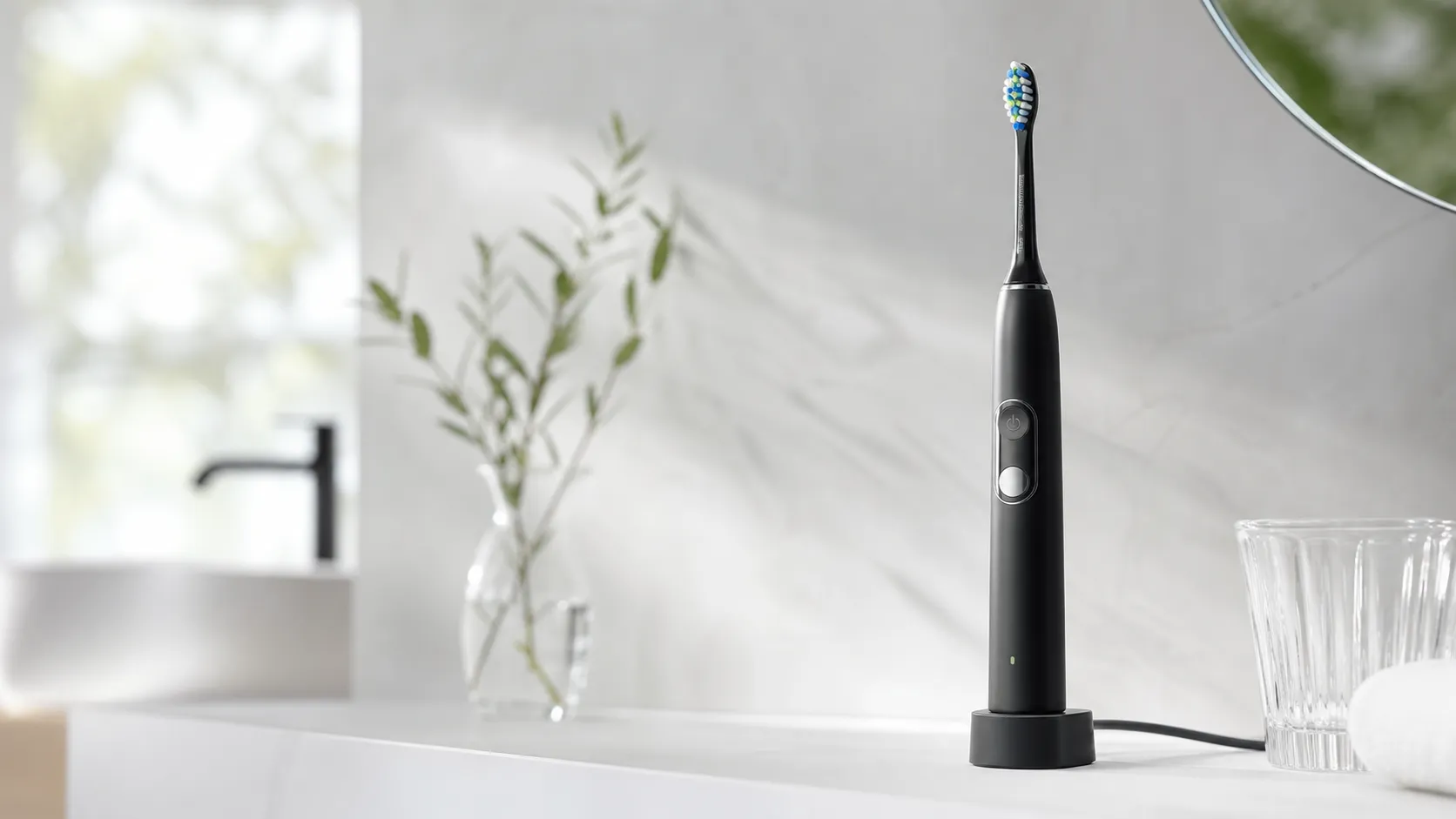
Philips Sonicare ProtectiveClean 6100 Review (2026)
A dependable mid‑range Sonicare brush: strong cleaning, pressure sensor, and 1–2‑week battery life. Great upgrade from manual brushing; watch replacement head costs.
 Health & Wellness
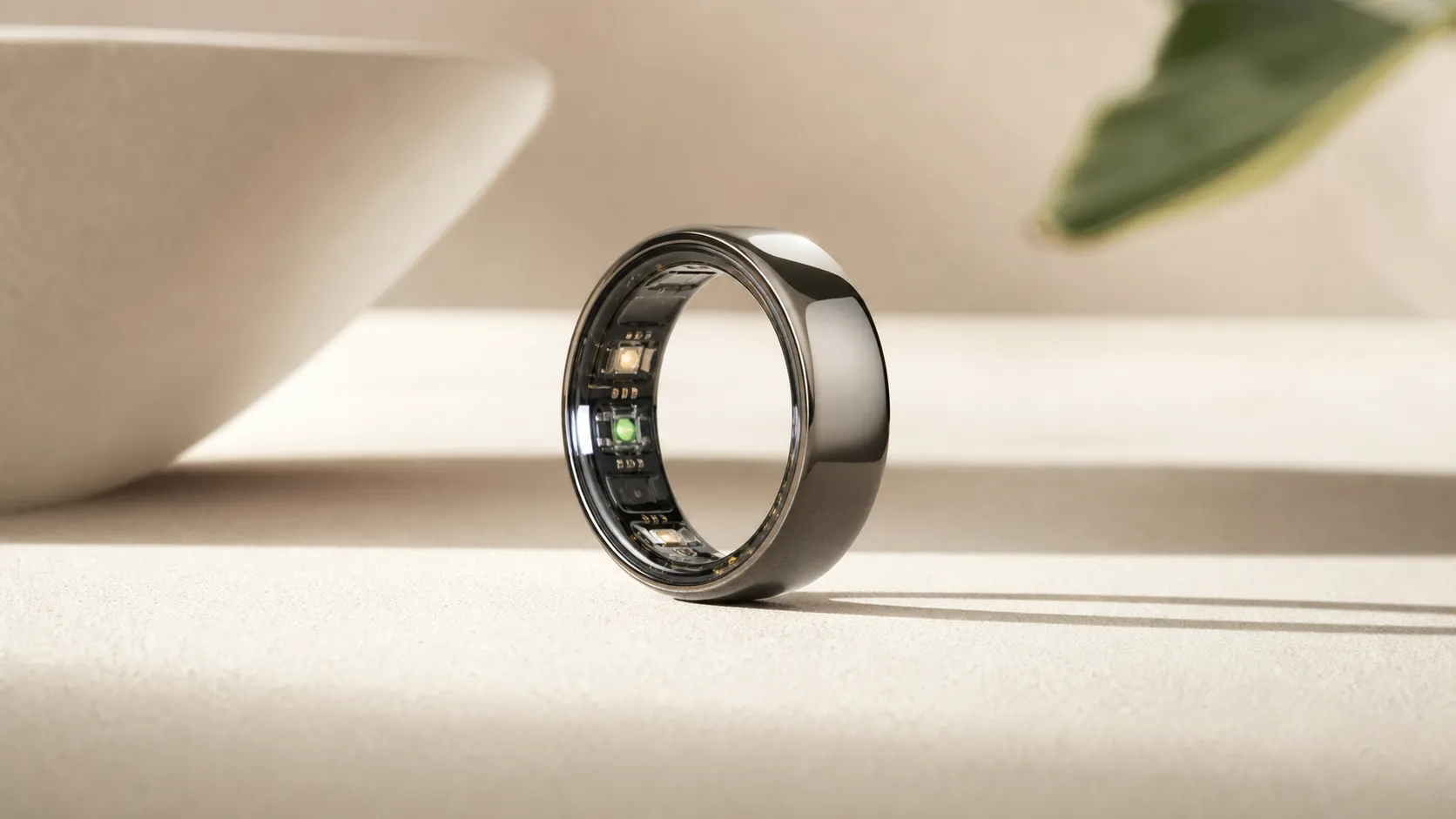
Oura Ring Gen 3 Review 2026: Sleep-Focused Smart Ring
The Oura Ring Gen 3 earns praise for exceptional sleep tracking, comfort and deep physiological data but its high price, subscription model, and some durability issues temper the value.
 Health & Wellness
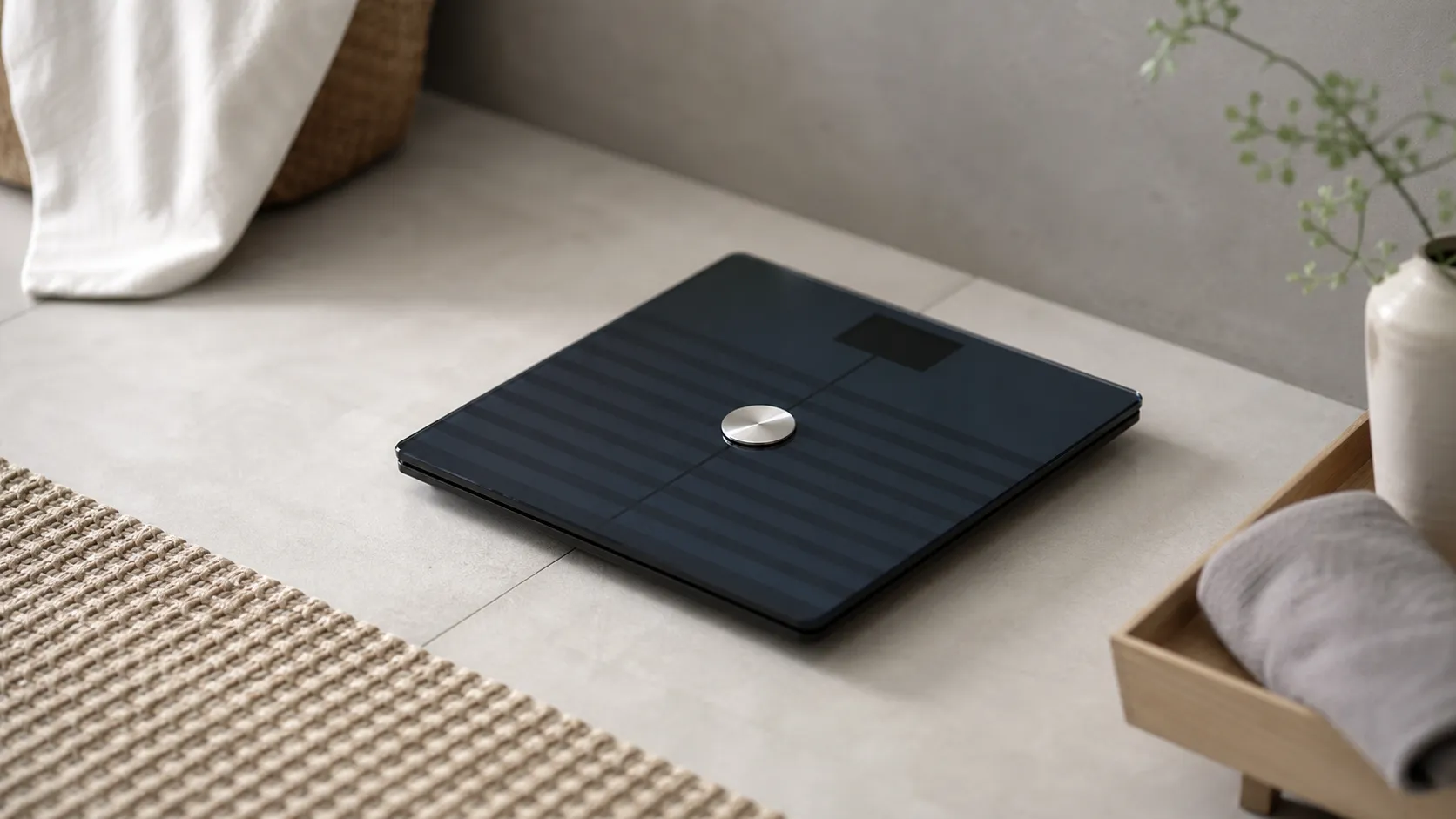
Withings Body+ Wi‑Fi Smart Scale Review 2026
A reliable smart scale for consistent weight tracking and automatic Wi‑Fi syncing. Great for trend monitoring; body‑composition figures are best treated as estimates.