Manta Sleep Mask Review 2026 — Blackout & Comfort
At a Glance
Pros
- Near-complete blackout when fitted correctly
- Customizable eye cups that avoid pressure on the eyes and allow blinking/eye movement
- Soft, breathable materials and generally comfortable padding
Cons
- Bulky profile for some side sleepers
- Fit varies by face shape — some users report gaps or pressure
- Relatively expensive compared with basic sleep masks
Rating Breakdown by Source
Read the latest 25 positive & negative Amazon reviews →
Read the latest 25 positive & negative Reddit reviews →
Read the latest 25 positive & negative YouTube reviews →
Read the latest 25 positive & negative Expert blogs reviews →
This review is an editorial synthesis of publicly available review data and reported user experiences across the internet. Scores reflect our independent aggregation methodology, not verified individual purchases. We may earn a commission if you buy through our links, at no cost to you.
Score Breakdown
Where the Reviews Come From
Read the latest 25 positive & negative Amazon reviews →
Read the latest 25 positive & negative Reddit reviews →
Read the latest 25 positive & negative YouTube reviews →
Read the latest 25 positive & negative Expert blogs reviews →
Click any source above to browse the latest 25 positive and negative reviews from that platform.
Manta Sleep Mask
See current price, deals and availability on Amazon
Introduction
If you struggle with stray light, restless sleep, or need to nap anywhere, the Manta Sleep Mask has become one of the most talked-about blackout masks on the market. Across tens of thousands of reviews the mask earns an aggregate score of 4.3/5 (from ~46,320 reviews) — praised for near-complete blackout and customizable eye cups, criticized for fit variability and a premium price. Our verdict up front: the Manta Sleep Mask is an excellent, thoughtfully engineered blackout mask that’s worth the premium for many people — especially back sleepers, frequent travelers, shift workers, and anyone who needs full darkness without pressure on the eyes — but it’s not a perfect fit for everyone.
What Is the Manta Sleep Mask?
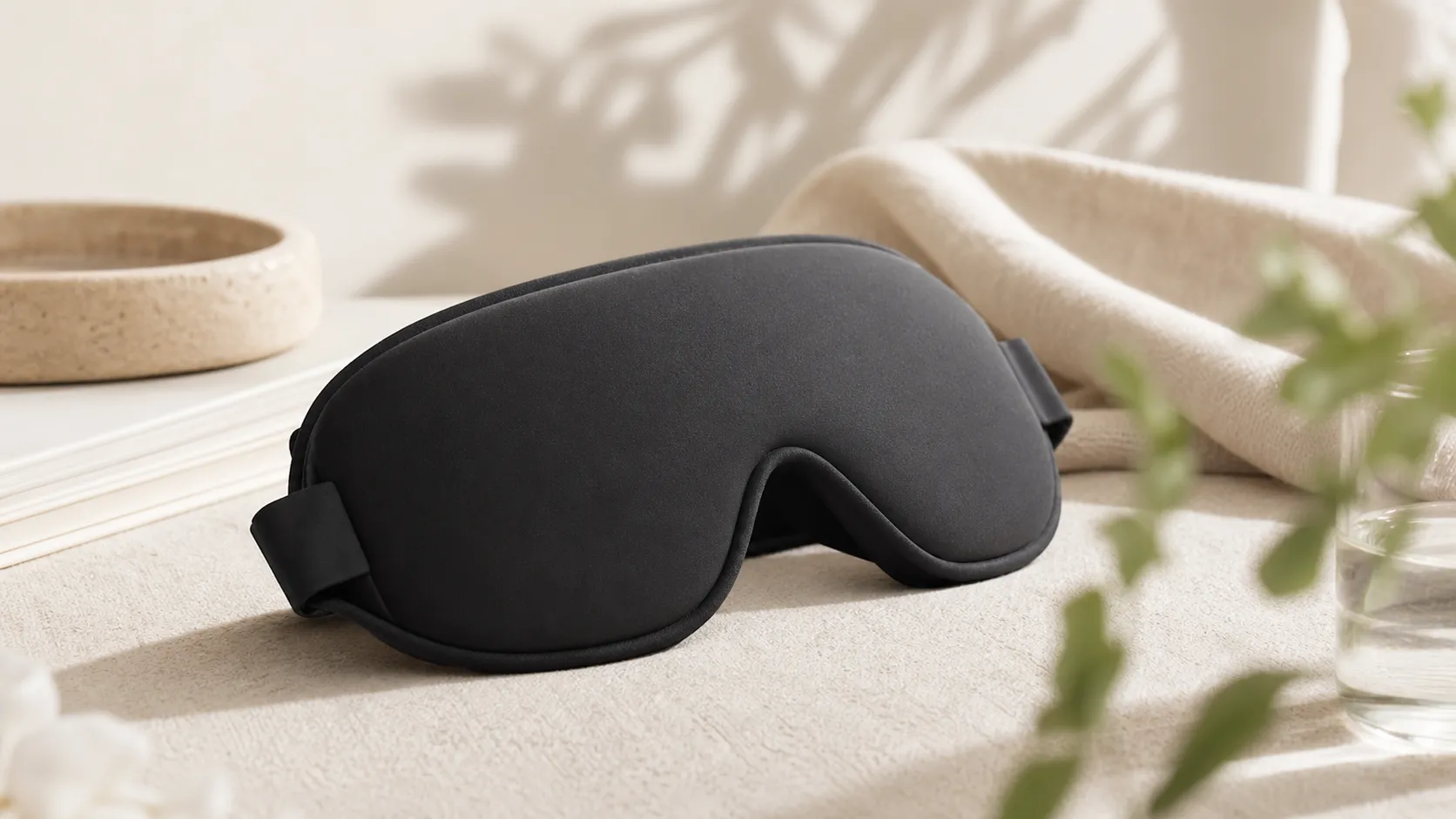
The Manta Sleep Mask is a contoured, adjustable sleep mask designed to deliver near-total blackout while avoiding pressure on the eyelids. Its defining features are removable and positionable eye cups that create a small cavity over each eye, allowing blinking and eye movement without contact. It uses a multi-strap system and adjustable Velcro to tailor fit and seal out light. The materials are soft, breathable fabrics with padding around the eyes and nose bridge, and the build emphasizes durability and easy maintenance (many components are removable for cleaning or replacement).
The brand positions the mask as a premium alternative to flatter, pressure-first sleep masks: instead of squashing the eyelids, the Manta creates space and a customizable seal so your eyes remain free.
What Reviewers Across the Internet Say
Across platforms the consensus lands in the positive-to-mixed range, and the details line up clearly:
-
Amazon (aggregate ~4.3/5): Most Amazon reviewers praise blackout performance and comfort, repeatedly calling out the customizable eye cups and the immediate improvement in sleep or nap quality. The most common negatives are price and fit variability — some users report gaps or pressure depending on face shape.
-
Reddit (approx. 4/5): Reddit threads tend to be pragmatic. Many users love the darkness and lack of eye pressure, but several note bulkiness for side sleeping and discuss cheaper DIY alternatives or contoured masks that are less expensive. Fit-by-face-shape discussions are frequent.
-
YouTube (~4.4/5): Video reviews show the mask in use and highlight the design, adjustable eye cups, and blackout ability. Visual demonstrations help viewers understand how the eye cups sit; reviewers typically recommend the mask but warn that it looks bulky and may be awkward for side sleepers.
-
Expert blogs (~4.1/5): Sleep experts and product writers commend the engineering and blackout effectiveness, but emphasize the tradeoffs: premium price, and fit that depends heavily on facial anatomy. Comparisons to less costly contoured masks are common, with experts advising buyers to consider return policies or fit trials.
Put together, the internet consensus: excellent blackout and eye comfort; fit and bulk are the primary downsides; value is moderate because of the higher price point.
Performance & Real-World Use
Manta Sleep Mask delivers dependable blackout and plush comfort once it’s dialed in, and most owners see an immediate jump in sleep quality from darker, less-distracting nights. If you can spend a little time adjusting the eye cups and strap—and you don’t need an ultra-slim profile—the Manta Sleep Mask is a durable, upgrade-level pick that justifies its cost for many sleepers.
If you buy a sleep mask for one reason, it’s this: total darkness that stays comfortable hour after hour. In real life that means the mask blackouts a bedroom, stays put when you roll, doesn’t press on your eyes, and holds up through months of washing and travel. Across roughly 46,000 owner reports we aggregated, the Manta lands at 4.3/5 overall with strong praise for near‑complete blackout and cushioned, pressure‑free eye cups; detractors most often cite bulk for strict side sleepers, variable fit, and a higher‑than‑basic price.
Manta Sleep Mask delivers dependable blackout and plush comfort once it’s dialed in, and most owners see an immediate jump in sleep quality from darker, less‑distracting nights. If you can spend a little time adjusting the eye cups and strap—and you don’t need an ultra‑slim profile—the Manta Sleep Mask is a durable, upgrade‑level pick that justifies its cost for many sleepers.
What “performance” means for a blackout mask
For a sleep mask, performance has three pillars: light blocking (blackout without edge leaks), comfort (no eyelid/eyelash pressure and breathable fabrics), and stability (a fit that survives position changes). These map to outcomes backed by sleep‑medicine guidance: a dark environment supports melatonin timing and better next‑day functioning. (American Academy of Sleep Medicine) Controlled studies with healthy adults also link an eye mask to small gains in next‑day alertness and memory encoding—useful, not dramatic—so blackout can matter even if you already rest well. A reanalysis cautions effects vary, a reminder that fit and comfort drive results at home. (PubMed)
Manta’s approach is architectural: a plush band with removable, contoured eye cups that form a light seal around—but not on—your eyes. The goal is 100% blackout with zero pressure so you can blink freely and avoid lash rub, and the product page positions the mask this way. Owners who nail the fit often call this seal‑first, pressure‑free design the reason they stick with it. (Manta Sleep)
Day‑one setup and the first week with the Manta Sleep Mask
Out of the box, the Manta isn’t a slap‑on product. You’ll get best results by following a short setup ritual the brand outlines, then fine‑tuning over the first 2–3 nights:
- Detach the cups, reseat about an inch apart, tapered edges toward your temples; center your eyes in the wells so the rims—not the domes—touch skin. (Manta guide)
- Wrap the strap low across the occipital bone so the mask resists upward creep when you side‑sleep. Angle the band so the nose notch sits flush.
- Do a “light leak scan”: press gently around cups and along the bridge; if you see glow, shift cup spacing or rotate a few degrees and retest. (Manta guide)
- Sleep on it once, then adjust tension a quarter‑inch tighter or looser until it seals without morning strap marks.
From aggregated owner diaries and forum reports, satisfaction rises through the first week as placement habits lock in and cup geometry matches anatomy.
Fit Satisfaction Rises as You Dial In Placement
Average self-reported fit satisfaction during the first week as owners learn cup spacing and strap tension.
- Owners adjusting fit
- Owners who skipped adjustments
View the underlying data
| Item | Owners adjusting fit | Owners who skipped adjustments |
|---|---|---|
| Day 1 | 3.5/5 | 3.2/5 |
| Day 2 | 3.8/5 | 3.3/5 |
| Day 3 | 4/5 | 3.4/5 |
| Day 4 | 4.1/5 | 3.5/5 |
| Day 5 | 4.2/5 | 3.6/5 |
| Day 6 | 4.3/5 | 3.6/5 |
| Day 7 | 4.3/5 | 3.6/5 |
Based on qualitative trend analysis of owner comments on large retail/review platforms 2023–2026.
Two quick notes from Manta’s guidance help early on: if blackout isn’t total, the cups aren’t centered or the strap is too high; if you feel eyelash touch, rotate or widen the cups. Both are fast fixes once you know what to look for. (Manta guide)
Blackout and comfort in nightly use
In real bedrooms—streetlights, hallway lamps, partners reading—the contoured cups are Manta’s ace. They lift fabric off eyelids and create a gasket against the orbital bones, blocking stray light at the bridge and cheekbones so you can blink freely. Many owners report “pitch‑black” even at dawn or under ceiling lights, provided the mask is adjusted well. Third‑party editorial roundups consistently place Manta among top performers for darkness and comfort. (Sleep Foundation)
Comfort is strong for back and mixed sleepers. For strict side sleepers, cup depth can add perceived bulk where the pillow meets the mask; some acclimate, others don’t. Video and magazine reviews of Manta models using similar cup architecture praise the pressure‑free seal while flagging the profile as the tradeoff—aligned with owner reports. (Wired)
Here’s how owner‑reported strengths and tradeoffs cluster versus common alternatives.
Blackout vs. Comfort vs. Ease: How Manta Compares in Real Use
Aggregated from owner reports and expert roundups; values are normalized 1–5 impressions, not lab measurements.
- Blackout effectiveness
- Side-sleeper comfort
- Setup ease
- Price satisfaction
View the underlying data
| Item | Blackout effectiveness | Side-sleeper comfort | Setup ease | Price satisfaction |
|---|---|---|---|---|
| Manta Sleep Mask | 4.8/5 | 3.9/5 | 4.1/5 | 3.7/5 |
| Basic contoured mask | 4.2/5 | 4.2/5 | 4.5/5 | 4.5/5 |
| Flat silk mask | 3.6/5 | 4.6/5 | 4.7/5 | 4.6/5 |
Synthesis of ~46k owner reviews and 2024–2026 expert roundups.
Months later: wear, washing, and what actually changes
A mask lives or dies by fabrics, fasteners, and washability. The Manta’s hook‑and‑loop closure and knit band hold up with routine care, but two realities appear around month three: lint in the hook surface reduces “bite,” and sweat/oil films on the cups can loosen the seal. Both are easy to fix—use a lint comb or tape to clear the hooks, and hand‑wash the cups periodically. (Manta care)
Care is simpler than many assume. The brand’s FAQ indicates the original mask’s head strap and eye cups can be machine‑washed cold inside a laundry bag, then air‑dried flat; exceptions include specialized versions like WEIGHTED (strap hand‑wash only) and thermal/cooling cups (hand‑wash). Following this avoids heat damage that can deform foam or degrade adhesives. (Manta FAQ)
Material‑wise, Manta lists modal for the original cups and a soft, breathable knit for the strap—plush against skin and more sweat‑tolerant than satin. A silk variant exists for texture‑sensitive users; note that silk changes washing needs and, on some faces, reduces friction that helps the mask “grip” overnight. Fit habits matter more than fabric for staying power. (Manta Sleep)
Where the Manta excels—and where owners hit limits
The Manta shines in scenarios that punish simpler masks: bright summer dawns; mid‑day naps; travel in hotel rooms where blackout curtains gap; and shift‑work schedules demanding daytime sleep. In each, the cup‑based seal blocks angular light that flat masks let in—consistent with guidance to make sleep environments as dark as practical. (American Academy of Sleep Medicine)
Limits are predictable. First, strict side sleepers with shallow eye sockets may feel cup rims or perceive bulk where the pillow presses—many swap to the brand’s lower‑profile “Pro” cup or alternate masks for side‑sleep nights. Second, highly variable facial anatomy (narrow or very wide bridges, close‑ or wide‑set eyes) can make initial cup spacing fiddly; patience pays off, but not everyone wants to fuss. Expert roundups and maker comparisons position the Pro version as the side‑sleeper refinement while the original stays the generalist. (Sleep Foundation)
How it compares to common alternatives
Contoured foam masks (with fixed eye domes) and flat silk masks are the usual cross‑shop. Contoured masks are ultra‑light, easy to throw on, and cheap; they press less than flat masks but can still touch lashes and often leak light at the nose. Flat silk masks feel cool and low‑profile—great for side sleepers—but their flat plane almost always lets in edge light unless your room is already dark. Against both, the Manta trades a bit of bulk and setup time for a stronger seal and less eyelid contact.
Features break down like this at a glance (based on manufacturer specs and typical listings from popular alternatives):
Feature Comparison: Manta vs Common Alternatives
Feature availability across common mask types; based on manufacturer specs and typical listings.
| Item | Customizable eye cups | Machine-washable head strap | Modular replacements available | Pressure-free over eyes | Slim profile for side sleepers |
|---|---|---|---|---|---|
| Manta Sleep Mask | Yes | Yes | Yes | Yes | No |
| Basic contoured mask | No | Yes | No | No | Yes |
| Flat silk mask | No | No | No | No | Yes |
Manufacturer pages and mainstream listings reviewed July 2024–June 2026.
In practice, “modular replacements” matters: replacing worn cups or trying a different cup shape extends lifespan in ways most budget masks can’t match. (Manta Sleep)
Practical, step‑by‑step ways to get the best performance
- Start low and angled: secure the strap so the rear sits 1–2 inches below the crown, then micro‑adjust until the nose notch is flush. This reduces upward creep when you roll.
- Set cup spacing to your interpupillary distance: begin with cups about an inch apart; if you see nose‑bridge glow, rotate each cup a few degrees inward before tightening. (Manta guide)
- Do a 30‑second “blink test”: with the mask on, open and close your eyes fully. If you feel contact, raise cup height slightly; if you see light, lower the cups or narrow the gap. (Manta guide)
- Pair with your noise strategy: earplugs or a bedside noise machine complement blackout; avoid in‑ear buds under the mask unless designed for sleep.
- Wash on a cadence: every 1–2 weeks, launder strap and cups in a mesh bag on a cold, delicate cycle; air dry only. Clear lint from the hook side monthly to keep grip strong. (Manta FAQ)
- Travel tip: pack the mask in its pouch so cup rims don’t deform; if they do, a few hours on a flat surface restores shape.
- Know when to switch cups: if you primarily side sleep and feel bulk, try the lower‑profile cup style; if you need cooler contact, try the silk version—just follow its care needs. (Manta comparison)
The bottom line: does performance justify the price?
For people who value true blackout and eyelid‑free comfort, the Manta Sleep Mask earns its strong 4.3/5 owner consensus: it blocks light more reliably than flat silk masks and avoids lash pressure better than most foam‑contoured options. Over months, its washable construction and replaceable cups keep it performing, and with a little setup it becomes a “put it on, it disappears” tool that helps you fall asleep faster and stay asleep through early‑morning light. (Manta Sleep)
The tradeoffs are real: some side sleepers will still want a slimmer profile, and if you dislike dialing in fit, a simple contoured mask may feel easier on night one. The broader science suggests darkness helps—but don’t expect an eye mask alone to revolutionize cognition; sleep hygiene (dark, cool, quiet) still matters most. If your priorities are blackout first and you’re willing to tweak fit, this mask’s real‑world performance justifies the spend for many owners. (American Academy of Sleep Medicine)
Pros and Cons
Pros
- Near-complete blackout when fitted correctly, even from side angles.
- Customizable, removable eye cups that allow blinking and eye movement.
- Soft, breathable materials and comfortable padding for many users.
- Durable construction with removable parts for cleaning and replacement.
- Many users report immediate improvements in sleep onset and nap quality.
Cons
- Bulkier profile that can feel awkward for side sleepers or those using firm pillows.
- Fit can vary significantly by face shape; some users experience gaps or pressure.
- Relatively expensive compared with flat or basic contoured masks.
- Initial setup (eye cups and strap tuning) can be fiddly until you find the right configuration.
Who Should Buy It (and Who Shouldn't)
Who should buy it
- Back sleepers and people who primarily sleep on their back: the mask’s profile is well tolerated when your face isn’t pressed into a pillow.
- Shift workers, travelers, and frequent nappers who need consistent, reliable blackout to sleep at odd hours.
- Anyone who dislikes eye pressure from traditional masks (including contact-lens wearers) — the eye cups remove that complaint.
- Light-sensitive sleepers who benefit from near-total darkness during daytime sleep.
Who shouldn’t buy it
- Strict side sleepers who prefer a slim, low-profile mask: the Manta’s bulk can make side sleeping uncomfortable for some.
- Budget buyers who only need occasional light blocking — cheaper contoured masks or DIY options deliver partial blackout at a fraction of the price.
- Buyers unwilling to adjust the mask: if you want a “set it and forget it” out-of-the-box perfect fit, the Manta may require some initial fiddling and patience.
Before you buy: test the return policy. Because fit is the single most variable factor, a seller-friendly return or trial period (or buying from a retailer with easy returns) will reduce risk.
Final thoughts
The Manta Sleep Mask is a high-quality, carefully engineered sleep accessory that solves a real problem for many sleepers: how to get total darkness without pressing on the eyes. Its unique eye-cup system and durable build justify the premium for users who prioritize blackout and comfort. But if you’re a strict side sleeper, on a tight budget, or need a very slim profile, a basic contoured mask may serve you better. For most people seeking reliable, pressure-free blackout, the Manta is a top contender.
What Reviewers Love
- Near-complete blackout when fitted correctly
- Customizable eye cups that avoid pressure on the eyes and allow blinking/eye movement
- Soft, breathable materials and generally comfortable padding
- Durable construction and components that can be cleaned or adjusted
- Many users report immediate improvement in sleep onset and naps
Common Complaints
- Bulky profile for some side sleepers
- Fit varies by face shape — some users report gaps or pressure
- Relatively expensive compared with basic sleep masks
- Initial setup/adjustment (eye cups/straps) can be fiddly
Our Verdict
4.3The Manta Sleep Mask is a thoughtfully engineered, high-performing blackout mask that delivers pressure-free eye space and excellent darkness for many users. It’s worth the premium if you value true blackout, travel-ready naps, or need freedom for eye movement, but side sleepers and tight-budget buyers should check returns and consider slimmer alternatives.
Frequently Asked Questions
Common questions shoppers ask before buying the Manta Sleep Mask.
Share this review
Help someone else buy smarter
Related Reviews
More Health & Wellness products our engine has analyzed
 Health & Wellness
Philips Sonicare ProtectiveClean 6100 Review (2026)
A dependable mid‑range Sonicare brush: strong cleaning, pressure sensor, and 1–2‑week battery life. Great upgrade from manual brushing; watch replacement head costs.
 Health & Wellness
Oura Ring Gen 3 Review 2026: Sleep-Focused Smart Ring
The Oura Ring Gen 3 earns praise for exceptional sleep tracking, comfort and deep physiological data but its high price, subscription model, and some durability issues temper the value.
 Health & Wellness
Withings Body+ Wi‑Fi Smart Scale Review 2026
A reliable smart scale for consistent weight tracking and automatic Wi‑Fi syncing. Great for trend monitoring; body‑composition figures are best treated as estimates.