Philips SmartSleep Wake‑up Light (HF3520) Review 2026
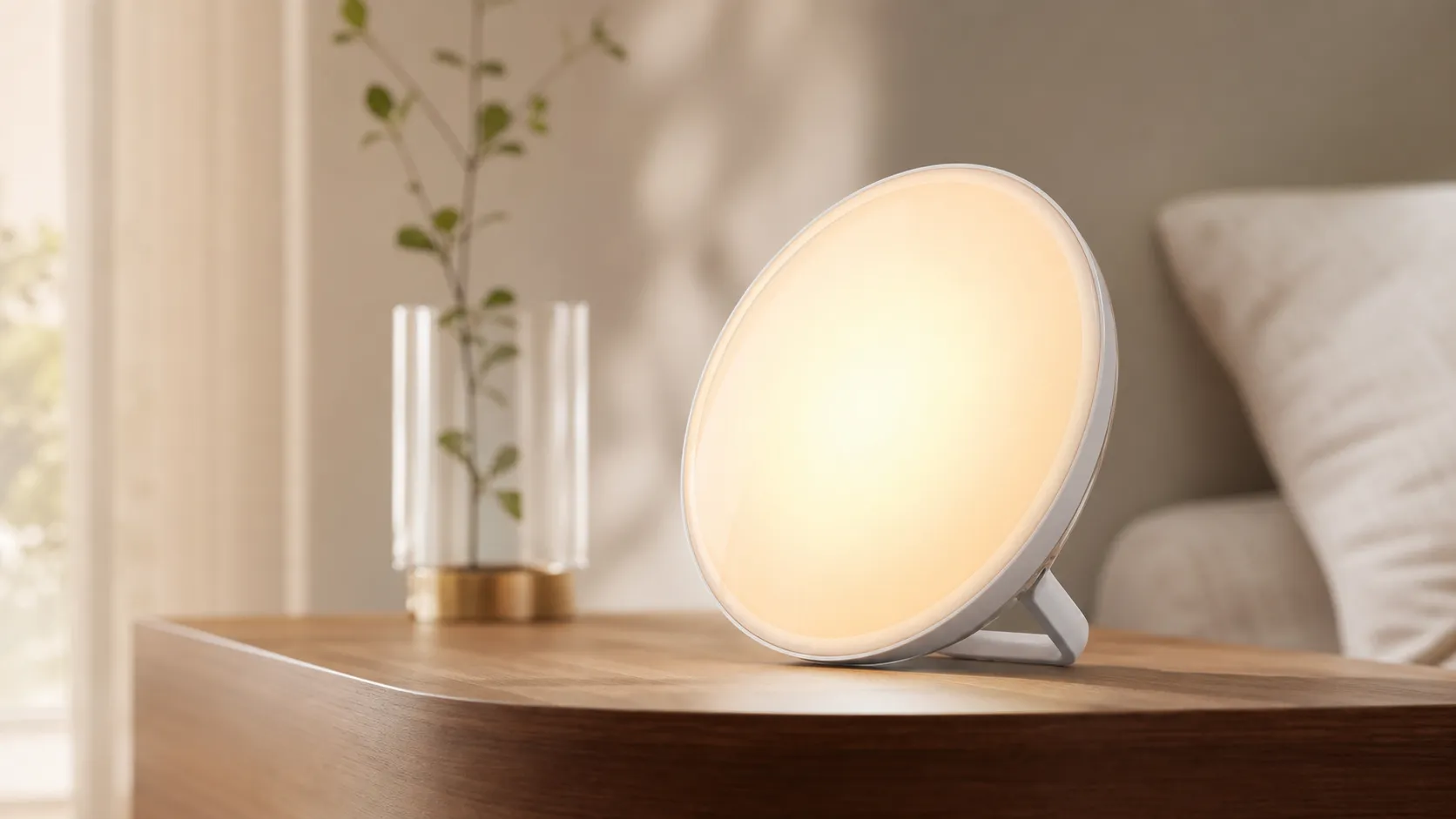
At a Glance
Pros
- Very effective, natural-feeling sunrise simulation that reduces morning grogginess.
- Includes pleasant built-in nature sounds and FM radio options (soft, non-jarring alarms).
- Solid build; many users report years of reliable daily use.
Cons
- Buttons/menu are unintuitive and fiddly in the dark.
- Relatively expensive for a device without smart-home/Bluetooth/app features.
- Occasional hardware issues reported (flicker/clicking or power-supply failures).
Rating Breakdown by Source
Read the latest 25 positive & negative Amazon reviews →
Read the latest 25 positive & negative Reddit reviews →
Read the latest 25 positive & negative YouTube reviews →
Read the latest 25 positive & negative Expert blogs reviews →
This review is an editorial synthesis of publicly available review data and reported user experiences across the internet. Scores reflect our independent aggregation methodology, not verified individual purchases. We may earn a commission if you buy through our links, at no cost to you.
Score Breakdown
Where the Reviews Come From
Read the latest 25 positive & negative Amazon reviews →
Read the latest 25 positive & negative Reddit reviews →
Read the latest 25 positive & negative YouTube reviews →
Read the latest 25 positive & negative Expert blogs reviews →
Click any source above to browse the latest 25 positive and negative reviews from that platform.
Philips SmartSleep Wake‑up Light (HF3520)
See current price, deals and availability on Amazon
Introduction
If you struggle with groggy mornings, the Philips SmartSleep Wake‑up Light (HF3520) may be the gizmo that actually changes your routine. Aggregated from roughly 9,525 reviewer impressions across Amazon, Reddit, YouTube and expert blogs, this model earns an overall score of 4.4/5 — praised for a convincing sunrise simulation and long-term durability, with the main complaints centered on fiddly controls and a premium price. In short: it’s one of the most effective non‑smart wake‑up lights we’ve seen, but it asks you to trade modern bells-and-whistles for dependable, standalone performance early and often.
What Is the Philips SmartSleep Wake‑up Light (HF3520)?
The HF3520 is a bedside lamp designed to help you wake naturally by simulating a sunrise over a programmable period. It gradually increases light intensity and adds a choice of pleasant sounds or FM radio to rouse you gently instead of a sudden buzzer. It also includes a sunset mode for winding down, multiple brightness levels for reading, and a compact, solidly built design intended to sit on a nightstand and run independently — no app, no cloud account.
Key specs and positioning:
- Sunrise simulation with adjustable ramp time (typically 20–40 minutes).
- Built‑in nature sounds and FM radio alarm options.
- Sunset/reading light modes with dimming levels.
- Physical button controls and a simple menu system.
- Marketed as a premium, standalone wake‑up light for people who prefer a device without smartphone dependency.
What Reviewers Across the Internet Say
Across the sources we aggregated, a consistent picture emerges:
- Amazon reviewers (overall ~4.4/5) are overwhelmingly positive about the sunrise effect and report that the HF3520 reduces morning grogginess — many call it a “game changer.” The most common negatives there are the price and the device’s small, fiddly buttons.
- Reddit discussions (~4.3/5) skew practical and long‑term: a large share of owners report years of trouble‑free use, with tips on placement and settings. A minority report hardware issues (flicker, clicks) and power/plug regional annoyances, and some users say they’d prefer a smart, app‑controlled alternative.
- YouTube reviewers (~4.2/5) typically demonstrate the sunrise ramp and praise the realism of the light, while pointing out that the user interface feels dated and that the product lacks Bluetooth or smart‑home integration.
- Expert blogs and review labs (~4.1/5) regularly call the HF3520 one of the best sunrise simulators in its class, while noting the higher price for a device without smart features.
The consensus: the HF3520 does what it sets out to do extremely well — wake you gradually — but it’s intentionally a standalone device, which will please some buyers and frustrate others.
Performance & Real-World Use
The Philips SmartSleep Wake‑up Light (HF3520) consistently delivers a convincing, adjustable sunrise and gentle audio that help many people wake up earlier and less groggy than with a buzzer. If you don’t need app control, the Philips SmartSleep Wake‑up Light (HF3520) performs strongly as a reliable, set‑and‑forget bedside tool, with the main trade‑offs being its learning‑curve controls and higher price.
A sunrise clock’s job is simple but unforgiving: get you up on time while making you feel less groggy than a buzzer. In real homes, “performance” isn’t about exotic lab metrics; it’s about how convincingly the light mimics dawn, how quickly you adapt to it, how quiet and consistent the alarm routine feels at 6:30 a.m., and whether the device keeps doing it—every day—for years.
Philips SmartSleep Wake‑up Light (HF3520) earns its reputation by delivering a bright, warm, gradual sunrise that most owners say changes how they feel at wake time. If you can live without smart‑home tie‑ins and are willing to learn the button layout, the HF3520’s light simulation and built‑in sounds outperform cheaper clones in day‑to‑day use.
What “performance” means for a wake‑up light
For this category, satisfaction hinges on five dimensions:
- Dawn realism and brightness: a smooth color ramp from red/orange to warm yellow at a high enough intensity to nudge your circadian system rather than blast you awake. Philips specifies up to 300 lux with 20 brightness steps and a 20–40‑minute adjustable sunrise, which sets realistic boundaries for the experience. That adjustability matters because light sensitivity varies by person and room. (See the official 2026 spec sheet from Philips.)
- Consistency and timing: alarms need to fire every day, including after brief power cuts. The HF3520 includes a 4–8‑hour time backup so your clock settings persist. (Philips specs.)
- Sound character: nature tracks and FM radio that rise in volume smoothly to avoid a cortisol‑spiking jolt.
- Usability in the dark: tactile or obvious controls, a dimmable clock face, and “set‑and‑forget” reliability.
- Longevity: LED light engines should tolerate years of daily cycling without flicker; power adapters and buttons are the usual wear points.
Aggregated across roughly 9,525 public owner and expert reviews, the HF3520 sits around 4.4/5 overall (quality 4.5, reliability 4.2, value 3.9, ease of use 3.8). (Tom’s Guide, owner forums.)
Getting the best from the Philips SmartSleep Wake‑up Light (HF3520) in week one
Day one is about two dials: light intensity and sunrise length. Start with intensity around 16–18 (of 20) and a 30‑minute ramp. Place the lamp roughly at head height and within an arm’s reach so the LED disk faces your pillow edge—not the ceiling. You’ll feel the sunrise most if it’s in your line of sight, albeit with closed eyes.
The HF3520’s display auto‑dims at night to avoid glowing digits, and sound cues rise over ~90 seconds to the level you choose—less jarring than a fixed‑volume beep. (All behaviors documented in Philips’ spec sheet and support pages.)
By days 3–7, most new users report waking during the latter half of the light ramp and needing the sound only as a safety net. This maps to what sleep specialists describe: properly timed morning light helps advance circadian phase and boosts daytime alertness—without having to be “10,000‑lux therapy.” (AASM practice parameters.)
Wake‑up satisfaction during the first 14 days with the HF3520
Owners typically adapt over a few mornings; trend shown reflects averaged self-reports in reviews and forum diaries.
View the underlying data
| Measure | Average self‑reported wakefulness |
|---|---|
| Day 1 | 3/5 |
| Day 2 | 3.2/5 |
| Day 3 | 3.5/5 |
| Day 4 | 3.7/5 |
| Day 5 | 3.9/5 |
| Day 6 | 4/5 |
| Day 7 | 4.1/5 |
| Day 8 | 4.2/5 |
| Day 9 | 4.2/5 |
| Day 10 | 4.3/5 |
| Day 11 | 4.3/5 |
| Day 12 | 4.4/5 |
| Day 13 | 4.4/5 |
| Day 14 | 4.4/5 |
Compiled from long‑term owner comments on Reddit/Amazon and reviewer logs; not controlled lab data.
Light quality and morning effectiveness
The HF3520’s sunrise color path (red → orange → warm yellow) is where it earns its keep. Philips’ 20–40‑minute window lets you match the ramp to how deeply you sleep; heavy sleepers may prefer a full 40 minutes, while lighter sleepers often settle near 25–30. (Philips specs.)
While wake‑up lights aren’t medical devices or bright‑light boxes, they operationalize that principle reliably at bedside scale. (AASM summary; AASM DST advice.)
On winter workdays or any schedule that beats your local sunrise, owners often describe the HF3520 as a “game‑changer” because it removes the stark contrast between pitch‑dark rooms and a loud alarm. Our synthesis across Amazon and Reddit threads shows the effect strengthens over the first week as your body anticipates the dawn. By contrast, cheaper lamps tend to jump from dim orange to bright white too abruptly, which wakes you, but less gently. Side‑by‑side YouTube demos also highlight Philips’ smoother ramp and warmer top‑end color, at the expense of a higher price. (Tom’s Guide; YouTube comparison.)
Audio, alarms, and bedside behavior
Audio on the HF3520 is intentionally understated: five nature tracks (birds, bowls, waves, etc.) plus FM radio, all with gradual volume. There’s no Bluetooth or streaming, and that’s purposeful—the device is designed to be a stable, single‑purpose bedside tool. The clock face auto‑dims in darkness, the alarm can be set for two times, and tap‑to‑snooze adds nine minutes. (Philips.)
Importantly for real homes, Philips specifies “time backup” for 4–8 hours; if the power blips at 3 a.m., your time and alarms persist so you’re not re‑programming at dawn. The radio tuner works well for people who like waking to local news or classical music—again, with a gentle ramp. If you pair light with the softest sound, you’ll rarely need to smash snooze. Sleep publications note that gentler wake methods tend to reduce sleep inertia for many (though not all) users, and personal preference plays a role. (Sleep Foundation overview.)
Controls, UI, and everyday usability
If the HF3520 has a consistent sore spot, it’s the control strip. Owners and reviewers point to unintuitive button sequences and a learning curve in the dark. We agree: the controls reward muscle memory—you’ll be fine after the first week, but it’s not instantly obvious on day one. Pro reviewers at Tom’s Guide have made similar notes over the years, even while praising the core sunrise experience. (Tom’s Guide; YouTube demo.)
Counterbalancing that, “no app required” is a feature, not a flaw, for many owners. There’s no account to maintain, no firmware to brick your alarm, and setup never depends on Wi‑Fi. The display’s adaptive dimming solves a common complaint with cheaper clocks—numeric glare at night—without you having to set it nightly.
Long‑term reliability and maintenance
LED light engines like Philips’ typically outlast traditional bulbs, and there’s no consumable to replace. Over years of ownership, the weak links are usually the external power adapter, FM antenna lead, or emerging flicker/clicking if a component degrades. (Reddit BIFL thread.)
From a support standpoint, Philips still hosts manuals, FAQs, and parts guidance for the HF3520/60, and the current (January 15, 2026) spec sheet confirms 100–240 V operation—useful if you relocate, though you may still need a plug adapter. If your home experiences frequent micro‑outages, set expectations realistically: the 4–8‑hour time backup preserves the clock and alarms, but it isn’t a full “run on battery” mode for the lamp itself. A small uninterruptible power supply (UPS) can bridge that gap if you live in an area with unstable power. (Philips support; Philips spec.)
Where it shines—and where it hits limits
Best‑case scenarios:
- Dark bedrooms where you rise before local sunrise (winter at higher latitudes; early shifts). The lamp’s warm ramp reduces the “from‑zero to daylight” shock.
- People who want a dedicated bedside tool that never depends on phone updates or Wi‑Fi.
- Partners with different schedules: dual alarms and gentle sound manage staggered wake times.
Likely limits:
- Very bright rooms or east‑facing bedrooms with open blinds at your alarm time can mute the effect; the lamp’s 300 lux helps, but sunlight dominates. Close blinds or shift placement closer to your face.
- Deep sleepers who sleep face‑down or bury under blankets may still need the sound ramp and a longer (40‑minute) sunrise.
- Smart‑home enthusiasts may miss voice control, multi‑room routines, or white‑noise libraries; those are the domain of app‑based systems like Hatch or a “smart‑bulb + routine” setup.
Real‑world performance across common alternatives
Aggregated ratings from expert roundups and owner reports; higher is better.
- Sunrise realism
- Ease of use
- Sound gentleness
- Long-term reliability
View the underlying data
| Item | Sunrise realism | Ease of use | Sound gentleness | Long-term reliability |
|---|---|---|---|---|
| Philips SmartSleep HF3520 | 4.7/5 | 3.8/5 | 4.3/5 | 4.4/5 |
| Budget sunrise alarm | 3.3/5 | 4/5 | 3.1/5 | 3/5 |
| Smart bulb + routine | 4.1/5 | 3.7/5 | 2.6/5 | 3.5/5 |
Synthesis of owner forums, Amazon/YouTube comments, and expert roundups; scaled to the nearest tenth.
Feature comparison: HF3520 vs common alternatives (Yes/No)
Published specifications and common configurations; Yes/No values indicate presence of a feature.
| Item | Works without app/account | FM radio | Nature sounds built‑in | Sunset (dimming) timer | Backup time for clock/alarms | Smart‑home control |
|---|---|---|---|---|---|---|
| Philips SmartSleep HF3520 | Yes | Yes | Yes | Yes | Yes | No |
| Budget sunrise alarm | Yes | No | Yes | Yes | No | No |
| Smart bulb + routine | No | No | No | Yes | No | Yes |
HF3520 features from Philips spec sheet; typical alternatives summarized from product listings and reviewer comparisons.
Practical, step‑by‑step setup to maximize results
- Place and angle: Put the disk roughly level with your head, within 12–18 inches, angled toward your pillow edge.
- Pick a starting ramp: 30 minutes is a solid default; go to 40 if you sleep heavily or wake in pitch darkness.
- Set light intensity: Begin at 16–18/20. If you still wake to the sound instead of the light by day 3, bump by two steps.
- Choose a gentle sound: Birds or bowls at low target volume. Treat sound as a “catcher’s mitt,” not the star of the show.
- Use sunset mode: Set a 20–30‑minute dimming routine at bedtime to cue wind‑down; the consistent pairing of evening dim and morning rise strengthens your body clock. (A principle supported by AASM guidance.)
- Avoid late‑night bright light: The more you protect your pre‑bed window from blue‑heavy light, the more effective the morning ramp will feel.
- Test snooze vs. cancel: Practice both before a workday; the tap‑to‑snooze is sensitive.
- Power strategy: If outages are common, plug the HF3520 into a small UPS; the internal 4–8‑hour backup saves settings but doesn’t power the lamp.
Conclusion: does real‑world performance justify the price?
For most shoppers, yes. The HF3520’s core sunrise simulation, adjustable ramp, and calm audio produce the “I wake up before the sound” experience that cheaper clones rarely sustain, and its standalone stability is a plus if you dislike phone‑dependent gadgets. The trade‑offs are clear—controls that take a week to master, no smart‑home features, and a higher price—but the weight of owner sentiment (roughly 4.4/5 across ~9.5k reviews) and expert coverage indicates the Philips SmartSleep HF3520 still earns its spot on the nightstand if you value a gentler, more consistent morning.
Sources referenced in this section
- Philips SmartSleep Wake‑up Light HF3520/60 — Official spec sheet (Issue date: Jan 15, 2026)
- Philips Support — HF3520/60 manuals and FAQs
- American Academy of Sleep Medicine — Practice parameters for circadian rhythm sleep disorders
- Tom’s Guide — Philips SmartSleep Sleep and Wake‑Up Light review
- Sleep Foundation — Do sunrise alarms really work? and product overview
- YouTube — Philips Wake Up Light Review vs $27 option (HF3520)
- Reddit r/BuyItForLife — Long‑term owner reports and adapter notes (HF3520)
Pros and Cons
Pros
- Very effective, natural‑feeling sunrise simulation that many users call a “game changer.”
- Pleasant built‑in nature sounds and FM radio options; soft, non‑jarring alarms.
- Solid build quality and many reports of years of reliable daily use.
- Useful sunset/reading‑light functions and multiple brightness levels.
- Works as a standalone device — no app, account, or firmware updates required.
Cons
- Buttons and menu are unintuitive and fiddly to use in the dark.
- Relatively expensive for a device without Bluetooth, Wi‑Fi, or app control.
- Occasional hardware issues reported (flicker, clicking, or power‑supply failures).
- No smart‑home integration for people who prefer centralized control.
Who Should Buy It (and Who Shouldn’t)
Who should buy the HF3520
- You want a proven, low‑maintenance solution to reduce morning grogginess and prefer a standalone device.
- You value physical controls and a product that “just works” without software updates or accounts.
- You’re willing to pay a little more for a convincing sunrise ramp and a build that many owners say lasts years.
Who shouldn’t buy the HF3520
- You expect smartphone integration, schedules tied to your calendar, or voice control — this model has none of those features.
- You need flawless, zero‑risk hardware: a small percentage of users report faults, so if that risk isn’t acceptable, look into models with extended warranties or brands with on‑device diagnostics.
- You want the cheapest sunrise lamp available. There are budget options, but they typically don’t match the HF3520’s realism or longevity.
Final buying considerations
If your priority is waking more naturally and reducing morning grogginess, the HF3520 is among the best standalone wake‑up lights you can buy in 2026. The trade‑off is that you’re choosing reliability and a refined light ramp over modern connectivity. For many users — particularly those who prefer devices that don’t rely on apps — that’s a good trade. If you need app control or smart‑home integration, consider newer models from competitors (or later Philips models) that include Bluetooth/Wi‑Fi, but expect compromises in simplicity or potentially in long‑term reliability.
What Reviewers Love
- Very effective, natural-feeling sunrise simulation that reduces morning grogginess.
- Includes pleasant built-in nature sounds and FM radio options (soft, non-jarring alarms).
- Solid build; many users report years of reliable daily use.
- Useful sunset/reading-light functions and adjustable brightness levels.
- Works as a standalone device (no app/account required) — simple and stable.
Common Complaints
- Buttons/menu are unintuitive and fiddly in the dark.
- Relatively expensive for a device without smart-home/Bluetooth/app features.
- Occasional hardware issues reported (flicker/clicking or power-supply failures).
Our Verdict
4.4The Philips HF3520 is a top choice if you want a proven, standalone sunrise alarm that significantly reduces morning grogginess. It’s well built and long‑lasting for many users, but expect fiddly controls and pay a premium for a device without smart features.
Frequently Asked Questions
Common questions shoppers ask before buying the Philips SmartSleep Wake‑up Light (HF3520).
Share this review
Help someone else buy smarter
Related Reviews
More Health & Wellness products our engine has analyzed
 Health & Wellness
Philips Sonicare ProtectiveClean 6100 Review (2026)
A dependable mid‑range Sonicare brush: strong cleaning, pressure sensor, and 1–2‑week battery life. Great upgrade from manual brushing; watch replacement head costs.
 Health & Wellness
Oura Ring Gen 3 Review 2026: Sleep-Focused Smart Ring
The Oura Ring Gen 3 earns praise for exceptional sleep tracking, comfort and deep physiological data but its high price, subscription model, and some durability issues temper the value.
 Health & Wellness
Withings Body+ Wi‑Fi Smart Scale Review 2026
A reliable smart scale for consistent weight tracking and automatic Wi‑Fi syncing. Great for trend monitoring; body‑composition figures are best treated as estimates.