Philips Sonicare ProtectiveClean 4100 Review 2026
At a Glance
Pros
- Consistently reported effective plaque removal compared with manual brushing
- Long battery life that typically lasts weeks between charges
- Built-in pressure sensor helps avoid over‑brushing and protects gums
Cons
- Replacement brush heads are relatively expensive and add to long‑term cost.
- Fewer cleaning modes/features than higher‑end Sonicare models (limited customization).
- A minority of users report durability/handle issues after a year or two of use.
Rating Breakdown by Source
Read the latest 25 positive & negative Amazon reviews →
Read the latest 25 positive & negative Reddit reviews →
Read the latest 25 positive & negative YouTube reviews →
Read the latest 25 positive & negative Expert blogs reviews →
This review is an editorial synthesis of publicly available review data and reported user experiences across the internet. Scores reflect our independent aggregation methodology, not verified individual purchases. We may earn a commission if you buy through our links, at no cost to you.
Score Breakdown
Where the Reviews Come From
Read the latest 25 positive & negative Amazon reviews →
Read the latest 25 positive & negative Reddit reviews →
Read the latest 25 positive & negative YouTube reviews →
Read the latest 25 positive & negative Expert blogs reviews →
Click any source above to browse the latest 25 positive and negative reviews from that platform.
Philips Sonicare ProtectiveClean 4100 Electric Toothbrush
See current price, deals and availability on Amazon
Intro
If you want an electric toothbrush that mostly gets the job done without fuss or flashy extras, the Philips Sonicare ProtectiveClean 4100 is one of the most straightforward, well-reviewed options on the market. Aggregated across tens of thousands of user reviews and expert write-ups, the 4100 earns a solid overall rating (about 4.5/5) for delivering noticeably better cleaning than a manual brush, long battery life, and simple, gum-friendly features — all at an attainable price. Our verdict up front: this is one of the best value entry-level sonic toothbrushes for people who want reliable cleaning and low maintenance rather than a feature-packed model.
What Is the Philips Sonicare ProtectiveClean 4100 Electric Toothbrush?
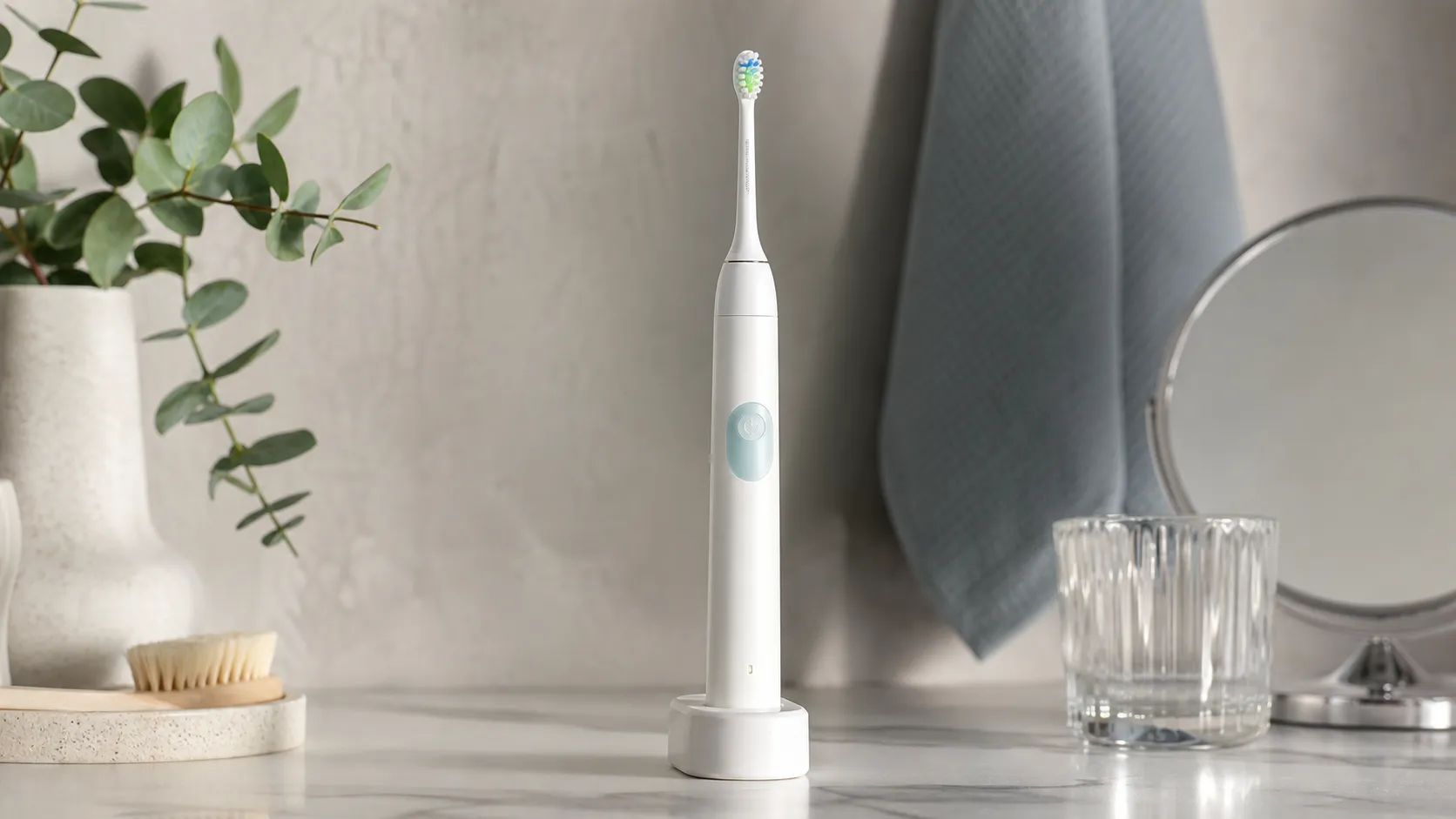
The ProtectiveClean 4100 is Philips Sonicare’s entry-level sonic power toothbrush aimed at users upgrading from a manual brush or anyone who prioritizes ease-of-use and gentle gum care. It uses Sonicare’s high-frequency brush motion (sonic brushing) rather than the rotating-oscillating action used by some competitors. Key features include one (main) cleaning mode, a built-in pressure sensor to warn against hard brushing, a two-week (or longer in real use) battery life, and compatibility with the brand’s range of snap-on replacement heads.
Positioned below Philips’ mid- and high-end models, the 4100 strips away extras like multiple cleaning modes, smart Bluetooth pairing, and travel timers beyond the standard quadpacer and 2-minute timer. That simplicity is intentional: the 4100 offers sonic cleaning performance that reviewers say is a clear upgrade over manual brushing without the cost or complexity of premium models.
What Reviewers Across the Internet Say
When we synthesize feedback from multiple sources, a consistent picture emerges:
- Amazon (overall ~4.6/5): Amazon buyers overwhelmingly praise the 4100’s cleaning effectiveness, battery life, and value. Many describe it as a reliable, everyday upgrade from a manual brush — especially for people new to electric toothbrushes.
- Reddit (~4.1/5 consensus): Reddit threads are a bit more mixed. Users appreciate the gentle feel and battery performance but often compare it to Oral‑B’s oscillating heads and to higher‑end Sonicare models. Discussions focus on long‑term cost of replacement heads and sometimes durability concerns after a year or two.
- YouTube (~4.2/5 consensus): Video reviewers demonstrate strong plaque-removal and gum-care benefits and like the simplicity. Critics point out the lack of extra modes and mention the brushing sensation can feel less forceful than oscillating brushes, which some users prefer.
- Expert blogs (~4.3/5 consensus): Dental and tech blogs generally recommend the 4100 as a solid, evidence-backed sonic option for most users. Experts highlight it as a dependable value pick with useful safety features (e.g., pressure sensor) but note it isn’t feature-rich.
Across sources the numeric sub-scores cluster around: quality 4.4, reliability 4.3, value 4.5, and ease of use 4.7. That translates to a consistent consensus: effective, easy, and good value, with predictable trade-offs around customization, replacement head costs, and occasional durability reports.
Performance & Real-World Use
The Philips Sonicare ProtectiveClean 4100 Electric Toothbrush consistently delivers a stronger, gentler clean than a manual brush and pairs it with truly low‑maintenance ownership: a two‑minute timer and pressure alerts that keep technique honest, plus a battery that typically runs for weeks between charges. If you’re fine with one mode and the ongoing cost of genuine heads, the Philips Sonicare ProtectiveClean 4100 Electric Toothbrush is one of the most reliable everyday upgrades you can make for your oral‑care routine.
A toothbrush’s performance shows up in the mirror, not the spec sheet. For an everyday electric brush like the ProtectiveClean, what owners really notice is whether plaque lifts more easily than with a manual brush, whether gums feel protected, and whether the handle simply works without constant charging or fiddly settings. Over weeks and months, consumables (heads) and small ergonomic touches (timers, pacing, pressure cues) matter as much as the motor.
The Philips Sonicare ProtectiveClean 4100 Electric Toothbrush consistently delivers a stronger, gentler clean than a manual brush, goes weeks between charges, and keeps you honest with a two‑minute timer and pressure alerts. If you’re fine with one cleaning mode and the long‑term cost of genuine brush heads, the Philips Sonicare ProtectiveClean 4100 Electric Toothbrush balances real‑world effectiveness, simplicity, and value.
What “performance” really means for an electric toothbrush
For this category, performance breaks into six dimensions you can actually feel:
- Plaque removal: how smooth teeth feel after two minutes and how buildup recedes over a few weeks.
- Gum comfort and protection: whether bristles and pressure control avoid abrasion while cleaning the gumline.
- Guidance: timers, quadrant pacing, and reminders that help you hit two minutes, twice daily—an evidence‑based baseline from the American Dental Association. (ada.org)
- Battery and charging: time between charges, how long a full charge takes, and whether performance sags as the battery depletes.
- Reliability: month‑to‑month consistency of the motor and electronics.
- Ownership costs: replacement‑head cadence and price, since heads should be swapped every three to four months. (ada.org)
On those measures, the 4100 favors a focused formula: one Clean mode, a built‑in pressure sensor that pulses when you press too hard, a two‑minute SmarTimer with 30‑second QuadPacer, and a battery advertised for about two weeks per charge. Philips also emphasizes a “sonic” motion around 31,000 bristle movements per minute that stirs fluid to lift plaque. (usa.philips.com)
Setup and first‑week experience with the Philips Sonicare ProtectiveClean 4100 Electric Toothbrush
Day one is straightforward. Attach the included C2 plaque‑control head, seat the handle on the charger, and give it a long first charge—Philips documentation notes it can take up to 24 hours to fully top off; you can brush sooner, but a complete initial charge sets realistic runtime expectations. (manuals.plus)
Two features shape the first week. Easy‑Start gradually ramps power over the first 14 uses so new electric‑brush users aren’t overwhelmed—useful if you’re transitioning from a manual brush or have sensitive gums. The pressure sensor pulses to cue a lighter touch if you bear down; combined with the 30‑second QuadPacer tones, it nudges even coverage and a full two minutes, aligning with ADA guidance. (acc.usa.philips.com)
What you feel in week one is that “just‑polished” glide when the timer sounds and, for many, less aggression at the gumline than with some oscillating brushes. If the sensation seems ticklish at first, let Easy‑Start finish; most people adapt within a few days.
Cleaning effectiveness and gum protection: how the 4100 achieves results
Powered brushes have an evidence base. The Cochrane Collaboration’s review found powered toothbrushes reduce plaque and gingivitis more than manual brushing—about 11% less plaque at one to three months and 21% less beyond three months—when people use them consistently. Timers and pacing help with that consistency. (pmc.ncbi.nlm.nih.gov)
The 4100 uses rapid, side‑to‑side motion around 31,000 movements per minute, which Philips says creates micro‑fluid agitation that reaches slightly beyond the bristles. Paired with a tapered plaque‑control head, many users report smoother enamel after a standard two‑minute session. (usa.philips.com)
There are trade‑offs versus oscillating‑rotating competitors (e.g., Oral‑B). A Cochrane analysis comparing types suggests rotation‑oscillation designs can have a small edge in plaque reduction in some trials, though results vary and correct technique matters more than raw motion type. If you prefer the “polishing” feel of a round‑head Oral‑B, that preference may matter as much as the numbers. (cochrane.org)
Battery life, charging routine, and month‑to‑month reliability
The 4100’s headline convenience is time between charges. Philips lists “up to two weeks,” which matches many owners who travel charger‑free for a while. A full top‑off can take up to 24 hours; that’s typical for simple induction bases that favor gentle rates over speed. (usa.philips.com)
Charge‑and‑runtime claims make more sense in context. Oral‑B’s Pro 1000, with a different drive and a nickel‑metal hydride pack, is pegged by Oral‑B support at roughly seven days of use from a 22‑hour charge at two minutes, twice a day. If you want to charge less often, the 4100 is easier; if you park a brush on its stand anyway, the gap shrinks. (pg-lex.my.salesforce-sites.com)
Battery life and full‑charge time (manufacturer/support claims)
Battery life and charge‑time claims for two popular entry models. Figures are from manufacturer/support documentation; real‑world results vary with brushing habits.
- Battery life (days)
- Full‑charge time (hours)
View the underlying data
| Item | Battery life (days) | Full‑charge time (hours) |
|---|---|---|
| Sonicare ProtectiveClean 4100 | 14 | 24 |
| Oral‑B Pro 1000 | 7 | 22 |
Philips USA product/manuaI; Oral‑B support battery/charge table (see citations).
Reliability over months is about predictability: the motor maintains intensity, the pressure cue still triggers when you clamp down, and the charge indicator gives honest warnings. Keep the head‑to‑handle junction clean and dry, don’t store the brush wet in a closed case, and avoid constant “topping off” if you can—habits that reduce corrosion and battery stress.
Consumables, maintenance, and the real cost of ownership
Heads drive long‑term cost, and cadence is set by hygiene science. The ADA advises replacing a toothbrush (or head) every three to four months, or sooner if bristles fray. The 4100’s BrushSync replacement reminder can help you stick to that interval on compatible Sonicare heads. Alongside the SmarTimer and QuadPacer, technique usually becomes more consistent and gentler. (ada.org)
The routine looks like this: replace the head on schedule; after each brushing, remove the head, rinse both pieces, and dry the metal post area; let the handle air‑dry upright; and charge when the indicator asks, giving it a long first session and as‑needed later. Those small steps keep the pressure sensor reliable, the motor clean, and the battery healthy. Philips’ documentation backs the first‑charge guidance; ADA pages supply the timing and replacement intervals. (manuals.plus)
Maintenance tasks and intervals for best results
A simple maintenance plan that aligns with ADA guidance and Philips manuals to preserve performance and reliability.
| Measure | Interval and purpose |
|---|---|
| Replace brush head | No |
| Charge handle | No |
| Rinse/dry head & post | No |
| Brush duration | No |
| Brushing pressure | No |
ADA oral‑care topics; Philips Sonicare manuals.
Where it excels—and where you’ll feel its limits
The 4100 shines for people who want a dependable daily clean with minimal choices: press power, follow the pacer, and let the pressure sensor keep you in the safe zone. If you’ve struggled to brush a full two minutes with a manual brush, the audible pacing alone is a major upgrade, and it matches professional guidance. The gentle sonic action is also a good fit if your gums feel “buzzed” by stiff manual strokes or aggressive rotary heads. (ada.org)
You’ll hit limits if you crave customization. There’s one cleaning mode, no intensity toggles, and no app coaching. If you’re tackling heavy surface staining or want targeted routines (whitening pulses, gum‑massage patterns), you’d look up the Sonicare range or to Oral‑B models with multiple modes. And while many owners report years of uneventful service, any electric brush carries some risk of handle or battery issues after long daily use—another reason to favor simple charging habits and regular cleaning of the head coupling.
How it stacks up to typical alternatives
Against its most‑recommended rival, Oral‑B’s Pro 1000, the 4100 trades some of the “scrubbing” feel of oscillation for a quieter, smoother sonic hum and a longer time between charges. Both include pressure protection and a two‑minute timer; the Pro 1000’s pressure cue stops pulsations rather than pulsing the handle, and only Sonicare offers BrushSync head‑replacement reminders on compatible heads. Oral‑B’s ecosystem wins on variety and lower typical head prices; Sonicare wins on battery convenience and broad head compatibility. Feature claims come from the brands’ official pages and support docs. (oralb.com)
If you’re weighing a modest upgrade within Philips’ range, the ProtectiveClean 5100 (or 5300 bundle) adds extra modes and a travel case while keeping the same basic motor and pressure sensor, so polishing or gum‑care modes are the main reason to step up—not raw cleaning power. (usa.philips.com)
Key features present by model
Feature comparison across entry brushes (based on manufacturer pages and support docs).
| Item | Pressure sensor | Timer/QuadPacer | Multiple modes | Brush head reminder | Travel case |
|---|---|---|---|---|---|
| Sonicare 4100 | Yes | Yes | No | Yes | No |
| Oral‑B Pro 1000 | Yes | Yes | No | No | No |
| Sonicare 5100 | Yes | Yes | Yes | Yes | Yes |
Philips USA product pages; Oral‑B Pro 1000 page.
Practical, step‑by‑step guidance to get the best performance
- Before first use, seat the handle on the charger overnight for a full initial charge; later, recharge when the indicator requests. (manuals.plus)
- Use Easy‑Start for the first 14 uses if you’re new to electric brushes; keep pressure light and let the brush do the work. (acc.usa.philips.com)
- Brush two minutes, twice daily, following the 30‑second QuadPacer to cover all quadrants evenly; this matches ADA guidance. (ada.org)
- Replace the head every 3–4 months (or sooner if bristles fray). If you use BrushSync‑compatible heads, heed the reminder. (ada.org)
- After each session, pull off the head, rinse the handle post and head, and dry the junction. This helps long‑term reliability.
- For sensitive spots, “float” the bristles along the gumline and slow down; if the handle pulses a pressure alert, back off until it stops. (usa.philips.com)
Verdict: does the real‑world performance justify the purchase?
Yes. In daily use, the 4100’s sonic action, pressure protection, and dead‑simple guidance reliably produce cleaner, smoother teeth than a manual brush with minimal fuss, and the battery’s long stretches between charges make it easy to live with. The trade‑offs—single mode and ongoing head cost—are reasonable for most people, and they’re supported by independent evidence that powered brushing beats manual when done for a full two minutes, twice a day. (pmc.ncbi.nlm.nih.gov)
Sources referenced in this section
Pros and Cons
Pros
- Consistently better plaque removal than manual brushing for many users.
- Long battery life that often lasts weeks between charges.
- Built-in pressure sensor helps protect gums from over-brushing.
- Simple, intuitive controls — easy for first-time electric-brush buyers.
- Strong price-to-performance ratio as an entry-level sonic model.
Cons
- Replacement brush heads are relatively expensive and increase ongoing costs.
- Few cleaning modes — limited customization compared with premium Sonicare models.
- A minority of users report durability/handle issues after 12–24 months.
- Some users prefer the feel and cleaning action of oscillating (Oral‑B) brushes.
Who Should Buy It (and Who Shouldn't)
Should buy if:
- You’re upgrading from a manual toothbrush and want a clear improvement without a steep price premium.
- You value long battery life and low-maintenance charging routines.
- You have sensitive gums and want a gentler sonic action plus a pressure sensor to avoid over-brushing.
- You prefer a simple, reliable device without smart connectivity or many modes.
Shouldn’t buy if:
- You want a feature-rich brush with multiple cleaning modes, Bluetooth tracking, or app-guided brushing.
- You prefer the tactile, oscillating-cleaning sensation of Oral‑B-style heads.
- You’re highly sensitive to long-term replacement costs — the genuine Sonicare heads are pricier than many third-party options.
Final Thoughts
The Philips Sonicare ProtectiveClean 4100 is an easy recommendation for buyers who want a dependable sonic toothbrush that prioritizes effective cleaning, gum safety, and long battery life over extra modes and smart features. It’s a particularly strong choice for anyone switching from a manual brush or those looking for a low-friction, low-maintenance upgrade.
What Reviewers Love
- Consistently reported effective plaque removal compared with manual brushing
- Long battery life that typically lasts weeks between charges
- Built-in pressure sensor helps avoid over‑brushing and protects gums
- Simple, intuitive operation — easy for new electric‑toothbrush users
- Good price-to-performance ratio for an entry-level sonic model
Common Complaints
- Replacement brush heads are relatively expensive and add to long‑term cost.
- Fewer cleaning modes/features than higher‑end Sonicare models (limited customization).
- A minority of users report durability/handle issues after a year or two of use.
- Some reviewers prefer the different feel/cleaning action of oscillating (Oral‑B) brushes.
Our Verdict
4.5The Philips Sonicare ProtectiveClean 4100 is a smart pick for buyers who want proven sonic cleaning, excellent battery life, and gentle gum protection without paying for unnecessary extras. It’s an outstanding entry-level Sonicare, though ongoing replacement-head costs and fewer modes may prompt power users to look higher up the lineup.
Frequently Asked Questions
Common questions shoppers ask before buying the Philips Sonicare ProtectiveClean 4100 Electric Toothbrush.
Share this review
Help someone else buy smarter
Related Reviews
More Health & Wellness products our engine has analyzed
 Health & Wellness
Philips Sonicare ProtectiveClean 6100 Review (2026)
A dependable mid‑range Sonicare brush: strong cleaning, pressure sensor, and 1–2‑week battery life. Great upgrade from manual brushing; watch replacement head costs.
 Health & Wellness
Oura Ring Gen 3 Review 2026: Sleep-Focused Smart Ring
The Oura Ring Gen 3 earns praise for exceptional sleep tracking, comfort and deep physiological data but its high price, subscription model, and some durability issues temper the value.
 Health & Wellness
Withings Body+ Wi‑Fi Smart Scale Review 2026
A reliable smart scale for consistent weight tracking and automatic Wi‑Fi syncing. Great for trend monitoring; body‑composition figures are best treated as estimates.