TheraBand Resistance Bands Set Review 2026
At a Glance
Pros
- Consistent, clinic-style color coding and calibrated resistance levels.
- Good build quality and tactile feel compared with many cheap alternatives.
- Very portable — folds up small for travel or home storage.
Cons
- Noticeable latex odor out of the package (requires airing out).
- Higher price than many generic resistance-band sets.
- Bands can wear or snap with heavy/years-long use or improper anchoring.
Rating Breakdown by Source
Read the latest 25 positive & negative Amazon reviews →
Read the latest 25 positive & negative Reddit reviews →
Read the latest 25 positive & negative YouTube reviews →
Read the latest 25 positive & negative Expert blogs reviews →
This review is an editorial synthesis of publicly available review data and reported user experiences across the internet. Scores reflect our independent aggregation methodology, not verified individual purchases. We may earn a commission if you buy through our links, at no cost to you.
Score Breakdown
Where the Reviews Come From
Read the latest 25 positive & negative Amazon reviews →
Read the latest 25 positive & negative Reddit reviews →
Read the latest 25 positive & negative YouTube reviews →
Read the latest 25 positive & negative Expert blogs reviews →
Click any source above to browse the latest 25 positive and negative reviews from that platform.
TheraBand Resistance Bands Set
See current price, deals and availability on Amazon
Quick take — verdict up front
If you want clinic-grade, predictable resistance for rehab, progressive training, or travel-friendly home workouts, the TheraBand Resistance Bands Set is a strong pick. Our aggregated score: 4.4/5 from roughly 16,700 reviews, with particularly high scores for ease of use (4.8) and quality (4.5). Expect consistent, color-coded resistance levels and a product favored by physical therapists — but plan to air the bands and accept a higher price than generic alternatives.
What is the TheraBand Resistance Bands Set?
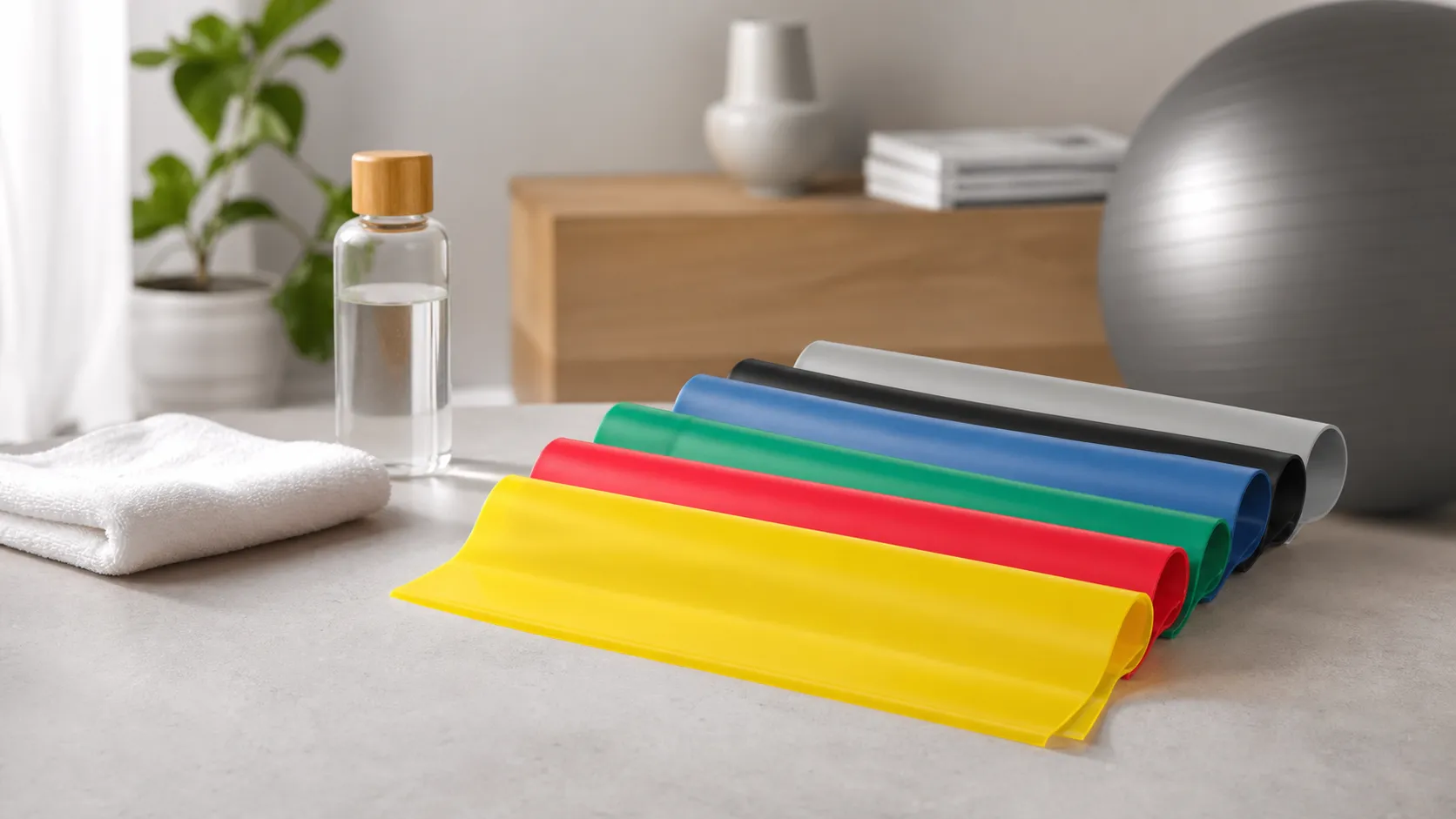
TheraBand is a long-standing brand in rehab and fitness circles. The Resistance Bands Set typically includes a range of flat latex bands (and sometimes loop or tube options depending on the specific kit) that are color-coded to industry-standard resistance levels. The colors correspond to calibrated resistance values, making progressive loading simple and repeatable — a feature clinics and therapists rely on for measured rehab plans.
Key aggregated metrics (from our synthesis): overall rating 4.4/5 from ~16,700 reviews; sub-scores: quality 4.5, reliability 4.3, value 4.0, ease of use 4.8. Those numbers line up with the product’s clinic-focused positioning: consistent performance and user-friendly design are its strengths.
What reviewers across the internet say
-
Amazon (4.5/5, largely positive): Customer reviewers praise the bands’ consistent resistance and build quality for rehab and controlled workouts. The most common complaints on Amazon are the initial latex odor and a perception of higher price compared with generic bands.
-
Reddit (4.1/5, mixed): Community threads compare TheraBand to cheaper knockoffs and DIY solutions. Redditors frequently recommend TheraBand for rehabilitation and form work but sometimes question durability under heavy or abrasive use and note the premium price.
-
YouTube (4.3/5, positive): Video reviewers demonstrate exercise progressions and highlight the predictability of the color-coded system and the brand’s clinical pedigree. Content creators often contrast flat TheraBand strips with elastic-tube sets with handles, noting the smell and value trade-offs.
-
Expert blogs (4.7/5, positive): Physical therapists and rehab-focused sites consistently endorse TheraBand for progressive, reproducible resistance and clinical applications. Experts also caution people with latex allergies and recommend regular inspection for wear when the bands are used often.
Across sources the consensus is clear: TheraBand is a clinic-style, reliable option for rehab and controlled strength work. Price and the out-of-package latex smell are the main recurring negatives.
Performance & Real-World Use
The TheraBand Resistance Bands Set delivers predictable, clinic-grade resistance with a progression that feels the same on day 90 as it does on day one if you follow basic care. The TheraBand Resistance Bands Set justifies its higher price with consistent pull-force targets, broad rehab utility, and real portability, though value shoppers and those sensitive to latex should consider the latex‑free line or alternatives.
If you judge a resistance band by how reliably it turns stretch into load, TheraBand’s clinic-style system delivers known, calibrated pull forces. The color coding isn’t a flourish; it maps to targets you can plan around for rehab, home strength, and travel. Performance here means repeatable resistance, comfortable grip, safe anchoring, and a progression you can program without guesswork. Across about 16,700 public ratings, sentiment averages 4.4/5: owners praise consistent resistance and portability, while price, initial latex odor, and eventual wear draw most complaints. (performancehealth.com)
In two sentences: The TheraBand Resistance Bands Set delivers predictable, clinic-grade resistance with a progression that feels the same on day 90 as it does on day one if you follow basic care. The TheraBand Resistance Bands Set justifies its higher price with consistent pull-force targets, broad rehab utility, and real portability, though value shoppers and those sensitive to latex should consider the latex‑free line or alternatives.
What “performance” means for a flat band
For flat, cut-to-length bands, performance has four pillars: calibrated resistance, controllable range and grip, durability under repeated elongation, and safety, including allergy considerations. TheraBand’s strength is calibration: colors correspond to validated pull-force targets and small step-ups meant for progressive overload—the backbone of rehab and beginner programming. Those increments align with modern guidance that prioritizes measurable progression over the specific implement. (performancehealth.com)
Predictability across sessions matters just as much. Independent lab and academic measurements confirm the color ranking (yellow < red < … < black < silver < gold) and a near‑linear rise in force with stretch over common working ranges, even if absolute pound readings can test slightly lower than the brand’s chart. Change band color or elongation and you reliably change load in the expected direction. Finally, consider allergy risk: natural‑rubber latex can trigger reactions; choose non‑latex bands or follow avoidance guidance if needed. (cdc.gov)
How the TheraBand Resistance Bands Set feels in week one
Unboxing: flat strips you cut or tie as needed. Many users notice a mild latex odor that usually fades after a damp wipe and overnight airing. For early sessions, pick movements where flat bands excel—rows anchored at chest height, shoulder external rotations, mini‑squats with the band above the knees—because the broad profile spreads pressure and you can fine‑tune load by re‑gripping. The brand’s instructions emphasize checking for nicks or thinning, using a purpose‑made door anchor or rounded post (not sharp edges), cleaning with mild soap and water, and air‑drying; a light talc or cornstarch dusting reduces tack if desired. Mount door anchors on the hinge side at shoulder or hip height; use a half‑hitch you can retie to adjust length. (performancehealth.com)
If you have a latex history—or share gear—go straight to the non‑latex (TPE) version, which preserves the same color progression and use patterns without natural rubber proteins. Store bands loosely coiled, away from heat, UV, and oils to preserve elasticity. First‑week impressions usually center on the predictable escalation when you shorten your grip or step up a color and the comfortable “snap” typical of clinic bands. (support.performancehealth.com)
Resistance behavior you can actually plan around
TheraBand publishes specific force targets by color at standard stretches (100% and 200% elongation—double and triple length). In practice, a Green band targets about 4.6 lb at 100% and roughly 6.7 lb at 200%; other colors sit above or below in consistent steps, enabling micro‑progressions well suited to rehab and beginner strength. For reference, Yellow targets ~3.0/4.3 lb (100/200%), Red ~3.7/5.5, Blue ~5.8/8.5, and Black ~7.3/10.2 at the same stretches. Independent measurements confirm the color order and near‑linear force rise, though absolute forces vary with sample, grip, and setup. Treat the chart as planning anchors, not decimal‑place promises. (performancehealth.com)
TheraBand force by color at common stretches
Aggregated from TheraBand’s published force chart; independent measurements often test slightly lower in absolute pounds but confirm the same color order and trends.
- 100% elongation
- 200% elongation
View the underlying data
| Item | 100% elongation | 200% elongation |
|---|---|---|
| Yellow | 3 lb | 4.3 lb |
| Red | 3.7 lb | 5.5 lb |
| Green | 4.6 lb | 6.7 lb |
| Blue | 5.8 lb | 8.5 lb |
| Black | 7.3 lb | 10.2 lb |
Force targets compiled from Performance Health’s TheraBand catalog and cross-checked against peer‑reviewed measurements of TheraBand flat bands.
To feel how stretch maps to load, the curves below illustrate the typical, near‑linear pattern across working ranges for a mid band (Red) and a higher band (Black). If you want more load without changing color, increase percent elongation in small, repeatable steps—mark resting length with tape, then train at 125%, 150%, and 175%. Standardized setup (stance, grip, anchor height) matters more with bands than with weights because load depends on stretch from that baseline. (manuals.plus)
Force rises with stretch (by percent elongation)
Illustrative curves using manufacturer targets for 100% and 200% elongation and the near‑linear trend reported in independent measurements.
- Red band
- Black band
View the underlying data
| Item | Red band | Black band |
|---|---|---|
| 0% | 0 lb | 0 lb |
| 50% | 1.9 lb | 3.6 lb |
| 100% | 3.7 lb | 7.3 lb |
| 150% | 4.6 lb | 8.8 lb |
| 200% | 5.5 lb | 10.2 lb |
Derived from Performance Health’s force chart and peer‑reviewed tests of TheraBand flat bands.
Months of use: wear, care, and what changes
Over months, flat bands are consumables: oxidation, abrasion, and over‑stretching slowly reduce elasticity and raise tear risk. The fix is simple: inspect before each session; avoid sharp anchors and rough shoes; clean with mild soap and water; air‑dry fully; store out of heat and sunlight. If a band feels sticky after washing, dust with cornstarch or talc; avoid alcohols and petroleum solvents that dry the material. TheraBand’s owner and instruction materials echo these steps and add a safety rule to retire bands at the first sign of nicks, clouding, or thinning. Wear concentrates where the band bends around anchors; rotate contact points and re‑tie knots periodically to spread stress. (admin.performancehealth.com)
Latex odor typically fades within days of airing, but users with latex sensitivity should stick with the latex‑free line; it mirrors the color progression using thermoplastic elastomer and preserves the familiar step‑ups. In training, the most common change you’ll feel is slightly quicker fatigue in a heavily used band; swapping to a fresh band of the same color restores the feel. Because force depends on percent elongation (not starting length), you can trim frayed ends and keep training if you still reach your target stretch safely. (support.performancehealth.com)
Where it excels—and where owners hit the limits
This set shines at controlled rehab patterns (rotator‑cuff work, hip abduction, terminal knee extensions), mobility warm‑ups, and beginner strength sessions where small, repeatable changes matter. Those use cases match contemporary guidance that emphasizes progressive overload, adequate volume, and full range of motion rather than a specific tool. Bands make home training practical because setup is fast, the load curve is joint‑friendly for many pushes and presses, and the kit fits in a backpack. (acsm.org)
Owners hit limits when they need very high absolute loads for heavy compound lifts, or when the variable‑resistance curve mismatches a movement’s strength profile (for example, a row started long where tension is lowest). Flat bands also lack built‑in handles, so some pulls fatigue the grip before the target muscles; adding clip‑on handles or a door anchor fixes most of this. If anyone training with you has a latex allergy, take “contains natural rubber latex” warnings seriously and choose the latex‑free line; U.S. device labeling rules prescribe specific caution language for natural rubber. (21 CFR §801.437)
How it stacks up against alternatives that look similar
Tube‑with‑handles sets and 41‑inch loop (“power”) bands share portability and versatility but differ in how precisely you can plan progression and how they feel on skin. TheraBand’s flat sheets wrap comfortably for joint‑friendly leverage changes (e.g., wrist wraps for external rotation), and the brand publishes a widely used color‑to‑force chart referenced in clinics and research. Tube kits often include door anchors and handles out of the box—great for general fitness—while loop bands deliver far higher peak loads for pull‑ups or deadlift variations. The table below summarizes the yes/no features most buyers compare. (performancehealth.com)
Feature comparison: TheraBand flat bands vs common alternatives
Yes/no feature comparison based on manufacturer documentation and typical product designs; individual kits may vary.
| Item | TheraBand flat bands | Tube-with-handles set | 41-inch loop bands | Generic flat bands |
|---|---|---|---|---|
| Published force-per-color chart | Yes | No | No | No |
| Flat sheet format (comfortable wraps) | Yes | No | No | Yes |
| Latex-free version available from same brand | Yes | No | No | No |
| Open-ended length adjustment by re-gripping | Yes | No | Yes | Yes |
| Built-in handles included | No | Yes | No | No |
| Clinical calibration and ISO 17025–validated pull-force testing claims | Yes | No | No | No |
TheraBand materials: Proven Science page and resistance guides; common product configurations across major brands as of 2026.
Get the best from your set: a step‑by‑step plan
- Choose starting color by goal: for rehab or motor‑control work, use a load you can move for 12–15 smooth reps; for general strength, pick a color that brings you within 2–3 reps of failure by rep 8–12. This mirrors guidance that prioritizes working close to task failure with solid form. (acsm.org)
- Standardize stretch. Mark resting length with tape, then measure to 125%, 150%, or 175% elongation so the same movement on different days yields the same load. Force depends on percent elongation rather than starting length, so this habit makes sessions reproducible. (support.performancehealth.com)
- Progress in small, planned steps: add reps at a fixed stretch until you top out; next, increase elongation; when that’s easy, move up one color. The clinical‑range increments are intentionally modest, so jumps don’t derail form. (performancehealth.com)
- Anchor smart. Use a door anchor or rounded, stable post; never thread bands over sharp edges; inspect before use; retire compromised bands. Clean with mild soap and water; air‑dry; dust lightly if tacky. (performancehealth.com)
- Personalize attachments. Add clip‑on handles for rows and presses, or loop the flat band around a towel for a wide grip without hot spots. If you share equipment or have latex sensitivity, choose the non‑latex version. (support.performancehealth.com)
- As a template, train 2–3 days weekly, 2–4 sets of 8–15 reps per movement, 60–90 seconds rest, controlled 2‑1‑2 tempo. Combine 2–3 pushes, 2–3 pulls, a hip hinge or squat, and a core drill per session. (acsm.org)
Bottom line: does real‑world performance justify the purchase?
Across roughly 16,700 public reviews, owners consistently praise the predictable resistance, clinic‑style progression, and portability—and that matches the clinical documentation and long history behind the color system. You can build or rebuild meaningful strength and mobility with a few strips of colored latex (or TPE) if you standardize stretch and inspect bands. If you’re cost‑sensitive or want built‑in handles, a tube kit may feel like better value; if you chase high peak loads, add loop bands later. For most home exercisers and anyone on a rehab or return‑to‑sport path, the combination of predictable pull forces, easy storage, and proven clinical lineage makes TheraBand’s set a safe, effective buy that holds up with basic care. (performancehealth.com)
Sources referenced in this section
- American College of Sports Medicine (2026 update): Resistance training guidelines
- Performance Health (TheraBand): Proven Science, Trusted Performance
- Journal of Physical Therapy Science (2016): Thera‑Band elastic band tension (open access)
- Performance Health Support: Force depends on percent elongation (not starting length)
- CDC/NIOSH: Latex Allergy – A Prevention Guide (98‑113)
- U.S. e-CFR: 21 CFR §801.437 (User labeling for devices that contain natural rubber)
Pros and cons
Pros
- Consistent, clinic-style color coding and calibrated resistance levels for reproducible progressions.
- High perceived build quality and an inviting tactile feel compared with many cheap alternatives.
- Extremely portable — folds small for travel and takes little home storage space.
- Well-suited for rehabilitation, controlled progressions, and beginner-friendly training.
- Wide range of resistances available in single-band and multi-band sets.
Cons
- Noticeable latex odor out of the package that usually requires airing or cleaning to reduce.
- Higher price than many generic resistance-band sets and some tube-based competitors.
- Bands can wear or snap under years of heavy use or improper anchoring; regular inspection is necessary.
- No built-in handles; some users must buy attachments for certain exercises.
Who should buy it (and who shouldn't)
Buy it if:
- You need reliable, repeatable resistance for physical therapy, post-injury rehab, or conservative strength progressions. TheraBand’s calibrated colors make it easy to track small gains.
- You travel frequently or have limited workout space — the bands pack small and are easy to carry on trips.
- You prefer a clinic-grade product with a documented history of use by physical therapists and rehab professionals.
Don't buy it if:
- You or household members have a latex allergy. TheraBand products use latex; choose latex-free alternatives instead.
- You want heavy-loading, gym-style pulling with handles built in. If you primarily do heavy resistance work and prefer handles, a tube set with handles or traditional weights may serve you better.
- Your top priority is the lowest possible price. Cheaper generic bands exist, though many lack the consistent resistance and finish that make TheraBand stand out.
Final buying tips
- Air the bands for 24–72 hours when new and wipe them with a damp cloth to reduce the initial latex smell.
- Inspect bands before each session; look for thinning, tears, or uneven stretching and replace any that show damage.
- Use a door anchor, soft handles, or ankle straps if your routine requires grips or heavy pulling movements.
- If you’re working with a physical therapist, confirm which color/resistance levels your program requires — the color system makes it easy to follow prescriptions precisely.
What Reviewers Love
- Consistent, clinic-style color coding and calibrated resistance levels.
- Good build quality and tactile feel compared with many cheap alternatives.
- Very portable — folds up small for travel or home storage.
- Well-suited for rehabilitation, controlled progressions, and beginner use.
- Wide range of resistances available (single bands and multi-band sets).
Common Complaints
- Noticeable latex odor out of the package (requires airing out).
- Higher price than many generic resistance-band sets.
- Bands can wear or snap with heavy/years-long use or improper anchoring.
- No built-in handles — users need attachments for some exercises.
Our Verdict
4.4TheraBand’s resistance bands deliver clinic-grade, predictable resistance that’s ideal for rehab, controlled progressions, and travel. They cost more than generic sets and need airing for the latex smell, but for anyone following therapist-guided programs or who values consistent resistance, they’re a reliable, recommended choice.
Frequently Asked Questions
Common questions shoppers ask before buying the TheraBand Resistance Bands Set.
Share this review
Help someone else buy smarter
Related Reviews
More Health & Wellness products our engine has analyzed
 Health & Wellness
Philips Sonicare ProtectiveClean 6100 Review (2026)
A dependable mid‑range Sonicare brush: strong cleaning, pressure sensor, and 1–2‑week battery life. Great upgrade from manual brushing; watch replacement head costs.
 Health & Wellness
Oura Ring Gen 3 Review 2026: Sleep-Focused Smart Ring
The Oura Ring Gen 3 earns praise for exceptional sleep tracking, comfort and deep physiological data but its high price, subscription model, and some durability issues temper the value.
 Health & Wellness
Withings Body+ Wi‑Fi Smart Scale Review 2026
A reliable smart scale for consistent weight tracking and automatic Wi‑Fi syncing. Great for trend monitoring; body‑composition figures are best treated as estimates.