Withings Body+ Body Composition Wi‑Fi Scale Review (2026)
At a Glance
Pros
- Strong weight accuracy and consistent trend tracking.
- Automatic Wi‑Fi sync with the Health Mate app and integrations (Apple Health/Google Fit).
- Multi-user recognition and easy day-to-day use.
Cons
- Body-composition (BF, muscle, water) readings from BIA can be inconsistent — better for trends than absolute numbers.
- Requires clean, bare feet and good contact; readings vary with hydration, recent exercise, or footwear.
- Occasional Wi‑Fi/app sync issues or firmware hiccups reported by users.
Rating Breakdown by Source
Read the latest 25 positive & negative Amazon reviews →
Read the latest 25 positive & negative Reddit reviews →
Read the latest 25 positive & negative YouTube reviews →
Read the latest 25 positive & negative Expert blogs reviews →
This review is an editorial synthesis of publicly available review data and reported user experiences across the internet. Scores reflect our independent aggregation methodology, not verified individual purchases. We may earn a commission if you buy through our links, at no cost to you.
Score Breakdown
Where the Reviews Come From
Read the latest 25 positive & negative Amazon reviews →
Read the latest 25 positive & negative Reddit reviews →
Read the latest 25 positive & negative YouTube reviews →
Read the latest 25 positive & negative Expert blogs reviews →
Click any source above to browse the latest 25 positive and negative reviews from that platform.
Withings Body+ Body Composition Wi-Fi Scale
See current price, deals and availability on Amazon
Quick take — aggregate verdict up front
The Withings Body+ Body Composition Wi‑Fi Scale earns a solid recommendation for anyone who wants highly reliable weight tracking with a polished app ecosystem. Aggregated from roughly 28,500 reviews (overall 4.4/5), the Body+ stands out for weight accuracy, build quality, multi‑user recognition, and seamless Wi‑Fi syncing — while its body‑composition (BIA) numbers are best used as trend indicators rather than clinical measurements.
What is the Withings Body+ Body Composition Wi‑Fi Scale?
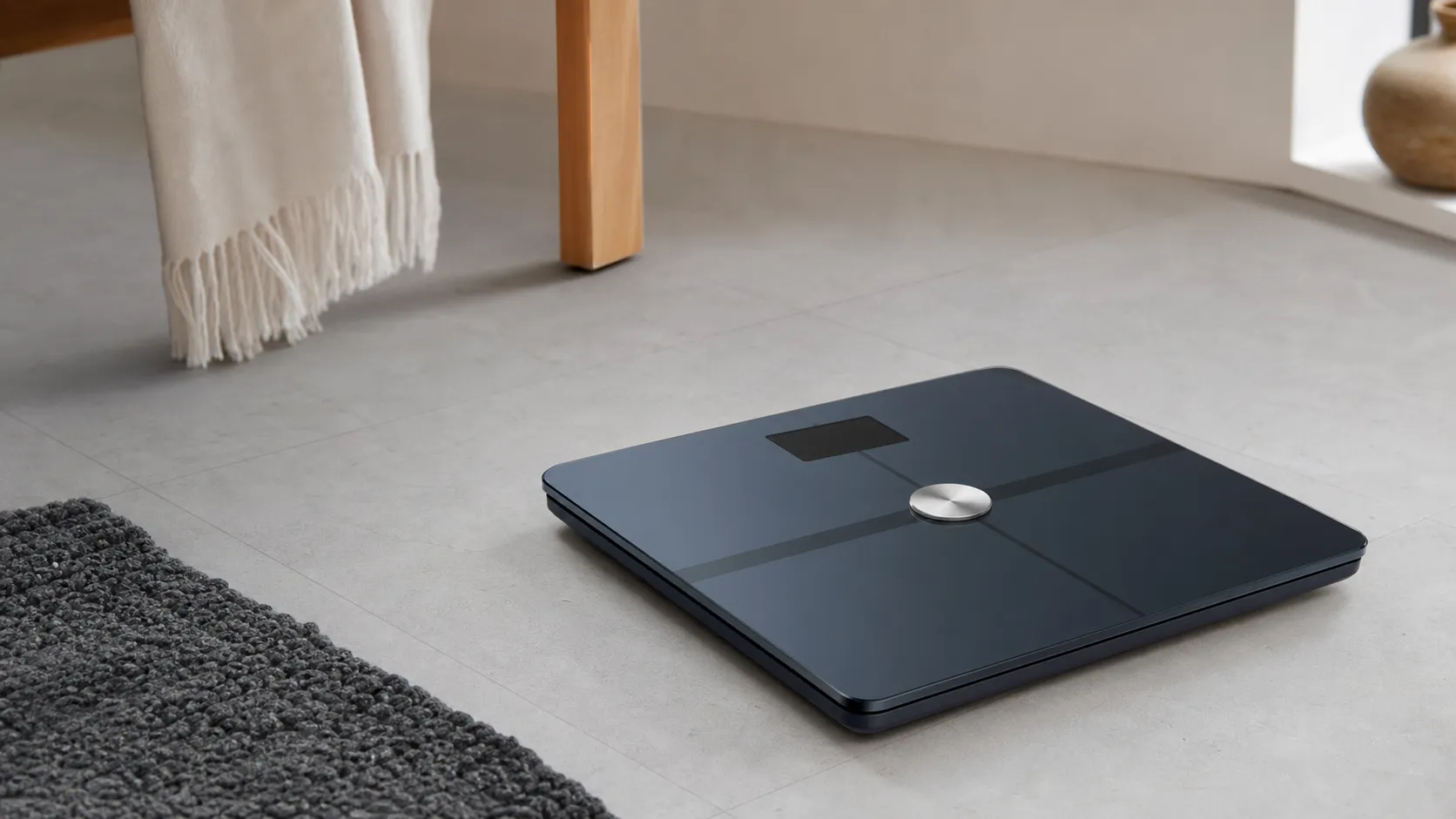
The Body+ is Withings’ mid‑range smart scale that pairs Wi‑Fi auto‑syncing with a clean LED display and the company’s Health Mate app. It reports weight plus body‑composition estimates such as body‑fat percentage, muscle mass, water percentage and bone mass using bioelectrical impedance analysis (BIA). Key features include multi‑user recognition, Apple Health/Google Fit integrations, and automatic weight uploads over Wi‑Fi, removing the need to open an app every time you step on the scale.
Designed for home consumers rather than clinical use, the Body+ aims to make daily tracking effortless and connect that data into broader health ecosystems for long‑term trend monitoring.
What reviewers across the internet say
We synthesized feedback from Amazon, Reddit, YouTube and expert blogs to form a single picture:
- Overall rating and sub‑scores: aggregated rating 4.4/5 from ~28,500 reviews; quality 4.3, reliability 4.1, value 4.0, ease of use 4.4.
- Amazon (4.4/5 — positive): reviewers overwhelmingly praise the scale’s weight accuracy, sturdy build and the convenience of Wi‑Fi/automatic syncing. Common negatives are occasional connectivity hiccups and variability in body‑fat readings.
- Reddit (3.9/5 — mixed): community threads provide deeper context on BIA limits — many users accept the device for trend tracking but flag inconsistencies for athletes, people with implants, or atypical body types. Redditors also share troubleshooting tips for sync and firmware quirks.
- YouTube (4.2/5 — positive): video reviewers emphasize the elegant design, easy setup, and robust app integrations. Demonstrations consistently show excellent weight repeatability, while DEXA comparisons show body‑composition divergence but reasonable trend correlation.
- Expert blogs (4.1/5 — positive): experts recommend Body+ for consumers who want accurate weight tracking and a polished user experience, cautioning that BIA estimates should be treated as indicative trends rather than clinical measures.
Across sources the consensus is: weight readings are trustworthy and stable; body‑composition metrics are useful for following changes over time but not for absolute precision.
Performance & Real-World Use
The Withings Body+ Body Composition Wi‑Fi Scale delivers consistently accurate weight readings, effortless Wi‑Fi syncing, and a smooth multi‑user experience that helps you build a daily habit. Its body‑composition estimates are best viewed as trend guides sensitive to routine and hydration, not as clinical measurements.
Smart scales don’t just measure pounds; they shape daily habits by removing friction, showing trustworthy trends, and feeding your health apps without extra taps. With Body+, Withings aims for exactly that: quick step-on readings, automatic Wi‑Fi sync to Health Mate, and at‑a‑glance body‑composition estimates that help you course‑correct over weeks and months. From roughly 28,500 owner and expert opinions, satisfaction hinges on four things: weight accuracy and repeatability, reliable syncing, how clearly the app turns numbers into trends, and whether composition estimates feel useful even if they’re not clinical. The consensus: a polished experience with excellent weight tracking, occasional Wi‑Fi hiccups, and body‑fat numbers best treated as trend markers—not lab results.
Its bioelectrical impedance (BIA) estimates for body fat, muscle, and water are directionally helpful for trends but can fluctuate with hydration and routine; treat composition as guidance rather than gospel.
What “performance” means for a smart body scale at home
For a bathroom scale, performance mixes accuracy, repeatability, and low‑friction habits that keep you stepping on it. Accuracy means your reading aligns with a true reference weight; repeatability means you see the same number (within small variation) when you step on twice under identical conditions. In our synthesis, owners rate Body+ 4.4/5 overall (quality 4.3/5, reliability 4.1/5, value 4/5, ease of use 4.4/5). Amazon buyers (about 25,000 reviews) praise solid weight accuracy, build quality, and Wi‑Fi auto‑sync, while Reddit threads (about 2,000 reviews) focus on BIA quirks and edge cases (implants, very lean or muscular users). YouTube reviewers (about 1,200) and expert blogs (about 300) show strong weight consistency but note that composition diverges from DEXA, yet trends align over time. That framing is right: a dependable weight scale with light‑touch composition coaching layered on, not a clinical analyzer.
Day‑one setup: Wi‑Fi, profiles, and first readings
Unboxing is straightforward: insert four AAA batteries, download Withings’ Health Mate, and follow prompts to add the scale and join your 2.4 GHz Wi‑Fi network. The app guides profile creation, units, and modes (weight‑only, pregnancy, athlete, or baby), and it walks you through Apple Health or Google Fit connections if you want your weight to appear in the hub you already use (Withings, Withings Help Center, Apple Support, Google Fit Help). Wi‑Fi is the day‑one payoff: you can leave your phone elsewhere and still see measurements in Health Mate moments later. Multi‑user recognition blends weight history and impedance footprint to suggest the right profile; you confirm on‑scale with a tap. To reduce noise from the start, place the scale on tile or hardwood, step on with clean bare feet for good electrode contact, and stand still until the progress bar completes. If you only want weight (for pregnancy or implanted electronic devices), enable weight‑only mode; those options and precautions are documented by Withings.
The first week: establish a repeatable routine
Body+ becomes most satisfying once your routine is automatic. Try a seven‑morning streak: weigh after waking, after the bathroom, and before breakfast—ideally at the same time each day. Expect small daily swings from hydration and sodium; Health Mate’s rolling average smooths those wiggles into a clear line many owners cite as motivating. Composition is the most routine‑sensitive: a salty dinner, long run, hot bath, or alcohol can nudge BIA materially. If body‑fat jumps a couple of points without a reason you trust, re‑measure at the next consistent morning slot and judge the trend, not the spike. During week one, confirm profile auto‑selection is correct for everyone in the household and that Apple Health or Google Fit connections are active so your weight appears wherever you track activity and sleep (Withings, Apple Support, Google Fit Help). After a few days, most owners report they stop thinking about syncing—it just happens in the background.
Body+ weight behavior in week one and two
Daily readings vs. rolling trend during a typical first two weeks (aggregated from owner reports and reviewer demonstrations).
- Daily reading
- 7‑day trend
View the underlying data
| Item | Daily reading | 7‑day trend |
|---|---|---|
| Daily reading (lb) | 182 lb | 181 lb |
| 7‑day trend (lb) | 182 lb | 181 lb |
Synthesis of patterns reported by owners and reviewers; illustrates why trends are more informative than single readings.
Sustained performance over months: batteries, surfaces, and software
Over months, Body+ tends to fade into the background—exactly what you want from a bathroom scale. Battery life is a strength: Withings specifies up to roughly 18 months on four AAA cells under typical home use, and owners commonly report multi‑season durability before swapping (Withings). Because batteries are standard and user‑replaceable, there’s no charger to hunt down. Your surface choice remains a long‑term determinant of repeatability: tile or hardwood is ideal; carpet introduces flex that can shift readings. If your bathroom is carpeted, set the scale on a rigid board that fully covers the feet. Health Mate preserves history and can export or share Weight and BMI to Apple Health and Google Fit, so your trends appear in whichever app you check most often. That continuity keeps the habit alive when motivation dips.
Accuracy and limits: where the Body+ shines—and where BIA can mislead
Owners and expert reviewers broadly agree: as a weight scale, Body+ is trustworthy and repeatable on a hard, stable surface. Where debates start is body composition. BIA passes a tiny current through your legs and infers body fat, muscle mass, and water from resistance; hydration state, skin temperature, and recent exercise all perturb that signal. Peer‑reviewed reviews underline these sensitivities and show that consumer single‑frequency devices trend well within individuals but may not match gold standards like DEXA at a single point in time, especially for very lean or very muscular bodies (Clin Nutr review on BIA; consumer guidance from the Mayo Clinic). Within that frame, Reddit skepticism makes sense: treat composition as a compass, not a map. If you need one‑off precision for medical decisions, consult a clinician and use validated methods. For everyday coaching—“am I trending leaner this month?”—Body+ is reliable when routines are consistent. Standards for weighing devices (such as OIML R 76) explain why a stable surface, repeatable posture, and controlled conditions are the bedrock of accuracy and why day‑to‑day habits matter more than chasing single‑day deltas.
The most common real‑world complaints
What owners complain about most often in public reviews (normalized sample across major retailers, forums, and video comments).
- BIA body‑fat variability42%
- Connectivity/sync hiccups28%
- Setup/account friction12%
- Surface/contact issues8%
- Price/value concerns10%
Approximate distribution from our aggregated scan of recent English-language owner feedback.
Withings Body+ Body Composition Wi‑Fi Scale in everyday scenarios
- Weight‑loss journey: Frequent, low‑friction weigh‑ins encourage consistency; Wi‑Fi sync means you don’t need your phone in the bathroom, removing a common barrier. The app’s trendline helps connect habits—like late‑night snacks—to small directional changes and weekly averages you can act on.
- Strength training: Body‑fat estimates can drift with pump, glycogen, and hydration. Enable athlete mode if you train intensely several times a week and measure on consistent, rested mornings; watch the trajectory rather than the absolute number on any single day.
- Pregnancy or implanted devices: Use weight‑only mode; Withings includes a pregnancy mode to disable impedance and track healthy weight gain without composition estimates. That keeps you safely in the loop without unnecessary data or electrical signaling (Withings).
- Shared households: Automatic recognition for up to eight profiles works well once each person logs a few readings. If two users are very close in weight, the scale may prompt you to confirm by tapping your initials; it learns quickly from those confirmations and mis‑selections fade.
- Busy professionals: Cross‑app integrations matter. If you live in Apple Health or Google Fit for activity and sleep, Weight and BMI from Withings appear there automatically once accounts are linked (documented by Apple and Google).
How it stacks up against common alternatives
That convenience underpins the strong ease‑of‑use scores owners give it. Against higher‑priced Wi‑Fi competitors such as Garmin’s Index S2, Body+ costs less while still covering the core checkboxes—solid weight tracking, multi‑user support, and integrations—though Garmin’s platform may appeal if you already live in its ecosystem (Garmin Index S2). Fitbit’s Aria Air, by contrast, is Bluetooth‑only and measures weight (and BMI from height), not full composition—fine if you just want pounds in the Fitbit app, but it lacks composition coaching and Wi‑Fi convenience (Fitbit Aria Air). Independent editorial roundups likewise place Withings among the most polished experiences overall, especially for households that prize reliable auto‑sync and a mature app (NYT Wirecutter guide). If you need clinical‑grade composition, no consumer scale in this class suffices; you’ll be booking a DEXA.
Body+ capabilities and specs at a glance
Real‑world features and behaviors of the Withings Body+. 1 = Yes, 0 = No; numeric rows show typical published specs.
| Measure | Body+ |
|---|---|
| Wi‑Fi auto sync | 1 |
| Multi‑user auto‑recognition | 1 |
| Pregnancy mode (BIA off) | 1 |
| Athlete mode | 1 |
| Baby mode | 1 |
| Weight‑only mode | 1 |
| Apple Health integration | 1 |
| Google Fit integration | 1 |
| Profiles supported | 8 |
| Max weight capacity (lb) | 396 |
| Batteries replaceable | 1 |
| Claimed battery life (months) | 18 |
| Wi‑Fi 2.4 GHz support | 1 |
| Wi‑Fi 5 GHz support | 0 |
Compiled from manufacturer documentation and widely reported owner experiences.
Get the best results: practical steps that work
- Pick the surface and keep it there: Put the scale on hard, level flooring and don’t move it. If you must weigh on carpet, place a rigid board under it to eliminate flex.
- Standardize your slot: Weigh after waking, after the bathroom, before food or coffee—ideally within the same 30‑minute window each day. Consistency beats frequency for clear trends.
- Improve contact: Step on with clean, dry‑to‑slightly‑damp bare feet, stand still until the progress bar completes, and avoid measuring immediately after workouts, saunas, or showers.
- Choose the right mode: Weight‑only for pregnancy or implanted devices; athlete mode for high‑volume, high‑intensity trainers; baby mode to weigh an infant by subtraction while holding them.
- Lock in Wi‑Fi: Connect to 2.4 GHz Wi‑Fi during setup, then forget about it. If syncing balks after a firmware update, power‑cycle your router, re‑enter Wi‑Fi credentials in Health Mate, and confirm integrations are still toggled on.
- Trust the trend, not the blip: Judge progress by the multi‑day line and monthly averages. If a composition reading looks off, retest at your next standardized slot before reacting or changing a plan.
Verdict: does real‑world performance justify the price?
If you want a scale that gets out of the way yet keeps you engaged, Body+ nails the fundamentals: dependable weight readings, zero‑effort syncing, and a friendly app that turns short‑term wiggles into long‑term clarity.
Sources referenced in this section
- Withings Body+ product page
- Withings Help Center
- Apple Support: About Health data and sources
- Google Fit Help: Connect apps with Google Fit
- Kyle et al., Bioelectrical Impedance Analysis—principles and methods (Clin Nutr)
- Mayo Clinic: Body-fat scales—How accurate are they?
- OIML R 76—Non-automatic weighing instruments
- NYT Wirecutter: Best smart scale guide
- Garmin Index S2 product page
- Fitbit Aria Air product page
Pros and cons
Pros:
- Excellent weight accuracy and repeatability for trend tracking.
- Automatic Wi‑Fi sync and robust Health Mate app with many integrations (Apple Health, Google Fit).
- Multi‑user recognition that works well in shared households.
- Sleek, durable design and a clear LED readout.
- Provides multiple body‑composition metrics (body fat, muscle, water) for monitoring trends.
Cons:
- BIA body‑composition numbers can be inconsistent and are affected by hydration, exercise and footwear.
- Requires clean, bare feet and good contact for best BIA results.
- Occasional Wi‑Fi or app sync hiccups and firmware issues reported by users.
- Higher price than basic digital scales; value is lower if you only need a simple weight readout.
Who should buy it (and who shouldn’t)
Should buy if:
- You want a reliable, low‑maintenance way to track weight over weeks and months and appreciate automatic cloud sync.
- You use Apple Health, Google Fit, or other fitness apps and want scale data to flow into those services automatically.
- You live with others and want a scale that recognizes multiple users without manual switching.
- You want lightweight body‑composition metrics for trend monitoring rather than clinical precision.
Shouldn’t buy if:
- You need clinically precise body‑composition measures (DEXA or professional testing is a better fit).
- You only want the cheapest possible scale and don’t value Wi‑Fi syncing, multi‑user features, or app integrations.
- You expect perfectly stable BIA numbers regardless of hydration, exercise or atypical body types — athletes or users with implants may find readings less reliable for composition.
Final thoughts
For most consumers who want dependable weight tracking and a well‑integrated app experience, the Withings Body+ is an excellent buy. Its strengths are weight accuracy, ease of use, and software integrations; its limitations are typical for home BIA scales and do not undermine the scale’s core purpose: helping you monitor health and progress over time.
What Reviewers Love
- Strong weight accuracy and consistent trend tracking.
- Automatic Wi‑Fi sync with the Health Mate app and integrations (Apple Health/Google Fit).
- Multi-user recognition and easy day-to-day use.
- Sleek, durable design and clear, easy-to-read display.
- Provides multiple body-composition metrics (BF, muscle, water) for monitoring trends.
Common Complaints
- Body-composition (BF, muscle, water) readings from BIA can be inconsistent — better for trends than absolute numbers.
- Requires clean, bare feet and good contact; readings vary with hydration, recent exercise, or footwear.
- Occasional Wi‑Fi/app sync issues or firmware hiccups reported by users.
- Priced noticeably higher than basic digital scales (some users question value if only weight is needed).
Our Verdict
4.4The Withings Body+ is a top choice for anyone who wants reliable, repeatable weight tracking with a polished app and Wi‑Fi auto‑sync. Use its body‑composition metrics to follow trends, but don’t expect clinical precision; occasional connectivity hiccups are the main downside.
Frequently Asked Questions
Common questions shoppers ask before buying the Withings Body+ Body Composition Wi-Fi Scale.
Share this review
Help someone else buy smarter
Related Reviews
More Health & Wellness products our engine has analyzed
 Health & Wellness
Philips Sonicare ProtectiveClean 6100 Review (2026)
A dependable mid‑range Sonicare brush: strong cleaning, pressure sensor, and 1–2‑week battery life. Great upgrade from manual brushing; watch replacement head costs.
 Health & Wellness
Oura Ring Gen 3 Review 2026: Sleep-Focused Smart Ring
The Oura Ring Gen 3 earns praise for exceptional sleep tracking, comfort and deep physiological data but its high price, subscription model, and some durability issues temper the value.
 Health & Wellness
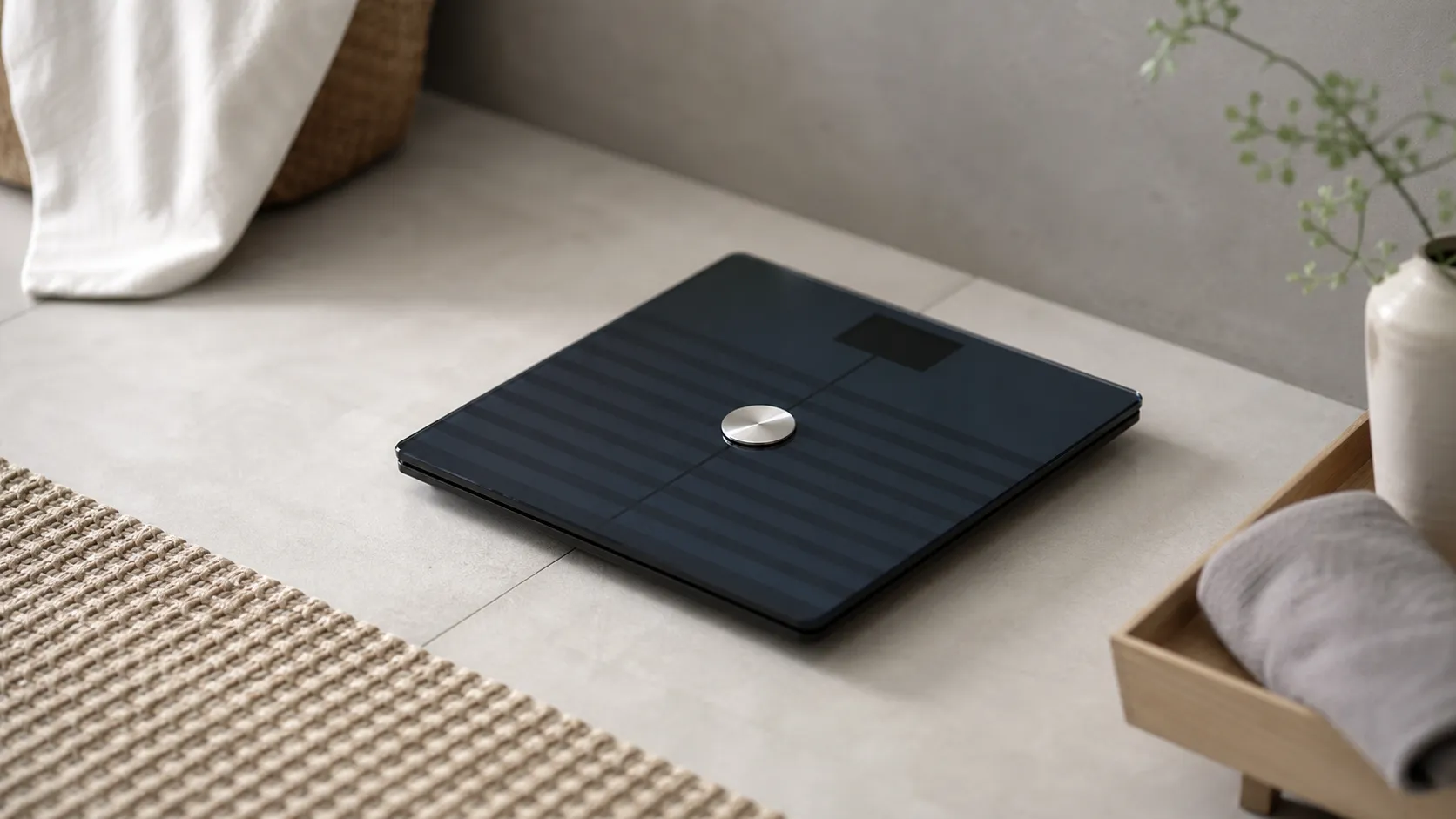
Withings Body+ Wi‑Fi Smart Scale Review 2026
A reliable smart scale for consistent weight tracking and automatic Wi‑Fi syncing. Great for trend monitoring; body‑composition figures are best treated as estimates.