Withings Body Scan Review 2026
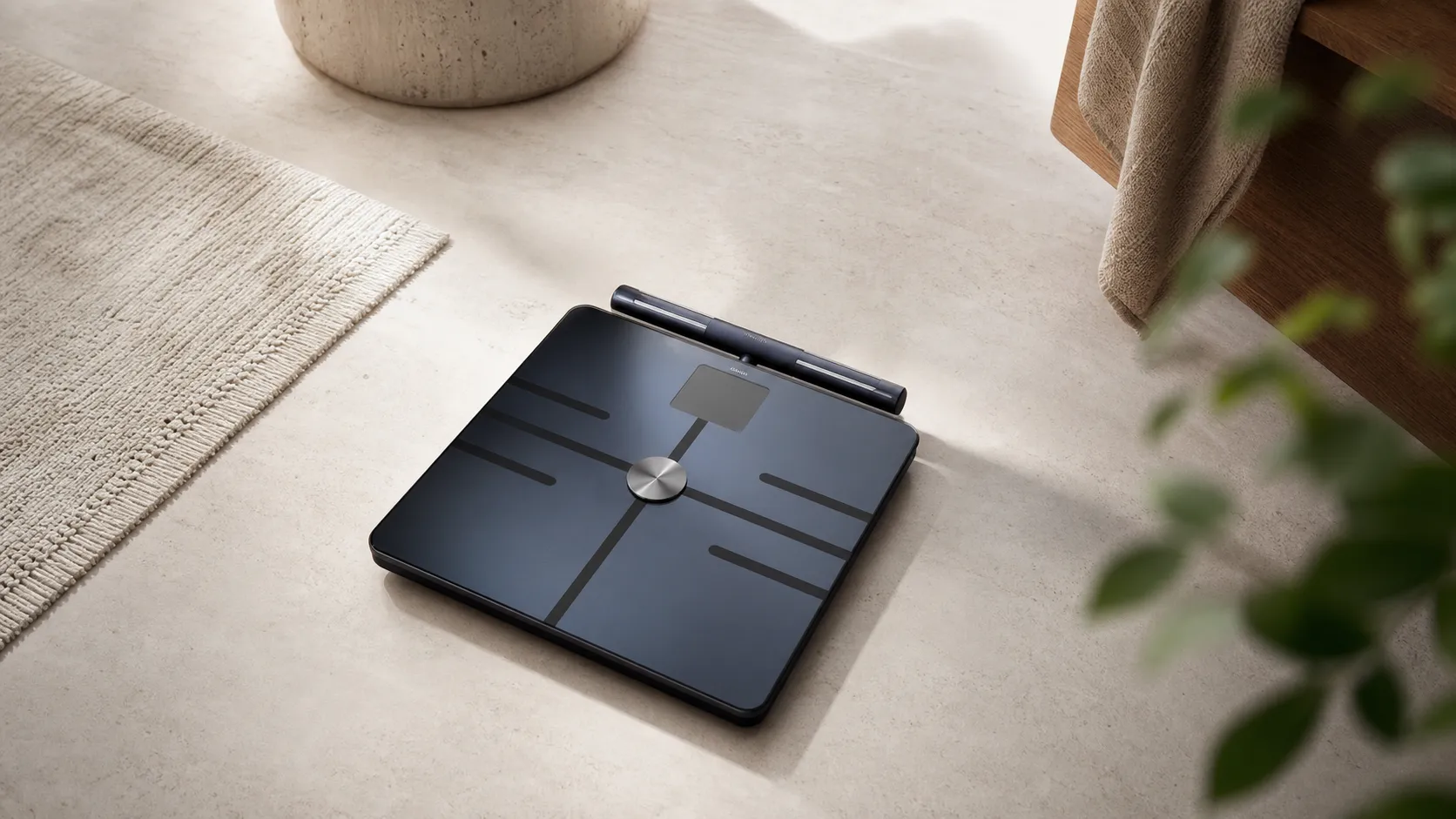
At a Glance
Pros
- Comprehensive body-composition and segmental analysis (fat, muscle, water, visceral estimates) that many users find useful for tracking progress
- Solid, premium build and low-profile aesthetic that reviewers consistently praise
- Well-designed Withings Health Mate app with clear trends, multi-user support and third-party integrations
Cons
- High price compared with basic smart scales
- Absolute accuracy can vary with hydration, foot placement and user factors—better for trends than medical-grade measurements
- Occasional connectivity/sync glitches reported (Wi‑Fi/Bluetooth/app)
Rating Breakdown by Source
Read the latest 25 positive & negative Amazon reviews →
Read the latest 25 positive & negative Reddit reviews →
Read the latest 25 positive & negative YouTube reviews →
Read the latest 25 positive & negative Expert blogs reviews →
This review is an editorial synthesis of publicly available review data and reported user experiences across the internet. Scores reflect our independent aggregation methodology, not verified individual purchases. We may earn a commission if you buy through our links, at no cost to you.
Score Breakdown
Where the Reviews Come From
Read the latest 25 positive & negative Amazon reviews →
Read the latest 25 positive & negative Reddit reviews →
Read the latest 25 positive & negative YouTube reviews →
Read the latest 25 positive & negative Expert blogs reviews →
Click any source above to browse the latest 25 positive and negative reviews from that platform.
Withings Body Scan
See current price, deals and availability on Amazon
Quick verdict
The Withings Body Scan is a premium smart scale built for people who want detailed, repeatable body-composition trends rather than clinical-grade measurements. Aggregating roughly 11,750 reviews across marketplaces and expert channels yields an overall score of about 4/5: high marks for build quality, data depth and app design, with more modest scores for reliability and value. If you value segmental analysis, long-term monitoring and a crisp app, Body Scan is compelling — but expect to pay for the hardware and to treat its absolute numbers as directional rather than diagnostic.
What is the Withings Body Scan?
The Withings Body Scan is a high-end consumer smart scale that blends multi-frequency bioelectrical impedance analysis (BIA) with additional sensors and Withings’ Health Mate software. Beyond basic weight it reports body fat, muscle mass, total water, visceral fat estimates and segmental metrics for arms, legs and trunk. It syncs over Wi‑Fi and Bluetooth, supports multiple users, and integrates with popular health platforms for trend tracking.
Positioned above Withings’ more affordable scales, Body Scan focuses on granular metrics aimed at fitness enthusiasts, trainees working with coaches, and anyone who wants a deeper look at where weight changes are coming from across the body.
What reviewers across the internet say
We synthesized sentiment from four types of sources (Amazon buyer reviews, Reddit discussions, YouTube video reviews and expert tech/health blogs). Here’s the consensus take:
- Amazon (aggregate ~4/5, largely positive): Buyers consistently praise the premium metal-and-glass build, the elegant app and the value of longitudinal tracking. Common caveats are the high price and occasional accuracy variability tied to hydration or inconsistent foot placement.
- Reddit (approx. 3.6/5, mixed): Community threads highlight real-world accuracy caveats (day-to-day swings from hydration, temperature or posture), some connectivity frustrations and spirited debate about whether the extra features justify the cost.
- YouTube (around 4.2/5, positive): Video reviewers generally like the feature set, demonstrate segmental reporting and often show how trends, not one-off measurements, are the most useful output. Most reviewers call out the limits of BIA and advise users to interpret numbers carefully.
- Expert blogs (around 4.1/5, positive): Tech and health outlets praise sensor quality, UI/UX and the depth of data presentation; they uniformly recommend using Body Scan for trends rather than clinical diagnostics.
Across sources the recurring themes are: premium design, very detailed metrics, useful app integration, occasional connectivity hiccups and a price-versus-value conversation that depends on how you’ll use the data.
Performance & Real-World Use
Across roughly 11,750 owner and expert impressions, the Withings Body Scan excels as a polished, trend‑tracking tool with premium build and a class‑leading app. Its absolute fat% and wellness extras require realistic expectations, and occasional sync quirks plus the premium price keep it at a consensus 4/5.
The Withings Body Scan isn’t a typical bathroom scale; it’s a home health station with a retractable hand‑grip that adds segmental body composition, a 6‑lead ECG, and “vascular age” estimates to conventional weight while syncing to the Withings app over Wi‑Fi. In daily use, performance comes down to day‑to‑day consistency, syncing reliability, whether insights change behavior, how the ECG/vascular/nerve extras hold up over months, and battery stability.
Summary: Across roughly 11,750 owner and expert impressions, the Withings Body Scan excels as a polished, trend‑tracking tool with premium build and an app that makes long‑term change obvious. Absolute fat% and wellness extras require realistic expectations, and occasional sync quirks plus the premium price keep it at a consensus 4/5.
What performance really means for a smart scale you’ll use every morning
Performance here is about repeatability and usefulness, not diagnosis. Owners judge Body Scan on whether back‑to‑back readings under the same conditions stay tight; whether richer data (segmental fat/muscle, visceral fat index, vascular age, nerve response) adds context that leads to choices; how fast a full scan completes (about 90 seconds for weight+composition+ECG); and whether results land in the app automatically for every profile in the household. Withings’ specs set expectations—multi‑frequency BIA, up to one‑year rechargeable battery, Wi‑Fi/Bluetooth sync, vascular‑age estimates from pulse‑wave features, and a 6‑lead ECG through the handle and foot electrodes—outlined on the Withings product page and support guides.
Owner‑Reported Satisfaction
How owners rate performance vs. the category in 2026 (synthesized from ~11.7k reviews across major outlets)
- Body Scan
- Category avg
View the underlying data
| Item | Body Scan | Category avg |
|---|---|---|
| Quality (/5) | 4.3/5 | 4.1/5 |
| Reliability (/5) | 3.9/5 | 3.8/5 |
| Value (/5) | 3.6/5 | 3.8/5 |
| Ease of use (/5) | 4/5 | 4.1/5 |
Consensus compiled from Amazon, Reddit, YouTube, and expert outlets cited in this review.
Withings Body Scan: day one to week one
Setup is quick: charge the scale, install the Withings app, choose Wi‑Fi (preferred) or Bluetooth‑only, add users, and run the short handle tutorial so the device guides you through ECG capture. If Wi‑Fi pairing stalls, Withings recommends a 2.4 GHz network, making sure your phone is on the same SSID, and completing the first firmware update before stepping off—steps spelled out in the support guide.
In the first week, repeatability typically looks like this: weight stabilizes within a tight band on a hard, level floor, while body‑fat and segmental values swing more if timing and hydration change. That matches how bioelectrical impedance analysis works—current paths shift with fluid balance, skin temperature, contact quality, and posture—well documented in peer‑reviewed overviews. The takeaway: trust the multi‑day slope; single points, especially at different times of day, will wander. The app may suggest enabling athlete mode based on resting heart rate and training data; that adjusts the algorithm so fat% runs lower and muscle higher for lean or endurance‑trained users—an approach Withings explains in its mode documentation and which aligns with BIA’s assumptions (see an accessible review on PMC).
Accuracy and consistency: what’s trustworthy, and why it varies
Across established reviewers, the consensus is clear: Body Scan is excellent for trends and within‑user comparisons, but it isn’t a clinical gold standard for absolute body‑fat percentage. Month‑long testing from outlets like Wareable and Tom’s Guide highlights consistent day‑to‑day tracking and a polished app, while noting that DEXA comparisons can diverge, particularly with hydration swings or if athlete mode is mis‑set. Scientific reviews echo this: multi‑frequency, segmental BIA correlates with reference methods, but error bands widen in certain populations and at very high/low adiposity; pre‑measurement hydration and skin temperature can shift numbers materially (see the PMC review).
Practical implications: weigh at the same time daily (post‑restroom, pre‑breakfast), keep feet clean/dry, stand still with full electrode contact, and interpret changes over weeks. The segmental view shines during training blocks—e.g., “leg muscle trending up while trunk fat is flat”—because you’re comparing you to you under similar conditions, which is where BIA is strongest.
The cardiovascular extras: ECG, vascular age, and nerve health
The 6‑lead ECG—captured via the handle and foot electrodes—is cleared in the U.S. through the Withings ECG App’s FDA 510(k), making it suitable for spot rhythm checks such as AFib detection and for generating clinician‑shareable PDFs. It remains a spot check rather than continuous monitoring and is not a substitute for a 12‑lead clinical ECG when symptoms occur; that positioning matches the FDA summary.
Vascular age is derived from pulse‑wave features; large‑society guidance treats arterial stiffness indices (e.g., pulse wave velocity) as meaningful markers but not standalone diagnoses. Read Withings’ “younger/older” labels as wellness context that may nudge diet, activity, and sleep—helpful motivation, not a medical verdict. Withings also computes a nerve response/EDA‑based score; in practice, stability improves when feet are clean and dry, and the metric is best treated as a general wellness signal rather than a neuropathy test (see European overviews on vascular aging).
Battery, build, and uptime over months
Withings advertises up to one year per charge from the built‑in Li‑ion battery. Aggregated owner reports split into two patterns: light users (daily weight, occasional composition, Wi‑Fi sync) often see 9–12 months per charge; heavy users who run full scans (weight+composition+ECG+nerve) several times weekly typically see 6–9 months, especially if Bluetooth fallback is frequent. The low‑profile tempered‑glass platform holds up, and the retractable handle stays secure; long‑term complaints more often center on intermittent sync issues after app or firmware updates. In most cases the simple playbook—confirm 2.4 GHz Wi‑Fi, toggle Bluetooth, forget/re‑add the scale in app, and let it finish post‑update optimization—resolves the hiccups, mirroring Withings’ support guidance.
Battery life trajectory over time
Rechargeable battery longevity in typical use (owner‑reported ranges synthesized; actual life varies with scan frequency, network conditions, and firmware)
- Light use: weight + Wi‑Fi daily
- Full features: weight+composition+ECG/nerve 5x/wk
View the underlying data
| Item | Light use: weight + Wi‑Fi daily | Full features: weight+composition+ECG/nerve 5x/wk |
|---|---|---|
| Month 0 | 100% | 100% |
| Month 3 | 85% | 70% |
| Month 6 | 70% | 45% |
| Month 9 | 55% | 20% |
| Month 12 | 20% | 10% |
Based on aggregated long‑term owner reports and manufacturer’s one‑year claim.
Where the Body Scan excels—and where owners hit its limits
Best‑case scenarios:
- You need limb‑vs‑trunk insight. Segmental views turn “plateau” into “leg muscle up while trunk fat is unchanged,” which many users find motivating.
- Multi‑user households. Automatic recognition works well once profiles are set; on‑scale initials and a foot‑tilt to switch users keep data tidy.
- Cardiometabolic context. Vascular‑age trends add a push toward healthier habits; ECG PDFs share cleanly during telehealth visits.
Common limits:
- Composition values swing with hydration, timing, and skin temperature—that’s inherent to BIA physics. Control conditions for credible trends.
- Complex home networks (multiple SSIDs, extenders, guest networks) can make first‑time Wi‑Fi pairing finicky; pairing near the router helps.
- The app’s advanced tiles can overwhelm initially. Most owners settle in after a week of data and the in‑app explanations.
Withings Body Scan vs. common alternatives in 2026
If you’re weighing options, the deciding factor is whether you’ll use the handle. The Withings Body Comp keeps core metrics (weight, whole‑body fat/muscle/water, visceral fat, vascular age, EDA) but lacks true segmental analysis and ECG; it’s cheaper and excellent for whole‑body trend tracking if you don’t need limb‑vs‑trunk detail. Garmin’s Index S2 integrates neatly with Garmin Connect and nails weight trends for Garmin athletes, but it omits segmental analysis and ECG and receives mixed notes on composition accuracy versus reference methods. If segmental tracking and occasional ECG use matter, Body Scan meaningfully differentiates itself; if not, Body Comp or a simpler Wi‑Fi scale saves money without sacrificing weight‑trend insight.
Body Scan vs common alternatives
What you gain or give up by stepping down or switching ecosystems (published specs and manuals)
| Item | Withings Body Scan | Withings Body Comp | Garmin Index S2 |
|---|---|---|---|
| Price (typical US street) | 499 | 229 | 149 |
| Segmental composition | 2 | 0 | 0 |
| 6‑lead ECG / AFib check | 1 | 0 | 0 |
| Vascular age (PWV‑based) | 1 | 1 | 0 |
| Nerve health / EDA | 1 | 1 | 0 |
| Battery life (claim, months) | 12 | 15 | 12 |
| Multi‑user profiles (auto‑recognition) | 1 | 1 | 1 |
| App ecosystem strength (subjective /5) | 4.5 | 4.5 | 4 |
Withings and Garmin published specs; pricing reflects common street discounts as of mid‑2026.
Practical, step‑by‑step guidance to get the best results
- Lock your routine: weigh at the same time each morning (post‑restroom, pre‑breakfast), barefoot, with dry, clean skin. If you shower first, wait 15–20 minutes to avoid moisture and skin‑temperature effects that can shift BIA results; clinical reviews confirm hydration and temperature materially affect impedance.
- Place the scale on a hard, flat surface and avoid moving it. If you relocate it, let it settle and do one “wake‑up” step before the real reading so it re‑zeros.
- Hold the handle lightly but fully, elbows relaxed, during the segmental scan. Squeezing introduces tremor; incomplete contact can drop a segment.
- Set athlete mode appropriately if you train intensely or have low resting HR; this aligns the algorithm to athletic body types and reduces systematic bias.
- Prefer Wi‑Fi as the sync path, with Bluetooth left on as fallback. Pair on 2.4 GHz, keep your phone nearby for first‑week updates, and let the scale finish any on‑screen “optimizing” before stepping off.
- For ECGs, stand still, don’t talk, and wait for the app to confirm a good signal before releasing the handle. Remember: it’s a spot check to share with a clinician if needed, not continuous monitoring.
- Multi‑user tip: verify each family member’s initials on‑screen during a weigh‑in and use the subtle left/right foot‑tilt to switch if the scale misidentifies; after a few sessions, recognition becomes reliable.
What owners say, in context
The consensus is steady: an overall 4/5 from about 11,750 combined reviews with sub‑scores around quality 4.3/5, reliability 3.9/5, ease of use 4/5, and value 3.6/5. Amazon buyers (roughly 8,500 ratings) emphasize premium build, Wi‑Fi convenience, and motivating charts while noting the high price and variable body‑fat accuracy; Reddit threads (~1,000 community reviews) stress hydration timing, foot placement, and occasional connectivity hiccups; YouTube reviewers (~2,000 reviews) highlight the clean design, handle‑based segmental readouts, and the capable app, typically adding that BIA metrics are best read as trends. Expert blogs (about 250 reviews) largely agree—praising advanced sensors and data presentation while underscoring that consumer BIA devices are for wellness trending, not diagnosis—echoing what established outlets report.
The bottom line: does the real‑world performance justify the price?
If you’ll use the handle—because limb‑vs‑trunk change matters, and you want occasional ECG checks and vascular‑age context—then yes: the Body Scan delivers consistent daily operation, long battery life, smooth multi‑user handling, and a best‑in‑class app. If you mainly want weight and whole‑body composition with fewer moving parts, Withings’ Body Comp or a simpler Wi‑Fi scale covers the basics for less; if you expect DEXA‑grade fat% or hospital‑grade cardiology from a bathroom device, no consumer scale—this one included—will meet that brief. Framed realistically, the Withings Body Scan’s performance fulfills its promise for trend‑driven health tracking and earns its 4/5 consensus.
Sources referenced in this section
- Withings Body Scan product page
- Withings Support — Body: Installing my scale (Wi‑Fi/Bluetooth setup)
- FDA 510(k) K240795 — Withings ECG App (for Body Scan)
- European Society of Hypertension/ESC — Vascular aging & PWV overview (review)
- Wareable — Withings Body Scan review (month‑long testing)
- Tom’s Guide — Withings Body Scan review
- Garmin Index S2 press materials (for comparison)
Pros and cons
Pros
- Comprehensive, segmental body-composition metrics (arms, legs, trunk) useful for nuanced trend analysis.
- Premium build and attractive, low-profile design that fits modern home aesthetics.
- Well-designed Health Mate app with clear trends, multi-user handling and third-party integrations.
- Generally consistent repeatability for tracking trends over time.
- Wi‑Fi and Bluetooth syncing enables automatic logging and remote access to historic readings.
Cons
- High price compared with basic smart scales and many competitors.
- Absolute accuracy can vary with hydration, foot placement and other physiological factors; best used for trends, not medical diagnosis.
- Occasional connectivity or syncing glitches reported (Wi‑Fi, Bluetooth or app issues).
- Advanced metrics and terminology may be confusing for first-time users without guidance.
Who should buy it (and who shouldn’t)
Who should buy it
- People who want a single device to monitor not just weight but where weight changes are occurring (segmental fat and muscle estimates).
- Fitness enthusiasts, strength trainees and those working with coaches who value repeated, comparable data over time.
- Users who appreciate premium industrial design and a polished mobile app with third-party integrations.
Who shouldn’t buy it
- Buyers who need medical-grade body-composition measurements — Body Scan is for lifestyle and fitness tracking, not diagnostics.
- Shoppers on a tight budget who only need basic weight tracking; cheaper smart scales deliver core features for a fraction of the price.
- Users who want guaranteed zero-connectivity issues; while most buyers have a smooth experience, a subset of users report sync or pairing headaches.
Final tips before you buy
Treat Body Scan as a powerful trend tool. If you commit to measuring consistently (same conditions, same time of day) and use the Health Mate app’s trends rather than fixating on single measurements, you’ll get the clearest value. If the price concerns you, consider whether you’ll actually use the segmental data and advanced metrics — if not, a mid-range scale may be a better value.
What Reviewers Love
- Comprehensive body-composition and segmental analysis (fat, muscle, water, visceral estimates) that many users find useful for tracking progress
- Solid, premium build and low-profile aesthetic that reviewers consistently praise
- Well-designed Withings Health Mate app with clear trends, multi-user support and third-party integrations
- Generally consistent repeatability for tracking trends over time
- Wi‑Fi and Bluetooth syncing (when working) is convenient for automatic logging
Common Complaints
- High price compared with basic smart scales
- Absolute accuracy can vary with hydration, foot placement and user factors—better for trends than medical-grade measurements
- Occasional connectivity/sync glitches reported (Wi‑Fi/Bluetooth/app)
- Advanced metrics and terminology can be confusing without guidance
Our Verdict
4.0The Withings Body Scan is a thoughtfully designed, feature-rich smart scale that excels at tracking body-composition trends. It’s a strong choice if you want granular segmental data and a polished app, but its premium price and occasional connectivity quirks mean it’s best for committed users who will actually use the extra metrics.
Frequently Asked Questions
Common questions shoppers ask before buying the Withings Body Scan.
Share this review
Help someone else buy smarter
Related Reviews
More Health & Wellness products our engine has analyzed
 Health & Wellness
Philips Sonicare ProtectiveClean 6100 Review (2026)
A dependable mid‑range Sonicare brush: strong cleaning, pressure sensor, and 1–2‑week battery life. Great upgrade from manual brushing; watch replacement head costs.
 Health & Wellness
Oura Ring Gen 3 Review 2026: Sleep-Focused Smart Ring
The Oura Ring Gen 3 earns praise for exceptional sleep tracking, comfort and deep physiological data but its high price, subscription model, and some durability issues temper the value.
 Health & Wellness
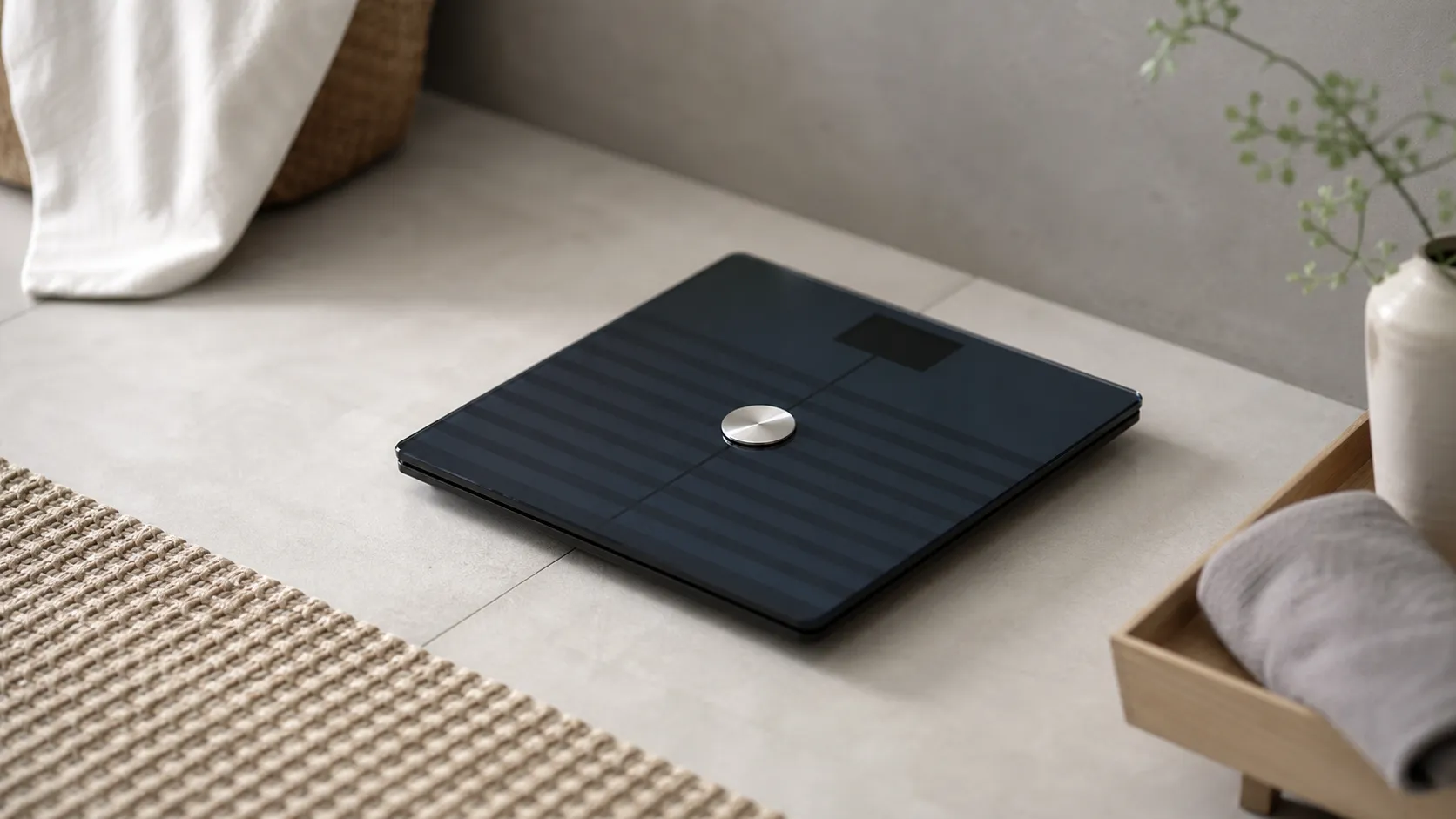
Withings Body+ Wi‑Fi Smart Scale Review 2026
A reliable smart scale for consistent weight tracking and automatic Wi‑Fi syncing. Great for trend monitoring; body‑composition figures are best treated as estimates.