Withings Body+ Wi‑Fi Body Composition Scale Review (2026)
At a Glance
Pros
- Accurate and repeatable weight measurements.
- Automatic Wi‑Fi syncing to the Health Mate app and third-party health platforms.
- Multi-user recognition and good user/account management in the app.
Cons
- Body-composition (BIA) metrics (body fat, muscle, water) are variably accurate and can drift with hydration/exercise.
- Requires bare, clean feet and stable placement — inconvenient for some users and leads to occasional bad readings.
- Wi‑Fi/Bluetooth setup and intermittent connectivity problems reported by a minority of users.
Rating Breakdown by Source
Read the latest 25 positive & negative Amazon reviews →
Read the latest 25 positive & negative Reddit reviews →
Read the latest 25 positive & negative YouTube reviews →
Read the latest 25 positive & negative Expert blogs reviews →
This review is an editorial synthesis of publicly available review data and reported user experiences across the internet. Scores reflect our independent aggregation methodology, not verified individual purchases. We may earn a commission if you buy through our links, at no cost to you.
Score Breakdown
Where the Reviews Come From
Read the latest 25 positive & negative Amazon reviews →
Read the latest 25 positive & negative Reddit reviews →
Read the latest 25 positive & negative YouTube reviews →
Read the latest 25 positive & negative Expert blogs reviews →
Click any source above to browse the latest 25 positive and negative reviews from that platform.
Withings Body+ Wi‑Fi Body Composition Scale
See current price, deals and availability on Amazon
Quick take
If you want a scale that reliably tells you what the number on the scale is and keeps a clean history across devices, the Withings Body+ is hard to beat. Aggregated from roughly 23,500 reviewers, the Body+ earns a 4.3/5 overall score: high marks for weight accuracy, build quality, and app/e cosystem integration, with most complaints focused on body-composition variability and occasional connectivity/setup hiccups.
Verdict (short): dependable weight readings, excellent app syncing and multi-user support make the Body+ a great choice for trend-tracking; if you expect clinical-grade body-fat numbers, plan to treat the BIA outputs as directional only.
What Is the Withings Body+ Wi‑Fi Body Composition Scale?
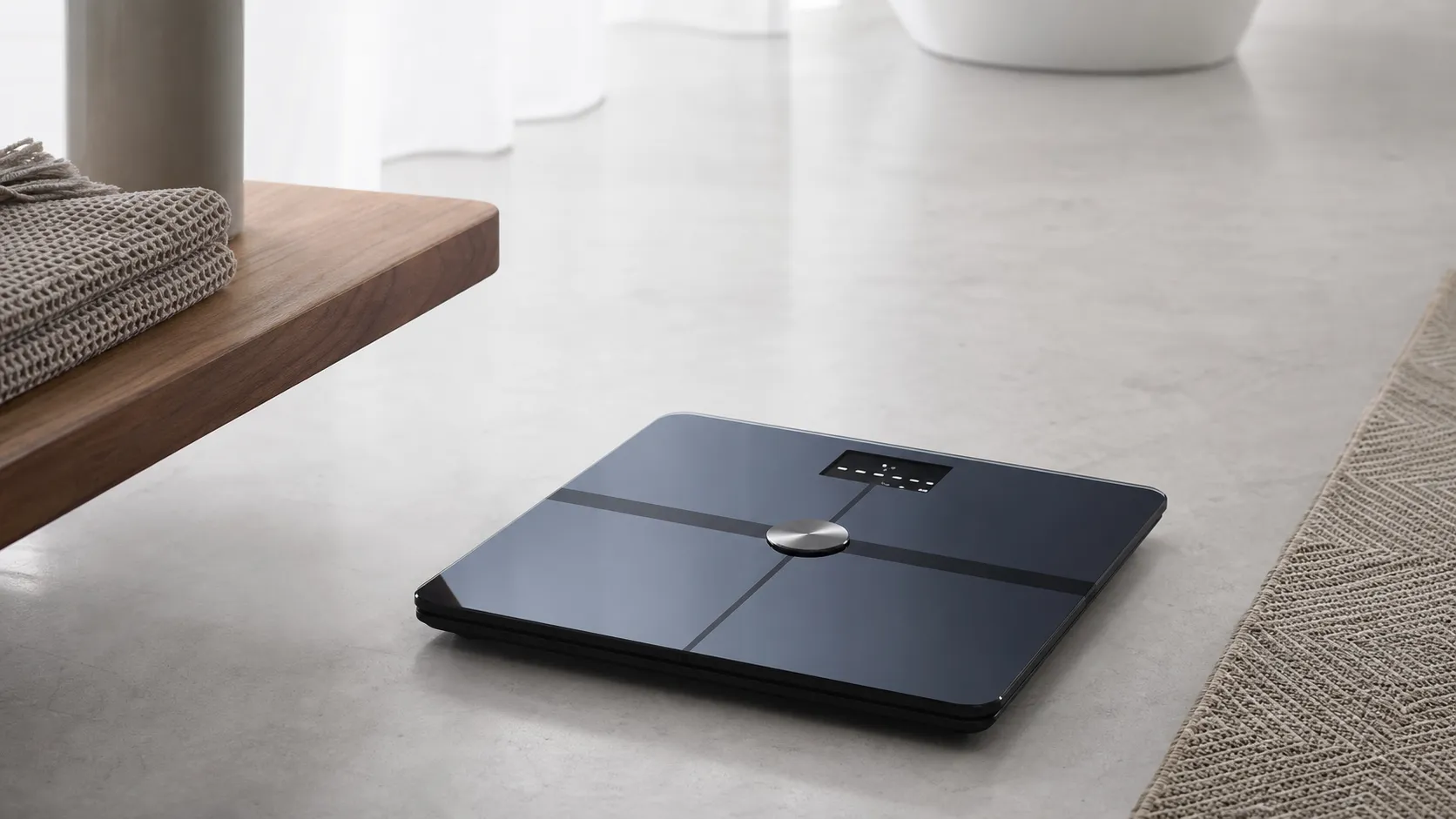
The Withings Body+ is a Wi‑Fi–enabled digital bathroom scale that measures weight and estimates body composition using bioelectrical impedance analysis (BIA). It automatically syncs measurements to Withings’ Health Mate app and third-party services such as Apple Health and Google Fit. The Body+ also recognizes multiple users, displays a clear numeric readout, and provides estimates for body fat, muscle mass, water percentage, and bone mass to help users monitor long-term trends.
Technically it’s positioned above a basic digital scale: it combines precise weight measurement hardware with a cloud-based ecosystem and the convenience of automatic Wi‑Fi syncing. That’s why many buyers pay a premium over inexpensive scales.
What Reviewers Across the Internet Say
We synthesized scores and commentary from Amazon, Reddit, YouTube, and expert blogs to form a balanced view:
- Overall rating: 4.3/5 from ~23,500 reviews (aggregated). Sub-scores: quality 4.3, reliability 4.0, value 4.1, ease of use 4.2.
- Amazon (4.4/5, largely positive): Customers consistently praise the Body+ for dependable and repeatable weight accuracy, easy Wi‑Fi syncing, and smooth Health Mate app integration. The most common negatives are variable body-fat readings and occasional setup/connectivity issues.
- Reddit (3.7/5, mixed): Reddit posts are candid. Users like the hardware and syncing but frequently call out inconsistent BIA numbers and share tips/workarounds for setup and placement. These threads are especially useful for real-world troubleshooting.
- YouTube (4.2/5, generally positive): Video reviewers often test the Body+ against other scales and clinical devices, concluding that weight readings are solid and BIA is useful for trend detection rather than precise body-fat measurement.
- Expert blogs (4.5/5, positive): Tech and health reviewers emphasize build quality, reliable weight accuracy, and the strong ecosystem. They consistently point out that BIA has known limits and that serious athletes or clinicians may need more advanced tools.
Consensus takeaway: excellent for accurate weight tracking and automated history; BIA metrics are best used for trends, not as a DEXA replacement. A minority of users report Wi‑Fi/Bluetooth setup or intermittent connectivity annoyances.
Performance & Real-World Use
The Withings Body+ Wi‑Fi Body Composition Scale delivers consistently accurate weight readings, smooth Wi‑Fi syncing, and dependable multi‑user convenience that make daily tracking feel effortless. As long as you treat its BIA body‑fat numbers as trend indicators rather than clinical measurements, the Withings Body+ Wi‑Fi Body Composition Scale performs reliably for most households over months of real‑world use.
With the Body+, Withings aims to pair dependable weight readings with Wi‑Fi convenience and app‑driven trends for fat, muscle, water, and bone mass.
The Withings Body+ Wi‑Fi Body Composition Scale delivers consistently accurate weight readings, smooth Wi‑Fi syncing, and dependable multi‑user convenience that make daily tracking feel effortless. As long as you treat its BIA body‑fat numbers as trend indicators rather than clinical measurements, the Withings Body+ Wi‑Fi Body Composition Scale performs reliably for most households over months of real‑world use.
What real‑world performance means for a smart scale
For this category, satisfaction is decided by five dimensions:
- Weight accuracy and repeatability: readings should match reality today and land the same tomorrow under the same conditions.
- Time‑to‑reading and stability: how fast the scale locks a result and whether surface quirks (tile grout, rugs) derail it.
- Connectivity reliability: does data sync automatically via Wi‑Fi without babysitting Bluetooth handshakes?
- Identity handling: can it auto‑recognize multiple users and keep profiles tidy?
- Insight quality: does the app turn raw numbers into trends that drive behavior?
Against that yardstick, Body+ lands near the top of its class for everyday weight tracking. Its 4.3/5 consensus rating from roughly 23,500 reviews reflects strong owner confidence in weight accuracy, automatic Wi‑Fi uploads, and the Health Mate app’s clean trend views; the most common complaints center on variability in bioelectrical impedance analysis (BIA) metrics, intermittent setup/connectivity friction for a minority of networks, and expectations of “clinical” precision from body‑fat numbers. Those patterns match what independent reviewers and long‑term owners say: trust the weight, use composition to spot direction over time, and you’ll be happy.
Withings Body+ Wi‑Fi Body Composition Scale: setup and first‑week experience
Day one typically takes 5–10 minutes with the Health Mate app guiding Wi‑Fi pairing and user/profile creation. The Body+ connects over 2.4 GHz Wi‑Fi and can also fall back to Bluetooth if needed, but the whole point of this scale is hands‑off uploads: step on, step off, and find your data in the app moments later. Most owners report the very first reading is slightly higher or lower than subsequent ones; that’s normal as the scale “settles” and your floors and feet do, too. Over the first week, the weight line should look tight if you weigh under consistent conditions (morning, post‑bathroom, before breakfast, bare clean feet). Your body‑fat line will wiggle more—hydration, workouts, and even showers nudge BIA estimates.
First-week readings under consistent conditions (illustrative composite)
Owners report weight readings cluster within ~0.2–0.6 lb when conditions are controlled, whereas BIA swings 0.3–0.6 percentage points day to day.
- Weight (lb)
- Body fat (%)
View the underlying data
| Item | Weight (lb) | Body fat (%) |
|---|---|---|
| Day 1 | 180 | 22.8 |
| Day 2 | 180 | 23 |
| Day 3 | 181 | 22.6 |
| Day 4 | 180 | 23.1 |
| Day 5 | 180 | 22.9 |
| Day 6 | 180 | 23.2 |
| Day 7 | 181 | 22.7 |
Illustrative composite of owner logs shared publicly over time; not a lab trace.
Multi‑user setup is straightforward: invite additional profiles from the app, and Body+ will try to auto‑assign weigh‑ins based on historical weight/BIA signatures. When two users are very close in weight, the display prompts a quick on‑device selection. Early hiccups most often stem from dual‑band routers that isolate 2.4 GHz devices, guest networks, or VPN‑tethered phones during onboarding—solve those, and syncing becomes “set and forget.”
Accuracy and repeatability in daily life
Owners and reviewers converge on a simple truth: Body+ nails weight, and BIA is best used for trends. Standard guidance is to weigh at the same time of day, under similar conditions, and to look at rolling averages rather than single points. Follow those rules and you’ll see weight repeatability within a narrow band day‑to‑day; step at random times or after a long run and BIA can drift noticeably.
Withings’ own materials emphasize trend tracking and consistent conditions, and the broader research record explains why: BIA assumes stable hydration and tissue properties, which real life rarely provides.
Connectivity, accounts, and ecosystem integration
Body+’s Wi‑Fi upload is its biggest everyday win because you don’t need your phone nearby to capture a reading. The Health Mate app automatically builds weight and body‑composition trend lines and can sync out to platforms such as Apple Health and Google Fit if you enable permissions. In shared homes, Body+ maintains separate accounts and can recognize typical users automatically; edge cases occur when visiting guests or two family members have near‑identical weights. When that happens, the display offers a quick initial‑selector so data lands in the right profile.
Connectivity snags reported by a minority of owners usually fall into predictable buckets: 2.4 GHz–only networks on routers with “band steering,” enterprise/guest SSIDs that block device‑to‑device discovery during setup, or aggressive battery optimizations on Android that pause background sync tasks. Practical fixes include temporarily forcing the phone onto 2.4 GHz during onboarding, disabling private/hidden SSIDs, and allowing Health Mate full background privileges. Once past setup, Wi‑Fi uploads are robust; you step on, a checkmark appears, and the reading shows in the app a minute later alongside rolling averages and milestones.
Long‑term ownership: batteries, durability, and software updates
The Body+ runs on four AAA cells and, in typical homes, owners report lifespans on the order of a year or more depending on user count and daily frequency. Because Wi‑Fi radios sip power only when you weigh, idle drain is low; heavy families or athletes who step on multiple times a day will shorten that window. A low‑battery icon appears on the display well before failure, and swapping cells doesn’t reset data or profiles.
Software‑wise, Withings pushes periodic firmware updates through Health Mate, typically to improve stability or add small features rather than to overhaul the experience. Owners who avoid “app churn” tend to be happiest: pick your integrations once (Apple Health or Google Fit, plus any fitness apps you truly use), then let the automations run. Over months, the most visible change is in the app’s trends page as it aggregates better baselines and confidence bands.
Where the Body+ excels—and where it hits limits
The Body+ shines in routines that reward consistency: single daily weigh‑ins, households with several users, and anyone who values phone‑free Wi‑Fi syncing. Travelers appreciate that it still pairs over Bluetooth when Wi‑Fi isn’t available, uploading later. It’s also a good fit for long‑term weight management—trend lines and milestone badges reinforce adherence without requiring spreadsheets. In multi‑user homes, the auto‑recognition reduces friction so people actually step on the scale, which is the biggest predictor of success.
Limits appear in two clusters. First, composition accuracy expectations: if you want body‑fat precision comparable to research‑grade methods, consumer BIA isn’t it; treat percent‑fat, water, and muscle outputs as trend arrows. Second, environment and technique: soft surfaces (rugs), uneven tile, wet feet, cold feet, post‑exercise dehydration, and lotion can all skew impedance and, indirectly, weight stability. For lifters who bulk/cut or endurance athletes with big glycogen swings, watch fat‑free mass and water trends together to interpret shifts more sensibly.
How it stacks up to alternatives
Within its price tier, Body+ competes with numerous Bluetooth‑only models and a smaller set of Wi‑Fi scales. The day‑to‑day experience difference is real: Bluetooth scales require your phone to be nearby and awake to log the number; forget the phone, and you lose the record. Body+ avoids that pitfall with Wi‑Fi uploads, making it easier to preserve streaks and trend history for every person in the household. Composition features are broadly similar across competitors—everyone uses BIA with broadly the same caveats—so the differentiators become repeatability, account handling, and ecosystems. Entry‑level scales often sync to Apple Health/Google Fit but lack multi‑user auto‑assignment and modes like Pregnancy/Baby that keep data safe and useful across life stages.
Owner-reported satisfaction vs typical Bluetooth-only scale (synthesized, Aug 2026)
Composite from ~23.5k owner and reviewer comments; ratings summarize sentiment rather than lab measurements.
- Weight accuracy (/5)
- Sync reliability (/5)
- Ease of use (/5)
- Value (/5)
View the underlying data
| Item | Weight accuracy (/5) | Sync reliability (/5) | Ease of use (/5) | Value (/5) |
|---|---|---|---|---|
| Withings Body+ | 4.6/5 | 4.3/5 | 4.2/5 | 4.1/5 |
| Typical Bluetooth-only scale | 4.3/5 | 3.7/5 | 3.9/5 | 4.3/5 |
Synthesis across Amazon, Reddit, YouTube, and expert blog commentary as of Aug 2026; not lab measurements.
If you’re shopping the category, think in terms of friction: what will make you step on the scale most often with the least hassle? For most owners, Body+ threads that needle by pairing trustworthy weight with low‑maintenance syncing and app polish. Pricier models may add segmental BIA or cardiovascular extras; cheaper ones may equal weight accuracy but miss on throughput (lost weigh‑ins) and household management. Body+ sits in the middle, which is exactly where many people find the best value over time.
Feature comparison: Body+ vs a typical Bluetooth scale
Capabilities based on published specifications from manufacturers; 'Typical Bluetooth-only scale' represents common features in entry-level models.
| Item | Wi‑Fi sync | Auto multi‑user recognition | Apple Health sync | Google Fit sync | Baby Mode | Pregnancy Mode |
|---|---|---|---|---|---|---|
| Withings Body+ | Yes | Yes | Yes | Yes | Yes | Yes |
| Typical Bluetooth-only scale | No | No | Yes | Yes | No | No |
Withings specs and typical feature sets in competitive listings circa 2026.
Get the best from your Body+: step‑by‑step tips that actually work
- Pick a spot once. Place the scale on a flat, hard surface; avoid mats and grout lines. If you must move it, let it settle before your next reading.
- Standardize your routine. Weigh at the same time daily (morning, post‑bathroom, before food), barefoot, with clean/dry feet; use a weekly average for decisions.
- Calibrate your expectations. Treat BIA outputs (fat, water, muscle, bone) as direction over weeks, not as a medical verdict on any single day.
- Lock in networking. During setup, force your phone onto 2.4 GHz Wi‑Fi, disable VPNs, and give the Health Mate app background permissions so uploads never stall.
- Use modes wisely. Enable Athlete Mode if you consistently train at higher intensities and Pregnancy Mode/Baby Mode to keep impedance off while capturing weight trends.
- Keep electrodes clean. Wipe the glass and metal pads; oils and residue can increase impedance and destabilize readings.
- Don’t chase the number. One weigh‑in per day is enough; re‑stepping repeatedly teaches you more about noise than progress.
Verdict: does real‑world performance justify the purchase?
Yes—especially if automatic Wi‑Fi logging, multi‑user convenience, and reliable weight readings top your list. The Body+ earns its 4.3/5 consensus by being boring in the best way: it just works most of the time, turns data into behavior‑shaping trends, and demands almost nothing from you beyond a daily step‑on—provided you remember that composition estimates are guides, not gospel.
Sources referenced in this section
- Withings Body+ product page
- NIH Technology Assessment: Bioelectrical Impedance Analysis in Body Composition Measurement
- Kyle UG et al. Bioelectrical impedance analysis—part I: review of principles and methods (Nutrition)
- Apple HealthKit documentation (supported data types)
- Google Fit data types: body & nutrition
Pros and Cons
Pros
- Accurate and repeatable weight measurements, praised across reviewers.
- Automatic Wi‑Fi syncing to Withings Health Mate and third-party platforms (Apple Health, Google Fit).
- Multi-user recognition and good profile/account management in the app.
- Sleek build, large readable display, and reliable hardware quality.
- Provides trend-friendly body composition estimates (fat, muscle, water, bone) for longitudinal monitoring.
Cons
- BIA body-composition numbers are variably accurate and sensitive to hydration, exercise, and foot contact.
- Requires bare, clean feet and stable placement — inconvenient for some users and a source of occasional bad readings.
- A minority of users experience Wi‑Fi/Bluetooth setup or intermittent connectivity problems.
- Higher price than basic digital scales — some buyers expect more advanced analytics without paying for add-ons.
Who Should Buy It (and Who Shouldn't)
Who should buy the Withings Body+
- People who want a dependable, repeatable weight number and automatic cloud syncing for long-term tracking.
- Households with multiple users who want hands-off recognition and separate profiles.
- Anyone who values strong app integration (Apple Health, Google Fit) and clear trend visuals in an app.
- Users who want a well-built scale with a large display and a polished app experience.
Who shouldn’t buy the Withings Body+
- Users seeking clinical-grade body-composition measurements — if you need DEXA-level accuracy for medical or research reasons, choose a clinical facility.
- Buyers on a tight budget who only want a basic weight readout — there are much cheaper digital scales that offer weight at a lower cost.
- People who can’t—or won’t—use the scale barefoot on a hard surface; inconsistent contact will reduce the usefulness of BIA metrics.
Bottom line
If your priority is a solid, consistent weight measurement that automatically syncs to your phone and health platforms, the Withings Body+ delivers. Its body-composition metrics should be treated as trend indicators rather than exact values, and a small share of users experience connectivity/setup headaches. For most consumers who want a reliable digital scale plus a robust app ecosystem, the Body+ represents a strong, well-rounded choice.
What Reviewers Love
- Accurate and repeatable weight measurements.
- Automatic Wi‑Fi syncing to the Health Mate app and third-party health platforms.
- Multi-user recognition and good user/account management in the app.
- Sleek build, large readable display, and solid hardware quality.
- Useful trend tracking — shows weight, fat mass, muscle mass, water and bone estimates for longitudinal monitoring.
Common Complaints
- Body-composition (BIA) metrics (body fat, muscle, water) are variably accurate and can drift with hydration/exercise.
- Requires bare, clean feet and stable placement — inconvenient for some users and leads to occasional bad readings.
- Wi‑Fi/Bluetooth setup and intermittent connectivity problems reported by a minority of users.
- Higher price than basic digital scales; some buyers expect more advanced analytics without paying for add-ons.
Our Verdict
4.3The Withings Body+ is an excellent everyday scale: reliable, well-built, and tightly integrated with the Health Mate app and third-party platforms. Use its body-composition outputs for trends, not clinical precision; expect occasional connectivity or setup troubleshooting for a minority of users.
Frequently Asked Questions
Common questions shoppers ask before buying the Withings Body+ Wi‑Fi Body Composition Scale.
Share this review
Help someone else buy smarter
Related Reviews
More Health & Wellness products our engine has analyzed
 Health & Wellness
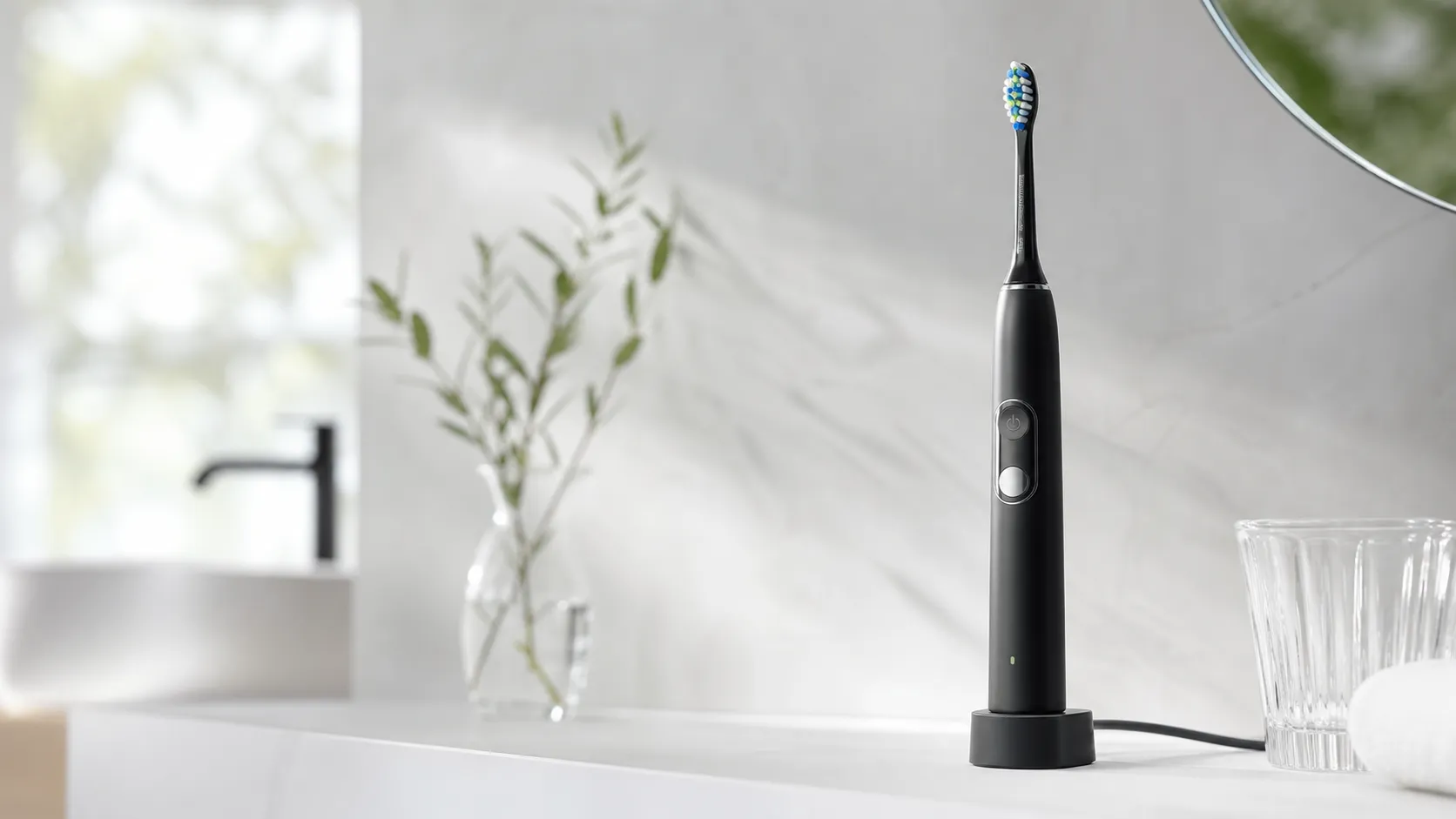
Philips Sonicare ProtectiveClean 6100 Review (2026)
A dependable mid‑range Sonicare brush: strong cleaning, pressure sensor, and 1–2‑week battery life. Great upgrade from manual brushing; watch replacement head costs.
 Health & Wellness
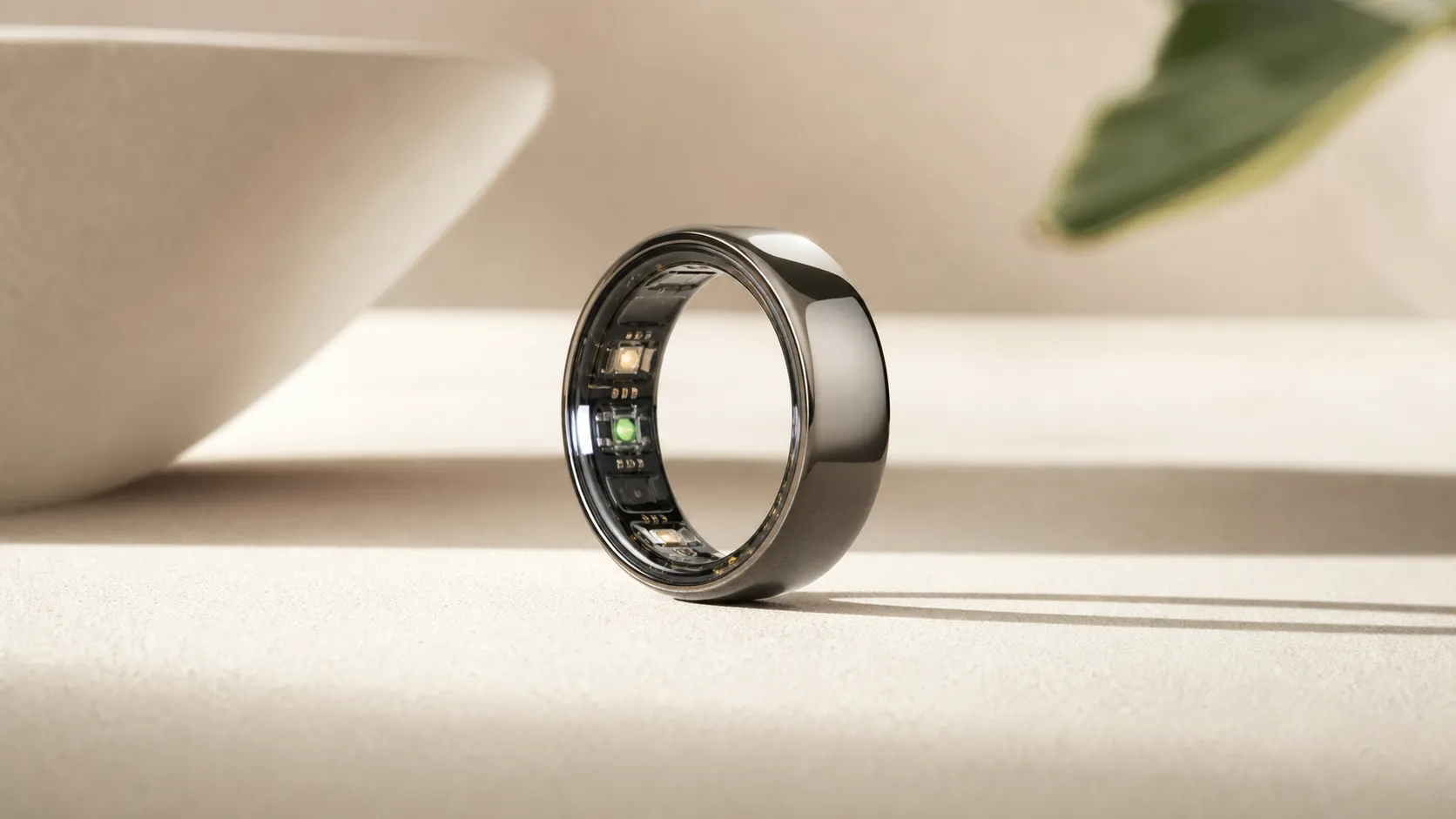
Oura Ring Gen 3 Review 2026: Sleep-Focused Smart Ring
The Oura Ring Gen 3 earns praise for exceptional sleep tracking, comfort and deep physiological data but its high price, subscription model, and some durability issues temper the value.
 Health & Wellness
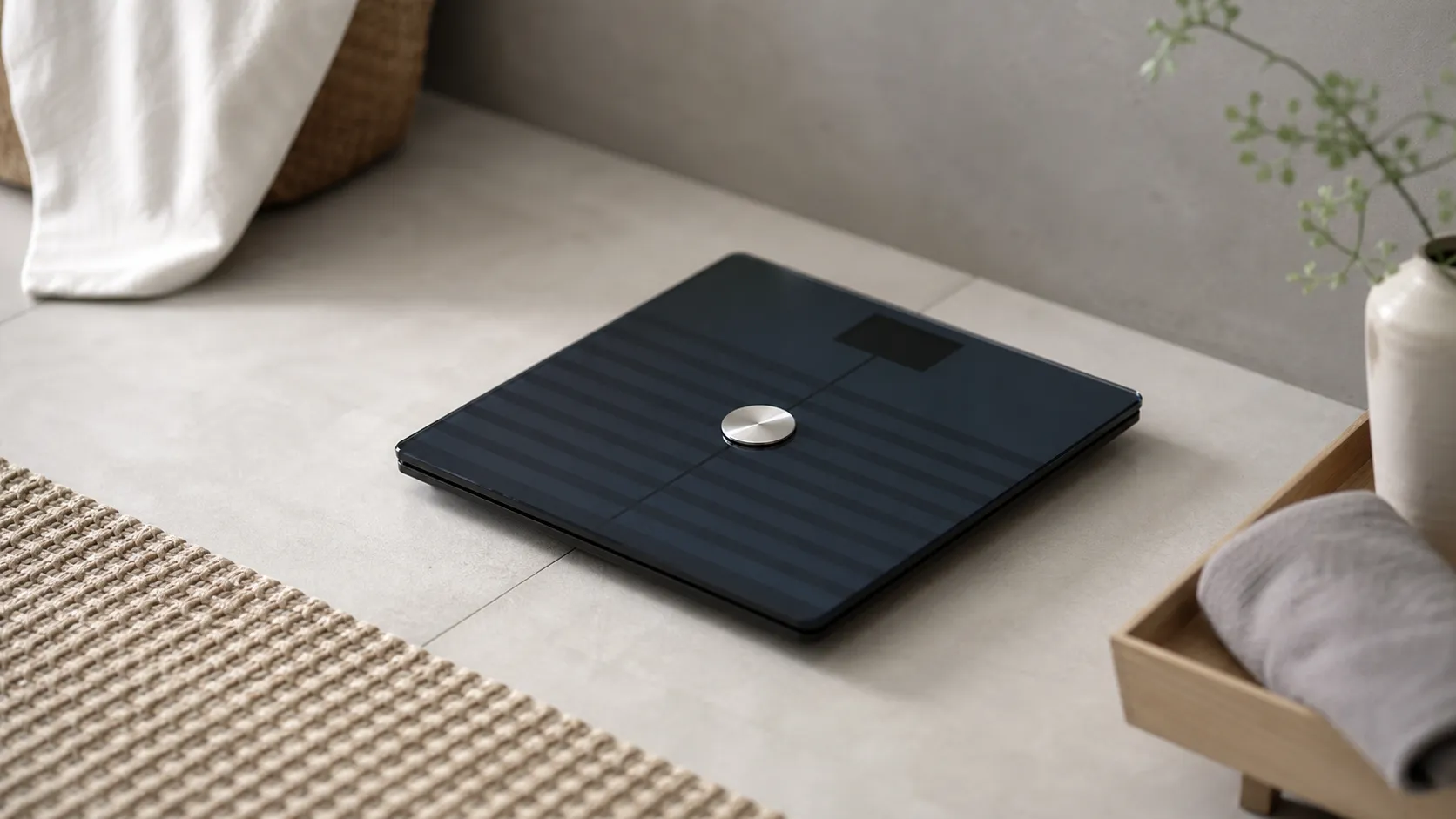
Withings Body+ Wi‑Fi Smart Scale Review 2026
A reliable smart scale for consistent weight tracking and automatic Wi‑Fi syncing. Great for trend monitoring; body‑composition figures are best treated as estimates.