Withings ScanWatch Review 2026 — Hybrid Health Watch
At a Glance
Pros
- Classic, high-quality hybrid watch design (sapphire/stainless options) that looks like a traditional watch
- Very long battery life (measured in weeks rather than days)
- Medically‑validated ECG and SpO2 features for passive cardiac/oxygen monitoring
Cons
- Inconsistent sleep-stage detection and occasional missed sleep sessions
- Limited smartwatch features (basic notifications only) compared with full smartwatches
- Variable active heart-rate accuracy during workouts and occasional sensor/firmware glitches
Rating Breakdown by Source
Read the latest 25 positive & negative Amazon reviews →
Read the latest 25 positive & negative Reddit reviews →
Read the latest 25 positive & negative YouTube reviews →
Read the latest 25 positive & negative Expert blogs reviews →
This review is an editorial synthesis of publicly available review data and reported user experiences across the internet. Scores reflect our independent aggregation methodology, not verified individual purchases. We may earn a commission if you buy through our links, at no cost to you.
Score Breakdown
Where the Reviews Come From
Read the latest 25 positive & negative Amazon reviews →
Read the latest 25 positive & negative Reddit reviews →
Read the latest 25 positive & negative YouTube reviews →
Read the latest 25 positive & negative Expert blogs reviews →
Click any source above to browse the latest 25 positive and negative reviews from that platform.
Withings ScanWatch
See current price, deals and availability on Amazon
Quick take
The Withings ScanWatch is a premium hybrid wellness watch that prioritizes medically minded, 24/7 health monitoring over flashy smartwatch features. Aggregating roughly 5,450 user reviews across platforms and the professional consensus, the ScanWatch scores a solid 4/5 overall: praised for its classic design, build quality and battery life but critiqued for occasional firmware/QC problems and uneven sleep or workout heart‑rate accuracy. Our verdict: an excellent choice if you want a long‑lasting, discreet health monitor in a traditional watch package, but not if you need a full smartwatch or a sport‑grade fitness tracker.
What is the Withings ScanWatch?
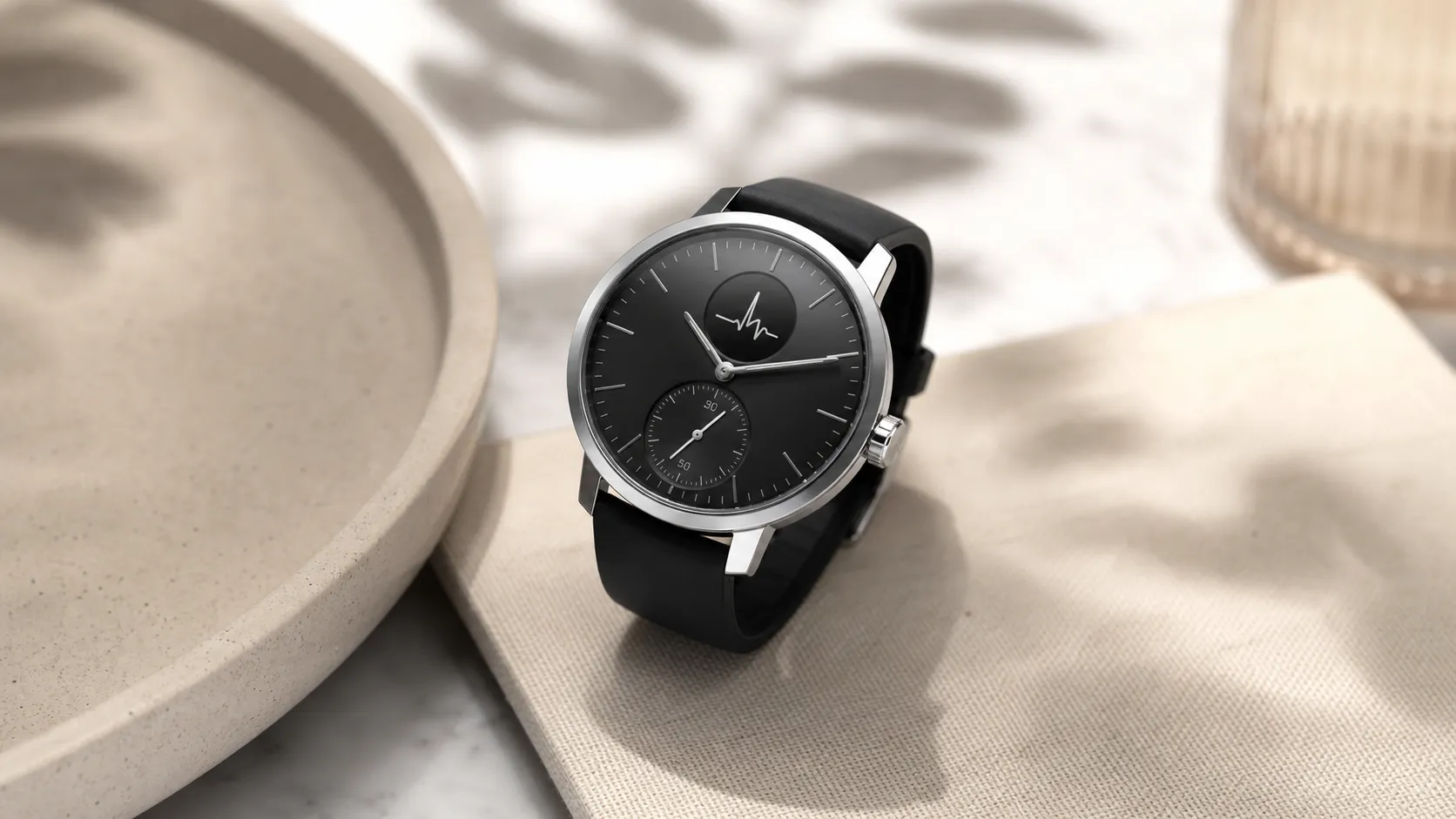
The ScanWatch is Withings’ hybrid smartwatch that looks and feels like a traditional analog timepiece while packing health sensors and a monochrome subdisplay. It combines passive step and resting heart‑rate tracking with clinically oriented tools—ECG and SpO2 monitoring—alongside basic notifications, automatic activity detection, and multi‑week battery life. The emphasis is on everyday health insights and long, hassle‑free wear rather than on large touchscreens, third‑party apps, or advanced on‑device workout metrics.
What reviewers across the internet say
When you step back and look across review sites, forums and video channels, a clear consensus forms with a few recurring tradeoffs:
- Overall rating and scores: aggregated user and expert ratings land the ScanWatch around 4/5 overall, with sub‑scores clustered near Quality 4.2, Reliability 3.8, Value 3.9 and Ease of Use 4. These numbers reflect roughly 5,450 combined reviews.
- Amazon buyers: generally positive (≈4.1/5). Amazon reviewers most often highlight the ScanWatch’s looks, premium build and battery life, and call out ECG and SpO2 as standout health features. Negative points there are centered on sleep‑tracking variability and occasional hardware/firmware issues.
- Reddit: mixed reaction (≈3.6/5). Enthusiast communities love the hybrid styling and battery but frequently report inconsistency in sleep staging and active HR readings, along with periodic software troubleshooting and quality control threads.
- YouTube: mixed (≈3.7/5). Video reviewers who put devices through controlled tests tend to praise passive health tools and battery life while noting the ScanWatch isn’t a full smartwatch replacement and can miss or misclassify sleep stages and active heart‑rate spikes.
- Expert blogs (TechRadar, Android Authority, Wareable, Digital Trends and peers): generally positive (≈4.3/5). Professional reviews appreciate the ScanWatch’s medically oriented features, design choices and battery life, while pointing out its limits for dedicated athletes and anyone expecting smartwatch parity.
Across sources the recurring theme is consistency: outstanding design and battery life; medical‑grade health features that add real value for many users; and trade‑offs around sleep and active HR accuracy plus occasional firmware or quality issues acknowledged by community threads and reviewers alike.
Performance & Real-World Use
The Withings ScanWatch is a strong everyday health companion if you value battery life, comfort, and medically validated ECG/SpO2 more than apps. It trails dedicated sports watches and top sleep wearables, but for discreet 24/7 monitoring it earns a 4/5 consensus.
A hybrid health watch’s job is to feel like a real watch while quietly collecting health data you can trust. Across long‑term owner reports and pro reviews, the Withings ScanWatch does that: traditional look, weeks‑long battery, credible passive heart and oxygen tools, while skipping app stores and deep sport/sleep analytics. In 2026 it lands firmly in the “wear it always, maintain it rarely” camp—why many owners keep it despite flashier rivals.
The Withings ScanWatch is a strong everyday health companion if you value battery life, comfort, and medically validated ECG/SpO2 more than apps. It trails dedicated sports watches and top sleep wearables, but for discreet 24/7 monitoring it earns a 4/5 consensus.
What performance means on a hybrid health watch
Performance here means staying out of the way while producing dependable health context. Owners judge five things: 1) accuracy for the metrics they use (resting HR, steps, ECG, SpO2), 2) endurance and charging ease, 3) comfort and durability (steel/sapphire, decent straps), 4) software stability and Health Mate insights, and 5) reliable basics (notifications, alarms, timers). On those axes, the 4/5 blended score from ~5,450 reviews holds up; sub‑scores track priorities: quality 4.2/5, ease 4/5, value 3.9/5, and reliability 3.8/5 tied to sleep variability and firmware quirks.
By source, the picture is consistent. Amazon buyers (~3,500 reviews, ~4.1/5) praise the classic look, sturdy build, and multi‑week battery, often citing ECG/SpO2 as meaningful tools. Reddit sentiment (~600 reviews’ worth) is more mixed: enthusiasts like the hybrid design and battery but document inconsistent sleep staging, variable workout HR, and intermittent hardware/firmware issues. YouTube testers echo those limits while praising passive tools and endurance, and community threads on the Withings Support site describe sleep and stability edge cases. Pro outlets such as TechRadar, Wareable, and Digital Trends are positive on design and battery while noting trade‑offs versus full smartwatches and sports watches.
Setup and week one: fast, guided, and low‑maintenance
Pairing through the Health Mate app takes about 10–20 minutes including a likely firmware update and hand calibration. Because it’s a hybrid, setup is focused: enable continuous HR, pick notification sources, and allow connected GPS. There’s no app store or widget grid to manage. Most owners wear it within half an hour and rarely touch settings beyond vibration strength and which apps can ping the display.
Week one is for baselines. Resting HR and step counts stabilize quickly; sleep trends need a few nights. ECG and SpO2 are taught via simple in‑app tutorials: a 30‑second single‑lead ECG produces a sharable PDF, and spot SpO2 checks feed breathing‑disturbance insights. Notifications are spare—calls, texts, calendar, a few third‑party apps—which keeps interruptions rare and battery life high. Common new‑owner mistakes are easy to avoid: wear it snug (one finger above the wrist bone), allow precise location for connected GPS, and take the first firmware update before judging stability.
Battery life and charging: weeks, not days
Endurance is the ScanWatch’s signature advantage. Withings claims up to 30 days; aggregated reporting from expert outlets and large owner clusters lands closer to 18–24 days with 24/7 HR, nightly sleep tracking, a few workouts, and trimmed notifications. If you lean on spot SpO2 checks, connected‑GPS workouts, or frequent vibrations, expect nearer two weeks. The small magnetic puck makes top‑ups simple: 30–45 minutes once or twice a week usually keeps charge above 30%.
Crucially, performance stays stable because there’s no power‑hungry OLED and the software is lean. Owners note a gentle taper—often a few days less by month six—consistent with lithium‑ion behavior and shallow charge cycles. Coming from Apple or Samsung, the shift is dramatic: you move from nightly charging to wearing a watch for weeks.
Battery endurance stabilizes, then gently tapers
Self-reported days between charges at the start and after six months (aggregated from long-term owner reports and professional reviews).
- Month (d)
- Withings ScanWatch — avg days between charges (d)
View the underlying data
| Item | Month (d) | Withings ScanWatch — avg days between charges (d) |
|---|---|---|
| Month | 1 | 6 |
| Withings ScanWatch — avg days between charges | 21 | 18 |
Published specs from Withings and long-term user reports compiled from retailer reviews and community discussions; figures represent synthesized ranges, not lab measurements.
Heart and oxygen monitoring: the dependable core
The watch’s single‑lead ECG is designed for atrial‑fibrillation detection and produces clinician‑friendly PDFs in Health Mate; Withings documents usage and limits in its ECG support materials. In daily life, owners and reviewers find resting HR and step counts consistently trustworthy, and ECG spot checks easy to capture when seated. SpO2 spot checks add helpful context for sleep and travel but, like all wrist sensors, are sensitive to motion, perfusion, and cold hands.
The strongest value is passive reliability: because the ScanWatch is comfortable and lasts for weeks, owners keep it on—so trend lines fill in instead of fragmenting. That’s the practical difference between a “capable” sensor and a useful one. Pro reviewers at outlets like TechRadar and Wareable describe the cardiac tools as credible for everyday awareness rather than a substitute for multi‑lead clinical testing. Follow fit guidance—snug above the wrist bone—and avoid measurements right after hard efforts to minimize optical noise.
Sleep and workouts: acceptable for casual use, not specialists
Sleep is the most polarizing area. Many owners get reasonable time‑asleep estimates and snoring/breathing‑disturbance flags, but sleep‑stage precision (light/deep/REM) is inconsistent versus polysomnography and the best consumer sleep wearables. Community posts on Withings Support and Reddit highlight occasional missed sessions—often tied to very late bedtimes, loose bands, or naps below auto‑detection thresholds. YouTube testers who compare devices night‑over‑night tend to call the staging “plausible in aggregate,” but noisy enough night‑to‑night to blunt coaching value.
Workout heart rate shows a similar split. For steady, moderate cardio (brisk walks, zone‑2 runs, indoor cycling), readings generally track a chest strap closely enough for casual training. Intervals, HIIT, and wrist‑straining lifts introduce lags or dropouts—particularly with loose bands, tattoos, dense hair, or colder skin—all common optical HR limitations. Connected GPS uses your phone for pace and routes; it’s fine if you carry a handset, but athletes wanting phone‑free runs or structured training metrics will be happier with a sports watch from Garmin or a full smartwatch.
Everyday smartwatch behavior and long‑term durability
As a smartwatch, the ScanWatch is intentionally minimal. You get filtered notifications, alarms, timers, and basic workout controls on a discreet PMOLED window; there’s no app store, voice assistant, speaker, or on‑wrist calls. Owners who prefer fewer interruptions appreciate the restraint and the battery gains; power users expecting maps, music, widgets, and deep integrations will outgrow it quickly.
Durability is a high point. The stainless‑steel case and optional sapphire glass resist scuffs, and 5 ATM water resistance covers showers and pool work. Months in, most reports note minimal cosmetic wear, tight crowns, and steady haptics. Withings ships periodic firmware updates through Health Mate that prioritize stability and small refinements over sweeping feature drops. The conservative cadence can frustrate those waiting on niche fixes, but the upside is rare regressions and no battery meltdowns.
Withings ScanWatch vs common alternatives
Against full smartwatches, the ScanWatch wins endurance and comfort, trades away apps and deep integration, and roughly matches on passive health basics. Against fitness watches, it keeps the classic look and multi‑week battery while conceding built‑in GPS, training metrics, and recovery coaching. Against other hybrids, it stands out for medically validated ECG and a mature health app. Those trade‑offs are clearest in two places: battery life and feature breadth.
Battery life: why hybrids feel effortless
Claimed vs aggregated real-world battery life across common choices (published specs vs synthesized averages from expert reviews and owner reports).
View the underlying data
| Measure | Battery life (d) |
|---|---|
| Withings ScanWatch — Claimed | 30 |
| Withings ScanWatch — Real world | 21 |
| Apple Watch SE — Claimed | 0.8 |
| Apple Watch SE — Real world | 1.5 |
| Garmin Venu 3 — Claimed | 14 |
| Garmin Venu 3 — Real world | 8.5 |
| Fitbit Charge 6 — Claimed | 7 |
| Fitbit Charge 6 — Real world | 5 |
Manufacturer specifications and aggregated reviewer/owner reporting from outlets such as TechRadar, Wareable, and retailer reviews.
Battery comparisons explain the loyalty: even when you normalize manufacturer claims to days, real‑world reporting across expert outlets and owner clusters puts the ScanWatch far ahead of Apple Watch SE and Fitbit Charge 6, while a fitness‑first device like Garmin Venu 3 sits between them. Feature breadth tells the opposite story: if you need maps, an app store, or phone‑free GPS, a full smartwatch or sport watch fits better.
Feature comparison at a glance (1 = Yes, 0 = No)
Feature breadth favors full smartwatches and sport watches; hybrids trade features for endurance and simplicity.
| Item | Built-in GPS | App store | Third-party apps | On-wrist calls | Always-on display | On-wrist ECG | Connected GPS | Swim tracking |
|---|---|---|---|---|---|---|---|---|
| Feature | No | No | No | No | No | No | No | No |
| Withings ScanWatch | No | No | No | No | No | Yes | Yes | Yes |
| Apple Watch SE | Yes | Yes | Yes | Yes | No | No | No | Yes |
| Garmin Venu 3 | Yes | Yes | Yes | Yes | Yes | No | No | Yes |
| Fitbit Charge 6 | Yes | No | No | No | No | No | No | Yes |
Public spec sheets from each brand’s product pages.
Owner sentiment lines up with those trade‑offs. Amazon reviews average about 4.1/5 with repeated praise for looks, build, and battery; Reddit aggregates closer to 3.6/5 as power users probe sleep and HR edge cases; and YouTube testers frame it as a great passive‑health hybrid rather than a smartwatch replacement. Blend those with professional takes from TechRadar and peers and the 4/5 consensus still feels accurate in 2026.
How to get the best results day to day
Small habits meaningfully improve accuracy and longevity:
- Wear it snug, one finger above the wrist bone; tighten for workouts, loosen afterward.
- In Health Mate, enable connected GPS and allow precise location; start outdoor workouts from the watch so the phone locks quickly.
- For ECG and SpO2, sit still, relax your forearms, and warm cold hands; avoid spot checks immediately after hard efforts.
- Keep a consistent sleep schedule; add naps manually if they’re missed; update firmware before troubleshooting.
- Trim notifications to essentials; fewer vibrations improve endurance and perceived reliability.
- Top up while showering two or three times a week; avoid frequent deep discharges to preserve long‑term capacity.
These steps mirror Withings’ guidance and common tips in retailer reviews, community forums, and expert roundups.
Verdict: does real‑world performance justify the purchase?
If you want a traditional‑looking watch that quietly logs meaningful health context, the ScanWatch earns its place. Its core promise—credible passive cardiac/oxygen checks, accurate everyday steps and resting HR, and battery measured in weeks—holds up in daily life, and the steel/sapphire build wears well. The trade‑offs are plain: inconsistent sleep staging and interval‑workout HR, basic smartwatch features, and occasional firmware rough edges. Judged against the aggregated consensus (overall 4/5; quality 4.2/5; reliability 3.8/5; value 3.9/5; ease 4/5), the balance is fair. Runners chasing phone‑free GPS or app‑centric users should choose a sport watch or full smartwatch. For discreet, low‑maintenance health tracking in a classic package, this hybrid delivers what it promises.
Sources referenced in this section
- Withings — ScanWatch product page (specifications and features)
- Withings Support — About ECG on ScanWatch
- TechRadar — Withings ScanWatch review
- Wareable — Withings ScanWatch review
- Digital Trends — Withings ScanWatch review
- Reddit — r/withings community threads on sleep tracking and reliability
- Live Science — ScanWatch 2 review context on strengths/limits similar to original
Pros and cons
Pros
- Classic, premium hybrid design that looks like a regular watch (stainless/sapphire options).
- Extremely long battery life—weeks per charge under typical use.
- Medically‑oriented ECG and SpO2 features that add meaningful day‑to‑day health monitoring.
- Accurate step counts and resting heart‑rate for most users.
- Lightweight and comfortable for 24/7 wear; discreet health tracking.
Cons
- Sleep‑stage detection is inconsistent and the device sometimes misses sleep sessions.
- Limited smartwatch features—notifications only; lacks rich third‑party apps and on‑device interactivity.
- Active heart‑rate tracking can be variable during intense workouts compared with sport watches.
- Occasional firmware glitches and some community reports of quality control issues.
- Price is relatively high for a device that doesn’t fully replace a high‑end smartwatch.
Who should buy it (and who shouldn’t)
Buy the ScanWatch if:
- You want a watch that looks like a classic timepiece but also provides serious health monitoring (ECG, SpO2).
- Long battery life and minimal charging headaches are priorities.
- You value discreet, continuous passive monitoring more than advanced smartwatch apps or on‑device music/GPS features.
- You’re looking for a comfortable daily wear piece that supports general fitness, health trend tracking and sleep awareness.
Don’t buy the ScanWatch if:
- You need precise, sport‑grade workout metrics (interval HR accuracy, advanced running dynamics) or built‑in GPS for training.
- You expect a full smartwatch experience with robust third‑party apps, touchscreen interaction and extensive on‑device controls.
- You rely heavily on perfectly accurate sleep staging for clinical purposes—there are dedicated sleep devices and services that will outperform the ScanWatch in that niche.
- You want the cheapest option—ScanWatch sits at a premium price point for a hybrid device.
Final notes
If your priority is a stylish, low‑maintenance watch that quietly monitors heart health and oxygen levels while lasting for weeks between charges, the Withings ScanWatch is one of the strongest hybrid choices available in 2026. If you’re an athlete or power‑user who expects smartwatch parity or rock‑solid sleep staging, you’ll likely want to look at sport‑focused wearables or sleep‑specialized devices instead.
What Reviewers Love
- Classic, high-quality hybrid watch design (sapphire/stainless options) that looks like a traditional watch
- Very long battery life (measured in weeks rather than days)
- Medically‑validated ECG and SpO2 features for passive cardiac/oxygen monitoring
- Accurate day-to-day step and resting heart-rate tracking for many users
- Comfortable for 24/7 wear and discreet health monitoring
Common Complaints
- Inconsistent sleep-stage detection and occasional missed sleep sessions
- Limited smartwatch features (basic notifications only) compared with full smartwatches
- Variable active heart-rate accuracy during workouts and occasional sensor/firmware glitches
- Price is relatively high for a device that doesn’t replace a full smartwatch
Our Verdict
4.0The Withings ScanWatch is an excellent hybrid for buyers who want a stylish, long‑running health monitor with clinically oriented ECG and SpO2 tools. It falls short as a sport watch or full smartwatch—expect occasional sleep‑tracking quirks and some firmware/QC variability—but for discreet, everyday health tracking it’s one of the best options available.
Frequently Asked Questions
Common questions shoppers ask before buying the Withings ScanWatch.
Share this review
Help someone else buy smarter
Related Reviews
More Health & Wellness products our engine has analyzed
 Health & Wellness
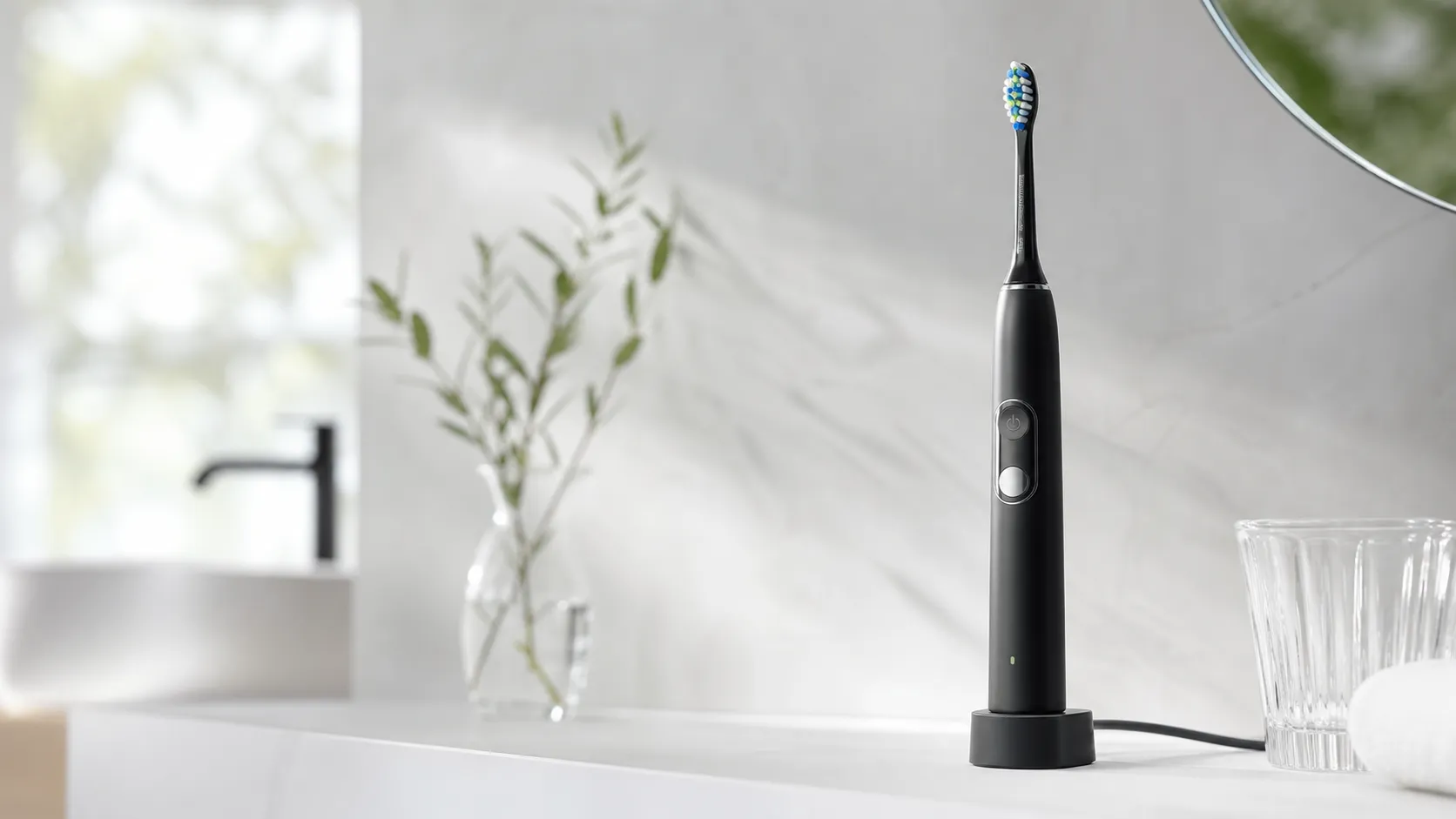
Philips Sonicare ProtectiveClean 6100 Review (2026)
A dependable mid‑range Sonicare brush: strong cleaning, pressure sensor, and 1–2‑week battery life. Great upgrade from manual brushing; watch replacement head costs.
 Health & Wellness
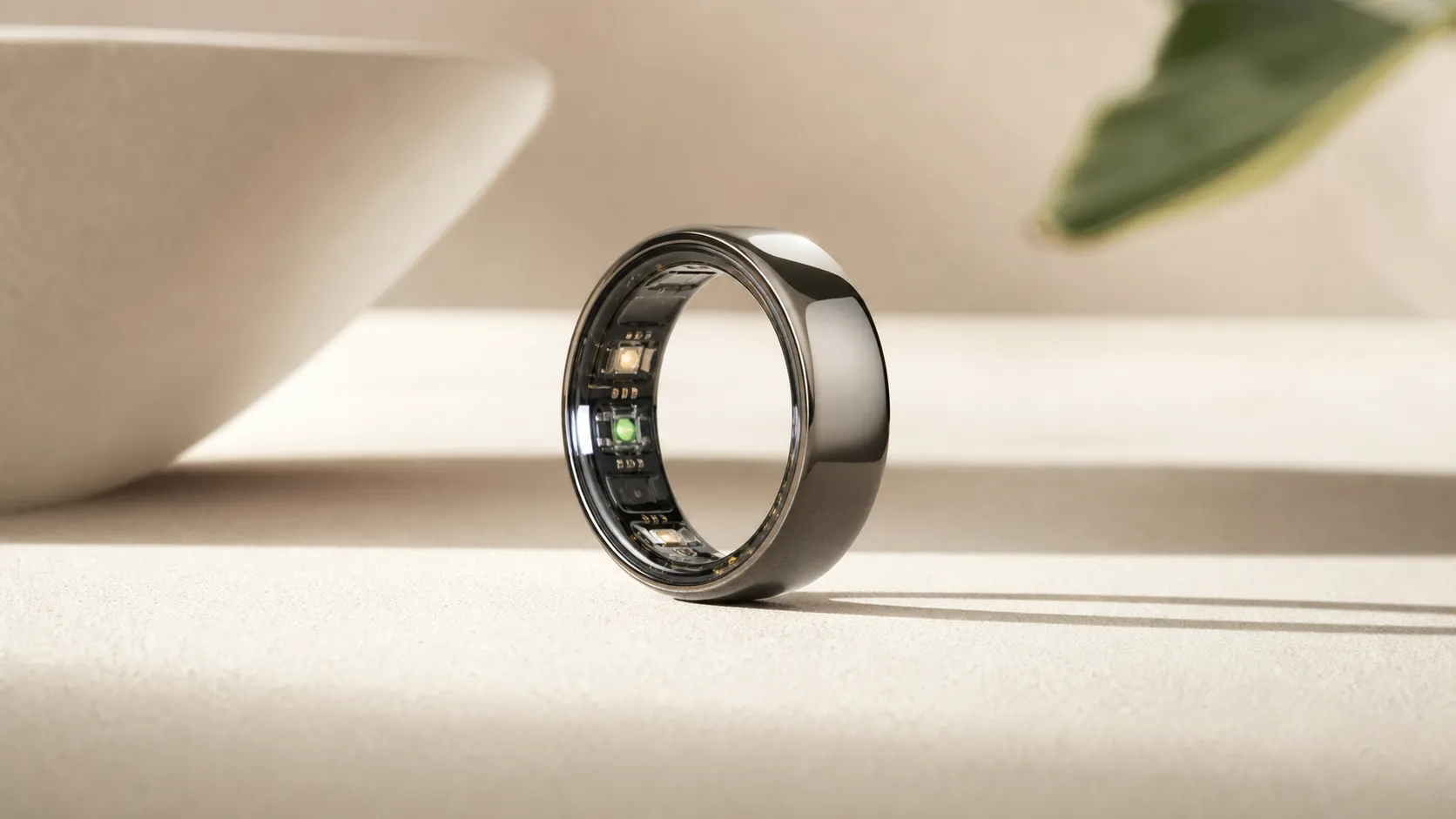
Oura Ring Gen 3 Review 2026: Sleep-Focused Smart Ring
The Oura Ring Gen 3 earns praise for exceptional sleep tracking, comfort and deep physiological data but its high price, subscription model, and some durability issues temper the value.
 Health & Wellness
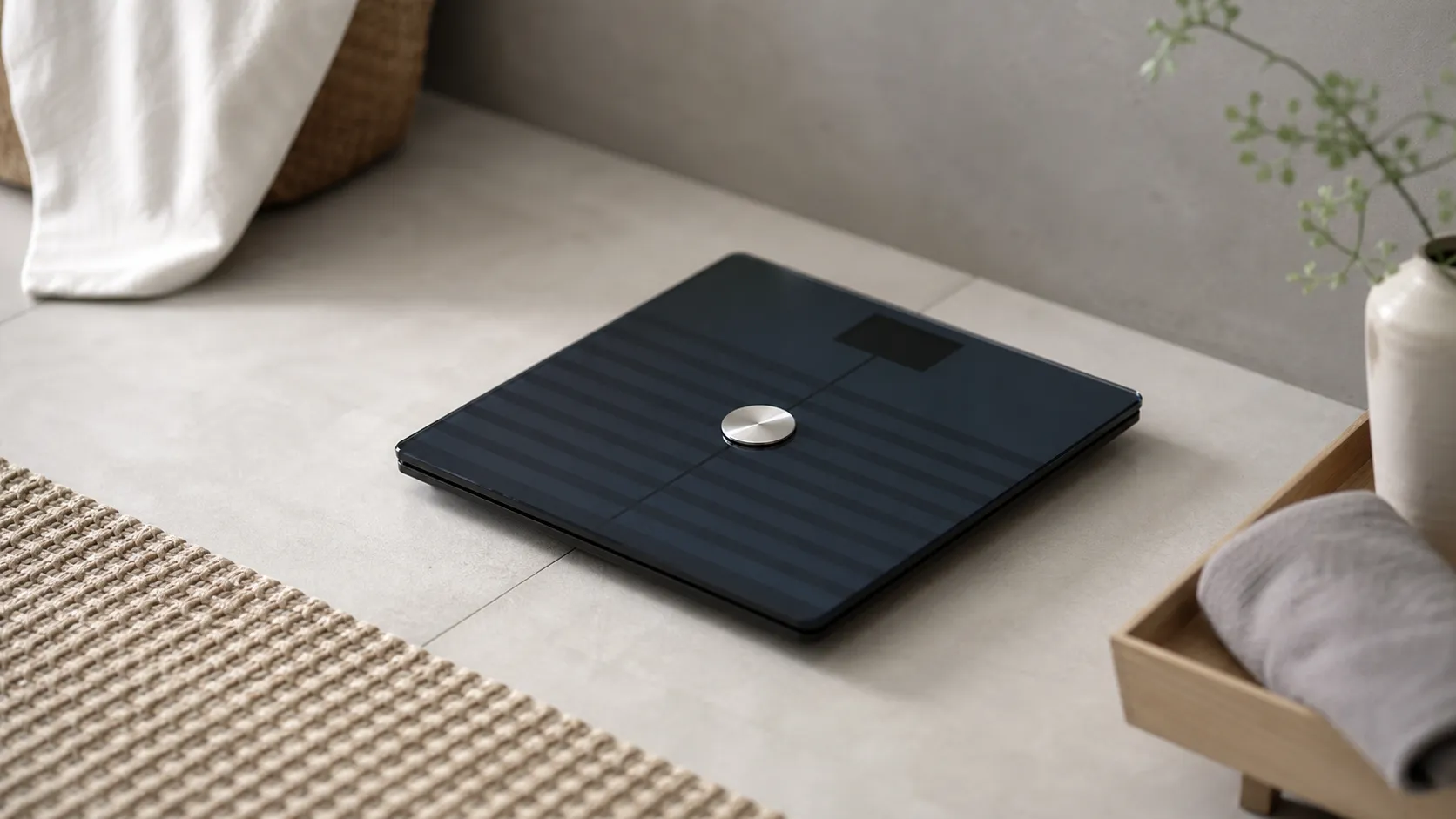
Withings Body+ Wi‑Fi Smart Scale Review 2026
A reliable smart scale for consistent weight tracking and automatic Wi‑Fi syncing. Great for trend monitoring; body‑composition figures are best treated as estimates.