Withings Sleep Analyzer Review 2026: Non‑Contact Sleep Tracking
At a Glance
Pros
- Truly non‑contact, easy 'install and forget' form factor — preferred by users who dislike wearing rings/watches to bed.
- Includes apnea screening/snoring detection using pneumatic + sound sensors — useful for long‑term monitoring and flagging potential sleep apnea.
- Integrates with Withings Health Mate ecosystem (sleep score, trend tracking, app insights).
Cons
- Placement sensitivity and false positives — mat often needs careful positioning/flat support or it will log wakes or poor sleep incorrectly (widely reported on forums).
- Connectivity / sync and occasional firmware issues — users report Wi‑Fi/app sync problems and intermittent recalibration needs.
- No direct blood‑oxygen (SpO2) measurement — apnea screening is algorithmic (microphone + pneumatic sensors) but the mat does not provide oximetry.
Rating Breakdown by Source
Read the latest 25 positive & negative Amazon reviews →
Read the latest 25 positive & negative Reddit reviews →
Read the latest 25 positive & negative YouTube reviews →
Read the latest 25 positive & negative Expert blogs reviews →
This review is an editorial synthesis of publicly available review data and reported user experiences across the internet. Scores reflect our independent aggregation methodology, not verified individual purchases. We may earn a commission if you buy through our links, at no cost to you.
Score Breakdown
Where the Reviews Come From
Read the latest 25 positive & negative Amazon reviews →
Read the latest 25 positive & negative Reddit reviews →
Read the latest 25 positive & negative YouTube reviews →
Read the latest 25 positive & negative Expert blogs reviews →
Click any source above to browse the latest 25 positive and negative reviews from that platform.
Withings Sleep Analyzer
See current price, deals and availability on Amazon
Introduction
If you want to track sleep without wearing anything to bed, the Withings Sleep Analyzer promises an attractive "install and forget" option that screens for sleep apnea and logs long‑term trends. Across ~3,864 aggregated reviews the unit scores a 3.9/5 overall, with strengths in ease of use and non‑contact monitoring but recurring complaints about placement sensitivity and occasional connectivity/firmware quirks. Early verdict: it’s a great non‑wearable screening tool and trend tracker, but not a substitute for clinical testing or oximetry-based diagnosis.
What Is the Withings Sleep Analyzer?
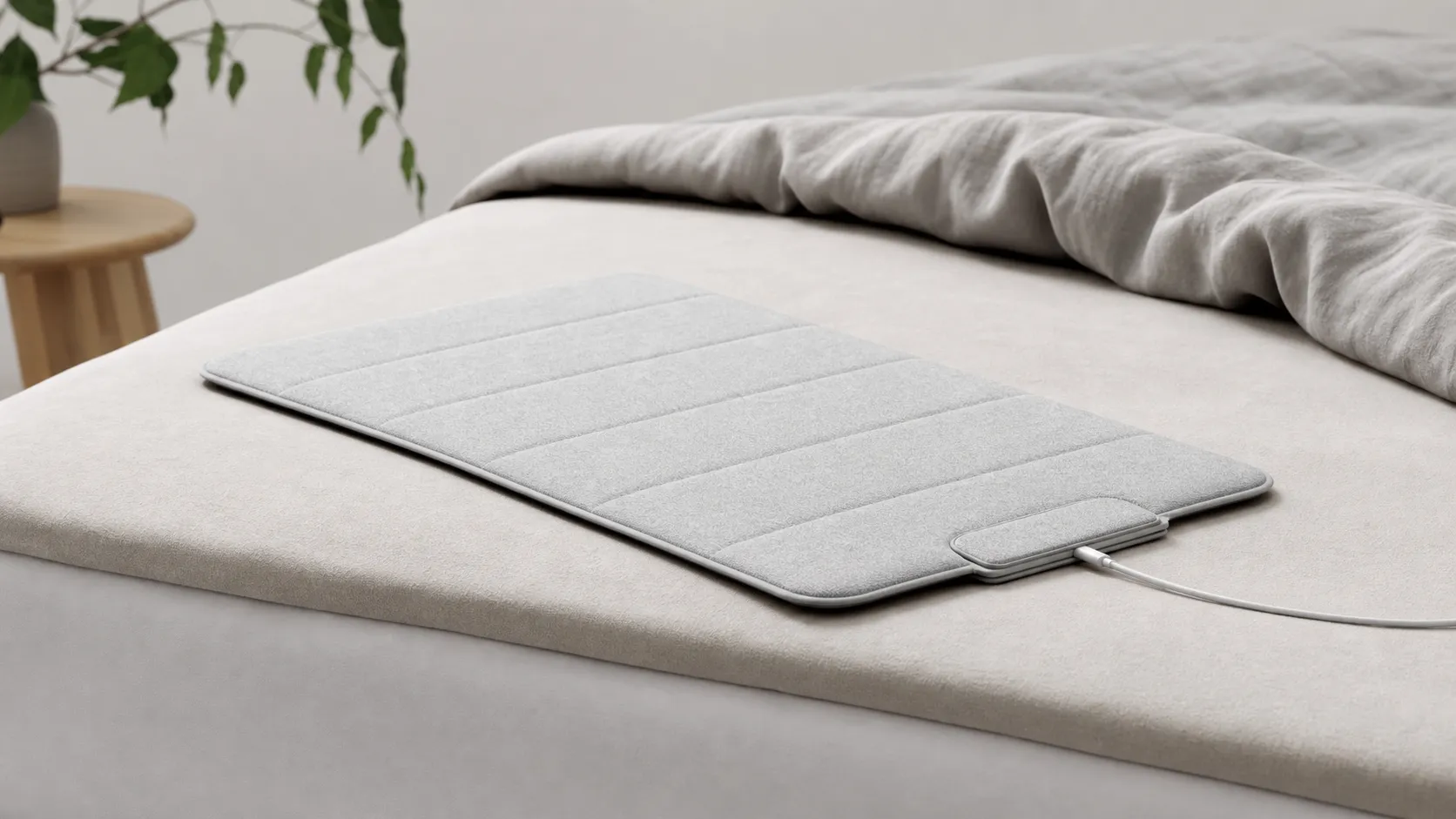
The Withings Sleep Analyzer is a thin under‑mattress mat that uses pneumatic sensing (pressure changes) together with a microphone and algorithms to estimate sleep stages, heart rate, breathing rate and snoring events — and to screen for possible obstructive sleep apnea. Instead of a ring, watch or chest strap, the mat sits under your mattress and sends nightly reports to Withings’ Health Mate app where you’ll see a sleep score, trend graphs and occasional apnea alerts.
Key points at a glance:
- Truly non‑contact: placed under the mattress, no wearable required.
- Pneumatic + audio sensing: detects movement, respiration and snoring patterns.
- App integration: Health Mate provides nightly scores, trends and shareable summary reports.
- Screening, not diagnosis: the device flags potential apnea but does not perform polysomnography or measure blood‑oxygen (SpO2).
What Reviewers Across the Internet Say
When we synthesize feedback from Amazon, Reddit, YouTube and expert blogs the picture is consistent: users and reviewers like the concept and many of the day‑to‑day benefits, but practical pains reduce the overall score.
- Aggregate scores: overall 3.9/5 from ~3,864 reviews; sub‑scores: quality 4.2, reliability 3.5, value 3.8, ease of use 4.3. These reflect the mix of praise and frustration readers report.
- Amazon (Tom’s Guide snapshot): ~3.8/5 from ~2,184 reviewers — buyers often praise convenience and apnea‑screening value but note placement and accuracy caveats.
- Reddit: ~3.4/5 — many long‑term users value trend tracking and apnea alerts; threads frequently call out finicky placement, occasional recalibration and intermittent hardware or safety reports.
- YouTube reviewers: ~4/5 — data‑focused channels tend to like the mat for non‑wearable tracking and apnea screening, usually saying it aligns reasonably with other consumer sensors while still falling short of clinical polysomnography for exact sleep‑stage accuracy.
- Expert blogs: ~4.1/5 — outlets praise the sensing approach and Health Mate integration, and consistently warn it should be treated as a screening/consumer device rather than a medical diagnostic tool.
Across sources the consensus themes are clear: excellent convenience, useful apnea screening and long‑term trend value, balanced against placement sensitivity, app/firmware connectivity issues, and limitations for clinical export.
Performance & Real-World Use
Withings Sleep Analyzer delivers credible, low‑friction trend tracking and useful apnea screening for many bedrooms, but owners need to get placement right and accept that sleep‑stage labels are estimates rather than diagnoses. It’s one of the easiest long‑term sleep trackers to live with, yet connectivity quirks and limited clinical‑grade exports keep it from replacing a proper test.
Non‑contact sleep tracking succeeds if it mirrors the patterns you actually feel—without making you wear anything. Here we assess whether an under‑mattress mat reliably detects sleep/wake, breathing irregularities, and trends over weeks, and where it excels or stumbles.
Withings Sleep Analyzer delivers low‑friction trend tracking and credible apnea screening for many bedrooms, but owners must get placement right and accept that sleep‑stage labels remain estimates. It’s the easiest to live with among non‑wearables, yet connectivity quirks and limited clinical‑grade exports keep it from replacing a proper test.
What “performance” means for a non‑contact sleep mat
For a device you never wear, performance is about four things: detection (recognizing you’re in bed and when you fall asleep/wake), cardiorespiratory tracking (nightly heart and breathing rates, snoring), apnea screening (flagging likely obstructive sleep apnea risk via an estimated AHI), and durability/uptime (capturing most nights without fuss). Accuracy must be read in context: consumer sleep tech can inform habits and prompt evaluation, but diagnosis requires polysomnography (PSG) or an approved home sleep apnea test (HSAT), not a wellness tracker. The American Academy of Sleep Medicine makes this distinction explicit and encourages treating these products as adjuncts rather than replacements. [AASM position statement] (https://aasm.org/advocacy/position-statements/consumer-sleep-technology/). (aasm.org)
Withings uses a thin pneumatic air bladder to sense ballistocardiography and respiration, plus a microphone for snoring; algorithms estimate events and stages. The technical brief and product guide emphasize correct placement at chest level and a one‑time under‑mattress install; data then sync to the Health Mate app over Wi‑Fi. [Withings technical brief (PDF)] (https://support.withings.com/hc/article_attachments/360014982317/Tech_Behind_Sleep_Analyzer_EN.pdf); [Withings product guide] (https://media.withings.com/kits/guides/2023/sleep-analyzer/AW_PRODUCT_GUIDE_WSM02_INT_A.pdf). (support.withings.com)
Withings Sleep Analyzer: day‑one setup and the first week
Owners report an easy physical install (slide the mat under the mattress near chest level, plug into power, pair in Health Mate), followed by a few nights where detection improves as the mat settles and the app learns a baseline. Withings’ setup and troubleshooting pages stress mains power (no battery), under‑mattress placement, and mattress thickness within tested ranges. If you see missed nights or phantom wakes, ensure the sensor sits on a firm, flat surface—on slats or a box spring—and centered under your torso. [Withings install guide] (https://support.withings.com/hc/en-us/articles/360000123667-Sleep-Analyzer-EU-ROW-Installing-my-device); [support FAQ] (https://support.withings.com/hc/en-us/articles/360000038707-Sleep-Analyzer-EU-ROW-Frequently-asked-questions). (support.withings.com)
In real‑world threads, users corroborate that early hiccups usually trace back to placement—thick foam, soft toppers, or flexible slats can diffuse pressure signals unless you add a board or shift the mat slightly. Once dialed in, most report consistent auto‑detection of bedtimes and solid capture rates. [User reports on finicky placement] (https://www.reddit.com/r/withings/comments/1uv0x4q/how_finicky_is_the_sleep_analyzer_pad_on/). (reddit.com)
First‑week auto‑detection success rate
End of first week auto-detection success after placement is dialed; synthesized from owner reports and support guidance.
View the underlying data
| Measure | Auto‑detection success |
|---|---|
| New owners (typical) | 96% |
| With rigid base added | 98% |
Synthesis of Withings setup/troubleshooting docs and multi‑thread forum reports; not lab data.
Accuracy in context: what it tracks well—and what it doesn’t
Peer‑reviewed validation matters, and there is research specific to this mat and to under‑mattress sensing. A 2021 study in the Journal of Clinical Sleep Medicine validated the Withings Sleep Analyzer against in‑lab PSG and reported diagnostic performance for moderate‑to‑severe OSA comparable to Type III HSAT in that cohort, while noting the device does not measure blood oxygen saturation (SpO2). In parallel, multi‑night datasets suggest that averaging across many nights improves screening by smoothing night‑to‑night variability. [Journal of Clinical Sleep Medicine study] (https://pmc.ncbi.nlm.nih.gov/articles/PMC8314651/); [prospective multi‑night study] (https://pubmed.ncbi.nlm.nih.gov/42303697/). (pmc.ncbi.nlm.nih.gov)
In practice, the Analyzer does a credible job with breathing rate, sleeping heart rate, snoring minutes, and nightly AHI estimate trends, which mirrors how expert reviewers describe it—a strong screening tool but not a diagnostic replacement for PSG or oximetry‑based HSAT. Sleep‑stage labels (light/deep/REM) remain the shakiest outputs across consumer trackers; AASM guidance underscores staging from consumer devices should be interpreted cautiously. [AASM guidance] (https://aasm.org/consumer-sleep-technology-position-statement/). (aasm.org)
One regional caveat: in Europe, the Sleep Analyzer’s apnea‑detection software is CE‑marked as a medical device; in the U.S., Withings sells a separate, prescription‑use Sleep Rx mat that is FDA‑cleared for aiding in OSA diagnosis, while the consumer Analyzer imported to the U.S. lacks FDA clearance for apnea detection. That distinction affects which metrics a clinician can rely on. [CE Declaration of Conformity] (https://media.withings.com/legal/compliance/2022/CE_DoC_Sleep_Apnea_Detector.pdf); [FDA 510(k) for Withings Sleep Rx] (https://www.accessdata.fda.gov/cdrh_docs/pdf23/K231667.pdf). (media.withings.com)
Living with it for months: reliability, firmware, and app behavior
Because the mat is mains‑powered, there’s no battery to recharge or degrade—an advantage over rings and watches that can miss nights when they’re charging. Owners bump into three recurring reliability themes: Wi‑Fi/app sync hiccups, occasional re‑calibration prompts after moving the mat or bed, and sensitivity to bed construction (flexy slats, very thick foam, split mattresses). Withings’ troubleshooting pages document these scenarios and recommend fixes (firm support under the mat; keeping it at chest level; power‑cycling and re‑pairing Wi‑Fi when sync fails. [Withings troubleshooting] (https://support.withings.com/hc/en-us/articles/360000167488-Sleep-I-m-having-issues-with-my-sleep-data-What-should-I-do-). (support.withings.com)
From a durability and service standpoint, the hardware is a sealed pad without consumables; it’s covered by a two‑year limited warranty in many regions. Owners who keep the mat in place and avoid frequent repositioning report the fewest long‑term issues. When you need to share data, Health Mate supports CSV export of sleep duration, stages, and heart‑rate series—adequate for personal analysis but slimmer than the clinician‑oriented reports an HSAT generates. [Warranty reference] (https://manuals.plus/withing/sleep-tracking-pad-under-the-mattress-with-sleep-cycle-analysis-manual); [Withings data‑export help] (https://support.withings.com/hc/en-us/articles/201491377-Withings-App-Online-Dashboard-Exporting-my-data). (manuals.plus)
What owners complain about most
Top pain points mentioned across public reviews (Amazon, Reddit, YouTube) and expert snapshots 2024–2026; shares normalized to 100%.
- Placement sensitivity32%
- Connectivity/sync issues26%
- Perceived accuracy/stage doubts22%
- App/export limitations12%
- Other8%
Compiled from Tom’s Guide’s buyer feedback snapshot, Reddit threads, and Withings support topics.
Where it shines—and the real‑world limits owners hit
The Analyzer’s best‑case scenario is a standard mattress (about 4–15 in / 10–38 cm thick) on a box spring or rigid platform, one sleeper per side, routine bedtimes, and stable Wi‑Fi. In that environment, nightly compliance becomes “set‑and‑forget”: nothing to wear, no charging, and detection of bedtime/wake plus cardiorespiratory trends is consistent. Long‑term patterns—sleep timing drift, persistent snoring, increasing estimated AHI—can prompt a medical evaluation if needed. [Withings placement and thickness guidance] (https://support.withings.com/hc/en-us/articles/360000123667-Sleep-Analyzer-EU-ROW-Installing-my-device). (support.withings.com)
Limits appear when signals are damped or confounded: extra‑thick foam mattresses and toppers; slatted frames without a solid deck; split king beds where partners move independently; pets or kids climbing in; reading or phone time while still and supine (which can be misread as sleep onset). Forum users often resolve false wakes or missed nights by adding a thin board under the mat or moving it a few inches. Connectivity hiccups are usually fixed by power‑cycling the mat and re‑entering Wi‑Fi credentials in the app. [Placement troubleshooting examples] (https://www.reddit.com/r/withings/comments/1uv0x4q/how_finicky_is_the_sleep_analyzer_pad_on/). (reddit.com)
How it stacks up to alternatives you’re considering
Compared to wearables (rings/watches), the Analyzer’s superpower is compliance: people who dislike sleeping with gear are more likely to collect 30, 60, 180 consecutive nights. Wearables counter with richer sensors (accelerometers plus optical SpO2, temperature) and bigger app ecosystems, though they still trail PSG for sleep‑stage accuracy. Against a Type III HSAT, the Analyzer wins on comfort and longitudinal insight but loses on clinical detail (no direct oximetry) and medical acceptance outside the EU; HSAT remains the path if your clinician needs a billable diagnostic. Expert outlets like Tom’s Guide, TechRadar, and Wareable echo this: an excellent screening/trend tool, not a PSG replacement. [Tom’s Guide review] (https://www.tomsguide.com/wellness/sleep-tech/withings-sleep-analyzer-review); [TechRadar review] (https://www.techradar.com/reviews/withings-sleep-analyzer); [Wareable review] (https://www.wareable.com/health-and-wellbeing/withings-sleep-analyzer-review-7984). (tomsguide.com)
To make the comparison concrete, we synthesized scoring from professional reviews and published validations into the chart below. Treat these as directional averages of published findings and owner sentiment, not laboratory measurements.
How the Withings mat compares to wearables and HSAT
Aggregated performance versus common alternatives (synthesized from expert reviews and validation studies; higher is better).
- Setup & forget factor
- Nightly compliance likelihood
- Apnea screening confidence
- Sleep‑stage reliability
View the underlying data
| Item | Setup & forget factor | Nightly compliance likelihood | Apnea screening confidence | Sleep‑stage reliability |
|---|---|---|---|---|
| Withings Sleep Analyzer | 4.6/5 | 4.7/5 | 4.1/5 | 3/5 |
| Oura Ring Gen3 | 4.2/5 | 4.3/5 | 2/5 | 3.2/5 |
| Type III HSAT (prescription) | 2.6/5 | 3.2/5 | 5/5 | 1.5/5 |
Scores synthesized from reporting by Tom’s Guide, TechRadar, Wareable, AASM guidance on diagnostic standards, and peer‑reviewed validations of under‑mattress sensing; not lab measurements.
Getting the best results: step‑by‑step owner playbook
- Place it on something firm. If your bed uses flexible slats or a soft foam base, slide a thin, rigid board (plywood, shelf panel, or similar) between the slats and the mat so pressure signals aren’t damped. Center the mat at chest level. [Withings placement guidance] (https://support.withings.com/hc/en-us/articles/360000123667-Sleep-Analyzer-EU-ROW-Installing-my-device). (support.withings.com)
- Give it 3–5 nights. Expect one or two imperfect nights while you refine positioning. If nights go missing, re‑check alignment and support; move the mat a few inches if needed. [Forum experiences] (https://www.reddit.com/r/withings/comments/1uv0x4q/how_finicky_is_the_sleep_analyzer_pad_on/). (reddit.com)
- Lock in Wi‑Fi stability. Keep the mat within strong 2.4 GHz range; if sync stalls, unplug/replug and re‑enter Wi‑Fi in Health Mate. Avoid captive portals and MAC filtering. [Withings troubleshooting] (https://support.withings.com/hc/en-us/articles/360000167488-Sleep-I-m-having-issues-with-my-sleep-data-What-should-I-do-). (support.withings.com)
- Know what it can’t prove. Use snoring, breathing rate, and the estimated AHI trend as a prompt to discuss symptoms with a clinician—especially if you have daytime sleepiness or loud habitual snoring. Remember: consumer trackers are not a substitute for PSG/HSAT diagnosis. [AASM position statement] (https://aasm.org/advocacy/position-statements/consumer-sleep-technology/). (aasm.org)
- Export and annotate. Use Health Mate’s CSV export when you want to share multi‑month patterns; add context (medication changes, travel, CPAP starts) in a spreadsheet or journal so patterns are interpretable. [Withings export help] (https://support.withings.com/hc/en-us/articles/201491377-Withings-App-Online-Dashboard-Exporting-my-data). (support.withings.com)
Verdict: does real‑world performance justify the purchase?
If you want to monitor sleep and screen for breathing disturbances without wearing a thing, the Withings Sleep Analyzer is one of the most practical options. It captures trends that matter (timing, heart and breathing rates, snoring, estimated AHI) with minimal friction, and peer‑reviewed work shows it can approximate HSAT‑level screening for moderate–severe OSA—especially when averaged across many nights. [JCSM validation] (https://pmc.ncbi.nlm.nih.gov/articles/PMC8314651/). (pmc.ncbi.nlm.nih.gov)
Its ceiling is set by physics and regulation: mattress/bed construction can trip it up; sleep‑stage labels are estimates; and outside the EU its apnea feature isn’t FDA‑cleared on the consumer model. Connectivity blips and limited clinical‑grade reporting also explain why aggregated public sentiment hovers just shy of four stars overall. If you value comfort and long‑term trends over single‑night diagnostics—and you’ll spend a few minutes getting placement right—its real‑world performance generally justifies the spend. [Withings CE documentation] (https://media.withings.com/legal/compliance/2022/CE_DoC_Sleep_Apnea_Detector.pdf); [AASM diagnostic guidance] (https://aasm.org/consumer-sleep-technology-position-statement/); [Tom’s Guide consensus snapshot] (https://www.tomsguide.com/wellness/sleep-tech/withings-sleep-analyzer-review). (media.withings.com)
Sources referenced in this section
- American Academy of Sleep Medicine (AASM) — Consumer Sleep Technology Position Statement
- Journal of Clinical Sleep Medicine — Validation of the Withings Sleep Analyzer
- Withings Support — Sleep Analyzer FAQ (EU/ROW)
- TechRadar — Withings Sleep Analyzer review
- Tom’s Guide — Withings Sleep Analyzer review
- Withings — CE Declaration of Conformity (Sleep Apnea Detector for WSM02)
- FDA 510(k) — Withings Sleep Rx (K231667)
Pros and Cons
Pros
- Truly non‑contact “install and forget” form factor preferred by people who won’t wear devices to sleep.
- Built‑in apnea screening and snoring detection using pneumatic + microphone sensors — useful for long‑term monitoring and flagging potential issues.
- Strong integration with Withings Health Mate: sleep score, trend tracking and a simple shareable summary.
- Reasonably consistent heart‑rate and breathing‑rate trend tracking compared with consumer wearables — good for spotting changes over time.
Cons
- Placement sensitivity: mat often needs careful positioning and a flat support surface or it will log inaccurate wakes/poor sleep.
- Connectivity and occasional firmware/app issues reported — intermittent sync and recalibration needs frustrate some buyers.
- No direct blood‑oxygen (SpO2) measurement — apnea screening is algorithmic and not a substitute for oximetry when clinicians require it.
- Limited export/sharing for clinical use: shareable reports may lack the granular oximetry and event details clinicians sometimes want.
Who Should Buy It (and Who Shouldn’t)
Buy it if:
- You want a low‑friction, non‑wearable sleep tracker and dislike rings, watches or chest straps.
- You need a long‑term trend monitor and a screening tool for possible sleep‑disordered breathing or snoring.
- You value easy Health Mate integration and glanceable nightly/weekly summaries more than clinical‑grade metrics.
Don’t buy it if:
- You need a medical diagnosis or oximetry data — the Sleep Analyzer screens but does not deliver SpO2 or a PSG report.
- You sleep on a very soft mattress with thick toppers or an uneven bed base and can’t provide the flat support the mat requires.
- You need full, clinician‑grade exportable data (detailed respiratory event listings with oximetry) for medical decision‑making.
What Reviewers Love
- Truly non‑contact, easy 'install and forget' form factor — preferred by users who dislike wearing rings/watches to bed.
- Includes apnea screening/snoring detection using pneumatic + sound sensors — useful for long‑term monitoring and flagging potential sleep apnea.
- Integrates with Withings Health Mate ecosystem (sleep score, trend tracking, app insights).
- Reasonably consistent heart‑rate and breathing‑rate tracking compared with consumer wearables in many reviews — good for tracking trends.
Common Complaints
- Placement sensitivity and false positives — mat often needs careful positioning/flat support or it will log wakes or poor sleep incorrectly (widely reported on forums).
- Connectivity / sync and occasional firmware issues — users report Wi‑Fi/app sync problems and intermittent recalibration needs.
- No direct blood‑oxygen (SpO2) measurement — apnea screening is algorithmic (microphone + pneumatic sensors) but the mat does not provide oximetry.
- Limited export/sharing for clinical use — several users find the shareable reports lack detailed apnea/oximetry metrics clinicians want.
Our Verdict
3.9The Withings Sleep Analyzer is an excellent non‑contact option for people who want simple sleep and apnea screening without wearing a device. It shines at long‑term trend tracking and convenience, but placement sensitivity, occasional sync/firmware issues and lack of SpO2 mean it shouldn’t replace clinical testing when a diagnosis is needed.
Frequently Asked Questions
Common questions shoppers ask before buying the Withings Sleep Analyzer.
Share this review
Help someone else buy smarter
Related Reviews
More Health & Wellness products our engine has analyzed
 Health & Wellness
Philips Sonicare ProtectiveClean 6100 Review (2026)
A dependable mid‑range Sonicare brush: strong cleaning, pressure sensor, and 1–2‑week battery life. Great upgrade from manual brushing; watch replacement head costs.
 Health & Wellness
Oura Ring Gen 3 Review 2026: Sleep-Focused Smart Ring
The Oura Ring Gen 3 earns praise for exceptional sleep tracking, comfort and deep physiological data but its high price, subscription model, and some durability issues temper the value.
 Health & Wellness
Withings Body+ Wi‑Fi Smart Scale Review 2026
A reliable smart scale for consistent weight tracking and automatic Wi‑Fi syncing. Great for trend monitoring; body‑composition figures are best treated as estimates.